A Dades Valley road trip is one of the most scenic ways to travel through southern Morocco, combining red-rock canyons, green agricultural terraces, traditional villages, unusual geological formations and one of the country’s most recognizable mountain roads. Rather than treating the valley as a quick photo stop on the way to the Sahara, allow enough time to drive beyond Boumalne Dades, explore the gorge and stop at viewpoints along the route.
This guide explains how to plan the drive, where the famous switchbacks and Monkey Fingers are located, how long to stay, when to visit, and how Dades fits into a wider route linking Ouarzazate, Todra Gorge and Merzouga.
Dades Valley Road Trip: Route at a Glance
The Dades Valley stretches through a changing landscape of cultivated fields, earthen villages and increasingly steep rock walls. Boumalne Dades acts as the main gateway to the upper valley and gorge, where the road leaves the main east-west route and follows the Dades River north into the mountains.
The simplest way to understand the area is to treat Boumalne Dades as your base and drive into the gorge, stopping at geological formations, villages and viewpoints before returning the same way.
| Time available | Recommended plan |
|---|---|
| 2–3 hours | Drive from Boumalne Dades to the main gorge viewpoints and return |
| Half day | Add Monkey Fingers, short walks and several photography stops |
| 1 full day | Explore the gorge slowly, walk in the valley and have lunch locally |
| 1 night | Best for sunset, morning light and a relaxed road-trip schedule |
For current tours and activities in the area, see the Dades Valley destination page.
Dades Valley or Dades Gorge: What Is the Difference?
The names are often used interchangeably, but they describe slightly different parts of the landscape.
Dades Valley refers to the wider river valley, including villages, cultivated land, kasbah-style architecture and the road running through the region. Dades Gorge is the narrower and more dramatic canyon section where steep rock walls close around the river and road.
On a Dades Valley road trip you experience both. The lower valley introduces the contrast between dry mountains and green fields, while the upper road gradually becomes more dramatic as it approaches the gorge.
This transition is one of the reasons driving the route is more rewarding than arriving only at one famous viewpoint.
Start in Boumalne Dades
Boumalne Dades is the practical gateway to the valley. Travelers arriving from Ouarzazate, Skoura or Kelaat M’Gouna reach the town before turning toward the gorge.
This is a useful place to refuel, buy water or food and confirm road conditions before heading farther into the valley. Accommodation is available both around Boumalne and farther along the gorge road.
If your schedule is tight, you can visit the upper valley and return to Boumalne before continuing toward Tinghir. Staying farther inside the valley, however, gives you easier access to early-morning and late-afternoon scenery.
See the Monkey Fingers Rock Formations
One of the most distinctive stops is the rock formation commonly called Monkey Fingers, near the Tamlalt area. Weathering has created long rounded ridges in the reddish rock, producing formations that look very different from the sheer canyon walls farther up the valley.
The viewpoint from the road is worthwhile, but walking nearby gives you a better sense of scale and texture.
Do not assume every visible path is an established hiking trail. If you want to explore beyond straightforward roadside viewpoints, local guidance is useful.
VMT’s Dades Valley Guided Nature Walk combines Monkey Fingers, valley viewpoints and easy walking for travelers who want to spend more time outside the vehicle.
Drive the Famous Dades Gorge Switchbacks
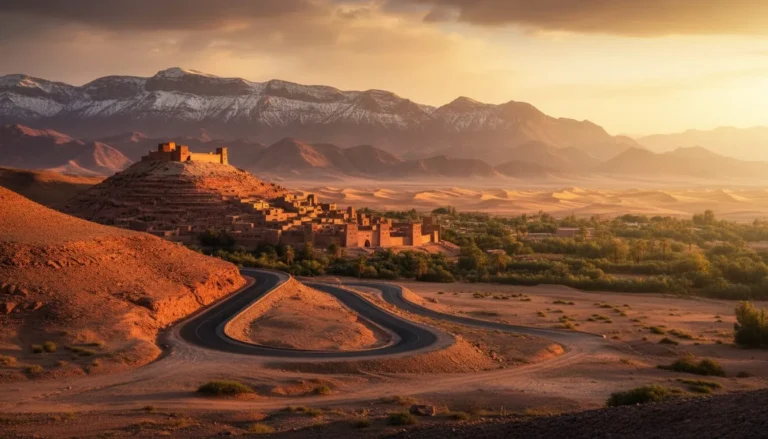
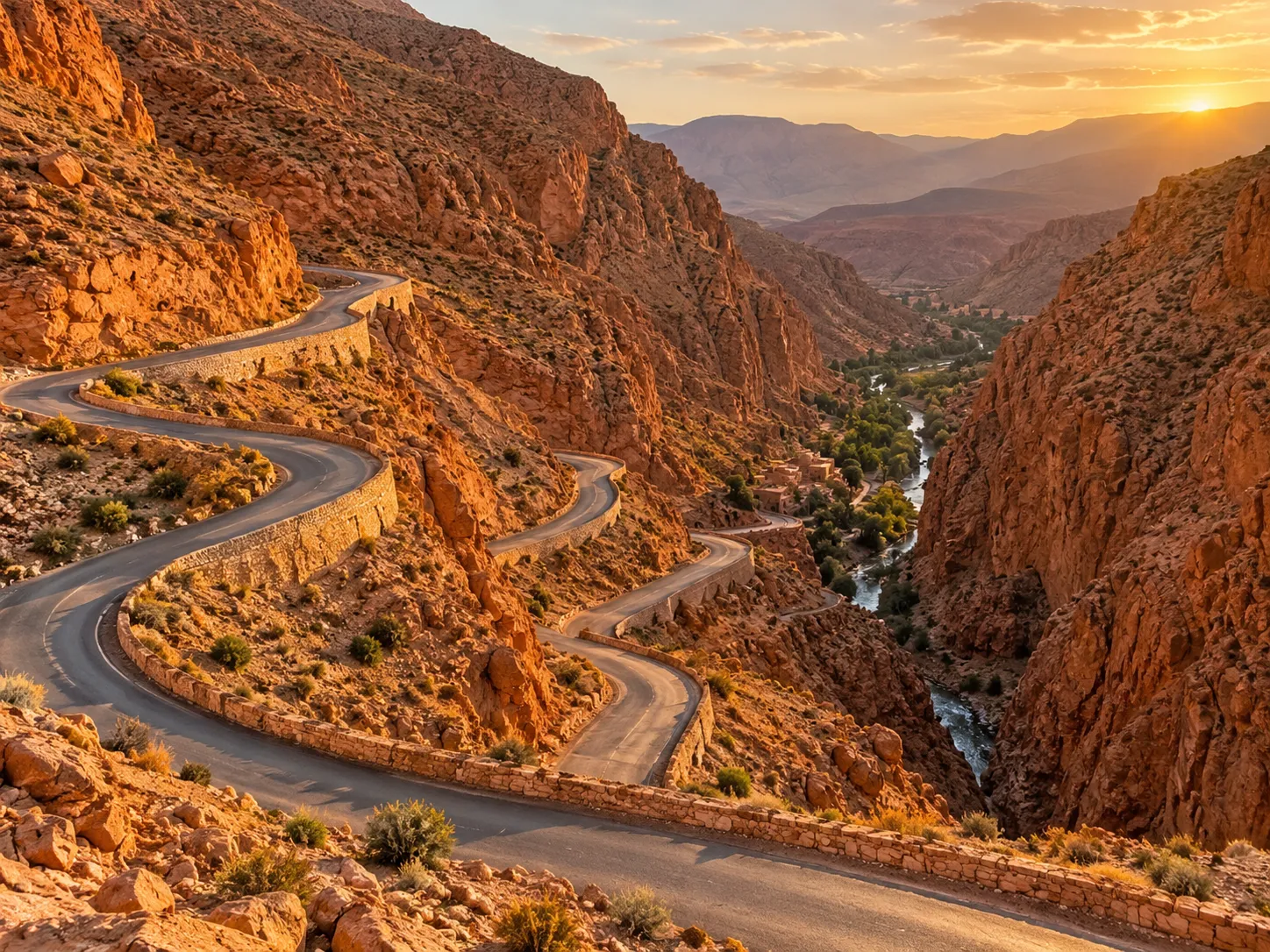
The best-known image of Dades is the steep sequence of hairpin bends climbing above the gorge. The road zigzags sharply across the mountainside, with the river and canyon below.
Drive slowly and concentrate on the road rather than trying to photograph the bends while moving. Use a proper stopping place or viewpoint before taking photographs.
The attraction is not simply the road engineering. From higher ground you can see how tightly the Dades River and road are compressed between the surrounding cliffs.
Best View of the Winding Road
The classic photograph is taken from above the switchbacks, looking down toward the curves and canyon floor.
Light changes the colors of the landscape significantly. Morning can provide clearer conditions and less traffic, while late-afternoon light often brings warmer tones to the red and orange rock.
Allow enough time to stop safely rather than building your schedule around reaching the viewpoint at an exact minute.
Continue Into Dades Gorge
Beyond the best-known switchbacks, the landscape remains worth exploring. The road follows the river between increasingly dramatic rock walls, small settlements and patches of cultivated land.
Morocco’s tourism office describes the gorge as a dramatic limestone landscape with a river running through its base and specifically recommends exploring the area on foot.
You do not necessarily need to drive as far as possible. Choose a sensible turnaround point based on daylight, weather and your onward itinerary.
Walking and Hiking in Dades Valley
A Dades Valley road trip becomes much more rewarding when at least part of the day is spent outside the vehicle.
Short Walks
Casual visitors can stop around Monkey Fingers, villages and wider sections of the valley for short walks. Comfortable walking shoes are enough for straightforward paths in dry conditions.
Longer Hikes
Longer routes can enter side valleys and mountain terrain away from the main road. These hikes require more preparation because route finding, water availability and trail conditions vary.
A guide is recommended when the route is not obvious or when you plan to spend several hours away from the main road.
Avoid narrow canyon routes when heavy rain or flooding is possible. Dry-looking channels can change quickly when rainfall occurs upstream.
Kasbahs, Villages and the Green Valley
The Dades region is not only bare canyon scenery. One of its most interesting features is the contrast between arid mountains and the green ribbon created by the river.
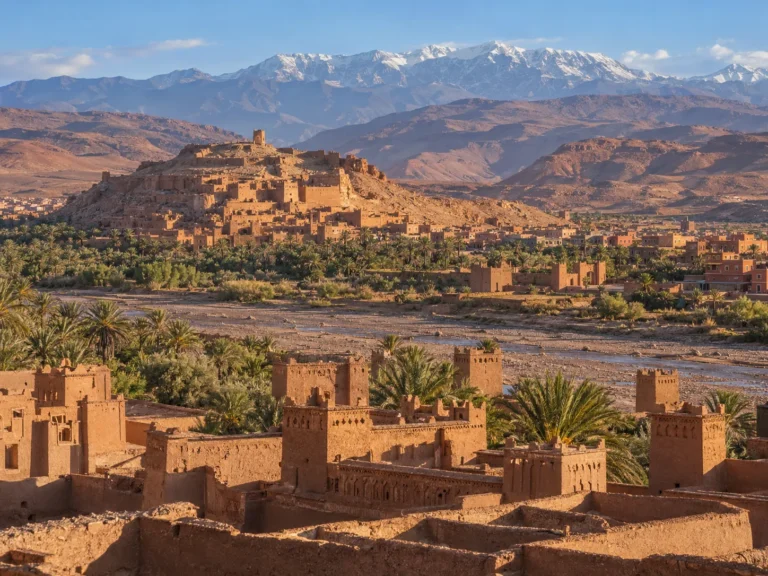
Fields, orchards and villages follow the water, while earth-toned fortified buildings blend into the surrounding cliffs. Morocco’s tourism office historically describes this wider region as part of the Road of a Thousand Kasbahs, with fortified settlements and cultivated gardens forming an important part of the landscape.
Not every old building is a formal visitor attraction. Some structures are privately owned, inhabited or fragile, so do not enter simply because a doorway appears open.
Best Stops on a Dades Valley Scenic Drive
You do not need to create a rigid list of dozens of locations. For most travelers, the following sequence gives a balanced Dades Valley road trip:
- Boumalne Dades for supplies and orientation
- Lower-valley viewpoints overlooking fields and villages
- Monkey Fingers rock formations near Tamlalt
- Traditional architecture and roadside viewpoints
- The famous Dades Gorge switchback road
- Upper gorge scenery
- A short walk or relaxed lunch before returning
The best stops depend on light, road conditions and how much walking you want to do. Leave space for unplanned viewpoints instead of trying to reach every pin saved on a map.
Best Time to Visit Dades Valley
Spring and autumn are particularly comfortable for driving, photography and walking. Daytime temperatures are generally easier for outdoor activities than during the hottest summer period.
Spring can also bring stronger contrasts between the green valley floor and surrounding dry rock.
Summer is possible, but plan longer walks for morning or late afternoon. Exposed terrain can become very hot around midday.
Winter can provide clear views and quieter roads, but nights can be cold and mountain weather may affect driving conditions. Check the forecast before traveling farther into the upper gorge.
How Long Should You Spend in Dades Valley?
A minimum of half a day allows you to reach the major viewpoints, but one night is a better choice for travelers following a southern Morocco road trip.
Staying overnight means you can arrive without racing daylight, explore part of the gorge in the afternoon and continue the next morning toward Todra or Merzouga.
Two nights make sense for travelers planning a substantial hike or wanting to explore the valley independently at a slow pace.
Dades Valley From Ouarzazate
Dades fits naturally after Ouarzazate on an eastbound journey through southern Morocco. The route passes the Skoura and Kelaat M’Gouna area before reaching Boumalne Dades.
Instead of thinking of this as a transfer day, allow time for landscape stops. The route gradually changes from oasis and kasbah scenery toward the rockier Dades region.
If you begin in Marrakech, reaching Dades requires crossing the High Atlas and continuing through the Ouarzazate region. That makes Dades much better as an overnight stage on a multi-day route than as a same-day return excursion from Marrakech.
Dades Valley to Todra Gorge
Todra Gorge is the most logical next stop when continuing east. Return from the Dades Gorge road to the main route and continue toward Tinghir before heading into the Todra canyon.
Dades and Todra are often combined, but they should not be treated as identical attractions. Dades is particularly rewarding as a scenic road trip through a long changing valley, while Todra is known for the experience of walking directly beneath very high canyon walls.
Travelers based in Dades can also use the Todra Gorges day trip from Dades Valley if they do not want to organize the drive independently.
Dades Valley to Merzouga
After Todra, many southern Morocco itineraries continue toward Merzouga and the Erg Chebbi dunes.
This creates one of Morocco’s strongest landscape sequences: High Atlas roads, earthen kasbahs, Dades Valley, Todra Gorge and finally the Sahara dunes.
Do not try to turn every section into a short photo stop simply to reach the desert earlier. The journey to Merzouga is part of the experience, and an overnight in Dades helps divide the drive into a more reasonable itinerary.
For travelers starting in Marrakech, the 3-Day Desert and Gorges Tour demonstrates the basic sequence of Marrakech, Dades, Todra and Merzouga. VMT currently uses Dades as the first overnight stage before continuing to Todra and the Sahara.
Where to Stay in Dades Valley
Boumalne Dades
Stay around Boumalne if you want easier access to the main east-west road, shops and onward transport. This is convenient for travelers leaving early toward Tinghir.
Inside the Valley
Staying farther along the gorge road provides a more scenic setting and reduces the distance to the upper valley the following morning.
This option is especially useful for photographers, hikers and travelers who value landscape over convenient access to the main highway.
When booking, check the exact map position. A property marketed as being in Dades can be some distance from the switchbacks or upper gorge.
Self-Drive or Guided Tour?
Self-driving works well for travelers comfortable with mountain roads and gives you the greatest flexibility for photography stops.
A private driver is useful if you want to concentrate on the scenery rather than navigation, while an organized tour makes sense when Dades is part of a longer route from Marrakech to the Sahara.
| Travel style | Main advantage |
|---|---|
| Rental car | Maximum flexibility over stops and timing |
| Private driver | Flexible route without having to drive yourself |
| Organized tour | Transport, accommodation and onward routing handled together |
| Guided walk | Better for trails, geology and local context |
If self-driving, avoid rushing after dark simply to reach your hotel. Mountain roads require more concentration than major highways, particularly around tight bends.
What to Bring for a Dades Valley Road Trip
- Comfortable walking shoes
- Drinking water
- Sun hat and sunscreen
- Light layers for temperature changes
- Offline navigation or downloaded maps
- Cash for small cafés, shops and local services
- Charged phone or camera
- Light rain protection when conditions require it
Travelers visiting only viewpoints do not need technical hiking equipment. Prepare more carefully if you intend to leave the roadside and follow longer walking routes.
Practical Driving and Safety Tips
- Drive slowly on switchbacks and narrow mountain sections.
- Stop only where there is enough space to pull completely off the driving line.
- Do not stop suddenly in the road for photographs.
- Check weather before entering narrower canyon areas.
- Avoid hiking in watercourses when heavy rain is possible.
- Fill up with fuel before relying on services deep in the valley.
- Carry enough water for walks away from cafés and hotels.
- Give yourself more driving time than a simple distance calculation suggests.
- Avoid unnecessary night driving on unfamiliar mountain roads.
Who Is Dades Valley Best For?
A Dades Valley road trip is particularly rewarding for travelers interested in landscapes, photography, geology, road trips and short hikes.
Families can enjoy the scenic drive and easy viewpoints without committing to long walks. Active travelers can add a guided hike, while photographers benefit from an overnight stay that provides both afternoon and morning light.
Dades is less suitable as a rushed standalone excursion from Marrakech. It works best as part of a wider southern Morocco route where the journey naturally continues toward Todra Gorge and Merzouga.
FAQ
Is Dades Valley Worth Visiting?
Yes. Dades combines one of Morocco’s most dramatic scenic roads with canyon scenery, unusual rock formations, traditional villages and a green river valley. It is especially worthwhile when traveling between Ouarzazate and the Sahara.
How Long Do You Need for a Dades Valley Road Trip?
Allow at least half a day for the gorge road and major viewpoints. One overnight stay provides a much better pace and makes it easier to combine Dades with Todra Gorge the following day.
Where Are the Famous Dades Switchbacks?
The famous hairpin bends are on the road leading farther into Dades Gorge beyond Boumalne Dades. An elevated viewpoint above the bends provides the classic view of the road zigzagging through the canyon.
What Are the Monkey Fingers in Dades Valley?
Monkey Fingers is the common name for unusual weathered rock formations around the Tamlalt section of the valley. Their rounded vertical shapes make them one of the most recognizable geological features along the Dades route.
Can You Drive Dades Valley Yourself?
Yes. The main route is commonly explored by self-drive travelers, but drivers should be comfortable with bends and mountain roads. Conditions can change with weather or road works, so allow extra time and avoid unnecessary driving after dark.
Can You Combine Dades Valley and Todra Gorge?
Yes. The two destinations fit naturally into the same southern Morocco itinerary. A common route is to stay overnight in Dades, explore part of the gorge, then continue through Tinghir to Todra Gorge before traveling toward Merzouga.
Plan Your Dades Valley Road Trip
The best Dades Valley road trip is not about driving directly to the famous switchbacks, taking one photograph and leaving. Begin with the wider valley, stop around the Monkey Fingers, spend time at the gorge viewpoints and include at least a short walk so you can experience the landscape away from the car.
If your journey continues east, an overnight in Dades creates a natural break before Todra Gorge and Merzouga while giving the valley enough time to stand as a destination of its own.
Explore destinations, tours and locally organized Morocco experiences with Visit Morocco Together.
Ready to Experience Morocco?
Turn this inspiration into your next adventure. Our travel experts are ready to help.