Fes is a city best understood slowly. Its historic medina, Fes el-Bali, is not simply a collection of monuments: it is a dense urban environment of homes, mosques, madrasas, markets, workshops, food stalls, fountains and working craft districts.
A good Fes travel guide should therefore do more than list attractions. It should help you understand how to explore the medina, which historic sites deserve time, what to expect at the tanneries and artisan workshops, when a local guide is useful and how food, religion and craftsmanship fit into the city’s identity.
One full day is enough for a focused introduction to Fes el-Bali. Two or three days allow a much better balance between monuments, crafts, food and independent wandering. With four days, you can also add excursions such as Volubilis and Moulay Idriss or a nature-focused day toward Ifrane and the Middle Atlas.
Why Is Fes One of Morocco’s Most Important Cultural Cities?
Fes developed into one of Morocco’s great centers of religion, scholarship, commerce and craftsmanship.
The historic medina contains madrasas, mosques, fondouks, residences, workshops, fountains and souks layered into a street network that developed over centuries.
Fes reached particular importance under the Marinid dynasty, when major religious and educational buildings were constructed and the city served as a capital.
Its significance did not disappear when Morocco’s political capital moved elsewhere. Fes continues to be strongly associated with religious learning, traditional crafts and urban heritage.
Understanding Fes el-Bali
Fes el-Bali is the historic core most first-time visitors mean when they talk about the Fes Medina.
Its narrow lanes change constantly in character. A busy commercial street can turn into a quieter residential passage, then open onto a madrasa, food market or workshop area.
Do not approach the medina only as a list of attractions to complete.
A useful first visit combines three layers:
- Historic architecture and religious learning
- Working crafts and markets
- Food and ordinary street life
That gives the medina more meaning than simply walking between famous photo locations.
What Should You See on a First Fes Medina Walk?
A focused first day can include Bou Inania Madrasa, the Al-Qarawiyyin area, craft districts, the Chouara tannery area, souks and food stops.
The exact walking order should remain flexible because opening hours, congestion and workshop activity can change.
Bab Bou Jeloud and the Medina Entrance
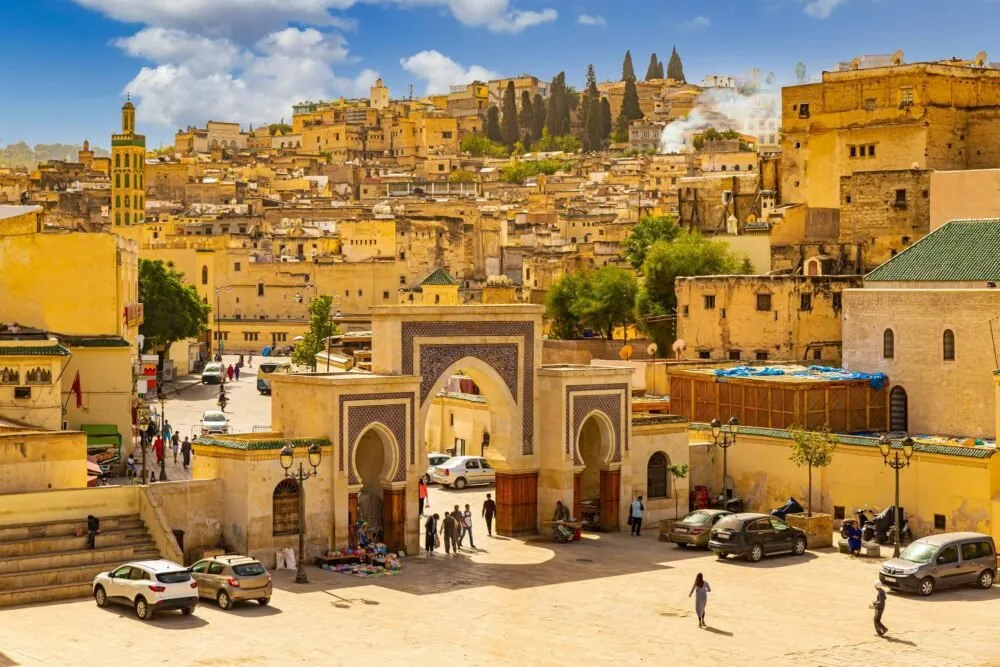
Bab Bou Jeloud, often called the Blue Gate, is a practical orientation point for many first-time visitors entering Fes el-Bali.
From here, major medina streets lead gradually downhill toward older commercial and religious quarters.
Do not assume the broadest street is the only route worth following. Much of Fes’s character lies in the side streets between major landmarks.
Bou Inania Madrasa
Bou Inania Madrasa is one of the most important architectural stops in the medina.
Look beyond the overall courtyard and notice the combination of carved wood, plaster decoration, geometric tilework and carefully organized architectural space.
The madrasa is particularly useful early in a visit because it introduces decorative traditions that appear again throughout Fes.
The Al-Qarawiyyin Area
Al-Qarawiyyin is central to Fes’s history as a place of religious scholarship and learning.
The surrounding streets also form part of one of the medina’s most historically important zones.
Visitor access to active religious spaces can be restricted. Non-Muslim visitors should plan around the areas actually open to them rather than assuming every mosque interior can be entered.
A local guide can provide historical context without presenting restricted access as part of the tour.
Madrasas and Religious Architecture
Fes contains several important religious and educational buildings.
Rather than trying to visit every madrasa, choose one or two and pay attention to how decoration, calligraphy, courtyards and architecture relate to education and religious life.
Current opening hours and restoration work should be checked locally.
Should You Hire a Guide in Fes?
Fes is one of the Moroccan cities where a good local guide can significantly improve a first visit.
The main benefit is not simply preventing you from getting lost.
A knowledgeable guide can explain:
- How different medina quarters developed
- Why certain trades cluster in particular areas
- The role of madrasas and religious buildings
- Architectural details you might otherwise miss
- How artisan production works
- Which workshops welcome visitors
- How to move between major landmarks efficiently
VMT currently offers a Fes Medina Walking Tour through Fes el-Bali, artisan quarters and souks.
A guided day does not mean you should avoid independent exploration altogether. One useful approach is to take a guided walk first, then return alone to the areas you found most interesting.
Can You Explore Fes Medina Without a Guide?
Yes.
The French medina guide correctly emphasizes practical navigation. Carry an offline map or navigation app, wear comfortable shoes and allow more time than the straight-line distance suggests.
The medina includes uneven paving, slopes, steps, crowds and narrow passages shared by pedestrians and working transport animals.
Use recognizable gates, major streets and landmarks as orientation points rather than trying to memorize every turn.
Also accept that wandering is part of the experience. You do not need to know your exact position every minute, but keep enough awareness to return to a known route without relying on unsolicited assistance from strangers.
Chouara Tanneries and Leather Craft
The leather tanneries are among the most recognizable working craft environments in Fes.
Leather production forms part of the city’s long artisan history, and the medina still contains tanning, leatherworking, shoe-making and leather-goods businesses.
How Do You Visit Chouara Tannery?
Most visitors see the tannery from elevated terraces associated with surrounding leather shops.
Clarify the arrangement before going upstairs.
A terrace visit may be presented as free, included with a guided walk or connected with a shop visit. None of those arrangements should create an automatic obligation to buy.
Views differ from terrace to terrace, and the appearance of the vats changes with production activity.
Do not expect every vat to be brightly colored or every worker to be present at a particular hour simply because an older travel photograph shows that scene.
Respect the Tannery as a Workplace
The tannery is not a staged performance.
Give workers room to carry out their jobs, follow instructions from the viewing location and ask before photographing an identifiable individual closely.
Fes Crafts: More Than Leather
The merged cultural articles add an important correction to the usual tourist image of Fes: the city’s craftsmanship extends far beyond the tanneries.
Pottery and Ceramics
Fes is strongly associated with painted ceramics and decorative pottery.
A structured workshop visit can show the stages between clay preparation, shaping, painting and firing rather than presenting the finished object without explaining how it was made.
Zellige
Zellige mosaic work requires cutting glazed tiles into geometric pieces that are assembled into larger patterns.
Look for zellige not only in craft workshops but also in madrasas, fountains, riads and other historic architecture.
Metalwork
The medina contains metalworkers producing practical and decorative objects.
Listen for the working rhythm of hammering and engraving rather than treating every craft quarter only as a shopping area.
Woodwork
Carved and painted wood appears throughout Fes architecture and craft traditions.
Cedar and other woods are used in doors, ceilings, furniture and decorative pieces.
Textiles and Carpets
Textile and carpet shops are common throughout the medina.
Ask about origin, materials and technique rather than assuming every carpet sold in Fes was produced locally.
How Should You Visit Artisan Workshops?
The source articles emphasize meeting craftspeople and observing traditional techniques, but these visits should be arranged respectfully.
An artisan workshop is a workplace.
Ask before entering production areas, taking close photographs or recording video.
Do not expect someone to stop working repeatedly for your camera.
If you want a hands-on pottery, cooking or craft experience, book an organized activity where participation is expected.
Purchasing should remain a separate decision. Learning about a workshop does not create an obligation to buy.
Shopping in the Fes Souks
The souks are an important part of everyday commercial life in the medina.
Depending on the quarter, you may encounter:
- Leather goods
- Ceramics
- Metalwork
- Textiles
- Carpets
- Spices
- Perfumes and herbal products
- Jewelry
- Food
Bargaining can occur in many shops, but there is no universal percentage by which every initial price should be reduced.
Compare workmanship, ask what an object is made from and decide what you are willing to pay before negotiations become the main experience.
Food in Fes
Food appears throughout the merged articles because it is one of the easiest ways to connect the city’s history with daily life.
Fes is particularly associated with refined urban cooking as well as market and street food.
Pastilla
Pastilla is one of the dishes frequently associated with Fassi cuisine.
Recipes and fillings vary, so it is more useful to try the dish in a reputable restaurant than to search for one supposedly definitive version.
Tagine and Couscous
Tagines and couscous appear across Morocco rather than belonging exclusively to Fes.
They are still useful dishes for comparing ingredients and preparation between restaurants, homes and regions.
Pastries and Mint Tea
The French medina article preserves pastries and mint tea as part of the Fes experience.
A café or pastry stop can also provide a valuable break during a long medina walk.
Food Markets
Markets reveal ingredients before they appear on the plate.
A guided food walk or market visit can help identify spices, preserved products, breads and seasonal produce without turning every stall into a tasting stop.
Should You Take a Cooking Class in Fes?
The English cultural-tour source recommends cooking classes as a deeper cultural activity.
A cooking class works particularly well if you have at least two days in Fes because it provides an active experience after a monument-heavy medina day.
Some classes include a market visit, while others begin directly in a kitchen or riad.
Confirm what is actually included rather than assuming every cooking class follows the same format.
Riads and Moroccan Hospitality in Fes
Staying in a riad can add another architectural layer to the visit.
Traditional courtyard houses often include decorative plaster, tilework and carved wood similar to details seen in historic monuments.
However, do not choose a medina riad only from photographs.
Check:
- Walking distance from vehicle access
- Luggage assistance
- Stairs
- Heating or cooling
- Room location around the courtyard
- Breakfast times
- Late-arrival arrangements
The medina experience begins before you reach the front door, so arrival logistics matter.
Fes as a Spiritual and Intellectual Center
The source articles repeatedly describe Fes as Morocco’s spiritual heart.
That idea is useful when treated carefully.
The city contains active mosques, religious institutions, madrasas and traditions of scholarship that remain meaningful to residents rather than existing purely as historical attractions.
Sufi traditions and religious celebrations form part of the city’s wider cultural history, but private or religious ceremonies should not be presented as guaranteed tourism experiences.
If a public religious or cultural event is taking place during your stay, ask whether visitors are welcome and follow local guidance.
For broader advice on dress, greetings, photography and respectful behavior, use the Morocco Culture and Etiquette guide.
Jnan Sbil: A Break From the Medina
The four-day Fes source recommends Jnan Sbil after a craft-focused day.
This is a useful planning idea.
After several hours in the narrow, busy lanes of Fes el-Bali, a garden stop gives you a different pace and visual environment.
Use current opening information when planning the visit rather than relying on an old itinerary.
How Many Days Do You Need in Fes?
| Time | Good focus | Pace |
|---|---|---|
| 1 day | Guided Fes el-Bali introduction, madrasa, tanneries and souks | Focused first visit |
| 2 days | Medina + crafts, food, gardens or independent exploration | Best minimum for culture-focused travelers |
| 3 days | Fes + cooking/craft experience + nearby excursion | Comfortable pace |
| 4 days | Fes + Volubilis/Moulay Idriss + crafts + Middle Atlas day | Fes as a regional base |
A 1-Day Fes Medina Plan
For one full day, prioritize the medina rather than trying to combine Fes with an out-of-town excursion.
A practical structure is:
- Begin near Bab Bou Jeloud
- Visit Bou Inania Madrasa
- Walk deeper through the medina
- Explore the Al-Qarawiyyin area
- Visit craft quarters
- See the Chouara tannery area
- Stop for lunch or a market tasting
- Continue through souks and artisan streets
This is a planning framework, not a guaranteed sequence. Adjust it according to opening hours, crowds and your guide’s route.
A 2-Day Fes Itinerary
Day 1: History and Medina
Use the first day for a guided introduction to Fes el-Bali, including architecture, religious history, markets and the tannery area.
Day 2: Crafts, Food and Slower Exploration
Return to the medina more independently.
Choose a pottery or craft workshop, cooking class, food-focused walk or longer artisan visit.
Finish with Jnan Sbil or another quieter area rather than repeating a full guided sightseeing day.
A 3-Day Fes Stay
Three days gives you time to experience Fes without making every day a medina day.
Use two days in the city and add one nearby historical excursion.
Meknes, Volubilis and Moulay Idriss fit naturally with a Fes-based cultural trip.
The VMT Fes destination hub lists current day trips and experiences starting from the city.
A 4-Day Fes and Surroundings Itinerary
The merged French four-day article provides a useful structure that can be retained with more realistic framing.
Day 1: Fes Medina
Begin with Fes el-Bali, its historic buildings, markets and tannery area.
Day 2: Volubilis and Moulay Idriss
Travel toward the Volubilis archaeological site, then combine it with Moulay Idriss Zerhoun.
Volubilis adds a Roman-era historical layer that is very different from medieval Fes.
Moulay Idriss should be approached as a living town with religious significance, not as a staged cultural attraction.
Day 3: Fes Crafts and Jnan Sbil
Dedicate more time to pottery, ceramics, zellige, leather, textiles or other crafts.
If you want to participate rather than only observe, choose an organized workshop.
Finish with Jnan Sbil for a quieter end to the day.
Day 4: Ifrane and Middle Atlas Nature
The original route proposes Ifrane, Dayet Aoua and the Michlifen area.
This can provide a useful nature contrast with the medina, but route conditions and the character of lakes, forests or hiking areas vary by season.
Check current access and weather rather than promising a particular landscape based on an old itinerary.
Fes, Volubilis or Ifrane: Which Extension Is Better?
| Extension | Best for |
|---|---|
| Volubilis + Moulay Idriss | Archaeology, history and cultural context |
| Meknes | Imperial-city history and architecture |
| Ifrane / Middle Atlas | Nature and a break from medina sightseeing |
| Extra Fes day | Crafts, food, photography and slower travel |
Best Time to Visit Fes
Fes involves substantial walking, so temperature and rain can affect how comfortable a medina day feels.
Spring and autumn are useful starting points for comparing dates.
Summer can be hot, so shift longer walking sessions toward mornings and later afternoons and choose accommodation with reliable cooling.
Winter can work well for cultural sightseeing, but mornings and evenings may be cool and rain is possible.
Use the Morocco Seasonal Travel Guide for month-by-month planning instead of assuming every season feels the same in Fes.
What to Wear and Bring for Fes Medina
- Comfortable walking shoes
- Weather-appropriate layers
- Water
- Sun protection in warmer months
- Offline map or downloaded navigation
- Small day bag rather than bulky luggage
- Cash for smaller purchases where needed
Modest clothing is practical around religious and residential areas.
Remember that Fes el-Bali is both a visitor destination and a place where people live, work, study and worship.
Photography in Fes
Architectural details, workshops, markets and tannery views make Fes particularly rewarding for photography.
Ask before making an identifiable person the main subject.
Permission from a guide or shop owner does not automatically mean every artisan or worker has agreed to be photographed.
Religious spaces, museums and private interiors can also have their own camera rules.
Common Fes Planning Mistakes
Trying to See the Whole Medina in Half a Day
Fes el-Bali rewards slower exploration. Choose a manageable set of landmarks and craft areas.
Using the Tanneries as the Only Craft Experience
Leather is only one part of Fes craftsmanship. Make room for pottery, zellige, metalwork, wood or textiles.
Assuming Every Workshop Visit Requires Shopping
Clarify expectations and buy only when you genuinely want the item.
Following Unverified Shortcuts
Use established public routes and known entrances rather than following anyone who promises a secret shortcut or guaranteed rooftop access.
Adding Volubilis Before Giving Fes a Full Day
If you have only one day, stay in Fes. Excursions become more worthwhile after the medina has enough time.
Calling Every Tradition “Authentic”
Fes is a living modern city as well as a historic one. Crafts, food and religious practices continue to change rather than existing unchanged for visitors.
FAQ
How many days do you need in Fes?
Two days is a strong minimum for a culture-focused visit: one day for a guided medina introduction and another for crafts, food and independent exploration. Three or four days allows excursions to Volubilis, Moulay Idriss, Meknes or the Middle Atlas.
Do you need a guide for Fes Medina?
No, but a local guide is particularly useful on a first visit because Fes el-Bali has a complex street network and many historical and craft layers that are easy to miss. A good approach is to take a guided walk first and explore independently afterward.
What are the main things to see in Fes Medina?
Important stops include Bou Inania Madrasa, the Al-Qarawiyyin area, souks, traditional craft districts and the Chouara tannery area. The medina itself—the streets, markets and working neighborhoods—is as important as any single monument.
Are the Fes tanneries worth visiting?
Yes if you are interested in traditional leather production and working craft districts. Most visitors view Chouara from nearby terraces. Clarify access arrangements before entering and remember that the tannery is an active workplace rather than a staged attraction.
What crafts is Fes known for?
Fes is strongly associated with leatherwork, pottery, ceramics, zellige, metalwork, carved wood and textiles. Workshop visits are most useful when they explain how an object is produced instead of functioning only as shopping stops.
What is the best day trip from Fes?
For history, Volubilis, Moulay Idriss and Meknes make a strong combination. For nature, an Ifrane and Middle Atlas outing provides a greater contrast with the medina. If you only have one or two days total, spend the extra time in Fes instead.
Explore Fes as a Living City, Not Just a Maze
The strongest Fes experience combines history, architecture, crafts, food and ordinary medina life.
The merged source articles contain the right ingredients: Bou Inania Madrasa, Al-Qarawiyyin, tanneries, souks, leather, pottery, zellige, textiles, cooking, riads and the city’s religious and intellectual history. The French articles add useful practical advice, Jnan Sbil and excursions to Volubilis, Moulay Idriss and the Middle Atlas.
Bringing those topics together produces a much stronger guide than six short pages competing around the same Fes-medina keywords.
Start with one focused guided day, then give yourself time to return independently to the workshops, markets and streets that interested you most.
Browse current Fes tours and day trips on the Fes destination page, or use the Fes Medina Walking Tour for a guided introduction to the old city.
If you want Fes integrated into a longer private Morocco route, use the custom Morocco trip planner.
Explore destinations, tours and locally organized Morocco experiences with Visit Morocco Together.
Ready to Experience Morocco?
Turn this inspiration into your next adventure. Our travel experts are ready to help.