Morocco hidden gems are not necessarily secret places that nobody has heard of. A more useful way to think about them is as destinations that sit outside the country’s most common Marrakech–Fes–Chefchaouen–Sahara circuit and usually reward travelers who are willing to slow down, travel a little farther or stay overnight.
This guide focuses on smaller cities, mountain landscapes and Atlantic towns where sightseeing tends to feel less compressed than at Morocco’s most famous attractions. From the pink granite landscapes around Tafraoute to the lagoon at Oualidia and the Rif Mountain trails around Akchour, these places can add variety to a second trip or create a more regional first itinerary.
Morocco Hidden Gems: What Does “Hidden” Really Mean?
No worthwhile destination in Morocco is completely undiscovered, and describing inhabited towns as secret places can be misleading. Some locations in this guide already receive domestic visitors, hikers, surfers or travelers from nearby cities.
The important difference is that they usually receive less international tourism than destinations such as Marrakech, Chefchaouen, Essaouira or Merzouga. In many cases, visitors also spread across a wider landscape rather than concentrating around one famous attraction.
Crowd levels still change with weekends, school holidays, festivals and the season. Choosing quieter places does not guarantee an empty medina or beach.
| Destination | Region | Best for | Suggested stay |
|---|---|---|---|
| Tafraoute | Anti-Atlas | Granite scenery, hiking and villages | 2 nights |
| Taroudant | Souss | Medina, souks and historic walls | 1–2 nights |
| Akchour | Rif Mountains | Hiking, river scenery and waterfalls | 1 full day |
| Asilah | Northern Atlantic coast | Art, medina walls and coastal atmosphere | 1 night |
| Oualidia | Atlantic coast | Lagoon, seafood and slow travel | 1–2 nights |
| Mirleft | Southern Atlantic | Cliffs, beaches and surfing | 2 nights |
| Sidi Ifni | Southern Atlantic | Architecture and coastal landscapes | 1–2 nights |
| Salé | Rabat region | Historic medina and local city life | Half day–1 day |
Tafraoute: Pink Granite and the Anti-Atlas
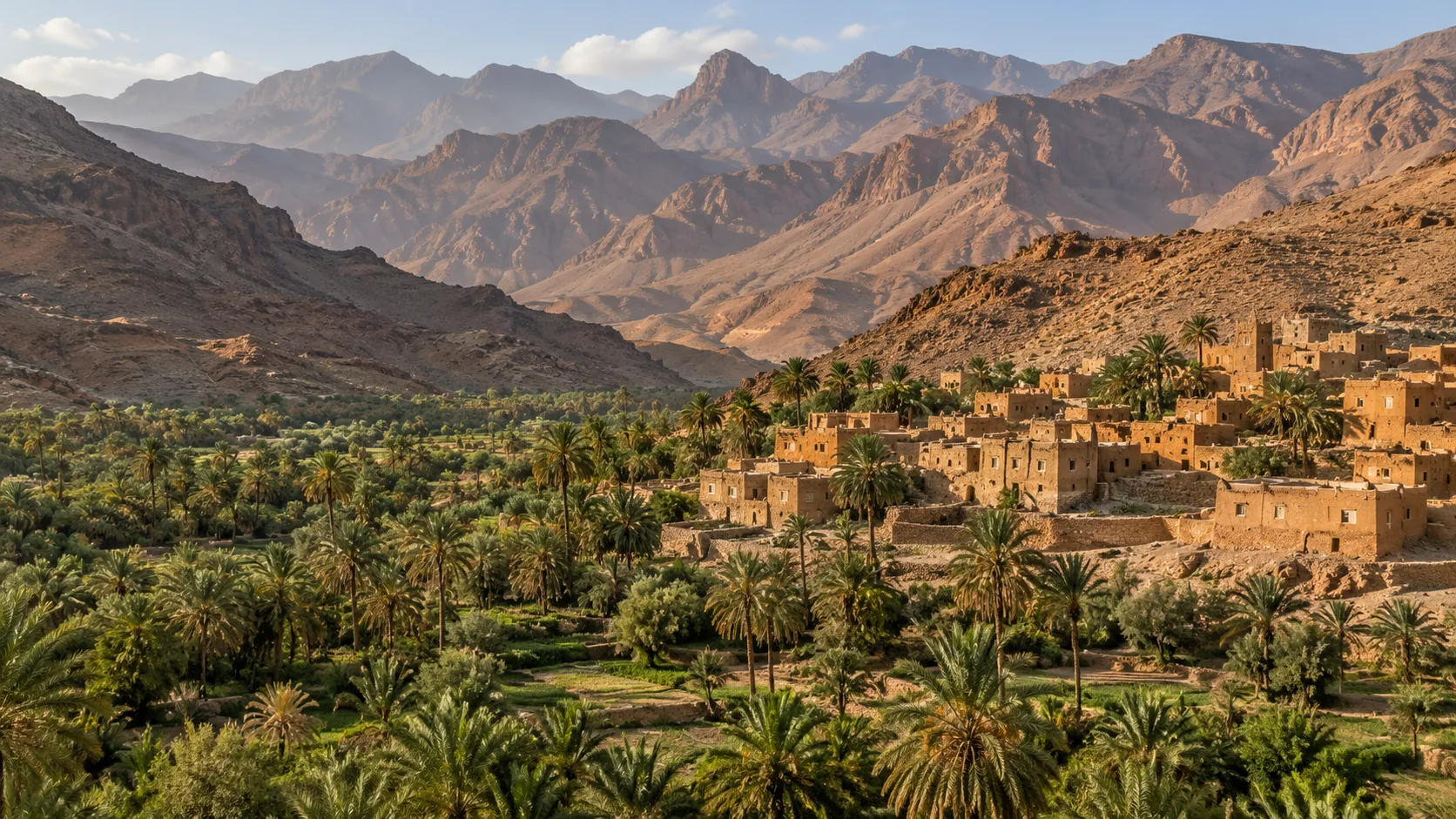
Tafraoute is one of the strongest alternatives for travelers who want mountain scenery without following the busiest High Atlas itinerary. The town sits among dramatic pink granite formations in the Anti-Atlas, with valleys, almond groves and Amazigh villages surrounding it.
The landscape is the main reason to stay for more than a few hours. Scenic drives and walks can take you toward the Ameln Valley, granite formations, nearby villages and Ait Mansour Gorge.
Spring is particularly attractive when almond trees flower, although the exact timing depends on weather and season. Outside blossom season, the exposed granite landscape remains the main attraction.
How Long to Stay in Tafraoute
Allow at least two nights if you are traveling this far into the Anti-Atlas. One day can be used for Tafraoute and its immediate surroundings, while another gives you time for Ait Mansour, village landscapes or a longer hike.
VMT also operates a Tafraoute Guided Nature Walk for travelers who prefer to explore the rock formations and gorge with local guidance.
Taroudant: A Walled City Without Marrakech’s Scale
Taroudant works well for travelers who like medinas and traditional markets but do not need the scale or sightseeing density of Marrakech.
The city is enclosed by long ochre ramparts and contains working souks, neighborhood streets, cafés and traditional craft shops. The medina is compact enough to explore without turning the day into a checklist of monuments.
Taroudant is particularly easy to combine with Agadir and the Souss region. It can be visited as a day trip, although one night allows you to experience the medina after daytime visitors have left.
Combine Taroudant and Tafraoute
For travelers interested in Morocco hidden gems in the south, Taroudant and Tafraoute make a logical combination. Taroudant provides an urban and market experience, while Tafraoute shifts the journey toward mountain landscapes and village scenery.
Allow several days rather than trying to turn both into quick stops. Roads through southern Morocco are part of the experience and can take longer than the distance on a map suggests.
Akchour: Hiking Beyond Chefchaouen
Akchour lies in the Rif Mountains and is known for river scenery, waterfalls, natural pools and hiking routes.
Many travelers reach northern Morocco for Chefchaouen but never dedicate enough time to the surrounding mountain landscape. Akchour provides a useful contrast to the blue medina and works best as a dedicated nature day rather than a short sightseeing stop.
Trail difficulty and water conditions vary. Some routes are straightforward, while longer hikes require more time, suitable footwear and better route awareness.
Akchour Is Quieter, Not Empty
Akchour is a good example of why “hidden gem” should not be interpreted literally. The area can become busy on warm weekends and holidays because it is also popular with Moroccan visitors.
Starting earlier, avoiding peak weekends and allowing time for a proper walk usually provides a better experience than expecting to have the pools or waterfalls to yourself.
Asilah: Art and Atlantic Walls in Northern Morocco
Asilah is a small whitewashed coastal town south of Tangier, known for its fortified medina, murals, galleries and Atlantic setting.
It is considerably easier to explore than Morocco’s large medinas. You can walk through the old town, see the walls, stop at art spaces and spend time by the sea without needing a tightly structured itinerary.
The town becomes more active around cultural events and the summer season, so travelers seeking the quietest atmosphere may prefer other times of year.
Asilah fits naturally into a northern route with Tangier rather than requiring a separate cross-country journey.
Oualidia: Lagoon, Seafood and a Slower Atlantic Stop
Oualidia offers a very different coastal experience from Essaouira or Agadir. The town is built around a sheltered lagoon and is particularly associated with seafood, oysters, birdlife and slow days beside the water.
Oualidia suits travelers who do not need a long list of monuments. The appeal is the lagoon itself: walking beside the water, eating seafood, kayaking or simply breaking up a longer Atlantic road trip.
One night is enough for a short stop, while two nights provide time to slow down properly.
Who Should Choose Oualidia?
Oualidia works particularly well for couples, families and travelers who want a calm coastal break between more intensive city visits.
It is less suitable for anyone looking for nightlife or a busy resort environment. The slower rhythm is the reason to include it.
Mirleft: Cliffs and Beaches on the Southern Atlantic Coast
Mirleft is one of the most useful Morocco hidden gems for travelers building a coastal route south of Agadir.
The surrounding coastline includes cliff-backed beaches, rocky viewpoints and surf areas, while the town itself remains relatively small. Rather than expecting one major landmark, plan the visit around beaches, coastal walks and time outdoors.
Having your own vehicle or arranged transportation makes exploring the surrounding coast considerably easier because the best landscapes are spread out.
Sea conditions along this part of the Atlantic can be strong. Choose swimming and surfing locations according to conditions on the day and local guidance.
Sidi Ifni: Art Deco Architecture and Atlantic Cliffs
Sidi Ifni provides one of Morocco’s more unusual combinations of coastal scenery and 20th-century architecture.
The town retains buildings influenced by its Spanish-era history, while cliffs, ocean viewpoints and beaches shape the surrounding landscape. It works particularly well for travelers already visiting Mirleft or continuing farther through southern Morocco.
The appeal here is atmosphere rather than a dense sightseeing schedule. Walk the town, look at the architecture, spend time at the coast and use Sidi Ifni as part of a slower southern route.
Salé: Look Across the River From Rabat
Salé is one of the easiest less-visited places to add to a mainstream Morocco itinerary because it sits directly across the Bou Regreg River from Rabat.
Its historic medina, walls and local commercial streets provide a different atmosphere from central Rabat without requiring a major detour.
You do not need to dedicate several days to Salé. A half-day or full day works well for travelers already staying in the capital and wanting to see another side of the Rabat-Salé urban area.
Places That Are Excellent but No Longer Really Hidden
Some destinations are repeatedly described online as off the beaten path even though they now form part of standard Morocco itineraries.
Chefchaouen, Essaouira, Ait Ben Haddou, Merzouga, Todra Gorge and the Agafay Desert are all worth visiting, but choosing them solely because you expect very few other travelers can lead to disappointment.
The same applies to popular hiking bases such as Imlil. Traveling early, staying overnight or visiting outside peak periods can create a quieter experience, but that is different from choosing a genuinely less-visited region.
How to Build a Less-Crowded Morocco Itinerary
The easiest way to use Morocco hidden gems is not to scatter them randomly between famous destinations. Group places geographically and protect enough time for slower roads.
Northern Route
Combine Tangier with Asilah, then continue toward Chefchaouen and dedicate a full day to Akchour. This provides coastal towns, medinas and Rif Mountain hiking without adding excessive cross-country travel.
Atlantic Route
A route through Casablanca or El Jadida can continue toward Oualidia and then south toward Essaouira. Travelers with more time can continue beyond Agadir toward Mirleft and Sidi Ifni.
Anti-Atlas and Deep South Route
From Agadir, combine Taroudant with Tafraoute and potentially continue toward Tiznit or the southern coast. This route is particularly good for travelers prioritizing scenery, small towns and road trips rather than major monuments.
When to Visit Less-Crowded Places in Morocco
Spring and autumn work well for most of the destinations in this guide because walking temperatures are generally more comfortable.
The Anti-Atlas can become very hot in summer, while Rif and Atlantic destinations experience different weather patterns. Coastal Morocco may remain cooler than inland areas but can also be windy or cloudy.
Winter can be rewarding for southern destinations such as Taroudant, Tafraoute and the Atlantic coast. Mountain weather requires more planning, particularly at higher elevations.
Even in a relatively quiet destination, weekends and local holiday periods can significantly change visitor numbers.
Transport and Planning
Choosing less-visited places usually requires accepting slightly more complicated transport.
Large cities such as Marrakech, Fes, Rabat and Casablanca have strong train and bus connections, while smaller mountain and coastal destinations may require buses, shared taxis, rental cars or private transport.
A rental car provides the greatest flexibility in areas such as Tafraoute, Mirleft and the southern coast, where landscapes and smaller stops are spread over wider distances.
If you do not want to drive, build the trip around regional bases and organize day tours or transfers rather than attempting to connect several remote places in one day.
Travel Responsibly in Smaller Communities
- Ask before photographing residents at close range.
- Do not enter homes, farms or workshops without permission.
- Buy crafts because you genuinely want them rather than treating shopping as an obligation.
- Use local guides when they add useful knowledge or make hiking safer.
- Carry rubbish out of beaches and hiking areas.
- Respect agricultural land, irrigation channels and livestock routes.
- Keep expectations realistic: local communities are living places, not staged cultural attractions.
- Avoid geotagging fragile or restricted natural locations when doing so could encourage unsafe access.
Who Should Explore Morocco Beyond the Classic Route?
Morocco hidden gems are particularly suitable for repeat visitors, road-trippers, photographers, hikers and travelers who prefer fewer scheduled attractions and more time in landscapes or small towns.
They can also work for first-time visitors, but you do not need to avoid every famous destination. Combining Marrakech or Fes with one quieter region often creates a more balanced trip than trying to build an itinerary exclusively around obscure places.
Travelers with very limited time should prioritize geographic efficiency. A quiet destination stops feeling relaxing if reaching it requires spending most of the trip in transit.
FAQ
What Are the Best Morocco Hidden Gems?
Tafraoute, Taroudant, Akchour, Oualidia, Mirleft, Sidi Ifni and Asilah are good options depending on your route. The best choice is usually the one that fits naturally with the region you are already visiting.
Is Chefchaouen Still a Hidden Gem?
Not really. Chefchaouen remains a beautiful destination, but it is now one of northern Morocco’s best-known visitor stops. Travelers looking for quieter nature nearby can dedicate a day to Akchour or explore other parts of the Rif.
Where Can I Go in Morocco for Fewer Crowds?
Consider the Anti-Atlas around Tafraoute, Taroudant in the Souss region, Oualidia on the Atlantic coast, or Mirleft and Sidi Ifni farther south. Crowd levels still vary by season and local holidays.
Do You Need a Car to Visit Morocco’s Less-Known Places?
No, but a car makes many regional itineraries easier. Smaller towns can often be reached by bus or shared taxi, while rental cars and private transfers provide more flexibility for mountain valleys, beaches and scenic stops outside town centers.
How Many Days Should I Allow for an Off-the-Beaten-Path Morocco Trip?
Allow at least five to seven days if you want a regional route rather than a single day trip. Seven to ten days gives you more flexibility to combine a major gateway city with several smaller destinations without spending every day changing hotels.
Are Hidden Places in Morocco Always Cheaper?
No. Smaller towns can have lower everyday costs, but limited transport or accommodation choice can increase the price of certain services. Choose quieter destinations for their pace and setting rather than assuming they will automatically reduce the total trip cost.
Discover a Quieter Side of Morocco
The strongest Morocco hidden gems are not places that need to remain secret. They are destinations where the pace, landscape or scale offers a different experience from the country’s busiest tourism centers. Tafraoute rewards travelers willing to enter the Anti-Atlas, Oualidia provides a slow Atlantic break, Taroudant offers a manageable walled city, and Akchour shifts a northern itinerary from blue streets to mountain trails.
Choose destinations that fit together geographically, give them enough time and avoid judging a trip by how many supposedly undiscovered places you can collect. A slower regional journey will usually feel more off the beaten path than a rushed national itinerary built from isolated photo stops.
Explore destinations, tours and locally organized Morocco experiences with Visit Morocco Together.
Ready to Experience Morocco?
Turn this inspiration into your next adventure. Our travel experts are ready to help.