
A Morocco north to south itinerary is one of the most rewarding ways to understand how much the country changes from region to region. Starting near the Mediterranean and Strait of Gibraltar, the journey moves through the Rif Mountains, historic imperial cities, the Middle Atlas, the Sahara, dramatic valleys and finally the High Atlas before reaching Marrakech.
Rather than flying between Morocco’s most famous destinations, traveling overland allows the landscape to become part of the experience. The blue streets of Chefchaouen feel very different from the medina of Fes, while the journey toward Merzouga gradually replaces green mountain scenery with oasis valleys, rocky plateaus and desert horizons.
This guide follows a practical route from Tangier to Marrakech through Chefchaouen, Fes, Merzouga, Todra Gorge, Dades Valley and Ait Ben Haddou. It also explains how much time to allow, where extra days are most useful and what to consider before planning the journey.
Morocco North to South Itinerary at a Glance
A compact version of this journey can be completed in around 10 days, although 12 to 14 days gives you more time to explore without turning every day into a transfer.
- Day 1: Tangier
- Days 2-3: Chefchaouen
- Days 4-5: Fes
- Day 6: Fes to Merzouga
- Day 7: Merzouga and the Sahara
- Day 8: Merzouga to Todra Gorge and Dades Valley
- Day 9: Dades Valley to Ait Ben Haddou
- Day 10: Ait Ben Haddou to Marrakech
- Days 11-14: Optional extra time in Marrakech, Fes, Chefchaouen or the desert
Travelers who prefer an organized version of a similar route can also explore the 10-day Morocco tour from Tangier to Marrakech.
Day 1: Begin Your Journey in Tangier
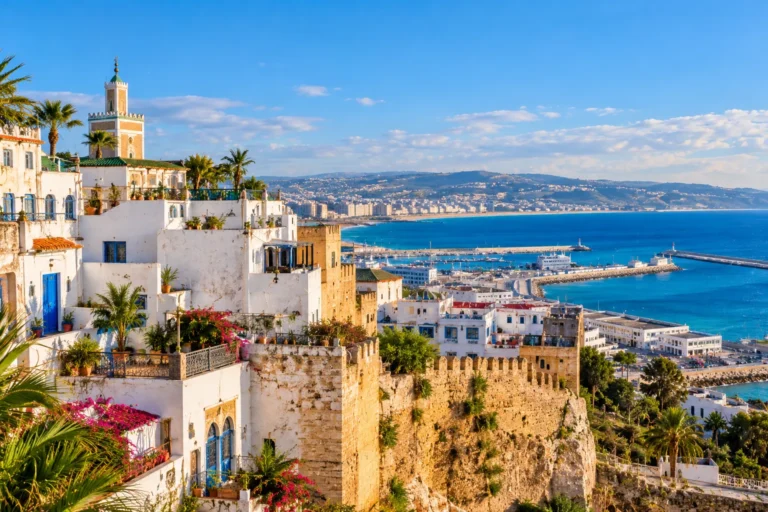
Tangier is a natural place to begin a north-to-south journey through Morocco. Located beside the Strait of Gibraltar, the city has long been a meeting point between Africa, Europe and the Mediterranean world.
Spend your first day exploring the old medina and Kasbah rather than immediately continuing south. Walking through the historic center gives you time to adjust to the rhythm of Moroccan cities while discovering narrow streets, cafés, markets and viewpoints toward the coast.
If your arrival time allows, the Kasbah area is particularly rewarding in the late afternoon. You can also explore Grand Socco and the streets connecting the newer city with the medina.
Travelers with an additional day can visit Cap Spartel or the Atlantic coastline before leaving Tangier.
Days 2-3: Tangier to Chefchaouen
Leave the coast and travel inland toward the Rif Mountains and Chefchaouen.
The town is known internationally for its blue-painted medina, but it deserves more than a quick photography stop. Its mountain setting, compact old town, small plazas and slower rhythm create a very different atmosphere from larger Moroccan cities.
Spend your first afternoon walking without a strict route through the medina. Plaza Uta el-Hammam is a useful orientation point, while quieter residential lanes reveal much of the architecture that makes Chefchaouen distinctive.
Later in the day, walk toward a viewpoint overlooking the town and surrounding Rif Mountains. Early morning is another excellent time to explore, particularly before the busiest part of the day.
Is One Night in Chefchaouen Enough?
One night works when your itinerary is limited to 10 days, but two nights create a better experience. An additional day gives you time to explore slowly, enjoy the mountain setting and avoid treating Chefchaouen as simply a short photo stop between Tangier and Fes.
Days 4-5: Discover Fes and Its Historic Medina
Continue south to Fes, one of the most important cultural stops on this itinerary.
The old city, Fes el-Bali, is a dense network of historic streets filled with workshops, religious buildings, traditional houses, markets, fountains, food stalls and small neighborhood spaces. It rewards slower exploration because many of its most interesting details are found between the major landmarks.
Places commonly included during a visit include Bou Inania Madrasa, the Al-Qarawiyyin area, traditional souks and the Chouara Tanneries. The experience becomes more meaningful when you also pay attention to working artisan areas where metalwork, leatherwork, textiles and woodcraft remain visible.
Should You Hire a Guide in Fes?
A knowledgeable local guide can be especially useful in Fes. The medina is large, and understanding the history and purpose of different neighborhoods, workshops and monuments adds considerably more context than simply following the main tourist route.
Allow at least one complete day for the old city. If you have additional time, a second day gives you space to explore beyond the most visited areas and enjoy Fes at a less hurried pace.
Day 6: Travel from Fes to Merzouga
The road from Fes toward the Sahara is one of the most significant travel days of the itinerary. It is long, but the changing landscape makes it more than a simple transfer.
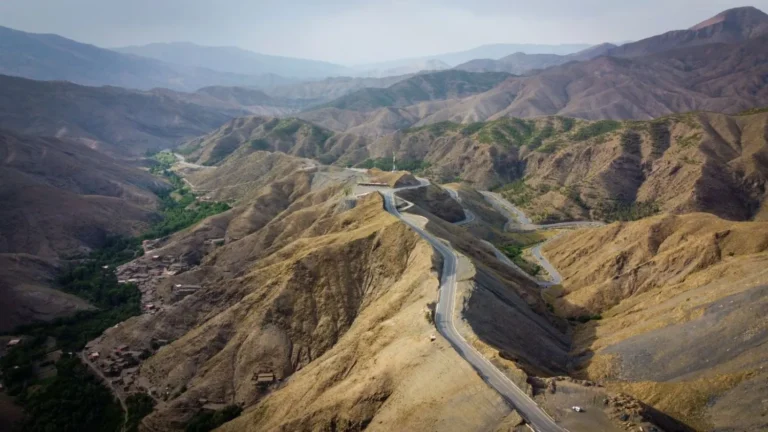
As you leave northern Morocco, the route passes through changing elevations and increasingly open countryside. Mountain scenery gradually gives way to drier terrain, palm-filled valleys and the landscapes associated with southeastern Morocco.
Regular stops are worthwhile because the transition itself helps explain Morocco’s geography. By the time you approach Merzouga, the environment feels completely different from Tangier, Chefchaouen and Fes.
Try not to schedule a demanding evening after arriving. The journey is substantial, and a slower first evening near the desert makes the following day much more enjoyable.
Day 7: Experience Merzouga and the Sahara
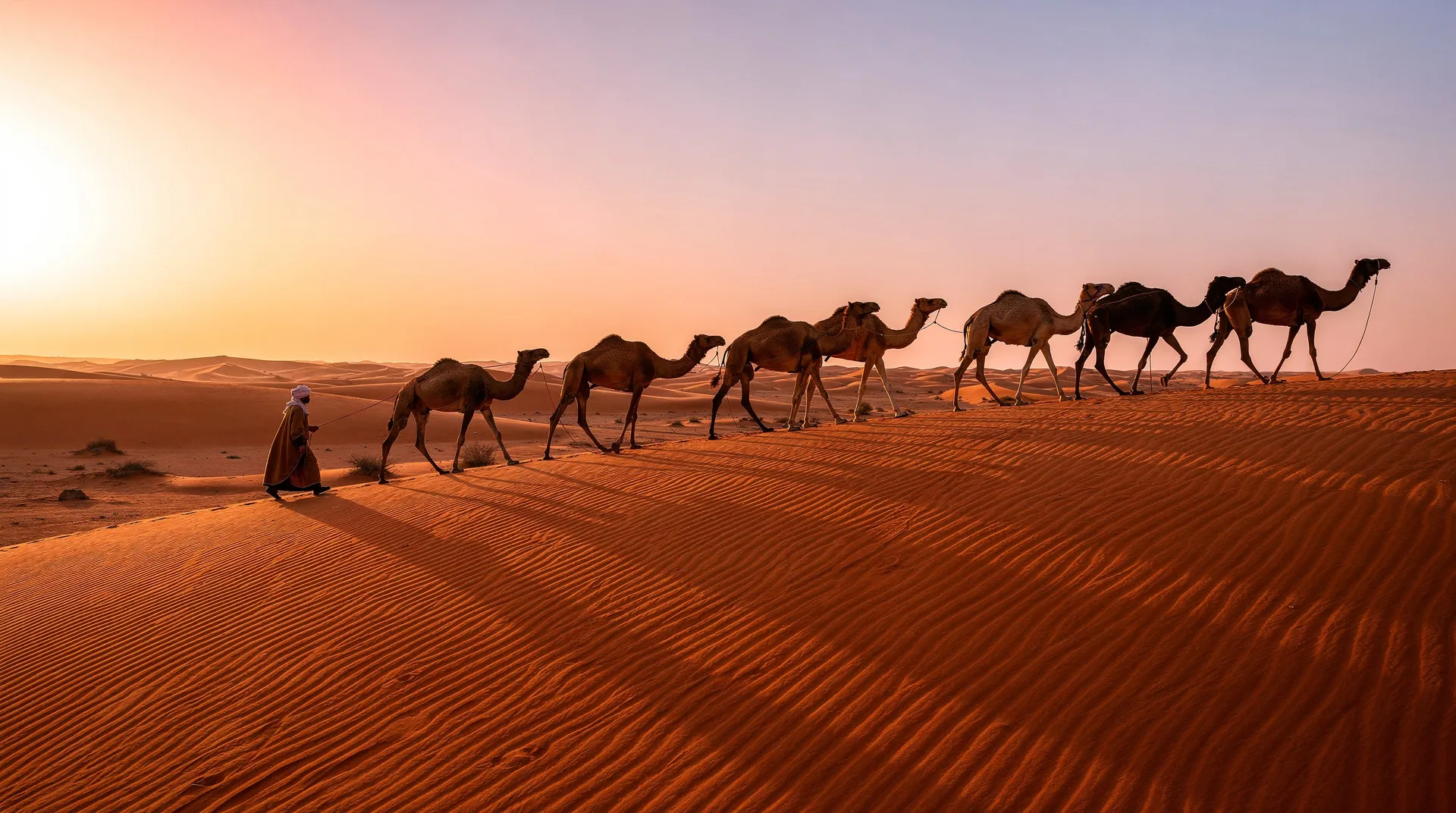
Merzouga sits beside Erg Chebbi, a large field of Saharan dunes in southeastern Morocco.
Give yourself time to experience the landscape at more than one point during the day. The character of the dunes changes noticeably as the sun moves, with sunrise and sunset producing particularly dramatic light and shadows.
A typical desert experience may include a camel ride or 4×4 transfer toward a camp, time among the dunes and an overnight stay in the desert. Travelers staying longer can also explore villages and desert communities around Merzouga rather than limiting the visit to the dunes alone.
One Night or Two Nights in Merzouga?
One night is enough to experience a desert camp as part of a fast itinerary. Two nights are preferable if the Sahara is one of the main reasons for your trip.
An additional day means you do not need to leave immediately after sunrise and gives you more time to appreciate the wider desert region.
Day 8: Merzouga to Todra Gorge and Dades Valley
Leaving Merzouga does not mean the dramatic scenery is finished. The route west introduces rocky landscapes, oasis towns, traditional settlements and deep valleys.
A major stop is Todra Gorge, where tall canyon walls rise around a narrow passage through the mountains. Walking through part of the gorge provides a welcome break from the road and adds another type of landscape to the journey.
Continue afterward toward Dades Valley. The region is known for rugged rock formations, mountain roads, cultivated areas and villages built into an otherwise dry landscape.
Staying overnight around the Dades area is also practical. It breaks the route between the Sahara and Marrakech into more comfortable sections rather than trying to cover the entire distance in one day.
Day 9: Dades Valley to Ait Ben Haddou
The next stage continues through southern Morocco toward Ouarzazate and Ait Ben Haddou.
Ait Ben Haddou is one of Morocco’s best-known examples of traditional earthen architecture. Instead of viewing it only from the roadside, allow time to walk through the settlement and see how its narrow passages, towers and surrounding landscape fit together.
The wider area around Ouarzazate also reflects Morocco’s long history as a crossroads between desert routes, mountain communities and settlements farther west.
Spending the night in this region allows you to start the High Atlas crossing the following day without combining too many major stops into a single journey.
Day 10: Cross the High Atlas to Marrakech
The final major travel day takes you across the High Atlas toward Marrakech.
This part of the route provides one final major change of scenery. Mountain roads and high-altitude landscapes gradually lead toward the plains surrounding Marrakech.
After several days traveling through mountains, valleys and desert regions, Marrakech can initially feel intense. Allow time to settle into your accommodation before heading into the medina.
Jemaa el-Fnaa is an obvious starting point, particularly toward the end of the afternoon when the atmosphere begins to change. From there, the surrounding souks lead into workshops, market lanes and historic neighborhoods.
How Many Days Do You Really Need?
Ten days is possible for travelers who have limited time and are comfortable with several substantial road journeys.
For most travelers, 12 days provides a better balance. You can add an additional night in Chefchaouen and another in either Merzouga or Marrakech without significantly changing the route.
With 14 days, the itinerary becomes considerably more relaxed. Extra nights can be used in Fes, the Sahara or Marrakech, depending on whether your priorities are culture, landscapes or city exploration.
Where Should You Add Extra Days?
- Add a night in Chefchaouen if you prefer photography, mountain scenery and a slower atmosphere.
- Add a night in Fes if history, architecture and traditional crafts are a priority.
- Add a night in Merzouga if the Sahara is one of the main reasons for your trip.
- Add one or two nights in Marrakech if you want additional time for monuments, food, shopping and day trips.
Best Time for a North to South Morocco Trip
Spring and autumn are popular periods for a journey that combines northern Morocco, the mountains and the Sahara because temperatures are generally easier to manage across multiple regions.
Summer can be very hot in inland and desert areas, particularly around Merzouga and southern Morocco. Travelers visiting during this period should plan activities around the cooler parts of the day and prepare for strong daytime heat.
Winter can be comfortable in some cities, but evenings and early mornings may become cold in the mountains and desert. Warm layers are important if you plan to stay overnight near the dunes.
Because this itinerary crosses several climate zones, there is no single outfit or temperature range that applies to the entire route.
How to Travel Through Morocco From North to South
You can complete parts of northern Morocco using public transportation, but the entire route becomes more complicated once you continue toward the Sahara, Todra Gorge and Dades Valley.
Independent travelers often combine trains, buses and other road transport. This can work well if you have additional time and are comfortable coordinating separate connections.
A private driver or organized multi-day tour simplifies the sections where destinations are spread across mountain, valley and desert regions. It also makes it easier to stop at viewpoints, villages and smaller places between the main overnight destinations.
The best option depends on your budget, travel style and how much flexibility you want during the trip.
What to Pack for This Morocco Itinerary
Packing for a cross-country journey requires more flexibility than packing for a single city break.
- Comfortable walking shoes for medinas, kasbahs and uneven surfaces
- Lightweight clothing for warmer daytime conditions
- A warmer layer for mountain and desert evenings
- Sun protection, including sunscreen, sunglasses and a hat
- A reusable water bottle
- A small day bag for sightseeing and road stops
- A power bank for long travel days
- Clothing that is comfortable and respectful for visiting towns, villages and cultural sites
Avoid packing too heavily. Moving between several accommodations becomes easier when luggage is manageable.
Tips for Planning a Better Morocco Itinerary
- Do not make every destination a one-night stop. Constant arrivals and departures can quickly make the journey tiring.
- Treat road days as part of the experience rather than wasted time between attractions.
- Allow flexibility for viewpoints, cafés, villages and unexpected stops.
- Plan longer stays around the places that match your interests instead of giving every destination equal time.
- Expect temperatures to change significantly between northern Morocco, the mountains and the Sahara.
- Leave some free time in Marrakech at the end of the journey rather than scheduling activities immediately after arrival.
FAQ
What is the best route from north to south Morocco?
A practical route begins in Tangier and continues through Chefchaouen, Fes, Merzouga, Todra Gorge, Dades Valley, Ait Ben Haddou and Marrakech. This creates a logical journey through northern Morocco, the Sahara region and the High Atlas.
Can you travel from Tangier to Marrakech through the Sahara?
Yes. Rather than taking the more direct route south, you can travel from Tangier through Chefchaouen and Fes before continuing southeast to Merzouga. From the Sahara, continue west through Todra Gorge, Dades Valley and Ait Ben Haddou before crossing the High Atlas toward Marrakech.
Is 10 days enough for Morocco?
Ten days is enough for a relatively fast north-to-south itinerary, but it requires efficient planning and several long travel days. Twelve to fourteen days is more comfortable if you want time to explore rather than simply reach each destination.
Should Merzouga be included on a first trip to Morocco?
Merzouga is worth including when you have enough time for the journey and want to experience Sahara landscapes. Because reaching the desert requires significant road travel, it works particularly well within a longer multi-destination itinerary.
Should I start this Morocco itinerary in Tangier or Marrakech?
Either direction can work. Starting in Tangier creates a natural geographical progression from northern Morocco toward the Rif Mountains, imperial cities, Sahara and High Atlas before finishing in Marrakech. The reverse route can be equally practical depending on your international flights and wider travel plans.
Is it better to travel independently or with a tour?
Independent travel gives you more control over individual stops and accommodation, while an organized tour or private driver simplifies transportation across the longer desert and mountain sections. The right choice depends on how much planning you want to manage yourself.
Experience Morocco From North to South
A Morocco north to south itinerary is not simply a way to connect several famous cities. Its real value comes from seeing how landscapes, architecture, food, traditions and daily life change as you move through different regions of the country.
Tangier introduces Morocco from the Mediterranean north, Chefchaouen brings you into the Rif Mountains, Fes adds centuries of urban history, and Merzouga opens the journey into the Sahara. Todra Gorge, Dades Valley and Ait Ben Haddou then reveal another side of southern Morocco before the route crosses the High Atlas and finishes in Marrakech.
Give the journey enough time, keep your schedule flexible and consider the days between destinations as part of the experience rather than simply transportation.
When you are ready to turn the route into your own Moroccan journey, explore destinations, tours and locally organized travel experiences with Visit Morocco Together.
Ready to Experience Morocco?
Turn this inspiration into your next adventure. Our travel experts are ready to help.