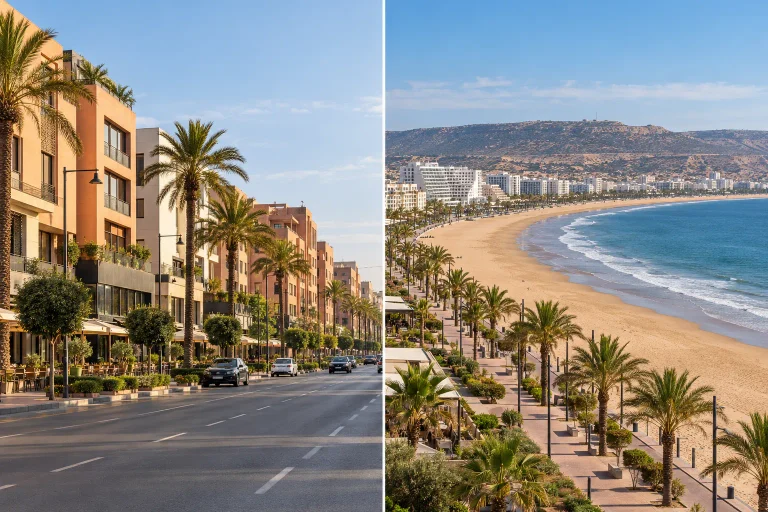
Morocco seasonal travel starts with matching your dates to the places and activities that matter most. There is no single month that produces the same conditions in Marrakech, Essaouira, Chefchaouen, the Atlas Mountains and a Sahara camp.
Spring and autumn are useful starting points for trips that combine inland cities and southern Morocco. Summer often makes the Atlantic coast more attractive, while winter can work well for city sightseeing and desert travel but requires more attention to cold nights, rain, heating and mountain-road conditions.
The best strategy is to choose the regions you actually want to visit, compare their seasonal conditions and then build the itinerary around those differences. Climate averages are useful for choosing a month. A current forecast, official warnings and local operating information become more important when the trip is close.
Which Months Should You Compare for Morocco Seasonal Travel?

Start by comparing spring and autumn dates for a mixed city-and-desert itinerary, then adjust according to your tolerance for heat, altitude, rain and coastal wind.
April and October can provide a useful compromise for many multi-region trips, but they do not guarantee identical conditions across Morocco or guarantee dry weather.
If your travel dates are fixed, adapt the route instead of trying to force an itinerary designed for another season.
A July holiday might prioritize Essaouira, Agadir or another Atlantic base while keeping inland sightseeing shorter. A January trip can focus on Marrakech, Fes, food, architecture and southern Morocco while keeping higher mountain activities dependent on current access.
Use the Morocco destinations guide to group the places you are considering before comparing dates. A coastal city, a mountain village and a Sahara camp each need a separate weather assessment even when they appear on the same itinerary.
Also identify the one experience you would be most disappointed to miss. If it is a particular Atlas trek, the trail conditions should influence your dates. If it is a festival, begin with the confirmed edition rather than assuming the event always falls on the same weekend.
Morocco Weather Month by Month
Monthly averages demonstrate how strongly inland and coastal conditions can differ.
The following table compares average daily minimum and maximum air temperatures in degrees Celsius for Marrakech and Agadir Inezganne. These figures describe historical climate rather than the exact temperatures you will experience on an individual trip.
Source: the WMO World Weather Information Service, using information supplied by Morocco’s meteorological service for 1991–2020. Values are shown as average low / average high.
| Month | Marrakech, °C | Agadir Inezganne, °C | What to consider |
|---|---|---|---|
| January | 5.9 / 19.1 | 8.4 / 21.1 | City visits with warm evening layers; check heating and mountain-road conditions. |
| February | 7.6 / 20.7 | 10.2 / 22.0 | Allow for cool mornings and rain; pleasant city weather does not establish mountain access. |
| March | 10.3 / 23.6 | 12.3 / 23.4 | Useful for city sightseeing and lower-elevation outings, with a wet-weather alternative. |
| April | 12.4 / 25.7 | 14.1 / 23.2 | Useful city-and-desert window; assess high mountain routes separately. |
| May | 15.2 / 29.4 | 15.9 / 24.2 | Inland afternoons become warmer; preserve breaks between outdoor visits. |
| June | 17.9 / 33.6 | 18.1 / 25.6 | Consider more coastal time and shorter outdoor sessions inland. |
| July | 20.6 / 37.7 | 19.2 / 26.7 | Make heat a central route decision, especially for prolonged inland activities. |
| August | 21.1 / 37.4 | 19.5 / 27.0 | Compare coastal bases and verify cooling at accommodation. |
| September | 18.6 / 32.5 | 18.6 / 26.1 | Inland heat remains relevant; autumn does not begin everywhere immediately. |
| October | 15.7 / 28.5 | 16.7 / 26.1 | Strong cultural and desert-travel month; allow for rain and cooler evenings. |
| November | 10.7 / 23.1 | 12.9 / 24.1 | Allow for shorter days, cooler evenings and wetter spells. |
| December | 7.3 / 20.2 | 10.1 / 22.1 | Check heating, mountain conditions and year-end accommodation terms. |
The contrast is particularly clear in July. Marrakech’s historical average daily high is 37.7°C compared with 26.7°C at Agadir Inezganne.
These values are averages, not maximum temperatures. Heatwaves can produce considerably hotter conditions.
Air temperature also does not tell you whether the sea will feel comfortable for swimming. Water temperature, wind, waves and local warnings need separate consideration. In the same way, a Marrakech temperature average cannot describe a high Atlas trail.
How Do Morocco’s Regions Differ by Season?

Treat every major region as a separate part of your weather plan.
Atlantic Coast
Agadir, Essaouira, Rabat and Casablanca often experience less extreme summer temperatures than inland cities, but they should not be treated as interchangeable.
Essaouira may be windy, Agadir can offer a different beach climate, while Rabat and Casablanca have their own rainfall and Atlantic conditions.
Mediterranean Coast
For places such as Al Hoceima, M’diq or Saïdia, distinguish a summer beach holiday from a cooler-season city or road trip.
Check marine forecasts and seasonal facilities if swimming or boating is important.
Rif Mountains and Northern Morocco
A Tangier forecast does not establish walking conditions around Chefchaouen or Akchour.
Rain, elevation, steep surfaces and road conditions should be considered separately.
Atlas Mountains
A valley outing, mountain pass and summit ascent can experience completely different conditions on the same day.
Always ask about the elevation, route surface and recent conditions of the actual activity.
Sahara and Southern Morocco
Compare hot daytime conditions with overnight temperatures, and remember that a desert journey usually also includes mountain roads and southern valleys.
The camp is only one part of the route.
Historical WMO data illustrates this variation further. For 1991–2020, Tanger’s average January minimum/maximum was 8.2 / 16.8°C, with 89.8 mm average monthly rainfall. Errachidia’s January average was 2.0 / 15.9°C, while its average July high reached 39.5°C.
These are station-specific climate references, not forecasts for Chefchaouen, Merzouga or an individual campsite.
Morocco in Spring: March to May
Spring is one of the easiest seasons for building a varied Morocco route because cities, lower mountain areas, southern Morocco and the Sahara can often be combined without the most intense summer heat.
However, March, April and May should not be treated as one identical season.
March
March can provide comfortable city sightseeing and greener landscapes after winter rain, but higher mountain areas may still experience snow or difficult conditions.
April
April often provides a useful balance for Marrakech, Fes, southern Morocco and Sahara routes. Continue to check high-elevation conditions independently.
May
May becomes warmer inland and also introduces seasonal rural events such as rose-harvest activities in the Kelaat M’Gouna region.
Do not assume that a festival or flowering period happens on identical dates every year. Confirm the relevant edition or harvest conditions before building a non-refundable itinerary around it.
For a spring itinerary, combine city visits with selected outdoor experiences and keep one alternative for rain or inaccessible mountain trails.
Morocco in Summer: June to August
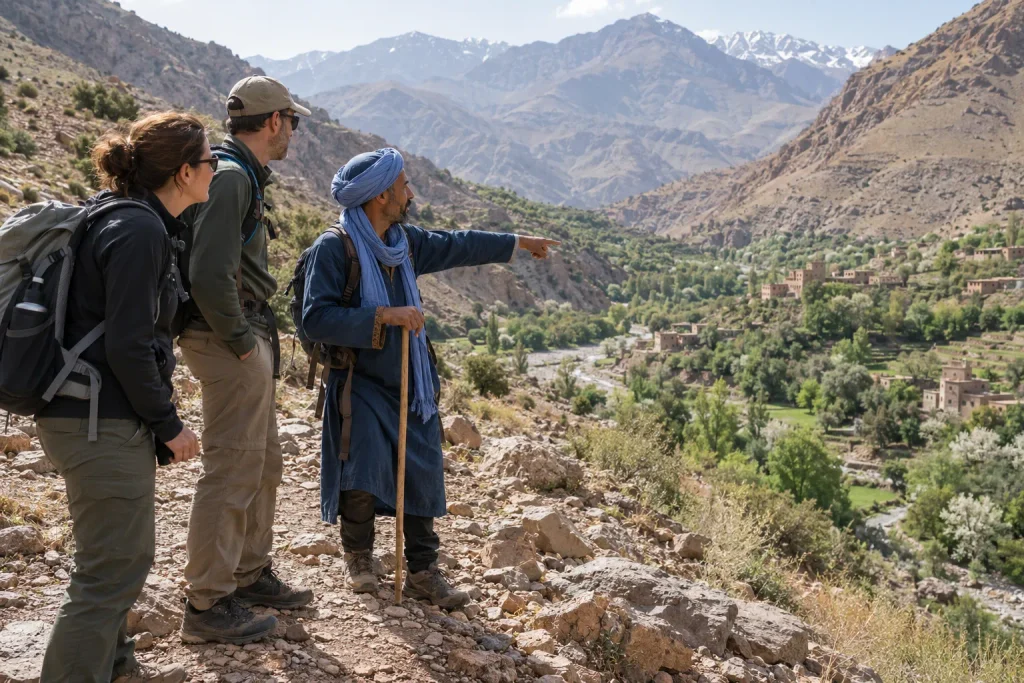
The merged summer article correctly emphasizes that summer travel requires route adaptation rather than pretending that July and August work like spring.
Inland temperatures can become extremely high, particularly around Marrakech, the southeast and desert regions.
Choose More Coastal Time
Agadir, Essaouira and other Atlantic destinations can provide a more manageable base when inland temperatures are severe.
This does not guarantee cool weather, calm wind or ideal swimming conditions, but the coast often produces a different summer experience from Marrakech or Merzouga.
Marrakech in Summer
Marrakech remains visitable, but sightseeing should be planned more carefully.
Use early morning and later afternoon for outdoor walking, and select accommodation where you can comfortably rest during hotter parts of the day.
Confirm that cooling is available in the actual room category you are booking.
Jemaa el-Fna often becomes more appealing later in the day, while gardens or indoor attractions can help break up a hot sightseeing schedule.
Agadir in Summer
The merged summer article highlights Agadir as a beach-focused alternative to inland heat.
Beach time, surfing and other water activities can fit a summer itinerary, but assess sea conditions and activity-specific safety rather than assuming warm air automatically means perfect water conditions.
Atlas Mountains in Summer
Higher elevation can offer relief from some inland heat, but mountain conditions still depend on altitude, exposure and route difficulty.
Imlil or Oukaïmeden should not automatically be described as cool simply because they are in the mountains.
Sahara in Summer
A Sahara trip requires much more caution during severe summer heat.
If the trip operates, outdoor activities may need to shift toward early morning or late afternoon. Confirm the actual camp, transfer and activity schedule rather than assuming every desert service runs unchanged throughout summer.
The Essaouira medina, port and ramparts day trip from Marrakech is one way to add coastal time. The listed programme includes return transport and time around the medina, port and ramparts, with lunch and drinks separate.
Remember that a day trip still adds road travel at both ends. An overnight stay creates a slower rhythm and may make more sense if the coast is intended as a genuine break from inland summer conditions.
Morocco in Autumn: September to November
Autumn is another strong period for mixed itineraries, but September can remain very hot inland.
September
Do not assume summer heat disappears as soon as the calendar changes. Marrakech, southern Morocco and the Sahara can still feel hot.
October
October often works well for routes combining cities, Atlas crossings and the Sahara, while coastal destinations remain easy to add.
November
By November, shorter daylight, cooler evenings and an increasing possibility of wetter conditions should influence the schedule.
A November itinerary should not expect to complete the same sequence of outdoor stops at the same times as a June itinerary.
Check the entire travel day using how to get around Morocco. A mountain crossing with sightseeing, meals and photo stops can require much longer than a direct driving estimate.
Morocco in Winter: December to February
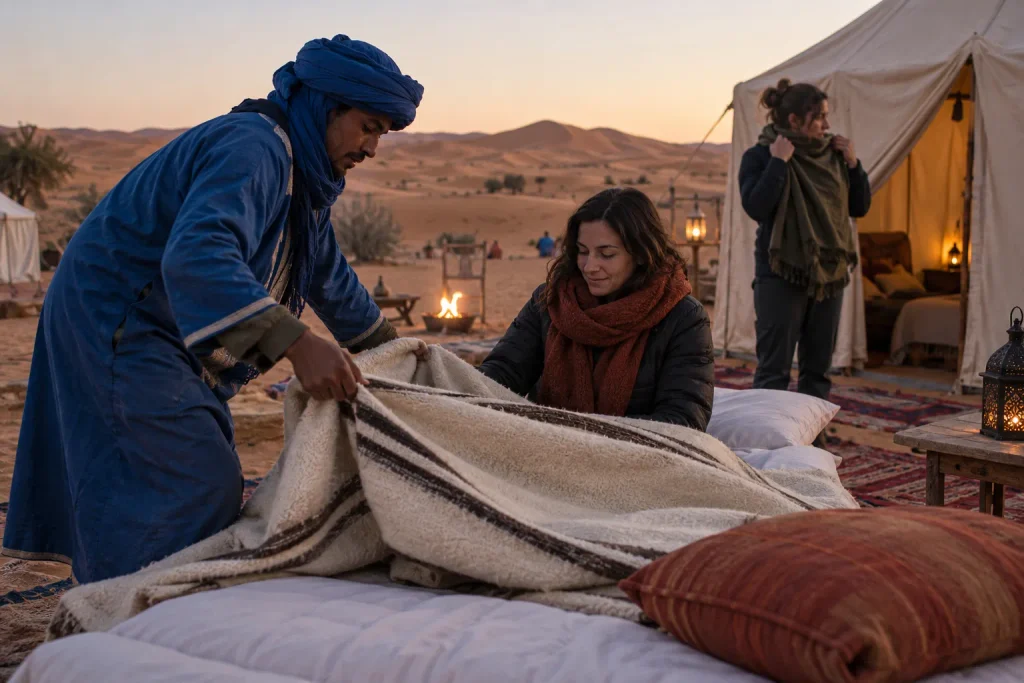
The merged winter guide adds useful city and regional ideas for Marrakech, Essaouira, Fes, the Atlas and Ouarzazate.
Winter can be an excellent time for cultural travel and southern road trips, but “mild Morocco winter” should not be confused with uniformly warm conditions.
Marrakech in Winter
Mild daytime temperatures can make the medina, palaces, gardens and souks comfortable to explore.
Evenings can be much colder than the afternoon, particularly in courtyard-style accommodation.
Ask whether your actual room has effective heating rather than assuming a riad will feel warm at night.
Essaouira in Winter
Essaouira can still work well for walking, seafood, the medina and Atlantic views.
Wind and rain remain relevant, so do not treat mild air temperatures as guaranteed beach weather.
Fes in Winter
Fes works well for medina exploration, crafts, food and museums when you prefer cooler city conditions.
Carry layers for early morning and evening.
Ouarzazate and Southern Morocco in Winter
Winter can make daytime exploration around Ouarzazate, Ait Ben Haddou and southern kasbah routes more comfortable than peak summer.
Nights can still be cold, and the road from Marrakech crosses the Atlas, so mountain weather remains part of the trip.
Sahara in Winter
For a Sahara stay, ask about bedding, bathroom arrangements, heating where available and the timing of the journey into camp.
Do not use a climate figure from Errachidia or Marrakech as a direct measurement of your tent at Erg Chebbi or Erg Chigaga.
The approach route also matters. A desert booking reached through the High Atlas can be affected by mountain-road conditions even if the dunes themselves are clear.
When Should You Plan Atlas or Rif Hiking?
Choose hiking dates according to the actual trail, elevation and current ground conditions rather than a general seasonal label.
A village walk, full-day trail and multi-day summit ascent require completely different preparation.
Warm weather in Marrakech does not prove that a high mountain pass is clear.
After heavy rain, a gorge or waterfall route may also require reassessment even during a normally suitable month.
For more demanding Atlas hiking, use a qualified mountain guide and ask about current route conditions, necessary equipment and the fallback plan if the intended trail is not suitable.
The Atlas Mountains and village day trip from Marrakech is a lower-commitment example from the VMT inventory. Its published programme includes mountain viewpoints and an easy valley or village walk with return transport from Marrakech. It is not a summit trek, and weather or road conditions may require adjustments.
Even when an activity is advertised as easy, ask about distance, surface, steps and time on your feet.
How Does Ramadan Affect Travel in Morocco?
Ramadan changes daily routines, meal schedules and some service arrangements, so it deserves its own planning rather than being treated as a normal seasonal event.
Ramadan follows the lunar calendar and moves through the Gregorian year. A date mentioned in one article applies to that particular year and should not be copied indefinitely.
For planning ahead, the FCDO’s Morocco travel advice currently identifies the next Ramadan as starting in February 2027. Treat detailed advance calendars as provisional until the appropriate official confirmation.
Ask your hotel or riad where breakfast and daytime meals will be available.
Also check:
- Restaurant opening hours
- Attraction schedules
- Shop opening times
- Guide and driver schedules
- Transport around sunset
- Evening activity times
Allow time for the sunset meal and be patient with changed routines, particularly later in the afternoon.
How Do Easter, Christmas and School Holidays Affect Travel?
Check the calendar in Morocco and the school or public-holiday calendar in your departure country.
School breaks and Easter can affect flight prices and family-room availability even when they are not Moroccan public holidays.
For Moroccan religious and public holidays, check the exact year’s dates and confirm opening hours directly with the venue or provider.
Christmas and New Year can bring different hotel terms. Ask whether the chosen property requires:
- A minimum stay
- A compulsory dinner
- A special event charge
- Different cancellation terms
Families and multigenerational groups should reserve the required room layout and transport before filling the itinerary with optional activities.
Morocco Festivals and Seasonal Events
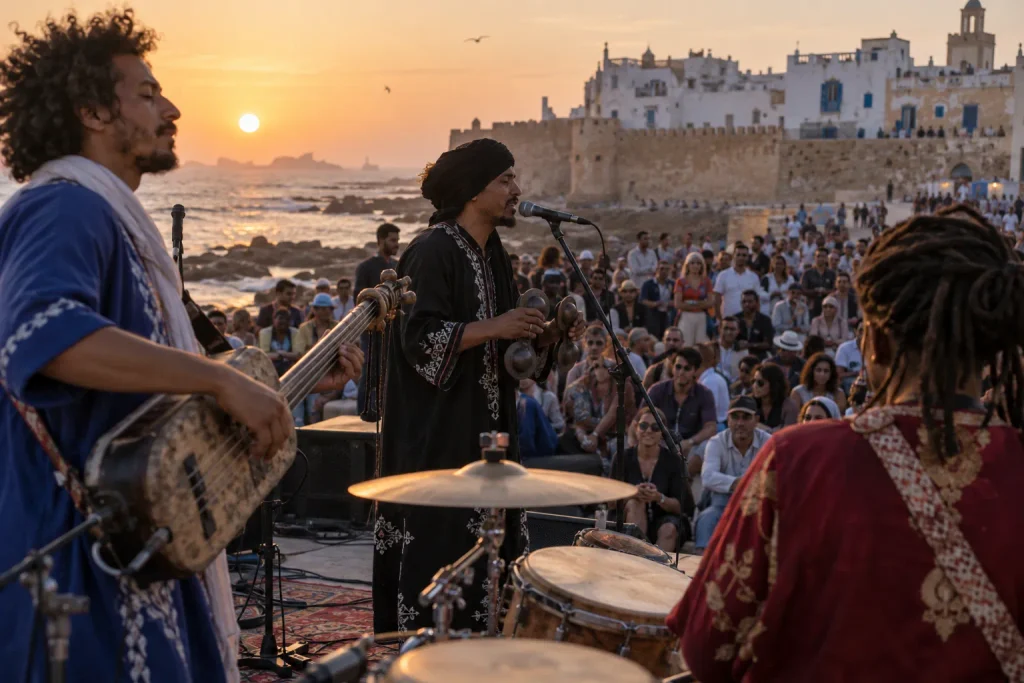
Morocco’s cultural calendar can be a reason to choose a particular month, but festival planning requires year-specific information.
Do not treat an event’s usual month or last year’s weekend as a confirmed date for the next edition.
Events travelers commonly monitor include:
- Gnaoua and World Music Festival in Essaouira
- World Sacred Music events in Fes
- Mawazine in Rabat
- Rose-related celebrations around Kelaat M’Gouna
- Film events in Marrakech
- Regional agricultural and cultural moussems
The exact edition matters more than the general festival name.
Gnaoua and World Music Festival
Checked on 14 October 2026: the official Gnaoua and World Music Festival website announces 24–26 June 2027 in Essaouira.
Confirm the programme, venue arrangements and ticket conditions directly for that edition.
If the festival is the main reason for travelling, consider staying in Essaouira rather than relying on a day trip from Marrakech.
Compare accommodation with the announced venues and think about how you will return after late performances.
Other Festivals
For other events, wait for the organiser’s announcement before using the date for a non-refundable flight or hotel booking.
Always record the year beside a festival date in your itinerary.
An article saying that a festival “usually takes place in May” or “normally happens in June” is background information, not confirmation for your travel year.
What Is Confirmed About Morocco and the 2030 World Cup?
FIFA has appointed Morocco, Portugal and Spain as hosts of the 2030 World Cup, with centenary celebration matches also planned in Argentina, Paraguay and Uruguay.
That hosting decision is confirmed in FIFA’s tournament information.
Do not confuse the confirmed host announcement with the details needed for an individual football trip.
Before booking around a match, confirm:
- Official match date
- Venue
- Ticket conditions
- Transport arrangements
- Accommodation availability
A proposed stadium itinerary, tour package or social-media post does not establish match admission.
Keep accommodation and transport reasonably flexible until the information relevant to your trip is confirmed.
What Should You Do When Weather Changes the Plan?
Historical climate helps you choose dates. It cannot determine whether tomorrow’s hike, desert transfer or boat activity should operate.
Use a current forecast, official warnings and the provider’s assessment close to travel.
Morocco’s official meteorological vigilance service provides warnings covering hazards including heat, heavy rain, snow, wind and dangerous marine conditions.
Extreme Heat
Shorten outdoor sessions, reconsider demanding inland excursions and use genuinely cooled indoor spaces for rest.
Heavy Rain
Choose a city-based or indoor alternative when appropriate and check the access route.
Do not replace a closed mountain trail with an unassessed river, gorge or waterfall route.
Snow or Ice
Check road and trail conditions before leaving. A lower-elevation alternative may be possible only after local assessment.
Strong Wind or Dust
Reassess exposed viewpoints, Sahara transfers and outdoor activities.
Rough Seas
Move toward an appropriate land-based programme rather than assuming another beach nearby will automatically be safe.
Ask about weather-related changes before paying for an activity. Establish who decides whether the activity runs and whether the response is rescheduling, substitution, credit or refund.
How Far Ahead Should You Book?
There is no universal booking window for every Moroccan destination and season.
Prioritize arrangements that would be difficult to replace:
- Confirmed festival dates
- Specific family or connecting rooms
- Specialist mountain guides
- Particular riads or desert camps
- Transport connected to international flights
- Holiday-period accommodation
Compare the complete price for your actual dates rather than one isolated room rate.
Include transport, meals not included, entrance fees and optional activities.
When the trip depends on weather-sensitive activities, understand the modification or cancellation terms before paying.
Which Season Is Best for Different Morocco Trips?
| Travel priority | Useful periods to compare | Main caution |
|---|---|---|
| First multi-region trip | Spring or autumn | Check mountains, rain and inland heat individually |
| Marrakech city break | Autumn through spring | Summer heat can change the sightseeing schedule |
| Atlantic coast | Useful throughout much of the year | Wind, sea temperature and waves vary locally |
| Sahara journey | Often easiest outside peak summer heat | Cold winter nights and summer extremes |
| Atlas hiking | Depends on elevation and exact route | Snow, heat, rain and trail access cannot be generalized |
| Festival trip | Confirmed event dates | Never book from an old edition’s calendar |
How to Turn Seasonal Information Into a Workable Route
Choose one priority first, identify the conditions it needs and build the rest of the trip around that decision.
Then test the itinerary against a normal travel day:
- What time do you need to leave?
- How long will you be outdoors?
- When can you eat and rest?
- What is the longest road transfer?
- What happens if the main activity cannot operate?
- Do you reach the next hotel before or after dark?
For an April city-and-desert trip, check Atlas crossings separately from Marrakech’s climate.
For an August family holiday, compare additional coastal nights with a shorter inland stay.
For a winter cultural trip, build in indoor alternatives and confirm room heating.
For a festival trip, confirm the exact edition before making the event the foundation of the route.
These are planning examples rather than promises about future weather or availability.
FAQ
What is the best month to visit Morocco?
There is no single best month for every route. April and October can be useful starting points for trips combining cities and southern Morocco, while summer may suit the Atlantic coast better and winter can work well for cultural sightseeing and the Sahara. Always compare the individual regions on your itinerary.
Is Morocco too hot in summer?
Some inland and desert areas can become extremely hot in summer, while Atlantic destinations such as Agadir and Essaouira often experience less extreme temperatures. A summer Morocco trip can work well when the route, accommodation and activity schedule are adapted to the heat.
Is Morocco good to visit in winter?
Yes. Winter can be very good for Marrakech, Fes, Essaouira and southern Morocco. Expect cool mornings and evenings, colder desert nights and possible snow or difficult conditions in higher Atlas areas. Confirm heating at your accommodation.
When is the best time for the Sahara Desert?
Many travelers prefer the cooler part of the year rather than peak summer. Spring and autumn often make it easier to combine the Sahara with cities and road travel. Winter days can be pleasant, but nights may be cold.
Can I travel to Morocco during Ramadan?
Yes. Visitors can travel during Ramadan, but meal times, restaurant hours, shops and daily schedules may operate differently. Respect local customs, check arrangements for your dates and allow for the evening sunset meal when planning transport or activities.
Should I plan a Morocco trip around a festival?
Yes when the festival is one of your main reasons for travelling, but only after the organiser confirms that specific year’s dates. Book accommodation in the host city where practical and verify ticket, venue and late-evening transport arrangements separately.
Choose the Season Around Your Route, Not the Other Way Around
Morocco seasonal travel becomes much easier once you stop looking for one universal “best time to visit Morocco.”
The Atlantic coast, imperial cities, Rif Mountains, High Atlas and Sahara can behave very differently during the same week.
The original seasonal article provides the strongest planning foundation: compare historical climate, then adapt the route according to region, elevation and activity. The merged winter article adds Marrakech, Essaouira, Fes and Ouarzazate ideas, while the summer article reinforces the value of coastal travel, heat-aware Marrakech sightseeing and carefully timed Sahara activities.
Festivals add another reason to choose dates, but every edition needs fresh confirmation. Ramadan, public holidays and major future events such as the 2030 World Cup also require year-specific planning rather than recycled calendar information.
Use the Morocco destinations guide to choose regions, then compare routes in the Morocco Itineraries guide.
If the Sahara is a major priority, use the Sahara Desert Tours guide. For mountain-focused travel, explore the Atlas Mountains guide.
If you want the itinerary adjusted around your exact travel month, weather preferences, festival dates, hiking level and available nights, use the custom Morocco trip planner.
Explore destinations, tours and locally organized Morocco experiences with Visit Morocco Together.
Ready to Experience Morocco?
Turn this inspiration into your next adventure. Our travel experts are ready to help.