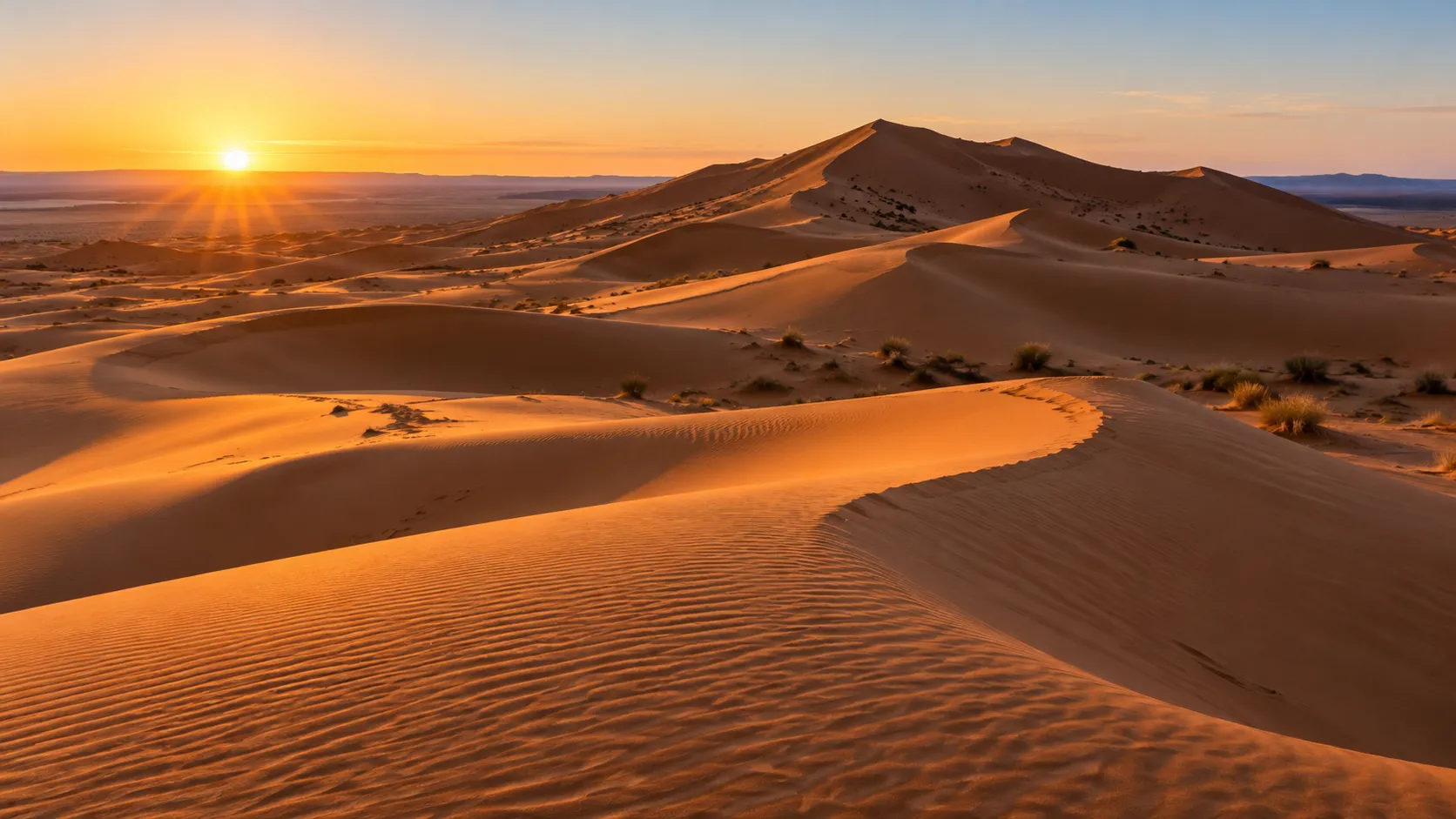
Morocco’s Sahara rewards a route with time at the dunes, rather than a camp booking squeezed between long drives. This Sahara Desert travel guide compares the main places to visit, explains how to choose accommodation, and shows how a desert stay can fit between Marrakech, Fes, and the southern valleys.
For many first visits, Merzouga and Erg Chebbi offer a practical combination of dune scenery, nearby accommodation, and onward road connections. Erg Chigaga suits a trip planned around a more remote approach, commonly through M’Hamid. Zagora is a town and a gateway to the Drâa Valley, so a booking described simply as “Zagora desert” needs a more precise location.
The most useful question is how much time you will actually spend there. Count the nights near the dunes, identify where you sleep on the journey, and check both the arrival and departure arrangements.
Sahara Desert Travel Guide to Morocco’s Main Areas
Morocco’s desert landscapes include dunes, gravel plains, rocky ground, oases, and settlements. A sand sea is known as an erg. Merzouga is a village beside Erg Chebbi, while Erg Chigaga is a different dune area farther southwest.
These places belong to different routes. They are not neighboring stops you can casually exchange once you are on the road.
Within Morocco’s wider destination regions, the southeastern desert is usually a substantial travel commitment from the northern cities and Atlantic coast. Choose the desert area before reserving the accommodation around it.
Merzouga and Erg Chebbi for Dunes with Nearby Services
Merzouga and the Erg Chebbi area suit travelers who want a choice of village accommodation, dune outings, and camp stays.
Road access to the surrounding settlements makes it possible to stay in a hotel or guesthouse and visit the dunes separately. Sleeping in a tent is optional.
Merzouga and nearby Hassilabied provide different accommodation locations around the dune area. Ask for the property’s actual map position and its walking or vehicle access to the sand. A photograph facing the dunes may leave the village, road, or neighboring camps outside the frame.
This area fits a Marrakech-to-Fes journey more naturally than Erg Chigaga. The transfer days remain long, even when you avoid returning to the city where you started.
Erg Chigaga for a Trip with an Off Road Approach
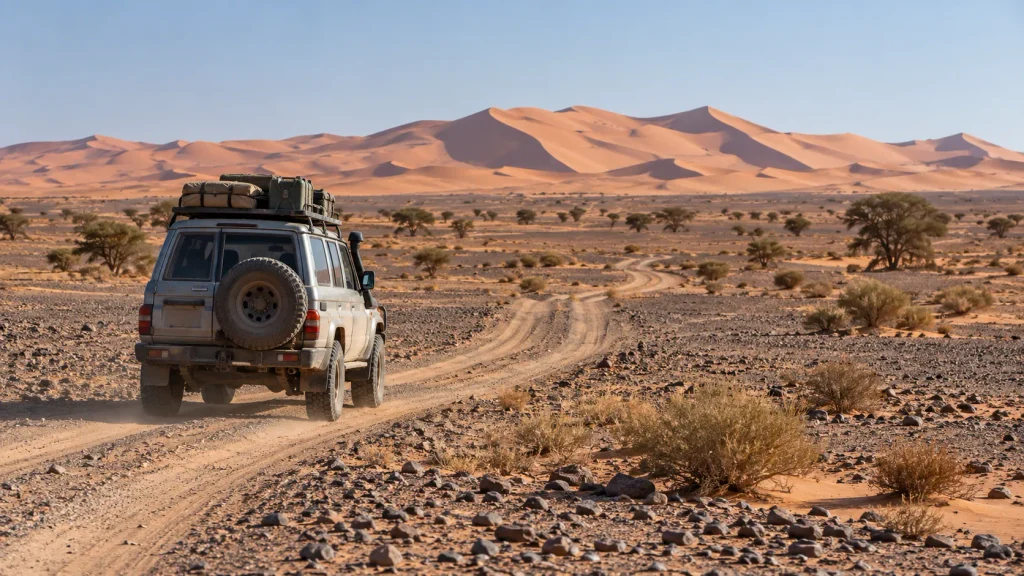
Erg Chigaga requires more attention to the final approach. Access commonly involves an off-road journey with a suitable vehicle and an experienced local driver, rather than following a paved road to the tent.
M’Hamid is a useful gateway, but a camp near M’Hamid and a camp at Erg Chigaga are different bookings. Ask which dune area the itinerary reaches, where the vehicle changes if necessary, and how long the off-road section is expected to take.
Remoteness also changes the practical questions. Consider communications, access to medical help, supplies, and what happens if weather prevents the planned transfer.
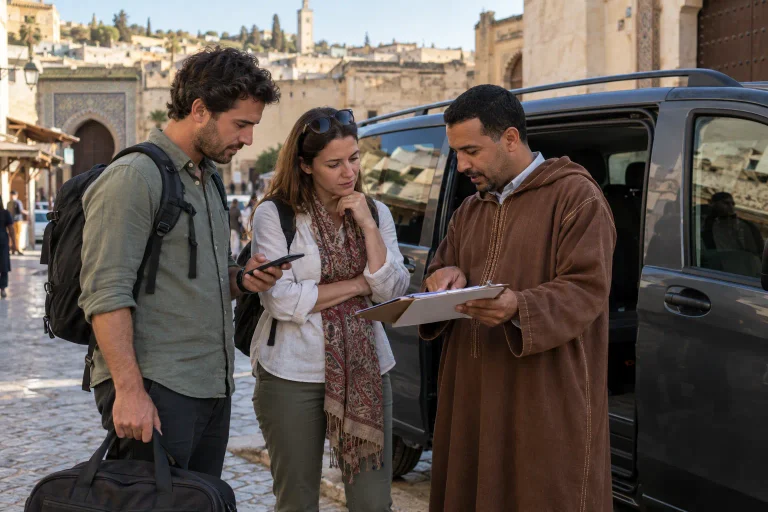
Visit Morocco Together’s Erg Chigaga 4×4 desert discovery is a local activity to consider once this area is part of your route. Agree the precise meeting point, vehicle arrangements, and finish time. A one-day activity should not be assumed to include arrival from Marrakech or overnight accommodation.
Zagora and the Drâa Valley for Towns Oases and a Southern Journey

Zagora can suit travelers interested in the Drâa Valley, palm-growing landscapes, and a journey south from Ouarzazate.
The town itself is not a substitute name for Erg Chigaga. Camp descriptions around Zagora may refer to different locations and landscapes, including smaller dune areas.
Before booking, request the camp name, location, photographs of the surrounding terrain, and the transfer route. If your main reason for going is a broad expanse of dunes, make sure the promised setting matches that expectation.
A short Zagora itinerary from Marrakech can still contain two substantial driving days. Fewer tour days do not necessarily mean a less tiring trip.
Agafay for a Separate Experience Near Marrakech
Agafay is a stony, arid landscape near Marrakech. It can suit an outing or overnight stay when you have limited time, but it does not provide the Sahara dune setting found at Erg Chebbi or Erg Chigaga.
Choose it for its own landscape and proximity to the city. It should not be sold or understood as a day trip to the Saharan sand seas.
If you only have one spare day in Marrakech, a nearby excursion may fit your holiday more comfortably than trying to compress the Sahara into the same space.
Which Desert Area Fits Your Travel Plans
Begin with your route and the experience you want.
Choose the Merzouga area if you want dunes with a range of nearby accommodation, or if the desert sits between Marrakech and Fes. It also gives you flexibility to combine a village hotel with a separate camp night.
Consider Erg Chigaga if the off-road approach and a stay farther from town are part of the appeal. Allow enough time for that approach rather than treating it as an extra stop on an already crowded circuit.
Choose a Drâa Valley journey through Zagora when towns, cultivated landscapes, and the road south matter as much as the camp. Identify the particular camp before deciding whether its dune setting is right for you.
For a short first trip, selecting one dune area usually leaves more time to enjoy it. Visiting both Erg Chebbi and Erg Chigaga requires a longer route and additional transfers.
How Many Days Do You Need for the Sahara
The departure city changes the answer. A traveler already staying in Merzouga can arrange a local outing, while a traveler leaving Marrakech must first cross a substantial part of the country.
A three-day journey from Marrakech to Merzouga and onward to Fes can include two nights: one en route and one in the desert area. It does not provide three full days in the dunes.
A four- or five-day allocation creates more room for another overnight stop or a full day near the dunes. Decide where that extra time goes. It can be absorbed by additional sightseeing unless the itinerary explicitly reserves it for the desert stay.
When assessing how many days to spend in Morocco, count the desert travel days alongside your city days. A week containing a Sahara crossing has a different pace from a week split between Marrakech and Essaouira.
One Camp Night Gives You an Evening and Morning
A single camp night often centers on arrival, sunset if timing allows, dinner, sleep, and departure after the following morning’s activities.
That can be enough for an introduction. It leaves little room for delays, a change in weather, or a relaxed day after the journey.
Ask what time you reach the meeting point and what time you must leave the next day. Those details explain the experience more clearly than “overnight desert adventure.”
Two Nights Near the Dunes Create More Options
Two nights can mean two camp nights, or one night in village accommodation and one in a camp.
A village night can provide space to recover from the drive, organize luggage, and begin the camp transfer without rushing. Two camp nights can suit travelers who want more time in the same setting, provided daytime conditions and facilities are appropriate.
Confirm what happens between the two nights. Will you stay at camp, return to town, or take an excursion? Meals, transport, and access to a comfortable resting area should be clear.
Getting to the Sahara from Marrakech Fes and Ouarzazate
The road journey is part of the trip. Plan it with enough room for meals, rest stops, sightseeing, and the final camp transfer.
From Marrakech Across the High Atlas
A common route toward Merzouga crosses the High Atlas and continues through southern towns and valleys. Stops may include Aït Benhaddou, Ouarzazate, or the Dadès and Todra areas.
These stops need real time. A long list of names does not establish how much you will see at each one.
A direct Marrakech-to-Merzouga journey can consume most of the day before breaks and the camp approach. Splitting the route with an overnight stop makes it easier to include visits without arriving exhausted.
If walking in the mountains matters to you, give it a separate allocation. Crossing a pass by road offers a different experience from a stay in an Atlas mountain village.
From Fes Through the Middle Atlas and Ziz Valley
Fes provides another approach to Merzouga, commonly through the Middle Atlas and the Ziz Valley.
This is also a substantial travel day. Forest stops, viewpoints, and meals extend the journey beyond the driving estimate, so keep the arrival plan realistic.
If your transport arrives late, stay in local accommodation and begin the dune experience the following day. A late arrival should not force a rushed transfer into an unfamiliar setting.
From Ouarzazate Toward Either Desert Route
Ouarzazate can be a useful southern starting point, but it is not beside the main dune areas.
From there, a journey toward Merzouga follows a different direction from one through the Drâa Valley toward Zagora and M’Hamid. Confirm the destination and the complete route before comparing prices.
If you intend to fly into a southern airport, check that a suitable flight operates for your dates and include the onward road transfer. An airport on a map does not establish a convenient connection.
A Five Day Marrakech to Fes Route with More Desert Time
This suggested allocation uses four nights and gives the Merzouga area a full day. It is a planning example, not the stated itinerary of a particular tour.
- Day 1: Leave Marrakech, cross the High Atlas, and visit Aït Benhaddou if timing permits. Stay in Ouarzazate or the Skoura area.
- Day 2: Continue east with selected valley or gorge stops. Reach accommodation near Merzouga and stay overnight.
- Day 3: Spend the day around the desert area with prearranged activities and rest time. Transfer to the camp for the night.
- Day 4: Leave after the morning program and travel north. Stay in Midelt to split the journey.
- Day 5: Continue through the Middle Atlas to Fes.
The four nights are one near Ouarzazate or Skoura, one near Merzouga, one at camp, and one in Midelt. Only one is a camp night.
A shorter version may remove the Midelt overnight and continue to Fes on the fourth day, creating a longer final transfer. Compare that tradeoff when planning a route with different arrival and departure cities.
A Five Day Route Toward M’Hamid and Erg Chigaga
This alternative also uses four nights and keeps the Drâa Valley and Erg Chigaga approach together.
- Day 1: Travel from Marrakech across the High Atlas and stay in Ouarzazate.
- Day 2: Continue through the Drâa Valley to M’Hamid, allowing for selected stops. Stay in or near the village.
- Day 3: Take a prearranged off-road transfer to Erg Chigaga with appropriate local support. Stay at camp.
- Day 4: Leave the dune area by the agreed route and return toward Ouarzazate for the night.
- Day 5: Return to Marrakech.
The four nights are two in Ouarzazate, separated by the southern journey, one near M’Hamid, and one at camp.
Exact tracks, stops, and transfer times depend on conditions and the operator’s plan. Agree them before booking rather than assuming every Erg Chigaga itinerary follows the same circuit.
Choosing a Desert Camp by Its Actual Facilities
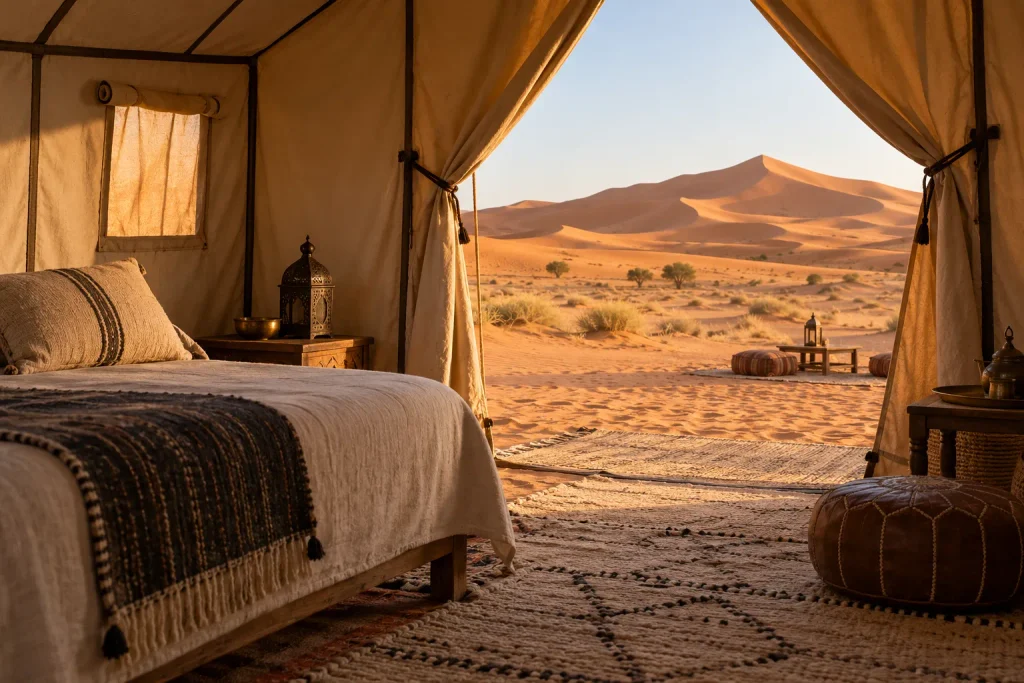
“Standard,” “deluxe,” and “luxury” are descriptions rather than a consistent grading system. Compare the facilities you will use.
Ask for the camp’s name, location, tent category, and photographs of that category. Establish whether bathrooms are private or shared and whether they are inside the tent or elsewhere.
Check beds, bedding, hot water, lighting, charging, and heating or cooling. If air conditioning is advertised, ask when it operates and whether it is available in your booked tent.
Visit Morocco Together’s four day desert experience with private tents and en-suite bathrooms describes a more comfort-focused option. Its four days and three nights refer to the whole journey. Confirm the camp location and nightly accommodation breakdown, along with the final transport and activity arrangements.
Location Matters as Much as the Tent
A camp farther from a settlement is not automatically quieter. Nearby camps, vehicle routes, generators, music, and lighting can affect the stay.
If quiet matters, ask about evening entertainment, its finish time, and the tent’s position. If you want a sociable evening, ask whether meals and music are shared with other guests.
Also check the surface between the vehicle, tent, dining area, and bathroom. Sand can make short distances difficult for travelers with mobility limitations.
Staying in a Hotel Near the Dunes Is a Valid Alternative
A hotel, kasbah-style property, or guesthouse near Merzouga can provide a fixed base for separate outings.
This may suit travelers who prefer a conventional room, want to avoid changing accommodation, or need facilities that a particular camp cannot provide.
Check the actual room conditions rather than assuming a hotel automatically has stronger heating, cooling, or accessibility. If a pool matters, confirm availability and seasonal operation.
The choice between different types of accommodation in Morocco becomes particularly practical here: the place you sleep and the activities you book can be arranged separately.
Camel Rides Walking and Vehicle Excursions
A desert stay does not require a camel ride. Ask whether vehicle access to camp is available, how it is priced, and where passengers are dropped off.
Camel riding involves mounting, dismounting, and a moving seated position. Discuss suitability in advance if you have mobility, back, or other relevant health concerns. Give children’s ages when arranging the activity rather than assuming the adult format will suit them.
Look for animals in visibly appropriate condition and handlers who work calmly. You should be able to decline a ride or shorten an activity without losing clarity about how you reach the accommodation.
For travelers staying locally, Visit Morocco Together’s Erg Chebbi sunrise camel ride returning to Merzouga offers a separate outing. Confirm the departure time, riding duration, and meeting arrangements. It does not replace the journey to Merzouga or provide a camp night.
Walking on Sand Takes More Effort Than Distance Suggests
Agree a route and return plan with your guide. A nearby dune can take longer to climb than expected, especially in heat or soft sand.
Avoid setting off alone beyond a familiar area for a photograph. Light, visibility, and the appearance of the dunes can change while you are away.
Check Motorized Activities Separately
Quad bikes and buggies need their own discussion about supervision, equipment, rider requirements, insurance, and the permitted route.
Choose established tracks and agree how the activity avoids pedestrians, animals, camps, and sensitive ground. Being in an open landscape does not remove the need for a controlled route.
Oases Markets and Community Visits Add Context
The desert journey passes through inhabited and cultivated places. Around Erfoud and Rissani, or along the Drâa Valley, allow time for town life and agricultural landscapes as well as the dunes.
A palm grove is a working area with paths, water arrangements, and privately used land. Enter with permission or suitable local guidance rather than walking through planted areas for photographs.
For market visits, confirm the relevant trading day locally. A town can be worth visiting outside its busier market period, but the experience will differ.
Music visits around Khamlia can add cultural context when performers are hosting visitors. Ask about timing and payment, and avoid assuming an advertised stop guarantees a performance. Request permission before recording people.
When to Visit Morocco’s Sahara Desert
Spring and autumn are useful starting points for planning because daytime conditions are often more manageable than during peak summer heat. Wind and dust can still affect any particular trip.
Winter can suit daytime exploration, with preparation for cold evenings and early mornings. Ask about bedding and the temperature inside the booked accommodation.
In summer, assess the whole day rather than only the sunset activity. You need a suitable place to rest, reliable water arrangements, and a plan for transfers or activities during intense heat.
Use Morocco’s official weather vigilance service to check the affected areas and warning validity, alongside local advice about access. Weather along the mountain approach also matters.
Do not assume that an arid region cannot flood. Heavy rain can disrupt roads and tracks, and the operator should have a clear alternative when access is unsuitable.
What to Pack for a Desert Stay
Bring sun-protective clothing, a hat, sunglasses, and suitable sunscreen. Add warm layers appropriate to the season, especially for early departures.
Closed shoes are useful for uneven ground and transfers. Keep essential medication, documents, water, and a small light accessible rather than buried in the main luggage.
Ask whether your suitcase travels to camp or stays at a meeting-point property. If only a small overnight bag is taken, establish where the remaining luggage is stored and when you collect it.
Keep electronics protected from sand and minimize unnecessary lens changes in dusty conditions. A power bank can be useful, but confirm any charging arrangements you depend on.
Your packing list for Morocco should account for the mountain crossing as well as the desert, particularly in colder periods.
Budget for the Whole Route
Compare the full trip total, not the camp’s starting price alone.
A local camp package may exclude travel from Marrakech or Fes. A multi-day tour may include road transport and several accommodation nights, but differ in meals, room categories, activities, and final drop-off.
Ask for a written breakdown covering:
- Price per person or per vehicle, and any minimum group size.
- Each overnight location and room or tent category.
- Road transport and the final camp transfer.
- Included meals, drinking water, and other drinks.
- Camel rides or other activities, with their duration.
- Optional visits, admission charges, and supplements.
- Cancellation terms and arrangements if weather changes the route.
A cheaper tent can be poor value if essential transfers or meals are added later. Equally, you may prefer a simpler camp and use the budget for another night near the dunes. Those choices fit into the wider cost of a Morocco trip.
Safety Communication and Respect for the Landscape
Arrange remote travel with people who know the area, carry appropriate supplies, and can explain the route and emergency arrangements.
Confirm who remains at camp overnight, how you contact staff, and what happens if someone needs medical assistance. Mobile coverage and internet access should not be assumed throughout the journey.
Check that insurance covers your planned activities and any relevant evacuation arrangements. Keep essential health needs clear when choosing between accommodation near town and a more remote camp.
The official regional travel advice for Morocco states that the land and sea borders with Algeria are closed. Do not plan a casual border crossing or follow an unapproved track toward the frontier.
Ask before photographing residents and respect requests to stop. Take rubbish out with you, use water thoughtfully, and leave plants, wildlife, and natural objects in place.
Sahara Desert Travel Questions
Is Merzouga the Same Place as Erg Chebbi
Merzouga is a village beside the Erg Chebbi dunes. Accommodation described as being in Merzouga may be in the settlement, near the dune edge, or at a camp reached by a separate transfer.
Is Erg Chigaga Better for a Quiet Trip
It can suit travelers seeking a more remote approach, but quiet depends on the particular camp, nearby activities, and vehicle routes. Ask about those details before choosing.
Can You Visit the Sahara in One Day from Marrakech
A day trip from Marrakech is not a practical format for a meaningful visit to Erg Chebbi or Erg Chigaga. A nearby Agafay outing offers a separate landscape when time is limited.
Is One Night in a Desert Camp Enough
One night provides an introduction built around the evening and following morning. A second night near the dunes gives more flexibility, whether spent at camp or in village accommodation.
Can You Stay in the Sahara Without Riding a Camel
Yes, where suitable alternative access is arranged. Confirm vehicle transfers and the final approach with the accommodation before booking.
Can You Travel from Marrakech to Fes Through the Desert
Yes. The Merzouga route can connect the two cities, but it includes substantial driving. Additional nights let you split transfers and spend more time at selected stops.
Will You See a Clear Star Filled Sky
It depends on cloud, dust, moonlight, and local lighting. A clear sky is possible, but neither a specific view nor a visible Milky Way should be guaranteed.
What Is the First Thing to Confirm Before Booking
Identify the exact dune area and camp location. Then check the complete route, accommodation nights, and transfer arrangements so the booking matches the time and experience you want.
Ready to Experience Morocco?
Turn this inspiration into your next adventure. Our travel experts are ready to help.