An Atlas Mountains travel guide should help you choose a mountain base before you choose a hike. Morocco’s ranges offer very different trips: a village stay near Marrakech, a cedar forest outing from Fes, a walking holiday in the central High Atlas, or a journey through the rocky landscapes around Tafraoute.
For a first mountain visit from Marrakech, Imlil, Ourika, and Ouirgane are useful places to compare. From Fes, Ifrane and Azrou fit more naturally. From Agadir, the Anti-Atlas offers a different landscape and a route that can combine mountain towns with the Atlantic coast.
The mountains connect with several of Morocco’s main destination regions, so the choice also depends on where the rest of your journey takes you.
You can enjoy the Atlas without attempting a summit. The important decisions are how much walking you want, how far you are willing to travel, and what conditions you are prepared for.
Atlas Mountains Travel Guide to the Three Main Ranges
The High Atlas, Middle Atlas, and Anti-Atlas are broad geographic areas, each containing towns, villages, valleys, and routes with different levels of access. Their names alone do not tell you how difficult a holiday will be.
The regions and travel areas of Morocco help explain how these mountain areas connect with the cities, coast, and desert.
High Atlas for Marrakech Side Valleys and Longer Mountain Journeys
The High Atlas contains Mount Toubkal and the valleys south of Marrakech. Imlil, Ourika, Ouirgane, and Oukaïmeden belong to this wider mountain setting, but they are separate destinations. Moving between them can involve returning along valley roads rather than taking a short connection across the mountains.
Farther east, Aït Bouguemez, the M’Goun area, and routes around Azilal offer another way into the High Atlas. These need their own travel time and accommodation planning.
The southern side opens toward places such as Ouarzazate, the Dadès Valley, and Tinghir. A road crossing toward the Sahara can show you mountain scenery, but it leaves a different amount of time outdoors from a stay built around walking.
Middle Atlas for Forests and Mountain Towns from Fes
Ifrane and Azrou are useful starting points for the Middle Atlas. This area suits travelers interested in cedar woodland, town walks, and a change of scenery from Fes or Meknes.
A day trip can introduce the area. Staying overnight gives you more room for walks and avoids fitting every stop into the journey back to the city.
A roadside forest visit and a longer trail are different activities. Ask how far the route actually goes on foot, especially if walking is the main reason for your visit.
Anti Atlas for Tafraoute and Southern Road Trips
The Anti-Atlas lies farther southwest. Tafraoute is a useful base for granite landscapes, village visits, and walking routes, with Agadir commonly used as a starting or finishing point.
Taroudant, in the Souss Valley, can add a town stay before you continue into the mountains. Tiznit can fit the return toward the coast.
Lower elevation does not automatically mean an easy outing. Exposed paths, heat, rough ground, and distance from road access still matter.
Choose Your Atlas Base Around the Day You Want
Start with the experience you want to repeat across your stay.
If you want a terrace, local meals, and one short walk, the quality and location of your accommodation may matter more than proximity to a famous summit. If you want several walking days, trail access and a suitable guide become more important.
For a mixed group, identify a base where some people can rest while others walk. A remote lodge with one demanding excursion may be less flexible than a village with several options nearby.
Imlil for Village Walks and Toubkal Trekking Access
Imlil is a practical choice for travelers who want to spend time on foot in the western High Atlas. Accommodation, guides, and trekking services make it a useful place to organize walking days.
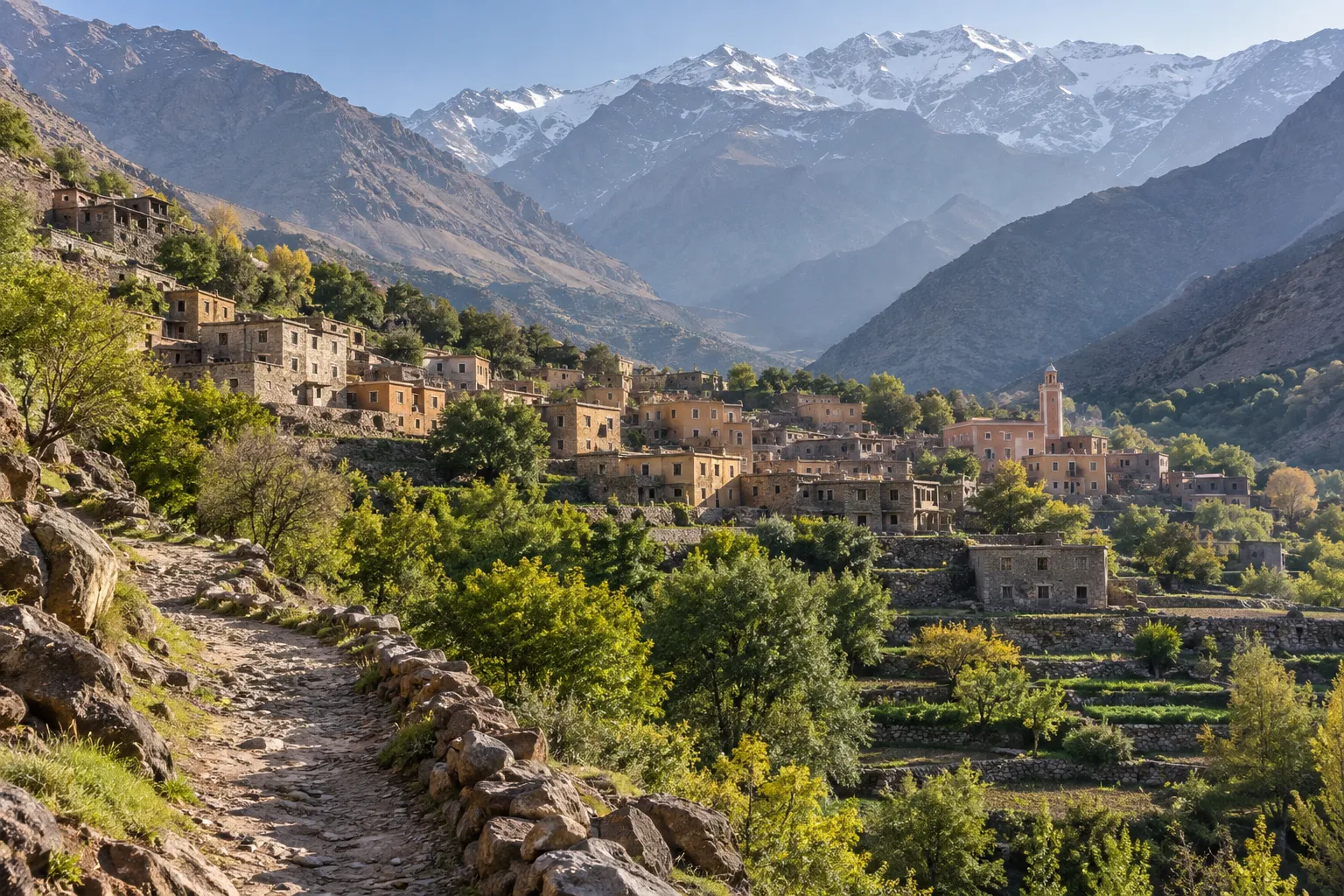
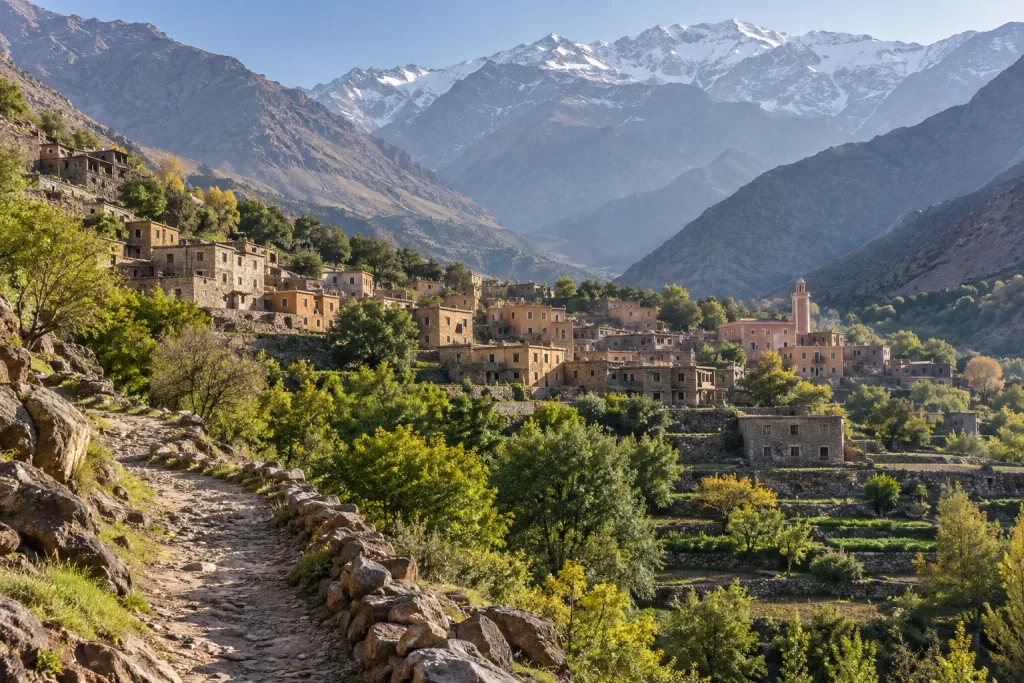
A stay can include terraced landscapes, village paths, and viewpoints without continuing toward the high refuges. Choose the route by ascent, descent, footing, and duration. A relatively short walk can still involve steep steps or sustained uphill sections.
Visit Morocco Together’s Imlil viewpoints route through High Atlas trails and terraced valleys starts in Imlil. It suits a day centered on local scenery; confirm the walking profile and pickup arrangements before booking. This is a different activity from a Toubkal summit trek.
Two nights give you an arrival afternoon and one full day before departure. A third night allows another walk or a day to change plans if conditions are unsuitable.
Check the Final Approach to Your Guesthouse
An Imlil address does not guarantee that a vehicle reaches the front door. Ask whether the property requires an uphill walk, how luggage reaches the entrance, and whether staff can meet you.
For travelers with reduced mobility, request details about steps, gradients, bathrooms, and access from the parking point. A photograph of a terrace will not answer those questions.
Ourika Valley for a Day Out with Optional Walking
The Ourika Valley can work for a Marrakech-based trip combining scenery, lunch, and time outside the city. Setti Fatma is a familiar stop, but your day does not have to revolve around reaching every waterfall.
Separate the roadside portion from the walking portion when comparing excursions. Paths beyond the village can involve uneven or wet ground, and different routes demand different levels of confidence.
Ask where the walk begins, how much climbing it involves, and what happens if someone turns back. A group should have an agreed alternative rather than discover halfway up that everyone is expected to continue.
For a quieter visit, consider spending more time at fewer stops. Restaurant terraces, village lanes, and mountain views can fill a day without a hurried waterfall circuit.
Ouirgane for a Longer Stay with Flexible Walking
Ouirgane is worth considering when you want a mountain stay with time for shorter outings, meals, and rest. Accommodation around the valley can suit travelers who prefer to return to the same room each night.
Some walks may be more manageable than high mountain routes, but ask about the particular trail. “Gentle” can describe a short village path or several hours of walking, depending on who is selling the trip.
Confirm whether dinner is served at the property, whether walks begin from the entrance, and whether transport is needed for each excursion. These details affect both your budget and how independently you can organize the day.
If a pool is part of your accommodation choice, check its operating season and whether it is heated.
Oukaïmeden for High Mountain Scenery and Conditional Snow Activities
Oukaïmeden offers a higher mountain setting within reach of Marrakech. It can appeal to visitors interested in scenery, walks, or winter snow when conditions allow.
Do not plan a ski holiday around photographs alone. Snow cover, road access, equipment, instruction, and lift operations all need confirmation for the proposed visit.
For a sightseeing outing, ask what you can realistically do once you arrive. A drive to a high viewpoint offers a different day from a guided winter walk or a ski session.
Winter access also affects the return journey. Agree with your driver how conditions will be assessed before leaving the city.
Aït Bouguemez for a Walking Holiday with More Time in One Valley
Aït Bouguemez is a strong candidate for travelers whose main interest is a mountain stay rather than a quick excursion from Marrakech. Village accommodation, cultivated landscapes, and walking routes allow a slower itinerary.
Allow for the journey into the valley. An arrival after a substantial drive should leave room to settle in rather than begin a demanding walk.
For a village-based stay, ask about room arrangements, heating, meals, and daily walking choices. For a trek toward M’Goun, discuss the full route, overnight arrangements, equipment, and emergency access with an experienced mountain guide.
The valley stay and the summit trek need separate decisions. You can choose one without committing to the other.
Azilal Ouzoud and Bin El Ouidane for Waterfalls and Lake Scenery
This part of central Morocco can suit a road journey combining mountain surroundings with waterfalls or a lake stay.
At Ouzoud, consider the walk down as well as the climb back. Steps, slopes, heat, and busy sections can affect how much of the site you want to explore.
Bin El Ouidane offers a different setting, where accommodation location may determine your experience more than a long list of activities. Check the property’s actual access to the water and the arrangements for any planned boat outing.
Water levels and activity availability can change. Treat swimming, boating, and canyon activities as separate bookings with their own conditions, rather than automatic parts of a scenic visit.
Ifrane and Azrou for a Middle Atlas Visit from Fes
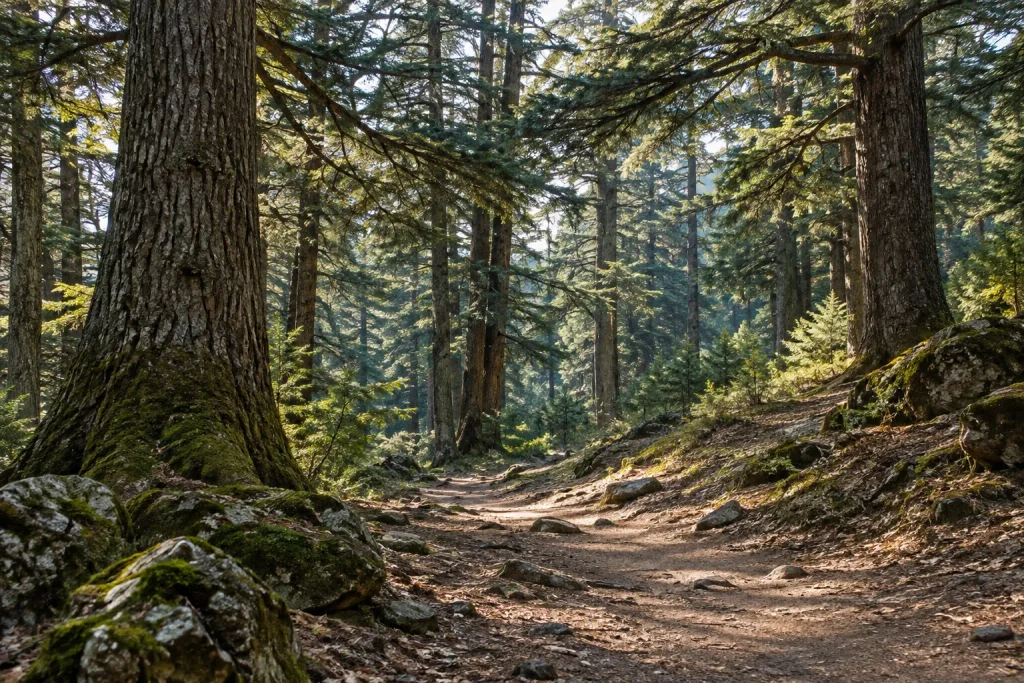
Ifrane and Azrou make sense when your trip is already centered on Fes or Meknes. They let you spend time in mountain towns and forest surroundings without adding a Marrakech transfer.
Visit Morocco Together’s Middle Atlas day trip from Fes through Ifrane and the Azrou cedar forest combines town stops with an easy forest walk. Confirm the departure point, time on foot, and return arrangements. Wildlife sightings depend on whether animals are present.
Keep your distance from Barbary macaques and avoid feeding or touching them. Food offered for a photograph encourages close contact and changes how animals interact with visitors.
An overnight stay is useful if you want a longer walking day or an unhurried town visit. Check heating in colder periods and road conditions before setting off.
Tafraoute for an Anti Atlas Stay from Agadir
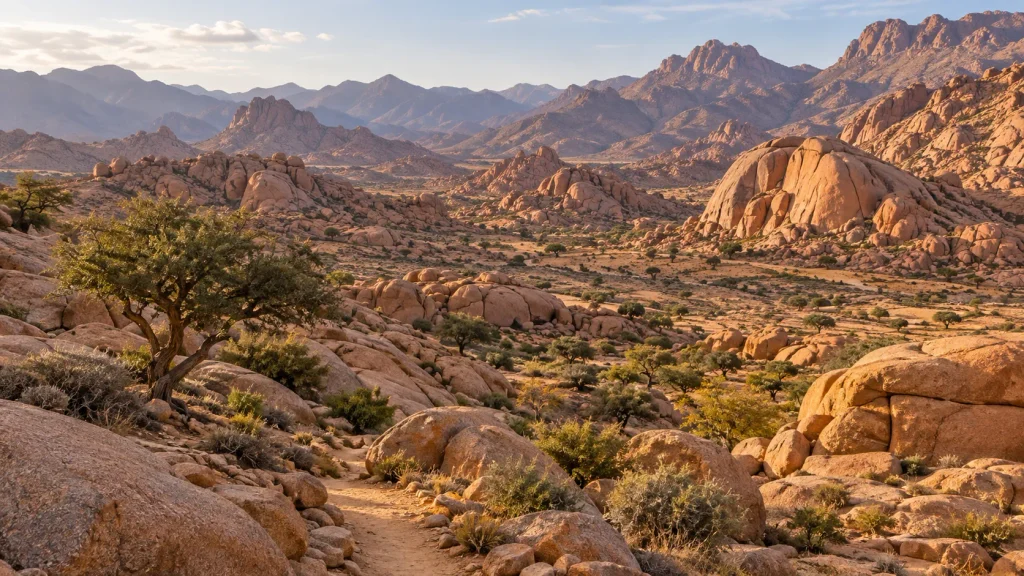
Tafraoute can anchor a southern mountain itinerary with time for village visits, granite scenery, and walks around the surrounding valleys.
A viewpoint drive, a hike, and a climbing session require different preparation. When comparing activities, ask whether the day is mostly spent in a vehicle or on foot, and whether any specialist instruction is included.
Visit Morocco Together’s three day journey through Taroudant, Tafraoute, and Tiznit starts and finishes in Agadir and includes two nights of accommodation. It provides a town-and-landscape route; travelers wanting longer hikes should agree those separately rather than assume they are part of the circuit.
Tafraoute also combines naturally with an Atlantic coast stay when you want both mountain and seaside time. Allow for the road journey between them.
Imouzzer and Paradise Valley for the Mountains Inland from Agadir
The country inland from Agadir offers another mountain outing, distinct from the Anti-Atlas around Tafraoute. Paradise Valley and the Imouzzer area can suit visitors who want scenery and walking while keeping a coastal base.
Confirm which Imouzzer is intended when making arrangements: similarly named places occur elsewhere in Morocco. Agree the actual stops and driving route.
Do not choose the outing solely for photographs of waterfalls or natural pools. Water flow varies, and access to a pool does not establish that swimming is appropriate. A dry-weather visit needs to work as a landscape outing in its own right.
Dadès and Todra for Mountain Scenery on a Southern Route
The Dadès Valley and Todra Gorge are useful stops when your wider journey continues toward or returns from the Sahara.
They can offer more than a short photograph stop, but extra walking needs time in the itinerary. Ask your accommodation or guide where a route begins, whether it follows roads or paths, and how it connects with the next transfer.
A drive through a gorge does not establish that every trail above it is suitable for independent walking. Climbing requires its own equipment and competent supervision.
If your main purpose is trekking, give the area a proper stay. Adding a substantial hike to a long onward driving day usually leaves too little room for either activity.
How Difficult Is Hiking in the Atlas Mountains
Difficulty depends on the route and conditions. Ask for more than a description such as “easy,” “moderate,” or “suitable for everyone.”
Before committing, establish:
- Expected walking time and opportunities to shorten the outing.
- Total ascent and descent.
- Highest point and overnight elevation.
- Ground conditions, exposed sections, and river crossings.
- Distance from vehicle access.
- Guide arrangements and what happens if someone cannot continue.
For children, discuss the youngest participant’s experience and attention span. For travelers with knee problems, descent and uneven steps may be more relevant than distance.
The UK government’s advice for hiking in the Atlas Mountains recommends researching trail demands, hiring a professional guide, carrying suitable essentials, and arranging insurance for the activities planned.
Toubkal Requires Its Own Trekking Plan
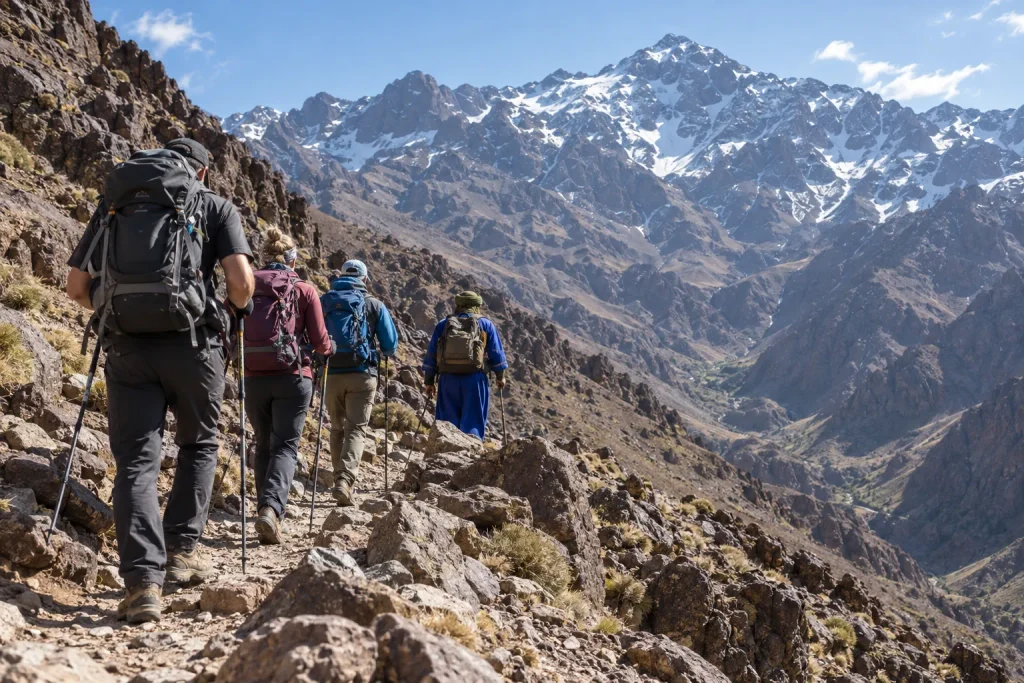
Mount Toubkal reaches 4,167 metres and is North Africa’s highest peak. The elevation and sustained ascent make it a separate undertaking from a village walk around Imlil.
Some itineraries advertise an ascent and return over two days from Imlil. That schedule should not be treated as a default for every visitor. Discuss preparation, acclimatization, daily effort, refuge arrangements, and flexibility with a qualified mountain guide.
Snow and ice change the nature of the route. Equipment needs and the skills required should be assessed for the actual conditions, including when snow remains outside the main winter period.
Build room for a changed plan. A summit booking should allow a clear discussion of when the guide would turn back, what alternative is available, and how a delayed descent affects your onward travel.
Insurance should match the intended altitude and activity, including relevant rescue and evacuation cover. The practical distinctions between activities also matter when arranging health and travel insurance for Morocco.
When to Visit the Atlas Mountains
Choose timing around the elevation and activity you want.
Spring can suit valley stays and walks among cultivated landscapes, while higher routes may retain snow. Conditions can differ substantially between a village and the pass above it.
Summer allows longer daylight, but exposed trails and southern mountain areas can still be hot. Start times, shade, water planning, and the length of the outing matter.
Autumn can suit walking holidays and combined city-and-mountain trips. Shorter days and changing conditions still need to be built into the route.
Winter can bring snow, ice, cold rooms, and disrupted road access. It suits travelers prepared for those conditions and for alternatives if an excursion cannot operate.
For departure decisions, use Morocco’s official weather vigilance service alongside local advice about the road and trail. Check the affected area and the warning’s validity period.
Heavy rain can make river valleys and mountain roads dangerous. A clear view from your hotel is not enough to judge conditions farther upstream or higher on the route.
How Many Days to Spend in the Atlas
One day works for an introduction from a nearby city, provided the excursion stays geographically focused.
Two nights allow an arrival afternoon, a full day, and departure the following day. This suits a first village stay with one main outing.
Three or four nights give you more flexibility for different walks and time at your accommodation. A trek involving passes, refuges, or remote overnight stops needs a schedule designed around that route.
Five Days with Marrakech and Imlil
This example uses four nights and keeps the mountain portion in one base.
- Day 1: Arrive in Marrakech and stay overnight.
- Day 2: Spend the day in Marrakech; stay a second night.
- Day 3: Travel to Imlil, settle in, and take a short walk if arrival time and conditions allow.
- Day 4: Take a prearranged guided valley walk; stay a second night in Imlil.
- Day 5: Return to Marrakech.
For an early departure flight, add or reallocate a final night in Marrakech. This itinerary does not include a Toubkal ascent.
Seven Days with Agadir Taroudant and Tafraoute
This example uses six nights and gives the Anti-Atlas portion time beyond a passing visit.
- Days 1 and 2: Stay two nights in Agadir, with time to arrive and enjoy the coast.
- Day 3: Travel to Taroudant and stay overnight.
- Day 4: Continue to Tafraoute and settle into your accommodation.
- Day 5: Spend a full day around Tafraoute with an agreed walk or village route; stay a second night.
- Day 6: Return toward Agadir, with a Tiznit stop if the route and timing permit; stay overnight in Agadir.
- Day 7: Depart or continue your trip.
Keep the longer road sections visible when building a multi-city Morocco route. The mountain stay should have its own full day rather than disappear between transfers.
Getting to Your Mountain Accommodation
Marrakech, Fes, and Agadir are useful gateways for different parts of the Atlas. Choose the gateway that fits your base instead of crossing the country to start a short mountain visit.
A private transfer is useful when you need a particular arrival time, have substantial luggage, or are staying beyond a town center. For public transport or shared taxis, verify the exact destination, departure arrangements, and the final connection to your accommodation.
Ask the property for a named meeting point. A map pin may mark the village while the entrance sits farther uphill.
For self-driving, check the proposed road, parking, weather, and daylight arrival. Do not accept a navigation shortcut without confirming its suitability locally. Mountain passes and valley roads can take longer than a distance suggests.
Where to Stay and What to Ask Before Booking
Choose accommodation around your daily plans.
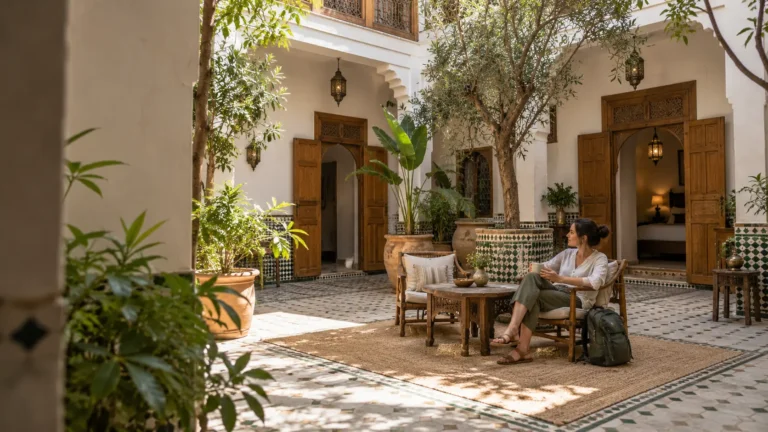
A village guesthouse can suit walking days and locally prepared meals. A lodge with grounds may suit travelers spending more time at the property. A mountain refuge serves a trekking route and has different sleeping and bathroom arrangements.
Confirm room heating, hot water, meal availability, dietary requirements, and access from the road. Ask whether bathrooms are private or shared, particularly on a moving trek.
If internet access matters, ask about the room or work area you will use. Mobile reception and connection quality can vary between nearby locations.
For trekking, establish whether you need a sleeping bag, liner, or other overnight equipment. Clarify luggage storage and transport before arriving with a large suitcase.
These details make choosing accommodation in Morocco more useful than selecting a property solely by its view.
Food Packing and Everyday Village Etiquette
Book dinner ahead when staying somewhere with limited nearby alternatives. Explain dietary needs clearly and ask how drinking water will be provided during walks.
Wear footwear suited to the ground, with layers for changing temperatures and protection from sun, wind, and rain. Longer or higher routes need an equipment list matched to that itinerary. Your Morocco packing choices should reflect both the mountain stay and the rest of the journey.
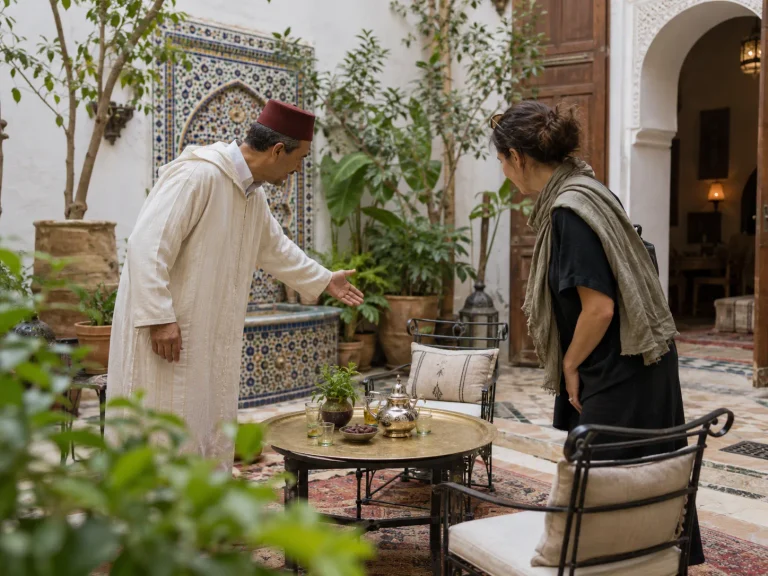
Many Atlas communities are Amazigh, with varied languages, livelihoods, and customs. Villages are places where people live and work. Ask before photographing residents, entering courtyards, or walking through cultivated land.
Agree payment for arranged meals, demonstrations, or visits in advance. Avoid handing sweets or money to children, and carry your rubbish back to a suitable disposal point.
Atlas Mountains Travel Questions
Can You Visit the Atlas Mountains Without Hiking
Yes. A stay can focus on scenery, meals, village visits, and short walks. Check the accommodation’s entrance carefully, because reaching the room may still involve steps or an uphill path.
Which Atlas Area Fits a First Visit from Marrakech
Imlil suits a walking-focused stay, Ourika can suit a day out with optional walking, and Ouirgane is worth considering for a longer accommodation-based visit. Compare the actual activities and access rather than choosing by name alone.
Is the Middle Atlas Worth Visiting from Fes
Yes, especially if you want forest scenery and mountain towns within a Fes-centered itinerary. A day trip provides an introduction, while an overnight stay allows more time outdoors.
Is the Anti Atlas Easier than the High Atlas
It depends on the route. Some outings avoid high altitude, but heat, exposed ground, and remote access can still make them demanding.
Can You Combine the Atlas and the Sahara
Yes. Decide whether you want to cross the mountains by road or spend time walking in them. A mountain overnight may require an additional day rather than being added to an already long desert transfer.
Do You Need a Guide
A professional mountain guide is a sensible choice for unfamiliar trails and is particularly important for higher, longer, or remote routes. Confirm qualifications, the agreed itinerary, and any local access requirements before departure.
Is a Two Night Mountain Stay Enough
It is enough for an introduction with one full day at your base. Add nights for several walks, a slower pace, or flexibility around conditions. Summit treks need their own itinerary.
What Should You Check Before Paying for an Atlas Trip
Confirm the start and finish points, walking demands, accommodation, meals, transport, guide arrangements, equipment, and change or cancellation terms. Make sure the description matches the experience you want, including what happens if conditions prevent the planned route.
Ready to Experience Morocco?
Turn this inspiration into your next adventure. Our travel experts are ready to help.