Morocco safety, health and insurance planning starts with your actual itinerary. A city break, an Atlas walk and a desert camp involve different roads, facilities, weather and activities. Before leaving, identify the risks you can reduce, the help you would call if something went wrong, and the costs your insurance would or would not cover.
This guide brings those decisions together for short-term visitors. It does not rate every city as safe or unsafe, recommend a particular insurer or replace advice from a clinician. Check current official travel advice for your nationality and route, get personal medical advice where needed, and read your own policy wording before paying for an activity.
Is Morocco safe to visit, and what should you check before departure?

Many people travel around Morocco without serious trouble, but no itinerary is risk free. Your useful question is where you will be, at what time, doing what, and with whom. Crowded medinas and beaches require attention to belongings; a late arrival requires a clear way to reach accommodation; remote hiking or desert travel requires a realistic plan for weather, communication and medical help.
Read a current government advisory close to departure and again if conditions change. The UK government’s Morocco safety advice discusses crime, scams, road travel, outdoor activities and beaches. It is written for UK nationals, so travellers from other countries should also check their own government’s consular advice and entry rules. Local authorities and your provider can give more immediate information about a particular road, trail or beach.
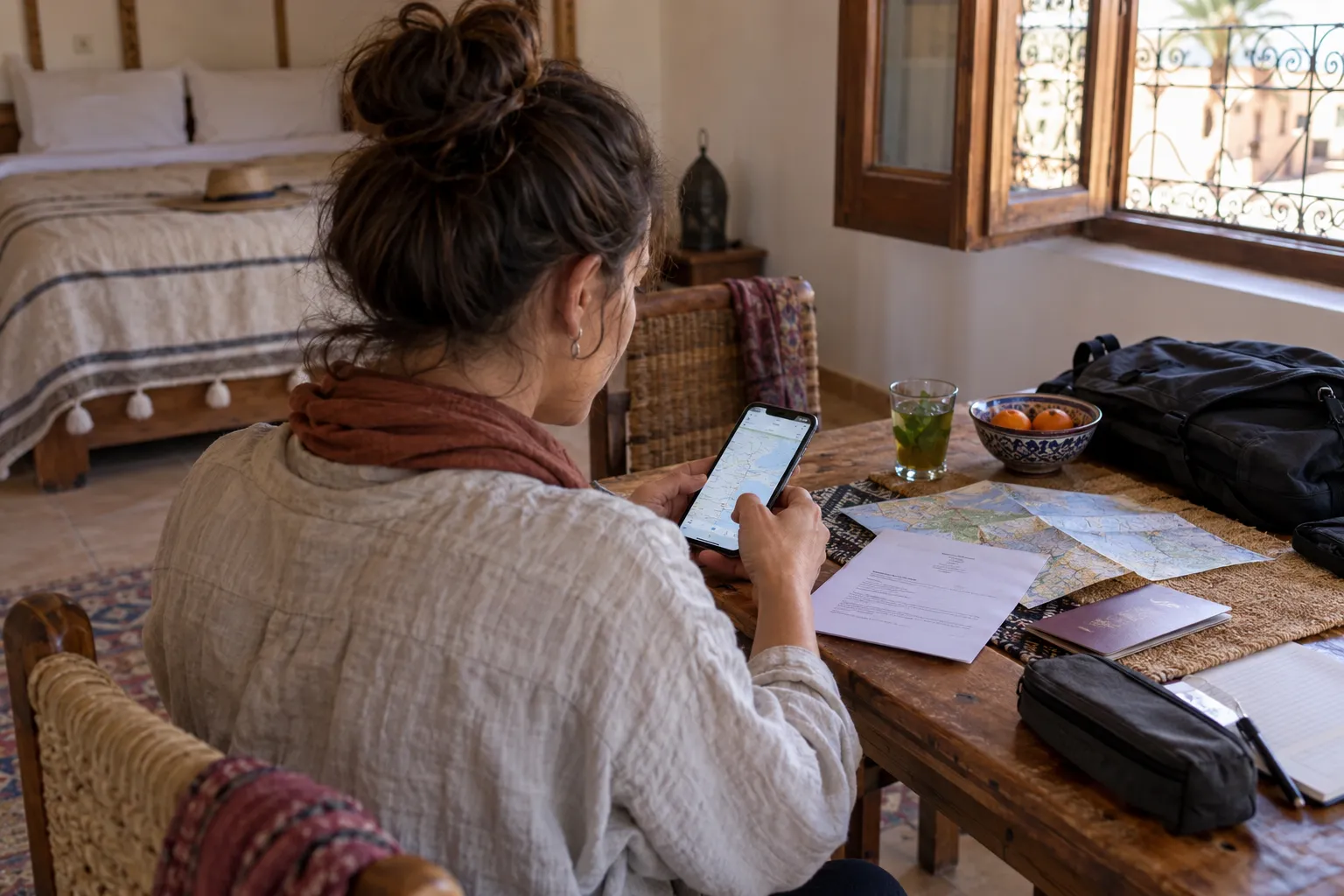
Write down your first night’s address and arrival route. Save an offline map, tell someone at home your rough route, and keep copies of your passport and policy documents separate from the originals. If a road or activity depends on good weather, decide in advance what would make you postpone it. A flexible day is easier to manage than an essential transfer booked immediately after a demanding excursion.
What health preparation should you make for Morocco?
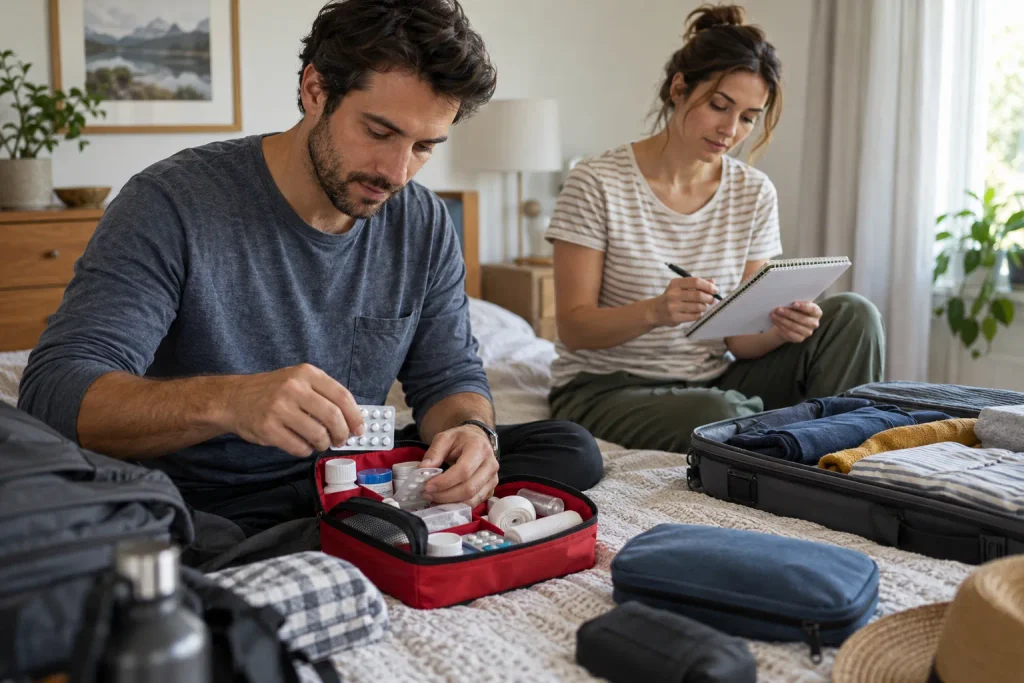
Arrange a travel health review in time to discuss your route, routine vaccinations, any destination-specific recommendations, medicines and relevant medical conditions. The advice can differ for a city visit, extended rural travel, a high-altitude trek or a family with children. Check the current TravelHealthPro Morocco country profile and ask a qualified clinician which recommendations apply to you. Do not use a general article as a prescription or assume everyone needs the same vaccines.
Bring enough of any regular prescription medicine for the trip, with its original packaging and documentation appropriate to your home and destination rules. Check whether your medicine can be brought into Morocco and whether it is likely to be available locally. If you use medical devices, confirm how to carry and power them. Share relevant information, such as a severe allergy or mobility requirement, with the people who need it to help arrange your trip.
Make everyday prevention fit the day. Carry drinking water, plan shade and rest during hot outings, and wear suitable shoes for uneven medina or mountain paths. A desert itinerary can bring heat during the day and much cooler conditions after dark; prepare layers instead of judging the whole route by the temperature at departure. Children, older travellers and people with health conditions may need a slower plan or individual medical guidance.
If an animal bites or scratches you, seek medical advice promptly even if the wound looks small. Rabies is a concern in Morocco; avoid approaching or feeding stray animals. For food, wash hands, choose food that has been handled and stored appropriately, and make allergies clear before ordering. When ingredients or cross-contact cannot be confirmed, choose a different meal rather than relying on a guess.
What should travel insurance for Morocco actually cover?
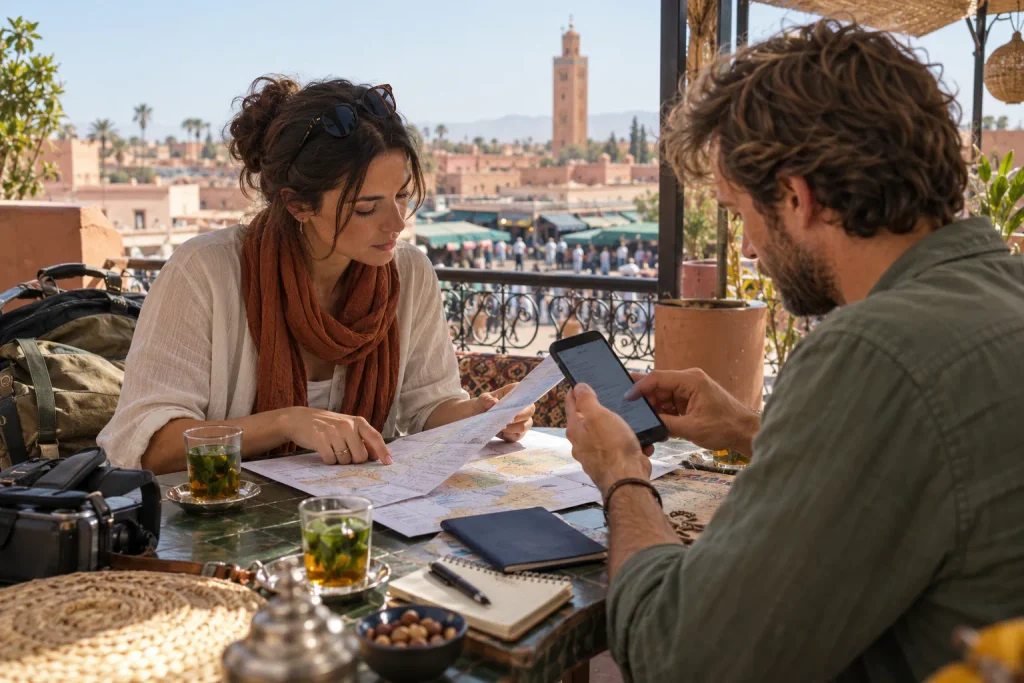
Choose insurance by matching its written terms to the trip you have booked. At a minimum, ask about emergency medical treatment, hospital care, medical evacuation and repatriation; then examine cancellation, interruption, baggage and personal liability where relevant. A policy advertised for Morocco may still exclude an activity, a pre-existing condition, a particular region or a claim arising after official travel advice changes.
The UK government’s Morocco travel advice recommends insurance that covers the itinerary, planned activities and emergency costs. That is a useful test regardless of which country issues your policy. If you already have cover through a bank account, credit card or annual plan, check its full wording and certificate rather than assuming a card logo confirms coverage.
| Your plan | Ask the insurer to confirm in writing |
|---|---|
| City stay and overland transfers | Dates, territory, emergency treatment, evacuation, baggage and any cancellation trigger. |
| Atlas hiking | Specific trek, altitude limit, guided or independent travel, search and rescue, and weather-related disruption. |
| Camel ride, desert camp or 4×4 outing | Whether each named activity is covered and what happens if you need transport from a remote location. |
| Quad biking, surfing, kayaking or other sport | Activity definition, equipment, protective gear, operator requirements, exclusions and liability. |
| Ongoing condition, pregnancy or family travel | Medical declaration rules, who is covered, age limits, deductibles and emergency assistance process. |
Ask whether a hospital is paid directly or you must pay first and claim later. Find the 24-hour assistance number, the process for getting treatment approved, the deductible or excess, and the documents needed after a claim. Coverage limits should be judged against your personal circumstances and the possible cost of treatment and evacuation, not an arbitrary number in a travel blog.
Tour booking terms and insurance terms are separate. A free-cancellation offer on an excursion is not the same as cover for a medical emergency, and travel insurance may not reimburse every cancellation reason. If wording is unclear, ask the insurer to answer with a reference to the relevant policy clause. A tour operator can explain its itinerary and own arrangements; only your insurer can confirm your personal cover.
How can you reduce theft, scams and arrival problems in cities?
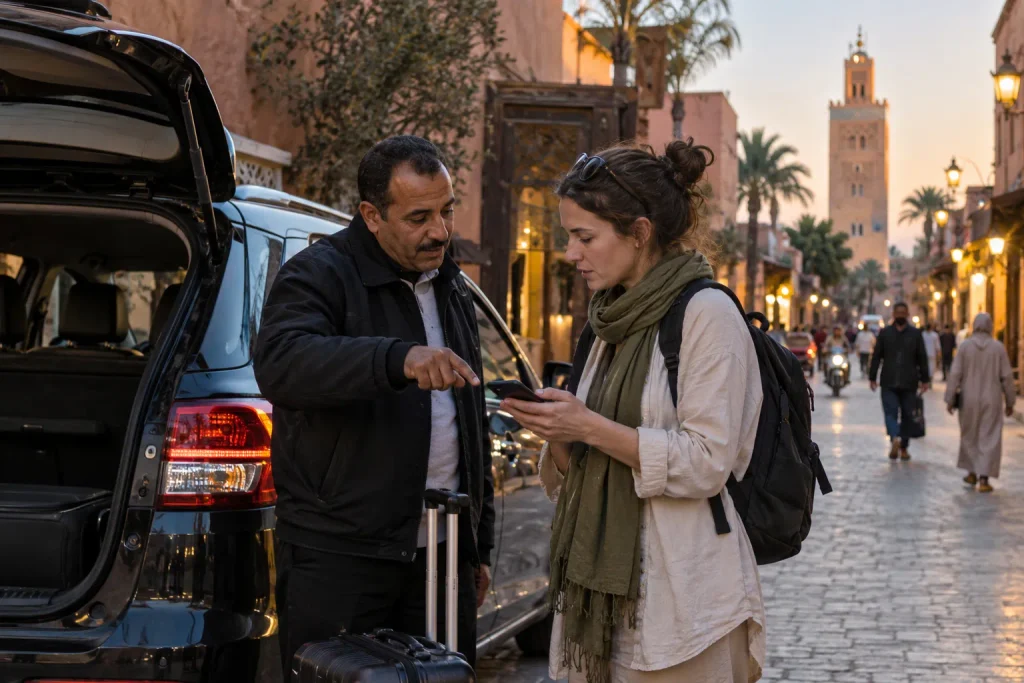
Keep valuables close in crowded areas, verify who you are paying, and have a route home before going out late. Petty theft and confidence tricks are reported in tourist areas, but that does not make every approach from a stranger a scam. Use proportionate habits: carry what you need for the day, put the phone away when navigating a busy crossing, and step into a shop or other staffed space if you need time to check a map.
For a guide, agree on the meeting point, route, duration and price before starting. Ask to see appropriate credentials when a person presents themselves as an official guide. If someone insists that a public street is closed, independently verify the claim before following them. In a shop, inspect the exact item you will receive and check the total before authorising a card payment. Decline an unwanted offer with a clear, polite answer and move on.
For a night arrival, arrange the address and pickup or taxi plan in advance. Confirm whether your accommodation has a staffed entrance and how to reach it from the drop-off point. If you feel uncomfortable during a ride, ask to stop in a busy, well-lit place when it is safe to do so. Share the change of plan with someone you trust. The guide to getting around Morocco can help compare transport options for the wider route; check the actual service and timing for your particular arrival.
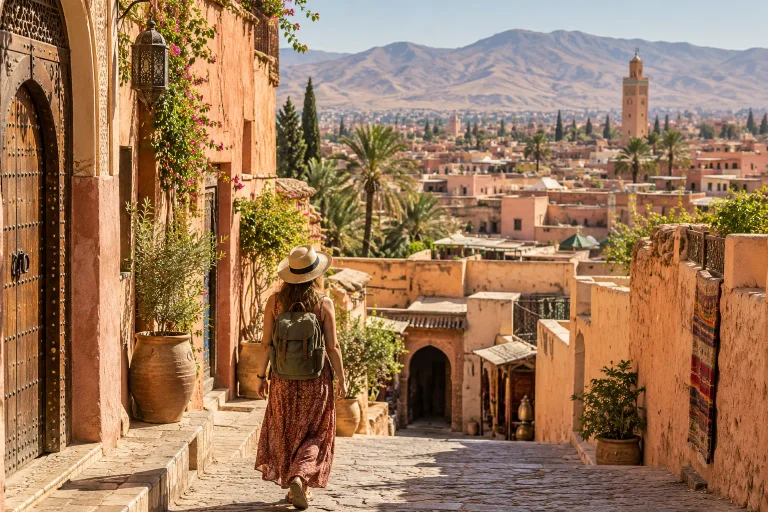
Before a Marrakech evening outing, save your return route and accommodation details. The Marrakech destination page can orient your visit, but it cannot tell you whether a particular alley, driver or event will be suitable on the night. Use local, current information rather than treating a city’s reputation as a guarantee.
What extra planning helps solo travellers, women and families?
Plan around the practical needs of your group, not a single label. Solo travellers benefit from an arrival contact, a charged phone, a clear route back and someone who knows their next stop. Women travelling alone or with friends may want to choose accommodation with straightforward access, set boundaries early in unwanted interactions and use a staffed venue to seek help when needed. These are options for managing situations, not claims that every encounter will be difficult.
For families, identify the nearest suitable medical service, give each child a way to contact an adult if separated, and agree on a meeting point before entering a crowded place. Keep water, necessary medicine and layers accessible during long journeys, not locked beneath luggage. Check age, height, mobility and health restrictions for any excursion; a service described as family friendly may still have uneven paths, long drives or activity-specific limits.
Anyone can change their mind about an activity. Ask providers in advance what happens if one person stays behind, how the group communicates after separating, and where the day’s final drop-off will be. A useful itinerary fits the least mobile or most heat-sensitive participant as well as the enthusiastic one.
What should you do if you become ill or injured in Morocco?
For a serious or rapidly worsening problem, seek urgent local medical help first. For a less urgent problem, ask your accommodation or guide for a suitable clinic or pharmacy, and contact your insurer’s assistance line as soon as you can. Explain your location, symptoms or injury, medicines and policy details. Follow clinical advice from a qualified professional rather than a tour itinerary or online anecdote.
Pharmacies can help you locate common medicines and advise when a doctor’s assessment is needed, but an apparently similar product may have different ingredients or dosing. Show the original prescription or package and ask about an exact equivalent. A clinician should assess a persistent or worsening illness, significant dehydration, breathing trouble, a serious allergic reaction or an animal bite. If you have a severe allergy, do not rely on a menu translation alone to establish safety.
Keep invoices, prescriptions, discharge notes and any report the insurer asks for. If an incident interrupts a booked service, tell the provider as well as the insurer and keep the written response. The insurer may have a preferred assistance network or approval process, but urgent treatment should not be delayed while you search for paperwork. Confirm how payment will be handled as soon as circumstances allow.
What changes for desert, mountain and beach activities?

Match the activity to conditions, fitness, equipment, operator procedures and a credible way to get help. A place being popular does not make every season, route or provider equally suitable. Ask what the activity actually involves, what can change on the day, and how the group returns if someone stops early.
Desert routes and long drives
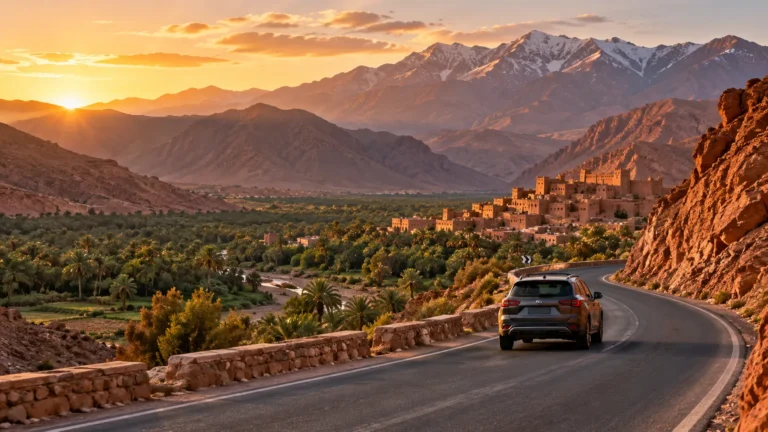
For a desert route, check the driving days, rest stops, drinking water, shade, overnight temperatures and access to assistance at camp. The Merzouga destination page gives geographic context; a specific tour page should then answer what is included. On the listed three-day Merzouga trip from Marrakech, the itinerary includes an Atlas crossing, long road days, a camel ride and a camp night. Its stated exclusions include lunches and drinks. Ask about the current route, suitable alternatives to the camel ride if needed, water arrangements and the plan for an unwell guest before booking. Confirm those exact activities with your insurer.
Atlas walks and higher routes
For a mountain outing, ask for the route’s length, elevation, footing, weather decision point, guide arrangement and evacuation plan. A scenic village walk is a different undertaking from a summit trek. The listed High Atlas village day trip from Marrakech involves village surroundings and an easy valley walk on uneven paths; its stops can change with local conditions. Check suitability for the people travelling with you and ask whether your policy covers the walk. For a high-altitude trek, discuss altitude and rescue terms separately rather than applying the day trip’s description to it.
Atlantic beaches, lagoons and water sports
Choose a supervised area where possible, heed local warnings and ask about currents, tides and lifeguard presence. Some Moroccan beaches have limited lifeguard cover, and a calm-looking shoreline or lagoon does not establish safe swimming conditions. For kayaking, surfing, a boat ride or quad biking near a coast, ask about weather limits, protective gear, the provider’s safety briefing and a return plan. Confirm that the specific activity is covered by your policy. Do not enter open water alone because a travel article called a beach “safe.”
How should you prepare for an emergency or a lost passport?
Save the current emergency numbers, your accommodation and operator contacts, your insurer’s assistance line, and your own country’s embassy or consulate before travelling. As checked on 29 September 2026, the UK government’s Morocco emergency guidance lists 150 for ambulance or fire, 190 for police, and 177 for the gendarmerie. Check those details again before departure and ask your accommodation which service to call from your precise location. The UK page’s consular services are for British nationals; use your own country’s representation for passport and citizenship matters.
In an emergency, move away from immediate danger if you can, call the relevant service and give a clear location. Ask your accommodation, guide or a nearby staffed business to help describe the location in Arabic or French if needed. After urgent help is on its way, contact your insurer and a trusted person. In a remote area, follow the operator’s established response procedure and do not assume ordinary phone coverage will always be available.
If your passport is lost or stolen, report the loss to local authorities as required, contact your embassy or consulate about a replacement or emergency document, and ask your carrier and insurer what they require for onward travel and a claim. A photo of the passport helps identify its details but does not itself replace a valid travel document. Keep copies of police reports and receipts, and allow time to resolve travel arrangements rather than assuming you can board the next flight as planned.
Frequently asked questions about Morocco safety, health and insurance
Is travel insurance mandatory for Morocco?
Requirements can depend on nationality, visa or travel circumstances, so check current official entry guidance for your own passport. Regardless of whether you must show a policy at entry, arrange cover that matches your trip and any medical or activity risks. The policy wording, not a country’s name on a comparison page, controls what you can claim.
Will ordinary travel insurance cover Atlas trekking or quad biking?
Do not assume it will. Ask the insurer about the exact activity, altitude, location, operator conditions, equipment and rescue costs. An included city walk does not imply cover for a summit trek or motorised desert activity.
Can I rely on my usual health insurance abroad?
Check directly with that provider. Confirm Morocco is within the covered territory, what care is paid for, whether evacuation or repatriation is included, and whether you must call an assistance line before non-urgent treatment.
What if I have a food allergy or get a stomach illness?
Tell the food provider clearly about your allergy and choose another meal if ingredients or cross-contact are uncertain. Seek medical help for severe symptoms or if an illness persists or worsens. Keep the insurer’s contact details available and document care received.
Are desert and mountain excursions suitable for children?
Suitability depends on the child’s age, health, ability to tolerate the route, weather, length of travel and the provider’s restrictions. Check the specific itinerary and insurance for every child. An overnight camp or long transfer may need a different plan from a short supervised walk.
What if I arrive late at night?
Confirm how to get from the arrival point to the accommodation, whether reception will be staffed, and where the driver or taxi will drop you. Keep the address and a backup contact available offline. Change the plan if a pickup or entrance cannot be confirmed.
Which emergency number should I save?
The UK government’s Morocco page listed ambulance and fire 150, police 190, and gendarmerie 177 when checked on 29 September 2026. Recheck the current official listing before departure and ask your accommodation which service applies locally. Save your insurer and embassy contacts as well.
Build the response plan into the itinerary
Morocco safety, health and insurance decisions are most useful before the first booking becomes difficult to change. Check the route and current advice, prepare for your personal health needs, confirm each activity with the provider and insurer, and save the contacts you would need in an emergency. Then leave enough time and flexibility to respond when weather, health or transport changes the day’s plan.
Ready to Experience Morocco?
Turn this inspiration into your next adventure. Our travel experts are ready to help.