Planning a Morocco itinerary is less about fitting every famous destination into one trip and more about choosing the right route for the number of days you actually have. Morocco stretches from Mediterranean and Atlantic cities to the Rif Mountains, imperial medinas, High Atlas valleys and the Sahara, so travel time matters just as much as the list of places you want to see.
A three-day trip should look very different from a two-week journey. With only a few days, Marrakech and one nearby region may be enough. With a week, the Sahara or northern Morocco becomes realistic. Around ten days gives you space to combine several regions, while twelve to fifteen days can support a broad north-to-south journey with cities, mountains, desert and coast.
This Morocco itineraries guide helps you choose the right trip length, route direction and combination of regions. It intentionally keeps the day-by-day descriptions short. Once you know how many days you have, follow the dedicated itinerary guide for the detailed route.
Morocco Itineraries by Trip Length
| Trip length | Best scope | Good route examples | Detailed guide |
|---|---|---|---|
| 3–5 days | One base plus one connected region | Marrakech + Atlas/Agafay, Marrakech + Essaouira, or a dedicated desert route | 3–5 Day Morocco Itinerary |
| 6–8 days | Two or three connected regions | Marrakech → Sahara → Fes, or Marrakech + Atlas + coast | 6–8 Day Morocco Itinerary |
| 9–11 days | Several major regions with selected two-night stays | Casablanca → Chefchaouen → Fes → Sahara → Marrakech | 9–11 Day Morocco Itinerary |
| 12–15 days | Broad multi-region journey | North + Fes + Sahara + southern Morocco + Marrakech + Atlantic coast | 12–15 Day Morocco Itinerary |
3–5 Days in Morocco: Keep the Route Focused
Three to five days is best treated as a regional trip rather than a shortened version of a two-week tour. Marrakech works particularly well as a base because you can combine the medina with the Atlas Mountains, Agafay, Ouzoud or Essaouira. A Sahara route is also possible, but the desert needs to become the main purpose of the trip rather than one extra stop.
Trying to combine Marrakech, Fes, Chefchaouen and Merzouga in this time creates more transfer time than exploration. Compare the realistic short-trip options in the 3–5 Day Morocco Itinerary.
6–8 Days in Morocco: Cities, Sahara or Coast
With roughly one week, you can begin linking major regions. A strong route can travel from Marrakech through southern Morocco and Merzouga to Fes, while another version can concentrate on Marrakech, the Atlas Mountains and Atlantic coast. Eight days can also support Chefchaouen when the trip runs in one geographical direction.
The important choice is usually between adding the far north, the Sahara or more coast rather than trying to include all three. See the detailed alternatives in the 6–8 Day Morocco Itinerary.
9–11 Days in Morocco: A Balanced Multi-Region Trip
Nine to eleven days provides enough time for a much broader first journey. Casablanca or Rabat, Chefchaouen, Fes, Merzouga, the southern valleys and Marrakech can work when the route flows north to south or in reverse.
This is also where two-night stays become easier to protect. Instead of leaving Fes or Merzouga immediately after one night, you can make the cultural and desert parts of the trip feel like destinations rather than transfers. Compare the main route families in the 9–11 Day Morocco Itinerary.
12–15 Days in Morocco: Complete Routes
Twelve to fifteen days gives you enough time for a broad Morocco itinerary with northern cities, Fes, the Sahara, southern Morocco, Marrakech and potentially the Atlantic coast. The main benefit is not simply adding more places: it is having enough time for slower stays in the destinations that deserve them.
Two weeks can support Chefchaouen, several Fes nights, one or two nights around Merzouga, a southern road stop, Marrakech and Essaouira when the journey is arranged geographically. Use the 12–15 Day Morocco Itinerary for the complete route comparisons.
Which Morocco Route Is Best for a First Trip?
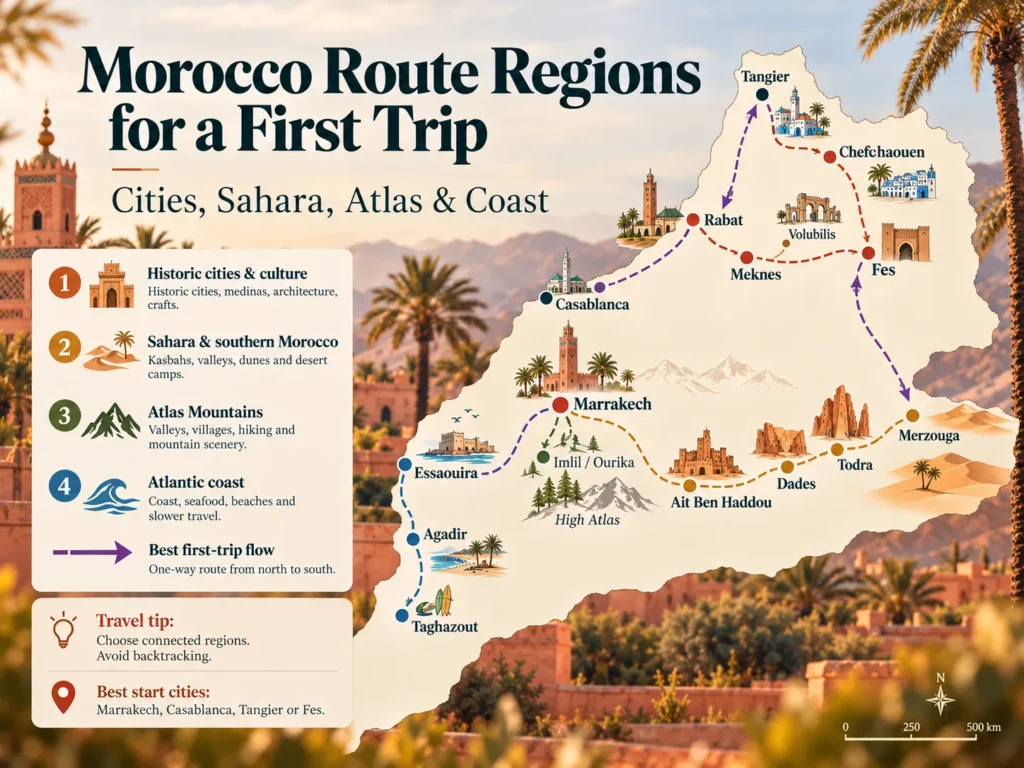
For many first-time visitors, the strongest itinerary combines one major historic-city section with the Sahara and southern Morocco.
A classic route can flow through:
Casablanca or Tangier → Rabat/Chefchaouen → Fes → Merzouga → Todra and Dades → Ait Ben Haddou → Marrakech.
If you have enough time, add Essaouira after Marrakech.
This route works because the landscapes change naturally as you travel: Atlantic or northern cities give way to historic Fes, then Middle Atlas scenery, the Sahara, rocky southern valleys, the High Atlas and finally Marrakech.
Choose the Route by What You Actually Want to Experience
For Historic Cities and Culture
Prioritize Marrakech, Fes, Rabat and Meknes. Chefchaouen can be added when the north is important, while Volubilis works well around a Fes and Meknes itinerary.
Do not reduce Fes to a few hours simply to increase the number of cities. Its medina, traditional workshops, food and historic architecture benefit from at least one complete day.
For the Sahara
Build the itinerary around Merzouga and Erg Chebbi rather than treating the Sahara as an optional evening outside Marrakech.
A road route from Marrakech normally passes through the High Atlas and southern Morocco, while Fes provides another logical approach from the north. On longer trips, traveling Fes → Merzouga → Dades → Ait Ben Haddou → Marrakech creates a particularly efficient one-way journey.
For Mountains and Trekking
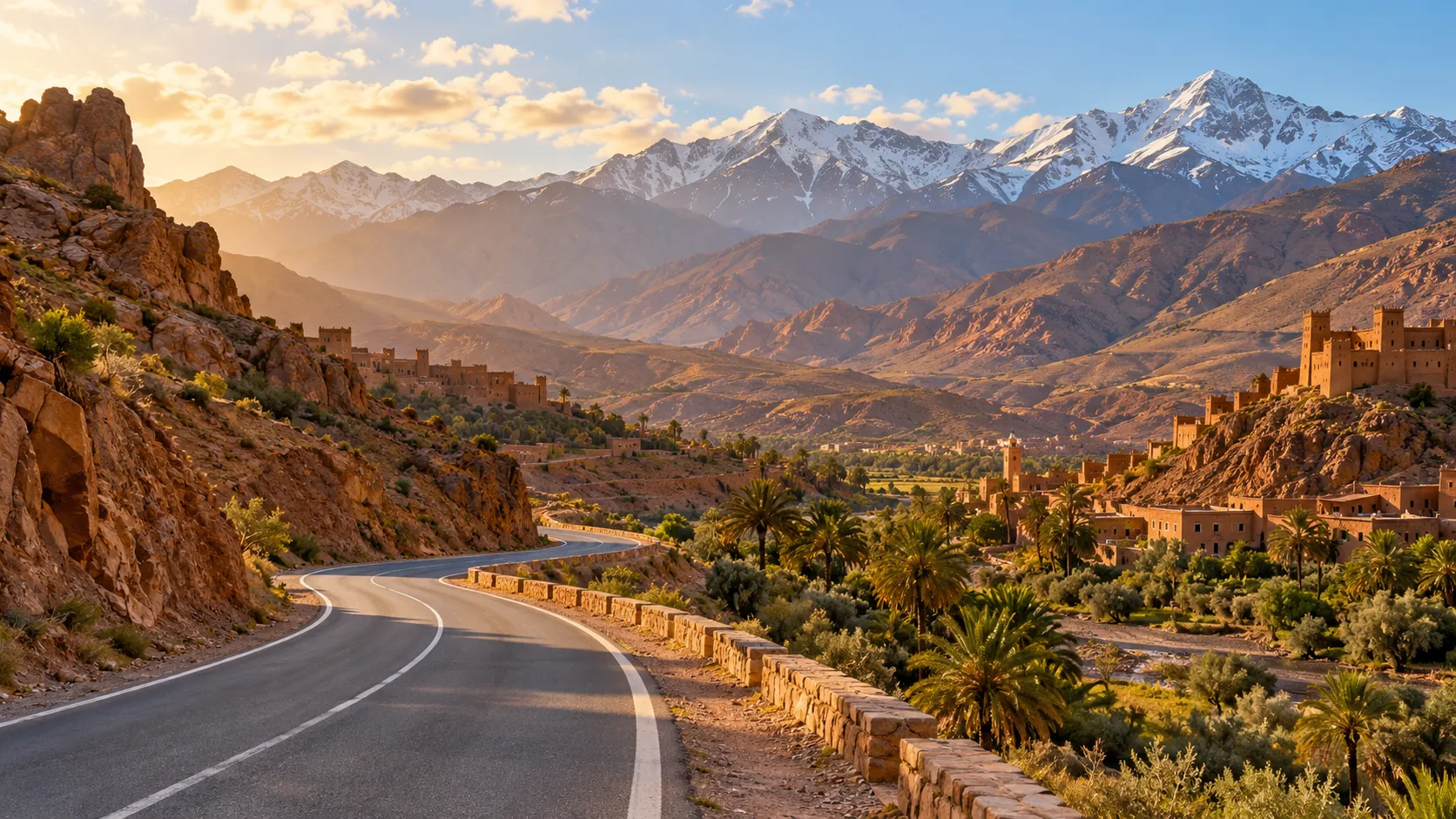
Include the Atlas Mountains as more than scenery viewed through a vehicle window. Depending on your trip length, the mountains can be a day trip from Marrakech, an overnight stay around Imlil or another valley, or a multi-day hiking component.
For Atlantic Coast
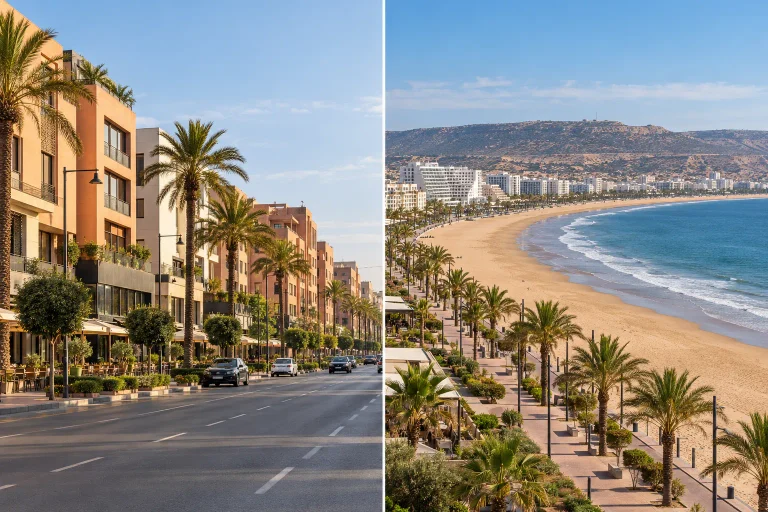
Essaouira is the easiest coastal destination to combine with Marrakech. Longer trips can extend toward Agadir, Taghazout or other Atlantic locations when beaches and slower travel matter more than northern Morocco.
For a North-to-South Journey
Start around Tangier or Casablanca and travel through Chefchaouen and Fes before heading southeast toward Merzouga and then west through southern Morocco to Marrakech.
This is one of the best ways to see Morocco’s changing geography without repeatedly retracing the same road.
How the Atlas Mountains Fit Into a Morocco Itinerary
The Atlas Mountains are not one single stop. They stretch across a large area and can play a very different role depending on how many days you have.
Atlas Mountains on a Short Trip
When you have only a few days, use Marrakech as a base for a mountain day. Imlil and the Ourika Valley are two popular options for valley scenery, walking and mountain communities.
Ourika can include riverside scenery and walks toward the Setti Fatma waterfalls, while Imlil is one of the best-known bases for High Atlas hiking.
Atlas Mountains on a One-Week Trip
If the Sahara is already part of your route, remember that you will cross the High Atlas while traveling toward Ait Ben Haddou and southern Morocco.
A separate Atlas excursion makes sense when hiking is an important interest. Otherwise, use that extra night in Marrakech, Fes or Merzouga rather than duplicating mountain travel.
Atlas Mountains on a 10–15 Day Trip
A longer journey gives you time to stay overnight in the mountains. This can include guided walking, valleys, terraced landscapes, village paths, a mountain guesthouse and regional meals.
Travelers who want a serious trekking component can use Imlil as a base and plan more demanding High Atlas routes separately. Mount Toubkal is a genuine mountain objective rather than a casual extension to every itinerary.
Amazigh Villages and Local Culture
Older tourism material frequently describes “Berber villages.” Amazigh is also widely used for the Indigenous communities of Morocco and North Africa.
Mountain villages should not be treated as scenery or automatic cultural performances. A meaningful visit is one arranged around a local guide, guesthouse, meal, artisan or other host who has agreed to participate.
Outdoor Activities in the Atlas
Depending on the area and season, Atlas travel can involve:
- Easy valley walking
- Longer guided trekking
- Waterfall walks
- Mountain biking
- Horseback riding
- Photography
- Guesthouse stays
- Village and agricultural landscapes
Choose the activity level according to your fitness, season and wider itinerary rather than assuming every mountain visit needs to become a major trek.
Atlas Mountains, Agafay or Sahara?
These landscapes should not be treated as interchangeable.
| Region | Main experience | How much time? |
|---|---|---|
| Atlas Mountains | Valleys, villages, hiking and high mountain scenery | Day trip to several days |
| Agafay | Rocky arid landscape near Marrakech | Several hours to one night |
| Merzouga / Erg Chebbi | Large Sahara dunes, camel or 4×4 travel and desert camps | Multi-day journey |
Agafay works when you have limited time around Marrakech. Merzouga is the stronger choice when large Sahara dunes are one of the main purposes of your Morocco trip. The Atlas Mountains provide a completely different mountain and hiking experience.
How Much Time Should You Spend in Morocco’s Main Stops?
| Destination | Typical useful stay | Why |
|---|---|---|
| Marrakech | 2–3 nights | Medina, palaces, gardens, food and souks |
| Fes | 2 nights | Full medina day plus arrival/departure time |
| Chefchaouen | 1–2 nights | Blue medina, Rif views and slower atmosphere |
| Merzouga | 1–2 nights | Sunset, camp, sunrise and optional full desert day |
| Atlas Mountains | Day trip to 2 nights | Depends on whether you want scenery or real trekking |
| Essaouira | 1–2 nights | Medina, seafood, Atlantic coast and slower pace |
These are planning ranges rather than rules. The right number of nights depends on the focus of your particular trip.
Where Should Your Morocco Itinerary Start?
Marrakech
Marrakech works particularly well for shorter trips, Atlas travel, Essaouira and routes heading through southern Morocco toward the Sahara.
Casablanca
Casablanca is practical when your international flight arrives there and you want to combine Rabat, Chefchaouen or Fes before moving south.
Tangier
Tangier is an excellent starting point for a north-to-south journey through Chefchaouen and Fes before continuing to the Sahara and Marrakech.
Fes
Starting in Fes works well when your priority is the historic city followed by Merzouga and a one-way journey through southern Morocco toward Marrakech.
Whenever possible, compare arriving in one city and departing from another. An open-jaw route can remove an entire day of unnecessary backtracking.
Sahara or Atlantic Coast?
On short and medium-length trips, this is one of the most useful decisions you can make early.
Choose the Sahara when you want Erg Chebbi, an overnight camp, dramatic southern landscapes and the road through Ait Ben Haddou, Dades or Todra.
Choose the Atlantic coast when you want slower travel, seafood, beaches, Essaouira’s medina or additional places such as Agadir and Taghazout.
At around twelve to fifteen days, including both becomes much more practical.
Chefchaouen or Essaouira?
Both are excellent destinations, but they pull the route in opposite directions.
Chefchaouen fits naturally with Tangier, Rabat and Fes. Essaouira fits naturally with Marrakech and Atlantic travel.
If you have less than ten days, choosing one rather than both usually produces a better itinerary. Longer trips can connect both if the overall route runs in one direction.
How to Include Ait Ben Haddou, Dades and Todra
Ait Ben Haddou, Dades Valley and Todra Gorge work best as part of the road between Marrakech and Merzouga rather than as separate destinations requiring their own unrelated excursions.
A Sahara itinerary from Marrakech can naturally move through the High Atlas, Ait Ben Haddou or Ouarzazate, Dades and Todra before reaching Merzouga.
Travelers continuing toward Fes can then complete a one-way route instead of retracing the entire southern road.
Self-Drive, Private Driver or Public Transport?
Self-Drive
A rental car provides excellent flexibility for Atlas, southern Morocco and coastal routes. It works best for travelers comfortable with mountain roads, city traffic, parking and long driving days.
For detailed planning, use the Morocco Road Trip Guide.
Private Driver
A private driver can make geographically broad itineraries easier because you can keep scenic stops without managing navigation and parking yourself.
A driver is not necessarily the same as a specialist city or mountain guide.
Train and Bus
Public transport can work well between major cities, particularly when your itinerary does not depend on rural valleys or multiple scenic stops.
The Sahara and southern road route often require additional road transport or an organized itinerary.
Best Time to Follow a Morocco Itinerary
Spring
Spring is a useful period for itineraries combining cities, Atlas scenery and the Sahara. It is also one of the stronger seasons for mountain walking.
Summer
Summer can become intensely hot around Marrakech, Ouarzazate and Merzouga. Coastal destinations may provide a very different climate during the same journey.
Plan desert activities for cooler parts of the day.
Autumn
Autumn works well for multi-region routes and Atlas hiking as the strongest summer heat decreases.
Winter
Winter can provide comfortable city sightseeing, but high mountain conditions may include snow and desert nights can become cold.
Check current mountain and road conditions when the Atlas forms an important part of the itinerary.
How to Avoid an Overpacked Morocco Itinerary
The easiest way to improve an itinerary is often to remove one destination.
Before finalizing the route, check whether you are:
- Changing hotels every night
- Crossing the same region more than once
- Traveling to Chefchaouen only for a few hours
- Giving Fes less than one full sightseeing day
- Calling Merzouga a Marrakech day trip
- Including Essaouira and Chefchaouen without allowing for the distance
- Adding a separate Atlas excursion immediately before crossing the Atlas toward the Sahara
- Returning to the original airport when another departure city would save a full day
A route with fewer destinations and more meaningful stays usually feels much richer than a longer checklist.
How to Choose the Right Morocco Itinerary
Start with four decisions:
- How many full days do you actually have after international travel?
- Which experience is non-negotiable: Sahara, cities, mountains, coast or northern Morocco?
- Which airport will you arrive at and depart from?
- How much time are you comfortable spending on the road?
Then choose the appropriate detailed guide:
- 3–5 Day Morocco Itinerary for focused short trips
- 6–8 Day Morocco Itinerary for one-week routes
- 9–11 Day Morocco Itinerary for balanced multi-region travel
- 12–15 Day Morocco Itinerary for complete long routes
The detailed pages contain the individual day structures. This pillar is designed to help you choose the right one before you begin building the schedule.
FAQ
How many days do you need for Morocco?
Seven to ten days works well for many first-time travelers who want cities plus the Sahara or another major region. Twelve to fifteen days is better when you want northern Morocco, Fes, the Sahara, Marrakech and the Atlantic coast without rushing. Three to five days is best kept regional.
What is the best Morocco itinerary for a first visit?
A strong first route combines Marrakech and Fes with the Sahara and the southern road through places such as Ait Ben Haddou, Dades or Todra. With more time, add Chefchaouen in the north or Essaouira on the Atlantic coast.
Can I visit Marrakech, Fes, Chefchaouen and the Sahara in one week?
It is possible in roughly eight days when the route is arranged geographically, but the pace is active. Six or seven days is better spent choosing either Chefchaouen or additional Sahara and city time. The 6–8 day guide compares the practical versions.
How many days should I spend in the Atlas Mountains?
A day trip is enough when you mainly want mountain scenery and an easy valley walk. One or two nights is better when you want guided trekking, Imlil, mountain villages or a guesthouse experience. Longer trekking routes should be planned as a separate part of the itinerary.
Should I visit Agafay or the Sahara?
Choose Agafay when you have limited time around Marrakech and want an arid landscape, sunset or camp-style experience. Choose Merzouga and Erg Chebbi when large Sahara dunes are one of the main reasons for your trip and you can dedicate several days to reaching them.
Is two weeks too long for Morocco?
No. Around fourteen days is one of the best lengths for a broad Morocco trip because it allows several two-night stays and enough time for northern Morocco, the Sahara, Marrakech and potentially Essaouira without turning every day into a transfer.
Build the Morocco Route Around Time, Geography and Priorities
There is no single perfect Morocco itinerary. A good three-day Marrakech trip and a good fifteen-day grand tour are designed according to completely different rules.
Short trips should stay focused. One-week journeys can begin linking cities, mountains or the Sahara. Nine to eleven days gives you enough time for a balanced multi-region route. Twelve to fifteen days opens the possibility of a broad journey through northern Morocco, Fes, the Sahara, southern valleys, Marrakech and Atlantic coast.
The Atlas Mountains can be a simple day trip, a scenic road crossing or a genuine trekking section depending on your available time. The Sahara can be one camp night or several days around Erg Chebbi. Chefchaouen and Essaouira can both be excellent additions, but only when the overall route supports them.
Choose the trip length first, then the region that matters most, and finally the individual stops. That approach creates a Morocco journey built around actual travel time rather than an unrealistic list of attractions.
Start with the 3–5 day routes, 6–8 day routes, 9–11 day routes or 12–15 day routes, depending on how long you have.
If you want the itinerary adjusted around your arrival airport, accommodation preferences, Sahara plans, hiking level and preferred travel pace, use the custom Morocco trip planner.
Explore destinations, tours and locally organized Morocco experiences with Visit Morocco Together.
Ready to Experience Morocco?
Turn this inspiration into your next adventure. Our travel experts are ready to help.