Essaouira combines a UNESCO-listed medina, working fishing port, broad Atlantic beach and a noticeably slower pace than Morocco’s larger inland cities. This Essaouira travel guide explains how long to stay, what to see inside the historic walls, how the city’s famous wind affects beach plans, where to eat seafood, and whether it makes more sense to visit from Marrakech for a day or stay overnight.
Once known as Mogador, Essaouira developed as an important Atlantic trading port. Today, its stone ramparts, whitewashed streets, blue fishing boats, art galleries and oceanfront setting give it a character that feels very different from Marrakech, Fes or Morocco’s desert towns.
Essaouira Travel Guide: How Long Should You Stay?
Essaouira is compact enough to see the main sights in a day, but one or two nights give you a much better experience. The medina is easy to explore on foot, and staying overnight means you can enjoy the ramparts and waterfront after many Marrakech day-trippers have left.
| Time available | Best approach |
|---|---|
| Half day | Medina, port and a short ramparts walk |
| 1 full day | Medina, Skala, fishing port, seafood lunch and beach |
| 1 night | Full city visit plus sunset and a quieter morning |
| 2–3 nights | Add water sports, Sidi Kaouki or countryside activities |
For current local tours and experiences, see the Essaouira destination page.
Explore the UNESCO-Listed Essaouira Medina
The medina is the natural starting point for a first visit. Unlike some of Morocco’s larger old cities, Essaouira has a relatively straightforward layout, so wandering independently is usually manageable.
The historic town was developed during the 18th century as a fortified Atlantic port. Its street plan and defensive architecture reflect both Moroccan urban traditions and European military influences, one of the reasons UNESCO added the Medina of Essaouira to the World Heritage List in 2001.
Spend time walking rather than moving directly between attractions. The most interesting parts of the medina include working shops, food stalls, art galleries, small squares and residential streets alongside more visitor-oriented craft stores.
Place Moulay Hassan
Place Moulay Hassan sits between the medina, port and waterfront and works as a useful orientation point. Cafés around the square make it a convenient place to stop before continuing toward either the fishing harbor or the old streets.
The square becomes particularly lively later in the day, so consider passing through more than once rather than treating it as a single sightseeing stop.
Explore the Back Streets and Souks
Essaouira’s medina has a strong tradition of crafts and art. You will see textiles, leather goods, jewelry, paintings and objects made from thuya wood, which is particularly associated with the region.
Do not assume everything for sale is locally handmade. Ask about the maker and materials if craftsmanship matters to you, particularly before buying higher-value products.
Travelers who want more historical context can join the Essaouira Medina Guided Walking Tour, which combines medina streets with the port, ramparts and local-life context.
Walk the Ramparts and Skala
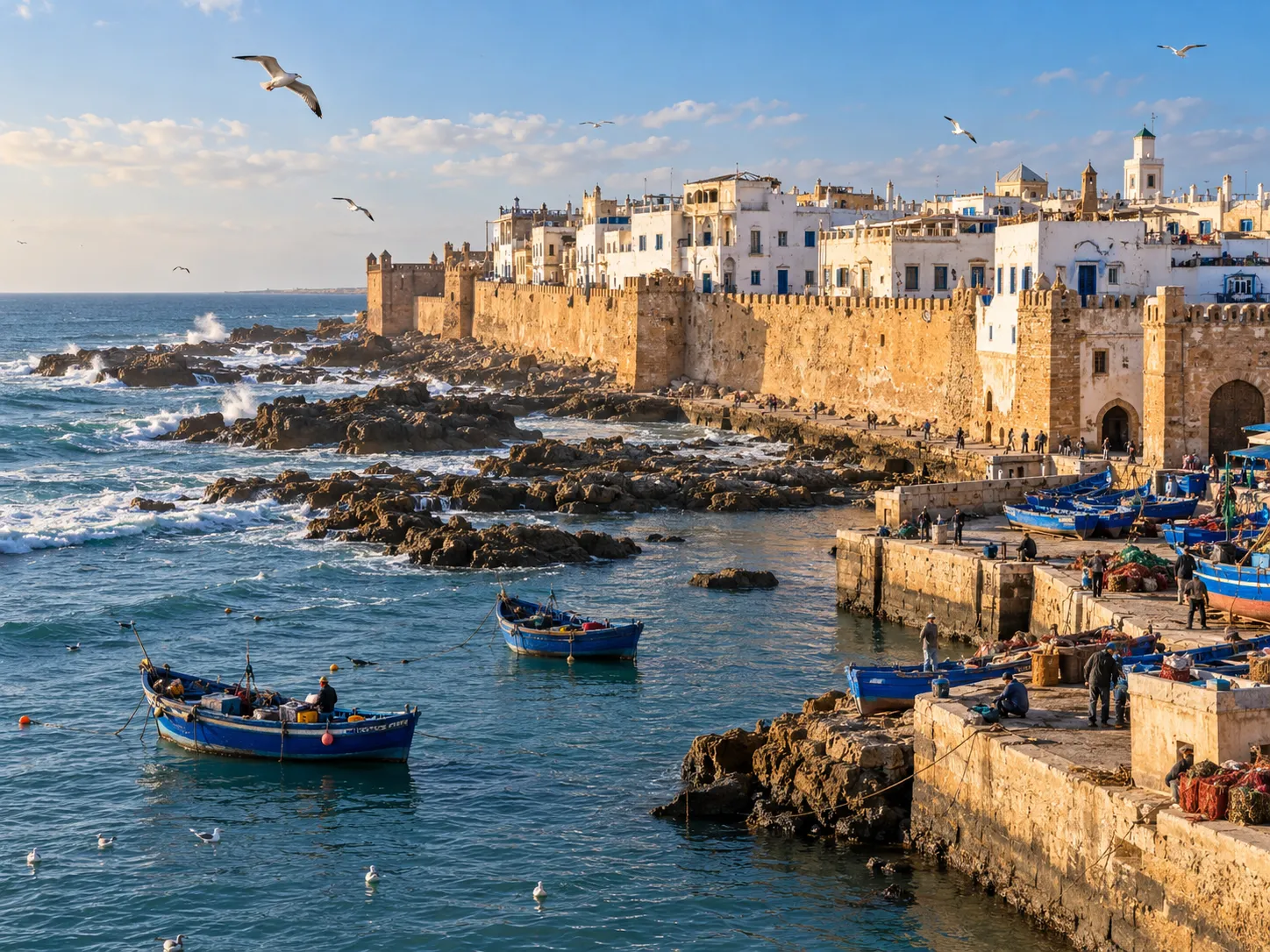
Essaouira’s Atlantic-facing fortifications are among the city’s most recognizable landmarks. The stone walls contrast sharply with the white buildings of the medina and the waves breaking below.
The Skala areas were part of the city’s defensive system, and today they provide some of the best views across the coast and surrounding buildings.
Wind is often noticeable here, even on days when the medina lanes feel sheltered. Keep hold of loose hats and bring a light outer layer if you are visiting outside the warmest conditions.
Best Time for the Ramparts
Late afternoon is especially attractive because the light warms the stone walls and Atlantic horizon. Photographers may also prefer the quieter conditions earlier in the morning.
Weather can completely change the atmosphere. A clear calm-looking afternoon and a cloudy windy morning can make the same viewpoint feel like two different places, which is part of Essaouira’s coastal character.
Visit Essaouira’s Fishing Port
The port is not simply a scenic backdrop. It remains a working harbor where boats arrive, fishermen handle catches and seafood moves between vessels, markets and restaurants.
The city’s distinctive blue fishing boats create some of Essaouira’s best-known images, particularly when viewed with the fortified medina behind them.
Working ports can be wet, busy and strongly scented, so wear shoes that you do not mind getting dusty or damp and stay clear of active working areas.
Seafood in Essaouira
Fresh seafood is one of the easiest local specialties to build into an Essaouira itinerary. Depending on availability, you may find sardines, white fish, shellfish, squid or other Atlantic catches.
Check prices before ordering seafood that is sold by weight, particularly when choosing fish from a display rather than a fixed menu.
Instead of assuming the most visible port stall is automatically the best choice, compare a few menus and look at what is actually fresh that day.
Essaouira Beach: What to Expect
Essaouira’s main beach forms a broad sandy arc south of the old city. It is excellent for long walks, watching water sports and taking a break from sightseeing.
However, an Essaouira travel guide should not describe it simply as a calm resort beach. The Atlantic wind that defines the city can make conditions very different from a sheltered Mediterranean beach or resort pool.
On calmer days, visitors may swim or spend time on the sand. On windier days, walking, surfing, windsurfing and kitesurfing may be much more appealing than lying on the beach.
Sea conditions vary, so assess the water on the day of your visit and follow local safety guidance rather than assuming swimming conditions will always be suitable.
Why Is Essaouira So Windy?
Essaouira’s exposed Atlantic position is central to its identity. The wind helps explain why the city has developed such a strong reputation for windsurfing and kitesurfing.
For travelers interested in water sports, this is an advantage. For travelers expecting a completely still beach holiday, it is something to plan around.
Check the wind forecast shortly before your beach day rather than relying only on the temperature forecast. A warm air temperature can still feel considerably cooler when the Atlantic wind is strong.
Windsurfing and Kitesurfing
Essaouira attracts both windsurfers and kitesurfers, and local schools operate along the coast. Beginners should use an instructor rather than renting equipment without understanding local wind, current and launch conditions.
More experienced riders should still check the daily forecast and local conditions before entering the water.
If water sports are one of the main reasons for your trip, give yourself several days rather than one fixed afternoon. This provides more flexibility if conditions on your first day do not match your skill level.
Art, Music and Craft Culture
Essaouira has long attracted artists and musicians, and galleries are spread throughout the medina. This creative side of the city is part of its appeal even if you are not visiting during a major festival.
Gnawa music is particularly associated with Essaouira’s cultural identity, and the city is internationally known for its Gnawa music festival.
You will also find workshops and stores selling thuya woodwork, textiles, paintings and jewelry. Browsing these smaller galleries and craft spaces is an easy way to break up a medina walk.
If you take photographs inside workshops or of individual artisans, ask first rather than assuming a commercial space automatically means photography is welcome.
The Mellah and Essaouira’s Jewish Heritage
Essaouira developed as a multicultural trading city, and its historic Jewish community formed an important part of that history. The Mellah, or former Jewish quarter, adds another layer to understanding the city beyond its beach and ramparts.
Some buildings and heritage sites have undergone restoration, while other streets still show the effects of age and coastal weather.
Approach the neighborhood as a historic residential district rather than only as a photo location. Travelers especially interested in this part of the city’s history can use a dedicated heritage tour rather than relying on brief descriptions from general sightseeing routes.
A Practical 2-Day Essaouira Itinerary
Day 1: Medina, Ramparts and Port
Begin in the medina before the busiest part of the day. Walk through the main streets and smaller lanes, stopping at galleries, workshops and shops that interest you.
Continue toward the ramparts and Skala for Atlantic views, then head toward Place Moulay Hassan and the fishing port.
Have seafood or another Moroccan lunch before spending the afternoon wandering additional parts of the medina.
Finish the day either on the ramparts or beachfront around sunset. The Essaouira Sunset Walking Tour is another option if you prefer to explore the late-afternoon city with a local guide.
Day 2: Beach, Water Sports or a Coastal Excursion
Use the second morning for the beach when conditions are comfortable. Walk along the sand, arrange a water-sports lesson if that is part of your plans, or simply spend a slower morning away from the medina.
If you would rather explore farther down the coast, make Sidi Kaouki the main activity for the day instead of trying to squeeze it into a short city itinerary.
Sidi Kaouki From Essaouira
Sidi Kaouki lies south of Essaouira and offers a more open coastal setting with a smaller village atmosphere. It appeals particularly to travelers interested in surfing, long beach walks and spending more time outside an urban environment.
The Moroccan tourism office highlights Sidi Kaouki for surfing and other wind-driven water sports, as well as walking along the beach. It is better treated as a half-day or full-day excursion rather than another central Essaouira attraction.
Travelers who want transport and a planned coastal outing can use the Sidi Kaouki Day Trip from Essaouira.
Best Time to Visit Essaouira
Essaouira can be visited throughout the year, and choosing the best period depends largely on what you want to do.
Spring and autumn are well suited to medina walks and general sightseeing because conditions are often comfortable for spending much of the day outdoors.
Summer attracts travelers looking for a cooler Atlantic alternative to inland Moroccan cities. The wind can also become an important part of beach and water-sports planning.
Winter is quieter and can still be enjoyable for sightseeing, but expect cooler evenings, possible rain and changing Atlantic conditions.
Whatever the season, a light wind-resistant layer is more useful in Essaouira than many travelers expect.
How to Get to Essaouira From Marrakech
Essaouira is reached from Marrakech by road. A typical journey takes around three hours depending on traffic, stops and your exact departure point.
This makes a day trip possible, but it creates a long day with several hours spent in a vehicle. A one-night stay is much more relaxed if your itinerary has room.
If time is limited and you prefer not to organize transport independently, the Essaouira Day Trip from Marrakech includes return transport and time for the medina, port and Atlantic coast.
Should You Take a Day Trip or Stay Overnight?
Choose a day trip if Marrakech is your main base and you only have one free day.
Stay overnight if you want evening atmosphere, sunset, water sports or enough time to explore without watching the return clock.
Two nights is even better for travelers who want both the historic city and a Sidi Kaouki or countryside excursion.
Essaouira From Agadir
Essaouira can also be combined with Agadir as part of an Atlantic coast itinerary. Morocco’s national tourism office gives the road distance between the Agadir-Taghazout region and Essaouira at roughly 175 kilometers, with a typical driving time of just under three hours.
Because the journey takes a meaningful part of the day, travelers moving between the cities should consider it a transfer rather than trying to fit extensive sightseeing into both destinations on the same day.
Where to Stay in Essaouira
Inside the Medina
The medina is the best choice for travelers who prioritize atmosphere, restaurants and walking access to historic sights. Riads and guesthouses range from simple traditional properties to more polished boutique accommodation.
Vehicle access is limited inside the old city, so check how far you will need to carry luggage from the nearest accessible gate.
Near the Beach
Beachfront and newer-city accommodation is better suited to travelers focused on water sports, easy vehicle access or ocean views.
You can still walk to the medina from many beachfront properties, making this a practical compromise for longer stays.
What to Eat in Essaouira
Seafood is the obvious priority, but there is no need to eat fish for every meal. Essaouira also has standard Moroccan dishes, small bakeries, cafés and contemporary restaurants.
- Grilled Atlantic fish
- Sardines when available
- Calamari and other seafood
- Fish or vegetable tagines
- Moroccan salads
- Fresh bread
- Mint tea
- Moroccan pastries
Ask for the price before ordering items sold by weight, and confirm whether sides, bread or drinks are included when ordering from informal seafood counters.
Essaouira Travel Guide: Practical Tips
- Bring a light wind-resistant layer even when the forecast is warm.
- Wear comfortable shoes for medina streets and the working port.
- Check the wind and sea forecast before planning swimming or water sports.
- Carry some Moroccan dirhams for small shops, cafés and taxis.
- Ask permission before photographing fishermen, artisans or residents closely.
- Do not block working areas inside the fishing port.
- Confirm seafood prices before ordering when prices are not fixed.
- Stay overnight if you want a slower experience than a Marrakech day trip allows.
- Give Sidi Kaouki a separate half or full day rather than rushing the excursion.
Who Is Essaouira Best For?
This Essaouira travel guide is particularly useful for travelers interested in historic medinas, seafood, photography, art, coastal walks, surfing, windsurfing and kitesurfing.
The compact historic center also works well for couples, solo travelers and families who prefer a city where most central attractions can be reached on foot.
Travelers looking exclusively for a sheltered resort beach may find the wind frustrating. Those who enjoy an active Atlantic coastline are more likely to see it as one of Essaouira’s strengths.
FAQ
How Many Days Do You Need in Essaouira?
One full day covers the main medina, ramparts, port and beach, but one or two nights provide a better pace. Stay longer if you want water sports, Sidi Kaouki or countryside excursions.
Is Essaouira Worth Visiting?
Yes. Essaouira combines a UNESCO-listed fortified medina, active fishing port, Atlantic beach, art scene and water sports in a compact destination. It also provides a strong contrast to inland Marrakech.
Can You Visit Essaouira as a Day Trip From Marrakech?
Yes. The drive typically takes around three hours each way depending on conditions, so a day trip is possible but long. Staying overnight gives you more time and lets you enjoy the city after many day visitors leave.
Is Essaouira Always Windy?
Wind is a defining feature of Essaouira’s Atlantic climate, although strength varies from day to day and by season. Check the current forecast if swimming, beach lounging, windsurfing or kitesurfing is important to your plans.
Can You Swim at Essaouira Beach?
Swimming is possible when sea and weather conditions are suitable, but Atlantic waves and wind vary. Assess conditions on the day and follow local safety advice rather than expecting consistently calm water.
Is Sidi Kaouki Worth Visiting From Essaouira?
Yes, especially if you want a more open beach setting, surfing or a slower coastal day. Give Sidi Kaouki at least half a day instead of trying to combine it with every major Essaouira sight in a few hours.
Plan Your Stay in Essaouira
This Essaouira travel guide works best as a flexible framework. Spend your first day walking through the UNESCO medina, exploring the ramparts, watching activity at the fishing port and ending beside the Atlantic. If you have another day, use it for the beach, water sports or a coastal trip toward Sidi Kaouki rather than repeating the same medina route.
Essaouira is compact enough to visit quickly, but its slower rhythm is one of the reasons not to rush it. An overnight stay gives the medina, port and beach enough time to feel like parts of one coastal city rather than separate items on a sightseeing checklist.
Explore destinations, tours and locally organized Morocco experiences with Visit Morocco Together.
Ready to Experience Morocco?
Turn this inspiration into your next adventure. Our travel experts are ready to help.