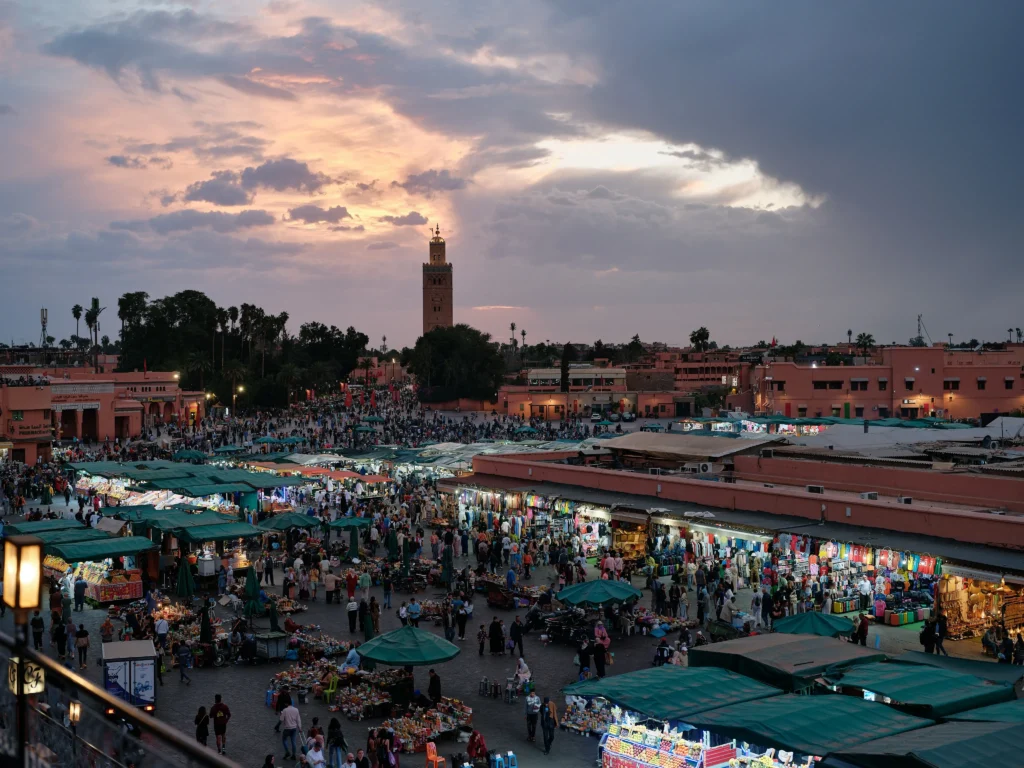
Jemaa el-Fna Marrakech is the place where many visitors first experience the intensity of the city’s old medina. During the morning it can feel surprisingly open and relaxed, but by late afternoon the atmosphere begins to change. Food stalls appear, groups form around performers and musicians, and the square becomes one of Marrakech’s busiest gathering places. The best way to understand Jemaa el-Fna is not to treat it as a single attraction to photograph and leave. Visit at different times of day, walk through the surrounding souks, stop for a rooftop view, and return after dark to see how completely the character of the square changes.
Why Jemaa el-Fna Matters to Marrakech
Jemaa el-Fna has been a central meeting place in Marrakech for centuries. Its importance is not based on one palace, monument or architectural feature. What makes the square unusual is the activity that takes place within it: trading, food, music, storytelling, informal performances and social gatherings.
UNESCO originally proclaimed the cultural space of Jemaa el-Fna as a Masterpiece of the Oral and Intangible Heritage of Humanity in 2001. It was incorporated into UNESCO’s Representative List of the Intangible Cultural Heritage of Humanity in 2008. The recognition focuses on the traditions practiced in the square rather than the physical square alone.
That distinction is useful for travelers. Jemaa el-Fna is not a museum where the experience stays the same throughout the day. What you see depends on when you arrive, which part of the square you walk through and what happens to be taking place around you.
What to Expect During the Day

Mornings are usually the easiest time to understand the layout of the square. There is more open space, the surrounding buildings are easier to see and the entrances toward the medina souks are less visually overwhelming than they become later in the day.
You will normally see juice stands, small vendors and people crossing between different sections of the medina. It is a useful time for photography, especially if you want wider views rather than tightly packed crowds.
Orange Juice and Drink Stalls
Fresh orange juice stalls are one of the most recognizable features of the square. Prices and offerings can change, so check the displayed price or ask before ordering rather than relying on figures from older travel guides.
Henna Artists
Henna artists may approach visitors directly or work from areas around the square. If you want a design, agree on the design and total price before anything is applied.
Be especially cautious with products marketed as black henna. Traditional henna normally creates reddish-brown tones, while darker temporary products may contain additional dyes that can cause skin reactions. If you are unsure what is being used, it is reasonable to decline.
Performers and Animal Photo Offers
You may encounter musicians, performers, snake handlers and people offering photographs with animals. Taking a photograph of someone performing may lead to a request for payment, so do not assume photographs are free simply because the performance is taking place in a public square.
You are also under no obligation to participate in animal photo experiences. If you are uncomfortable with captive monkeys or snakes being used for tourist photographs, simply keep walking and avoid paying for the interaction.
What Happens at Jemaa el-Fna After Sunset?
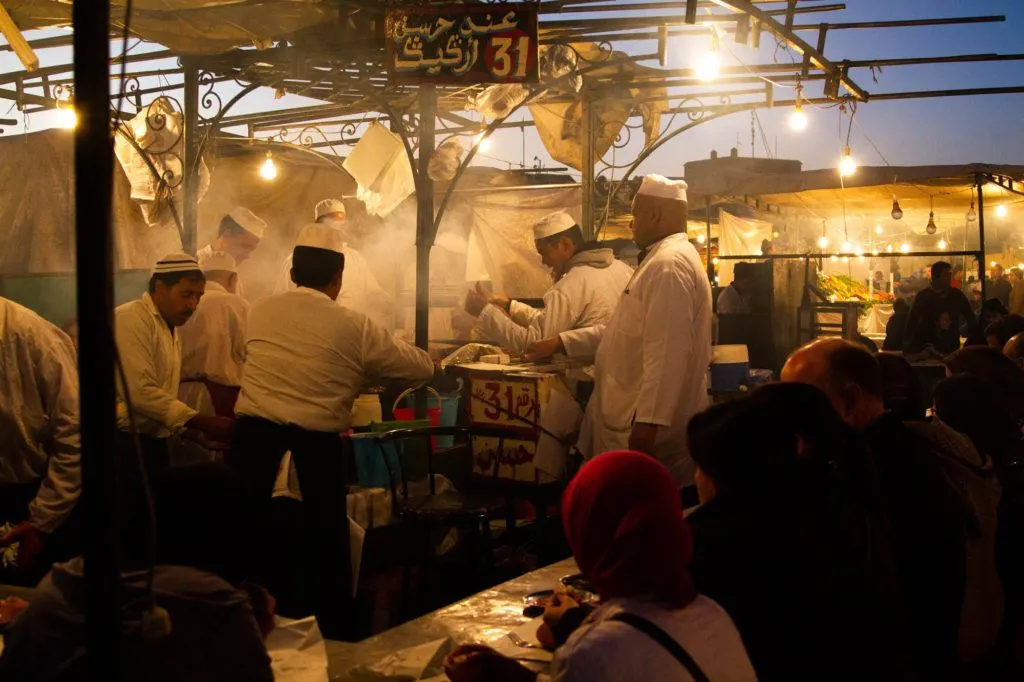
Late afternoon is when the square begins its best-known transformation. Food stalls are assembled, grills are lit and larger groups start forming around musicians and performers. By evening, much of the open daytime space has become a mixture of temporary kitchens, dining counters and circles of spectators.
This is also when the living cultural traditions associated with the square become easiest for visitors to notice. Performances vary, so there is no guaranteed nightly schedule. You may encounter musicians, storytellers, entertainers or other groups gathering an audience in a circle, traditionally known as a halqa.
You do not have to understand every word being spoken to appreciate how the crowd responds, but remember that these are working performers rather than free tourist displays. If you spend time watching or photographing someone, having small cash available for a contribution is practical.
Best Time to Visit Jemaa el-Fna Marrakech
There is no single best hour because the square offers a different experience throughout the day. For a first visit, late afternoon through early evening gives you the strongest contrast: arrive while there is still daylight, watch the square change, then stay after dark.
| Time | What to expect | Best for |
|---|---|---|
| Morning | More open space, lighter crowds and daytime vendors | Orientation and wide photographs |
| Late afternoon | Food stalls begin setting up and crowds gradually increase | Seeing the transition from day to night |
| Sunset | Changing light, busy rooftops and increasing activity below | Rooftop views and photography |
| Evening | Food stalls, performers, crowds and the square at its busiest | Street food and atmosphere |
If Jemaa el-Fna Marrakech is one of your priorities, visit once during daylight and again after dark rather than trying to experience everything in a single short stop. Sunset times vary throughout the year, so check the local sunset time for your travel date instead of planning around a fixed hour.
What to Eat at Jemaa el-Fna
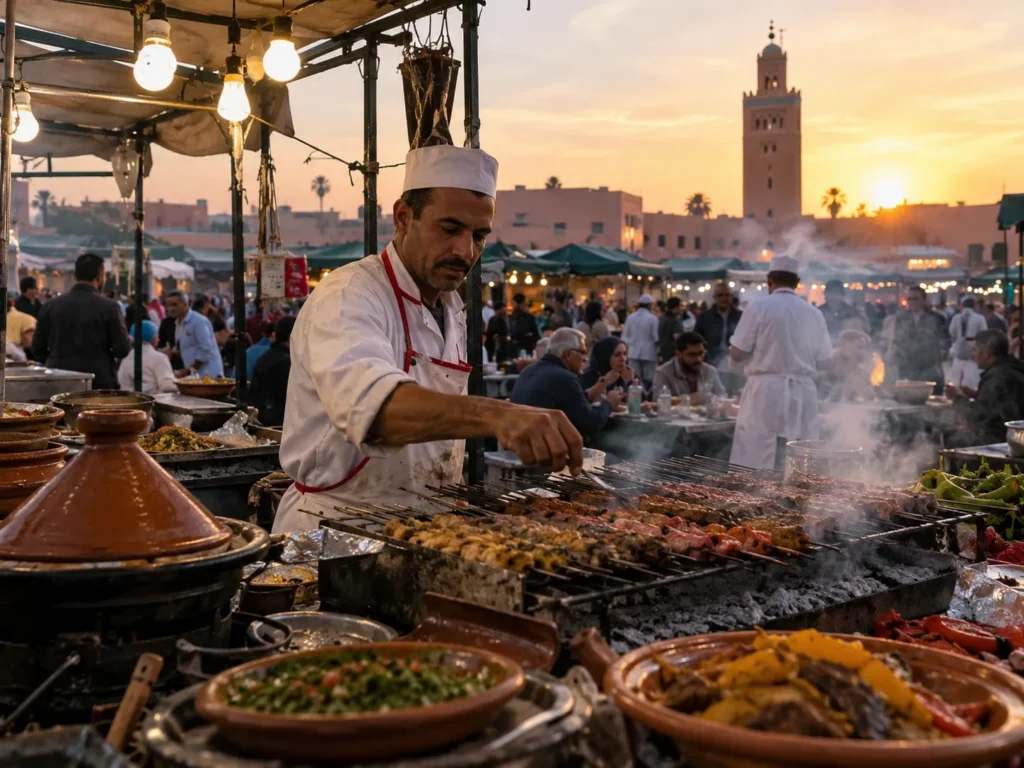
Eating at Jemaa el-Fna Marrakech is as much about the atmosphere as the meal. In the evening, temporary stalls prepare a changing selection of Moroccan dishes and snacks. What is available can vary from stall to stall and from one visit to another.
You may find options such as grilled brochettes, sausages, cooked vegetables, Moroccan salads, soups, bread, olives and other inexpensive dishes. Snail soup and sheep’s head are among the more distinctive foods travelers may encounter, but there is no need to approach the square as a checklist of unusual things you have to eat.
Walk around first, look at several stalls and choose somewhere that suits you. Confirm the price of what you order, particularly when adding several small dishes or drinks. Busy stalls can be a useful indicator of popularity, but use the same food-hygiene judgment you would use at any busy street-food market.
Should You Eat Dinner in the Square?
The food stalls are worth experiencing if you enjoy busy, informal street dining. Expect close seating, quick service, smoke from the grills and plenty of activity around you. Travelers looking for a long, quiet dinner may prefer one of the restaurants in the surrounding medina and visit the stalls separately.
A useful compromise is to try one or two small dishes in the square and then continue elsewhere for the rest of the evening.
Photography and Rooftop Views
Jemaa el-Fna is highly photogenic, but photographing the square and photographing individuals are not the same thing. Wide views from a rooftop or the edge of the square are straightforward. When photographing a performer, vendor or other identifiable person at close range, ask first where practical and be prepared for performers to request payment.
For a wide view, one of the rooftop terraces surrounding the square is particularly useful around sunset. Arrive before sunset if you want a good position, especially during busy travel periods. You will generally be expected to order something while using a café or restaurant terrace.
Instead of relying on a fixed list of rooftop businesses, choose according to the view, current opening status, menu and available seating when you visit. Restaurants and terrace arrangements can change much faster than the square itself.
Safety, Hassle and Common Tourist Situations
Because Jemaa el-Fna Marrakech becomes extremely crowded, keep phones, wallets and bags secure, particularly after dark and while watching performances. A zipped cross-body bag or similar arrangement is more practical than keeping valuables in open pockets.
You may be approached by sellers, performers, henna artists or people offering directions. A polite but clear refusal is usually the simplest response when you are not interested. You do not need to continue a conversation simply because somebody has approached you.
- Agree on prices before accepting a service, photograph or henna design.
- Keep your phone and wallet secure in dense crowds.
- Do not hand your phone or camera to strangers unless you are comfortable doing so.
- Use official or properly arranged guides rather than following unsolicited offers from people claiming to guide you through the medina.
- If someone says a street or attraction is closed, verify it independently before changing direction.
- Carry some small cash if you intend to watch performers or buy inexpensive food and drinks.
The aim is not to be suspicious of everyone. Jemaa el-Fna is a busy commercial and social space, and most interactions are ordinary. Clear expectations about prices and keeping control of your belongings simply make the experience easier.
How Long Should You Spend at Jemaa el-Fna?
For most travelers, Jemaa el-Fna Marrakech works best as part of a wider medina day rather than as an isolated attraction. Allow around one to two hours during the evening if you want to walk around, watch the food stalls and spend some time observing the square.
You can then combine it with the surrounding souks and historic sights. A good first-day approach is to explore part of the medina during daylight, return toward Jemaa el-Fna in late afternoon, watch sunset and stay into the evening.
If you want more context on your first visit, a Marrakech Medina and Jemaa el-Fnaa guided walking tour can help explain how the square connects with the surrounding medina, souks and historic streets.
What to See Near Jemaa el-Fna

The square sits at the center of several of Marrakech’s most visited areas, so there is little reason to travel there only for the square itself.
Koutoubia Mosque
The Koutoubia Mosque and its minaret form one of the most recognizable landmarks near Jemaa el-Fna. Non-Muslim visitors generally experience the mosque from the exterior and surrounding gardens rather than entering the prayer hall.
Marrakech Souks
The medina’s souks extend north from the square through a dense network of lanes selling textiles, leather goods, ceramics, lamps, spices and many other products. Give yourself time to wander rather than trying to follow every lane on a map.
Bahia Palace
Bahia Palace lies south-east of the square and can be combined with Jemaa el-Fna as part of a wider historic-medina route.
Ben Youssef Madrasa
Ben Youssef Madrasa lies farther north within the medina and works well with a route through the souks. If you are planning several days in the city, see the Marrakech destination guide for more places and experiences to combine.
FAQ
Is Jemaa el-Fna Marrakech free to visit?
Yes. Jemaa el-Fna is a public square and there is no general entrance ticket. You will pay separately for food, drinks, guided experiences, henna or other services you choose to use, and performers may expect contributions from people who stop to watch or photograph them.
Is Jemaa el-Fna better during the day or at night?
The evening is more atmospheric, while daytime is easier for understanding the layout and taking wider photographs. If possible, arrive in late afternoon so you experience both.
Is Jemaa el-Fna safe at night?
Large numbers of visitors and residents use the square after dark, but it is a crowded tourist area where petty theft can occur. Keep valuables secure, remain aware of your surroundings and be cautious with unsolicited services or unofficial guides.
Can you eat at Jemaa el-Fna?
Yes. Evening food stalls are one of the square’s defining features. Walk around before choosing, check prices before ordering and select food that suits your own comfort level and dietary needs.
Should I use a guide?
A guide is not essential for simply visiting the square. However, a licensed local guide can be useful on your first medina visit if you want historical context, help navigating the surrounding streets or explanations of traditions that are difficult to understand by observation alone.
How much time do I need?
Allow around one to two hours for an evening visit, longer if you plan to eat or spend time watching performances. Visiting once in daylight and returning after sunset gives you the most complete experience.
Plan Your Visit to the Square
A visit to Jemaa el-Fna Marrakech is most rewarding when you allow the square to change around you. Arrive before sunset, observe the daytime activity, watch the food stalls take shape and stay long enough to experience the evening crowds and performances. Keep prices clear, treat performers and residents respectfully, and combine the square with the surrounding medina rather than treating it as a standalone photo stop.
Explore Marrakech, local experiences and tailor-made Morocco journeys with Visit Morocco Together.
Ready to Experience Morocco?
Turn this inspiration into your next adventure. Our travel experts are ready to help.