Majorelle Garden Marrakech is one of the city’s most recognizable attractions, combining dense botanical planting, water features and vivid blue architecture just outside the historic medina. Created by French painter Jacques Majorelle and later preserved by Yves Saint Laurent and Pierre Bergé, the garden works best when you book ahead and give yourself enough time to enjoy it rather than treating it as a quick photo stop.
This guide explains the current ticket system, opening hours, how long to spend at Jardin Majorelle, what to see, when to visit for fewer crowds, and whether you should add the Pierre Bergé Museum of Berber Arts or nearby Musée Yves Saint Laurent Marrakech.
Majorelle Garden Marrakech: Quick Visitor Information
| Planning detail | What to know |
|---|---|
| Location | Rue Yves Saint Laurent, Marrakech |
| Garden opening hours | Currently 8:00 AM–5:30 PM daily |
| Last entry | Currently 5:00 PM |
| Standard garden admission | Currently 170 MAD |
| Recommended visit | About 1–1.5 hours for the garden |
| With museum | Allow roughly 2 hours or more |
| Tickets | Reserve a timed ticket online in advance |
These hours and prices are current at the time of writing in October 2026. Always verify the latest information through the official Jardin Majorelle ticket office before your visit because admission conditions can change.
For wider city planning, see the Marrakech destination page.
Why Is Jardin Majorelle Famous?
The garden is closely associated with French painter Jacques Majorelle, who began developing the property during the 1920s. Over several decades, he transformed it into both a personal garden and a place for experimenting with plants collected from different parts of the world.
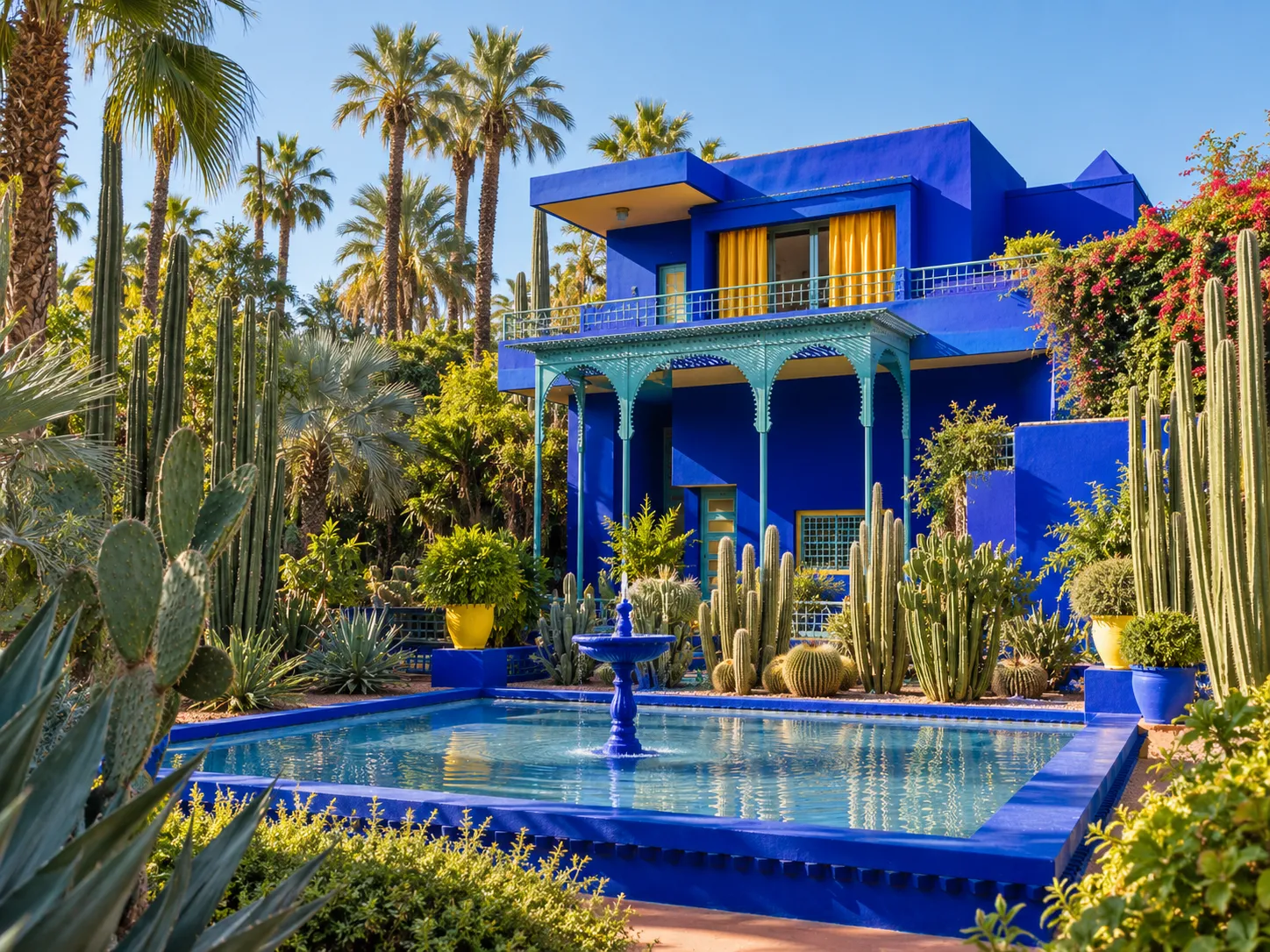
Majorelle’s architectural studio and garden structures became known for an intense cobalt shade now commonly called Majorelle Blue. Against green palms, bamboo, cacti and other plants, the blue creates the color contrast that has become the garden’s defining visual identity.
In 1980, Yves Saint Laurent and Pierre Bergé purchased Jardin Majorelle when the property faced redevelopment. They restored the garden and continued its preservation, establishing another layer of history linking the site with fashion and design.
Today, the garden covers approximately 9,000 square meters and combines Art Deco and Moorish influences with planting, pathways, pools and distinctive architectural color.
What to See at Majorelle Garden
Jardin Majorelle is compact enough to explore without a complicated route. The experience is mainly about slowing down and noticing how plants, architecture, water and color work together.
The Majorelle Blue Architecture
The intense blue buildings are usually the first feature visitors associate with the garden. Look beyond the obvious wide photographs and notice the smaller combinations of blue, yellow, green and turquoise throughout doors, railings, pots and architectural details.
The contrast is particularly effective around the cactus areas, where strong geometric plant forms sit against the flat blue surfaces.
Cacti and Succulents
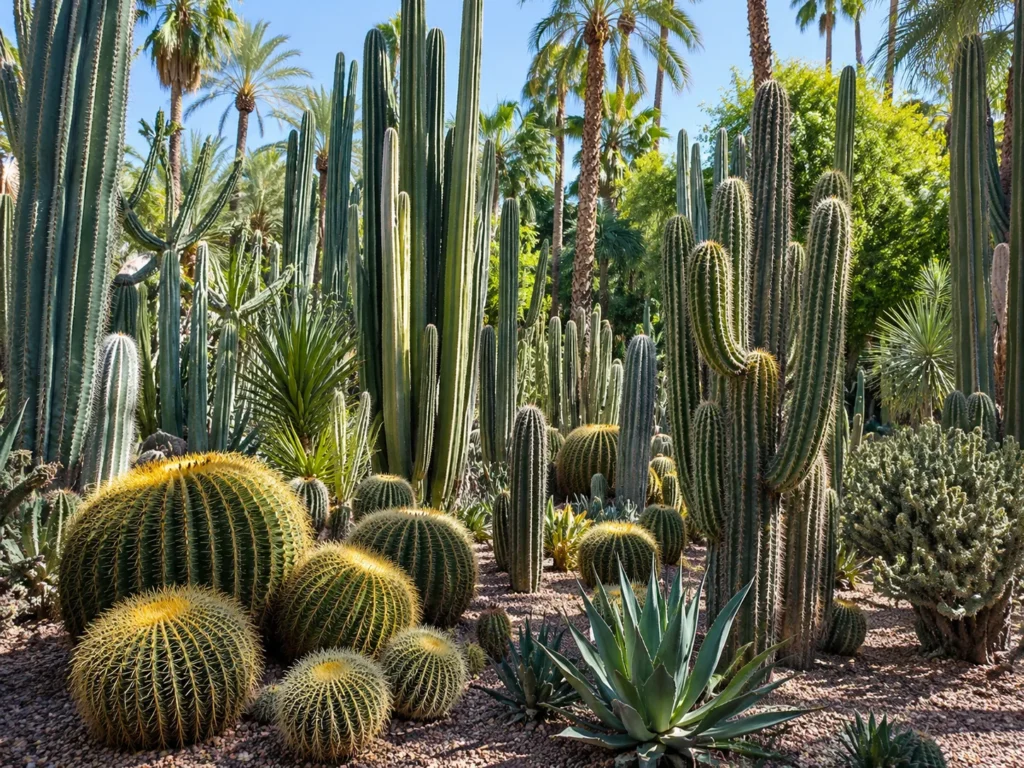
The cactus collection provides some of the garden’s most distinctive landscapes. Tall columnar species, rounded forms, agaves and other succulents create scenes that feel very different from traditional Moroccan courtyard gardens.
Take your time rather than rushing from one famous photo position to another. Some of the strongest views are found along smaller pathways where architecture appears through layers of vegetation.
Bamboo and Shaded Paths
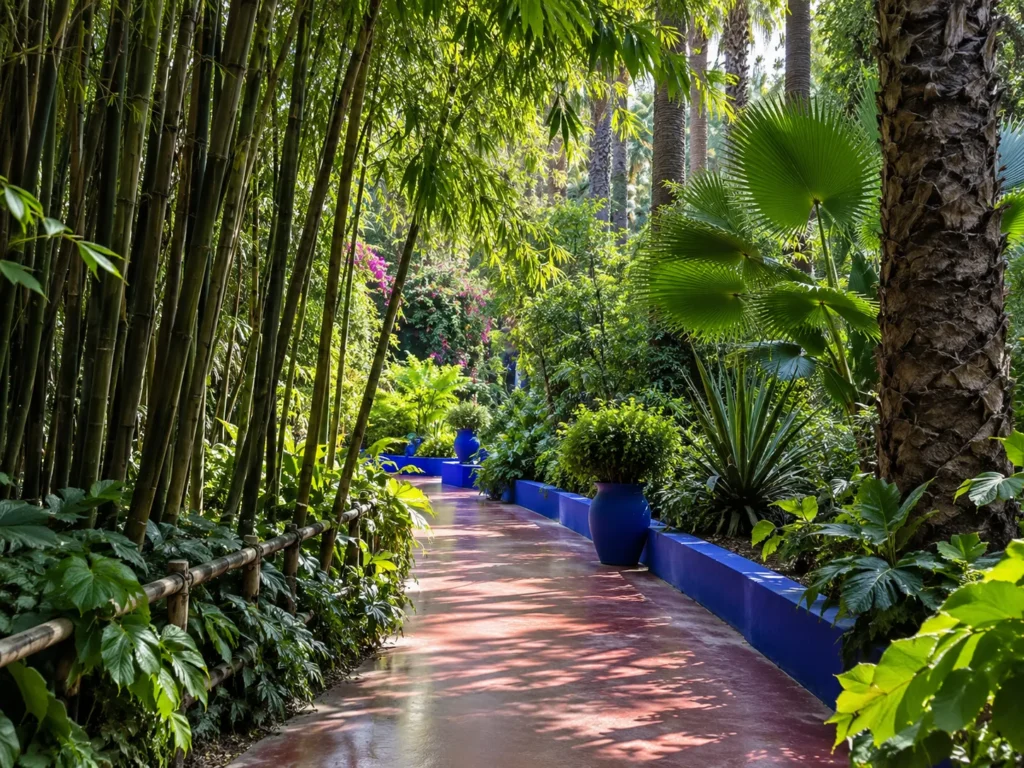
Bamboo and other dense plantings provide noticeably different light and atmosphere from the exposed cactus areas.
These shaded paths are especially welcome during warmer parts of the day and illustrate how varied the relatively compact garden can feel.
Pools and Water Features
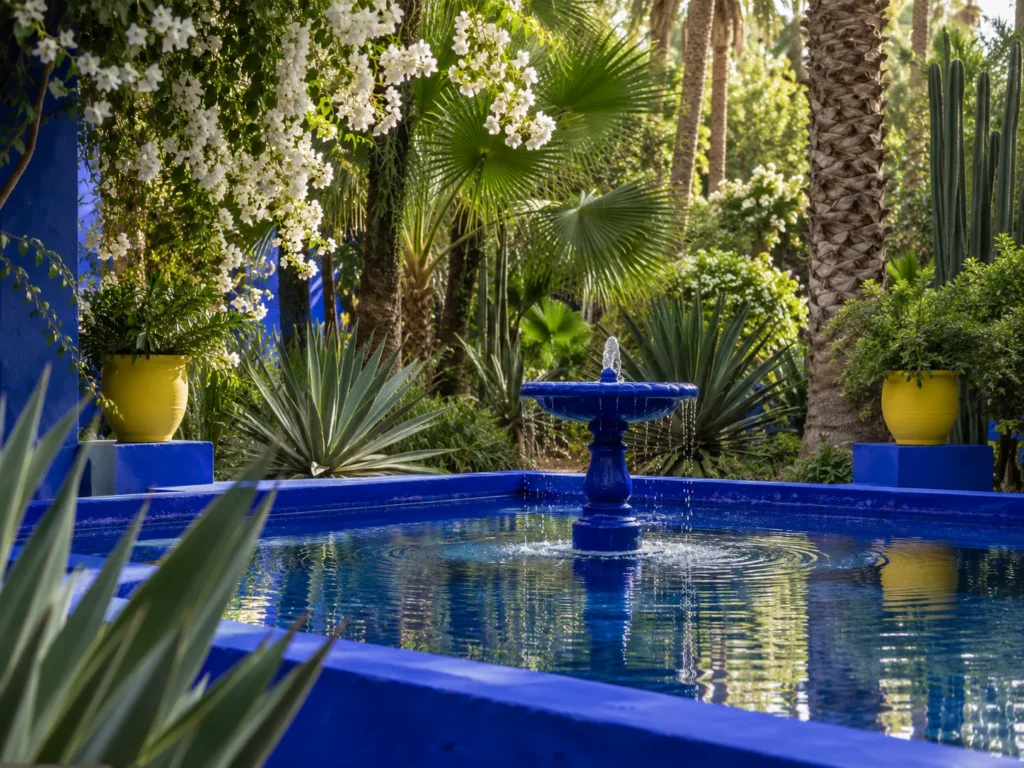
Pools, channels and fountains add reflections and movement between the planting areas. Water also provides another strong visual contrast with Majorelle Blue.
These sections can become popular photography points, so avoid blocking narrow paths while waiting for an empty composition.
The Pierre Bergé Museum of Berber Arts
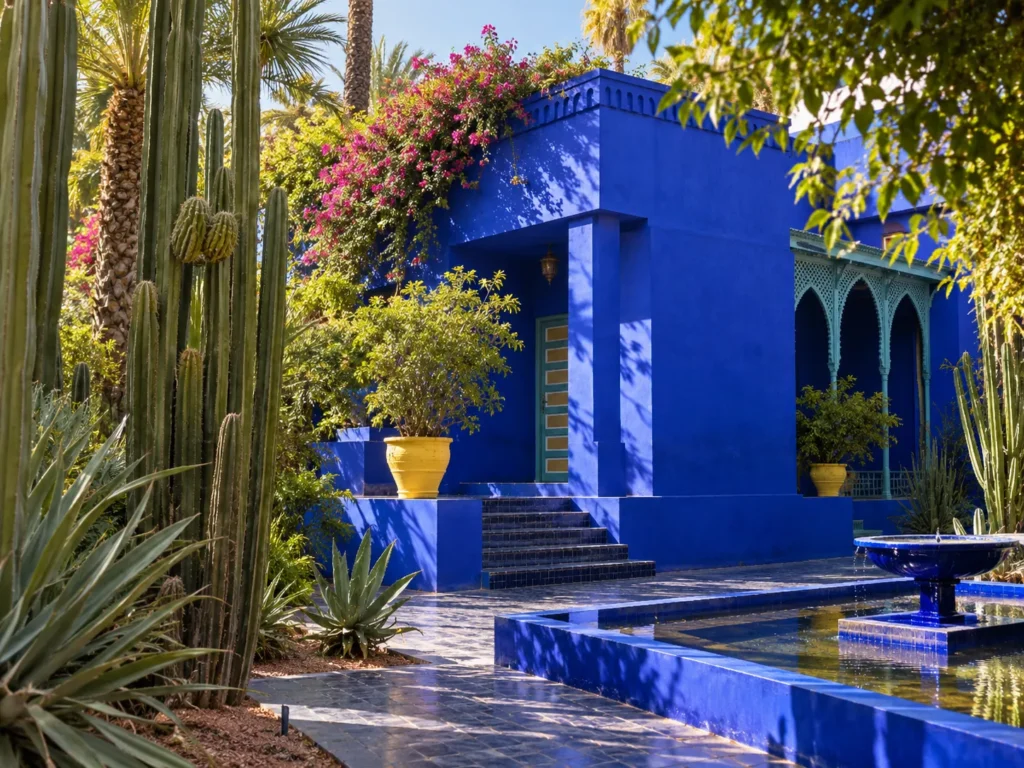
The Pierre Bergé Museum of Berber Arts is located within the Jardin Majorelle complex in Jacques Majorelle’s former painting studio.
The museum presents hundreds of objects representing Amazigh artistic traditions from different regions of Morocco, including jewelry, textiles, costumes and other forms of material culture.
The collection makes a useful addition because it gives the visit a cultural dimension beyond plants and design. Travelers particularly interested in Moroccan crafts, jewelry and Amazigh heritage should allow additional time rather than booking only the garden.
The museum requires its own admission or an appropriate combined ticket. Check the current options when making your official online reservation.
Jardin Majorelle vs Yves Saint Laurent Museum
The garden and Musée Yves Saint Laurent Marrakech are related but are not the same attraction.
| Jardin Majorelle | Musée Yves Saint Laurent Marrakech |
|---|---|
| Botanical garden and historic Majorelle property | Museum dedicated to Yves Saint Laurent’s work |
| Best for plants, architecture and photography | Best for fashion, design and exhibitions |
| Includes access options for the Pierre Bergé Museum | Separate museum building nearby |
| Allow roughly 1–2 hours | Allow additional time if visiting both |
If fashion and design are important to you, combine them during the same morning or afternoon because the two sites are close together.
If you mainly want the gardens and photography, Jardin Majorelle alone is enough for a satisfying visit.
Majorelle Garden Tickets: Book Before You Go
Jardin Majorelle uses timed online admission. Booking ahead is especially important during busy travel periods because your preferred time slot may sell out.
The official Jardin Majorelle ticket office is the safest place to purchase admission. The foundation specifically warns visitors about unauthorized ticket websites and states that valid tickets provide a QR code for entry.
You can check current availability through the official Jardin Majorelle ticket office.
Do not rely on screenshots of prices or opening hours from older travel guides. The current standard garden admission is 170 MAD at the time of writing, but prices can change.
Best Time to Visit Majorelle Garden Marrakech
For most visitors, the best strategy is to choose an early timed entry. The garden is one of Marrakech’s most recognizable attractions and becomes noticeably less tranquil when pathways fill with several groups at once.
Early Morning
Early morning is usually the strongest choice for photography, cooler temperatures and a more relaxed walk.
It is especially useful during warmer months because much of the visit is outdoors.
Middle of the Day
Midday can be busier and hotter, although shaded vegetation makes parts of the garden more comfortable than exposed monuments elsewhere in Marrakech.
If this is the only time available, the visit is still worthwhile. Simply expect more people around the famous blue architecture and main photography points.
Late Afternoon
Late afternoon can offer softer light and comfortable conditions, but do not choose a slot too close to final entry if you also intend to visit the museum.
Always check the current closing time when reserving your ticket.
How Long Should You Spend at Majorelle Garden?
Allow around one to one and a half hours for the garden itself.
Visitors primarily interested in photography can easily spend longer, especially when waiting for less crowded views.
If you add the Pierre Bergé Museum of Berber Arts, around two hours or more is more realistic. Adding Musée Yves Saint Laurent Marrakech can turn the visit into a half-day focused on gardens, art and design.
There is little benefit in rushing through Jardin Majorelle in 30 minutes simply to add another attraction to the same morning.
Where Is Majorelle Garden?
Jardin Majorelle is located on Rue Yves Saint Laurent in Marrakech’s modern city, outside the historic medina.
This matters when planning your sightseeing day. It is more efficient to combine the garden with Guéliz, the Yves Saint Laurent Museum or other modern-city stops than to travel repeatedly between Majorelle and monuments in the southern medina.
If you are staying inside the medina, a taxi is usually the simplest option. Walking is possible from some parts of central Marrakech, but distance and heat make it less attractive during hot weather.
Majorelle Garden and the Marrakech Medina
The garden creates a useful contrast with Marrakech’s medina, but the two experiences should not be treated as interchangeable.
The medina is about historic streets, markets, monuments and active city life. Majorelle is a controlled botanical and design environment with timed admission.
A balanced Marrakech itinerary can include Majorelle in the morning and the medina later in the day, but grouping sights geographically usually produces a more relaxed schedule.
Photography at Jardin Majorelle
Photography is one of the main reasons many travelers visit the garden.
- Use an early entry if you want clearer architectural views.
- Look for combinations of blue architecture and plants instead of photographing only the main villa.
- Use pathways and vegetation as natural frames.
- Avoid blocking narrow paths for prolonged photo sessions.
- Respect current rules regarding professional photography and equipment.
- Check directly with the garden if your visit involves commercial photography or filming.
The garden’s strongest photographs usually combine architecture, plants and water rather than isolating one blue wall.
Is Majorelle Garden Good for Families?
Yes. The garden is compact, colorful and easier for many children than a long museum or archaeological visit.
Young children should remain close because pathways can become crowded and the botanical collection contains cacti and other plants that should not be touched.
The official garden currently provides free admission for accompanied children under 10, but confirm the latest age policy before booking.
Accessibility
The official Jardin Majorelle website states that the garden is wheelchair accessible. The Pierre Bergé Museum of Berber Arts is also listed as wheelchair accessible.
Travelers with specific mobility requirements should still contact the attraction before visiting if they need detailed information about surfaces, assistance or facilities.
The garden involves walking and standing, but it is considerably less demanding than many historic medina sites with stairs and uneven ruins.
What to Bring
- Your ticket QR code
- Comfortable walking shoes
- Water, particularly in warm weather
- Sun protection
- A charged phone or camera
- Light clothing suitable for the season
You do not need hiking equipment or formal clothing. The main priority is staying comfortable while walking outdoors.
Majorelle Garden Marrakech: Practical Tips
- Reserve your timed ticket before arriving in Marrakech during busy periods.
- Use the official ticket office rather than an unauthorized reseller.
- Choose an early slot if photography and lower crowds matter to you.
- Allow at least one hour rather than treating the garden as a quick photo stop.
- Add the Pierre Bergé Museum if Amazigh art and craftsmanship interest you.
- Combine Majorelle with Guéliz or the Yves Saint Laurent Museum geographically.
- Check current opening hours and ticket prices shortly before your visit.
- Follow photography and filming rules displayed at the garden.
Is Majorelle Garden Worth Visiting?
Majorelle Garden is worth visiting if you enjoy gardens, architecture, photography, color or design. Its atmosphere is quite different from Marrakech’s palaces and medina streets, so it adds variety to a city itinerary rather than repeating another historic monument.
It is less essential for travelers with very limited time who have little interest in gardens or design. If you have only one day in Marrakech, decide whether Majorelle fits your priorities before sacrificing several major medina sights.
With two or three days in Marrakech, the garden fits much more naturally into the itinerary.
FAQ
How Much Is Majorelle Garden Marrakech?
At the time of writing in October 2026, standard admission to Jardin Majorelle is listed at 170 MAD. Reduced and free admission categories are available for eligible visitors. Check the official ticket site before visiting because prices can change.
What Are the Majorelle Garden Opening Hours?
The official ticket office currently lists Jardin Majorelle as open daily from 8:00 AM to 5:30 PM, with last entry at 5:00 PM. Verify the hours for your specific date before traveling.
How Long Do You Need at Majorelle Garden?
Allow roughly one to one and a half hours for the garden. Two hours or more is more comfortable if you also visit the Pierre Bergé Museum of Berber Arts.
Do You Need to Book Majorelle Garden in Advance?
Advance booking is strongly recommended because admission uses timed online tickets and popular time slots can become unavailable. Purchase through the official Jardin Majorelle ticket office.
Is the Yves Saint Laurent Museum Inside Majorelle Garden?
No. Musée Yves Saint Laurent Marrakech is a separate attraction located nearby. The Pierre Bergé Museum of Berber Arts is the museum located within the Jardin Majorelle complex.
What Is the Best Time to Visit Majorelle Garden?
Early morning is generally the best choice for cooler temperatures, photography and fewer crowds. Late afternoon can also work well, but leave enough time before final admission if you want to visit the museum too.
Plan Your Visit to Majorelle Garden Marrakech
Majorelle Garden Marrakech is easiest to enjoy when you book a timed entry, arrive without an overloaded sightseeing schedule and give yourself enough time to notice both the planting and architecture. The famous blue buildings attract most of the attention, but the quieter paths, cactus forms, water features and shaded vegetation are equally important to the experience.
Add the Pierre Bergé Museum if you want more cultural context, or combine the garden with the nearby Yves Saint Laurent Museum for a half-day centered on art, fashion and design.
Explore destinations, tours and locally organized Morocco experiences with Visit Morocco Together.
Ready to Experience Morocco?
Turn this inspiration into your next adventure. Our travel experts are ready to help.