Rabat combines Morocco’s role as a modern capital with a historic medina, monumental architecture, archaeological remains and an Atlantic setting. This Rabat travel guide is designed for travelers deciding how long to stay, which landmarks deserve priority, and how to combine the Hassan Tower, Kasbah of the Udayas, Chellah, medina and waterfront without rushing across the city.
Rabat is one of Morocco’s four historic imperial cities, but it feels very different from Marrakech or Fes. Broad avenues and administrative districts sit beside centuries-old fortifications, while the Bou Regreg River separates Rabat from neighboring Salé. The city’s combination of historic and modern urban heritage led to its inscription on the UNESCO World Heritage List in 2012.
Rabat Travel Guide: How Long Should You Stay?
One full day is enough to see Rabat’s principal landmarks if you plan the route efficiently. Two days provides a better pace and gives you time for Chellah, the medina, the Atlantic coast and possibly Salé across the river.
| Time available | Recommended plan |
|---|---|
| Half day | Hassan Tower, Mohammed V Mausoleum and Kasbah of the Udayas |
| 1 full day | Main monuments, Udayas, medina and waterfront |
| 2 days | Add Chellah, museums, coast and a slower medina visit |
| 3 days | Add Salé or more time for museums, gardens and neighborhoods |
For current tours, activities and local experiences, see the Rabat destination page.
Start With Hassan Tower and the Mohammed V Mausoleum
Hassan Tower is one of Rabat’s defining monuments. The tower was intended to form part of an ambitious Almohad mosque project begun in the late 12th century, but the complex was never completed.
Today, the surviving minaret, rows of stone columns and open esplanade create one of the capital’s most recognizable historic spaces.
Beside it stands the Mausoleum of Mohammed V, a much later monument whose white exterior, green roof and richly decorated interior create a striking contrast with the unfinished medieval mosque complex.
Give the area time rather than stopping only for a photograph of the tower. The relationship between the tower, mosque remains and mausoleum is what makes the site particularly interesting.
Visiting the Monumental Complex
Dress respectfully and follow any instructions at the mausoleum. Access arrangements can change during official events, ceremonies or maintenance, so check current conditions on the day rather than relying entirely on an old timetable.
Morning is a good time for photography and usually works well as the first stop in a city itinerary.
Explore the Kasbah of the Udayas
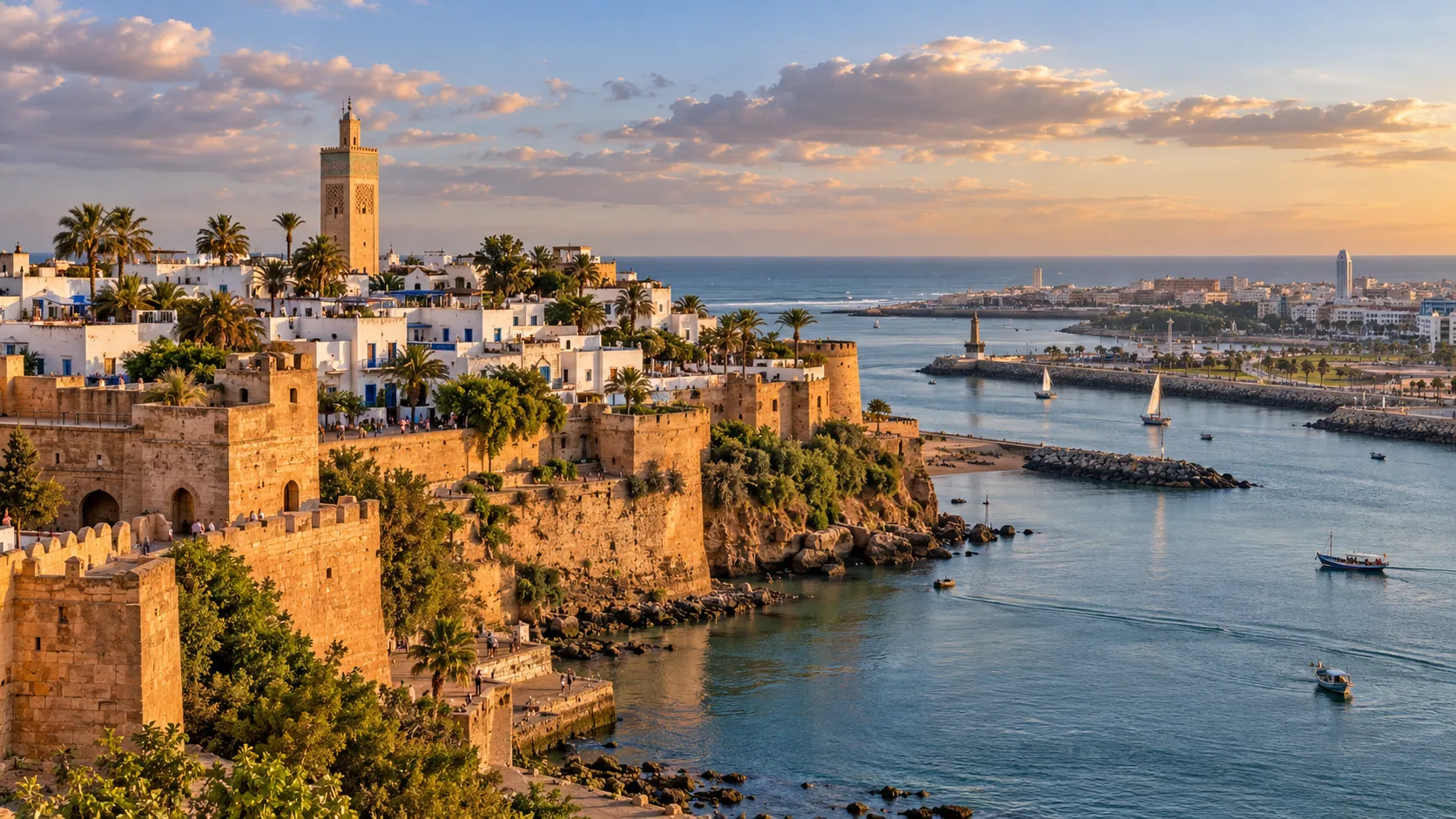
The Kasbah of the Udayas sits above the mouth of the Bou Regreg River and offers one of Rabat’s most distinctive combinations of fortifications, narrow streets and water views.
Enter through the monumental gate and walk through the compact neighborhood rather than treating the kasbah only as a viewpoint. Inside, whitewashed walls, blue details and residential lanes give the area a noticeably different character from the wider modern capital.
Rabat’s UNESCO-listed heritage includes the Udayas alongside the medina, Hassan complex, Chellah and elements of the modern capital.
Andalusian Gardens
The gardens beside the kasbah provide a quieter stop between sightseeing sections. Planting, shaded paths and historic walls make them useful when you want a break from streets and monuments.
Opening conditions can change, so check access during your visit.
If you want additional historical context, VMT’s Kasbah of the Udayas Guided Tour focuses specifically on the fortress and gardens.
Views Over the Bou Regreg
The edge of the kasbah provides broad views toward the Bou Regreg, Salé and the river mouth. This is one of the best places to understand Rabat geographically: the historic city, neighboring Salé, river and Atlantic coast all meet within a relatively compact area.
Walk Through Rabat Medina
Rabat’s medina is easier to navigate than the much larger historic centers of Fes or Marrakech, making it a good place for travelers who want a traditional urban atmosphere without spending most of the day finding their way through narrow lanes.
Markets sell clothing, leather goods, household items, food and crafts alongside stores aimed at visitors. Rue des Consuls is one of the better-known commercial streets, but there is no need to limit your walk to one shopping route.
Allow time for smaller lanes and everyday businesses rather than treating the medina as a souvenir stop.
Shopping in Rabat
You may find textiles, carpets, leatherwork, jewelry and other Moroccan crafts. As elsewhere in Morocco, not every item sold in a traditional market was necessarily produced locally.
If workmanship or origin matters to you, ask where an item was made before buying. Negotiation is common in some traditional shops but is not required everywhere.
Visit Chellah for Rabat’s Deeper History
Chellah provides one of the most interesting historical contrasts in Rabat. The archaeological site preserves remains from different periods, including ancient settlement evidence and later Islamic and Marinid structures.
This makes Chellah different from a single-period ruin. Walking through the fortified entrance reveals archaeological remains, historic structures and landscaped areas within the same site.
Morocco’s national tourism office highlights Chellah as one of Rabat’s major historical attractions, while UNESCO includes it within Rabat’s World Heritage property.
How Long to Spend at Chellah
Allow around one and a half to two hours for an independent visit if you enjoy archaeology and photography. Longer visits make sense with a guide because the layers of the site are not always obvious simply from looking at individual ruins.
VMT currently offers a Chellah Necropolis Guided Tour for travelers who want more context about its ancient and medieval periods.
Understand Rabat’s UNESCO Status
Rabat is unusual because its UNESCO recognition is not based only on the old medina.
The World Heritage property brings together earlier Islamic and historic structures with the 20th-century planned capital developed during the French Protectorate. This includes areas of the modern city as well as the medina, Kasbah of the Udayas, Hassan complex, historic walls and Chellah.
That combination explains why walking through central Rabat can feel very different from visiting an old Moroccan city built almost entirely around its medina.
Wide avenues, administrative buildings and landscaped public spaces are part of Rabat’s heritage story rather than simply modern areas to pass through between monuments.
See the Modern Capital
Rabat is Morocco’s political and administrative capital, and this contemporary role is visible throughout the city.
Government institutions, broad boulevards, modern cultural spaces and residential neighborhoods create a more open urban layout than many travelers expect after visiting Marrakech or Fes.
The Royal Palace area forms part of this modern capital landscape, although visitors should respect security restrictions and should not expect unrestricted access to royal or administrative compounds.
Mohammed VI Museum of Modern and Contemporary Art
Travelers interested in art can add the Mohammed VI Museum of Modern and Contemporary Art to a two-day itinerary. It provides a useful counterpoint to Rabat’s archaeological and medieval monuments by focusing on modern and contemporary artistic production.
Check current exhibitions and opening times before visiting, particularly if the museum is a major reason for your stay.
Walk Along the Bou Regreg
The Bou Regreg River is central to understanding Rabat and Salé. It separates the two historic cities while also creating one of the capital’s most attractive waterfront areas.
A late-afternoon walk along the river or marina area works particularly well after a day of monuments. Views back toward the Udayas and across toward Salé also provide a different perspective from the historic streets.
You do not need to schedule every part of Rabat as formal sightseeing. The waterfront is a good place to slow the pace before dinner.
Rabat’s Atlantic Coast
Rabat is also an Atlantic city. The coastline adds another dimension to a destination often described mainly through government buildings and imperial monuments.
Depending on weather and sea conditions, the coastal areas work well for walks, views and time away from the historic center. Morocco’s national tourism office highlights Rabat’s long Atlantic coastline as an important part of the destination.
The ocean can be windy and conditions are not always suited to swimming, so judge the beach according to local conditions on the day.
A Practical 2-Day Rabat Itinerary
Day 1: Major Monuments, Udayas and Medina
Begin at Hassan Tower and the Mohammed V Mausoleum before continuing toward the Kasbah of the Udayas.
Walk through the kasbah, stop at the gardens if open and spend time at the viewpoints over the Bou Regreg.
Continue into the medina for lunch, shopping and a slower afternoon walk.
Finish around the river or Atlantic side of the city as the light becomes softer.
Travelers who prefer to cover the main sights with a guide can use the Rabat City Highlights Walking Tour, which currently combines the Udayas, Hassan Tower, medina and Atlantic corniche.
Day 2: Chellah, Modern Rabat and the Waterfront
Start the second day at Chellah before moving into the modern central districts.
Add the Mohammed VI Museum if contemporary art interests you, then leave the late afternoon open for the Bou Regreg or Atlantic coast.
If you prefer another historic neighborhood instead of a museum, cross the river to Salé and explore its medina and waterfront.
Should You Visit Salé?
Yes, especially if you have two or more days in Rabat.
Salé sits directly across the Bou Regreg and has its own historic medina, walls, markets and local identity. It should not be treated simply as an outer neighborhood of Rabat.
Because the two cities are so close, adding Salé is far more efficient than using your second Rabat day for a long road excursion elsewhere.
A half-day is enough for an introduction, while travelers particularly interested in urban history can give Salé longer.
Best Time to Visit Rabat
Rabat’s Atlantic location gives it a milder coastal climate than many inland Moroccan cities, and the city can be visited throughout the year.
Spring and autumn are particularly comfortable for walking between monuments, medina streets and outdoor archaeological sites.
Summer can be warm but is generally influenced by the coast. Winter remains suitable for sightseeing, although rain, wind and cooler evenings are possible.
A Rabat travel guide should therefore focus less on avoiding one specific season and more on packing for changing coastal conditions.
How to Get to Rabat
Rabat fits easily into an itinerary through northern and central Morocco because it has strong road and rail connections with major cities.
From Casablanca
Rabat and Casablanca are straightforward to combine. Train travel is particularly practical for travelers who do not need a car, while private transfers and road transport provide more flexibility for hotel-to-hotel travel.
From Fes or Meknes
Rabat also connects naturally with Fes and Meknes on an imperial-cities itinerary. Rather than returning to Marrakech between each city, plan the route geographically so that Rabat forms part of a continuous journey.
From Tangier
Travelers exploring northern Morocco can continue south from Tangier toward Rabat before moving to Casablanca or inland destinations.
Train schedules and journey times can change, so check current departure information rather than relying on old timetable screenshots.
Getting Around Rabat
Many central sights are walkable once you are in the correct district, but Rabat is larger and more spread out than a compact medina destination.
Walking works particularly well between the medina, Udayas and parts of the waterfront. Taxis and the city’s public transport network are useful for longer journeys such as reaching Chellah or moving between accommodation districts.
Do not build an itinerary that assumes every landmark sits beside the next one. Group sights geographically so you spend more time exploring and less time crossing the city.
Where to Stay in Rabat
Medina and Udayas Area
Stay around the medina if traditional atmosphere and walking access to historic streets are priorities. Riads and guesthouses provide an experience closer to Morocco’s old-city style.
Check vehicle access if traveling with heavy luggage because some streets are not practical for direct car drop-off.
Central Rabat and Hassan
Central areas around Hassan provide convenient access to monuments, transport and modern-city services. This is a useful compromise for first-time visitors who want both the historic and contemporary sides of Rabat.
Agdal
Agdal suits travelers who prefer modern restaurants, cafés and a residential-city atmosphere. You will rely more on transport for some historic attractions but gain easier access to contemporary Rabat.
What to Eat in Rabat
Rabat provides plenty of opportunities to try classic Moroccan food without needing a rigid restaurant checklist.
- Tagine with meat, fish or vegetables
- Couscous
- Pastilla
- Moroccan salads
- Grilled fish and seafood
- Fresh bread and pastries
- Mint tea
The medina works well for casual meals and traditional food, while modern districts offer a wider range of contemporary cafés and restaurants.
Rabat Travel Guide: Practical Tips
- Allow one full day for the major landmarks and two days for a relaxed first visit.
- Wear comfortable shoes because a good itinerary involves substantial walking.
- Dress respectfully when visiting religious or royal monuments.
- Check current access conditions at major monuments before arrival.
- Combine nearby sights geographically rather than crossing the city repeatedly.
- Carry some Moroccan dirhams for cafés, taxis and smaller purchases.
- Ask before photographing residents closely.
- Bring a light layer for the Atlantic breeze, particularly outside summer.
- Use Salé as an easy second-day extension rather than automatically planning a distant excursion.
Who Is Rabat Best For?
This Rabat travel guide is particularly useful for travelers interested in history, architecture, archaeology, museums and cities where modern urban life sits alongside older monuments.
Rabat works well for couples, families, solo travelers and travelers building an imperial-cities route. It is also a good choice for visitors who find the intensity of some larger medinas tiring but still want historic streets and important Moroccan landmarks.
Travelers interested mainly in nightlife or very large traditional souks may prioritize other cities, but Rabat’s combination of heritage, coast and contemporary capital life makes it worth at least one full day.
FAQ
Is Rabat Worth Visiting?
Yes. Rabat combines major historic landmarks, a manageable medina, archaeological sites, museums and an Atlantic setting. It is particularly worthwhile for travelers already moving between Casablanca, Fes, Meknes or northern Morocco.
How Many Days Do You Need in Rabat?
One full day is enough for Hassan Tower, the Mohammed V Mausoleum, Udayas and the medina. Two days is better if you also want Chellah, museums, the waterfront or nearby Salé.
What Are the Main Things to See in Rabat?
Prioritize Hassan Tower, the Mohammed V Mausoleum, Kasbah of the Udayas, Rabat Medina and Chellah. With extra time, add the Mohammed VI Museum, Bou Regreg waterfront and Atlantic coast.
Is Rabat Medina Easy to Explore?
Yes. Rabat’s medina is relatively manageable compared with the larger historic centers of Fes and Marrakech. You can explore independently, although a guide adds useful historical and cultural context.
Is Rabat a UNESCO World Heritage Site?
Yes. Rabat was inscribed on the UNESCO World Heritage List in 2012 as “Rabat, Modern Capital and Historic City: a Shared Heritage.” The listing includes both older historic areas and important parts of the planned 20th-century capital.
Can You Visit Rabat and Salé Together?
Yes. The two cities face each other across the Bou Regreg River and are easy to combine. Salé works particularly well as a half-day extension when you have two days in Rabat.
Plan Your Stay in Morocco’s Capital
This Rabat travel guide works best as a two-part experience: spend time with the city’s older heritage at Hassan Tower, the Udayas, the medina and Chellah, then leave space for the Bou Regreg, modern districts and Atlantic coast. That combination is what makes Rabat different from Morocco’s other imperial cities.
If your itinerary allows, stay at least one night rather than treating the capital only as a transport stop. Two days gives Rabat enough time to reveal both its historical layers and its role as a contemporary Moroccan city.
Explore destinations, tours and locally organized Morocco experiences with Visit Morocco Together.
Ready to Experience Morocco?
Turn this inspiration into your next adventure. Our travel experts are ready to help.