
Morocco tourist attractions range from centuries-old medinas and monumental mosques to mountain valleys, Atlantic fortifications and vast Saharan dunes. That variety is one of the reasons sightseeing in Morocco feels so different from traveling through a country centered around a single type of landscape or historical period.
You can spend a morning walking through medieval streets in Fes, cross the High Atlas through mountain villages, explore an earthen ksar in southern Morocco and later watch the sun fall behind the dunes near Merzouga. On the Atlantic coast, historic ports such as Essaouira add another character entirely.
This guide introduces some of Morocco’s most important attractions and landmarks while also helping you decide which ones make sense for your route, interests and available travel time.
Marrakech Medina and Jemaa el-Fnaa
Marrakech is often one of the first places travelers associate with Morocco, and its historic medina contains several of the country’s most recognizable sights.
Jemaa el-Fnaa forms the energetic center of the old city. During the day, the square acts as a meeting point between the surrounding souks, cafés and historic streets. Toward evening, food stalls and crowds change the atmosphere considerably.
Nearby, the Koutoubia Mosque and its minaret provide one of Marrakech’s most familiar architectural landmarks. The mosque remains an active religious site, but the exterior, gardens and surrounding area can be appreciated while exploring the city center.
Other important places to include are Bahia Palace, Ben Youssef Madrasa and the network of souks spreading through the medina.
How Much Time to Allow in Marrakech
Two days is enough to experience the principal historic sights at a reasonable pace. Three days gives you more time for gardens, museums, food experiences and quieter neighborhoods beyond the busiest parts of the medina.
Fes el-Bali and Morocco’s Historic Craft Traditions
The historic medina of Fes offers a very different sightseeing experience from Marrakech.
Fes el-Bali is filled with narrow lanes, religious buildings, markets, traditional houses and workshops where crafts remain part of everyday commercial life. Exploring the medina is less about moving quickly from one monument to another and more about understanding how the historic city functions as a whole.
Bou Inania Madrasa, the Al-Qarawiyyin area and the traditional tannery quarter are among the best-known sights. Woodwork, metalwork, leather, ceramics and textiles can also be seen throughout different parts of the old city.
Consider Exploring Fes With a Local Guide
The medina is extensive, and many important architectural and cultural details are easy to miss without context. A knowledgeable local guide can help explain the purpose of different buildings, neighborhoods and artisan areas rather than simply leading you through the main streets.
Hassan II Mosque in Casablanca
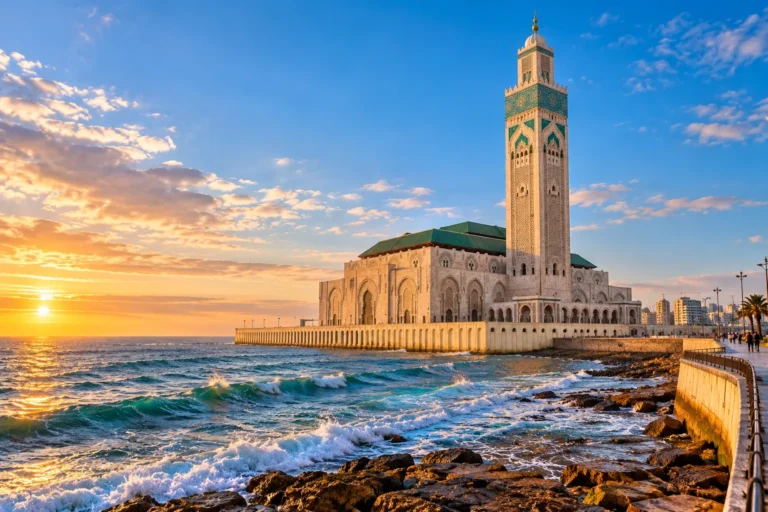
Casablanca is Morocco’s largest modern city, but its best-known landmark is the Hassan II Mosque.
Built beside the Atlantic Ocean, the mosque combines monumental scale with detailed Moroccan craftsmanship. Its location along the waterfront makes the setting almost as distinctive as the architecture itself.
For travelers arriving through Casablanca, the mosque provides a worthwhile introduction before continuing toward Rabat, Marrakech, Fes or northern Morocco.
Because access conditions and visiting schedules can change, check current visitor information before planning the timing of your visit.
Chefchaouen and the Blue Medina
Set in the Rif Mountains of northern Morocco, Chefchaouen is one of the country’s most photographed destinations.
Its attraction comes from the combination of blue-painted streets, small plazas, traditional buildings and a mountain backdrop. Although photography is a major reason people visit, Chefchaouen is best experienced slowly rather than as a quick stop for a few familiar viewpoints.
Wander through the medina, spend time around Plaza Uta el-Hammam and walk toward the edges of town for views across the blue buildings and surrounding mountains.
One or two nights generally works well if Chefchaouen forms part of a longer sightseeing route through northern Morocco.
The Atlas Mountains and Mount Toubkal
Not all major Morocco attractions are found inside cities. The Atlas Mountains offer some of the country’s most impressive natural scenery.
The High Atlas contains deep valleys, traditional villages, mountain passes and Mount Toubkal, which rises to 4,167 meters and is the highest peak in North Africa.
You do not need to climb Toubkal to appreciate the region. Places such as Imlil and surrounding valleys provide opportunities for shorter walks, village visits and panoramic mountain views.
The mountains also form an important geographical transition between Marrakech and the landscapes of southern Morocco, making them a natural part of many longer sightseeing routes.
Ait Ben Haddou and Southern Morocco’s Earthen Architecture
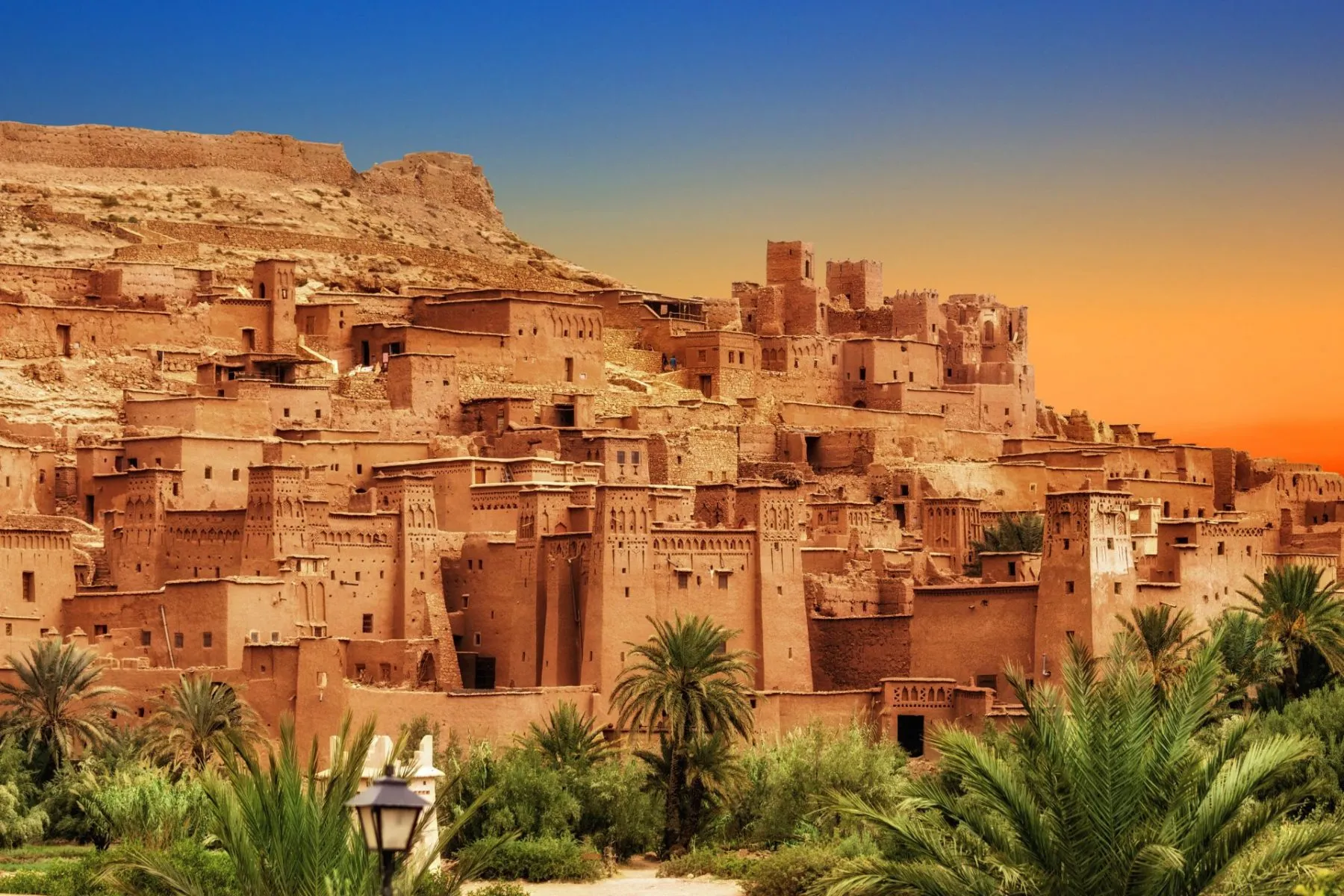
Ait Ben Haddou is one of Morocco’s most recognizable historic settlements.
The fortified ksar is built largely from earthen materials and rises above the surrounding landscape near the route between Marrakech and Ouarzazate. Walking through its passages reveals towers, compact houses and traditional construction methods adapted to the dry climate of southern Morocco.
The viewpoint from the higher parts of the settlement also provides a wider perspective across the surrounding valley.
Ait Ben Haddou fits naturally into journeys between Marrakech, Ouarzazate, Dades Valley and the Sahara, so it is easier to experience as part of an overland route than as an isolated attraction.
Merzouga and the Erg Chebbi Dunes
For many travelers, the Sahara is one of the most anticipated parts of a Morocco trip.
Merzouga sits beside Erg Chebbi, where high dunes create the classic desert landscape associated with southeastern Morocco.
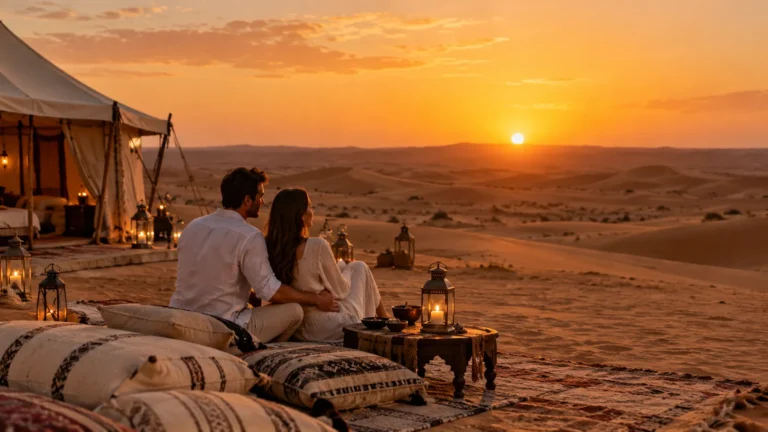
The experience is not limited to seeing the dunes. Travelers can watch the light change around sunrise and sunset, cross part of the desert by camel or 4×4, stay overnight at a desert camp and explore the wider Merzouga region.
Try to allow more than a few hours. The atmosphere changes significantly throughout the day, and rushing in and out of Merzouga removes much of what makes the desert memorable.
Travelers starting in Marrakech can also combine the Sahara with southern valleys on a 3-day desert and gorges tour from Marrakech.
Essaouira Medina and Atlantic Ramparts
Essaouira provides a complete change of atmosphere from Morocco’s imperial cities and desert regions.
The old medina sits beside the Atlantic Ocean and is enclosed by historic fortifications. Walking around the ramparts, fishing harbor and medina reveals a city shaped by trade, maritime life, art and coastal culture.
The Skala area provides some of the best ocean views, while the harbor remains one of the most characteristic parts of the city. Inside the medina, galleries, craft shops and cafés contribute to Essaouira’s slower rhythm.
The wide beach outside the historic center is also popular for walking and wind-powered water sports.
Volubilis Roman Ruins
Morocco’s history extends far beyond its medieval medinas and Islamic architecture. Volubilis, near Meknes and Moulay Idriss Zerhoun, preserves the remains of an important ancient Roman city.
Visitors can walk among columns, arches, house foundations and surviving mosaics while looking across the surrounding agricultural landscape.
Volubilis works particularly well as part of a journey between Fes and Meknes because it adds an earlier historical period to a route otherwise dominated by Morocco’s imperial cities.
Rabat’s Hassan Tower and Kasbah of the Udayas
Morocco’s capital is sometimes overlooked by travelers concentrating on Marrakech and Fes, but Rabat contains several important landmarks within a relatively manageable city.
Hassan Tower forms part of an unfinished mosque complex dating from the Almohad period. Nearby stands the Mausoleum of Mohammed V, creating one of the city’s most important monumental areas.
The Kasbah of the Udayas offers a different experience. Its narrow streets, white-and-blue buildings, fortified entrance and views toward the Bouregreg River make it one of Rabat’s most distinctive historic quarters.
How to Choose Which Morocco Attractions to Visit
Trying to see every major landmark in a short trip usually results in too much driving and too little time at each destination. It is better to build your sightseeing route around the amount of time you actually have.
5 to 7 Days
Choose one region rather than attempting the entire country. Marrakech can be combined with the Atlas Mountains and Ait Ben Haddou, while Fes can be paired with Meknes and Volubilis. A coastal itinerary might combine Marrakech and Essaouira.
8 to 10 Days
You can comfortably connect several major destinations. One popular option is Marrakech, the High Atlas, Ait Ben Haddou, Dades Valley and Merzouga. Another is Casablanca, Rabat, Chefchaouen and Fes.
12 to 14 Days
Two weeks makes it much easier to combine northern cities, imperial landmarks, the Atlas Mountains and the Sahara without turning most days into long transfers.
With this amount of time, you can experience Morocco’s cultural and geographical contrasts rather than limiting the trip to a single region.
Best Time for Sightseeing in Morocco
Spring and autumn are popular periods for multi-region sightseeing because temperatures are generally easier to manage across cities, mountains and desert areas.
Summer conditions vary considerably. Atlantic destinations such as Essaouira can feel very different from Marrakech and the Sahara, where daytime heat can become intense.
Winter can be pleasant for city sightseeing, but mountain regions and desert nights can become cold. Travelers crossing several regions should pack layers rather than assuming Morocco will be warm everywhere.
Practical Tips for Visiting Morocco’s Major Landmarks
- Allow more time than expected in historic medinas because walking routes are rarely direct.
- Wear comfortable shoes for cobbled lanes, ruins, mountain paths and uneven historic sites.
- Check opening hours before visiting religious buildings, museums and monuments.
- Dress respectfully when visiting religious and culturally significant places.
- Carry sun protection and water when exploring exposed archaeological sites or desert areas.
- Avoid scheduling too many distant attractions on the same day.
- Use local guides selectively where historical or cultural explanation adds real value.
- Leave room for markets, cafés and neighborhood walks rather than planning only ticketed attractions.
FAQ
What are the most famous tourist attractions in Morocco?
Some of the best-known attractions include Marrakech Medina and Jemaa el-Fnaa, Fes el-Bali, the Hassan II Mosque in Casablanca, Chefchaouen, the Atlas Mountains, Ait Ben Haddou, the Sahara dunes near Merzouga, Essaouira and the Roman ruins of Volubilis.
Which city has the most landmarks in Morocco?
Marrakech and Fes both contain a high concentration of historic architecture and cultural attractions. Marrakech is particularly convenient for first-time visitors, while Fes offers one of the country’s most immersive historic medina experiences.
How many days do I need to see Morocco’s main attractions?
Seven days is enough to explore one or two regions. Around 10 days allows several major destinations, while 12 to 14 days is better for combining northern Morocco, imperial cities, the Atlas Mountains and the Sahara.
Is the Sahara worth including in a sightseeing trip?
Yes, particularly if natural landscapes are important to you. However, Merzouga is far from Morocco’s principal northern and western cities, so the desert works best when you have enough time to make the journey part of the experience.
Can I visit Morocco’s attractions independently?
Many cities and landmarks can be explored independently. Guides are especially useful in complex historic medinas or at places where cultural and historical context improves the experience. Private transport or organized tours can also simplify journeys through the mountains and desert.
What should first-time visitors prioritize in Morocco?
A first trip often works best when it combines different types of experiences rather than only cities. For example, Marrakech or Fes can be paired with the Atlas Mountains, a historic kasbah, the Atlantic coast or the Sahara depending on your available time.
Discover Morocco Beyond a Single Landmark
The best Morocco tourist attractions are memorable individually, but the country’s real appeal comes from the contrast between them. Historic medinas, Atlantic ports, mountain villages, ancient ruins, earthen kasbahs and desert landscapes can all form part of the same journey.
Instead of trying to collect as many landmarks as possible, choose a route that gives you enough time to understand each place. A slower approach often leaves more room for local food, conversations, markets, scenic stops and the smaller details that make a trip memorable.
Explore destinations, desert journeys and locally organized experiences with Visit Morocco Together and start building a Morocco trip around the places that interest you most.
Ready to Experience Morocco?
Turn this inspiration into your next adventure. Our travel experts are ready to help.