A traditional Moroccan hammam is both a bathing ritual and a long-established part of everyday wellness culture in Morocco. For travelers, the experience can range from a simple neighborhood bathhouse to a private spa treatment with black soap, exfoliation, ghassoul clay and massage. Understanding that difference before booking is the easiest way to choose the right experience.
This guide explains what happens inside a hammam, the products commonly used, how public hammams differ from hotel and spa versions, what to wear, how long to allow, and what first-time visitors should know before their treatment.
Traditional Moroccan Hammam: What Is It?
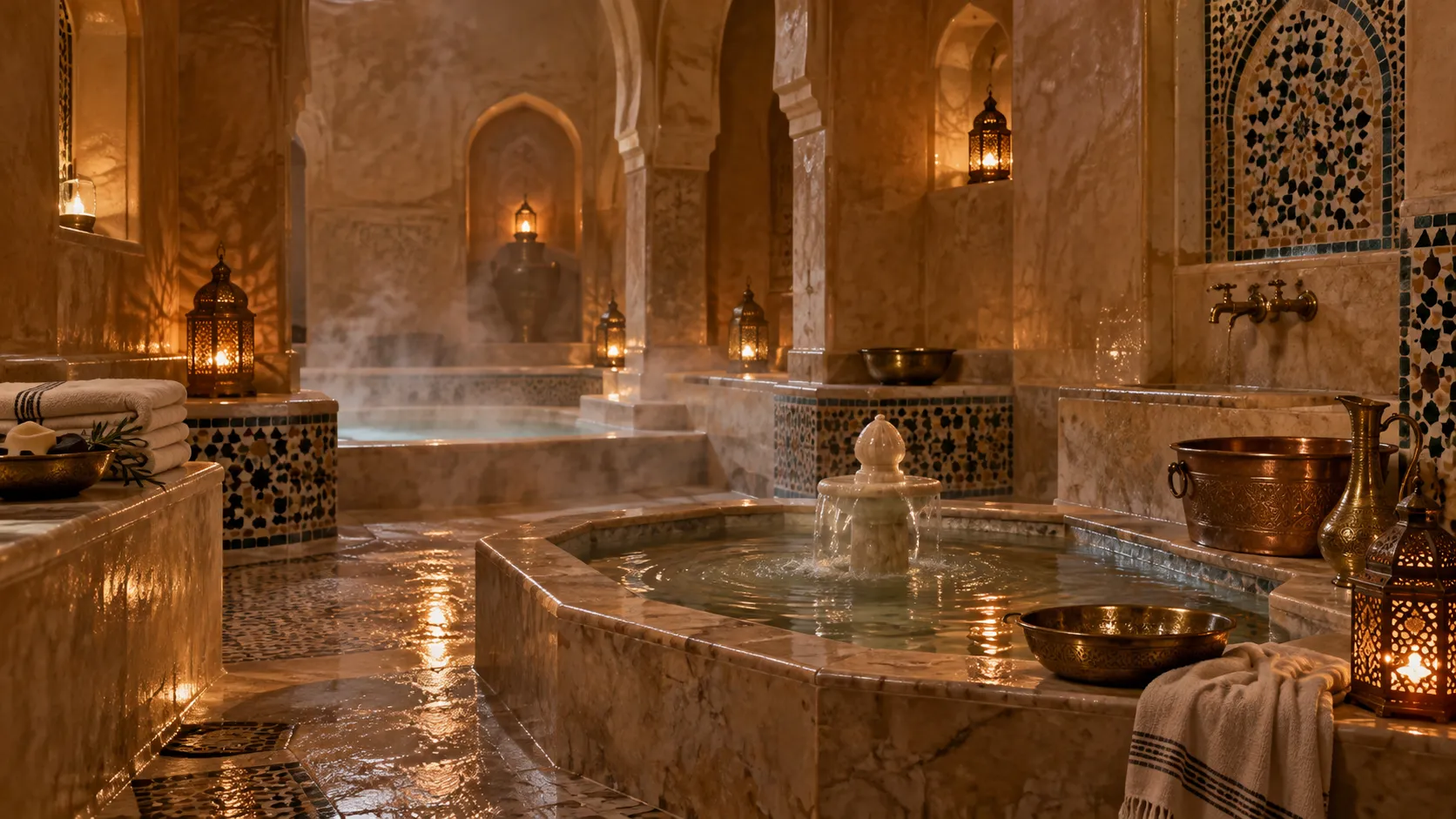
A hammam is a heated bathhouse centered around washing, warmth and exfoliation. Traditional public hammams have long served both a practical bathing function and a social role, while contemporary spas have adapted the ritual into private treatments aimed mainly at visitors and wellness travelers.
The experience usually involves spending time in a warm or steamy room, washing with Moroccan black soap and exfoliating the skin with a textured glove known as a kessa. Depending on the hammam, additional steps may include ghassoul clay, hair washing, moisturizing products or massage.
There is no single standardized hammam treatment. Public bathhouses, riad spas, hotel spas and specialist wellness centers can all provide noticeably different experiences.
Public Hammam vs Private Spa Hammam
The most important decision is whether you want a traditional community bathhouse or a more private spa treatment.
| Experience | What to expect | Best for |
|---|---|---|
| Traditional public hammam | Communal bathing environment, simple facilities and more self-directed washing | Travelers seeking a local bathing experience and comfortable with limited privacy |
| Local private hammam | Traditional ritual with an attendant in a more private setting | First-time visitors wanting cultural context with more guidance |
| Riad or hotel spa | Private treatment rooms, towels, amenities and optional massage | Travelers prioritizing comfort and privacy |
| Luxury spa | Full hammam ritual combined with massage, facials or other treatments | Travelers looking for a longer wellness experience |
Neither version is automatically more authentic. They serve different purposes. A neighborhood hammam reflects everyday bathing traditions, while a private spa presents elements of the ritual in a setting designed for guests.
What Happens During a Moroccan Hammam?
The exact sequence varies, but most visitor-oriented hammams follow a version of the same basic ritual.
1. Warming Up
You normally begin in a warm, humid room where heat and water help prepare your skin for washing and exfoliation.
This stage is not necessarily the same as a dry sauna. A hammam relies heavily on warmth, water and humid air rather than extremely high dry heat.
Give yourself time to adjust. If you feel uncomfortable, overheated or light-headed, tell the attendant and move to a cooler space.
2. Moroccan Black Soap
The next step commonly uses savon beldi, usually called Moroccan black soap in English. It has a soft or paste-like texture and is traditionally associated with olive-based ingredients.
The soap is spread over damp skin and left briefly before rinsing or moving into the exfoliation stage.
Black soap helps prepare the skin for the vigorous scrub that follows, but formulas vary between hammams and commercial products.
3. Kessa Exfoliation
The most distinctive part of a traditional Moroccan hammam is often the exfoliation.
An attendant uses a textured kessa glove to rub the skin firmly. First-time visitors are sometimes surprised by how vigorous the process feels and by how much dead surface skin becomes visible.
The scrub should feel firm but manageable. If the pressure is uncomfortable, say so rather than trying to endure it silently.
Do not exfoliate irritated, sunburned, recently shaved or injured areas aggressively.
4. Rinsing
After exfoliation, the skin is rinsed thoroughly with warm water.
In a traditional public bath this may involve bowls or buckets of water, while tourist spas generally use showers or treatment-room rinsing.
5. Ghassoul or Other Treatments
Some hammams apply ghassoul, a mineral-rich Moroccan clay traditionally used in skin and hair care.
Other establishments may use rose water, masks, oils or modern cosmetic products. These additions are not automatically part of every traditional Moroccan hammam, so check the treatment description before booking.
6. Massage or Moisturizing
Massage is frequently offered at tourist spas but should not be assumed to be part of the basic hammam ritual.
Some packages finish with argan oil or another moisturizer, while others offer a separate 30-, 45- or 60-minute massage.
If massage is important to you, confirm whether it is included in the advertised price or needs to be booked separately.
Traditional Hammam Products
Moroccan bathing traditions use several products that travelers may encounter in hammams, souks and beauty shops.
Black Soap
Moroccan black soap, or savon beldi, is commonly used before exfoliation. It differs from a conventional solid bar and normally has a soft, dark paste-like appearance.
Kessa Glove
The kessa is the textured exfoliating glove used during the scrub. The intensity depends on the glove, pressure and individual skin sensitivity.
Ghassoul Clay
Ghassoul is a clay traditionally associated with Moroccan bathing and cosmetic care. It may be used as a body or hair treatment depending on the hammam.
Argan Oil
Argan oil is often used after bathing as a moisturizer, particularly in spa-oriented treatments. It is not an essential step in every traditional public hammam.
Rose Water and Other Products
Rose water, herbs, henna and other products can appear in more elaborate treatments. Their use varies between regions, spas and individual packages.
Do not assume that a longer ingredient list makes a hammam more traditional. The core experience is primarily about heat, washing and exfoliation.
What Should You Wear in a Hammam?
This depends entirely on the establishment.
Traditional public hammams are usually separated by gender or operate different times for women and men. Clothing customs vary, and visitors may be expected to keep underwear or bathing bottoms on.
Private spas may provide disposable underwear, robes, slippers and towels.
Before arriving, ask:
- Should I bring swimwear or underwear?
- Are towels provided?
- Are slippers provided?
- Do I need my own toiletries?
- Are changing rooms and lockers available?
- Is the hammam private or communal?
Knowing these details beforehand avoids most first-time uncertainty.
Gender and Privacy in Moroccan Hammams
Traditional community hammams are generally organized so that men and women bathe separately, either in separate facilities or at different scheduled times.
Tourist spas operate differently. Some provide completely private rooms, while others have shared steam areas and separate treatment spaces.
Couples should never assume they will automatically receive the treatment together. If you want a couples hammam, ask specifically whether a shared private room is available.
How Long Does a Traditional Moroccan Hammam Take?
A simple hammam session may take around 45 to 90 minutes, while packages combining exfoliation, body treatments and massage can last two hours or longer.
| Experience | Typical time to allow |
|---|---|
| Basic bathing and scrub | About 45–75 minutes |
| Private hammam ritual | About 60–90 minutes |
| Hammam plus massage | About 1.5–2.5 hours |
| Extended spa package | 2–3+ hours |
Always use the duration stated by the specific spa rather than treating these ranges as fixed rules.
VMT’s Traditional Moroccan Hammam in Tangier, for example, currently schedules around 1.5 to 2.5 hours depending on the treatment selected.
Where to Try a Hammam in Morocco
Hammams exist throughout Morocco, so you do not need to alter an entire itinerary to experience one. It usually makes more sense to book a hammam in a city where you are already spending at least two nights.
Marrakech
Marrakech has one of the widest ranges of options, from neighborhood public baths to riad spas and high-end wellness centers.
It is particularly easy to place a hammam in the late afternoon after a day exploring the medina, gardens or palaces.
Fes
Fes is another good place to experience a hammam during a city stay. The dense medina and long days spent walking make a slower wellness activity a useful contrast to sightseeing.
As in Marrakech, options range from traditional local bathing facilities to more private visitor-focused spas.
Tangier
Tangier also has traditional and modern wellness options. Travelers wanting a prearranged treatment can consider the Traditional Moroccan Hammam in Tangier – Spa Experience.
Whichever city you choose, focus on the type of experience you want rather than assuming one destination offers a universally more authentic hammam.
Public Hammam Etiquette
A public hammam requires more awareness than a private spa because you are entering a shared local bathing space.
- Follow the local dress rules.
- Keep your bathing area reasonably contained.
- Avoid staring at or photographing other bathers.
- Never use your phone for photography inside a communal bathing area.
- Speak quietly and follow staff instructions.
- Bring your own toiletries when required.
- Ask before using unfamiliar buckets, basins or supplies.
Photography should generally be considered inappropriate inside an occupied public hammam.
How to Choose a Good Hammam or Spa
The word “hammam” can describe anything from a simple neighborhood bathhouse to an elaborate luxury treatment, so compare the details rather than relying on the name.
Before booking, check:
- Whether the treatment is private or communal
- Total treatment duration
- Whether exfoliation is performed by an attendant
- Whether massage is included
- Products included in the treatment
- Whether towels, robes and slippers are provided
- Gender or couples arrangements
- Current customer reviews
- Cleanliness and professional treatment standards
- Cancellation terms
If the service description is vague, ask exactly what happens between arrival and departure.
How Much Does a Moroccan Hammam Cost?
Prices vary enormously because a community bath and a luxury hotel spa are fundamentally different products.
A public hammam can be inexpensive, especially when you bring your own soap and supplies. Private visitor-oriented treatments cost more because they may include an attendant, towels, products, massage, refreshments or hotel-style facilities.
Instead of comparing only the headline price, compare what is actually included.
Should You Tip at a Hammam?
Tipping practices depend on the establishment and whether service is already included.
At private spas, check whether a service charge has already been added. If not, a discretionary tip for an attendant or massage therapist may be appropriate when you are happy with the service.
There is no need to treat one fixed percentage as a universal Moroccan rule.
When to Schedule a Hammam
A hammam fits particularly well after an active sightseeing day or toward the end of several days of travel.
Avoid scheduling one immediately before a time-sensitive airport, train or long-distance transfer. Give yourself enough time afterward to shower, dress, drink water and relax.
It is also sensible to avoid intensive exfoliation directly before spending long periods in strong sun, particularly if your skin feels sensitive afterward.
First-Time Hammam Tips
- Ask exactly what your booking includes before arriving.
- Tell the attendant if you want a gentler scrub.
- Do not shave immediately before a vigorous exfoliation treatment.
- Avoid treatment over sunburn, cuts or irritated skin.
- Remove valuable jewelry before bathing.
- Drink water before and after the session.
- Stand up slowly if the room is very warm.
- Leave the heated area if you feel dizzy or unwell.
- Confirm couples and gender arrangements in advance.
- Do not photograph inside communal bathing areas.
If you have a medical condition affected by heat or steam, are pregnant, or are unsure whether a hot bathing environment is appropriate for you, check with a qualified healthcare professional before booking.
Is a Hammam a Spa Treatment or a Cultural Experience?
It can be either, or both.
For Moroccans, the hammam has historically served practical and social functions alongside bathing and personal care. Tourist spas have adapted that tradition into a structured wellness treatment with more privacy, scheduled appointments and optional massage.
Neither experience should be treated as interchangeable. If your priority is understanding everyday bathing culture, a traditional bathhouse may be more interesting. If you mainly want to relax after sightseeing, a private hammam spa may suit you better.
FAQ
What Happens During a Traditional Moroccan Hammam?
A traditional Moroccan hammam usually involves warming the body in a humid bathing room, applying black soap, exfoliating with a kessa glove and rinsing with warm water. Some treatments also include ghassoul clay, moisturizing products or massage.
Do You Wear Clothes in a Moroccan Hammam?
Dress rules vary. Public hammams may expect underwear or bathing bottoms, while private spas may provide disposable garments. Ask the establishment before visiting rather than assuming the rules will be the same everywhere.
Are Moroccan Hammams Separated by Gender?
Traditional public hammams generally separate men and women, either through separate areas or different opening times. Tourist spas may offer private treatments or couples rooms, so check the arrangement when booking.
Is a Hammam Scrub Painful?
The kessa scrub can feel much stronger than ordinary exfoliation, especially if it is your first hammam. It should not feel intolerably painful. Ask the attendant to reduce the pressure if you are uncomfortable.
How Long Does a Moroccan Hammam Take?
A basic session may take roughly 45 to 90 minutes. A spa package with massage or additional treatments may last 1.5 to 3 hours. Always check the duration of your specific booking.
Should I Choose a Public Hammam or a Private Spa?
Choose a public hammam if you are comfortable with a communal environment and want a more everyday bathing experience. Choose a private spa if you value privacy, more guidance, supplied amenities and optional treatments such as massage.
Plan Your Traditional Moroccan Hammam Experience
A traditional Moroccan hammam is most rewarding when you know what type of experience you are booking. Decide first whether you want a neighborhood bathhouse or a private spa, then check the treatment steps, privacy arrangements, products and total duration before arriving.
For first-time visitors, a private hammam can provide an easier introduction to black soap, kessa exfoliation and Moroccan bathing traditions. Travelers comfortable with communal spaces may prefer the simplicity and everyday atmosphere of a public hammam.
Explore destinations, tours and locally organized Morocco experiences with Visit Morocco Together.
Ready to Experience Morocco?
Turn this inspiration into your next adventure. Our travel experts are ready to help.