Casablanca is Morocco’s largest city and one of the country’s most modern urban destinations. It feels very different from Marrakech or Fes: instead of building the trip mainly around a historic medina, a Casablanca itinerary moves between monumental architecture, broad Art Deco boulevards, working neighborhoods, markets and the Atlantic waterfront.
Two days is enough to see the city’s main highlights without rushing. The key is to group sights by area rather than crossing Casablanca repeatedly. Spend the first day around Hassan II Mosque, the Old Medina and central Casablanca, then use the second day for Habous, art, shopping and the Ain Diab coastline.
This Casablanca travel guide preserves the city’s major sights while leaving enough time for cafés, food and simply observing daily life in Morocco’s economic capital.
Casablanca in 2 Days at a Glance
| Day | Main areas | Best for |
|---|---|---|
| Day 1 | Hassan II Mosque, Old Medina, downtown, Mohammed V Square, Art Deco streets, Arab League Park | Architecture, history and city atmosphere |
| Day 2 | Habous Quarter, Abderrahman Slaoui Museum, shopping, Ain Diab Corniche | Culture, food, shopping and Atlantic views |
Is Two Days Enough for Casablanca?
Two full days gives you a good introduction to Casablanca.
You can see the Hassan II Mosque, walk through the Old Medina, explore central Art Deco streets, spend time in the Habous Quarter and finish beside the Atlantic without turning the visit into a race between attractions.
One day is enough for the essential highlights, but two days allows you to understand Casablanca as a city rather than treating it only as an airport stop.
Three days becomes useful if you want additional architecture, museums, food experiences or a day trip toward Rabat or El Jadida.
Day 1: Hassan II Mosque, Old Medina and Art Deco Casablanca
Start at Hassan II Mosque
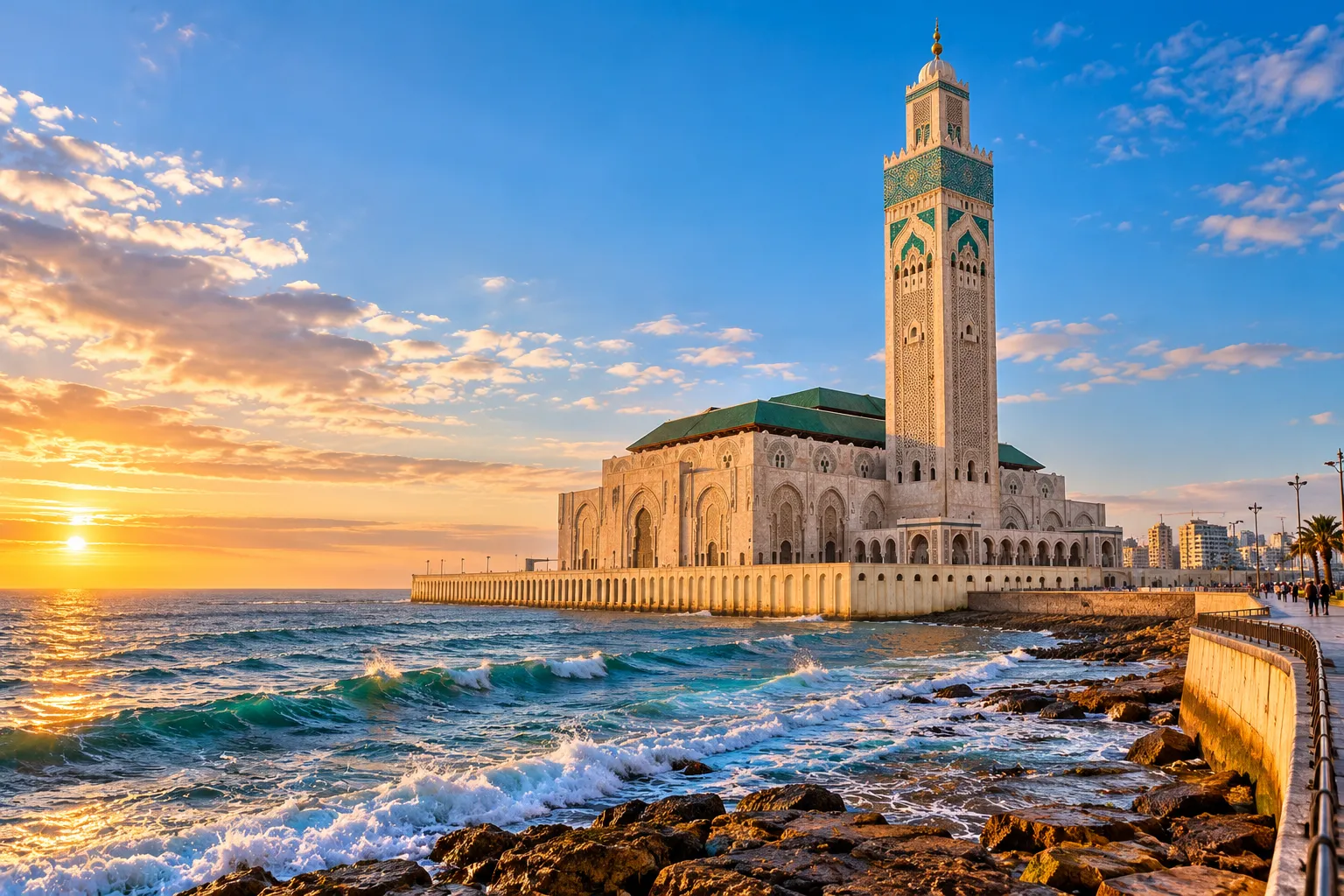
Begin your first morning at the Hassan II Mosque, Casablanca’s defining landmark.
The mosque stands dramatically beside the Atlantic and combines monumental scale with detailed Moroccan craftsmanship including zellige, carved wood, plasterwork, marble and other decorative arts.
Non-Muslim visitors who want to see the interior should plan around the official guided-visit schedule rather than arriving at any random time and expecting self-guided access.
Tour times can change according to season, Friday prayers and Ramadan, so check the current schedule before your visit.
Dress respectfully. Visitors entering the mosque should wear clothing covering the shoulders and torso and extending below the knees.
If you want a deeper introduction, VMT offers a Hassan II Mosque Guided Tour.
Walk the Hassan II Seafront
After the mosque, spend some time along the Atlantic promenade.
The location is part of what makes the mosque so distinctive. From outside, you can appreciate the contrast between the monumental architecture, open ocean and Casablanca’s modern skyline.
This is also one of the best places for photographs before continuing toward the older parts of the city.
Explore the Old Medina
Continue toward Casablanca’s Old Medina.
Do not expect the same scale or architectural atmosphere as Fes el-Bali or the Marrakech medina. Casablanca’s old quarter is smaller and reflects a different history.
Its narrow streets contain homes, shops, everyday commerce and sections of the city’s older urban fabric.
The appeal is less about a checklist of major monuments and more about seeing a different side of Casablanca from the wide boulevards and business districts nearby.
Lunch Near the Medina or Central Casablanca
Use lunch as part of the sightseeing day rather than rushing immediately to the next attraction.
Casablanca has a broad food scene ranging from everyday cafés and Moroccan restaurants to seafood and contemporary dining.
Possible Moroccan dishes include:
- Tagine
- Couscous
- Moroccan salads
- Grilled meats
- Seafood
- Fresh bread
- Mint tea
If seafood interests you, Casablanca’s Atlantic location makes it worth considering during at least one meal.
Explore Downtown Casablanca and Its Art Deco Architecture
After lunch, move into central Casablanca.
This part of the city provides one of the clearest contrasts with Morocco’s medieval medinas. Wide streets, civic buildings, balconies and façades reflect architectural development from the early twentieth century, including Art Deco and related styles.
Rather than looking for one single landmark, treat downtown as an architectural walk.
Mohammed V Square
Mohammed V Square is a useful starting point for understanding the civic center.
The surrounding area brings together monumental public architecture and broad urban spaces that feel very different from Casablanca’s Old Medina.
Avenue Mohammed V
Continue through central streets around Avenue Mohammed V, where architecture, shops, cafés and everyday city life overlap.
Look above street level. Some of Casablanca’s most interesting details are on upper façades, balconies, windows and decorative building fronts rather than at ground level.
If architecture is one of your main interests, VMT also offers a Casablanca Art Deco Architecture Walking Tour.
Arab League Park
Arab League Park provides a useful break after several hours of urban sightseeing.
The park sits close to central Casablanca and works well as a shaded pause between downtown architecture and the final part of the afternoon.
You do not need to schedule a long visit. Even a short walk helps vary the pace of the day.
Optional Evening: Downtown or the Atlantic
For your first evening, choose between staying downtown for dinner or heading toward the coast.
If you are tired after a full sightseeing day, there is no need to force another major attraction into the schedule.
Casablanca is particularly rewarding when you leave time for cafés and restaurants rather than treating every hour as a monument visit.
Day 2: Habous, Art, Shopping and the Corniche
Start in the Habous Quarter
Begin the second day in the Habous Quarter, also known as the New Medina.
The district combines traditional Moroccan architectural vocabulary with a more planned street layout than the Old Medina.
It is a useful place for:
- Walking
- Traditional shops
- Books
- Pastries
- Crafts
- Architectural details
Habous works especially well on a two-day itinerary because it demonstrates another stage of Casablanca’s urban development rather than repeating the atmosphere of the Old Medina.
Mahkama du Pacha Area
While exploring Habous, you may also see the exterior of the Mahkama du Pacha, an important architectural landmark in the district.
Interior access can depend on current conditions and permissions, so do not build the entire morning around assuming that you will be able to enter.
The surrounding Habous streets remain worthwhile regardless.
Abderrahman Slaoui Museum
The Abderrahman Slaoui Museum provides a more intimate cultural stop after the city’s large outdoor landmarks.
The collection includes Moroccan art, historic posters, jewelry and decorative objects within a house-museum setting.
It is a good choice for travelers interested in design, visual culture and the collecting history of twentieth-century Morocco.
Check current opening days and hours before going, particularly if your two-day visit falls on a weekend, holiday or special event.
Shopping in Casablanca
Casablanca offers a very different shopping experience from the souks of Marrakech or Fes.
You can move between traditional markets, local commercial streets and large modern shopping centers within the same city.
Habous for Traditional Shopping
Habous is useful for books, pastries, crafts and smaller traditional shops.
Morocco Mall
If modern retail is part of your trip, Morocco Mall is one of Casablanca’s best-known large shopping centers and can be combined with the western coastal side of the city.
Casablanca Marina Area
The Marina area provides another modern waterfront environment with shops, restaurants and contemporary development.
If you specifically want to visit Marina Shopping Center, check current opening information before making the trip.
For a two-day cultural visit, shopping should remain optional rather than replacing the Hassan II Mosque, downtown architecture or the Corniche.
Ain Diab Corniche
Use the later afternoon and evening for Ain Diab.
The Corniche runs along Casablanca’s Atlantic coast and brings together seaside walks, cafés, restaurants, beach areas and a more relaxed atmosphere than central downtown.
This is an ideal place to finish a two-day stay because it reveals another side of the city after the mosque, medinas and Art Deco center.
Can You Swim at Ain Diab?
Beach and swimming conditions depend on the Atlantic, weather and local conditions on the day.
Do not assume that every part of the coastline is suitable for casual swimming simply because it is a beach area.
If you mainly want a walk, sunset or café stop, the Corniche works regardless of whether swimming conditions are suitable.
VMT currently offers an Ain Diab Corniche Sunset Tour for travelers who want a guided coastal outing.
Dinner on Your Final Evening
Finish the trip with a Moroccan meal or seafood dinner.
The original two-day route recommends dishes such as tagine and couscous, both of which remain good choices if you want a traditional meal.
Casablanca also has a broader contemporary dining scene, so you do not need every meal to follow the same format.
If live music is important to you, check the restaurant’s current program rather than assuming entertainment is offered every evening.
Casablanca’s Top Sights
| Sight | Why visit | Best time in itinerary |
|---|---|---|
| Hassan II Mosque | Monumental architecture and Atlantic location | Day 1 morning |
| Old Medina | Older urban fabric and local street life | Day 1 late morning |
| Downtown Art Deco | Casablanca’s distinctive twentieth-century architecture | Day 1 afternoon |
| Arab League Park | Green break in the central city | Day 1 afternoon |
| Habous Quarter | Traditional-style architecture, shops and quieter streets | Day 2 morning |
| Abderrahman Slaoui Museum | Art, posters, jewelry and decorative collections | Day 2 midday |
| Ain Diab Corniche | Atlantic views, walking, cafés and sunset atmosphere | Day 2 afternoon/evening |
What About Rick’s Café?
Travelers interested in the cultural legacy of the film Casablanca may want to add Rick’s Café.
The café is a later recreation inspired by the fictional location associated with the movie rather than an original filming location from the classic film.
If it appeals to you, include it as a meal or evening stop rather than replacing one of the city’s genuinely historic attractions.
Casablanca Is Not Marrakech or Fes
One of the most common mistakes is judging Casablanca by the standards of Morocco’s historic imperial cities.
Casablanca’s strength is the combination of:
- Modern city life
- Hassan II Mosque
- Art Deco and twentieth-century architecture
- Atlantic waterfront
- Old Medina
- Habous Quarter
- Restaurants and cafés
If you want a vast medieval medina with dense traditional craft quarters, Fes is stronger.
If you want palaces, souks, gardens and a visitor-focused historic center, Marrakech is stronger.
Choose Casablanca when you want to experience Morocco’s largest contemporary city and the architectural layers that came with its modern growth.
Where to Stay for 2 Days in Casablanca
For a short visit, location matters because Casablanca is large.
Central Casablanca
Good for downtown architecture, restaurants and easier access to several central sights.
Near the Hassan II Mosque and Marina
Useful when the waterfront is a priority and you want easy access to the mosque and Atlantic promenade.
Ain Diab
Better for travelers who prioritize the coast, restaurants and evening atmosphere over being within walking distance of downtown landmarks.
For only two days, avoid choosing accommodation solely because it is inexpensive if it creates long daily transfers across the city.
Getting Around Casablanca
Casablanca is too large to approach entirely on foot.
Walking works well within individual areas such as downtown, Habous or sections of the Corniche, but you will probably use transport between neighborhoods.
Depending on your route, options include:
- Tram
- Taxi
- Private transfer
- Organized city tour
- Walking within individual districts
Allow extra time when crossing the city, especially during busy traffic periods.
If you prefer to see the main landmarks in a structured day, VMT’s Casablanca City Tour combines central sightseeing and the Atlantic side of the city.
Arriving Through Casablanca Airport
Casablanca is a common arrival or departure point for international Morocco trips, but the airport is outside the central sightseeing districts.
Do not treat an arrival day as a full sightseeing day if your flight lands late, immigration takes time or you still need to transfer into the city.
If you have a long daytime flight connection rather than an overnight stay, VMT also offers a Casablanca Layover Private City Tour.
Can You See Casablanca in One Day?
Yes.
If you only have one full day, prioritize:
- Hassan II Mosque
- Old Medina
- Downtown Art Deco
- Habous Quarter or Ain Diab
Choose between Habous and the Corniche based on your interests rather than trying to see every area.
Two days is better because it lets you separate architectural sightseeing from the coast and shopping.
Best Time to Visit Casablanca
Casablanca has an Atlantic coastal climate, so conditions differ from inland Marrakech and the Sahara.
The city can be visited throughout much of the year, but weather should still shape how you plan the day.
On warmer days, schedule long downtown walks earlier and use museums, cafés or the coast later.
On windy or rainy days, keep the itinerary flexible and prioritize indoor attractions when necessary.
For broader seasonal planning, use the Morocco Seasonal Travel Guide.
What to Eat in Casablanca
A two-day stay gives you enough time to combine classic Moroccan dishes with the city’s Atlantic food culture.
Consider:
- Tagine
- Couscous
- Seafood
- Grilled fish
- Moroccan salads
- Pastries
- Mint tea
- Local café breakfasts
Casablanca is a large working city, so do not restrict every meal to restaurants designed mainly for tourists.
A café lunch or simple local meal can be just as useful for experiencing everyday Casablanca as a formal dinner.
Common Casablanca Planning Mistakes
Visiting Only the Airport
Casablanca deserves more than being treated as a transfer point if you have enough time in your Morocco itinerary.
Expecting a Marrakech-Style Medina
The Old Medina is worthwhile, but Casablanca’s identity is much broader than its historic quarter.
Ignoring the Hassan II Mosque Tour Schedule
If you want to visit the interior, check current guided-tour times before building your day around it.
Trying to Walk Everywhere
The main neighborhoods are spread across a large metropolitan area.
Putting Morocco Mall Ahead of the City’s Unique Sights
Modern shopping can be enjoyable, but Hassan II Mosque, downtown architecture, Habous and the Atlantic waterfront provide a more distinctive Casablanca experience.
Overloading a Two-Day Itinerary
Leave room for meals, traffic and cafés rather than turning every hour into another scheduled stop.
FAQ
Is 2 days enough in Casablanca?
Yes. Two full days is enough for Hassan II Mosque, the Old Medina, downtown Art Deco architecture, Habous, a museum and the Ain Diab Corniche at a comfortable pace.
What should I see first in Casablanca?
Start with Hassan II Mosque. Its Atlantic setting and architecture make it Casablanca’s defining landmark, and interior visits operate on a schedule that is easier to plan around early in the day.
Can non-Muslims visit Hassan II Mosque?
Non-Muslim visitors can see the interior through the mosque’s official guided visits. Tour times vary by season, Friday prayers and Ramadan, so check the current timetable before going.
Is Casablanca Old Medina worth visiting?
Yes, but do not expect a medina on the scale of Fes or Marrakech. Casablanca’s Old Medina is smaller and is best visited as one part of a wider city itinerary that also includes downtown architecture and the waterfront.
Is Casablanca worth visiting if I am already going to Marrakech?
Yes, if you want a different side of Morocco. Marrakech centers heavily on its historic medina, palaces and tourism culture, while Casablanca offers monumental modern architecture, Art Deco streets, business-city energy and an Atlantic coastline.
Where should I go for sunset in Casablanca?
The Atlantic waterfront and Ain Diab Corniche are natural choices for late afternoon and sunset. The exact experience depends on weather and visibility, but the coast works well as the final stop after a day of city sightseeing.
Make Two Days in Casablanca About the City’s Contrasts
Casablanca becomes more interesting when you stop expecting it to behave like Morocco’s historic imperial cities.
Start with the monumental Hassan II Mosque and the smaller Old Medina, then move through the Art Deco center and broad civic streets. On the second day, experience the more traditional atmosphere of Habous, add art or shopping, and finish beside the Atlantic at Ain Diab.
That combination reveals what makes Casablanca distinctive: traditional Moroccan craftsmanship beside monumental modern architecture, older neighborhoods beside planned twentieth-century districts, and a working metropolis opening directly onto the ocean.
For current tours and activities, use the Casablanca destination page. If Casablanca is part of a longer Atlantic route, continue with the Morocco Atlantic Coast guide.
If you want Casablanca integrated into a longer Morocco itinerary, use the custom Morocco trip planner.
Explore destinations, tours and locally organized Morocco experiences with Visit Morocco Together.
Ready to Experience Morocco?
Turn this inspiration into your next adventure. Our travel experts are ready to help.