A 10-day Morocco road trip combines some of the country’s most dramatic landscapes into one journey: the historic streets of Marrakech, the peaks and valleys of the High Atlas Mountains, the earthen architecture of Ait Ben Haddou, the rocky gorges of southern Morocco and the Erg Chebbi dunes beside Merzouga.
This itinerary is designed for travelers who want more than a city break. It works particularly well for outdoor enthusiasts, culture seekers, photographers and travelers interested in Moroccan history because the route changes almost every day. One morning can begin in a mountain village and another beneath the dunes of the Sahara.
The original itinerary included two days in Marrakech, two days in the Atlas Mountains with the possibility of climbing Mount Toubkal, Ait Ben Haddou and Ouarzazate, two days around the Sahara, Todra Gorge and a final return to Marrakech. This expanded version keeps all of those experiences while organizing them into a more practical road-trip route.
10-Day Morocco Road Trip at a Glance
| Day | Route | Main experience |
|---|---|---|
| Day 1 | Marrakech | Jemaa el-Fna, medina, souks and Moroccan food |
| Day 2 | Marrakech | Koutoubia Mosque, Majorelle Garden and preparation for the road |
| Day 3 | Marrakech → High Atlas | Imlil, valleys, Amazigh villages and hiking |
| Day 4 | High Atlas | Mount Toubkal option or lower-level mountain trek |
| Day 5 | Atlas → Ait Ben Haddou | High Atlas road and UNESCO-listed ksar |
| Day 6 | Ouarzazate → Dades Valley | Film history, kasbah landscapes and southern valleys |
| Day 7 | Dades → Todra → Merzouga | Todra Gorge, Erg Chebbi and sunset camel trek |
| Day 8 | Merzouga | Sunrise, Sahara landscapes and desert culture |
| Day 9 | Merzouga → Southern Morocco | Long scenic return through oasis and valley country |
| Day 10 | Southern Morocco → Marrakech | Atlas crossing, relaxation and final shopping |
Days 1–2: Begin the Road Trip in Marrakech
Your adventure begins in Marrakech, a city known for its medina, busy souks, palaces, gardens and food.
Starting with two nights gives you time to recover from travel before heading into the mountains. It also means you do not need to collect a rental car or begin a long drive immediately after arriving.
Day 1: Jemaa el-Fna, Medina and Souks
Spend your first day exploring the historic center. Jemaa el-Fna is the natural starting point, particularly later in the afternoon when food stalls, performers and crowds gradually change the atmosphere of the square.
Continue into the surrounding souks, where narrow streets are filled with spices, textiles, leatherwork, metalwork, lamps and other Moroccan crafts.
Rather than trying to see every street on the first day, allow yourself time to become familiar with the medina.
Finish with Moroccan food in or around the old city. Tagines, couscous, salads, pastries and mint tea are common choices, but Marrakech also has everything from street-food stalls to contemporary restaurants.
Day 2: Koutoubia Mosque and Majorelle Garden
Keep the second day for the other Marrakech attractions included in the original itinerary.
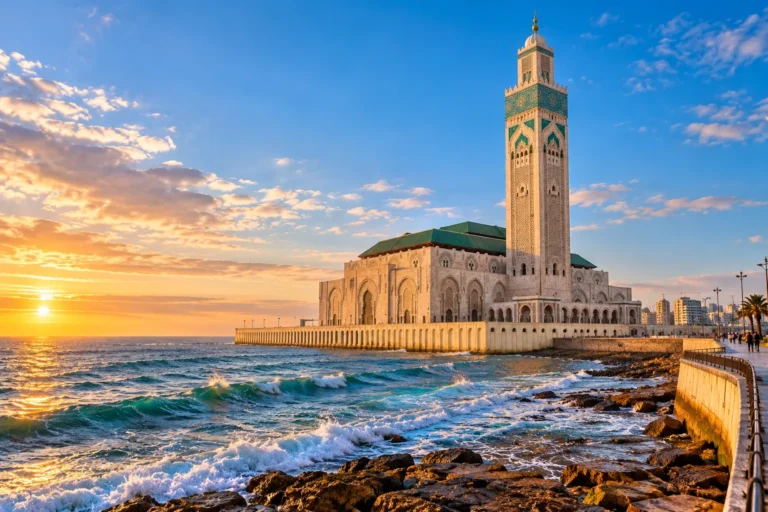
The Koutoubia Mosque and its minaret are among the city’s most recognizable landmarks. Non-Muslim visitors should respect current access restrictions to active mosque interiors while appreciating the exterior and surrounding gardens.
Continue to Majorelle Garden, whose planted spaces and distinctive architecture provide a quieter contrast with the medina.
You can also use this afternoon to organize the road-trip portion of the journey, confirm accommodation, check current mountain conditions and collect your vehicle if you are self-driving.
Day 3: Marrakech to the Atlas Mountains
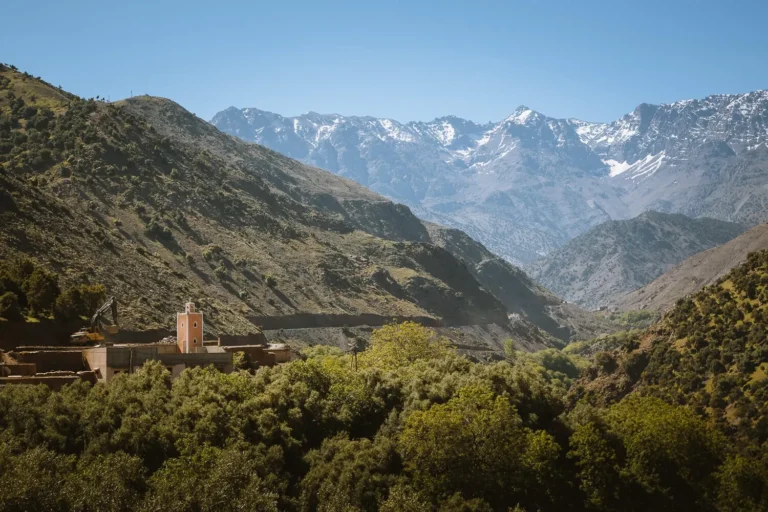
Leave Marrakech and travel toward the Atlas Mountains. The High Atlas creates one of the most dramatic landscape changes on this itinerary, replacing city streets with valleys, cultivated terraces, mountain villages and increasingly high peaks.
Imlil is one of the main bases for hiking around Mount Toubkal. Even travelers who do not intend to climb the summit can use the area for scenic walks and a night in the mountains.
Hiking Around Imlil
Use the first mountain day for a moderate walk rather than immediately attempting the most demanding route.
Trails around Imlil pass through valley scenery and communities where farming, livestock and tourism are important parts of local life.
A guided walk can include mountain viewpoints, nearby settlements and lunch in the valley, depending on the route you choose.
Amazigh Villages
The old article refers to traditional Berber villages. Amazigh is also widely used for the Indigenous peoples and communities of Morocco and North Africa.
Village paths can form part of a trekking route, but distinguish between walking through public areas and entering a private home. A hosted meal or tea visit should be arranged rather than assumed.
Stay overnight around Imlil or another appropriate High Atlas base.
Day 4: Mount Toubkal or a Lower-Level Atlas Trek
Mount Toubkal rises to 4,167 meters and is the highest peak in North Africa. A Toubkal ascent is the biggest physical challenge in the original 10-day itinerary.
It is important, however, to distinguish between visiting the Atlas Mountains and summiting Toubkal. A normal summit itinerary commonly requires two or more trekking days and suitable fitness. Weather, snow, altitude and season can change the difficulty substantially.
Option 1: Mount Toubkal Summit
If reaching Toubkal’s summit is one of the main purposes of your holiday, structure Days 3 and 4 specifically around the ascent and use professional local mountain support.
A compressed itinerary may involve trekking toward the mountain refuge on Day 3, an early summit attempt on Day 4 and descending afterward.
This is demanding. Do not select this version simply because it fits on paper. Check daily walking hours, elevation gain, seasonal conditions, equipment requirements and your own experience before committing.
Winter conditions can introduce snow and ice and may require mountaineering equipment and skills beyond normal hiking.
Option 2: High Atlas Hiking Without the Summit
For many travelers on a 10-day Morocco road trip, a lower-level hike is the better option.
You can spend the day exploring the valleys around Imlil, walk between mountain settlements and enjoy the scenery without using most of your energy on a 4,000-meter summit.
This also makes the following road journey toward southern Morocco much more comfortable.
The mountains remain a genuine part of the trip even if you never attempt Toubkal.
Day 5: High Atlas to Ait Ben Haddou
Leave the hiking section behind and begin the road journey toward southern Morocco.
The transition from the High Atlas toward Ait Ben Haddou is one of the most scenic parts of the road trip.
Ait Ben Haddou is a UNESCO World Heritage-listed ksar consisting of traditional earthen buildings enclosed by defensive walls. It is one of the best-known examples of southern Moroccan architecture.
Explore Ait Ben Haddou on Foot
Do not limit the visit to a photograph from across the river. Allow enough time to walk into the settlement, explore its passages and climb toward viewpoints above the ksar.
The surrounding landscape also helps explain why this area historically formed part of routes connecting the Sahara, the Atlas Mountains and Marrakech.
Photography and Film Locations
The distinctive earthen architecture and surrounding landscape have made Ait Ben Haddou a well-known filming location.
Photography is one of the reasons many travelers stop here, but remember that heritage sites and nearby settlements are more than film sets. Respect homes, residents and any restricted areas.
Stay around Ait Ben Haddou or continue the short distance toward Ouarzazate according to your accommodation.
Day 6: Ouarzazate and the Road to Dades Valley
Continue through Ouarzazate, sometimes promoted as the gateway to southern Morocco and widely associated with film production.
The original article specifically includes Atlas Film Studios, so keep it as an optional stop for travelers interested in cinema.
Atlas Film Studios
The Ouarzazate region has been used for international film and television productions for decades.
Atlas Studios gives visitors a closer look at sets and the area’s screen history. Opening arrangements and accessible sets can change, so verify current visitor information before planning the day around a studio tour.
Continue Toward Dades Valley
After Ouarzazate, continue through southern landscapes toward Dades Valley.
This part of the route is sometimes referred to through tourism names such as the Road of a Thousand Kasbahs because earthen fortifications and settlements appear throughout the region.
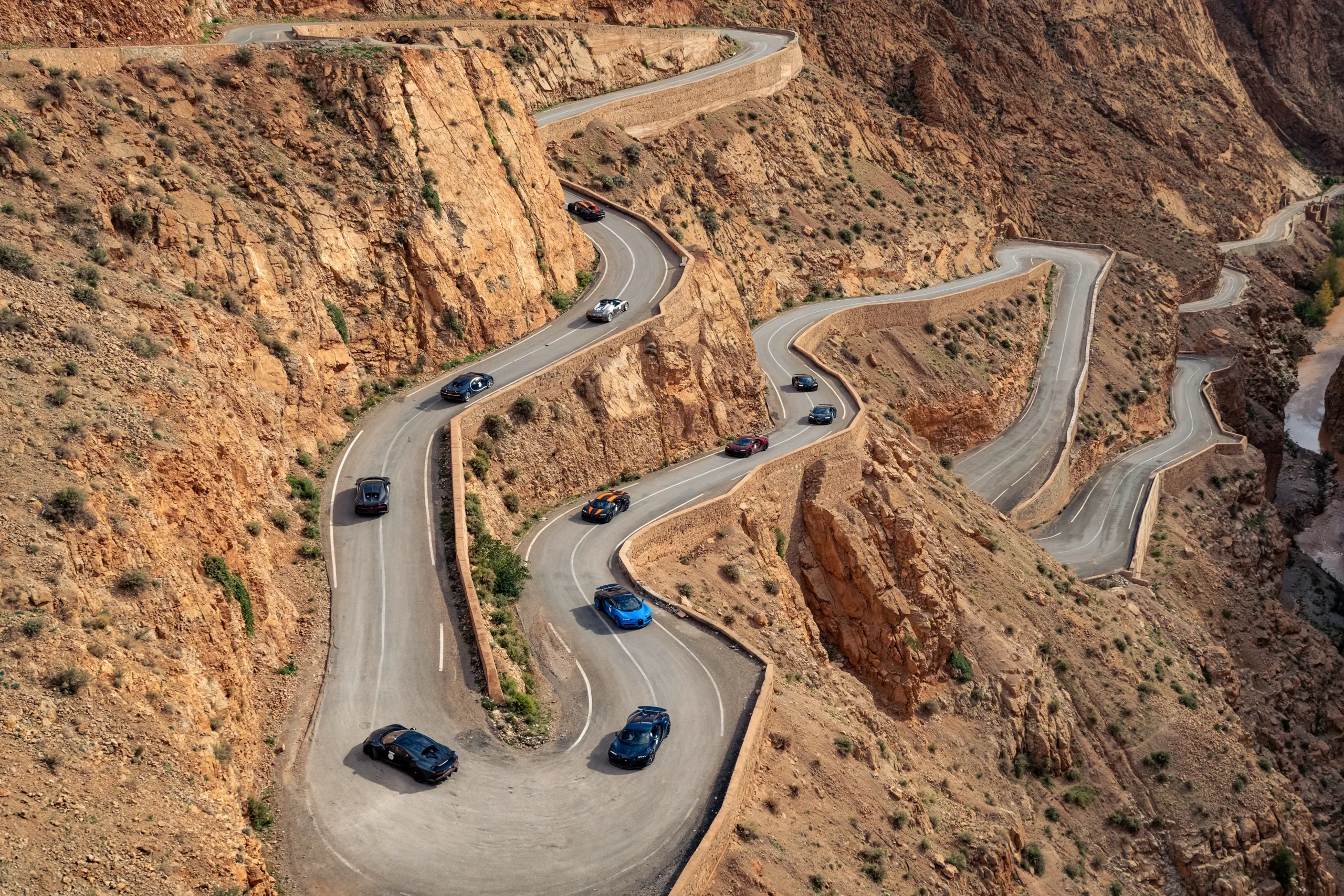
The landscape becomes increasingly rugged as you move toward Dades, where cultivated areas, villages and dramatic rock formations sit beside dry mountain scenery.
Spend the night around Dades instead of attempting to reach Merzouga on the same day.
Day 7: Dades Valley, Todra Gorge and Merzouga
Day 7 brings together the gorge experience from the original itinerary and the journey toward the Sahara.
Walk Through Todra Gorge
Stop at Todra Gorge, where steep canyon walls rise around the river and road.
The gorge is worth experiencing on foot. Even a relatively short walk provides a break from driving and makes the scale of the canyon much easier to appreciate.
Longer hiking and climbing routes are possible for travelers who have planned specifically for them, but a short exploration fits better into this road-trip day.
Continue Toward Merzouga
From Todra, continue through increasingly arid landscapes toward Merzouga.
Merzouga sits beside Erg Chebbi, whose large golden dunes form one of Morocco’s best-known Sahara landscapes.
Time your arrival according to the sunset activity rather than simply aiming to reach your accommodation before dark.
Sunset Camel Trek
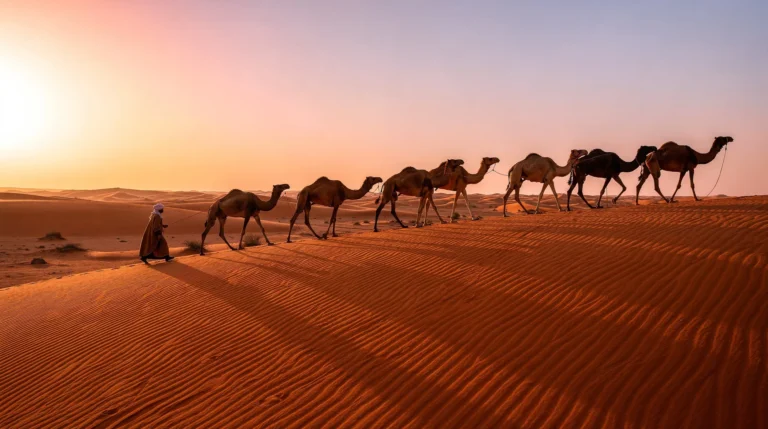
The old itinerary includes a camel trek into the Sahara, and that remains one of the classic Merzouga experiences.
A guide normally leads the camels from the edge of the dunes toward the camp or sunset area. No previous camel-riding experience is usually necessary for a short visitor ride.
Camel riding is optional. Travelers who prefer not to ride can ask about a 4×4 transfer or another way to reach the camp.
Night in a Sahara Desert Camp
Spend the night in a camp near the Erg Chebbi dunes.
The original article describes sleeping in a traditional Berber camp beneath a sky full of stars. Modern camps vary widely in style and comfort, from relatively simple tents to higher-comfort camps with private bathrooms.
Ask what the chosen camp actually provides, including:
- Sleeping arrangements
- Private or shared bathrooms
- Dinner and breakfast
- Luggage transport
- Camel or 4×4 access
- Electricity
- Hot water
- Evening activities
Some camps arrange local music or other evening experiences, but the program varies and should be confirmed rather than assumed.
Day 8: Sunrise and a Full Sahara Day
Wake before dawn for sunrise over Erg Chebbi.
The light changes quickly as the first sun reaches the dune ridges, creating long shadows across the sand. This remains one of the most memorable experiences described in the original road-trip article.
Bring a warm layer because desert mornings can feel cold outside the hottest part of the year.
Explore Beyond the Camp
Instead of leaving Merzouga immediately after breakfast, keep the day for the wider desert area.
Possible activities include:
- Walking among the dunes
- A 4×4 desert excursion
- Sandboarding where available
- Photography
- Visiting surrounding settlements
- Learning more about local music and culture through properly arranged experiences
- Relaxing at your accommodation
- Watching another sunset from a different location
Desert Culture and Local Communities
The original article describes experiencing the culture of nomadic tribes. Keep the cultural interest, but approach it carefully.
Southeastern Morocco includes communities with Amazigh, Arab and Saharan histories as well as families with nomadic or formerly nomadic traditions. A visitor activity should not suggest that every person living around Merzouga follows the same lifestyle.
If your itinerary includes a hosted visit, music experience or community encounter, ask who is participating and how the experience has been arranged.
Travelers interested in the wider desert can also explore the current Sahara Desert and Merzouga guide.
Day 9: Begin the Return Journey to Marrakech
Begin the westward return through southern Morocco.
This is a substantial road day, which is why the trip should not try to drive directly from Merzouga to Marrakech after a full day of desert activities.
If you did not have enough time at Todra Gorge on the way east, it can be included here as the original itinerary suggests. However, geographically it is usually more efficient to visit it on Day 7 while traveling from Dades toward Merzouga.
The return journey moves back through dry valleys, oasis landscapes and towns that link the Sahara with Ouarzazate and the High Atlas.
Where to Spend the Final Road-Trip Night
Your overnight location depends on how much driving you want to complete.
Dades, Skoura, Ouarzazate or another suitable southern stop can divide the return into manageable sections.
Do not choose the overnight point only according to the cheapest hotel. Consider how far you will need to drive on Day 10 and whether you want time for stops before reaching Marrakech.
Day 10: Cross the Atlas and Return to Marrakech
Complete the road journey back toward Marrakech.
The return across the mountain landscapes gives you one final view of the contrast that defines this itinerary: high ridges and rocky southern scenery gradually give way to the plains around Marrakech.
Once back in the city, return your rental vehicle if appropriate and keep the remainder of the day easy.
Relax and Shop for Souvenirs
The original itinerary ends with time to relax and shop for souvenirs, and that is a sensible final afternoon.
Return to the medina if you want to buy Moroccan crafts, spices, textiles, ceramics, leather goods or other items you saw earlier in the journey.
Waiting until the end of the trip can be useful because you now have a better understanding of the regional crafts and products encountered along the route.
Finish with a relaxed dinner and reflect on the journey from Marrakech through the Atlas Mountains, southern kasbah country and the Sahara.
Is Mount Toubkal Realistic on a 10-Day Road Trip?
Yes, but only if trekking is one of your main priorities.
The original itinerary gives Days 3 and 4 to the Atlas Mountains and specifically suggests summiting Mount Toubkal. A fast two-day summit itinerary can be possible for suitably fit and prepared hikers in appropriate conditions, but it makes the first half of the trip physically demanding.
If you complete a strenuous summit and then immediately begin several days of driving toward the Sahara, fatigue can reduce your enjoyment of the rest of the journey.
For a balanced 10-day road trip, I would choose between two versions:
| Option | Atlas experience | Best for |
|---|---|---|
| Toubkal version | Two-day supported summit attempt | Fit hikers who consider Toubkal a major trip goal |
| Balanced road-trip version | Imlil, valleys and moderate guided hikes | Travelers who want mountains and Sahara without an exhausting schedule |
Self-Drive or Private Driver?
The route can work as a self-drive journey or with a private driver.
Self-Drive
Driving yourself gives you flexibility to stop for viewpoints, photography and meals.
It works best for travelers who are comfortable with:
- Mountain roads
- Long driving days
- Navigation
- Parking
- Changing road conditions
- Driving between several accommodations
You generally do not need to drive on the dunes themselves. Arrange desert-camp access separately with your accommodation or activity provider.
Private Driver
A private driver lets you concentrate on the scenery rather than navigation and is particularly useful on the longer southern road sections.
It also makes scenic stops easier when you do not want to manage parking or route planning.
A private driver is not automatically a specialist mountain or city guide. Use an appropriate mountain guide for trekking and local guides where detailed historical interpretation matters.
Best Time for This Morocco Road Trip
Spring and autumn are useful seasons for combining hiking, southern Morocco and the Sahara.
Spring
Spring can provide good conditions for Atlas walking and road travel while avoiding the most intense summer heat around Merzouga.
Summer
Summer can be very hot in Ouarzazate, the valleys and the Sahara.
Outdoor activity around Merzouga should be planned for cooler parts of the day rather than assuming the same schedule works year-round.
Autumn
Autumn is another strong period for combining Atlas trekking and desert travel.
Winter
Winter changes the mountain portion significantly. High routes can have snow and ice, while desert nights can become cold.
A winter Mount Toubkal ascent should not be treated like a normal warm-season hike.
What to Pack for the Atlas Mountains and Sahara
This route crosses very different environments, so pack in layers.
- Comfortable walking shoes or hiking boots
- Lightweight daytime clothing
- Warm layer for mountains and desert nights
- Wind or rain protection for the Atlas
- Sun hat
- Sunglasses
- High-protection sunscreen
- Reusable water bottle
- Small hiking daypack
- Power bank
- Personal medication
- Headlamp for mountain or desert accommodation
- Comfortable trousers if you plan to ride a camel
If attempting Toubkal, request a trek-specific equipment list from your guide. Winter routes can require equipment well beyond standard walking gear.
Road Trip Planning Tips
- Do not underestimate the physical impact of combining a Toubkal trek with long driving days.
- Treat the road through southern Morocco as part of the experience rather than wasted travel time.
- Stay overnight around Dades instead of driving directly from Ouarzazate to Merzouga if you want a more comfortable pace.
- Visit Todra Gorge while traveling between Dades and Merzouga when possible.
- Reach Merzouga early enough to avoid rushing the sunset experience.
- Confirm desert-camp luggage and transfer arrangements before arrival.
- Check current High Atlas weather before mountain travel.
- Allow a route change if mountain conditions make the planned trek unsafe.
- Keep Day 9 mainly as a road day.
- Avoid scheduling an international flight immediately after the final long drive to Marrakech.
Who Is This 10-Day Morocco Road Trip Best For?
This itinerary works particularly well for travelers who enjoy a mixture of outdoor activity, history, culture and dramatic landscapes.
It is a strong choice if you want:
- Marrakech medina and food
- Atlas Mountain hiking
- Mount Toubkal as an optional challenge
- Amazigh mountain landscapes
- Ait Ben Haddou
- Ouarzazate and film history
- Dades Valley
- Todra Gorge
- Merzouga and Erg Chebbi
- A sunset camel trek
- A Sahara desert camp
- Sunrise over the dunes
Travelers who mainly want relaxed city sightseeing may prefer a less active itinerary. Likewise, serious hikers who want several days in the High Atlas should consider making the trip longer rather than compressing both a major trek and the Sahara into ten days.
FAQ
Is 10 days enough for a Morocco road trip through the Atlas and Sahara?
Yes. Ten days is enough for Marrakech, two Atlas Mountain days, Ait Ben Haddou, Ouarzazate, Dades, Todra Gorge and two days around Merzouga. The itinerary is active, so longer stays would be preferable if you want a multi-day trek or a slower road-trip pace.
Can I climb Mount Toubkal during a 10-day Morocco itinerary?
Yes, a fast supported ascent can fit into Days 3 and 4 for suitably fit travelers in appropriate conditions. However, it makes the itinerary considerably more demanding. Travelers who want a more balanced road trip can choose lower-level hiking around Imlil instead.
Can I drive from Marrakech to Merzouga myself?
Yes, but Merzouga should be reached as part of a multi-day southern Morocco route rather than one very long drive. Breaking the journey around Ait Ben Haddou, Ouarzazate and Dades makes the trip more manageable and gives you time to experience the landscapes along the way.
Is one night in the Sahara enough?
One desert-camp night provides sunset, an overnight stay and sunrise. This itinerary gives Merzouga roughly two days so you can also explore the wider desert region instead of arriving at sunset and immediately leaving after breakfast.
Do I have to ride a camel in Merzouga?
No. Camel trekking is one way to reach or explore the dunes, but many desert camps and operators can arrange 4×4 access. Choose according to your comfort, mobility and interests.
What is the best time for an Atlas Mountains and Sahara road trip?
Spring and autumn provide a useful balance for many travelers because they can offer more comfortable hiking and desert conditions. Summer can be extremely hot around the Sahara, while winter can bring snow and ice to high Atlas routes. Check current conditions shortly before traveling.
From Marrakech to the Mountains and Sahara
A 10-day Morocco road trip through the Atlas Mountains and Sahara brings together many of the landscapes that make southern Morocco so varied.
The journey begins among Marrakech’s souks, gardens and historic landmarks before moving into the High Atlas, where you can choose between moderate hiking and the much more demanding Mount Toubkal challenge.
From the mountains, the route crosses into the earthen landscapes of Ait Ben Haddou and Ouarzazate, continues through Dades Valley and Todra Gorge and eventually reaches the Erg Chebbi dunes around Merzouga.
A camel trek, desert camp and Sahara sunrise provide the dramatic final contrast before the route turns west toward Marrakech.
The best version of this trip is not necessarily the one with the hardest hike or the most activities. Choose the Atlas route that matches your fitness, protect enough time for the road journey and let the changing landscapes between Marrakech and Merzouga become part of the adventure.
If you want to adjust the trekking level, desert stay or driving pace, use the custom Morocco trip planner.
Explore destinations, tours and locally organized Morocco experiences with Visit Morocco Together.
Ready to Experience Morocco?
Turn this inspiration into your next adventure. Our travel experts are ready to help.