Ait Ben Haddou is one of southern Morocco’s most recognizable historic settlements, but a rewarding visit involves more than stopping for one photograph. This Ait Ben Haddou visitor guide explains how to explore the UNESCO-listed ksar, how much time to allow, where to find the best viewpoints, when to visit, what to expect from the walk, and how to include the site in a journey through Ouarzazate, the High Atlas and southern Morocco.
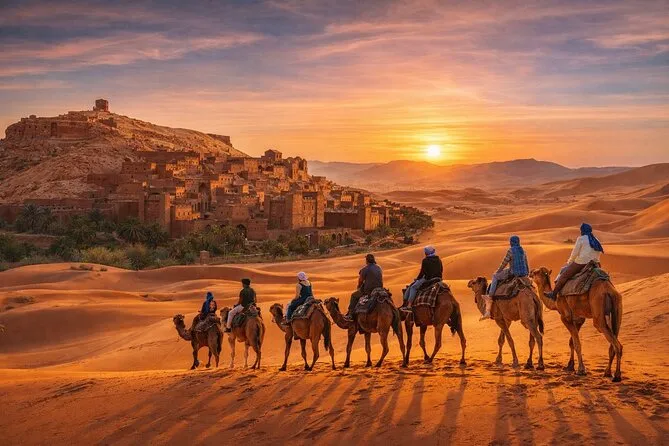
The settlement rises from an arid valley in Ouarzazate Province, with closely packed earthen houses, decorated towers and defensive walls climbing a hillside. Its architecture, historic caravan-route connections and dramatic landscape led to its inscription on the UNESCO World Heritage List in 1987. It has also become one of Morocco’s best-known filming locations.
Ait Ben Haddou Visitor Guide: Quick Planning Overview
Ait Ben Haddou can be explored in a few hours, but the experience changes significantly depending on how much time you allow. Visitors on a road trip can see the main ksar and upper viewpoint during a half-day stop, while staying overnight gives you access to quieter morning and evening light.
| Visit style | Suggested time | Best for |
|---|---|---|
| Quick stop | 1.5–2 hours | Travelers passing between Marrakech and Ouarzazate |
| Relaxed visit | 3–4 hours | Ksar walk, viewpoints, photography and lunch |
| Overnight stay | 1 night | Sunset, sunrise and a quieter visit |
| Extended area visit | 1–2 days | Ait Ben Haddou plus Ouarzazate, film locations or the Ounila Valley |
For current local tours and experiences, see the Ait Ben Haddou destination page.
What Is Ait Ben Haddou?
Ait Ben Haddou is a ksar, not simply one kasbah. The distinction is useful when understanding what you are visiting.
A kasbah usually refers to an individual fortified residence or citadel. A ksar is a fortified settlement containing multiple houses and community spaces protected by defensive walls. Ait Ben Haddou is therefore better described as the Ksar of Ait Ben Haddou.
Inside the walls, traditional earthen buildings are packed closely together along narrow passages that climb toward the upper part of the settlement. Some buildings are relatively simple, while others have prominent corner towers decorated with geometric earthen motifs.
The architecture reflects construction traditions used across the pre-Saharan valleys of southern Morocco, where earth and wood were practical building materials adapted to the dry environment.
Why Is Ait Ben Haddou a UNESCO World Heritage Site?
Ait Ben Haddou was inscribed on UNESCO’s World Heritage List in 1987 because it represents an important example of southern Moroccan earthen architecture and traditional pre-Saharan settlement design.
The surviving structures illustrate how homes, fortifications and community spaces were arranged within a compact defensive settlement. Although the construction techniques are older, UNESCO notes that the oldest surviving buildings at Ait Ben Haddou do not appear to predate the 17th century.
The ksar also occupied a position on historic commercial routes connecting southern Morocco and trans-Saharan trade networks with Marrakech.
The settlement remains vulnerable because earthen construction requires regular maintenance. Visitors should therefore treat walls, roofs and decorative surfaces as historic structures rather than climbing on fragile sections simply for photographs.
How to Explore Ait Ben Haddou
Walking is the only meaningful way to experience the historic ksar. The route begins around the lower part of the settlement before gradually climbing through narrow lanes toward the higher viewpoints.
You do not need a complicated itinerary, but allowing enough time to stop along the way makes the visit much more worthwhile.
Start With the View Across the Valley
Before entering, take a few minutes to look at the settlement from across the valley. From this side, you can understand how the buildings rise in layers up the hillside and how the defensive towers form part of the larger settlement.
This is also one of the most useful photography locations because it allows the full ksar to fit into the surrounding landscape rather than isolating individual buildings.
Walk Through the Lower Lanes
Once inside the ksar, follow the narrow passages upward rather than rushing directly to the top. The lower section contains some of the most interesting examples of traditional earthen construction.
You may pass homes, small shops and spaces used by local residents or craftspeople. Remember that Ait Ben Haddou is a heritage site with community connections rather than an abandoned film set.
Ask before entering privately managed spaces or taking close photographs of residents.
Climb Toward the Upper Viewpoint
The climb becomes steeper as you approach the upper section of the settlement. Comfortable shoes are useful because the surfaces can be uneven and dusty.
From higher ground, the view opens across the valley, modern village, dry hills and agricultural areas surrounding the ksar.
The upper viewpoint is one of the highlights of a first visit, but there is no need to race up and immediately return. The changing perspective while climbing is part of the experience.
If you want historical context while walking, the Ait Ben Haddou UNESCO Ksar Guided Walking Tour focuses on the settlement’s architecture, lanes and viewpoints.
Best Views and Photography in Ait Ben Haddou
Ait Ben Haddou is photogenic throughout the day, but light has a major effect on the appearance of its earthen walls.
Early morning is useful for travelers who want quieter lanes and softer light. Late afternoon and sunset bring warmer tones to the towers and surrounding landscape.
Useful photography locations include:
- The opposite side of the valley for a complete view of the ksar
- The lower approach for towers and architectural details
- The lanes within the settlement for close architectural compositions
- The upper viewpoint for the surrounding valley and mountains
- Viewpoints outside the ksar during late-afternoon light
Travelers specifically interested in golden-hour photography can also consider the Ait Ben Haddou Sunset Visit.
Ait Ben Haddou and Morocco’s Film History
The distinctive towers and surrounding dry landscape have made Ait Ben Haddou one of Morocco’s best-known filming locations. Its appearance has been used in international film and television productions, helping introduce the settlement to audiences far beyond Morocco.
Productions associated with the location include films such as Gladiator as well as scenes connected with Game of Thrones.
The film history is interesting, but it should not overshadow the older importance of the ksar itself. Ait Ben Haddou existed long before modern cinema and is significant because of its architecture, historic settlement pattern and position within southern Morocco.
Film enthusiasts who want more context can join the Ait Ben Haddou Film Locations Tour.
Best Time to Visit Ait Ben Haddou
Spring and autumn are among the most comfortable periods for exploring the ksar because daytime temperatures are generally easier for walking than during the hottest part of summer.
Summer visits are still possible, but the exposed climb through the settlement can become hot around midday. Start earlier in the morning or wait until later in the afternoon where possible.
Winter can provide good sightseeing conditions during the day, although mornings, evenings and High Atlas routes may be considerably cooler.
Best Time of Day
If your schedule is flexible, early morning or late afternoon usually provides the best balance of comfortable walking conditions and attractive light.
Visitors staying overnight have an advantage because they can explore outside the main arrival period of Marrakech and Ouarzazate day trips.
Sunset can be particularly attractive, but remember that you still need enough daylight to make your way down uneven paths safely.
How Long Should You Spend at Ait Ben Haddou?
Most travelers should allow around two to four hours.
Two hours is enough to cross into the settlement, walk through the lanes and climb to a viewpoint without spending much time at individual stops.
Three or four hours provides a better pace if you want photography, a guided visit, tea or lunch and time to appreciate the architecture.
An overnight stay is worthwhile for photographers and travelers who prefer slower travel. It lets you see the ksar near sunset and again in the quieter morning rather than fitting everything into a road-trip stop.
How to Get to Ait Ben Haddou
From Ouarzazate
Ouarzazate is the most convenient major base for visiting Ait Ben Haddou. The two places are close enough to combine comfortably, making Ait Ben Haddou a logical half-day or full-day outing for travelers staying in the Ouarzazate area.
This option is less tiring than making a same-day return from Marrakech and gives you more freedom to choose your visiting time.
From Marrakech
Ait Ben Haddou can be visited from Marrakech, but it is a long day because the route crosses the High Atlas Mountains. Current VMT day-trip itineraries generally allocate around 10–12 hours for a Marrakech journey combining Ait Ben Haddou and Ouarzazate.
If you are comfortable with a long driving day, the Ait Ben Haddou and Ouarzazate Day Trip from Marrakech combines the ksar with the High Atlas route and Ouarzazate.
Travelers continuing farther south should consider visiting Ait Ben Haddou as part of their onward journey rather than returning to Marrakech on the same day.
As Part of a Southern Morocco Route
Ait Ben Haddou fits naturally into an overland itinerary linking Marrakech with Ouarzazate, Skoura, Dades Valley, Todra Gorge and eventually the Sahara.
This is often the most efficient way to visit because you avoid repeating the High Atlas crossing purely for a single attraction.
Should You Stay Overnight?
You do not need to stay overnight to appreciate Ait Ben Haddou, but one night can significantly change the experience.
Stay overnight if you:
- Want sunrise or sunset photography
- Prefer exploring before larger daytime groups arrive
- Want a slower visit rather than a road-trip stop
- Plan to explore nearby valleys or film locations
- Are continuing toward Ouarzazate or farther south the following day
Travelers with limited time can comfortably stay in Ouarzazate and visit Ait Ben Haddou during the day.
What to Wear and Bring
You do not need technical hiking equipment, but Ait Ben Haddou involves more walking and climbing than the view from the road may suggest.
- Comfortable walking shoes with reasonable grip
- Sun protection, including sunscreen and a hat
- Drinking water, especially in warm weather
- A light layer during cooler months
- Cash for small purchases and local services
- A charged phone or camera
The settlement includes slopes, steps and uneven surfaces, so footwear matters more than dressing formally.
Practical Tips for Visiting Ait Ben Haddou
- Allow at least two hours rather than stopping only for photographs.
- Visit early or late in the day during hot weather.
- Wear footwear suitable for dusty and uneven paths.
- Ask before entering private interiors.
- Ask permission before taking close photographs of residents.
- Do not climb fragile walls or decorative sections for photographs.
- Carry some cash for small shops, cafés and local services.
- Check road and weather conditions when crossing the High Atlas.
Responsible Visiting at the UNESCO Ksar
Earthen architecture requires continuing maintenance, and the historic settlement is more fragile than stone architecture may appear.
Avoid leaning on decorated walls, climbing structures that are not intended as paths, or removing material from the site. Stay on established walking routes wherever possible.
It is also worth remembering that local people and families remain connected with the settlement. Treat homes and working areas as private spaces unless you are clearly invited inside.
Using local guides, buying directly from craftspeople when something genuinely interests you, and taking time to understand the settlement all contribute more than treating the ksar solely as a quick photograph stop.
Who Is Ait Ben Haddou Best For?
This Ait Ben Haddou visitor guide is particularly useful for travelers interested in architecture, history, photography, cinema and overland journeys through southern Morocco.
The visit also works well for families able to manage the uphill walking, couples, independent road trippers and travelers continuing toward the Sahara.
If you have very limited time in Marrakech and dislike long driving days, a dedicated return day trip may feel rushed. In that case, Ait Ben Haddou makes more sense when incorporated into a multi-day southern route.
FAQ
Is Ait Ben Haddou Worth Visiting?
Yes. Ait Ben Haddou combines UNESCO-listed earthen architecture, panoramic views, historic settlement patterns and a dramatic southern Moroccan landscape. It is especially worthwhile when included naturally in a route through Ouarzazate and southern Morocco.
Is Ait Ben Haddou a Kasbah or a Ksar?
Ait Ben Haddou is properly described as a ksar, meaning a fortified settlement containing multiple buildings within defensive walls. A kasbah normally refers to an individual fortified residence or citadel. The common phrase “Ait Ben Haddou Kasbah” is widely used by travelers, but Ksar of Ait Ben Haddou is more accurate.
How Long Do You Need at Ait Ben Haddou?
Allow around two to four hours for most visits. Two hours covers the main lanes and viewpoint, while three or four hours allows a slower walk, photography, a guide and time for food or tea.
Can You Visit Ait Ben Haddou From Marrakech in One Day?
Yes, but expect a long day because the route crosses the High Atlas Mountains. A Marrakech day trip commonly takes around 10–12 hours when combined with Ouarzazate and scenic stops. If you are already traveling south, it is usually more efficient to include Ait Ben Haddou as part of that journey.
What Is the Best Time to Visit Ait Ben Haddou?
Spring and autumn are comfortable for walking, while early morning and late afternoon generally provide the best light. Summer visits are possible but can be hot during the middle of the day.
Do You Need a Guide at Ait Ben Haddou?
A guide is not essential for simply walking through the ksar, but a knowledgeable local guide can explain the difference between architectural features, community spaces, historic trade routes and modern film history that are easy to overlook when visiting independently.
Plan Your Visit to Ait Ben Haddou
This Ait Ben Haddou visitor guide is best used as a flexible framework. Give yourself enough time to see the settlement from across the valley, walk slowly through its earthen lanes and climb toward the upper viewpoints rather than treating the UNESCO site as a quick roadside photograph. If your journey continues through Ouarzazate and southern Morocco, Ait Ben Haddou fits naturally into the route and deserves several hours rather than a rushed stop.
Explore destinations, tours and locally organized Morocco experiences with Visit Morocco Together.
Ready to Experience Morocco?
Turn this inspiration into your next adventure. Our travel experts are ready to help.