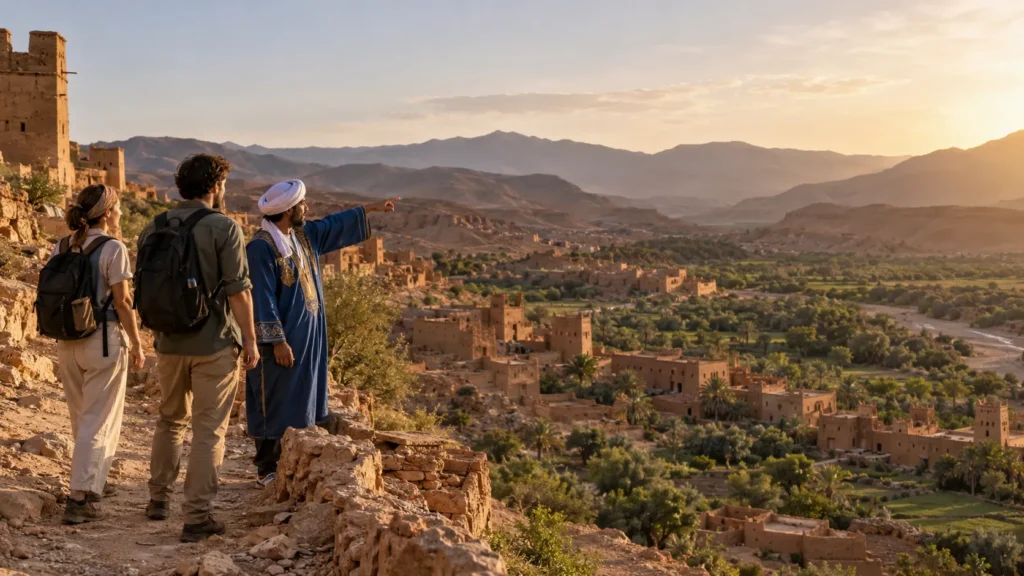
A tailor-made Morocco tour gives you something a fixed itinerary cannot always provide: control over how your time is used. Instead of choosing a route simply because it is sold as a standard 7-day, 10-day or 15-day package, you can build the journey around your flights, interests, preferred pace, accommodation style and the regions you genuinely want to experience. One traveler may want historic medinas, food and comfortable riads; another may prioritize the Atlas Mountains, the Sahara and scenic road journeys. The aim is not to include the highest number of destinations. It is to create a custom Morocco itinerary that works geographically, avoids unnecessary backtracking and leaves enough time to enjoy the places you came to see.
What Is a Tailor-Made Morocco Tour?
A tailor-made Morocco tour is planned around your own requirements rather than forcing your trip into a predetermined route. Your dates, number of travelers, arrival and departure cities, trip length, interests, accommodation preferences and budget can all influence the final itinerary.
This does not necessarily mean that every hour has to be scheduled. In fact, one of the advantages of custom travel is deciding where organization is useful and where independent time is better. You may want a private vehicle between cities, a local guide for the Fes medina, a planned desert stay in Merzouga and then an unscheduled afternoon in Essaouira.
The important distinction is that the route is designed around the traveler rather than the traveler having to adapt to an existing package.
Why Choose a Custom Morocco Itinerary?
Morocco combines historic cities, mountains, Atlantic coastline, desert regions, rural valleys and very different cultural environments. That variety is one of the country’s strengths, but it also makes route planning important. Marrakech, Fes, Chefchaouen, Essaouira and Merzouga are not close enough to be added casually to every itinerary.
A customized trip helps you decide which regions deserve time and which are better saved for another visit. It can also solve practical issues such as different arrival and departure airports, family requirements, dietary considerations, accessibility, celebrations, photography priorities or a preference for fewer hotel changes.
The French and English planning approaches can be summarized around four questions: What do you most want to experience? How much time do you actually have? What level of comfort and budget suits you? How much travel are you comfortable doing between overnight stops?
What Can You Customize?
| Part of the trip | What can change | Why it matters |
|---|---|---|
| Duration | From a short regional trip to a multi-week journey | Determines how many regions can realistically fit |
| Route | Cities, desert, mountains, coast or northern Morocco | Prevents unnecessary backtracking and long detours |
| Travel pace | Fast-moving sightseeing or slower multi-night stays | Controls how much of the trip is spent in transit |
| Transport | Private driver, transfers, rail where useful or mixed transport | Changes comfort, flexibility and access to rural areas |
| Guiding | Independent time, local city guides or more guided support | Allows deeper historical and cultural context where useful |
| Accommodation | Riads, hotels, guesthouses, kasbah-style stays and desert camps | Lets you balance atmosphere, facilities and budget |
| Experiences | Food, hiking, history, photography, wellness, desert and coastal activities | Makes the trip reflect your interests instead of a generic checklist |
| Budget | Accommodation level, activities and transport choices | Lets spending go toward the parts of the trip you value most |
Plan Your Morocco Tour by Trip Length
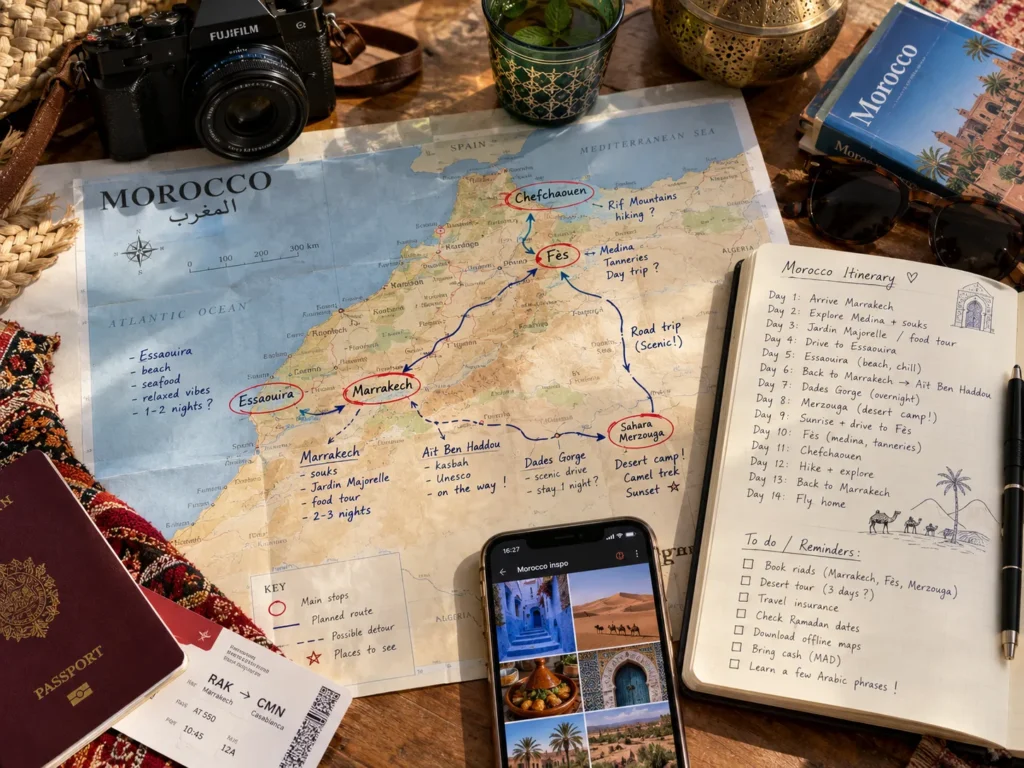
Trip length should shape the route before individual attractions are added. A common planning mistake is choosing six or seven famous places first and then trying to force them into the available days. A better approach is to start with your total time, identify one or two priorities and expand only when the route remains comfortable.
Planning for Less Than 5 Days
With fewer than five days, keep the itinerary regional. This is not enough time for a complete Morocco circuit, and trying to combine both northern Morocco and the Sahara will create more transport than experience.
Marrakech is one of the easiest bases for a short tailor-made Morocco tour. You can spend two or three nights exploring the medina, historic architecture, restaurants and souks, then add the nearby Atlas foothills, a day trip or an overnight experience outside the city.
Another option is to base the trip around Fes. This works well for travelers primarily interested in historic medina life, craftsmanship, food and cultural sightseeing. Nearby excursions can add variety without requiring a complete change of region.
Travelers interested in the Atlantic can concentrate on Marrakech and Essaouira, or even choose Essaouira alone for a slower coastal trip.
If the Sahara is your absolute priority, almost the entire short trip will need to be designed around the journey southeast. Merzouga should not be treated as a quick excursion from Marrakech.
For less than five days, prioritize one strong experience instead of trying to create a miniature grand tour.
Planning for 5–10 Days
Five to ten days is where custom planning becomes particularly useful. There is enough time to combine contrasting regions, but not enough time to include every major destination comfortably.
At the shorter end of this range, Marrakech plus Essaouira creates a good city-and-coast itinerary. Marrakech plus the Atlas Mountains is another option for travelers who prefer scenery and walking.
A seven-day trip can begin to incorporate a longer southern route. One practical structure is Marrakech, the High Atlas and kasbah landscapes, Merzouga and then Fes. Finishing in Fes instead of returning to Marrakech can reduce backtracking.
Eight or nine days gives more room for an additional night in the desert region, more time in Fes or an extension toward northern Morocco. Chefchaouen can work particularly well after Fes when the route is already moving north.
Ten days can support several different styles of tailor-made Morocco tour. One traveler might combine Marrakech, the Atlas, Merzouga and Fes. Another may prefer Marrakech, Essaouira and the coast. A third may focus on imperial-city history with a desert segment.
At this duration, resist the temptation to include Marrakech, Essaouira, Merzouga, Fes and Chefchaouen simply because ten days sounds long. The map may make this seem possible, but the resulting route can still involve too many consecutive travel days.
Planning for 11–15 Days
Eleven to fifteen days is the strongest range for travelers who want a broad first experience of Morocco without moving every night. Several of the routes consolidated into this guide used this duration because it allows cities, mountains, desert and coast to fit together more naturally.
A route can begin in Marrakech, cross the Atlas Mountains, continue through southern valleys and kasbah landscapes, reach Merzouga for a Sahara stay and then continue north to Fes.
With additional days, northern Morocco becomes easier to incorporate. Chefchaouen can follow Fes, while Rabat or Casablanca can be useful depending on your flight plans. The Atlantic coast can then provide a slower section toward the end of the trip.
Twelve days is enough to create a varied itinerary with breathing room if destinations are selected carefully. Thirteen to fifteen days makes it easier to protect two-night stays in important cities instead of constantly unpacking and repacking.
This duration is also well suited to travelers who want a mix of guided cultural visits and independent time. Rather than guiding every day, you might use local guides in Marrakech and Fes, have private transport between regions and keep Essaouira or Chefchaouen relatively unstructured.
For a first journey, this is often the best range for experiencing Morocco’s contrasts without turning the holiday into a transport challenge.
Planning for More Than 15 Days
With more than fifteen days, the biggest advantage is not simply being able to add more destinations. It is being able to travel more slowly.
A longer tailor-made Morocco tour can include three-night stays, additional mountain walks, quieter rural accommodation, extra time in northern Morocco and a more substantial Atlantic section without sacrificing the Sahara.
You can also build the itinerary around themes rather than famous places. Food-focused travelers might spend more time in Fes and Marrakech. Photographers can plan around sunrise, sunset and slower scenic drives. Active travelers can add trekking in the Atlas. Couples may prioritize riads, spas and coastal stays. Families can shorten individual travel days and include more recovery time.
More than fifteen days also gives repeat visitors the freedom to skip destinations they have already seen. Instead of repeating Marrakech and Fes, a second trip might concentrate on mountains, southern valleys, the Atlantic or northern Morocco.
The goal of a longer itinerary should be depth. If every extra day simply introduces another one-night stop, the benefit of having more time disappears.
Quick Guide to Choosing the Right Trip Length
| Duration | Best planning approach | Possible focus |
|---|---|---|
| Less than 5 days | Stay in one region | Marrakech, Fes, coast or nearby mountains |
| 5–10 days | Combine two or three complementary regions | Marrakech + Sahara + Fes, or city + coast |
| 11–15 days | Build a multi-region first-time itinerary | Cities + Atlas + Sahara + north or coast |
| More than 15 days | Slow down and add depth | Full regional journey, specialist interests and longer stays |
Choosing the Right Destinations for a Custom Morocco Tour
A good custom itinerary gives every destination a purpose. Do not add a city only because it appears on somebody else’s list of must-see places.
Marrakech: Flexible Starting Point
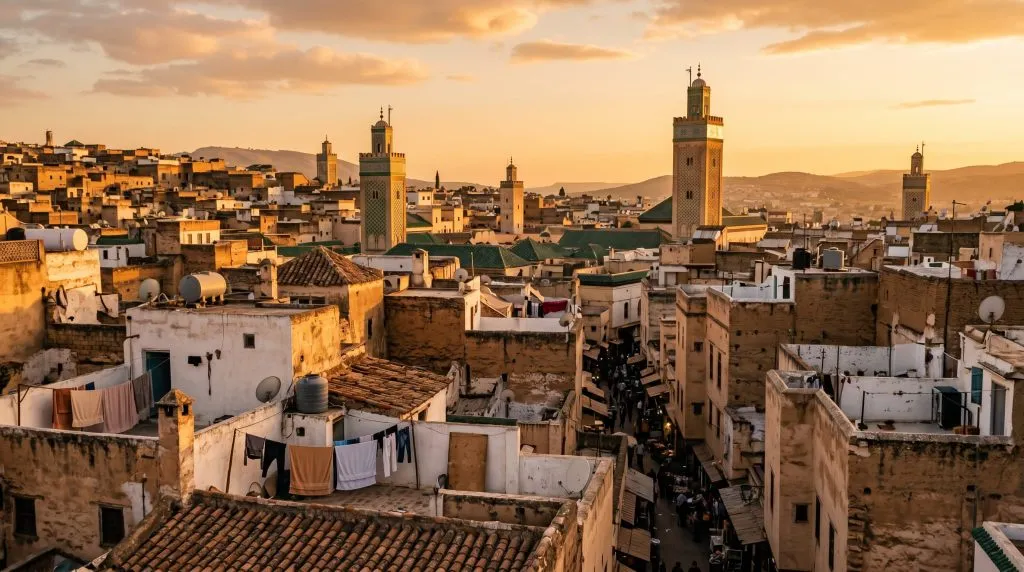
Marrakech works well at the start or end of many private itineraries. Its medina, gardens, food scene, riads and souks provide plenty to do, while its location makes it practical for routes toward the Atlas Mountains, Essaouira and southern Morocco.
Give Marrakech at least two nights when it is a major priority. Staying only one night often leaves travelers seeing the city immediately after arriving or immediately before a long road journey.
Atlas Mountains: Scenery, Walking and Rural Morocco
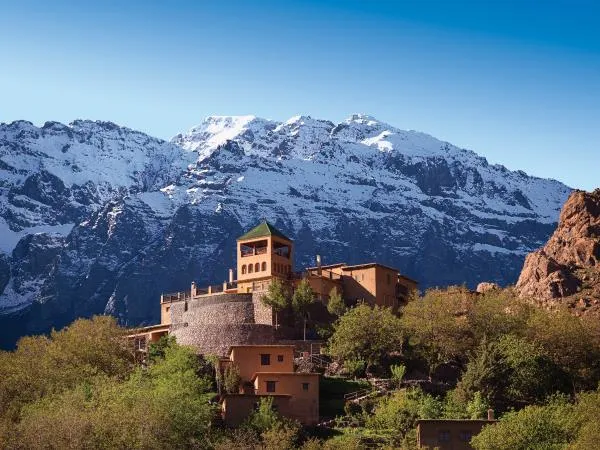
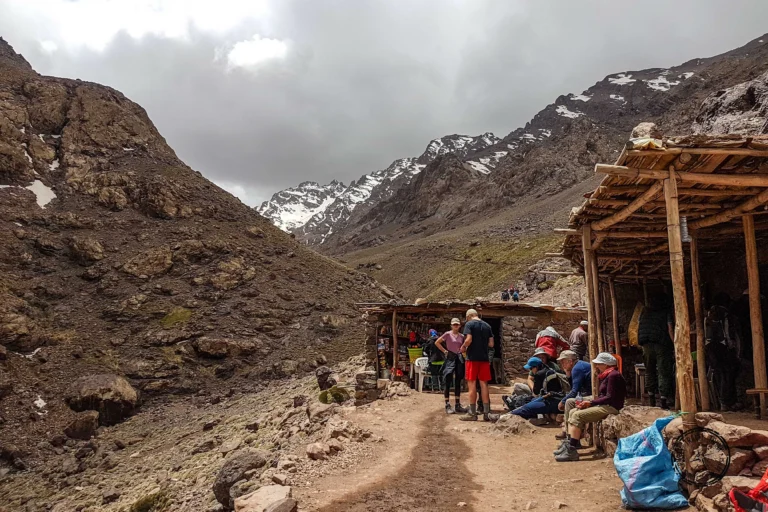
The Atlas Mountains can be included as a short excursion or become a major part of an active trip. Hiking, valleys, high passes and Amazigh communities provide a strong contrast with Morocco’s historic cities.
Travelers primarily interested in walking should allocate proper trekking time rather than treating the mountains only as scenery viewed from the vehicle on the way south.
Merzouga and the Sahara
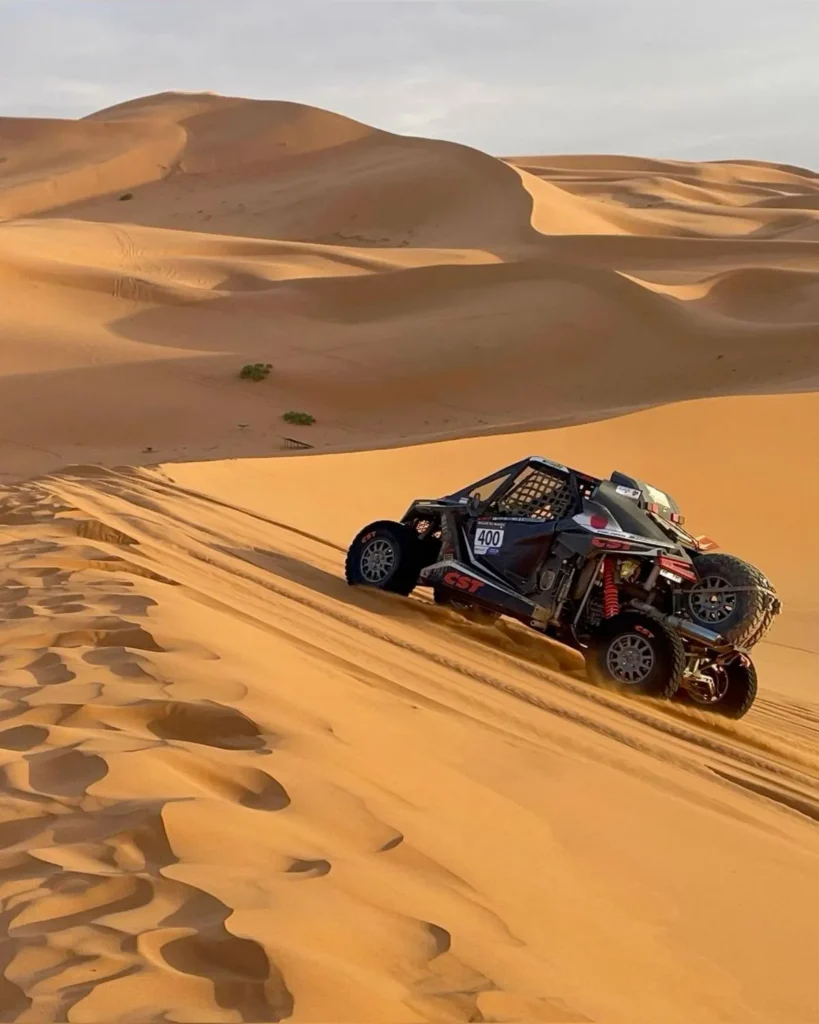
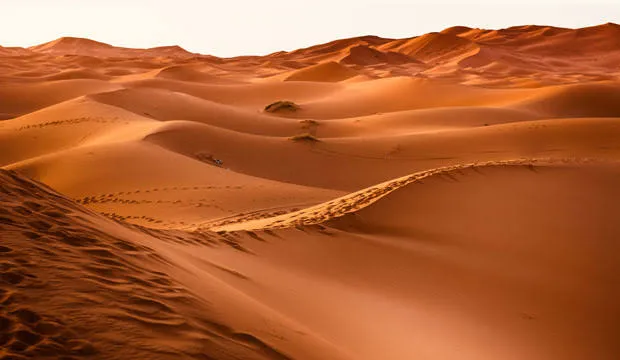
Merzouga is one of the main gateways to the Erg Chebbi dunes. A customized Sahara experience might include time on the dunes, a desert camp, sunrise or sunset, local villages and exploration of the surrounding region.
How much time to spend here depends on your priorities. One camp night can provide an introduction, while two nights in the region make it easier to experience the desert without arriving and leaving immediately.
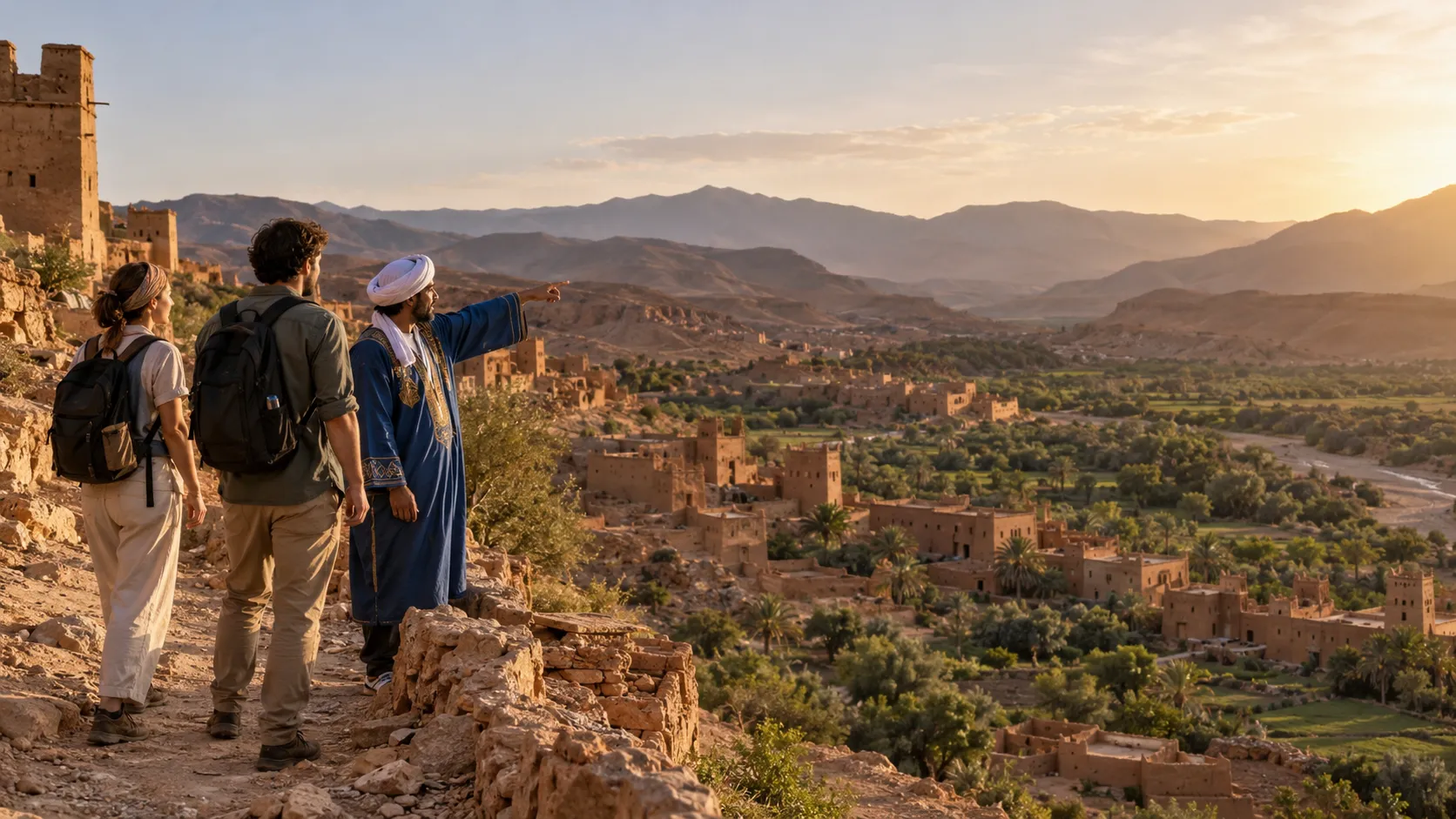
The journey to Merzouga is also part of the itinerary. Southern Morocco includes mountain roads, valleys, gorges and kasbah landscapes that deserve more than a series of rushed photo stops.
Fes: History, Crafts and Cultural Depth
Fes suits travelers interested in historic urban life, architecture and traditional crafts. The complexity of Fes el-Bali makes a local guide particularly useful for a first visit.
Fes also works geographically as a bridge between a Sahara journey and northern Morocco. A route from Marrakech through Merzouga to Fes can be more efficient than returning to Marrakech over the same roads.
Chefchaouen and Northern Morocco
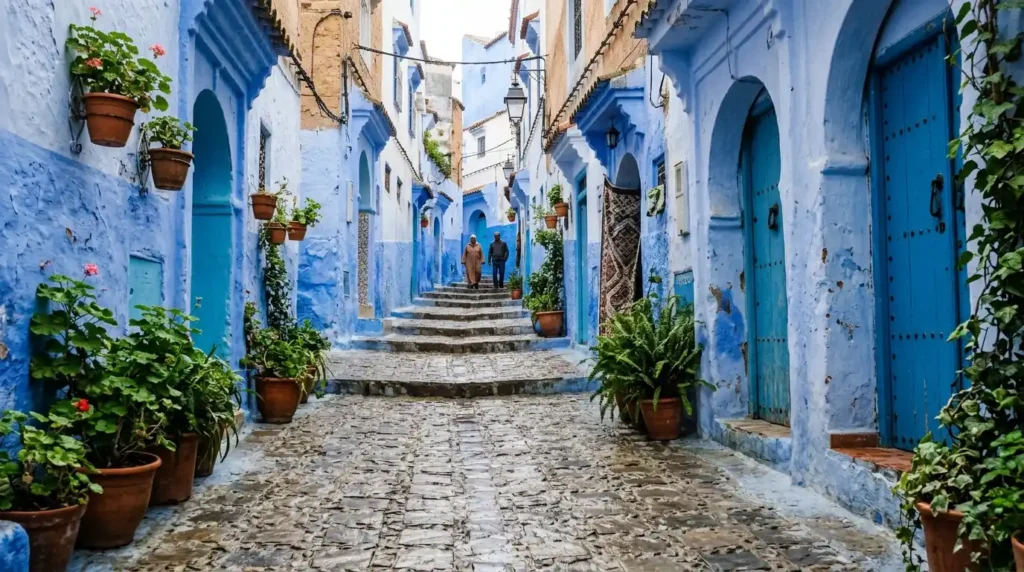
Chefchaouen adds a different visual and geographic character to the itinerary. It works best when northern Morocco already fits the direction of travel, especially when combined with Fes.
Adding Chefchaouen to a very short Marrakech-and-Sahara itinerary usually creates unnecessary distance. Give it a place in the route only when the northern extension makes sense.
Essaouira and the Atlantic Coast
Essaouira is particularly valuable as a slower stop. Its compact medina, harbor, restaurants and Atlantic setting create a useful change of pace after larger cities or a desert road journey.
Travelers who prefer food, walking and relaxed evenings may find Marrakech plus Essaouira more satisfying than adding a distant desert destination to a short holiday.
Private Driver, Local Guide or Driver-Guide?
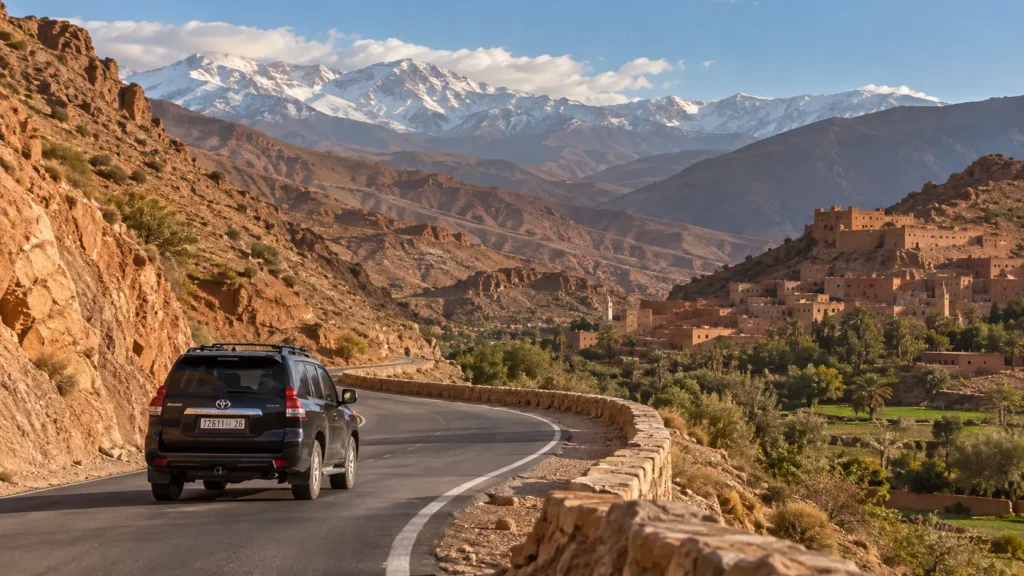
Several of the itineraries merged into this article focused heavily on traveling with a private driver or guide. These services can make a custom tour easier, but it is important to understand the role each person is providing.
Private Driver
A private driver is most valuable for transport between regions. You do not need to navigate unfamiliar roads, coordinate multiple transfers or work out how to reach rural destinations with limited public transport.
Private road travel also makes scenic stops easier. You can pause at viewpoints, have lunch along the way and adjust departure times within the practical limits of that day’s route.
A driver should not automatically be assumed to provide detailed historical guiding inside monuments or medinas. Confirm what is included rather than treating “driver” and “guide” as interchangeable terms.
Local Guide
A knowledgeable local guide is useful when interpretation matters. Historic medinas, architecture, religious history, traditional crafts and cultural context are easier to understand with somebody who can explain what you are seeing.
Marrakech and Fes are obvious places to consider guided visits. You may also choose specialist guides for food, trekking or other interests.
Driver-Guide
Some itineraries use the term driver-guide. If this option is offered, ask exactly what it means: whether the same person provides only road commentary, accompanies sightseeing or works alongside separate licensed guides in particular cities.
The right solution is often a combination: a private driver for the road journey, local guides where specialist knowledge is valuable and independent time when you simply want to explore at your own pace.
Design the Route Before Booking the Hotels
Accommodation should support the route, not dictate a badly connected itinerary. Work out the sequence of regions first, then choose where to stay.
Open-jaw planning can be particularly effective. If your flights allow it, arriving in one city and departing from another can reduce unnecessary backtracking. A Marrakech-to-Sahara-to-Fes route is the simplest example.
Protect two-night stays in the places that matter most. One-night stays are useful when breaking up a long road journey, but repeating them for an entire holiday quickly becomes tiring.
Choosing Accommodation for a Tailor-Made Morocco Tour
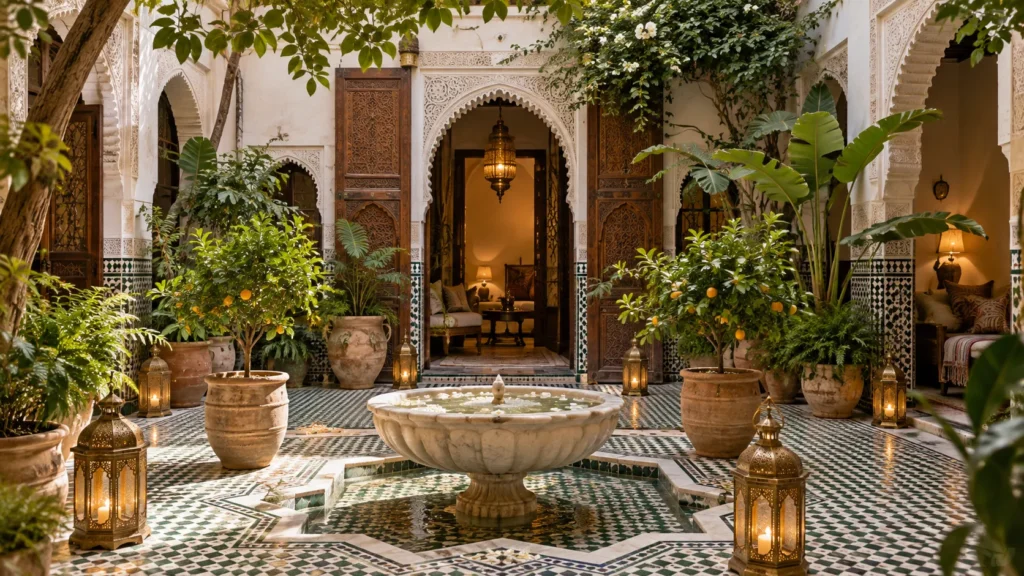
Accommodation is one of the easiest parts of the itinerary to personalize. Morocco offers traditional riads, larger hotels, boutique properties, mountain guesthouses, kasbah-style accommodation and desert camps.
Riads
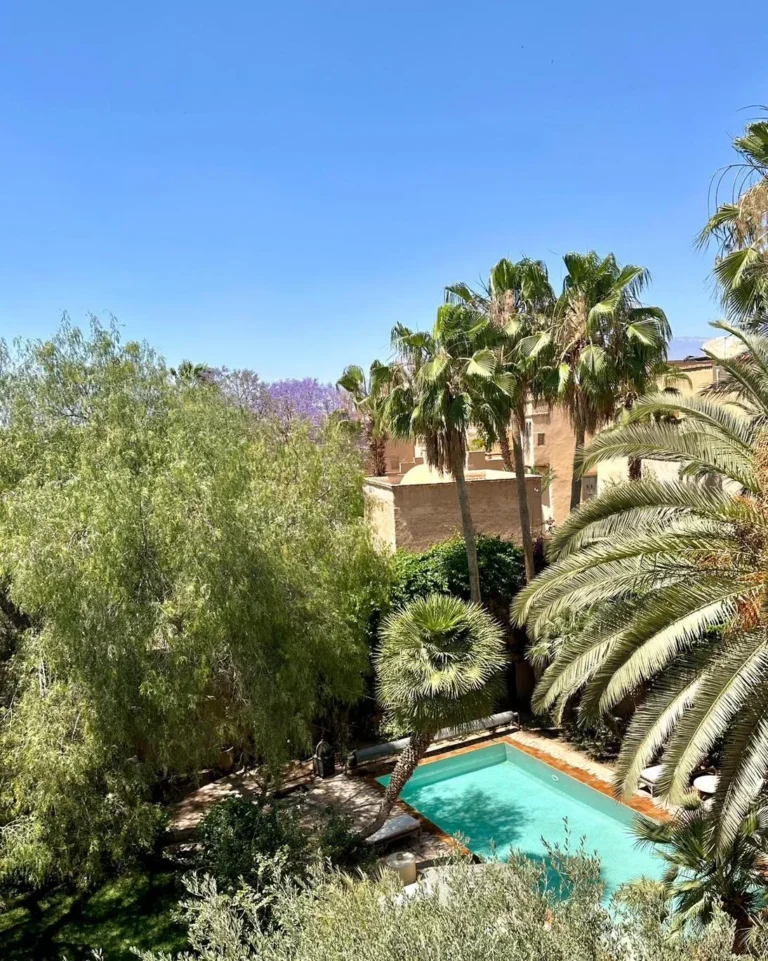
Riads can be ideal in cities such as Marrakech and Fes because they place you close to the historic medina and offer more architectural character than a conventional hotel.
Location matters. Some riads are deep inside pedestrian-only areas, so think about luggage, walking distance and accessibility rather than choosing solely from photographs.
Hotels and Resorts
A modern hotel may be a better fit for travelers who prioritize elevators, easy vehicle access, large swimming pools, connecting rooms or resort facilities.
Mixing accommodation styles can work especially well. You might stay in a riad in Fes, a comfortable hotel during a road journey and a coastal property with more space at the end of the trip.
Desert Camps
Desert accommodation varies considerably. Before booking, check the type of tent or room, bathroom arrangements, meal setup and what is involved in reaching the camp.
Do not rely only on labels such as “luxury.” Ask what facilities are actually provided.
How to Control the Budget Without Losing the Experience
One useful point from the French tailor-made travel material is that customization is not only about luxury. It can also help control spending.
Start with the parts of the trip that matter most. If a special desert camp is a priority, you may prefer simpler accommodation during a transit night. If food and riads matter more than private activities, put more of the budget there.
Consider the total cost of the route rather than comparing room prices in isolation. An inexpensive hotel that creates an unnecessary transfer may not actually save money.
Your budget can be adjusted through several variables: accommodation category, room type, private versus shared activities, number of guided visits, vehicle requirements and how many regions are included.
A good custom itinerary should make these trade-offs clear rather than automatically pushing every component toward the most expensive option.
Build the Trip Around Experiences, Not Only Cities
A destination list does not tell you what the journey will actually feel like. Start by identifying the experiences you care about, then use them to determine where your extra nights belong.
- Guided medina walks focused on history and architecture
- Moroccan cooking classes and food experiences
- Atlas Mountain walking or trekking
- Sahara dunes and a desert camp
- Traditional craftsmanship and artisan workshops
- Atlantic coast and seafood
- Photography-focused scenic stops
- Hammam and wellness time
- Local markets and culinary exploration
- Independent afternoons for cafés, shopping or simply wandering
You do not need an activity scheduled every morning and afternoon. A customized trip should create space as well as structure.
Tailor-Made Morocco Tours for Different Travelers
Families
Families may benefit from shorter driving days, larger rooms, swimming-pool time and activities matched to children’s ages. A private route also makes it easier to stop when necessary instead of following a group timetable.
Couples and Honeymoons
Couples often benefit from slower itineraries, attractive riads, coastal stays, spa time and a little more independent space. A romantic trip does not become better simply by adding more destinations.
Solo Travelers
A custom itinerary can provide logistical support while preserving independence. A solo traveler may want transfers and selected guided visits without having a guide throughout the whole journey.
Photographers
Photography-focused trips should be planned around light and time rather than the maximum number of attractions. Sunrise, sunset, market activity and scenic road stops require flexibility.
Active Travelers
Hikers and adventure travelers should protect proper time for the Atlas Mountains instead of squeezing a hike between long road transfers. The active portion of the trip should influence accommodation and transport planning.
Repeat Visitors
There is no need to repeat Marrakech, Fes or other famous cities simply because they appear on classic routes. A second tailor-made Morocco tour can focus entirely on coast, mountains, southern Morocco or less familiar regions.
How to Combine Cities and the Sahara Without Rushing
The Sahara is often the part of the route that creates unrealistic itineraries. Merzouga is a long-distance destination, so desert travel should be planned as part of a larger southern route rather than treated like a normal city excursion.
A logical journey from Marrakech can move through the Atlas and southern landscapes toward Merzouga, then continue toward Fes. This uses the road journey to connect two major cities rather than requiring a return over the same route.
With more days, the itinerary can continue north toward Chefchaouen. With even more time, coast or imperial-city stops can be added according to your departure point.
Do not judge the desert experience only by how many nights are spent in the dunes. The valleys, mountains, villages and roadside landscapes leading there are part of the journey.
Desert and Coast in the Same Morocco Itinerary
Several source itineraries combine the Sahara with Morocco’s Atlantic coast. This can work well when you have enough time because the environments are so different.
A desert section is usually more road-intensive and activity-focused, while Essaouira can provide a slower ending with walking, restaurants and sea air.
In a ten-day trip, combining both may require careful prioritization. In an 11–15 day itinerary, the contrast is easier to include without sacrificing city time.
For trips longer than fifteen days, the coast can become a proper part of the journey rather than simply a final overnight stop.
Culture, Food and Local Context
A private itinerary should not treat Morocco only as scenery. Historic cities, food, architecture, languages, craftsmanship and regional traditions provide the context that connects the trip.
Local guides can be valuable here, particularly in complex medinas. Cooking experiences can provide a different perspective from monument sightseeing, while craft workshops can help explain products that appear later in the souks.
Allow enough free time for ordinary experiences too. Sitting at a café, browsing a neighborhood market or returning to a restaurant you enjoyed can be more meaningful than another scheduled attraction.
How Flexible Is a Private Morocco Tour?
Private travel offers more flexibility than a fixed group tour, but it is not the same as having no schedule at all. Distances, hotel reservations, guide appointments and desert logistics still matter.
Small adjustments during the day may be easy: leaving slightly later, spending longer at a viewpoint or shortening a stop that does not interest you.
Larger changes, such as deciding to stay an extra night in another city, may affect accommodation and the remainder of the route. Discuss how flexible your booking will be before departure rather than assuming every element can change without consequence.
Best Time to Plan Different Morocco Experiences
Season should be considered at the itinerary-design stage. City sightseeing, mountain trekking and desert travel do not always have identical ideal conditions.
Spring and autumn are popular for multi-region journeys because they often provide comfortable conditions for walking and road travel. Summer can be hot in Marrakech, Fes and southern Morocco, while the Atlantic coast may feel very different.
Winter works for many cultural and desert routes, but mountain conditions and colder desert nights require different clothing and planning.
If your dates are fixed, adapt the route to the season instead of trying to copy an itinerary designed for another time of year.
Tailor-Made Tour vs Fixed Itinerary
| Factor | Tailor-made tour | Fixed itinerary |
|---|---|---|
| Dates | Designed around your schedule | Set departures or standard duration |
| Route | Built around preferred regions | Predetermined sequence |
| Pace | Can protect slower stays and free time | Designed for the standard schedule |
| Accommodation | Selected around style and budget | Usually preselected |
| Activities | Selected according to interests | Standard inclusions and optional extras |
| Guiding | Can be added only where useful | Usually follows the tour format |
A fixed itinerary can still be the right choice when its route already matches your interests. Custom travel becomes more valuable when the standard route would require compromises you do not want to make.
Common Mistakes When Planning a Custom Morocco Itinerary
Adding Every Famous Destination
A personalized trip should be selective. Marrakech, Fes, Chefchaouen, Essaouira, Casablanca, the Atlas Mountains and Merzouga do not need to appear on every itinerary.
Underestimating Driving Time
Road journeys are part of travel in Morocco, especially when the Sahara is included. Avoid planning major sightseeing immediately after every long transfer.
Changing Accommodation Every Night
One-night stops have a role on transit sections, but too many make the trip feel rushed. Protect longer stays in your priority destinations.
Assuming the Driver Is Automatically a Specialist Guide
Clarify roles before booking. Transport support and specialist historical guiding are different services.
Spending the Same Amount on Every Night
A tailor-made itinerary allows you to vary accommodation. Spend more where the property itself is part of the experience and less where you only need a comfortable transit night.
Scheduling Every Hour
Leave room for independent meals, shopping, cafés and rest. Custom travel should create freedom rather than replace one rigid schedule with another.
What Information Should You Give Your Travel Planner?
You do not need to design the whole route before requesting help. A good starting brief includes your travel dates or approximate month, number of travelers, arrival and departure points, total number of days and the places or experiences you care about most.
It is also useful to mention:
- Your approximate accommodation or overall budget level
- Whether you prefer a relaxed or active pace
- Interest in the Sahara, mountains, coast or northern Morocco
- Whether guided cultural visits are important
- Family ages and room requirements
- Accessibility considerations
- Dietary needs
- Honeymoon, anniversary or other special occasion
- Activities you definitely want to include
- Anything you specifically do not want
Avoid writing a rigid day-by-day itinerary unless you genuinely know exactly what you want. Sharing your priorities gives the planner more flexibility to suggest a route that makes sense geographically.
How to Request a Custom Morocco Itinerary
Start with the non-negotiable information: dates, number of travelers and total trip length. Then identify three or four priorities rather than submitting a list of every destination you have seen online.
For example, a useful request might say that you have ten days, are flying into Marrakech and out of Fes, definitely want the Sahara, prefer comfortable riads and want some cultural guiding without having every day fully scheduled.
That gives enough information to design a route while leaving room for expert suggestions.
If you are ready to build your itinerary, use the custom Morocco trip planner to share your dates, destinations, travel style and accommodation preferences.
FAQ
What is a tailor-made Morocco tour?
A tailor-made Morocco tour is a private or personalized journey designed around your dates, duration, preferred destinations, travel pace, accommodation style and interests instead of following a completely fixed itinerary.
How many days are ideal for a customized Morocco trip?
There is no single ideal duration. Fewer than five days works best for one region. Five to ten days can combine several complementary areas. Eleven to fifteen days is well suited to a broader first journey, while more than fifteen days allows slower travel and greater regional depth.
Is 7 days enough for Morocco?
Yes, if the route is selective. Seven days can work for Marrakech, a southern desert journey and Fes, or for a slower city-and-coast trip. It is not enough to visit every major region comfortably.
What can I see in Morocco in 10 days?
Ten days can combine Marrakech, the Atlas and southern Morocco, the Sahara and Fes at a reasonable pace. Depending on your priorities, you could instead design the trip around imperial cities, northern Morocco or the Atlantic coast.
Is 12 to 15 days enough for a full Morocco tour?
It is enough for a broad multi-region journey if the route is carefully designed. Cities, the Atlas, Sahara, northern Morocco and part of the Atlantic coast can be combined, but you should still avoid adding destinations simply to complete a checklist.
Do I need both a private driver and a guide?
Not necessarily. A private driver is useful for transport and road logistics, while local guides add specialist context in places such as historic medinas. Many travelers combine the two and leave some destinations independent.
Can the itinerary include riads and a Sahara desert camp?
Yes. Accommodation can be customized according to the region and your preferences, including riads, hotels, guesthouses and desert camps.
Is a customized Morocco tour only for luxury travelers?
No. Customization can also help manage the budget by choosing where to spend more and where simpler accommodation or fewer private activities make sense.
Can I start the tour in one city and finish in another?
Yes. When flights allow it, starting and ending in different cities can make the itinerary more efficient. Marrakech to the Sahara and onward to Fes is one example of using a one-way route to reduce backtracking.
Can a tailor-made trip include the desert and Atlantic coast?
Yes. It works best when there is enough time. Around 11 to 15 days provides more flexibility to combine a Sahara section with cities and an Atlantic stay without turning every other day into a long transfer.
How far in advance should I start planning?
Start once your approximate dates and flights are known, especially if you have specific riads, room types or desert accommodation in mind. Travelers with flexible accommodation and dates may have more options closer to departure.
Build the Morocco Itinerary Around the Traveler
The purpose of a tailor-made Morocco tour is not to create a longer version of a standard package. It is to make deliberate choices about route, pace, transport, accommodation and experiences. A four-day visitor should not plan like someone with three weeks, and a food-focused couple should not automatically follow the same itinerary as a trekking family or a photographer.
Start with the time you have, decide which experiences matter most and then build a geographically sensible journey around them. Use private transport where it improves logistics, local guides where context adds value, and free time where simply being in the destination is part of the experience. That balance is what turns a custom itinerary into a genuinely personal trip rather than another checklist.
Explore destinations, tours and locally organized Morocco experiences with Visit Morocco Together.
Ready to Experience Morocco?
Turn this inspiration into your next adventure. Our travel experts are ready to help.