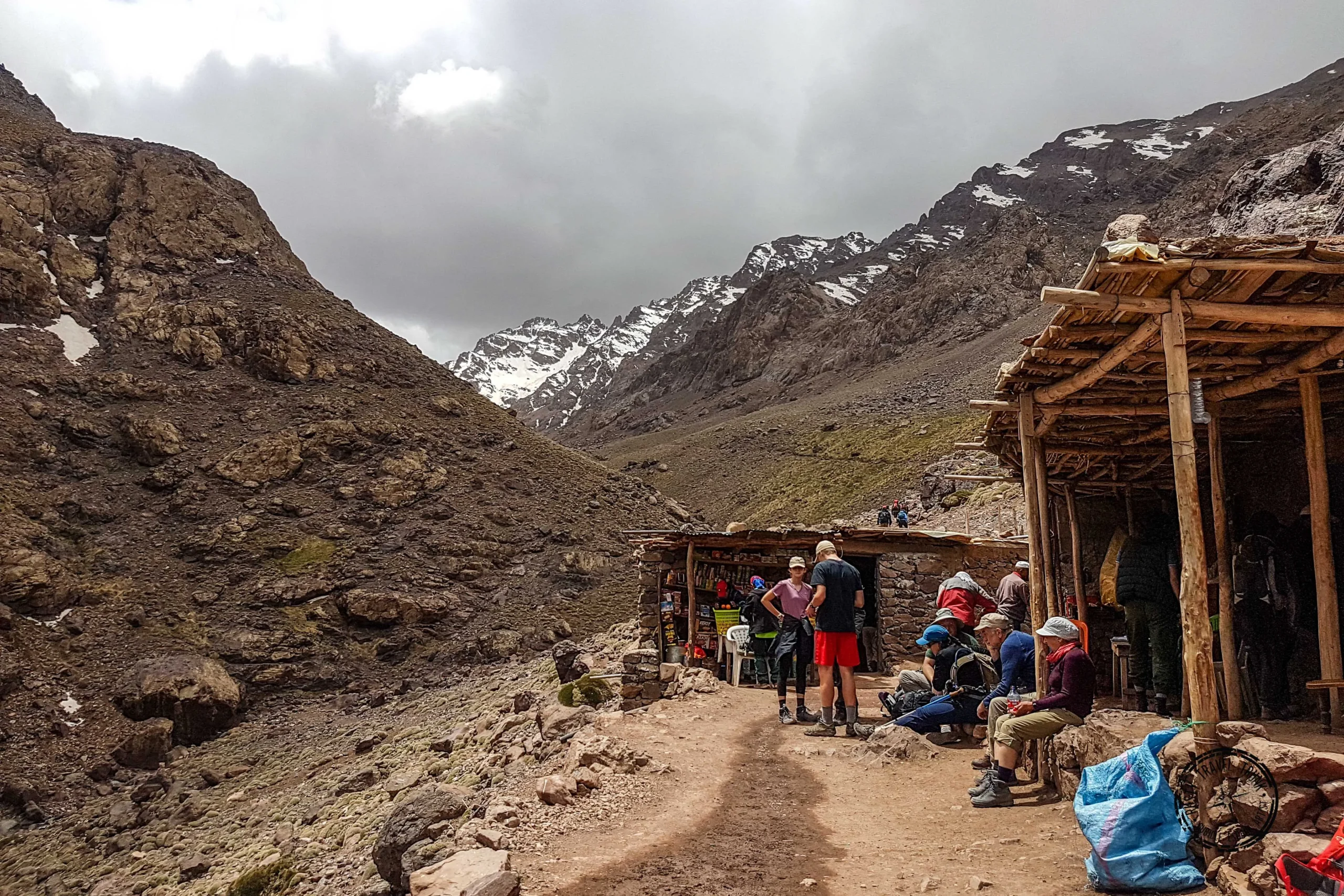
A Morocco adventure holiday can combine high mountain trails, Amazigh villages, dramatic road journeys, historic kasbahs, deep valleys and the dunes of the Sahara in one trip. The key is to plan by region and difficulty rather than trying to squeeze every landscape into a few days. Around the High Atlas, travelers can choose anything from relaxed valley walks to a Mount Toubkal ascent, while southeastern Morocco adds desert camps, dune walks, camel or 4×4 experiences and overland routes through valleys and gorges.
With enough time between the mountains and the Sahara, the journey feels like an adventure rather than a race between long driving days. Longer itineraries can also include Marrakech, Fes, Essaouira, Ait Ben Haddou and the Atlantic coast, but active days need to remain the focus rather than becoming small excursions between city transfers.
What Can a Morocco Adventure Holiday Include?
Morocco works well for active travelers because the experiences can be adjusted to different fitness levels. You do not have to be a mountaineer to enjoy the Atlas Mountains, and you do not have to spend days trekking across dunes to experience the desert.
A good itinerary can combine a guided day hike, a more demanding summit route, scenic road travel, a desert night and time to recover between active days.
Depending on the route and season, a Morocco adventure holiday can include:
- High Atlas trekking around Imlil
- A Mount Toubkal ascent
- Gentler walks in the Ourika Valley
- Multi-day mountain trekking
- Ait Bouguemez and less summit-focused Atlas routes
- Amazigh villages and mountain guesthouses
- Ait Ben Haddou and southern kasbah landscapes
- Dades Valley and Todra Gorge
- Merzouga and the Erg Chebbi dunes
- Short desert walks or longer supported desert trekking
- Camel riding when desired
- 4×4 desert exploration
- Sandboarding
- Quad biking where appropriately organized
- Desert camps
- Marrakech cultural time
- Fes and other historic cities on longer routes
- Essaouira and Atlantic-coast activities
The most useful starting point is deciding which experience matters most. If trekking is the priority, give the High Atlas several days. If the Sahara is the main goal, protect enough time for the journey south and an overnight stay near the dunes.
Travelers who want both should avoid treating either region as a quick excursion.
Trekking in the Atlas Mountains

The Atlas Mountains offer some of Morocco’s most varied hiking terrain. Around the High Atlas, routes pass through valleys, cultivated terraces, rocky slopes and Amazigh communities. Some walks can be completed in a few hours, while longer routes cross high passes and require overnight stays in mountain accommodation.
Imlil is one of the main trekking bases near Mount Toubkal. It works well for travelers who want to begin with a gentler walk before deciding whether a longer or higher route suits them.
Day hikes around the surrounding valleys can provide mountain scenery and village landscapes without the physical demands of a summit trek.
Atlas Hiking Beyond Toubkal
Mount Toubkal gets much of the attention, but it is only one part of the Atlas trekking experience.
Travelers looking for less demanding walking can explore valley trails around Imlil or the Ourika area. Longer itineraries can also consider areas such as Ait Bouguemez, where the experience can focus more on valleys, villages and multi-day walking than on reaching a single summit.
This can be especially useful for travelers who want an active holiday but do not want altitude to dominate the entire mountain section.
The right route depends on fitness, available days, season and whether the mountains are the main purpose of the trip or one part of a wider Atlas-and-Sahara itinerary.
Mount Toubkal for a Bigger Challenge

Mount Toubkal rises to 4,167 meters and is the highest peak in North Africa. The standard ascent is commonly planned over two or three days, usually with an overnight stay higher in the mountains before the summit attempt.
Although the normal route in favorable non-winter conditions is primarily a trekking challenge rather than a technical rock climb, altitude, long walking days, loose terrain and weather make preparation important.
If Toubkal is one of the main reasons for your trip, build in enough time to arrive rested and spend time walking at altitude before summit day. A rushed schedule immediately after an international flight or a long road transfer is not ideal.
Travelers who prefer a supported itinerary can look at the 3-day Mount Toubkal trek from Marrakech and compare the pace, elevation and daily walking requirements with their experience and fitness.
Toubkal Base Camp and Summit Pacing
Several of the old seven-day adventure itineraries use a progression from Marrakech to Imlil, then toward the Toubkal refuge or base-camp area before an early summit attempt.
That sequence can work as part of a dedicated mountain itinerary, but the details should be matched to current conditions and the traveler’s ability. Do not assume that reaching Imlil one day and attempting the summit immediately afterward is appropriate for everybody.
After the summit, allow time to descend, eat, rest and recover before beginning a long road journey toward southeastern Morocco.
Mountain Walking Without a Summit
Toubkal is not the only reason to visit the High Atlas. Valley walks, village-to-village hikes and lower mountain routes can be a better fit for families, casual hikers or travelers who want scenery without committing to a 4,000-meter summit.
These routes also leave more time for meals, viewpoints and conversations along the way.
This is often the better choice if your wider itinerary includes long road journeys through southern Morocco. A moderate mountain day followed by a desert route is generally easier to enjoy than combining a strenuous summit with an immediate full day in a vehicle.
Amazigh Villages and Mountain Culture
Many Atlas routes pass through predominantly Amazigh communities. Older source articles often use the term “Berber,” which remains common in tourism, but Amazigh is also widely used for the Indigenous peoples and cultures of North Africa.
Village visits should not be treated as staged attractions. Public walking routes, guesthouse stays and pre-arranged hosted experiences are different from entering private homes without invitation.
A trekking guide can help explain local routes, language, agriculture and regional customs. If meals or hosted visits are part of the itinerary, ask what has actually been arranged.
Local guides, guesthouses, cooks and mule teams can also form an important part of the mountain trekking economy.
From the Atlas Mountains to Southern Morocco
The transition from mountains to desert is part of the adventure rather than simply a transfer between two headline attractions.
Depending on the route, the journey can cross high mountain roads and move through changing environments of rocky valleys, earthen villages, palm groves, kasbahs and increasingly arid landscapes.
Ait Ben Haddou
Ait Ben Haddou fits naturally into many Atlas-to-Sahara itineraries. Its earthen architecture provides a cultural and historical stop between mountain travel and the southeastern desert route.
An eight-day source itinerary specifically uses Ait Ben Haddou between the Atlas and Sahara sections, allowing the journey south to include more than driving directly toward Merzouga.
Dades Valley and Todra Gorge
Dades Valley and Todra Gorge add hiking, dramatic rock landscapes and shorter active stops to the southern road route.
They can also break up an otherwise very long transfer toward Merzouga.
If you have enough time, stay overnight in the region instead of treating the valleys only as roadside photo stops.
Draa Valley and Oasis Landscapes
Some adventure routes travel through or toward the Draa Valley, where palm groves, oases and earthen architecture create another landscape between the Atlas and desert.
This route is especially relevant when traveling toward Zagora or M’hamid rather than using Merzouga as the only possible Sahara destination.
Sahara Desert Adventure Around Merzouga

Merzouga is a practical base for experiencing the Erg Chebbi dunes. Adventure here feels very different from the Atlas. Instead of steep mountain trails, the focus is on sand, open horizons, changing temperatures and the logistics of moving through an arid environment.
A typical stay may include walking on the dunes, watching sunset or sunrise, spending a night in a desert camp and exploring the wider region by 4×4.
Camel rides are also common, but they are optional. Travelers can choose walking or vehicle-based alternatives according to comfort and preference.
Desert Camps
A night in a Sahara camp appears throughout the seven-, eight-, ten-, eleven-, twelve- and fourteen-day adventure routes being consolidated here.
Camp standards vary from relatively simple accommodation to more comfortable tented stays. Before booking, check the sleeping arrangement, bathroom facilities, meals and method of reaching the camp.
Some camps organize music or other evening activities. Treat these as individual camp experiences rather than assuming every Sahara night includes the same program.
Camel Riding
Camel riding is frequently included in older Sahara itineraries, often around sunset. It can provide one way of moving into the dune landscape, but it should not be treated as mandatory.
If you do not want to ride, ask about walking or 4×4 access.
4×4 Desert Exploration
A 4×4 can be used to explore areas beyond the immediate camp and dune edge. This can suit travelers who want to cover more ground or prefer not to ride a camel.
Confirm the route, duration and whether the activity is private or shared.
Sandboarding
Several of the eight- and ten-day adventure articles include sandboarding as an optional desert activity. It can be a short addition to a dune stay rather than the main reason for visiting Merzouga.
Ask whether equipment is provided and choose terrain appropriate to your confidence and fitness.
Quad Biking
Quad biking also appears in the merged adventure material. If you include it, use an experienced operator and ask about helmets, route supervision, equipment condition and insurance.
Motorized activities should also be kept away from areas where they unnecessarily disturb camps, wildlife, residents or people enjoying the dunes on foot.
Desert Trekking Is Different From Mountain Trekking
Walking on sand can be surprisingly tiring, especially when temperatures rise. Short dune walks around sunrise or late afternoon are very different from a multi-day desert trek.
Longer desert routes need experienced local planning, reliable water supplies, suitable transport support and careful attention to weather.
Do not judge desert difficulty only by distance. Heat, sun exposure, wind and soft sand can make a short route more demanding than expected.
Carry water, sun protection and layers for cooler evenings, and avoid scheduling strenuous walking during the hottest part of the day.
Adventure Beyond Mountains and Desert
The merged articles also include cultural cities and the Atlantic coast. These additions work best on longer trips where they provide contrast and recovery rather than reducing time available for trekking.
Marrakech
Marrakech is the usual starting point in many adventure itineraries. An arrival day can include Jemaa el-Fna, the medina, souks or a relaxed evening before traveling into the mountains.
It is generally better to arrive, recover from the flight and begin the active portion rested rather than planning a major trek immediately after landing.
Fes
Longer adventure routes may finish or continue through Fes. The historic medina, artisan quarters and architecture add a cultural component after the mountain and desert sections.
On an eleven- or fourteen-day trip, a city day can also function as useful physical recovery.
Essaouira and the Atlantic Coast
The 8-, 11- and 12-day adventure cluster also introduces Essaouira and the Atlantic coast.
Essaouira can provide a slower section after trekking and desert travel, while the coastline can add walking, beaches, surfing, windsurfing or kitesurfing according to destination and current conditions.
If coastal adventure is genuinely important, protect enough time for it rather than trying to visit Essaouira as a rushed final-day detour.
How to Combine the Atlas Mountains and Sahara
The strongest Morocco adventure holiday itineraries treat the mountains and desert as two separate environments connected by a road journey through southern Morocco.
Rather than driving straight from one headline attraction to another, use the route to break up the trip with valleys, gorges, kasbahs or an overnight stop.
How much you can include depends on whether you want a summit attempt, casual hiking or simply one active day in the mountains.
| Trip length | Suggested adventure focus | Best for |
|---|---|---|
| 5–6 days | Marrakech + High Atlas hiking | Travelers prioritizing mountains without a long desert detour |
| 7–9 days | Atlas hiking + southern road route + Merzouga | Active first-time visitors who want mountain and desert contrast |
| 10–12 days | Multi-day Atlas trek + valleys and gorges + Sahara stay | Travelers who want more walking and fewer rushed transfers |
| 13–14 days | Toubkal or longer Atlas trek + Sahara + recovery days | Hikers who want active days to be the main purpose of the trip |
For a Morocco adventure holiday that includes both regions, avoid judging the route only by the number of stops. Give active days enough recovery time, then compare the site’s Morocco adventure tours and check how much time each itinerary gives to walking versus driving.
7-Day Morocco Adventure Itinerary
The duplicate seven-day articles share a similar concept: Marrakech, the High Atlas and a Sahara section. Some are trekking-focused, while others emphasize a camel ride or desert camp.
Seven days is possible, but route design matters because a serious Toubkal ascent and Merzouga are both substantial experiences.
A practical structure can look like:
- Day 1: Arrive in Marrakech and recover from travel
- Day 2: Travel to Imlil and begin Atlas walking
- Day 3: Continue trekking or move toward the Toubkal refuge if attempting the summit
- Day 4: Summit or complete a lower-level mountain route
- Day 5: Begin the southern journey toward desert country
- Day 6: Merzouga, dunes and desert camp
- Day 7: Continue to the departure point or begin the return journey
If the summit is included, seven days can become physically and logistically demanding. For many travelers, a better seven-day version uses moderate Atlas hiking instead of a full Toubkal ascent.
The original seven-day source material also included Imlil waterfalls, mountain villages, sunset in the dunes, Moroccan meals, a desert camp and final shopping or food time in Marrakech. Those experiences can remain part of the trip when the driving schedule allows.
8-Day Atlas and Sahara Adventure
Eight days gives slightly more room for the transition between mountains and desert.
The merged eight-day itineraries add several useful elements:
- Marrakech medina and Jemaa el-Fna
- Atlas hiking
- Toubkal National Park
- Ait Ben Haddou
- Merzouga and Erg Chebbi
- Desert camp
- Camel riding when desired
- Sandboarding
- Quad biking
- Traditional food and music where arranged
One cultural-adventure version also adds Essaouira before the Atlas and Sahara sections. That is possible, but adding the Atlantic coast to an eight-day route creates considerably more movement.
If trekking is the priority, keep the itinerary centered on Marrakech, the Atlas, the southern road and Sahara. If variety is more important than walking time, a coast-and-culture version can make sense with lighter trekking.
10-Day Atlas Mountains and Sahara Adventure
Ten days provides a more comfortable structure for combining mountain activity and desert travel.
A typical route can begin with Marrakech before moving into the Atlas Mountains, then continue through southern Morocco toward Ait Ben Haddou, valleys or gorges and finally Merzouga.
The old 10-day material adds desert towns and kasbahs, camel trekking, sandboarding and a night beneath the stars.
With ten days, you can protect more time for walking and avoid treating the entire journey between Marrakech and Merzouga as one extended transfer.
This duration works particularly well for travelers who want a multi-day active section but do not need to add both northern Morocco and the Atlantic coast.
11-Day Morocco Adventure: Mountains, Sahara and Cities
An eleven-day itinerary can combine active landscapes with more substantial city time.
The merged 11-day source specifically combines the Atlas Mountains and Erg Chebbi with Marrakech, Fes and Essaouira. That gives the journey four different environments: mountain trails, Sahara dunes, historic cities and the Atlantic coast.
It is an appealing combination, but do not treat every city as a one-night stop.
A better structure is to protect the mountain and desert sections first, then decide whether Fes or Essaouira adds more value according to your arrival and departure points.
Essaouira can provide useful recovery after strenuous hiking, while Fes adds historic-medina and craft experiences.
12-Day Adventure: Atlas, Desert and Coast
Twelve days is long enough to make the coast a more realistic part of an adventure journey.
A strong structure can combine:
- Marrakech
- Several days in the High Atlas
- A southern road route through kasbah and valley country
- Dades or Todra
- Merzouga and a Sahara stay
- Recovery time after the desert
- Atlantic-coast days around Essaouira or another suitable destination
Travelers who prefer mountains to the coast can use the additional days for a longer Atlas trek instead.
The key advantage of twelve days is not the ability to add more destinations. It is the ability to keep the same landscapes while giving them more time.
14-Day Morocco Adventure Tour
Fourteen days is the strongest option in this cluster for travelers who want mountains, valleys, desert and cities without making every day a transfer day.
The older 14-day article includes Marrakech, Fes, the Atlas Mountains, Erg Chebbi, Dades Valley and Todra Gorge, combining active landscapes with historical and cultural stops. :chatgpt-content-reference{index=”2″}
A two-week route can include:
- Arrival and cultural time in Marrakech
- Several real trekking days in the High Atlas
- Toubkal if suitable for your ability and season
- Valley and village routes
- Ait Ben Haddou
- Dades Valley
- Todra Gorge
- Merzouga and Erg Chebbi
- More than one desert activity
- Fes or another historic-city section
- Recovery time between strenuous days
This duration is particularly suitable when the active portion is the purpose of the trip rather than something added between sightseeing stops.
Best Time for a Morocco Adventure Holiday
Spring and autumn are useful starting points for many active itineraries because they can provide more comfortable conditions in both the mountains and southern Morocco.
For High Atlas trekking, April to June and roughly September to October or November are commonly used periods for many routes. Conditions still vary significantly with elevation and yearly weather, and snow can remain on high routes outside the warmest months.
The Sahara is generally more comfortable outside the hottest summer period. Autumn, winter and spring are better suited to desert activities for many travelers, although winter nights can become cold.
Summer heat in southeastern Morocco can make daytime hiking uncomfortable or unsafe, so the route should be adapted around the season rather than copied unchanged throughout the year.
Official Moroccan tourism material likewise presents the Atlas, Sahara and coast as distinct adventure environments requiring different planning rather than one uniform outdoor destination. :chatgpt-content-reference{index=”3″}
Winter Toubkal
Winter changes Mount Toubkal significantly. Snow and ice can turn a trekking route into a mountaineering environment where equipment and experience matter much more.
If you are considering a winter ascent, confirm current conditions and required equipment with a qualified local mountain guide before traveling.
Fitness and Difficulty: Choose the Right Level
An adventure trip should match your actual hiking experience, not just the scenery you want to photograph.
A gentle Ourika walk, an Imlil day hike, a multi-day village trek and a Toubkal summit are very different commitments.
Before booking, ask about:
- Daily walking time
- Distance
- Elevation gain and loss
- Highest altitude
- Trail surface and terrain
- Expected temperatures
- Luggage arrangements
- Accommodation
- Rest days
- Alternative routes if conditions change
Altitude is an important consideration on Mount Toubkal. Fitness helps with long uphill days, but it does not make anyone immune to altitude effects.
A sensible pace, hydration and enough time to adjust are more useful than trying to move quickly.
If you have health concerns or limited high-altitude experience, get appropriate medical advice before committing to a high-elevation trek.
What to Pack for Mountains and Desert
Packing for a route combining the High Atlas and Sahara means preparing for temperature changes rather than bringing heavy equipment for every possible condition.
Exact gear depends on the season and route, but these basics are useful for many active trips:
- Broken-in hiking shoes or boots with suitable grip
- Lightweight layers that can be added or removed as temperatures change
- Sun hat
- Sunglasses
- High-protection sunscreen
- Reusable water bottles or hydration system
- Small daypack for water, snacks and extra clothing
- Light rain or wind protection for mountain conditions
- Warm layer for cool mountain mornings and desert nights
- Personal first-aid items
- Regular medication
- Headlamp if the itinerary includes early starts, camps or basic mountain accommodation
For winter Toubkal or specialist routes, the equipment list can be very different. Do not assume ordinary hiking gear is enough when snow or ice is present.
Guides, Weather and Adventure Safety
A professional local guide is particularly valuable in the Atlas Mountains because routes, weather and difficulty can change with season and elevation.
Before a trek, confirm:
- Guide qualifications and role
- Daily route
- Maximum altitude
- Accommodation standard
- Meals and water arrangements
- What equipment is supplied
- What equipment you must carry
- Luggage or mule support where relevant
- Emergency and route-change procedures
Check whether your travel insurance covers trekking at the maximum altitude of your itinerary.
Weather should be allowed to change the plan. Reaching a summit is optional; returning safely is not.
Build enough flexibility into the trip that a poor-weather day does not force unnecessary risks or ruin the entire itinerary.
The same principle applies in the desert. Use experienced operators for longer routes, make sure water and transport logistics are clear, and be cautious with motorized activities where equipment and safety standards can vary.
For any higher-risk activity, check that your insurance specifically covers what you plan to do.
Adventure With Local Context
The mountain and desert regions are not empty playgrounds. They are home to communities with their own languages, livelihoods and traditions.
In the High Atlas, many villages are predominantly Amazigh, and guesthouses, guides, cooks and mule teams can form an important part of the local trekking economy.
Travel respectfully by asking before photographing people, staying on established routes where appropriate and following your guide’s advice around villages, water sources and private land.
In the desert, avoid leaving rubbish or treating encounters with residents as staged attractions.
Older source itineraries repeatedly describe interactions with “Berber villages” and “Berber camps.” Where possible, understand which community or host is actually involved rather than using one broad tourism label for every mountain or desert encounter.
A slower, better-planned route usually creates more meaningful interactions than a schedule built only around activities.
Who Is This Trip Best For?
A Morocco adventure holiday works especially well for travelers who enjoy walking, landscape changes and active days but still want cultural experiences and comfortable recovery time.
It can suit solo travelers, couples, groups of friends and families, provided the walking level is chosen carefully.
You do not need to make the trip extreme. A day hike in the Atlas, a scenic southern road journey and one night near the dunes can still feel adventurous.
More experienced hikers can build the itinerary around a multi-day trek or Toubkal ascent and use the Sahara as a contrasting second half of the journey.
For Beginners and Casual Hikers
Choose valley walking around Imlil, Ourika or another lower-level mountain area. Add a scenic road journey and short dune walks instead of committing to a summit or multi-day desert trek.
For Experienced Hikers
Use the High Atlas as the main focus. A multi-day trek, high passes or Toubkal can be followed by southern Morocco and a Sahara section.
For Families
Choose shorter walking days, manageable vehicle stages and accommodation that provides enough rest. Camel riding, sandboarding or other activities should be selected according to the age and confidence of each traveler rather than treated as mandatory.
For Culture and Adventure Travelers
Combine active regions with Marrakech, Fes, Ait Ben Haddou or Essaouira. The cultural days can also function as recovery time between physically demanding sections.
Common Mistakes When Planning a Morocco Adventure Trip
Trying to Summit Toubkal and Reach the Sahara Too Quickly
Both experiences deserve time. A summit followed immediately by a long road journey can make the desert section feel like recovery from exhaustion rather than another highlight.
Assuming Every Atlas Walk Has the Same Difficulty
A valley path and a 4,167-meter summit route are not equivalent. Ask for actual elevation, terrain and walking time.
Treating Merzouga as a Marrakech Day Trip
The Erg Chebbi dunes require a multi-day road journey from Marrakech. Use the valleys, gorges and historic stops along the route rather than treating all driving as lost time.
Adding Too Many Activities in the Sahara
Camel riding, 4×4 excursions, sandboarding, quad biking, sunrise and sunset can all be available, but you do not need every activity. Leave time to experience the landscape itself.
Ignoring the Season
A summer desert trek and a winter Toubkal ascent present very different challenges. Build the itinerary around actual seasonal conditions.
Choosing a Route Only by Number of Days
Two seven-day trips can be completely different. One may contain several proper trekking days while another spends much more time driving. Compare the daily structure rather than the headline duration.
FAQ
How many days do I need for a Morocco adventure holiday?
For mountains only, five or six days can work well. To combine the High Atlas with Merzouga and the Sahara, around seven to ten days provides more room for transfers and active days. Ten days or more is more comfortable if you want a multi-day trek rather than a single mountain excursion, while 12 to 14 days can also add valleys, cities or the Atlantic coast.
Is Mount Toubkal suitable for beginners?
The standard route is often completed by fit hikers without technical climbing experience in favorable non-winter conditions, but it remains a demanding high-altitude trek. Beginners should train beforehand, use appropriate local support and avoid treating the summit as guaranteed. Winter conditions require a different level of preparation and equipment.
Can I visit the Sahara directly after trekking in the Atlas Mountains?
Yes, but allow recovery and travel time. The road journey into southern Morocco is part of the itinerary, not just a transfer. If you have completed a strenuous summit trek, an easier day before another major activity can make the desert portion significantly more enjoyable.
What is the best season for mountain trekking and the Sahara?
Spring and autumn provide a useful overlap for many combined trips. High Atlas trekking is popular in spring and autumn, while the Sahara is generally more comfortable from autumn through spring. Winter changes conditions on high mountain routes, while summer heat can make desert activity much more demanding. Always check current conditions close to departure.
Do I need a guide for hiking in Morocco?
For serious mountain routes, unfamiliar terrain and summit attempts, professional local guiding is the sensible approach. Guides can help with navigation, current conditions, accommodation and local logistics. For simple low-level walks, the amount of support you need depends on the route and your experience.
Do I have to ride a camel to experience the Sahara?
No. Camel riding is only one way to experience the dunes. Depending on the camp and route, you may be able to walk or use a 4×4 instead. Choose the option that fits your comfort, mobility and interests rather than treating a camel ride as compulsory.
Build a Morocco Adventure Holiday Around the Landscapes
The most satisfying Morocco adventure holiday is not the itinerary with the most activities. It is one that gives the Atlas Mountains enough time for real walking, treats the Sahara as a destination rather than a quick photo stop, and leaves space for weather, recovery and the road journeys between regions.
For some travelers, that means five or six days focused almost entirely on Imlil and the High Atlas. Others will prefer seven or eight days combining lighter mountain trekking with Merzouga. Ten to twelve days creates more room for the valleys, Ait Ben Haddou and longer desert stays, while an eleven- to fourteen-day journey can also include Fes, Essaouira or other cultural destinations without sacrificing the active portion.
Choose the trekking level that genuinely fits you, travel in the right season and let the contrast between mountains, villages, valleys, kasbahs and dunes shape the journey.
Explore current routes through the Morocco adventure tours collection or use the custom Morocco trip planner if you want to adjust the trekking level, Sahara experience, route length or recovery days around your own schedule.
Explore destinations, tours and locally organized Morocco experiences with Visit Morocco Together.
Ready to Experience Morocco?
Turn this inspiration into your next adventure. Our travel experts are ready to help.