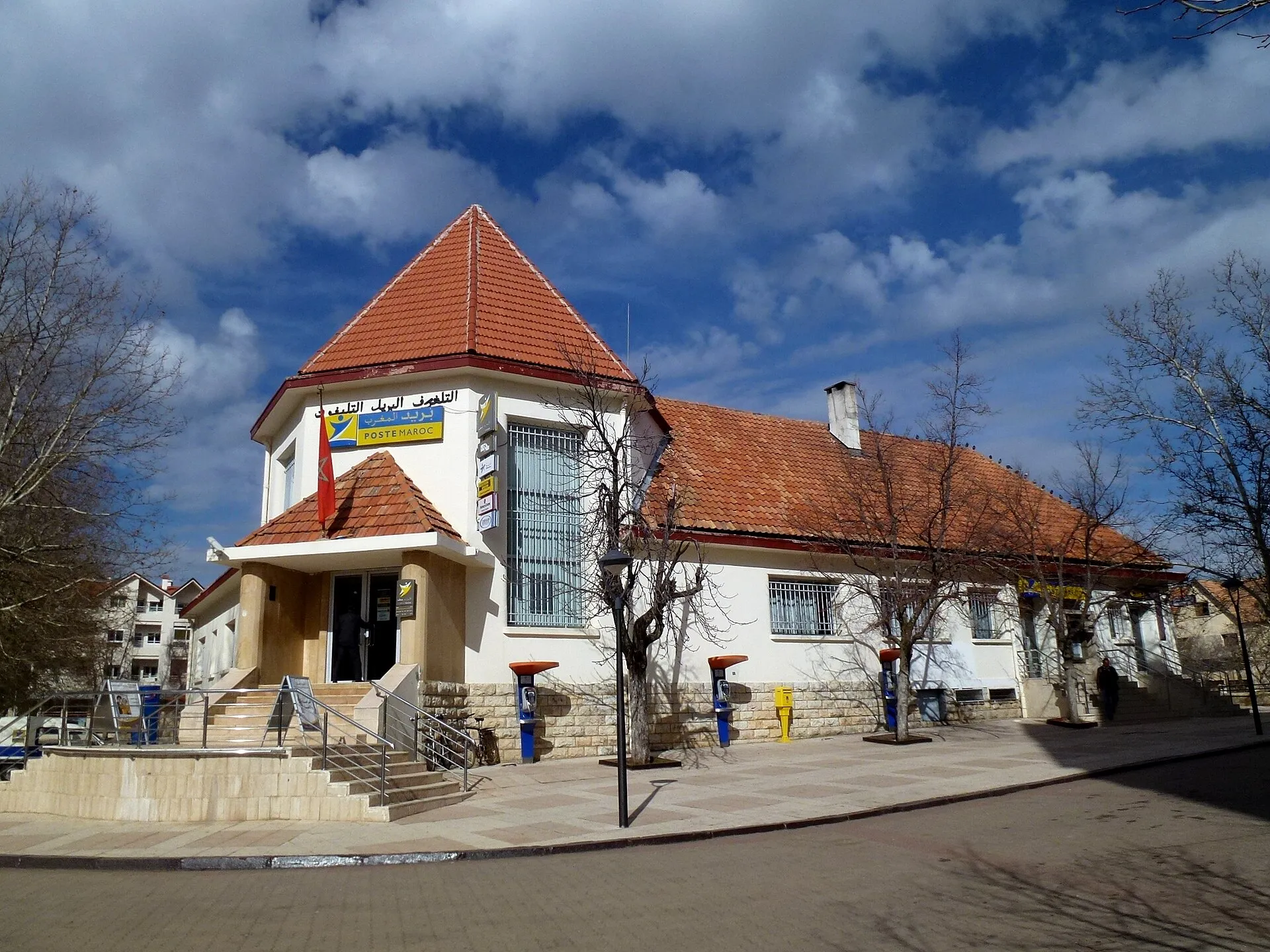
Ifrane is one of Morocco’s most unusual mountain towns. Set at around 1,650 meters in the Middle Atlas, it is known for red-roofed buildings, landscaped streets, nearby cedar forests, lakes and winter snow.
The town is often nicknamed the “Switzerland of Morocco” because its architecture and mountain setting look very different from the medinas, kasbahs and desert towns many travelers associate with the country.
Ifrane works well as a day trip from Fes, a stop on a Middle Atlas road trip or a quiet overnight base for travelers interested in forests, lakes and mountain scenery. The town itself is compact, so the strongest visit usually combines central Ifrane with at least one natural site nearby.
Ifrane at a Glance
| Place or experience | Why visit |
|---|---|
| Ifrane town center | Red-roofed architecture, parks and relaxed walking |
| Ifrane Lion | One of the town’s best-known landmarks |
| Ain Vitel | Green surroundings, water and easy nature walks |
| Dayet Aoua | Lake landscape, birdlife and countryside |
| Cedar forests | Middle Atlas scenery, walking and wildlife |
| Michlifen | Winter snow activities when conditions permit |
| Azrou | Useful extension for cedar-forest landscapes |
Why Is Ifrane Called the Switzerland of Morocco?
Ifrane looks noticeably different from many Moroccan cities.
Instead of a dense historic medina filled with narrow lanes, the town is characterized by open streets, gardens and buildings with steep roofs designed for a mountain climate.
Snow can fall during winter, reinforcing the alpine comparison.
The nickname is useful for describing the visual contrast, but Ifrane is still part of Morocco’s Middle Atlas and should be understood through its own regional landscape, culture and history rather than treated as a European town transplanted into Morocco.
Walk Through Central Ifrane
Ifrane is compact enough that the center can be explored on foot.
A simple walk allows you to see landscaped public spaces, red-roofed buildings and the relaxed urban character that distinguishes the town from Fes or Marrakech.
You do not need a long checklist of monuments. Part of Ifrane’s appeal is the slower pace itself.
This makes the town particularly useful during an itinerary filled with busy medinas or long road journeys.
See the Ifrane Lion
The Ifrane Lion is one of the town’s best-known landmarks and a common stop during a first visit.
The stone sculpture has become strongly associated with Ifrane and is easy to combine with a walk through the central area.
You do not need to plan much time around the statue itself. Treat it as one stop within the town rather than the main reason to travel to Ifrane.
Explore the Parks and Green Spaces
Ifrane is known for a greener and more open layout than Morocco’s major historic cities.
Parks and tree-lined spaces make walking one of the easiest activities in town, particularly during pleasant spring, summer and autumn weather.
Travelers coming from Fes often notice the difference immediately: Ifrane feels quieter, cooler and more spacious.
Ain Vitel
Ain Vitel is one of the natural areas associated with Ifrane and provides an easy opportunity to combine the town with water, trees and a short outdoor walk.
The landscape works best for travelers who want a gentle nature outing rather than a demanding mountain hike.
Conditions around springs, streams and waterfalls can vary according to season and recent rainfall, so do not judge the site only from photographs taken during wetter periods.
Dayet Aoua
Dayet Aoua is one of the best-known lakes in the Ifrane region.
The wider landscape attracts visitors for picnics, countryside views, walking and birdwatching.
Water levels and the appearance of the lake can change significantly with seasonal and longer-term conditions. A visit should therefore be planned for the overall landscape rather than with the expectation that the lake will always look exactly as it does in promotional photographs.
What Can You Do Around Dayet Aoua?
- Walk through the surrounding landscape
- Take photographs
- Watch for birds
- Enjoy a picnic where appropriate
- Combine the lake with other Middle Atlas stops
Respect natural areas and take waste with you after a picnic.
The Cedar Forests of the Middle Atlas
Cedar forests are one of the defining landscapes of the wider Ifrane region.
The Atlas cedar creates a very different environment from Morocco’s dry southern valleys or Atlantic coast, with forested mountain areas that support walking and wildlife.
A forest outing is a strong addition to an Ifrane visit because the town itself can be explored relatively quickly.
Barbary Macaques
Barbary macaques live in parts of the Middle Atlas forests and may be seen during trips around Ifrane and Azrou.
Wildlife sightings are never guaranteed.
If you see macaques:
- Keep a respectful distance
- Do not feed them
- Do not encourage them to approach for photographs
- Keep food and loose belongings secure
- Follow any local conservation guidance
Feeding wildlife changes natural behavior and can create problems for both animals and visitors.
Azrou as an Ifrane Extension
Azrou makes a natural addition to an Ifrane day because both belong to the wider Middle Atlas region.
The surrounding cedar-forest landscapes provide more time in nature and are commonly included on day trips from Fes.
A typical route does not need to treat Ifrane and Azrou as competing destinations. Ifrane provides the distinctive mountain-town atmosphere, while the Azrou area strengthens the forest and wildlife side of the day.
Al Akhawayn University
Al Akhawayn University is another well-known part of modern Ifrane.
Its campus architecture contributes to the town’s distinctive appearance.
Visitors should not assume that every university building or campus area is freely open for tourism. Respect access controls and view areas only where public entry is permitted.
Michlifen in Winter
Winter changes the character of Ifrane considerably.
When snow conditions are suitable, areas around Michlifen become associated with skiing, sledding and other snow activities.
Do not plan a ski trip based only on the calendar. Snowfall and operating conditions vary from year to year and within the same winter.
Check current conditions shortly before traveling.
Is Ifrane Always Snowy in Winter?
No.
Ifrane can receive snow and is one of Morocco’s best-known winter destinations, but snow is a weather condition rather than a guaranteed seasonal attraction.
If seeing snow is the main purpose of your trip, check recent local conditions before leaving Fes or another city.
Ifrane in Spring
Spring can be one of the most attractive periods for travelers interested in walking, forests and countryside rather than winter activities.
Temperatures can still differ substantially from lower cities, especially in the morning and evening.
Bring layers rather than assuming the weather will match Fes.
Ifrane in Summer
Summer is popular for escaping hotter lowland cities and spending time outdoors.
The higher elevation can create more comfortable conditions than some inland destinations, although sunny days still require water and sun protection.
Summer works well for:
- Town walks
- Forest outings
- Lake visits
- Picnics
- Short hikes
Ifrane in Autumn
Autumn brings another useful window for outdoor travel before winter conditions become more important.
Forest landscapes and cooler temperatures make the region well suited to walking and road trips.
Weather can become increasingly variable later in the season, particularly at elevation.
Hiking Around Ifrane
The wider Ifrane region offers much more walking than the town center itself.
Possible outings range from relaxed forest paths and lakeside walks to longer routes through Middle Atlas landscapes.
Before undertaking a longer hike, consider:
- Distance
- Elevation
- Weather
- Daylight
- Navigation
- Water
- Footwear
Use a knowledgeable local guide for routes where navigation or current conditions are uncertain.
Regional Crafts
Ifrane and the surrounding Middle Atlas are also associated with regional craft traditions.
Travelers may encounter:
- Carpets and woven textiles
- Rush or plant-fiber work
- Pottery
- Woodcraft
For travelers specifically interested in how Moroccan crafts are produced, continue with the Moroccan Handicraft Workshops guide.
What to Eat in Ifrane
Ifrane has Moroccan restaurants as well as cafés and dining options that reflect its role as a mountain resort and university town.
You can find familiar Moroccan dishes such as:
- Tagine
- Couscous
- Soups
- Grilled dishes
- Bread
- Mint tea
Local produce and regional food can vary by season.
Rather than looking for one supposed “Ifrane dish,” use meals as an opportunity to explore Middle Atlas ingredients and Moroccan mountain cooking where available.
Ifrane as a Day Trip From Fes
Ifrane is one of the most practical nature-oriented excursions from Fes.
Morocco’s tourism office places Ifrane roughly 70 kilometers from Fes, making it realistic to combine the town with other Middle Atlas stops in one day.
A balanced Fes day trip can include:
- Ifrane town center
- The Ifrane Lion
- A short walk
- Azrou
- A cedar-forest stop
Trying to add too many distant stops reduces the time available to actually walk and enjoy the landscape.
VMT currently offers a Middle Atlas Day Trip from Fes to Ifrane and Azrou.
Day Trip or Overnight Stay?
| Day trip | Overnight stay |
|---|---|
| Good when based in Fes | Better for slower nature travel |
| Enough for town and one forest stop | Allows lakes, walks and more regional exploration |
| Efficient for a short Morocco itinerary | Useful during snow season or a Middle Atlas road trip |
If your main goal is simply to see Ifrane’s unusual architecture and experience the cedar forests, a day trip can be enough.
Stay overnight when nature, winter activities or a slower Middle Atlas route are important parts of your trip.
How Long Do You Need in Ifrane?
The town itself does not require several days of conventional sightseeing.
A few hours is enough to walk through central Ifrane and see its main landmark.
A full day becomes worthwhile when you add nature.
| Available time | Best use |
|---|---|
| 2–3 hours | Town center, Lion and short walk |
| Half day | Ifrane plus nearby natural scenery |
| Full day | Ifrane, Azrou and cedar forest |
| 1–2 nights | Lakes, longer walks, winter activities or slower travel |
How to Get to Ifrane
Ifrane is most commonly reached by road.
Fes and Meknes are the most natural major-city starting points for many travelers, while Ifrane can also fit into a longer Middle Atlas journey toward Midelt and southeastern Morocco.
Transport options can include buses, shared taxis, private transfers and rental cars depending on your route.
Schedules can change, so check current transport information for your dates rather than relying on an old timetable.
Driving Through the Middle Atlas
Ifrane works particularly well on a road trip because you can combine town stops with lakes and forest areas that are less convenient to reach independently without a vehicle.
In winter, mountain weather can affect road conditions.
Check forecasts and current road information before driving when snow or ice is possible.
For broader self-drive planning, use the Morocco Road Trip Guide.
What to Wear in Ifrane
Do not pack for Ifrane based only on the temperature in Fes or Marrakech.
The higher elevation can make mornings and evenings cooler.
Useful items include:
- Comfortable walking shoes
- Layers
- A jacket outside the warmest periods
- Rain protection when appropriate
- Winter clothing when snow is expected
- Sun protection for outdoor days
For broader seasonal comparisons, use the Morocco Seasonal Travel Guide.
Responsible Wildlife Visits
The cedar forests are living ecosystems rather than wildlife parks.
If Barbary macaques appear, enjoy the sighting without trying to make the animals interact with you.
Avoid feeding, touching or cornering wildlife for photographs.
Stay on appropriate paths and take rubbish with you when visiting forests, lakes and picnic areas.
Common Ifrane Planning Mistakes
Visiting Only for the Lion
The Lion is an easy landmark, but the surrounding Middle Atlas landscapes are the stronger reason to make the trip.
Expecting Snow on a Specific Winter Date
Snowfall varies. Check recent conditions if snow is essential to your plans.
Assuming Dayet Aoua Always Looks the Same
Lake conditions and water levels can vary substantially.
Feeding Barbary Macaques
Wild animals should be observed without using food to attract them.
Treating Ifrane Like a Historic Medina Destination
The attraction is the mountain-town atmosphere and surrounding nature rather than a large collection of monuments.
Planning Only Around the Town Center
Combine Ifrane with a lake, forest or Azrou if you have a full day.
FAQ
Is Ifrane worth visiting?
Yes, particularly if you want a change from Morocco’s major medina cities. Ifrane offers a mountain-town atmosphere, red-roofed architecture, parks and access to Middle Atlas forests and lakes.
What is Ifrane famous for?
Ifrane is known for its alpine-style architecture, winter snow, the Ifrane Lion, its 1,650-meter Middle Atlas setting and nearby cedar forests, lakes and outdoor activities.
Can you visit Ifrane as a day trip from Fes?
Yes. Ifrane is roughly 70 kilometers from Fes and can be combined with Azrou and a cedar-forest stop in a full-day Middle Atlas excursion.
Does Ifrane have snow?
Ifrane can receive snow during winter and nearby areas such as Michlifen are associated with snow activities when conditions permit. Snow is not guaranteed on every winter date, so check current conditions before traveling.
Where can you see Barbary macaques near Ifrane?
Barbary macaques inhabit parts of the Middle Atlas cedar forests, including areas around Ifrane and Azrou. Sightings are not guaranteed, and visitors should never feed or approach the animals for photographs.
How long should you spend in Ifrane?
A few hours is enough for the center, while a full day allows you to combine Ifrane with lakes, Azrou or cedar forests. One or two nights works better if hiking, nature or winter activities are important to your trip.
Use Ifrane as a Gateway to the Middle Atlas
Ifrane is more interesting when you look beyond the “Switzerland of Morocco” nickname.
The red-roofed town creates a distinctive first impression, but the wider Middle Atlas provides the stronger travel experience: cedar forests, lakes, mountain air, wildlife and seasonal snow.
Walk through the center, see the Ifrane Lion and then give yourself time to explore at least one natural area. Dayet Aoua, Ain Vitel, Azrou and the cedar forests all add a different layer to the visit.
For travelers based in Fes, Ifrane works well as part of a full Middle Atlas day rather than as a rushed photo stop.
Explore Fes if you are combining the mountain region with the historic city, or use the Morocco Destinations Guide to compare Ifrane with other regions.
VMT also offers a Middle Atlas Day Trip from Fes combining Ifrane, Azrou and cedar-forest scenery.
If you want Ifrane included in a longer Fes, Middle Atlas or Sahara route, use the custom Morocco trip planner.
Explore destinations, tours and locally organized Morocco experiences with Visit Morocco Together.
Ready to Experience Morocco?
Turn this inspiration into your next adventure. Our travel experts are ready to help.