This Moroccan food guide covers what to order, where to look for regional dishes and which questions to ask before a meal. Start with a tagine, try couscous when it is freshly prepared, and leave room for cooked vegetable salads, breakfast breads and coastal fish. You can explore plenty of variety without ordering a large feast every evening.
The useful decisions happen at the table: whether a dish is shared, what goes into the broth, how seafood is priced and whether drinks are included. Understanding those details helps you choose meals that suit your appetite, dietary needs and travel plans.
Use this Moroccan food guide to choose dishes by flavour and appetite
Think about the kind of meal you want before working through unfamiliar names. Something warming, something crisp and something from the grill offer different starting points.
| What you feel like eating | Dish to look for | What to clarify |
|---|---|---|
| A slow-cooked main course | Tagine with vegetables, chicken, meat or fish | Main ingredient, sweetness and portion size |
| Grains with vegetables and broth | Couscous | Today’s preparation and whether the broth contains meat |
| A pastry with a substantial filling | Pastilla | Poultry or seafood filling, nuts and serving size |
| A bowl of soup | Harira | Meat, wheat and other ingredients in that kitchen’s recipe |
| Vegetables alongside bread | Zaalouk or taktouka | Ingredients, serving temperature and whether it is a side |
| A coastal lunch | Grilled fish | Species, weight, preparation charge and accompaniments |
The Moroccan National Tourist Office’s food and drink guide provides an introduction to the country’s main dishes. Recipes vary between households and restaurants, so use a dish name as a starting point for a conversation.
For a first dinner, choose one main dish and decide on starters after checking its size. Two people sharing several unfamiliar dishes may learn more from contrasting textures and flavours than from ordering two similar mains.
Tagine offers variety, while tanjia belongs to a different cooking tradition
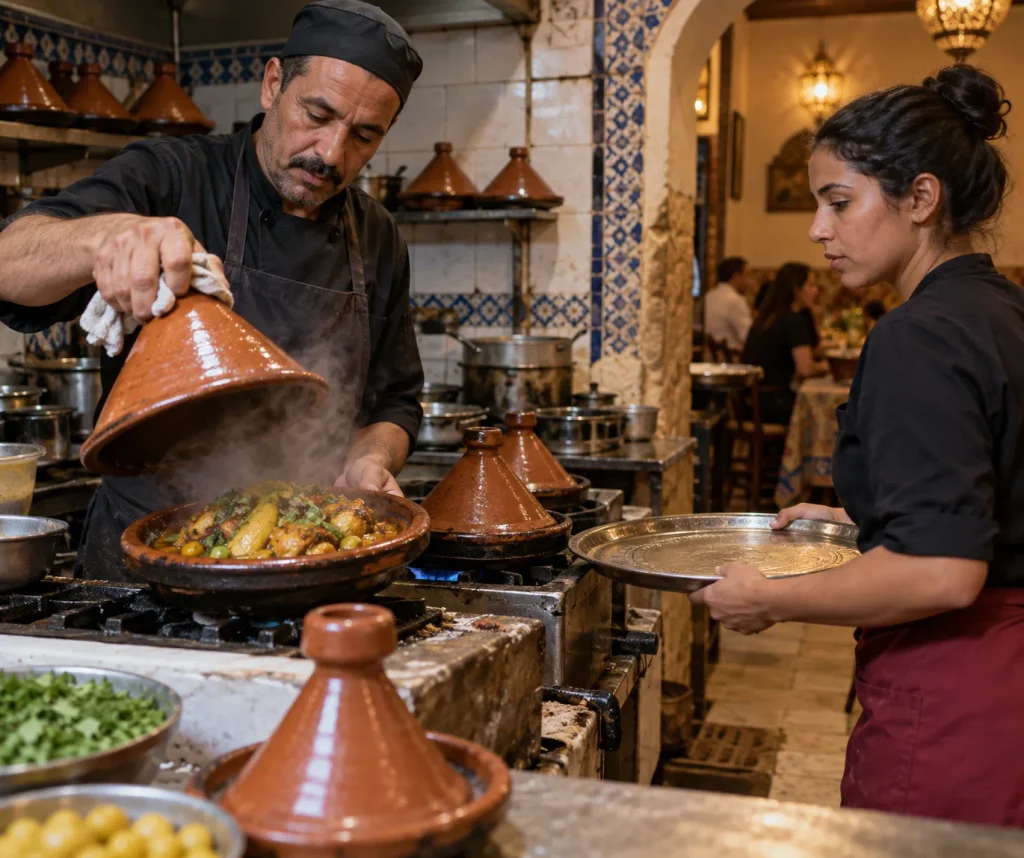
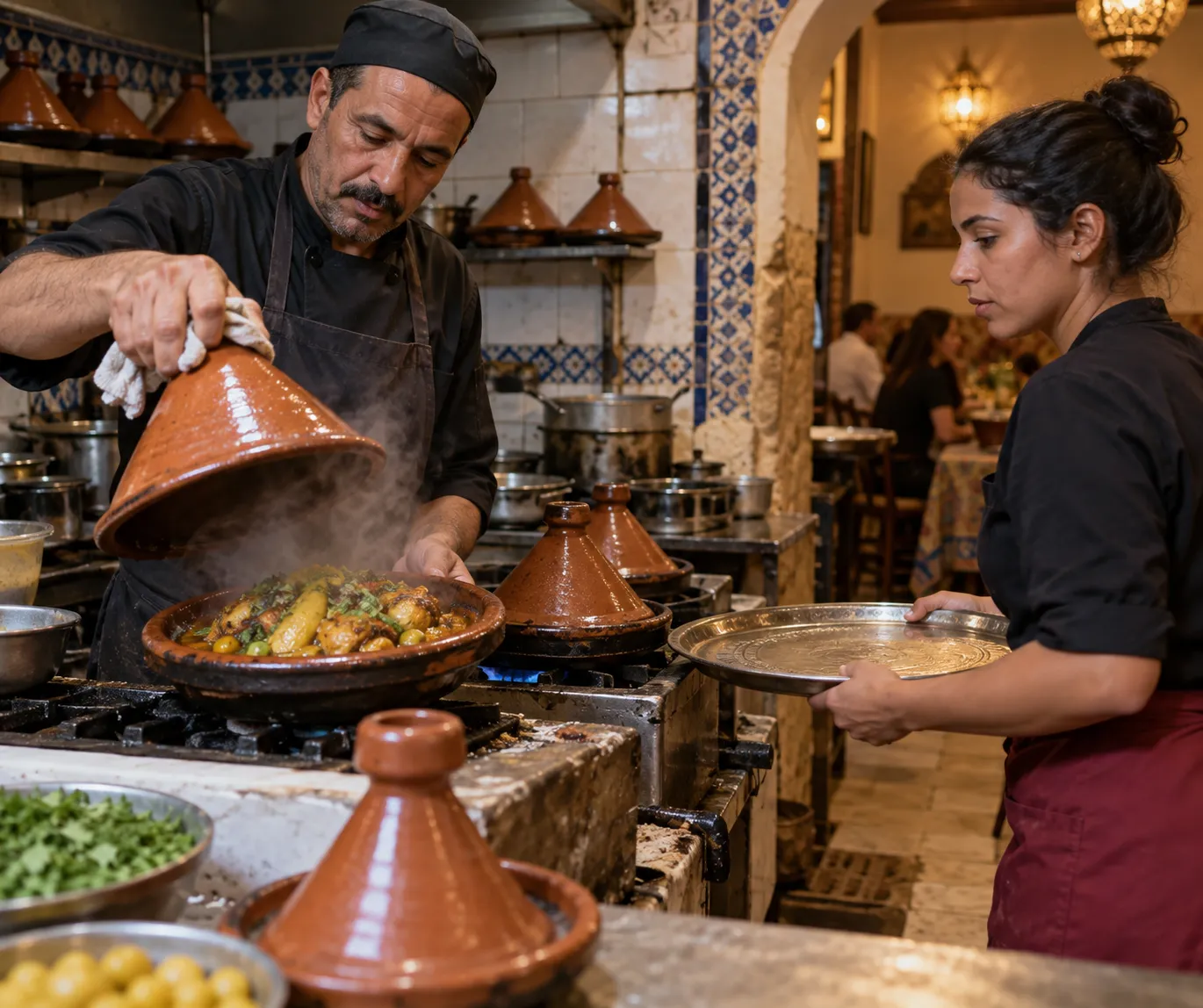
Tagine refers to both the cooking vessel and the dish associated with it. A chicken version with preserved lemon and olives tastes very different from meat cooked with prunes. A vegetable tagine brings another combination again. Read beyond the word “tagine” on the menu.
If you prefer savoury food, ask about dried fruit, honey or a sweet garnish before ordering. If you enjoy sweetness with meat, ask which preparation the kitchen recommends that day. Spices do not tell you how much chilli a dish contains; ask about heat separately and request any hot sauce on the side.
In Marrakech, look for tanjia, meat slowly cooked in a terracotta jar. It has a strong association with the city and is a separate dish from tagine. Its long cooking time makes availability worth checking earlier in the day, especially if it is your main reason for visiting a restaurant.
When comparing places, ask what has been prepared today and what needs advance notice. A photograph of a clay pot cannot tell you the recipe, portion or cooking schedule.
You can also ask whether bread accompanies the dish and whether a vegetable side would duplicate what is already included. Those small questions make the meal easier to order.
Couscous is worth planning around the kitchen’s serving day
Couscous is traditionally associated with Friday meals in Morocco, although restaurant availability varies. Ask your host or restaurant when it will be prepared rather than assuming every menu offers the same version every day.
Check the protein, vegetables and broth separately. A vegetable topping does not establish that the cooking liquid is vegetarian. If your group includes people with different diets, explain this before a shared platter is assembled.
Ask whether the quoted price covers one person or a platter for several diners. A large serving can make a satisfying lunch, so consider how it fits with a tasting tour or dinner booking later.
Couscous is usually made from wheat semolina. Anyone avoiding gluten needs a separately confirmed alternative; removing the meat or vegetables does not change the grain itself.
Pastilla, harira and rfissa give you different textures to try
Pastilla combines thin pastry with a filling that may feature poultry or seafood. Some versions include almonds and a sweet finish. Ask which version is being served and whether the portion is intended as a starter or main course.
Harira is a substantial soup commonly made with tomatoes, pulses and herbs. Recipes can contain meat, flour or pasta. It may suit a smaller meal, but the name alone does not establish vegetarian or gluten-free suitability.
Rfissa brings chicken and lentils together over pieces of bread or msemen, with a seasoned broth. If you would like to try it, ask your accommodation or restaurant in advance instead of building the day around finding it spontaneously.
These dishes need different questions. For pastilla, establish the filling. For harira, ask about the broth and thickener. For rfissa, check availability and how many people the serving feeds. That approach is more useful than treating every traditional dish as interchangeable.
Breakfast breads and mint tea can shape a slower morning

Msemen is a layered flatbread, baghrir has a porous pancake-like surface, and harcha is a semolina bread. Try different breads across several mornings instead of adding everything to one breakfast. Ask which accompaniments come with your order and which are charged separately.
Amlou is a spread commonly made with almonds, argan oil and honey, associated with southern Morocco. Its ingredients matter for anyone avoiding nuts or honey. Pastries and bread spreads also deserve an ingredient check if you have dietary restrictions.
Mint tea commonly combines green tea, mint and sugar. Ask for little or no sugar before the pot is prepared if that is your preference. Check whether the order is for one glass or a pot, particularly when several people are sharing.
If your accommodation includes breakfast, confirm the serving time before an early departure. You might prefer a smaller breakfast ahead of a food walk, or arrange something simple before a long transfer. An included meal only helps when it fits the day you have planned.
Let each destination suggest one food experience
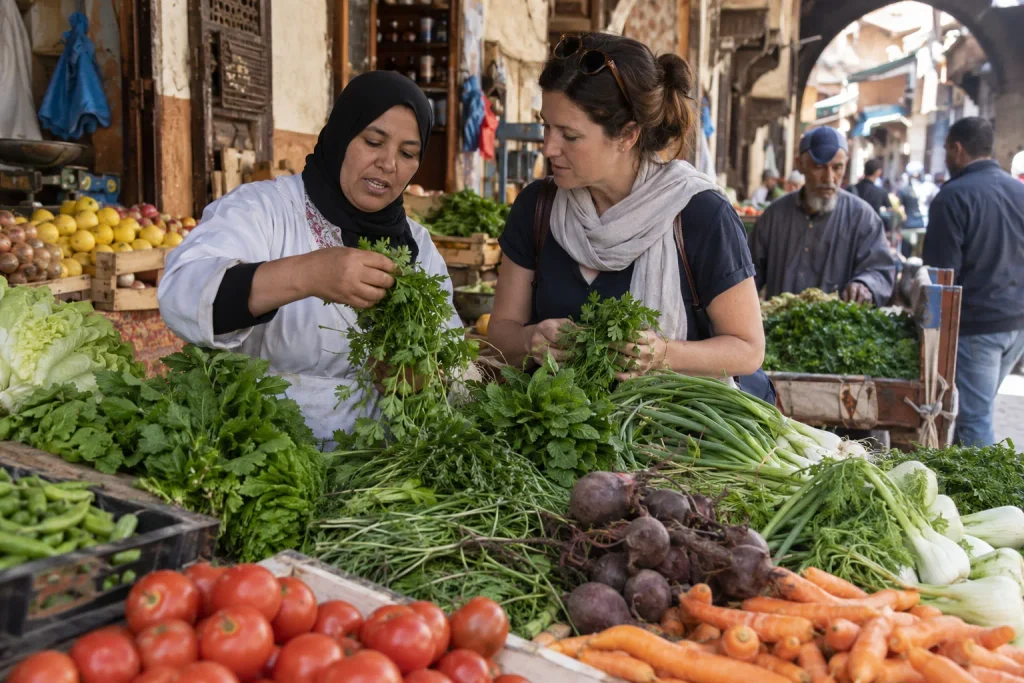
You do not need to redesign a whole itinerary around restaurants. Choose one food priority at each overnight stop, then keep the remaining meals flexible.
In Marrakech, make space for tanjia if slow-cooked meat interests you. You can also browse the evening food activity around Jemaa el-Fna, then choose where to eat after checking the menu and preparation. A lively setting and a suitable meal are separate decisions.
In Fes, consider spending part of a day learning how a dish comes together. A market visit followed by cooking gives you a reason to ask about produce, seasonings and substitutions that a restaurant menu may not explain.
In Essaouira, focus on the connection between the fishing port and the table. Ask what fish is available that day and how it will be prepared. Leave time for lunch instead of squeezing it between a late arrival and an immediate departure.
Around Agadir and the Souss region, look for opportunities to taste amlou and learn about culinary argan oil. If buying a food product, check its ingredients, packaging and intended use.
These are meal-planning ideas, not exclusive boundaries: dishes travel, and a city’s food extends well beyond a single speciality.
If you want to take flavours home, start with something you have enjoyed eating. Ask for the name of a spice mixture and a suggested use, then choose a quantity you will realistically cook with. For amlou or oil, request labelled packaging and check storage instructions. Keep edible oil purchases clearly identified as food products. Before buying anything for the journey home, check your destination’s food import rules and your carrier’s baggage requirements. A purchase that needs refrigeration is a different commitment from a sealed packet of spices, especially when several more travel days lie ahead.
Agree on the seafood order before it reaches the grill
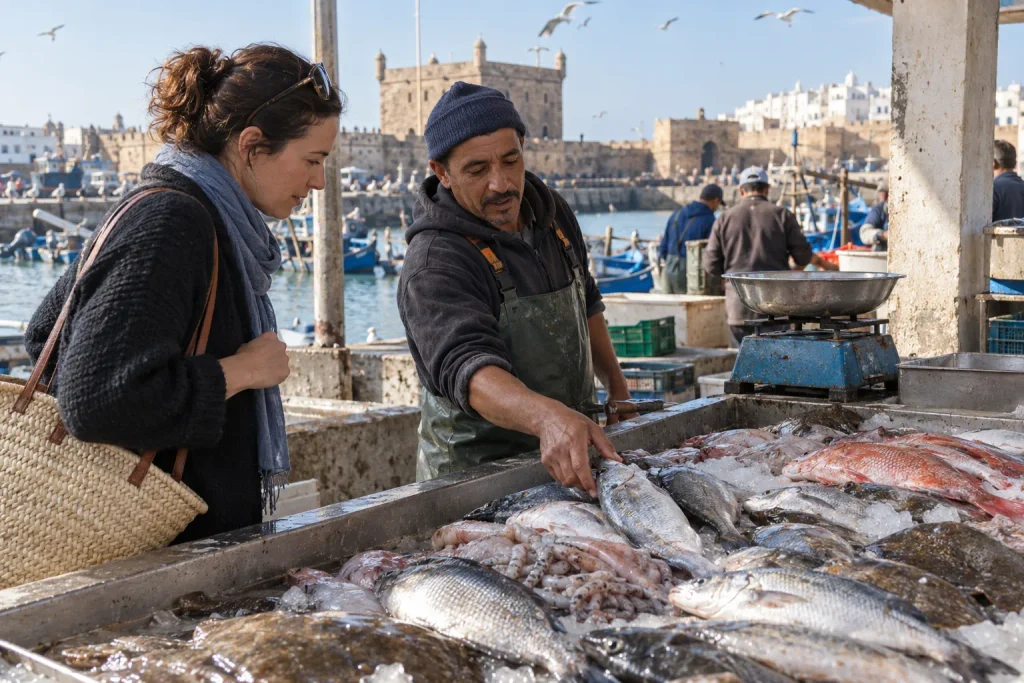
At a fish counter or restaurant, establish whether the price is per kilogram, per fish or per plate. Ask to see the weight and confirm the total before preparation. If several species are offered together, clarify how each contributes to the bill.
Check whether cleaning, grilling, bread, salads and drinks are included. A platter that looks suitable for two may be larger than you need, so describe your appetite and ask for a clear portion recommendation.
Whole fish can contain bones even when prepared for the table. If that is a concern, ask what preparation is possible rather than assuming a menu photograph represents a fillet.
For a guided introduction to the area, the Essaouira fishing port and seafood experience focuses on the port, coastal life and food culture. The current listing excludes food and drinks, so allow a separate meal budget and confirm any planned tastings before booking.
Vegetarian and vegan meals depend on the broth and finishing ingredients
Cooked vegetable dishes can provide a useful starting point. Zaalouk centres on aubergine, while taktouka uses peppers and tomatoes. Check how the kitchen prepares them and combine suitable sides with a more substantial dish if needed.
For vegetarian meals, ask specifically about meat or fish stock. For vegan meals, also check butter, eggs, dairy and honey. A server may understand your request more clearly if you name the ingredients you avoid instead of relying on a dietary label alone.
Explain restrictions when reserving a riad dinner or cooking activity, while the menu can still be adjusted. At a restaurant, ask the staff to confirm the preparation with the kitchen. If an answer remains unclear, choose a dish whose ingredients can be established.
For food allergies, bring a written card in a language the kitchen understands and ask about shared utensils and preparation surfaces as well as ingredients. Removing a visible garnish does not address cross-contact. Travellers with severe allergies should discuss the trip with their clinician and confirm whether each provider can accommodate their needs.
Keep a distinction between preference and allergy when speaking to staff. Clear information helps them judge what they can realistically prepare.
Choose between a stall, a restaurant and a riad dinner by the meal you want
A food stall can suit a single snack or a quick stop. A restaurant gives you a clearer opportunity to compare a full menu, while a riad dinner may fit an evening when you want to stay close to your room. Ask whether non-residents can dine and whether advance ordering is required.
For a market snack, start with a small order. Check the filling of bread or pastries before choosing several items, especially when you have another meal booked. Ask permission before photographing vendors or their work.
For a longer dinner, consider seating and access alongside the menu. A rooftop setting may involve stairs; a small courtyard may have limited tables. Families can ask whether a simpler preparation or shared portion is possible.
On an arrival night, give your accommodation a realistic arrival window before requesting dinner. On a departure day, check how much time the kitchen needs. Planning one meal carefully can leave the rest of the day pleasantly open.
Confirm the complete meal price before ordering
There is no single useful “Morocco meal price” covering a snack counter, a coastal fish lunch and a multi-course dinner. Compare what you will actually receive rather than treating the lowest displayed number as the full cost.
Use these questions when the menu is unclear:
- Is this price per person, per portion or for a shared dish?
- Does the set menu include drinks, bread and dessert?
- Are the small dishes placed on the table included?
- Is there a minimum order or a separate service charge?
- Which payment methods can I use?
If you have a firm budget, state it before choosing the meal. For a group, establish whether everyone must take the same set menu or can order separately. Check the bill while you are still at the table, when any question can be resolved easily.
Carry a suitable payment option for smaller purchases and ask about card acceptance before ordering. Treat gratuities separately from a listed service charge, and check what the bill already covers.
Food safety depends on handling, temperature and water
Choose food that is thoroughly cooked and served hot. Be cautious with raw seafood, undercooked meat, unpasteurised dairy and prepared food sitting at room temperature. A busy stall or an expensive dining room cannot by itself establish safe handling.
When you are uncertain about water quality, use factory-sealed bottled water or appropriately treated water. Apply the same caution to ice. Peel fruit yourself where practical and wash your hands before eating.
The CDC’s food and water precautions for travellers explain these choices in more detail. Street food can carry additional risk; watching one part of preparation does not reveal the whole storage and handling process.
Use this guidance when choosing where and what to eat, including during organised activities. A guide’s involvement does not remove the need to communicate dietary requirements or assess the food being served.
Ramadan meals need a little more advance planning
During Ramadan, check daytime dining and evening service directly with your accommodation and chosen restaurants. Do this for your actual dates rather than relying on a timetable from another season.
Iftar is the meal that breaks the daily fast at sunset. If you would like to join a restaurant or riad iftar, ask about the menu, arrival time and reservation arrangements. Harira and chebakia are associated with Ramadan, but each host’s spread will differ.
Arrange a daytime meal before setting off on an excursion, and discuss food stops with your driver or guide. If travelling with children or someone who needs regular meals, make those requirements clear during planning.
When invited to share a meal, follow your host’s lead about serving and eating. Ask before taking photographs, and explain any dietary restrictions beforehand. You can appreciate the hospitality without feeling obliged to eat an ingredient that is unsuitable for you.
Choose a cooking class for technique and a food walk for variety
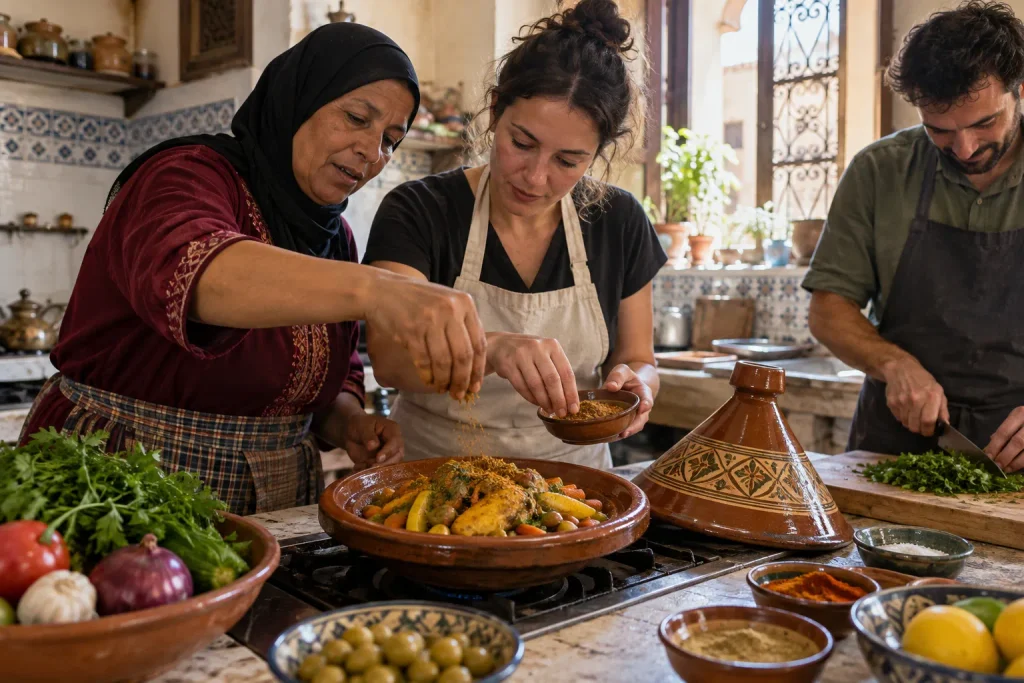
A cooking class makes sense when you want to understand a recipe and repeat it at home. A food walk suits a different aim: sampling several foods while learning how they fit into everyday city life. Decide which outcome interests you before comparing durations and prices.
| Experience | What to ask before reserving |
|---|---|
| Cooking class | Will I prepare the food myself, which dishes are planned, and is the meal included? |
| Food or market walk | Which tastings are included, how much walking is involved, and does it replace a meal? |
| Seafood-focused visit | Are food purchases separate, and can the guide help explain weights and preparation charges? |
The Moroccan cooking class in Fes with a souk market visit combines ingredient shopping with guided cooking and eating the meal you prepare. The listing includes ingredients and tea or water. Confirm the actual session length, menu and dietary arrangements for your date before fitting it around other plans.
For either format, ask where you meet and finish. Give yourself time afterwards instead of scheduling a large restaurant lunch immediately after an activity that already includes food.
Build a varied food day around one substantial meal
For a first full day, keep breakfast simple, choose one main dish for lunch, and leave dinner flexible. If lunch becomes a shared couscous meal, a smaller evening order may be enough. If a cooking class includes lunch, treat that as the day’s main food experience.
On the coast, reverse the emphasis: leave appetite and time for fish, then choose something different later. Over several days, alternate slow-cooked dishes, vegetables, soups, breads and seafood according to what you enjoy.
Keep a short note of dishes you liked and questions you still have. The next meal becomes easier to choose, and you leave Morocco with a clearer sense of its cooking than a checklist of names alone can provide.
Ready to Experience Morocco?
Turn this inspiration into your next adventure. Our travel experts are ready to help.