First time in Morocco? Keep your arrival day simple, give yourself time to understand your first neighborhood, and agree on the details before accepting a ride, tour, or other paid service. These decisions can make more difference to your first few days than adding another landmark to the itinerary.
Morocco does not feel the same everywhere. A stay inside Fes el-Bali, a hotel in central Casablanca, and a coastal break in Agadir involve different surroundings, access arrangements, and daily routines. Choose the experience you want, then make the practical arrangements fit it.
This guide focuses on what to expect and how to handle everyday situations during a first visit. For documents, bookings, and tasks before departure, use our guide to preparing for a trip to Morocco. For the broader route and timing decisions, start with the Morocco Trip Planning Guide.
First Time in Morocco Start With One Manageable Base
Choose your first overnight stop around your arrival airport, available time, and interests. A familiar city name alone is not enough reason to add another transfer after a tiring flight.
Marrakech suits travelers who want to organize their days around medina walks, gardens, historic buildings, and excursions outside the city. Fes is worth considering when artisan traditions and time in the old city are central to the trip. In either place, check the walk to your accommodation as carefully as the room photographs.
Casablanca or Rabat can suit an arrival focused on urban sightseeing and onward travel. Tangier can work as a northern starting point when it fits your flight or ferry arrangements. If your priority is time by the Atlantic, compare an Essaouira town stay with the accommodation and beach setting you want in Agadir.
These are starting options, not a ranking. The right choice depends on what you will do on an ordinary morning and evening, not only on a list of sights.
For a short first visit, consider one base and a manageable excursion before attempting several distant regions. You can leave the Sahara or northern cities for a longer journey if including them would turn most of this trip into travel days.
Keep the Arrival Day Light
Leave room for the steps between landing and reaching your room: airport formalities, baggage, finding your transport, traffic, and the final approach to the property.
A flight arrival time is not a hotel arrival time. Avoid reserving a timed activity so close to landing that a routine delay puts the booking at risk.
Once you have checked in, a useful first outing is simple:
- Find the entrance again from the nearest recognizable landmark.
- Identify somewhere nearby for a meal.
- Confirm where tomorrow’s pickup or meeting will happen.
- Take a short walk you can comfortably retrace.
- Leave a longer exploration for when you feel rested.
If you arrive late, ask the property to confirm reception arrangements and the precise meeting point. A prearranged arrival is particularly useful when the final part of the journey is unfamiliar.
Do not rely on a driver being able to reach a riad’s front door just because the booking says “hotel pickup.”
Understand the Final Walk to a Medina Riad
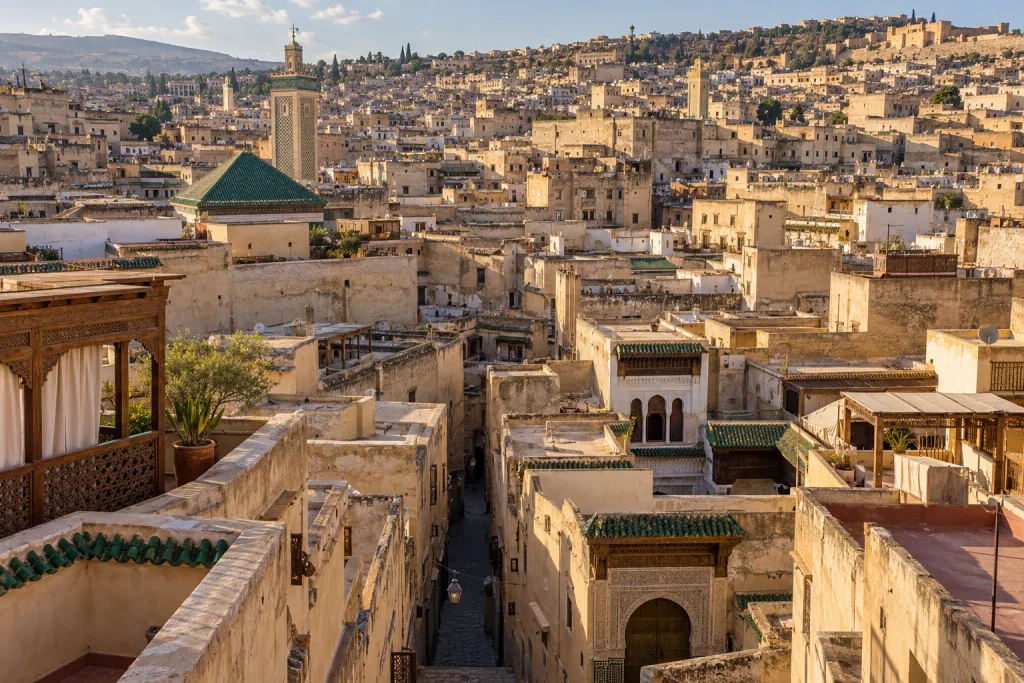
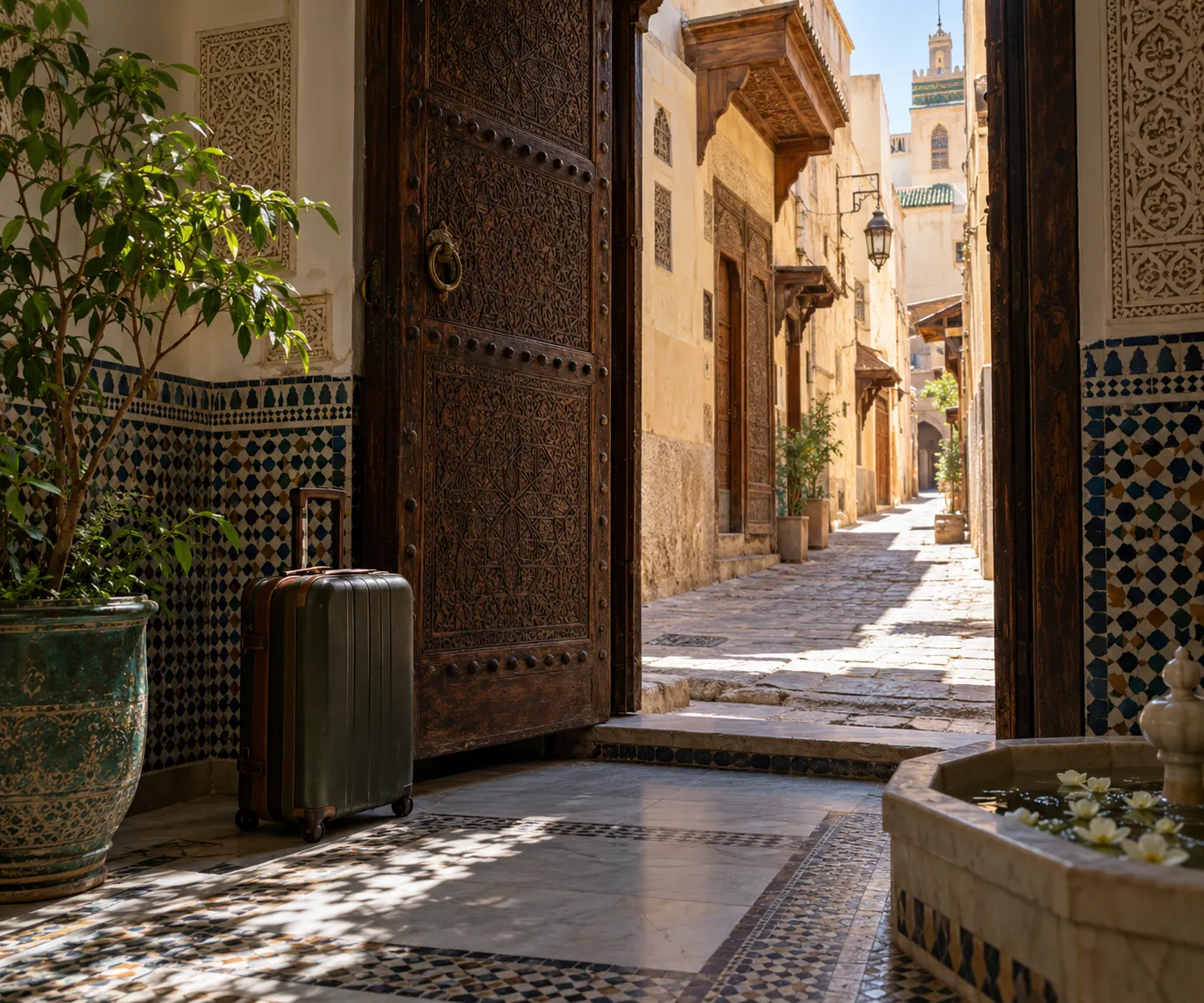
A medina address can involve pedestrian lanes, steps, uneven surfaces, or a vehicle stopping some distance from the entrance. The details differ by property and approach road.
Ask your host for the nearest practical drop-off point, the walking route from there, and whether someone will meet you. If you need step-free access or cannot carry luggage far, describe that need before booking.
Save the property’s written directions and a contact number. A map pin is useful, but the correct doorway may still be difficult to identify from the screen alone.
If someone offers luggage assistance, establish whether the arrangement comes from your accommodation and whether there is a charge. Agree on that before handing over bags.
On your first independent walk, notice a few landmarks rather than trying to memorize every turn. A photograph of a street junction or entrance can be more useful than remembering a shop display that may be packed away later.
Explore the Medina at Your Own Pace
You do not need to visit every lane or accept every invitation. Choose one or two places you want to see, allow time to stop, and keep a straightforward return plan.
Download a map for offline use and save your accommodation details before setting out. Keep an eye on the route as you walk rather than waiting until you feel completely lost.
If directions become confusing, stop somewhere you feel comfortable and contact your host. Ask them to explain the route from a recognizable location or arrange a meeting point.
A stranger saying a street or attraction is closed is a reason to check with your host, the venue, or an identified official. It does not require you to follow an alternative route offered on the spot.
Equally, an ordinary conversation or helpful gesture is not proof that someone is trying to sell you something. The practical distinction is whether you have agreed to a service, know its scope, and understand any payment expected.
Use a Guide When You Want Context or Navigation Help
A guide can help explain what you are seeing, organize access to planned stops, and reduce the effort of navigating unfamiliar streets. You can use one for a particular visit without booking guided support for the whole holiday.
Before confirming, ask about the duration, walking demands, language, meeting point, entry fees, and any shopping stops. Explain if you prefer history and architecture to time in shops.
For an organized introduction, Visit Morocco Together’s Fes Medina Walking Tour was listed from €55 per person on 21 October 2026. The page lists a licensed local guide, traditional lunch, mint tea breaks, entrance fees, and pickup. At that starting rate, two adults would budget €110 before exclusions. Confirm the day’s arrangements and final price for your booking.
If you prefer to explore independently afterward, ask your guide to point out useful landmarks and explain your return route.
For medina guiding, the UK Foreign, Commonwealth & Development Office’s Morocco guidance advises checking that a guide has an official badge and local authorization. The same page provides current safety and local-law information; travelers should also consult advice relevant to their own nationality.
Agree on the Service Before It Starts
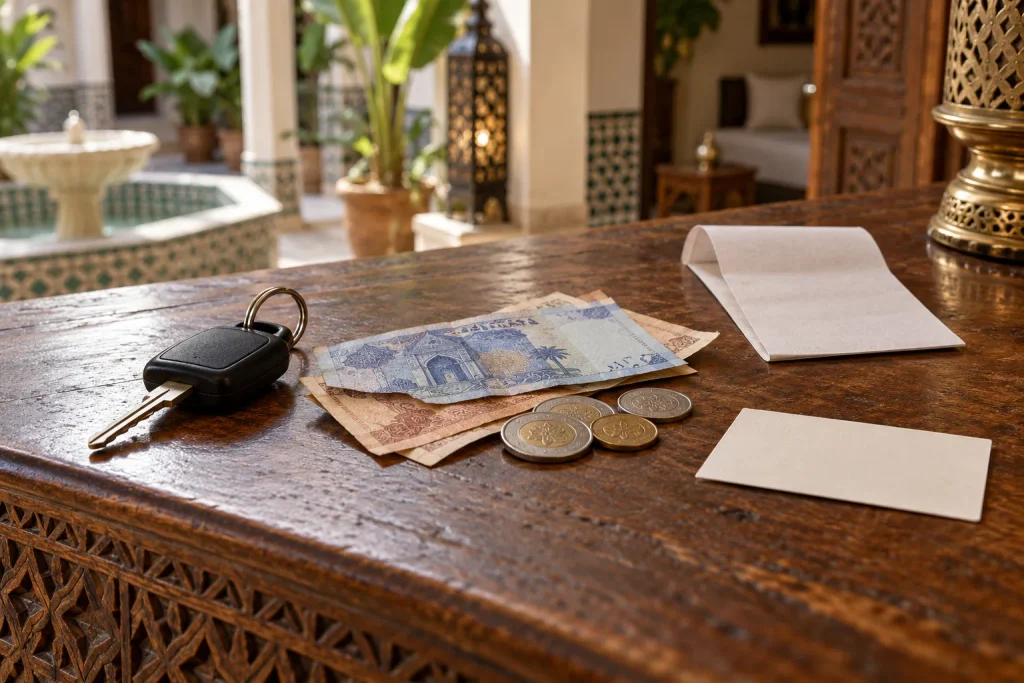
A clear agreement helps with rides, guiding, luggage assistance, photographs, and other paid activities.
Establish what you are accepting and what the total covers. Check whether the price is for the whole group, each person, one journey, or a longer period.
For a taxi journey, confirm the destination and whether a meter will be used or a fare is being agreed. If agreeing a fare, establish the total for your party and any luggage before setting off.
For a private transfer or excursion, keep the written confirmation available. It should identify the pickup point, destination, included services, and relevant contact.
If you do not want an offered service, a brief “No, thank you” is enough. You do not need to explain your spending plans or continue a discussion.
If an interaction becomes uncomfortable, move toward a staffed place and seek assistance. You do not have to remain in a conversation because it began politely.
Shop Without Turning Every Visit Into a Negotiation
Ask whether an item has a fixed price before bargaining. Do not assume the same approach applies to a supermarket, a labeled boutique, and a souk stall.
When a price is negotiable, first decide whether you actually want the item and what you are willing to spend. Compare materials, size, workmanship, and condition rather than applying a universal discount percentage.
You can leave without purchasing. A conversation, a cup of tea, or a demonstration does not automatically establish a purchase agreement.
For a larger item, confirm what you will receive and how it will reach you. Shipping, packaging, payment terms, and any charges at your destination need their own checks.
Keep shopping time separate from visits where your priority is learning or photography. Tell an organized guide if you want to limit retail stops.
Carry Enough Payment Options for the Day
Ask your accommodation and activity providers how balances are payable. Keep enough cash for purchases where you have confirmed it is needed, while checking card acceptance rather than assuming it everywhere.
Retain access to a second payment method if possible. Keep it separately from the card you use most often.
At a restaurant or shop, confirm the currency and amount before paying. At an ATM or card terminal, read any displayed fee or conversion offer before accepting it.
A small note on your phone can track what is already paid and what remains due. This is especially helpful when one traveler paid the accommodation deposit and another is covering daily expenses.
For a full calculation, our Morocco travel budget guide separates room costs, transport, meals, and excursions. A spending allowance after prepaid bookings is different from the total cost of the trip.
Read Transport Descriptions Carefully
Check the exact departure and arrival points for every booked journey. A city name can cover different stations, terminals, ports, and pickup areas.
A ticket to a city does not include onward transport to your accommodation unless the booking says so. Add time for that connection when planning your arrival.
Likewise, a walking tour’s pickup arrangement does not establish that all sightseeing will be by vehicle. Ask about walking, steps, rest stops, and access if these affect your choice.
Keep tickets and booking confirmations accessible until the journey is complete. If you need a phone to display them, preserve battery power and save the necessary information for offline access.
When plans change, revise the next booking too. A later arrival can affect a riad meeting, a dinner reservation, or the pickup you had arranged.
Use our guide to getting around Morocco for the transport choices themselves; on the day, focus on the station, meeting point, luggage, and final connection.
Choose a Desert Experience by Landscape and Available Time
If you want a desert outing, ask where it actually takes place. An excursion to Agafay outside Marrakech and a journey to the dunes near Merzouga offer different landscapes and travel commitments.
Decide whether your priority is an evening outside the city, a particular dune landscape, an overnight camp, or a longer route through southern Morocco. Then compare the itinerary and time in the vehicle.
For an evening option, Visit Morocco Together’s Agafay sunset outing from Marrakech was listed from €129 per person on 21 October 2026. It describes a stone-desert setting and includes return transport, a camel ride, dinner, and entertainment. Confirm the pickup, exclusions, and final price. This is an Agafay outing, not a trip to Merzouga’s sand dunes.
Ask about the animal activity itself before booking: whether riding is optional, how animals are handled, and what you can do instead if you choose not to participate. Keep the return arrangements clear even if you skip an activity.
An attractive photograph should not be the only basis for choosing an excursion. Read the start and finish points, overnight arrangements, and included services.
Dress for the Setting and the Weather
Plan clothes around the places you will enter and the conditions during your actual visit. City sightseeing, a religious site, a coastal walk, and a mountain outing do not all call for the same clothing.
Comfortable walking shoes and clothing you can layer make it easier to adapt during the day. Check the forecast for each overnight stop, including evenings, rather than packing from a single national weather summary.
For ordinary sightseeing, choose clothes in which you feel comfortable walking and entering the places on your route. Follow specific venue rules where they apply.
Our guide to what to wear in Morocco covers regional and seasonal choices. You do not need a separate wardrobe for every city, but you may need an extra layer or different footwear for a particular activity.
Check Access Before Entering Religious Sites
Do not assume every religious building that appears on a sightseeing list is open for tourist visits. An exterior stop, an open doorway, and an authorized interior visit are different things.
Hassan II Mosque in Casablanca offers paid guided visits. Check the Foundation’s official visitor information for its current schedule and rules. The published rules require clothing covering the shoulders and torso and extending below the knees, with shoes removed for entry.
Elsewhere, follow signs and ask staff about access. Avoid interrupting worship or photographing through a doorway simply because it is open.
During Ramadan or other religious occasions, reconfirm the opening hours, meal arrangements, and activity timings relevant to your day. Do not assume the schedule you saw for another month still applies.
Ask Before Photographing People
A person working in a market, preparing food, or walking through a neighborhood is not automatically participating in your photograph.
Ask permission before a recognizable portrait, respect a refusal, and discuss any paid photographic arrangement before taking part. With children, seek permission from a parent or guardian as well.
Be careful about location rules. Photography permission at one attraction does not establish permission at another, and sensitive sites may have restrictions.
You can still photograph streets, architecture, details, and landscapes without turning every encounter into a portrait session. Put the camera away when it makes an interaction uncomfortable or distracts you from traffic and your surroundings.
Make Meals and Rest Part of the Plan
Leave time to sit down, eat, and adjust your pace. A crowded itinerary becomes harder to enjoy when every meal is squeezed between timed visits.
Choose dishes that interest you and ask what they contain. If you have a food allergy or another requirement, explain it clearly and confirm whether the kitchen can meet it before ordering.
Do not rely on a dish’s name alone to establish its ingredients. The preparation can differ between kitchens.
On an excursion, establish which meals and drinks are included and where you will be able to stop. Carry what you need for the confirmed activity rather than assuming there will be a shop at every stage.
For solo travelers, families, and mixed-ability groups, build the day around a pace everyone can manage. Choosing fewer stops is a valid way to make a first visit work.
A Flexible First Full Day
Use your first full day to become familiar with the area before attempting a packed sightseeing schedule.
In the morning, visit one place you have chosen in advance or join an introduction suited to your interests. Allow time to understand the route and stop when something catches your attention.
Take a proper break around lunch. Check how much energy you have before deciding on the afternoon.
Later, choose a shorter independent walk, another nearby visit, or time at your accommodation. Make dinner convenient enough that you are not depending on a complicated return journey while tired.
This is a suggested pace, not a fixed itinerary. Adapt it to your arrival time, the weather, opening hours, and any commitments you have already booked.
Questions About a First Visit to Morocco
Can I Visit Morocco Without Booking a Whole Tour?
Yes. You can organize accommodation and journeys yourself and add guided support for a particular visit. Check the practical details of each booking rather than assuming independent travel or a package will suit every part of the route.
Do I Need to Speak French or Arabic?
You do not need to be fluent to plan a visit. Confirm the language available for your accommodation, transfers, and guided activities, and save important addresses in writing. A translation tool can help with short exchanges, but important booking details should be clearly understood by both sides.
Should I Start in Marrakech or Casablanca?
Compare your flights, first-night location, interests, and onward journey. Start in Marrakech if the activities you want are centered there. Start in Casablanca if it fits your arrival and route. Neither city has to appear in every first trip.
Can I Include the Sahara on a Short Visit?
Check the complete route, travel days, overnight stops, and return arrangements before deciding. If reaching the dunes would leave too little time for the rest of your visit, choose a different experience or save the Sahara for a longer trip.
Is a Riad Suitable for Everyone?
Check the individual property. Ask about stairs, luggage access, room position, heating or cooling, and late arrival. The word “riad” does not establish whether a particular building meets your needs.
What Should I Do if I Feel Lost in the Medina?
Stop at a staffed place where you feel comfortable, check your saved directions, and contact your accommodation. Give a recognizable location and ask for a route or meeting point. You do not need to accept an unsolicited guiding offer to get back.
Should I Book Every Hour Before Arrival?
Reserve the parts that depend on availability or a specific time, then leave room around them. Keeping the first day light gives you time to understand distances, your accommodation access, and the pace you want for the rest of the visit.
Ready to Experience Morocco?
Turn this inspiration into your next adventure. Our travel experts are ready to help.