Morocco attractions range from palace courtyards and working medinas to Roman remains, mountain valleys, and Saharan dunes. For a first trip, choose a few sights that offer different experiences and fit one sensible route. A palace visit can occupy part of a morning; a desert stay needs several travel days from the major cities.
A useful shortlist might include a historic urban area, one or two monuments or gardens, and a landscape experience. Which ones deserve your time depends on where you arrive, how much walking you want, and whether your holiday is a city break or a longer journey.
Start with what you want to see closely. Then give it enough time beyond the photograph.
Which Morocco Attractions Should You Prioritise
Choose attractions by what they add to your trip.
For decorative architecture, compare Bahia Palace, Ben Youssef Madrasa, and a guided interior visit to the Hassan II Mosque. For historic urban life, consider Fes el-Bali, Marrakech’s souks, or Tetouan’s medina.
For a different architectural setting, Aït Benhaddou offers an earthen fortified settlement, while Volubilis provides an archaeological landscape. For nature, select a particular valley, gorge, waterfall, or dune area rather than adding “the mountains” or “the desert” as a single sightseeing stop.
The wider range of things to do in Morocco includes activities as well as sights. A class, walk, or meal can provide a useful change of pace between monuments.
Jemaa el-Fna and the Marrakech Souks for Street Life
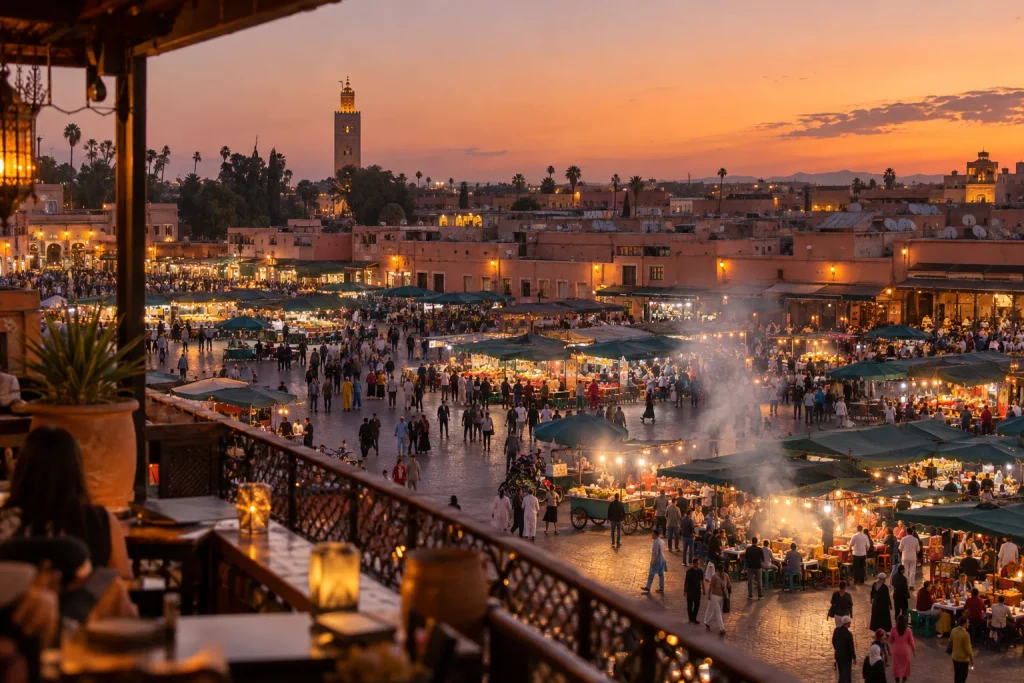
Jemaa el-Fna is a public square whose atmosphere changes through the day. Its appeal comes from activity, food, movement, and its relationship with the surrounding medina.
Treat it as somewhere to spend time rather than a monument to enter and leave. You might cross it during a daytime walk, then return later to observe a different rhythm.
Performances, photographs, food, and drinks can involve payment. Ask before photographing people and agree any charge beforehand. Leave working areas and pedestrian routes clear.
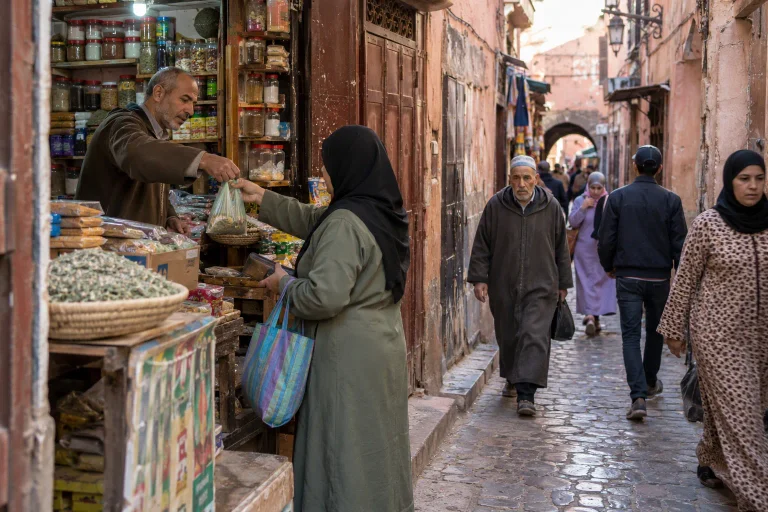
The souks north of the square provide another experience: lanes, shops, workshops, and small open spaces. Choose a manageable section instead of expecting to cover every craft quarter in one visit.
A few reference points make exploring Marrakech’s souks easier. Save your accommodation’s location and a clear route back before setting out.
Combine a focused souk walk with time around the square, leaving a meal break and room to pause. An arrival afternoon may suit a short orientation; a longer exploration can wait until you are rested.
Bahia Palace Ben Youssef Madrasa and El Badi Palace
These Marrakech attractions offer different ways to look at architecture. You do not need to visit all of them simply because they appear on the same list.
Bahia Palace for Courtyards and Decorative Detail
Bahia Palace suits travellers interested in courtyards, carved and painted surfaces, tilework, and the organisation of a palace complex.
Look beyond individual decorative panels. The sequence of spaces and the relationship between rooms and courtyards are part of the visit.
Access can vary within a historic property. Check which areas are open and allow for other visitors rather than expecting the quiet, empty setting shown in promotional photographs.
Ben Youssef Madrasa for Historic Educational Architecture
Ben Youssef Madrasa provides another architectural focus within the medina.
It can fit a day centred on the northern souks and nearby streets, avoiding an unnecessary return across the city. Plan enough time to look at the courtyard and the spaces open to visitors.
A madrasa visit should not be confused with unrestricted entry to nearby religious buildings. Each site has its own access arrangements.
El Badi Palace for Scale and Ruins
El Badi offers a different experience from a richly decorated interior. Its open spaces and surviving structures encourage you to consider the scale and former arrangement of the palace.
It suits travellers who enjoy architectural history and can appreciate a place through what remains. Shade and walking conditions matter when planning the time of day.
Visit Morocco Together’s guided El Badi Palace visit in Marrakech offers historical context for the ruins. Confirm the booked duration, meeting point, admission inclusion, and areas accessible. A guided activity’s total duration should not be assumed to be the time every independent visitor needs inside the monument.
Choose one main architectural visit for a half-day outing, then add nearby streets or a meal. Two monuments can work when architecture is a priority and the route leaves space between them.
Jardin Majorelle for Garden Design and Museum Interests
Jardin Majorelle suits a different kind of visit: planted spaces, colour, design, and paths through a managed garden.
Decide whether you want the garden alone or a visit involving one of the associated museums. Check the actual ticket combination, entry slot, and opening arrangements for each space.
The official Jardin Majorelle website identifies its authorised online ticket channel. Purchase through that route and check what the ticket includes before building the rest of the day around it.
Majorelle is outside the old medina. Include the journey between the garden and your other plans rather than assuming it sits beside Bahia Palace or Jemaa el-Fna.
Reserve a distinct part of the day for the garden and any museum you select. A timed entry needs more scheduling discipline than an unhurried walk through public streets.
Fes el-Bali for a Historic City on Foot
Fes el-Bali is an urban area rather than one attraction with a single entrance. Its streets connect homes, businesses, workshops, religious buildings, and historic monuments.
A good visit follows a route that gives those places context. Bakeries, fountains, craft processes, and changes between commercial and residential lanes can be as interesting as a named landmark.
Parts of the medina require walking, and access to particular interiors varies. Agree the route around your stamina and interests rather than accepting a full-day walk by default.
A qualified local guide can be useful for orientation and explanation. Establish whether the itinerary includes shops and whether you want time for purchasing.
Give a guided medina route a half day or longer according to your interests. These are scheduling allowances, not fixed tour durations. Leave time for another walk or a particular museum instead of fitting the entire city into one hurried circuit.
Chouara Tannery for Understanding a Working Craft Site
The Chouara Tannery attracts visitors for its arrangement of vats and the processes visible from surrounding viewpoints.
It is a working setting. What you see depends on activity at the time and the terrace or access point used.
A viewpoint may be reached through a leather shop. Clarify any payment or shopping expectations before entering, and do not assume that access means you must buy something.
Ask before photographing workers. Stay within permitted visitor areas and avoid treating the production site as a place to explore independently.
Include a tannery viewpoint within a wider Fes walk. It does not need to become the only reason to visit the medina or a promise that every production stage will be visible.
Hassan II Mosque for Architecture beside the Atlantic
The Hassan II Mosque in Casablanca offers a major architectural visit with an oceanfront setting.
An exterior view and a guided interior visit are different experiences. If the interior is important, establish the current visitor sessions, ticket arrangements, dress requirements, and arrival procedure.
Allow room around the visit rather than relying on a tight connection from an incoming flight. Airport formalities, traffic, and reaching the entrance all affect the schedule.
The mosque is a place of worship. Visitor access is governed by its own arrangements, and those arrangements should not be generalised to other mosques in Morocco.
Build a Casablanca half-day around the confirmed visit and selected nearby city interests. Travellers keen on urban architecture may want more time in the city rather than leaving immediately afterwards.
Rabat for Heritage Sites with Different Settings
Rabat offers several attractions that can be selected according to your interests.
The Hassan Tower area and Mausoleum of Mohammed V provide a monumental visit. Follow the current public access arrangements and any instructions around religious or ceremonial spaces.
The Kasbah of the Udayas offers a different setting of lanes, architecture, and viewpoints. Chellah provides another heritage visit whose ground conditions and areas open to visitors need separate consideration.
These places are not a single compact ticketed complex. Plan the connections and choose what you want to explore rather than treating a long list as one short walk.
Select two main areas for a measured city day, with time for lunch and transport. Add more only if the pace suits your group.
Volubilis and Meknes for an Archaeological and Imperial City Day
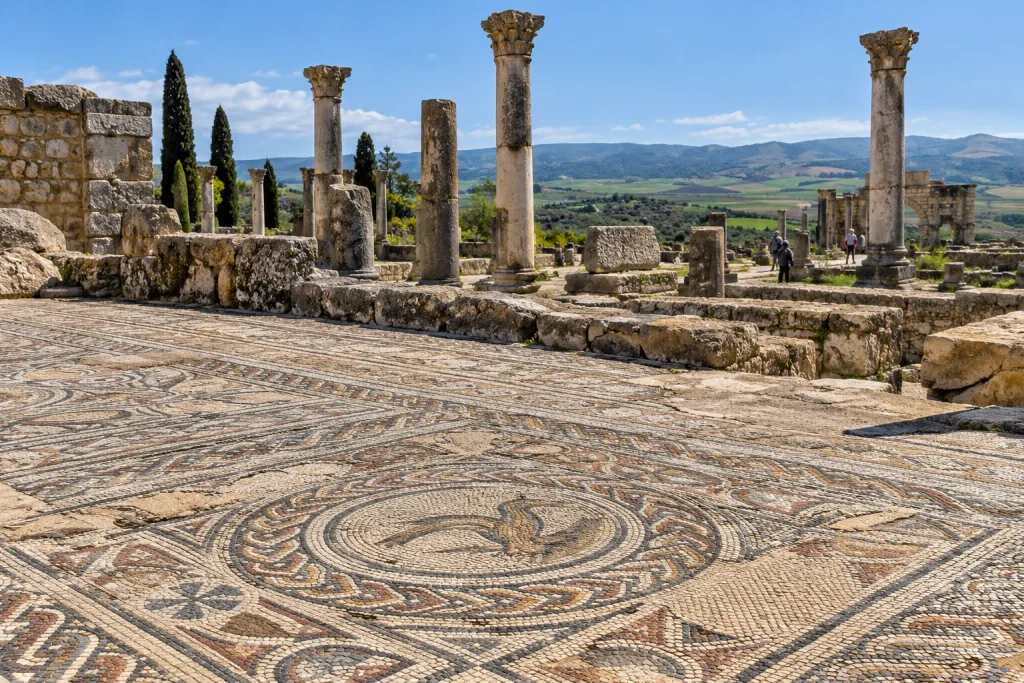
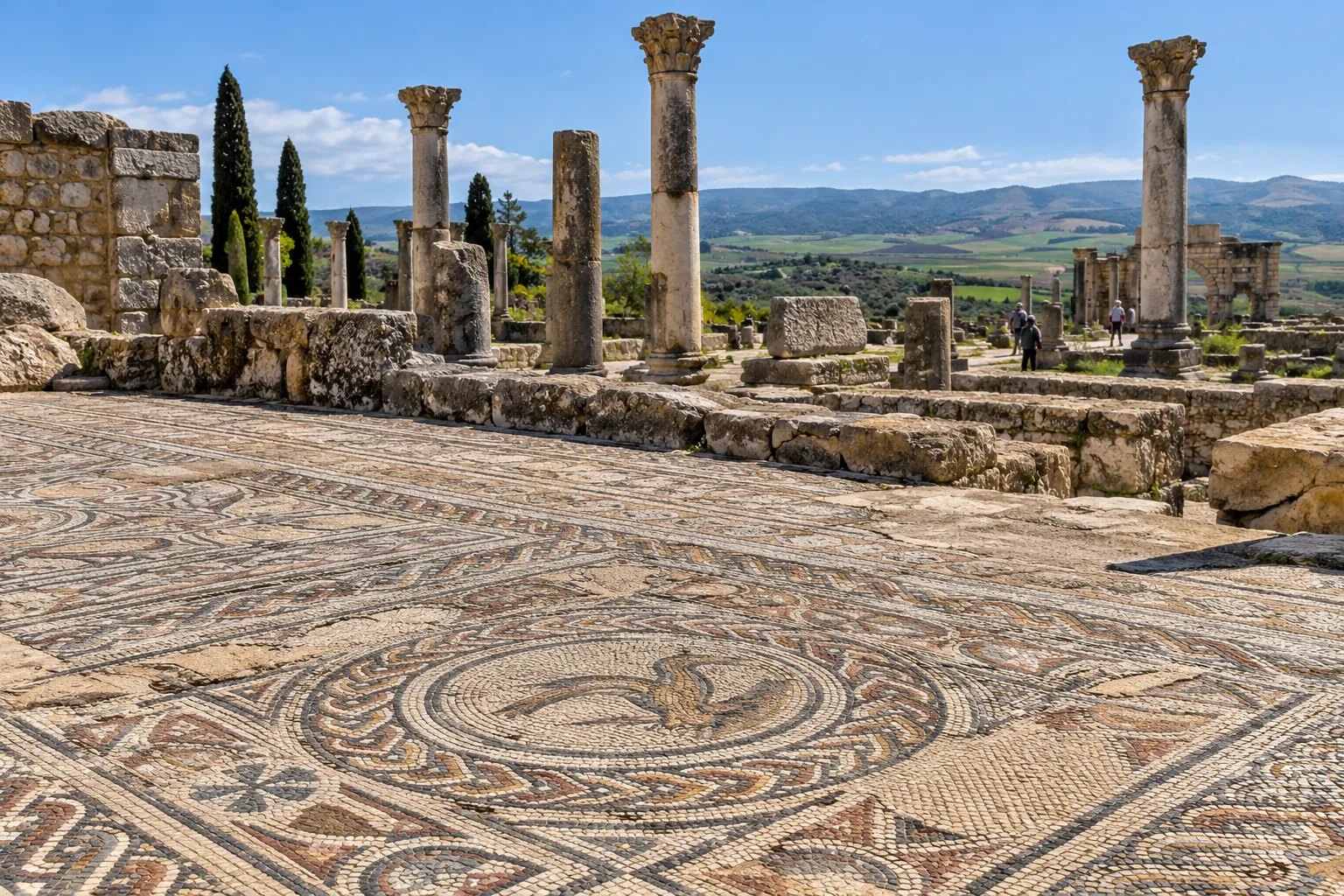
Volubilis suits travellers interested in the remains of an ancient urban settlement, including streets, public structures, and mosaics where accessible.
It is an outdoor archaeological site. Sun exposure, uneven ground, and the time needed to understand what remains should shape the visit.
A guide can help explain the layout and the relationship between visible features. Stay on permitted routes and respect barriers around fragile areas.
Meknes offers a contrasting urban visit, while nearby Moulay Idriss can add another stop if the schedule supports it. Trying to give equal time to every location can make a day feel rushed.
Visit Morocco Together’s Fes outing combining Volubilis and Meknes with Moulay Idriss viewpoints is one route to compare. Confirm time at the archaeological site, included admissions, guiding, and which Meknes visits are available. Keep the transport time visible alongside the sightseeing.
Allow a full excursion day from Fes for this combination. If archaeology is the priority, ask for more time at Volubilis rather than adding extra stops.
Chefchaouen for Streets and the Mountain Setting
Chefchaouen’s attraction is spread across its medina, painted buildings, stairs, squares, and views toward the Rif.
Choose a walking route that includes more than a sequence of photo doorways. Public spaces and ordinary streets give the town context.
The hillside approach to the Spanish Mosque viewpoint adds a different perspective, but involves an uphill walk. Assess the route, return light, and your walking ability before setting off.
Residential privacy matters. A blue doorway may be someone’s home, and a narrow lane still needs to function for residents.
An overnight stay gives you the option to explore at more than one time of day. A day trip can work when the return journey leaves sufficient time in town.
Aït Benhaddou for Earthen Architecture
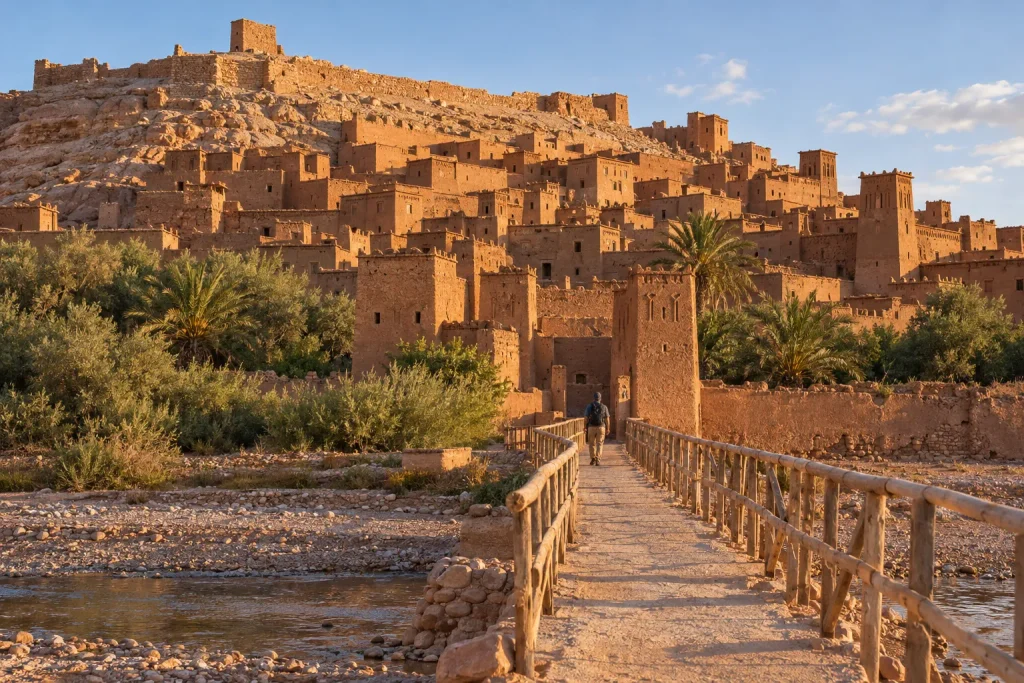
Aït Benhaddou is a ksar: a fortified settlement of grouped dwellings and shared spaces.
UNESCO describes its earthen buildings and defensive walls as an example of southern Moroccan architecture. That is a more useful starting point than treating the whole place as a film set or one castle.
Look at how buildings fit together, the materials, the lanes, and the relationship between the settlement and its surroundings. The climb to higher viewpoints is optional and should suit the conditions and your ability.
Use established visitor routes and check access locally. Fragile structures and private spaces should not be entered simply because a doorway appears open.
Visit Morocco Together’s two day Aït Benhaddou and kasbah-country journey from Ouarzazate includes one overnight within the route and returns to Ouarzazate. Confirm the accommodation and detailed stops. Travel from Marrakech to the starting point is a separate arrangement.
From Marrakech, the mountain crossing makes this a substantial road outing. Consider an overnight south of the High Atlas when you want more time outside the vehicle.
Essaouira for Ramparts Port Life and a Coastal Medina
Essaouira offers several connected attractions rather than one compulsory stop.
The medina, rampart areas, working port, shops, and seafront can support a day with different kinds of observation. Choose the particular public areas and monuments you want to enter, checking admission where applicable.
The port is a workplace. Keep clear of loading and fishing activity and follow local restrictions. Ask before photographing people closely.
Wind can affect a beach walk or the comfort of an exposed viewpoint. The town still offers places to spend time when sitting on the sand is less appealing.
A day visit can introduce the town, while two nights provide one full day and time beyond the transfer. The differences between coastal towns help decide whether Essaouira or another base fits your trip.
The Sahara Dunes for a Landscape That Needs More Time
Erg Chebbi beside Merzouga and Erg Chigaga are different dune areas with different approaches.
The attraction is the landscape and the time spent there: changing light, dune shapes, an evening outdoors, or an overnight stay. A camel ride and a camp are ways to organise the experience, not requirements for every visitor.
A hotel near the dunes can also support local outings. If staying at camp, establish the location, facilities, and final transfer rather than judging only by a photograph of a tent.
The road journey from Marrakech or Fes is a substantial part of the itinerary. A multi-day tour does not provide that number of full days at the dunes.
Select the Sahara destination and accommodation format before allocating city nights around it. Do not add the dunes to a city break as if they were a nearby monument.
Atlas Valleys Todra Gorge and Dadès for Mountain Scenery
“The Atlas Mountains” covers far more than one viewpoint. Choose a particular valley, village, or route.
Imlil can suit a walking-focused visit. Ourika can combine valley scenery with an optional walk, while a stay around Ouirgane can provide another pace. A Toubkal ascent requires a separate trekking plan.
Todra Gorge near Tinghir offers a striking enclosed landscape, while the Dadès area provides valley and rock scenery along a wider road journey.
A roadside visit, a valley walk, and a climb above a gorge are different activities. Specify which you want before comparing excursions.
Allow a day for a nearby valley outing from your base, or stay locally when walking is the main purpose. The different Atlas travel areas help keep the chosen experience realistic.
Ouzoud and Akchour for Waterfalls and Walking

Waterfalls are worth choosing for the whole outing, including the approach and surrounding landscape.
At Ouzoud, consider the route down, steps, heat, and the climb back. A viewpoint visit and a longer walk should have different expectations.
Around Akchour, choose a particular trail and understand its distance, footing, and return arrangements. A waterfall route and a walk toward God’s Bridge should not automatically be assumed to fit one easy excursion.
Flow, access, and conditions vary. Avoid booking on the assumption that the water will match a photograph or that a natural pool is suitable for swimming.
Protect the day for the outing when a substantial transfer is involved. Allow a shorter alternative if weather or walking conditions make the full route unsuitable.
Other Attractions That May Fit Your Route More Closely
A familiar national shortlist should not exclude places that match your interests.
In the north, Tetouan’s medina, Tangier’s kasbah area, and Asilah’s walled streets offer different urban visits. Around Tangier, coastal viewpoints and the Hercules Caves area need their own access and transport plan.
On the central Atlantic coast, El Jadida’s fortified quarter can suit a heritage visit. Verify access to individual interiors, including the Portuguese Cistern, before making them the reason for a detour.
Safi can appeal for pottery-related visits. Tiznit offers a silverwork interest, while Tafraoute and Amtoudi can add landscape and granary heritage to a southern journey.
Select these places because the subject interests you and the route works. A less familiar attraction is not automatically empty, open, or suitable for an unplanned arrival.
How to Build an Attraction Shortlist That Fits Your Time
Choose one main focus for each full day, then add nearby interests if time allows.
A Marrakech day might combine a palace or madrasa with a connected medina walk. A separate day can hold Majorelle and the museum or neighbourhood time you choose.
A Fes day can centre on a medina route. Volubilis and Meknes deserve a separate excursion day rather than being attached to the same schedule.
A northern trip might combine a Tangier stay with Tetouan or Chefchaouen. A southern road journey can connect Aït Benhaddou, valley scenery, and a desert stay, with overnight allocations between them.
The wider process of building a Morocco itinerary turns the shortlist into a usable route. Remove an attraction if reaching it takes more from the holiday than the visit adds.
For a Short City Break
Choose the city’s main historic area, one architectural or garden visit, and time for food or an activity you enjoy.
You can have a complete short trip without the Sahara, a mountain crossing, and another distant city.
For a Week with Two Bases
Choose bases that offer a useful contrast and a manageable connection. Leave a full day in each rather than counting arrival and departure periods as complete sightseeing days.
Three nights in one place generally give two full days if you arrive on the first day and leave on the fourth.
For a Longer Journey
Add landscape experiences where they fit geographically. A coastal stay, desert visit, and mountain walk each need their own time; they should not become incidental stops on consecutive long driving days.
Tickets Access and Costs to Check
Before paying, distinguish an entrance ticket from a guided visit and from transport to the site. The same attraction can appear in several products with different inclusions.
Check the official operator or site information where available. A museum ticket may not include the garden next door, and a city tour may not include every admission mentioned in its description.
For privately arranged visits, clarify the meeting point, language, duration, walking demands, and finish location. Families and travellers with limited mobility should discuss the particular route.
Outdoor attractions need a conditions check rather than only an opening-hours check. Weather, paths, river levels, and road access can change what is appropriate.
Compare the complete cost of sightseeing within a Morocco trip, including transfers and optional visits. Public streets may be freely accessible while food, performances, transport, and particular interiors involve separate payments.
Questions About Morocco Attractions
What Should You See on a First Morocco Trip
Choose a historic urban area, one or two monuments or gardens, and a contrasting experience that fits the route. Marrakech or Fes can provide several interests in one stay; a landscape visit needs its own allocation.
Which Marrakech Attractions Can You Combine
Group visits by location and confirmed entry arrangements. A palace and nearby medina streets can fit one outing, while Majorelle needs a separate journey and an appropriate ticket slot.
Are the Fes Tanneries Worth Including
They can add context to a medina walk when you are interested in leather production and craft processes. Clarify viewpoint access, payment expectations, and photography before entering.
Is Aït Benhaddou a Palace
It is a ksar, or fortified settlement, containing grouped dwellings and shared spaces. Understanding that layout gives the visit more meaning than treating it as one royal building.
Can You See the Sahara on a Day Trip from Marrakech
A meaningful visit to the main Saharan dune areas requires more time. Agafay near Marrakech offers a different, stony landscape and should not be confused with Erg Chebbi or Erg Chigaga.
Do You Need a Guide at Every Attraction
No. A guide can be particularly useful for a complex medina, archaeological interpretation, or an unfamiliar outdoor route. Some sites have their own mandatory visitor format; establish the rules for the particular place.
Which Attractions Suit Travellers Who Cannot Walk Far
Assess the actual entrance, surfaces, steps, seating, and vehicle access. A short list of suitable visits with planned breaks can work better than a generic city tour labelled easy.
Do You Have to Visit Every Famous Attraction
No. Choose the places that offer the experiences you want and give them enough time. A focused visit to a few sites can be more satisfying than a longer list built around transfers and queues.
Ready to Experience Morocco?
Turn this inspiration into your next adventure. Our travel experts are ready to help.