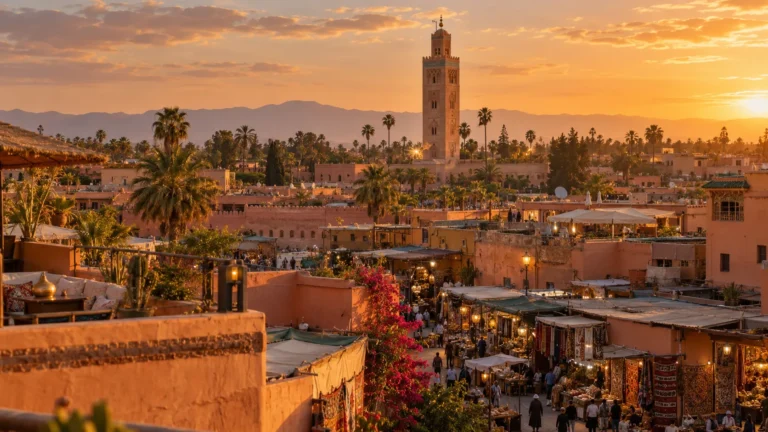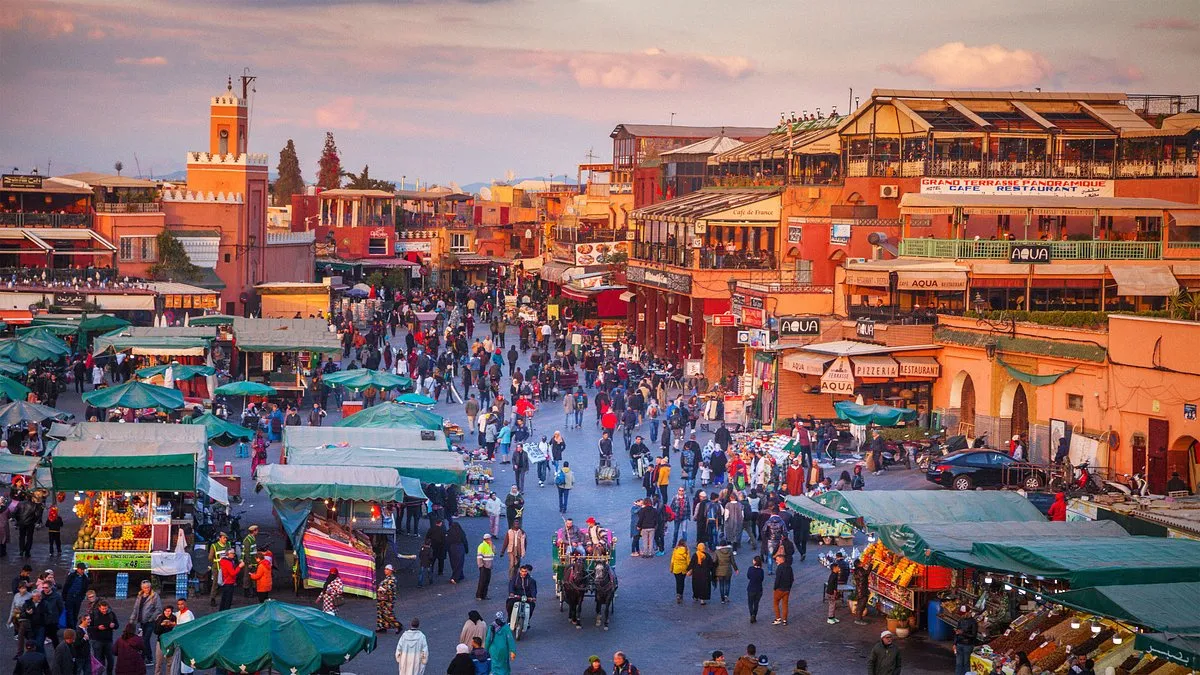

The Marrakech souks are one of the best places to understand how shopping, craftsmanship and daily life overlap inside the city’s old medina. North of Jemaa el-Fna, covered lanes and small squares lead through shops and workshops selling leather goods, rugs, lanterns, textiles, ceramics, spices, slippers and everyday household items. For a first visit, the hardest part is not finding something to buy — it is understanding where to go, how bargaining works and how to judge what you are being shown. This Marrakech shopping guide explains what to buy, where to look for spices and crafts, how to navigate the medina souks and how to shop without turning the experience into a stressful negotiation.
How the Marrakech Souks Are Organized
The Marrakech souks are not one enclosed market with a single entrance. They form a network of covered and open lanes within the historic medina, particularly north of Jemaa el-Fna and around areas such as Souk Semmarine, Rahba Kedima and the streets leading toward Ben Youssef.
Historically, trades were grouped into different areas. You can still notice concentrations of leather goods, metalwork, slippers, textiles, spices and other products, although the boundaries are much less rigid today. Shops serving visitors now sell a wider mix of products, and the names and spellings used for individual souks can vary between maps and guides.
Think of the named souks as orientation points rather than neatly separated shopping departments. One lane may be known for metalwork, while the next combines textiles, lamps, souvenirs and leather goods.
Souk Semmarine
Souk Semmarine is one of the main shopping arteries leading into the medina from the direction of Jemaa el-Fna. It is a useful place to start because the route is relatively easy to identify and has a broad mix of textiles, ceramics, lanterns, clothing, leather products and decorative goods.
It is also one of the more visitor-oriented parts of the market. Use it to understand the range of products available before deciding what you actually want to buy.
Rahba Kedima and the Surrounding Lanes
Rahba Kedima is a useful landmark deeper inside the medina. Around the square and nearby lanes you will encounter shops selling spices, dried plants, woven goods, baskets, carpets and other products.
This is a good area to slow down rather than simply pass through. The product mix changes quickly from one lane to another, and some of the more interesting small workshops sit just outside the most obvious shopping routes.
Souk Smata and the Slipper Shops
Traditional Moroccan slippers, commonly known as babouches, are sold throughout the medina, but some areas historically specialized in footwear. You will find everything from simple everyday slippers to highly decorated versions intended more as gifts or occasion wear.
Check the stitching, sole and finish rather than choosing on color alone. Try both shoes if possible, as handmade products may not feel completely identical.
Metalwork and Artisan Lanes
Other sections of the souks are associated with metalworkers and craftspeople producing lanterns, trays, mirrors, decorative pieces and household items. Listen for the sound of hammering and look beyond the retail displays: in some streets, workshops are located close to the shops selling the finished products.
Shopping in Marrakech: What to Buy in the Souks
One of the strongest reasons people search for a Marrakech shopping guide is simple: they want to know what is genuinely worth bringing home. There is no single essential souvenir. The better approach is to buy something you will actually use and to spend a little time comparing materials and workmanship.
| What to buy | Why travelers buy it | What to check |
|---|---|---|
| Spices | Easy to carry and useful for cooking | Freshness, aroma, labeling and whether the product is whole or ground |
| Leather goods | Bags, belts, wallets and slippers are widely available | Stitching, lining, zippers, smell and overall finish |
| Rugs and textiles | Large choice of patterns, sizes and weaving styles | Dimensions, material, construction, condition and shipping arrangements |
| Ceramics | Bowls, plates, serving dishes and decorative pieces are easy gifts | Cracks, chips, glaze and whether an item is intended for food use |
| Lanterns and metalwork | Distinctive Moroccan decorative style | Construction, sharp edges, weight and how you will transport it home |
| Argan products | Popular culinary and cosmetic product | Clear labeling, sealed packaging and whether it is culinary or cosmetic oil |
What to Know Before Buying a Moroccan Rug
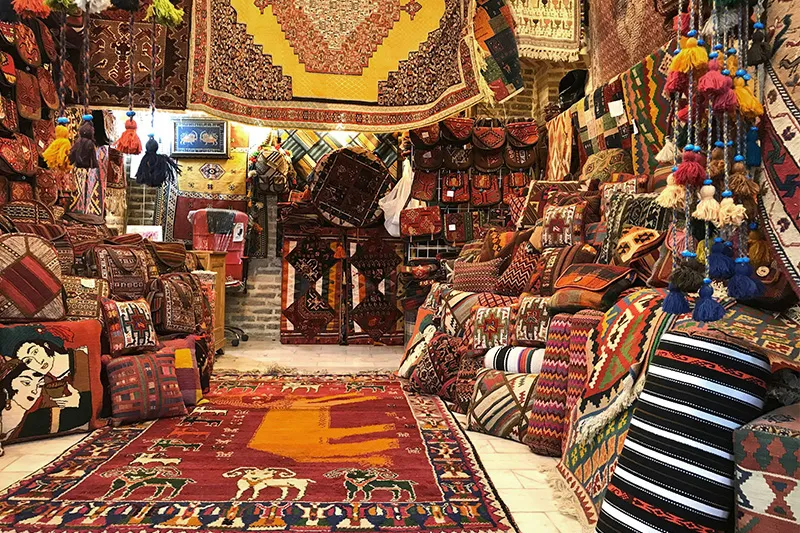
Carpet shopping can be enjoyable, but it is also where visitors are most likely to feel overwhelmed by choice and long negotiations. Do not feel that sitting down for tea commits you to making a purchase.
Before discussing price seriously, ask about the rug’s dimensions, material and construction. Take measurements of the room at home before your trip if you genuinely intend to buy something large. If a seller describes a rug using a regional or tribal name, treat that as information to investigate rather than automatic proof of origin or age.
For an expensive purchase, compare several shops first. Photograph the piece with permission and write down the dimensions so you can compare like with like.
Marrakech Spice Market: What You’ll Actually Find
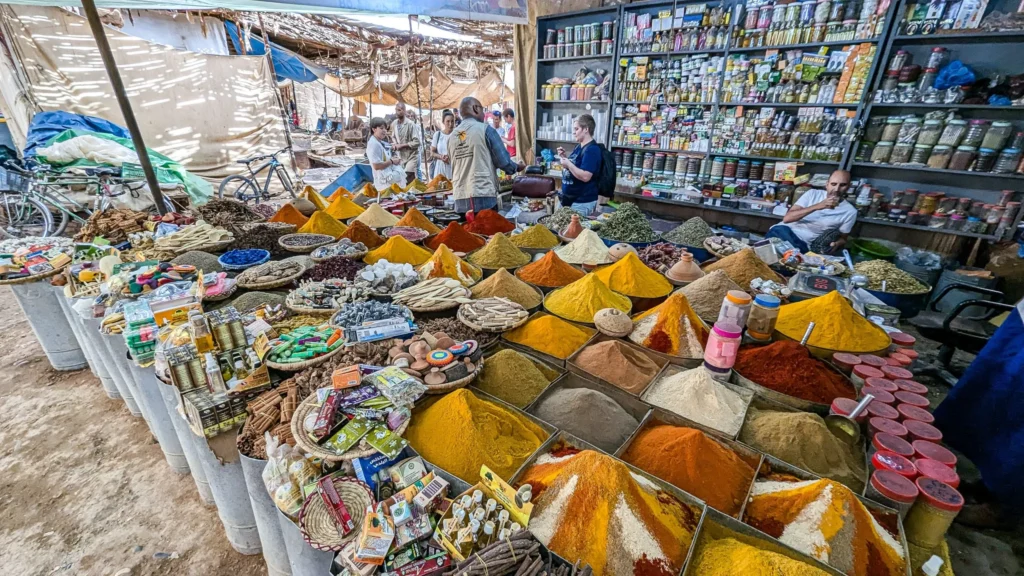
The Marrakech spice market is one of the most searched parts of the souks, but visitors should expect more than neat pyramids of brightly colored powders. Spice shops may sell cumin, cinnamon, paprika, ras el hanout blends, dried herbs, tea ingredients and other food products alongside perfumes, soaps, oils and traditional cosmetic products.
If you are specifically looking for a spice souk in Marrakech, explore the lanes around Rahba Kedima and nearby market areas rather than expecting one single building called “the spice market.” Shop names and souk boundaries overlap, and the modern market is more mixed than many simplified tourist maps suggest.
Buying Spices in Marrakech
Smell spices before buying where appropriate and ask what is actually included in a blend. Ras el hanout, for example, is not one standardized recipe, so mixtures can differ significantly between sellers.
Ground spices are convenient, but whole spices can be easier to inspect. If you are buying saffron, ask whether you are looking at whole threads or a ground product instead of assuming every bright red or yellow display is the same ingredient.
Buy quantities you can realistically use and check the customs rules for bringing food or plant products into your destination country before traveling home.
Marrakech Shopping Guide: How Bargaining Actually Works
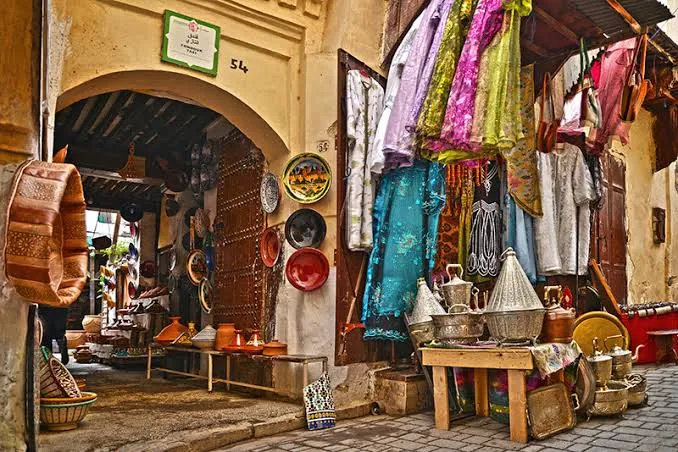
Bargaining is common in many traditional shops in the Marrakech souks, but there is no reliable rule that says every item should cost a fixed percentage of the first price. Different shops, products and sellers have different margins.
A better method is to compare similar items before negotiating. Once you know roughly what you want, ask the price and make an offer that reflects what you are genuinely willing to pay. The conversation may move back and forth several times.
- Ask the price before committing to the purchase.
- Compare similar products in more than one shop when the item is expensive.
- Negotiate only when you have genuine interest in buying.
- Keep the conversation friendly rather than treating it as a contest.
- Decide your maximum budget before negotiations become lengthy.
- If the price does not work for you, politely decline and move on.
Tea may be offered during a longer conversation, particularly when discussing carpets or higher-value goods. Accepting hospitality does not mean you are required to buy something.
Hidden Things to Do in Marrakech’s Traditional Souks
Shopping is only one reason to explore the traditional souks. Some of the most interesting moments happen when you stop looking at merchandise and pay attention to how the medina works.
Look for Working Artisan Workshops
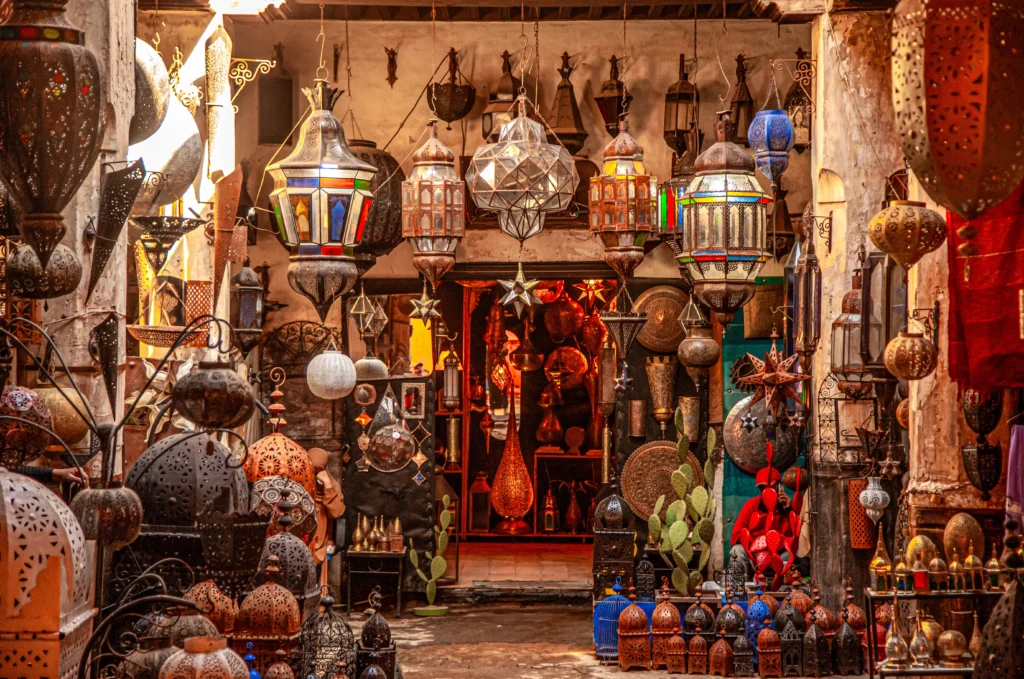
Behind some shopfronts you can see craftspeople working with leather, metal, textiles or wood. These spaces provide more context than simply looking at finished souvenirs. Do not assume a workshop is a performance for tourists, though; ask before entering private workspaces or taking close photographs.
Step Into a Fondouk Courtyard
Fondouks were historically connected with trade, storage and accommodation for merchants and goods. Some remain part of the working fabric of the medina and may contain small workshops or businesses today.
When an accessible fondouk is clearly open to visitors, stepping inside can reveal a much quieter architectural space only a few metres from a crowded shopping lane.
Notice the Transition Between Trades
Instead of trying to navigate directly from one famous shop to another, watch how the character of the streets changes. A lane filled with textiles may gradually give way to metalwork, leather or household goods. The sounds and smells can sometimes tell you that you have entered another working area before a map does.
Explore Without Buying Immediately
A useful first activity is simply to spend 30–60 minutes looking. Note the products and shops that interest you, then return later. This removes pressure and gives you a better sense of the range and quality available.
How to Navigate the Marrakech Souks Without Getting Stressed
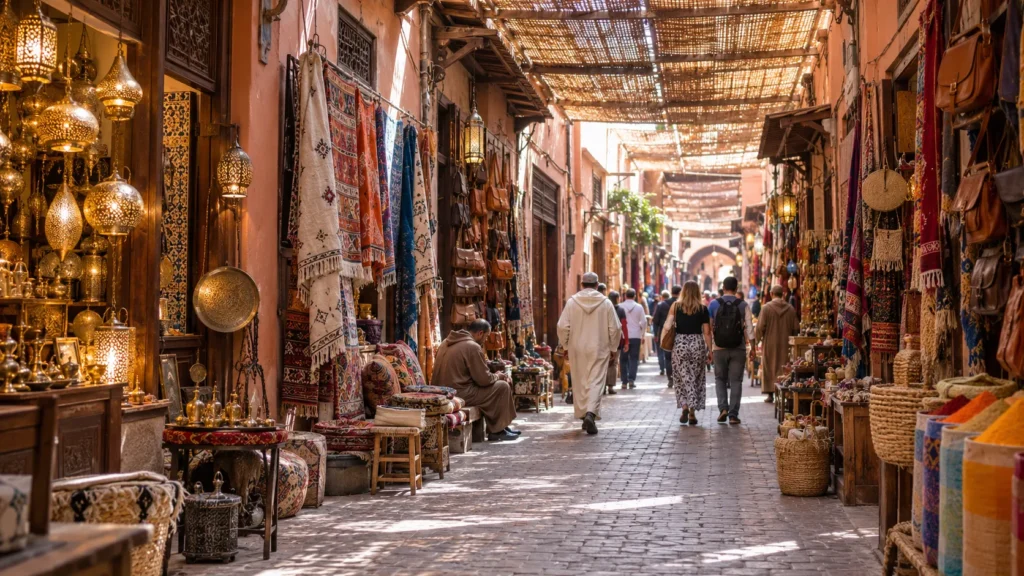
You do not need to get deliberately lost to enjoy the souks. The medina is complex, and wandering can be fun when you still have a few reliable reference points.
Jemaa el-Fna is the most useful southern landmark for many first-time visitors. Souk Semmarine provides one of the main routes north into the shopping area, while Rahba Kedima and the Ben Youssef area are useful landmarks farther inside the medina.
- Save the location of your riad or accommodation before leaving.
- Keep a screenshot of important meeting points in case mobile data is unreliable.
- Use larger squares and recognizable monuments as reference points.
- Allow extra time rather than planning a tightly timed route through small lanes.
- Ask your accommodation for the easiest landmark near your riad if its door is difficult to find.
If navigating, bargaining and identifying crafts are important parts of your visit, a Marrakech souks guided shopping tour can provide local context while covering spice shops, leather goods and artisan areas.
When Is the Best Time for Shopping in Marrakech?
Morning is useful if you prefer to explore before the busiest part of the day. The lanes generally feel easier to read and you can compare shops without combining the visit with the evening crowds around Jemaa el-Fna.
Later in the day, the medina becomes busier and the atmosphere builds as more visitors move between the souks and the main square. This can be enjoyable if atmosphere matters more than efficient shopping.
Do not rely too heavily on exact opening hours copied from old travel guides. Individual shops have their own schedules, and religious holidays, Fridays and seasonal routines can affect trading patterns.
Cash, Cards and Larger Purchases
Cash is useful for smaller purchases in the Marrakech markets, although some established shops also accept cards. For larger purchases, confirm the final amount and currency before paying.
If you intend to buy an expensive rug, large lantern or fragile ceramic piece, discuss transport before completing the transaction. Ask how the product will be packed and, if shipping is offered, make sure you understand the delivery arrangement and have written documentation.
Keep receipts for significant purchases where available, especially when an item is being shipped separately from you.
Shopping Safely in the Medina
The Marrakech souks are busy commercial areas used by residents, craftspeople, merchants and visitors. Normal awareness goes a long way.
- Keep your phone and wallet secure in crowded lanes.
- Close bags rather than carrying valuables in open exterior pockets.
- Confirm prices before accepting services.
- Check the final amount carefully when paying electronically.
- Be cautious with unsolicited offers from people claiming to be guides.
- If hiring a guide independently, use a properly licensed guide.
You do not need to be suspicious of ordinary conversations with shopkeepers. Being clear about whether you are browsing, comparing or genuinely ready to buy usually makes shopping more comfortable for everyone.
Are the Souks Only for Tourists?
No. Although the central Marrakech souks contain many businesses aimed at international visitors, the medina remains a living commercial area rather than a purpose-built tourist market. Alongside souvenir and craft shops you will find everyday goods, clothing, food, household products and services used locally.
The deeper you walk into the medina, the more mixed the commercial environment becomes. This is one reason it is worth visiting even if you have little interest in buying souvenirs.
Souks or Modern Shopping in Marrakech?
Travelers searching for shopping in Marrakech do not have to choose only the medina. The souks are best for traditional crafts, bargaining and the experience of shopping in the historic city. Areas such as Guéliz offer a more conventional shopping environment with boutiques, modern stores and more fixed-price retail.
If this is your first trip, the two experiences complement each other. Spend part of your shopping time in the medina, then explore the modern city if you want contemporary Moroccan design or a less negotiation-focused experience.
For more context on neighborhoods, attractions and activities around the city, see the Marrakech destination guide.
FAQ
What are the best things to buy in Marrakech?
Popular things to buy in Marrakech include leather goods, rugs, textiles, ceramics, lanterns, slippers and spices. The best purchase depends less on what appears on a souvenir checklist and more on quality, how easily you can transport the item and whether you will genuinely use it at home.
Where is the Marrakech spice market?
There is not one single enclosed building that functions as the Marrakech spice market. Spice sellers can be found around areas such as Rahba Kedima and through nearby medina souks. The mix of products and traditional souk boundaries overlaps, so it is better to explore an area than search for one exact doorway.
Do you need to bargain in the Marrakech souks?
Bargaining is common in many traditional shops, particularly where prices are not displayed. There is no fixed percentage you must negotiate. Compare products, decide what the item is worth to you and keep the negotiation polite.
Are prices fixed in Marrakech markets?
Some shops use fixed prices, while others expect negotiation. If a price is clearly displayed, do not automatically assume that bargaining is required. When no price is shown, ask before buying.
How much time do you need for the Marrakech souks?
Allow at least two to three hours for a first visit if you want to browse rather than simply walk through. Shoppers looking for rugs, leather goods or several specific items may want half a day because comparing quality and negotiating takes time.
Can I explore the souks without a guide?
Yes. Independent exploration is part of the appeal, especially if you are comfortable navigating busy pedestrian streets. A licensed guide can be useful if you want to understand artisan areas, have limited time or prefer help finding specific types of products.
What is Souk Semmarine known for?
Souk Semmarine is one of the main commercial routes through the Marrakech medina and has a wide variety of goods, including textiles, decorative items, ceramics, clothing and crafts. It is a practical starting point for first-time visitors because it connects with many smaller market lanes.
Explore the Marrakech Souks at Your Own Pace
The Marrakech souks are easier to enjoy when you stop thinking of them as a list of shops you need to complete. Start by exploring, compare several versions of anything you seriously want to buy, spend time around the spice and artisan areas, and leave room for workshops and courtyards that catch your attention along the way. Whether your priority is shopping in Marrakech, finding the right rug or simply seeing how the medina’s traditional commercial streets work, a slower approach usually produces the better experience.
Explore Marrakech, tours and locally organized Morocco experiences with Visit Morocco Together.
Ready to Experience Morocco?
Turn this inspiration into your next adventure. Our travel experts are ready to help.