Activities for families in Morocco work well when children have something to do, adults have room to enjoy the place and the day leaves space for meals and rest. A short market walk followed by cooking can be more engaging than several monuments in a row. A beach afternoon may be enough without adding a boat trip and a lesson.
Start with the children you are travelling with. A toddler who needs a nap, a child who likes making things and a teenager interested in surfing will want different days. Age helps with planning, but confidence, stamina, interests and sensory needs matter too.
The wider choice of things to do in Morocco gives families plenty of options. The aim is to choose a few that fit your route and daily rhythm, rather than turn a holiday into a checklist.
Which activities for families in Morocco should you choose?
Begin with one main activity for each full day, then keep the remaining time flexible. This is a planning approach, not a rule: some children enjoy a busy schedule, while others need a familiar afternoon routine.
For babies and toddlers, prioritise short outings near your accommodation, manageable access and somewhere to change, feed or rest. A promenade or garden may work better than a long excursion with limited stopping opportunities.
For children who enjoy practical tasks, investigate cooking, crafts and walks with a specific purpose. Looking for tile patterns or choosing ingredients gives them a role beyond following the adults.
Teenagers may prefer a lesson, photography, food exploration or a specialist activity they help choose. Give them some ownership of the plan.
These are suggestions for matching interests, not minimum ages for commercial activities. Providers must confirm participation requirements, equipment and supervision for the actual children in your group.
Turn a medina walk into a small shared project
A medina can hold a child’s attention when there is a clear focus. Instead of trying to see every street, choose a short route with two or three things to notice.
In Marrakech, you might look for repeating tile shapes, watch bread being sold and compare the sound of different working streets. In Fes, a guide could explain how an everyday object is made and show where the finished pieces are sold.
Ask for explanations at a level the children understand. A story about how a courtyard works may be easier to follow than a long sequence of dynasties.
Keep the activity respectful. Ask permission before photographing workers, avoid touching goods without an invitation and do not turn people into items on a scavenger hunt.
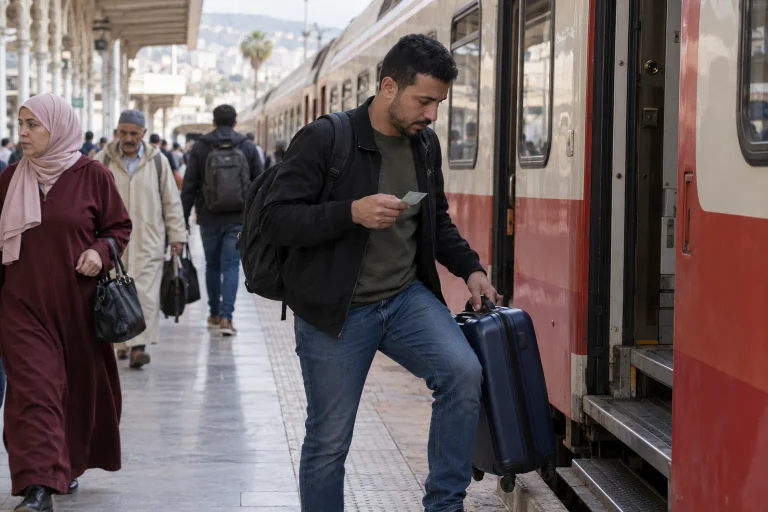
Plan where the walk finishes. A meal or a quiet break is more useful than ending far from your accommodation with tired children.
For younger children, assess the actual route before choosing a pushchair or carrier. Uneven paving, steps, crowds and vehicle movements affect both options. A short guided section can introduce the area without committing to a full-day city circuit.
Cook a meal with tasks children can actually join
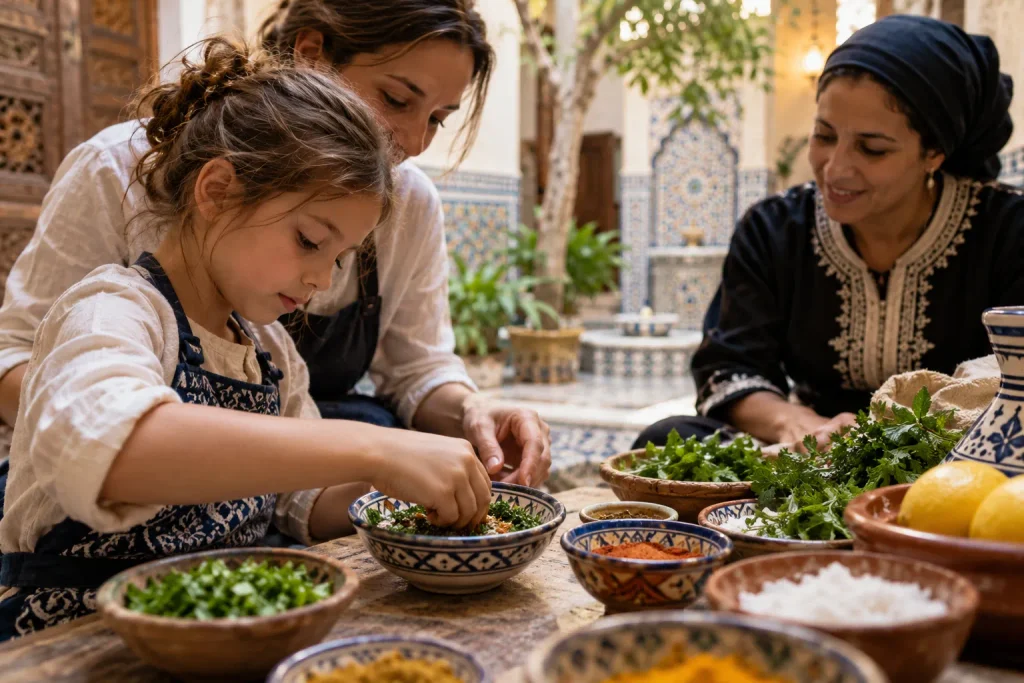
A cooking session can turn lunch into part of the experience. Children may enjoy measuring spices, mixing ingredients or shaping food when the tasks suit their age and ability.
Ask what each participant will do. A demonstration with a meal afterwards is different from a class where everyone cooks. Also check whether a child can sit out for a while without disrupting the session.
Visit Morocco Together’s Fes cooking class with a market visit combines choosing ingredients, preparing a tagine and eating the meal. Confirm suitable tasks for your children, the actual session length and dietary arrangements before booking.
A market section can add interest, but it may be the tiring part for a younger child. Ask whether the route can be shortened while preserving the main cooking activity.
Explain allergies and dietary needs before the menu is agreed. Ingredient lists, stock and shared equipment matter; do not rely on a vegetarian label alone.
Keep a familiar snack available if the cooking takes longer than the children expect. Learning how lunch is made is more enjoyable when everyone is comfortable enough to participate.
Watch an artisan or arrange a beginner craft session
Craft activities provide something concrete to discuss: how clay changes shape, how a pattern repeats or how separate pieces become a finished object.
Choose between observation and participation. A workshop visit can be engaging without allowing visitors to use tools. A practical class should explain the task, supervision and what children can take home.
In Safi, Visit Morocco Together’s city walk through pottery workshops and the medina offers a setting for seeing ceramic work. If making a piece is the priority, arrange that explicitly; visiting working potters does not automatically include a lesson.
For younger children, a short demonstration followed by time to draw what they saw may work better than a long class. Older children may enjoy asking the maker about the most difficult stage.
For pottery, check whether drying or firing continues after the session. A finished object may need collection or shipping rather than being ready to carry away.
Keep purchases optional. You can appreciate a craft without buying, and a modest souvenir budget can give older children a chance to make their own considered choice.
Visit a garden with a reason to look closely
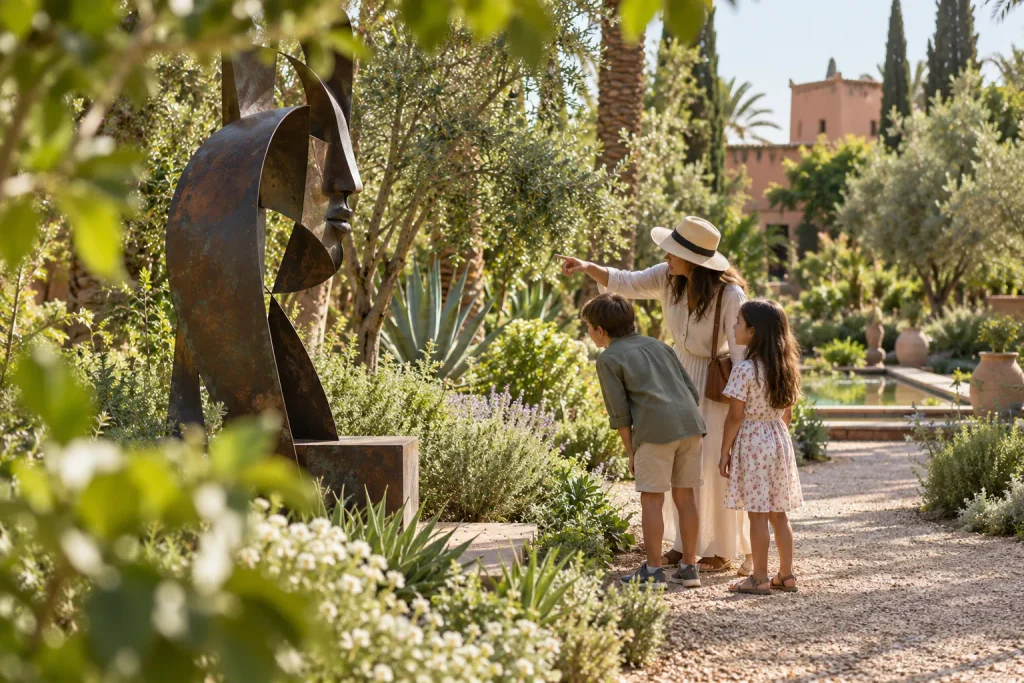
A garden can provide a change from busy streets, but it is not necessarily a playground. Choose it for walking, looking and pausing, with clear expectations about where children can move.
Near Marrakech, ANIMA’s art-and-nature garden combines planting with sculptures. You could ask each child to choose a favourite artwork or find something that changes when viewed from another angle. Stay on permitted paths and follow instructions about touching.
The transfer matters. Check how you will get there, how the return is arranged and whether the timing fits naps or meals.
Jardin Majorelle offers another kind of garden visit in Marrakech. Plan it as a managed visitor attraction, with the appropriate ticket and realistic expectations about queues and shared space.
A garden outing can be enough for a morning. Avoid automatically adding a museum, palace and long souk walk because they all appear on a list of attractions.
Let children spend time with something that interests them. Following that curiosity can be more rewarding than making sure every corner has been covered.
Give a museum or historic site one clear theme
Children do not need to absorb an entire collection to enjoy a visit. Choose a theme before entering: clothing, patterns, old photographs, building materials or the way people lived.
In Rabat, a collection visit can complement time in the city without requiring a full day indoors. In Marrakech or Fes, architectural details can provide a focus for a short heritage stop.
Ask the children a question that has room for an opinion. Which room would they choose to spend time in? Which object would they like explained? What material do they think was used?
At Aït Benhaddou, explore the idea of a fortified settlement, or ksar, rather than presenting the whole place as a single castle. Choose a manageable route and do not assume reaching the highest viewpoint is necessary.
Steps, uneven ground and exposed edges affect the visit. A child may enjoy the story but still find the climb tiring.
The choice of Morocco’s attractions becomes easier when you select a place for the family’s interests and access needs, rather than simply its fame.
Plan a wildlife visit around learning and walking time
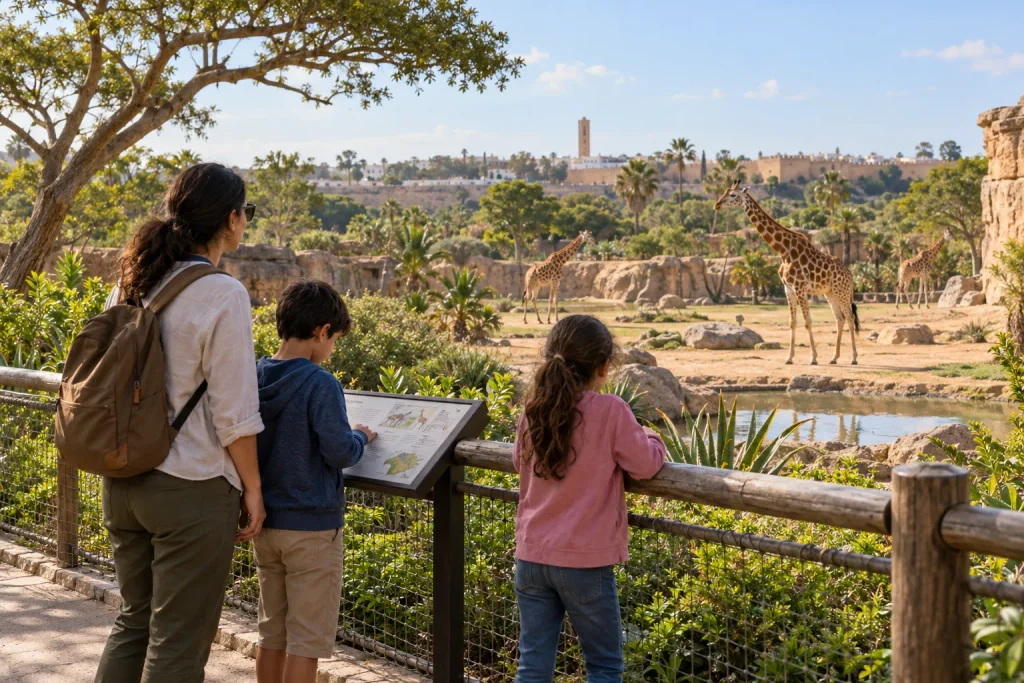
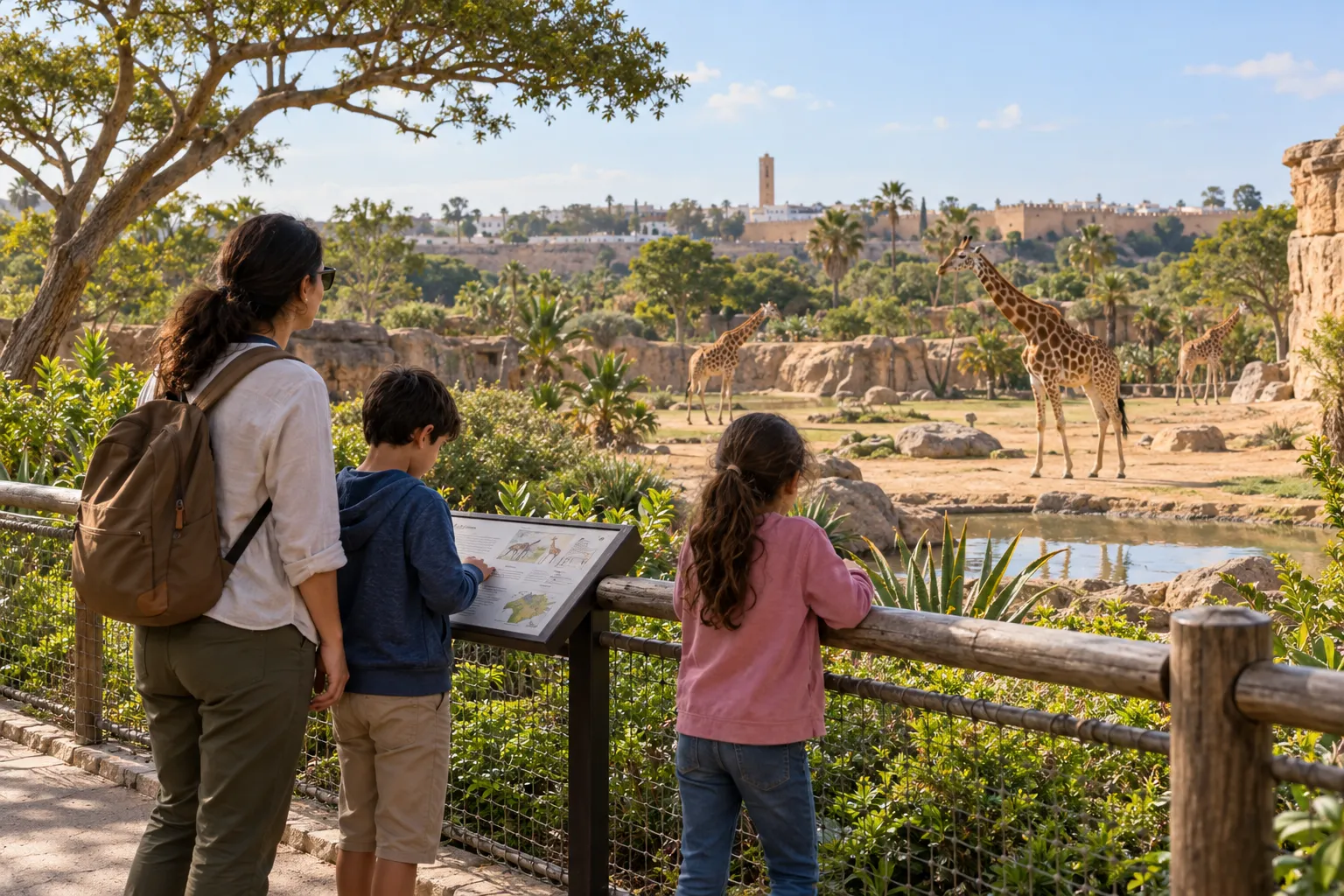
For families interested in animals, Rabat’s zoological garden provides a named option to investigate. Its visitor information includes animal areas, educational activities and a site map.
Choose a manageable part of the visit. Children may enjoy spending time watching a few species more than being hurried between every enclosure.
Check the current programme before promising a feeding presentation, workshop or other scheduled experience. Admission and a specialist activity may be separate arrangements.
Look at the map in relation to your group’s walking capacity, toilets and meal breaks. Allow time to sit rather than treating the route as a continuous circuit.
Elsewhere, wildlife watching can be informal: observing birds from an appropriate place or looking for animal tracks with a guide. Sightings cannot be guaranteed.
Avoid paying for staged photographs with captive wild animals. You can enjoy public squares and coastal areas without making handling or posing with an animal part of the family programme.
Build a beach day around play before adding water sports
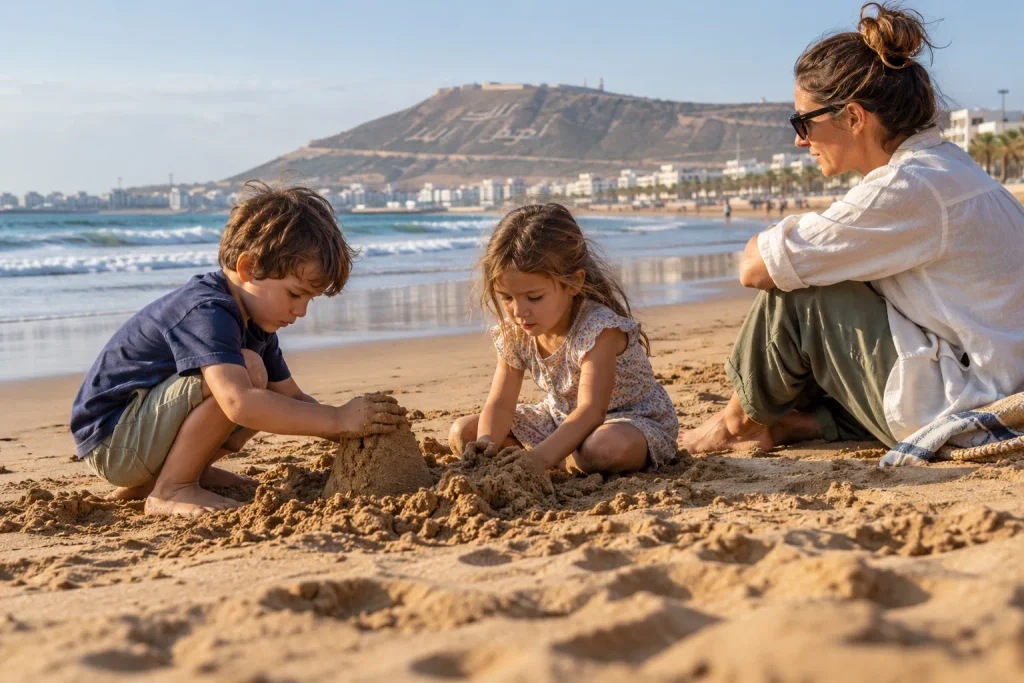
A beach day does not need a lesson or an excursion. Sand play, a walk, a picnic where permitted and time looking at the boats can provide plenty of interest.
Agadir can suit families wanting promenade access and places to pause. Essaouira offers a different mix of beach, medina and port views, although wind can change how comfortable it feels on the sand.
Oualidia, Martil and Saidia are other places to consider according to the route. Choose the specific beach and facilities rather than assuming every stretch of shore works the same way.
For swimming, follow current local instructions and choose an area with lifeguards on duty where possible. A lagoon or Mediterranean location is not a guarantee of calm or suitable water.
Keep active adult supervision separate from the presence of staff. Decide who is watching the children instead of assuming another adult has taken over.
The range of coastal activities in Morocco allows mixed groups to choose different levels of participation while sharing the same base.
Consider a surf lesson for children who want to learn
A surf lesson can appeal to a confident child or teenager who enjoys physical activity. Interest matters: a child who would rather stay on shore should not feel obliged to join.
Ask the school about minimum ages, swimming requirements, equipment sizes and instructor-to-student arrangements. Confirm how it assesses the day’s conditions and chooses the teaching area.
Around Taghazout and Tamraght, beginners need an appropriate teaching spot, not access to a famous advanced wave. Essaouira or other coastal bases may provide options depending on the route and conditions.
Establish how much time includes instruction in the water and whether parents need to remain nearby. A family booking does not necessarily mean all ages and levels can be taught together.
Leave room for a warm change of clothes, food and rest afterwards. Children may find a first lesson tiring even if it looks brief from the beach.
Choose the session for learning and enjoyment. Standing up, catching a wave or completing a particular skill should not be treated as a promised outcome.
Add a short mountain walk instead of a demanding trek
A mountain outing can introduce a different landscape without requiring a summit. Choose a specific route with a clear description of walking time, ascent and surface.
Around Imlil or another mountain base, ask for a walk that suits the youngest or least confident participant. A viewpoint near the vehicle may offer a better day than a long trail everyone feels pressure to finish.
A village lunch can provide a natural break if it is arranged in advance. Confirm the host’s agreement, seating, toilets and menu rather than expecting every household to receive visitors.
In the Rif near Chefchaouen, choose the exact Akchour objective. A waterfall route and God’s Bridge involve different decisions, and combining them should not be assumed to create an easy family circuit.
Avoid using a child’s energy at the beginning as the only measure. The return journey still needs to be completed.
The differences among mountain activities in Morocco help separate a gentle outing from a technical activity or a high-altitude plan.
Choose a coastal viewpoint day from Tangier
A shorter sightseeing day can work well when the family wants a change from a medina walk. Around Tangier, a headland or lighthouse setting gives children something identifiable to look for.
Visit Morocco Together’s Cap Spartel family outing provides an option built around viewpoints and stops. Confirm the vehicle time, walking involved and admission arrangements; seeing a lighthouse does not automatically include climbing it.
If adding Hercules Caves, ask about current access and whether the enclosed setting suits your children. A cave visit may interest one child and feel uncomfortable to another.
Keep the number of stops realistic. A shorter outing followed by lunch and a rest can be more enjoyable than combining every nearby attraction.
Agree the return meeting point and ask about toilet stops before leaving the city. For younger children, the logistics may determine the success of the day more than the length of time spent at each viewpoint.
Decide whether the desert journey suits this holiday
A desert stay can appeal to families who have enough time and children comfortable with the travel involved. It is not a requirement for a successful Morocco trip.
Distinguish reaching the dunes from the activities once you are there. A local camel ride or camp stay in Merzouga does not include the substantial journey from Marrakech or Fes unless the package explicitly says so.
Ask about vehicle access, suitable child restraints, breaks, tent arrangements, bathrooms and temperature control where available. A furnished tent photograph does not answer those questions.
Camel riding is optional only when an alternative has been arranged. Confirm the operator’s participation requirements and do not assume that a child can safely share a saddle with an adult.
A short guided walk or time near accommodation may be enough. Motorised activities have separate age, equipment and supervision requirements and should not be selected simply because teenagers enjoyed them in another family’s account.
The choice of desert activities in Morocco should follow the family’s comfort and route. Agafay offers a rocky setting near Marrakech, while a Sahara journey needs a different time commitment.
Use a pool or water-park day as a proper change of pace
A day focused on play can balance more structured sightseeing. In Marrakech, Oasiria is one water-park option to investigate alongside pools at accommodation.
Check current opening arrangements, attraction restrictions and what admission includes. Ask about swimming ability, age or height rules, changing facilities, shade and food.
A pool described as heated may still need clarification about which pool, the operating period and the conditions you can expect. Do not promise comfortable swimming based on the word alone.
Keep supervision explicit. Lifeguards and activity staff have defined roles, and their presence does not mean a child is receiving individual supervision.
For a kids’ club, establish whether it is supervised care, parent-accompanied play or a scheduled activity. Confirm staff arrangements, permitted ages and how children are collected.
Allow the day to remain a play day. Adding a demanding evening outing can remove the benefit of giving everyone a break.
Give teenagers a choice and younger children a predictable rhythm
Ask each child to choose something within a realistic set of options. A teenager might select a food activity or photography walk; a younger child might choose between a garden and a craft visit.
Discuss the practical details together. Explain how much walking or driving a choice involves and whether participation can be stopped or shortened.
For children who find crowds or noise difficult, identify a quieter alternative and an exit route. Tell the guide about sensory or communication needs before the outing, using specific requests where possible.
Families with different interests can sometimes split for part of a day, with appropriate adult supervision and separate guiding if needed. One person can attend a lesson while others enjoy an easier activity.
Keep a familiar element in the day, such as a usual snack, bedtime routine or quiet period. That can make unfamiliar places easier to enjoy.
A child declining one activity does not mean the day has failed. Adjusting early can preserve energy for something the whole family wants to share.
Try these three examples of an unhurried family day
Marrakech with younger children
Start with a manageable garden or short heritage visit, followed by lunch. Return to the accommodation for a nap or quiet time.
Keep the later outing optional: a nearby walk or early dinner may be enough. If everyone wants to see Jemaa el-Fna, make it a brief visit with a clear return plan rather than a commitment to remain in the busiest crowds.
Fes with children who enjoy making things
Choose a cooking class or a craft-focused walk as the main activity. If the class includes a market visit and a meal, avoid adding a full medina tour immediately afterwards.
Let the children draw, photograph permitted subjects or write down a favourite ingredient during the quieter part of the day. An early dinner can keep the evening simple.
A coastal day with mixed ages
Let a willing older child take an appropriately supervised lesson while another adult stays with younger children on land. Meet for a meal and leave the afternoon flexible.
If the conditions do not suit the lesson, switch to a town walk or another activity agreed with the provider. The shared day should not depend entirely on one weather-sensitive booking.
These are examples of pacing, not fixed packages. Adapt them to your accommodation, meal times and children’s needs.
Confirm transport and facilities before paying
The activity description often receives more attention than the journey, but transport can shape the whole day.
Give the provider each child’s age and relevant size details when discussing restraints. Obtain written confirmation of the specific seat and vehicle arrangement, including installation and luggage space. Do not treat “child seats available” as a complete answer.
For guided walks, establish the meeting point, toilet opportunities, shade and how the route can be shortened. Tell the guide if a child needs frequent breaks.
For classes, ask about minimum ages, adult participation and whether all children pay the same rate. For equipment activities, confirm sizes and participation rules.
Check whether food, admission, materials and transfers are included. A private outing may allow a more flexible pace, but it does not remove an activity’s limits.
The practical choices involved in getting around Morocco become more useful when matched to the family’s actual day, rather than an idealised route with no stops.
Keep the budget flexible and the programme selective
Paying for more activities does not necessarily create a better family holiday. Leave room for free time, a familiar meal or a return to somewhere the children enjoyed.
Compare the total for the whole group. Adult and child rates, private-session minimums, transport, admission and meals can change the cost substantially.
Do not buy a package solely because it contains many activities. Check whether everyone wants to participate and whether there is enough usable time between them.
Keep a small amount of the budget for changes. A shorter route, extra transfer or indoor alternative may be more useful than another advance booking.
When building a Morocco itinerary, reduce unnecessary changes of accommodation. Returning to a familiar base can make meals, sleep and the following day’s plans easier.
A useful family programme leaves people interested in tomorrow, rather than relieved that today’s list is finished.
Questions about activities for families in Morocco
Which activities work for toddlers?
Consider short garden visits, manageable promenade walks and brief outings close to your accommodation. Plan around sleep, meals, toilet or changing access and the child’s tolerance for heat and crowds. Provider age requirements still apply to organised activities.
Is Marrakech suitable for a family stay?
It can support a varied stay with gardens, food activities, heritage visits and time at the accommodation. Choose a manageable daily plan and consider the route between the vehicle drop-off and your room. A convenient base can matter more than the number of attractions nearby.
Should you book a private guide?
A private guide can help tailor explanations, breaks and the length of a walk. Explain the children’s interests and needs before booking. Independent outings can also work, especially when the route is simple and you are comfortable adjusting the plan yourself.
Can children join cooking classes?
Some classes can accommodate children, but suitable tasks, minimum ages, adult supervision and dietary arrangements must be confirmed. Ask whether the session involves cooking or primarily watching, and how long children are expected to remain engaged.
Do families need to include the Sahara?
No. A city-and-coast stay or a city break with a suitable mountain outing can provide plenty of variety. Include the Sahara when the family wants the experience and the itinerary allows enough time for the journey.
How many activities should you plan each day?
One main activity with flexible time around it is a useful starting point. Adjust according to age, energy, travel and interests. A transfer day, long lesson or demanding walk may already be enough without another organised outing.
Ready to Experience Morocco?
Turn this inspiration into your next adventure. Our travel experts are ready to help.