
What to wear in Morocco depends on the weather, the place you are visiting and what you will be doing that day. For ordinary sightseeing, a useful starting outfit is a breathable top with sleeves, comfortable trousers or a longer skirt, and shoes you can walk in. Add layers for the coast, higher elevations and cooler evenings.
You do not need a different costume for each region. A small selection of adaptable clothes can work across a city stay, a mountain excursion and a desert journey. The changes are practical: fabric weight, warmth, grip, sun protection and how much coverage suits the setting.
This guide focuses on choosing outfits for women and men. For toiletries, documents, chargers and luggage organisation, use the separate what to pack for Morocco checklist. The wider Morocco trip planning guide helps connect your clothing choices to your route.
What to wear in Morocco for everyday sightseeing
Choose clothes that let you walk, sit, climb steps and move comfortably. Loose trousers, shirts, T-shirts with sleeves, and midi or maxi skirts can all work, depending on the weather and your preferences.
Having shoulders, chest and knees covered is a considerate starting point for medinas, village visits and other everyday public settings. Think of this as a practical clothing choice rather than a uniform that everyone in Morocco wears.
You will see different styles within the same city. A hotel pool, a residential street, a religious site and an evening restaurant may each call for a different outfit. Change for the setting rather than treating the whole country as one dress-code zone.
For women
A loose shirt with lightweight trousers is an adaptable combination. A sleeved dress or a skirt with a comfortable top can work equally well for city sightseeing.
Check how clothing behaves when you sit down, bend over or walk up steps. A skirt that is comfortable on level streets may be awkward on a rocky path; a dress with a high slit may provide less coverage than you expected when seated.
An overshirt or cardigan is useful when moving between settings. Choose one you can wear comfortably rather than relying on a scarf that needs constant adjustment.
For men
A T-shirt, polo shirt or lightweight button-down shirt with comfortable trousers covers many sightseeing situations. Shorts can work in casual tourist settings, but long trousers are more versatile when the day includes a religious visit, a family home or a dressier meal.
Keep a shirt on when leaving the beach or pool. For walking, choose footwear around the route rather than assuming sandals are suitable for every surface.
These choices also make it easier to move between a casual morning, a cultural visit and an evening meal without returning to your accommodation.
Clothing does not guarantee freedom from unwanted attention
Wear what helps you feel comfortable and suits the visit. No outfit can guarantee that you will avoid harassment, and inappropriate behaviour is not the traveller’s fault.
Advice about coverage should help you make informed choices, not make you responsible for someone else’s behaviour. If a situation becomes uncomfortable, seek support from your guide, accommodation or an appropriate local authority.
What to wear in Morocco by season
For planning, spring generally means March to May, summer June to August, autumn September to November and winter December to February. Conditions within those months vary by region, altitude and year.
The Moroccan National Tourist Office’s climate overview explains the country’s coastal, mountain and desert influences. Use it for orientation, then check the forecast for the actual stops on your route.
A monthly average cannot tell you what to wear for a particular windy afternoon, rainy day or mountain overnight.
Spring: adjustable layers for changing days
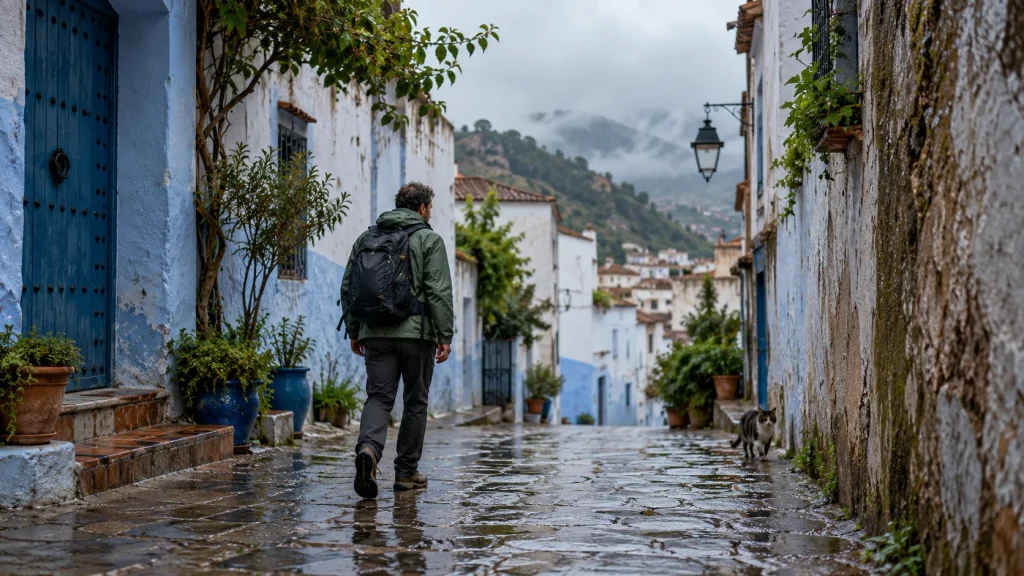
Start with a lightweight top and trousers or a longer skirt. Keep an overshirt, cardigan or fleece available for a cooler morning or evening.
For northern towns and outdoor walks, add a rain layer when conditions call for it. If your route continues from Marrakech into the Atlas or toward a desert camp, check the overnight forecast separately.
A practical spring outfit might be a breathable shirt, relaxed trousers, walking shoes and a light jacket carried in your day bag. The same combination can be adjusted by removing the jacket or adding a warmer mid-layer.
Summer: breathable coverage and clothes that move
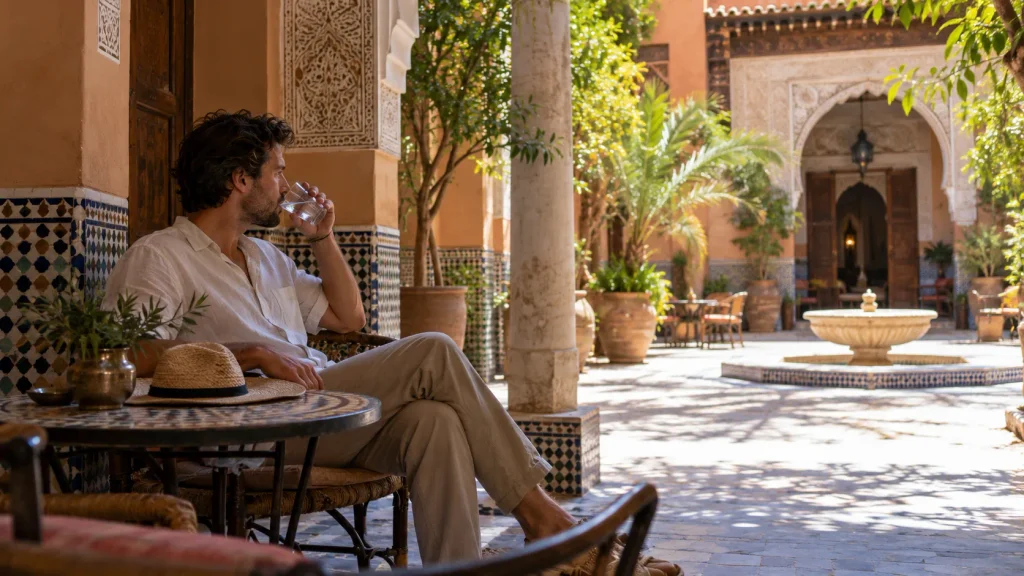
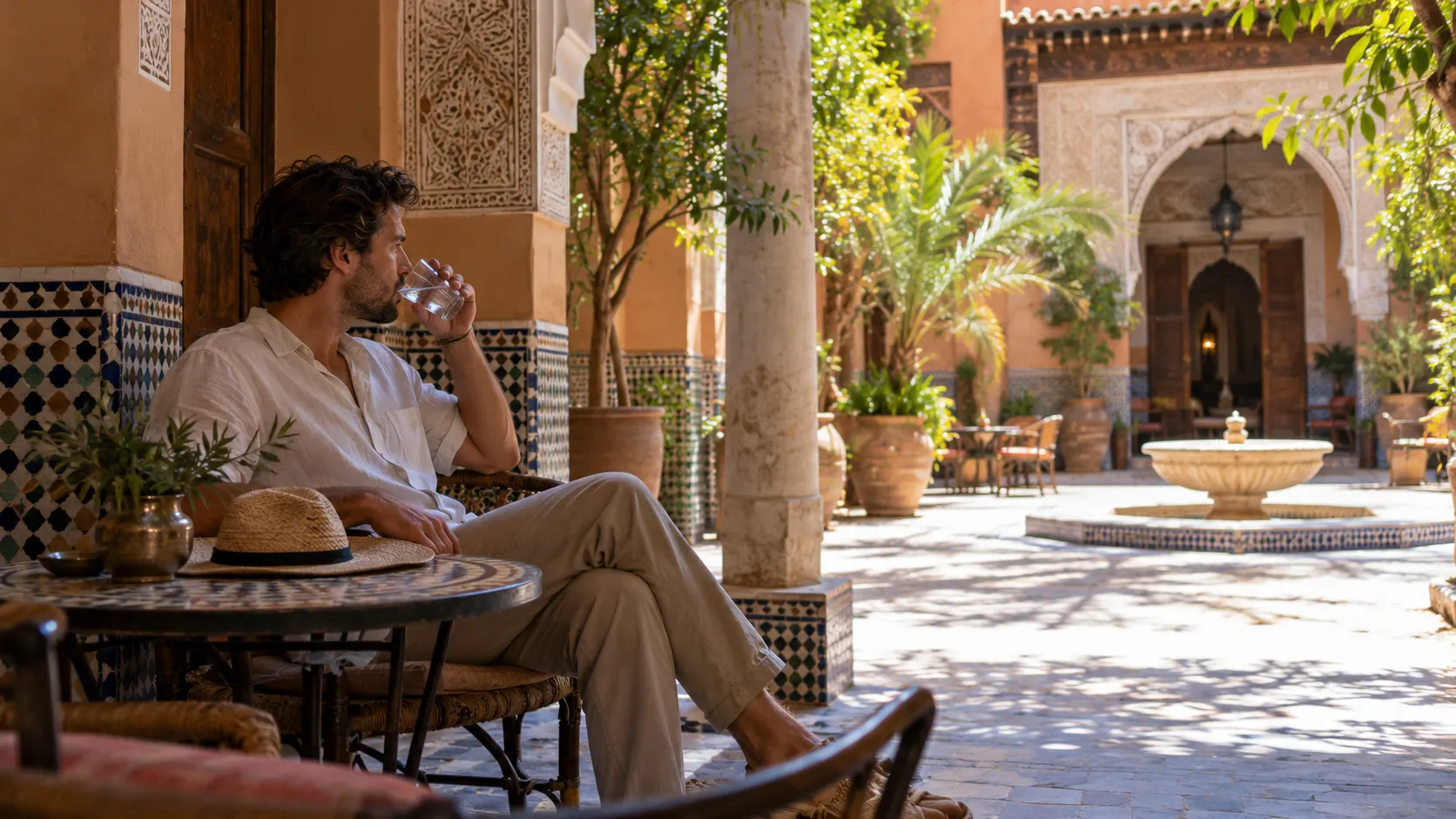
In inland places such as Marrakech and Fes, choose lightweight clothing that allows air to circulate. Linen, light cotton and suitable breathable blends are options; fit and comfort matter more than buying a particular fabric.
Loose long sleeves and trousers can provide coverage without the weight of heavy denim. Check that thin fabric is sufficiently opaque in strong daylight.
For outdoor days, use a sun hat that stays in place and clothing suited to the activity. A coastal stay or mountain excursion may still justify a layer even when your city forecast is hot.
Avoid assuming that the smallest possible outfit will be the most comfortable. Also avoid putting on several heavy layers solely for coverage: a single loose, opaque garment can be more practical.
Autumn: keep a warmer layer within reach
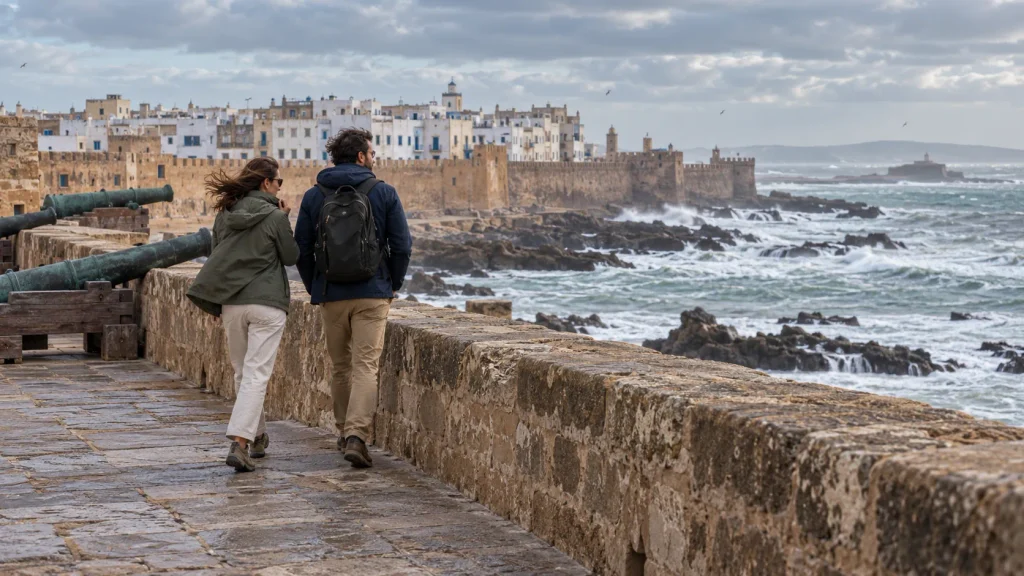
Early autumn may still feel summery in some places, while later dates can require more warmth and rain protection. Build the outfit around your travel week and region.
A shirt with trousers can remain the base, with a cardigan or fleece added for evening meals, road stops or cooler accommodation. Closed shoes become useful when streets are wet or the day involves longer walks.
For a route mixing coast, cities and desert, keep the warmer layer accessible during transfers. You should not have to unpack your main bag at a roadside stop to find it.
Winter: dress for the morning, evening and room as well as midday

Use layers you can adjust: a base top, a warm middle layer and an outer jacket appropriate to the forecast. Trousers, socks and comfortable closed shoes are a practical city combination.
Some winter days may allow lighter clothing at midday, but that does not remove the need for warmth after sunset. Ask about heating when a riad, guesthouse or camp stay affects your overnight needs.
Snow or winter mountain activities require a separate assessment. Obtain a route-specific equipment list from the guide; an outfit for sightseeing in Marrakech is not a winter trekking kit.
For choosing travel dates rather than clothes, the time to visit Morocco guide covers the wider seasonal trade-offs.
What to wear in Morocco by region
Use the examples below as outfit suggestions. Neighbourhood, venue, activity and forecast are more useful than assigning one dress rule to an entire city or population.
Marrakech, Fes and Meknes: clothes for long city walks
For medina days, choose an outfit you can walk in for several hours: a breathable sleeved top, comfortable trousers or a longer skirt, and supportive shoes.
In warmer conditions, a loose shirt can replace a heavier layer. In cooler weather, add a fleece, cardigan or jacket. Check skirt and dress hems so they do not drag on steps or uneven surfaces.
For women, a sleeved midi dress with walking shoes is one option. For men, relaxed trousers and a shirt or T-shirt are straightforward. Neither needs to be a special travel outfit.
Leave an outfit change for dinner only if it makes the evening more enjoyable. Comfortable sightseeing clothes may already suit a casual restaurant.
Casablanca and Rabat: city clothes with a coastal layer
Choose everyday city clothing that works for the day’s visits. Trousers with a shirt, a longer skirt with a top, or a comfortable dress can move between museums, cafés and streets.
Keep a light jacket or overshirt available for waterfront walks when conditions are breezy. If a religious visit is included, dress for that visit from the start or carry a suitable layer.
For the Casablanca City Discovery tour, plan clothing around both city walking and the Hassan II Mosque visit. Confirm the day’s access arrangements with Visit Morocco Together, and use the mosque’s own visitor rules when deciding what to wear.
Tangier, Tetouan, Asilah and Chefchaouen: grip, layers and weather protection
A comfortable top and trousers or a longer skirt can work across northern city visits. Choose shoes with grip for slopes and steps, particularly when surfaces are wet.
Tangier and Asilah itineraries may include exposed coastal stops; Chefchaouen involves different walking conditions from a level seafront promenade. Keep a wind or rain layer available according to the forecast.
A long skirt can work for city walking if the hem stays clear of the ground. Trousers may be easier for a day combining steps, viewpoints and travel between towns.
You do not need to dress in a particular colour for Chefchaouen photographs. Choose clothes you can enjoy walking in before considering how they look against the buildings.
Essaouira, Sidi Kaouki, Safi and El Jadida: dress for the breeze
A sunny coastal day can still call for an outer layer during a walk or an outdoor meal. Combine a breathable base with a light jacket or overshirt, and choose footwear for streets, sand or both.
Dresses and skirts are an option, but check that they remain comfortable in wind. Trousers can simplify a day moving between the port, medina and open coastline.
For a Sidi Kaouki day trip from Essaouira, wear layers suitable for walking along the coast. If you also want surfing, confirm it as a separate inclusion or arrangement; visiting a surf village does not itself mean a lesson or wetsuit is supplied.
Agadir, Taghazout and other coastal holiday bases: separate beachwear from town clothes
Choose swimwear for the pool, beach or booked water activity, then add clothing before visiting shops, cafés or residential streets.
A loose dress, an overshirt with trousers, or a T-shirt and suitable bottoms makes the transition simple. Carry a warmer layer for the journey home after a wet activity when needed.
For surfing, kayaking or other water activities, the instructor’s equipment and clothing requirements take priority over a general sightseeing suggestion. Check water conditions, footwear and any supplied wetsuit or buoyancy aid before the session.
The same principle applies to coastal stays farther along your route: check exposure and the day’s activity rather than assuming that every beach destination has identical conditions.
Ifrane, Azrou and Midelt: pay attention to elevation and timing
Clothes suitable for a warm city afternoon may be insufficient for a morning stop or overnight in the Middle Atlas.
Use trousers, closed shoes and layers that you can add without changing the whole outfit. In cooler conditions, a fleece and insulated jacket may be useful; select their weight from the forecast and your planned time outdoors.
If you are only stopping briefly on a road journey, keep the relevant layer beside you. For an overnight, include clothing for the evening and early departure as well.
Imlil, Ourika, Ouirgane and other Atlas valleys: distinguish a visit from a trek
For a village visit or easy walk, flexible trousers, a breathable top, suitable walking shoes and an accessible layer can be practical.
A waterfall path or rocky trail calls for attention to grip and movement. Avoid a long, trailing hem, footwear that slips easily or clothing that restricts your stride.
On the Ourika Valley and Setti Fatma waterfalls day trip, choose clothes for the walk you agree to undertake, including uneven paths and steps. Ask about current conditions and the walking section before deciding whether your ordinary city shoes are suitable.
For longer, higher or winter routes, obtain the guide’s specific clothing and equipment requirements. A valley lunch and a mountain ascent should not share an automatic dress recommendation.
Ouarzazate, Ait Ben Haddou, Skoura, Dades and Todra: clothes for road stops and walking
A southern road journey can involve hours seated in a vehicle followed by steps, uneven lanes and outdoor viewpoints.
Choose comfortable trousers, a breathable shirt and walking shoes. Add a layer for early starts or cooler stops according to the season, with enough flexibility to remove it later.
A dress or skirt can suit some visits, but check its length and freedom of movement. For a day with repeated vehicle entry and rocky walks, trousers may be simpler.
These areas are part of varied southern landscapes. Do not dress for the whole route solely from a picture of dunes at its far end.
Merzouga, Zagora, Mhamid and desert routes: change layers between activities
For daytime sightseeing, consider a lightweight shirt with sleeves, loose trousers, a secure sun hat and closed shoes. For camel riding, trousers that allow you to sit comfortably are more practical than a narrow skirt.
Avoid very loose accessories that could catch, and secure scarves or hat cords according to the guide’s instructions. A scarf can be useful for dust or sun, but it does not replace following advice when conditions change.
For an evening or camp night, check the overnight forecast and wear a warmer layer when needed. Desert nights are not equally cold throughout the year; choose clothing for your dates rather than assuming a thick jacket is always necessary.
Merzouga and Erg Chebbi, the Zagora area and routes toward Erg Chigaga are different journeys. Ask where you will actually stop and sleep before choosing your overnight outfit.
Taroudant, Tafraoute and the Anti-Atlas: movement and adaptable coverage
For town visits and village stops, a sleeved top with comfortable trousers or a longer skirt provides an adaptable starting point.
For walking among rocky landscapes, choose footwear with grip and clothes that allow a full stride. Keep a layer available for the time of day and elevation, especially on a route with early departures.
Use the same consideration in any smaller community: dress for the activity and the host setting, without assuming that everyone in the region dresses or thinks alike.
What to wear at religious sites and family visits
Site rules are different from general advice about sightseeing. Check whether visitors are admitted and what clothing is required before arriving. An appropriate outfit does not itself grant access to a place of worship.
Hassan II Mosque in Casablanca
The Hassan II Mosque Foundation’s published visitor rules require shoulders and chest to be covered and clothing long enough to cover the knees; shorts and short shirts are prohibited. Shoes must be removed before entering and carried with you.
A sleeved top with long trousers or a suitable longer skirt is a straightforward choice. Wear shoes you can remove and put back on easily.
Follow instructions from the mosque team on the day. Do not assume that a general travel blog’s advice about headscarves, footwear or clothing applies to every religious site.
Family homes, village visits and Ramadan
For a visit to someone’s home, choose an outfit that lets you sit comfortably and ask your host or guide about any expectations. A shirt or top with coverage and comfortable trousers or a longer skirt can be practical.
During Ramadan, be attentive to local expectations around religious areas and public settings. You do not need to buy a separate wardrobe; choose the more covered options you already have and ask when a particular visit is unclear.
For wider visiting customs, our Morocco culture and etiquette guide covers more than clothing.
Swimwear, restaurants and hammams
Pools and beaches
Swimwear is used at hotel pools and beach settings, including bikinis in many tourist facilities. Check the particular facility and choose what you feel comfortable wearing.
Bring a cover-up or ordinary clothes for moving away from the swimming area. Beachwear for a poolside afternoon need not become your outfit for the journey through town.
Restaurants and evening venues
For a casual meal, your clean sightseeing outfit may be sufficient. For a particular restaurant, club or event, check its dress policy when booking.
One adaptable outfit can cover several evenings: trousers and a shirt, or a comfortable dress with suitable shoes. Avoid choosing shoes that make the walk back to your accommodation difficult.
Hammams and spa treatments
Ask the facility what to wear, what it supplies and how the treatment is organised. Expectations differ between a public hammam and a private hotel spa, and between treatment formats.
Do not assume every facility supplies disposable underwear, towels or sandals, or that one swimwear recommendation applies everywhere. Confirm the arrangement if it affects your comfort.
Five outfit combinations you can adapt
These examples use ordinary clothing rather than a separate wardrobe for every city.
Warm city day: a loose sleeved shirt or T-shirt, lightweight trousers or a midi skirt, and walking shoes or supportive sandals suited to the route.
Windy coastal afternoon: a breathable top, trousers, comfortable shoes and a light outer layer. Choose a skirt or dress only if it remains comfortable in the breeze.
Cool city evening: a long-sleeved top, trousers or a dress with suitable layering, closed shoes and a jacket selected for the forecast.
Valley walk: flexible trousers, a breathable top, shoes with appropriate grip and an accessible warmer or rain layer. Confirm requirements for the actual trail.
Desert outing followed by dinner: comfortable trousers, a shirt with sleeves and closed shoes, with an extra layer ready for the evening if conditions require it.
Try the outfit before departure. Walk up steps, sit down and wear it with the shoes you intend to use. That tells you more than an outfit photograph alone.
Do you need traditional Moroccan clothing?
You can travel in your own everyday clothes. Buying or wearing a traditional garment is a personal choice, not a requirement for moving between regions.
If you want to buy a garment, ask the seller about its intended use, fabric, fit and care. Something designed for a celebration may not be the practical choice for a long walking day.
Avoid treating people’s everyday or ceremonial clothing as a costume for photographs. Ask permission before including people in pictures, and let the experience of the place matter more than reproducing a travel image.
Questions about what to wear in Morocco
Do women have to cover their hair?
A headscarf is not generally expected for ordinary tourist sightseeing. Individual sites may have their own requirements, so check the venue rather than applying one rule to every visit.
A scarf remains optional for warmth, sun or dust protection. You can also use an overshirt or other layer when you want extra coverage.
Can women wear trousers or jeans?
Yes. Choose a comfortable fit and weight for the day. Jeans can be practical in cooler conditions but may feel heavy during a hot inland walk. Lightweight trousers offer another option.
Can tourists wear shorts?
Shorts are seen in casual tourist and beach settings. Longer trousers or a skirt covering the knees are more adaptable for a day that includes medinas, village visits or places with clothing requirements.
For Hassan II Mosque, follow its published rule prohibiting shorts.
Are leggings suitable?
They can serve as an exercise garment or a layer under other clothing. For general sightseeing, combine them with a longer top if you prefer additional coverage, or choose looser trousers.
For a particular exercise venue or guided activity, check its clothing and equipment requirements.
Can I wear sandals?
Supportive sandals can suit some city and coastal outings. Choose closed shoes or other appropriate footwear when the terrain, weather or activity calls for it. Flip-flops are more useful around a pool than on a long uneven walk.
What should children wear?
Choose comfortable clothes for the weather and activity, with footwear they can walk in and layers they can add or remove. Check site rules with the venue rather than assuming that adult guidance applies identically to every age.
Do I need different clothes for Marrakech and Fes?
You can use the same core city outfits in both. Adjust layers for your dates, check the day’s visits and choose shoes for the amount of walking. There is no need to buy a separate outfit for each city.
What should I wear on a route combining city, coast and desert?
Begin with breathable tops, comfortable trousers or longer skirts, and walking shoes. Adapt that base with a coastal wind layer, activity-specific clothing and warmth selected for your desert overnight forecast.
Use the route to choose the layers. Keep the outfit comfortable enough that clothing does not become the main task of the day.
Ready to Experience Morocco?
Turn this inspiration into your next adventure. Our travel experts are ready to help.