Seafood in Morocco is at its most interesting when you treat it as part of the coastal journey rather than as a single national menu. Essaouira is an easy place to explore grilled fish and sardines, Oualidia is closely associated with oysters, Casablanca combines fish-market eating with a large-city restaurant scene, while Agadir, Safi and Tangier offer their own versions of everyday coastal cooking.
The simplest approach is to ask what fish or shellfish is available that day and then choose how you want it prepared. Grilling and frying are common, while chermoula-seasoned fish, fish tagines, stuffed sardines and seafood pastilla show how the catch becomes distinctly Moroccan.
You do not need to visit every coastal city to eat well. One or two seafood-focused stops that already fit your Morocco route will usually make more sense than adding long detours purely for a particular dish.
What Makes Moroccan Coastal Food Different?
Moroccan seafood cooking can be very simple. A fresh whole fish may need little more than salt, cumin or lemon before going onto a grill. At other meals, the seasoning becomes a much bigger part of the dish.
One of the most useful words to know is chermoula. Recipes vary between cooks, but this Moroccan marinade commonly combines fresh herbs with garlic, cumin, paprika, lemon and olive oil. It can be used with sardines, white fish and other seafood before grilling, frying, baking or cooking in a tagine.
This means two fish meals on the same trip can feel quite different. One might be a simply grilled catch beside the port, while the next could be a slow-cooked fish tagine with vegetables and a generous chermoula seasoning.
Moroccan Seafood Dishes Worth Trying
Grilled Sardines and Whole Fish
Grilled fish is one of the easiest ways to understand Morocco’s coastal cooking. Sardines are especially associated with Moroccan fish cuisine, but the available species change with the market, season and catch.
Rather than looking for one particular fish name, ask what is good that day. A simple preparation can be the better choice when the fish itself is the main reason for the meal.
Chermoula Fish
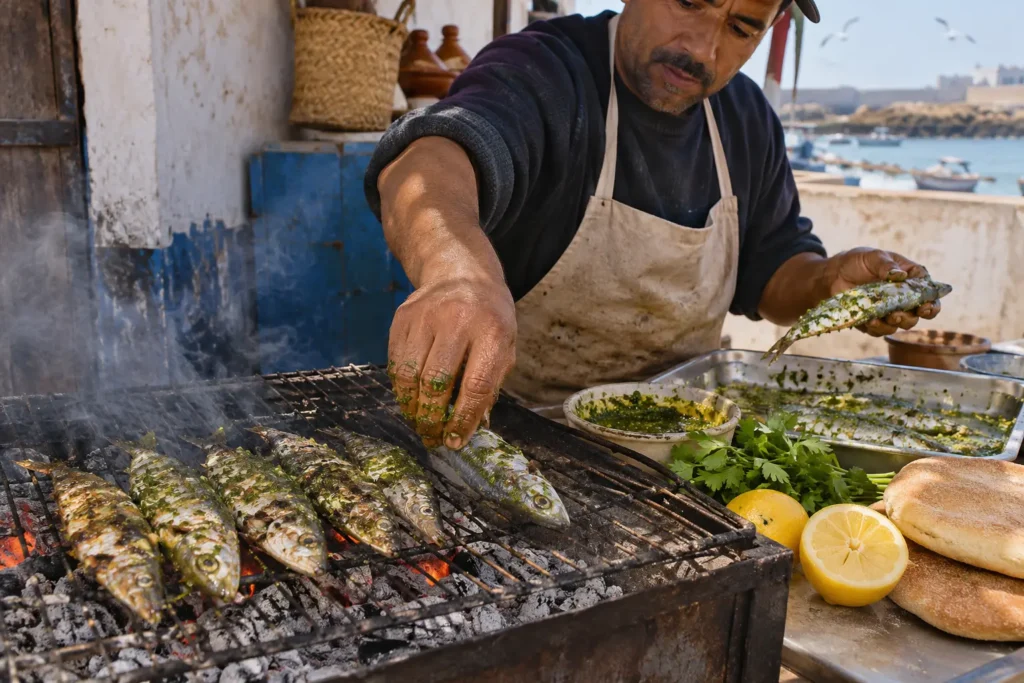
Chermoula can appear as a marinade, stuffing or seasoning in numerous fish preparations. It brings together citrus, herbs, garlic and warm spices without necessarily making the dish very hot.
If you enjoy Moroccan spices but do not want a meat tagine, chermoula-seasoned fish is a useful dish to look for on both traditional and contemporary menus.
Fish Tagine
A fish tagine usually combines fish with seasoning and vegetables cooked together in the familiar covered vessel. Tomato, peppers, potatoes, olives, preserved lemon and chermoula may appear, although recipes differ considerably between homes and restaurants.
For travelers comparing preparations, tagine gives you a more composed Moroccan dish than simply grilled fish. It is also worth asking what type of fish is being used rather than assuming every restaurant makes the dish the same way.
Stuffed Sardines
One particularly Moroccan preparation places chermoula between cleaned sardine fillets before the fish is fried or cooked using another method. The combination is richer and more seasoned than plain grilled sardines and works well if you want to try a familiar local fish in a different form.
Seafood Pastilla
Seafood pastilla is a savory variation of Morocco’s crisp pastry pie. Versions can contain combinations of fish, shrimp or prawns, calamari and vermicelli wrapped in thin pastry and baked until crisp.
It is a very different experience from a plate of fish at the port: more elaborate, richer and better suited to travelers interested in Moroccan pastry techniques as well as seafood.
Oysters
For oysters, Oualidia is the coastal stop that stands out. Its lagoon is associated with oyster cultivation, and eating oysters there places the ingredient directly within the landscape that produces it.
Sizes, availability and serving styles can vary, so it is better to ask what is available locally than to plan around a guaranteed variety or fixed seasonal promise.
Calamari, Shrimp and Other Shellfish
Moroccan coastal menus are not limited to fish. Depending on the destination and current supply, you may also see calamari, shrimp, mussels, clams and other shellfish served grilled, fried, sautéed or incorporated into tagines and mixed seafood dishes.
These preparations are especially useful for groups who want to share several plates rather than order one whole fish per person.
Where to Eat Seafood in Morocco: Coastal Stops That Make Sense
Essaouira: The Easiest Seafood Stop for Many First Trips
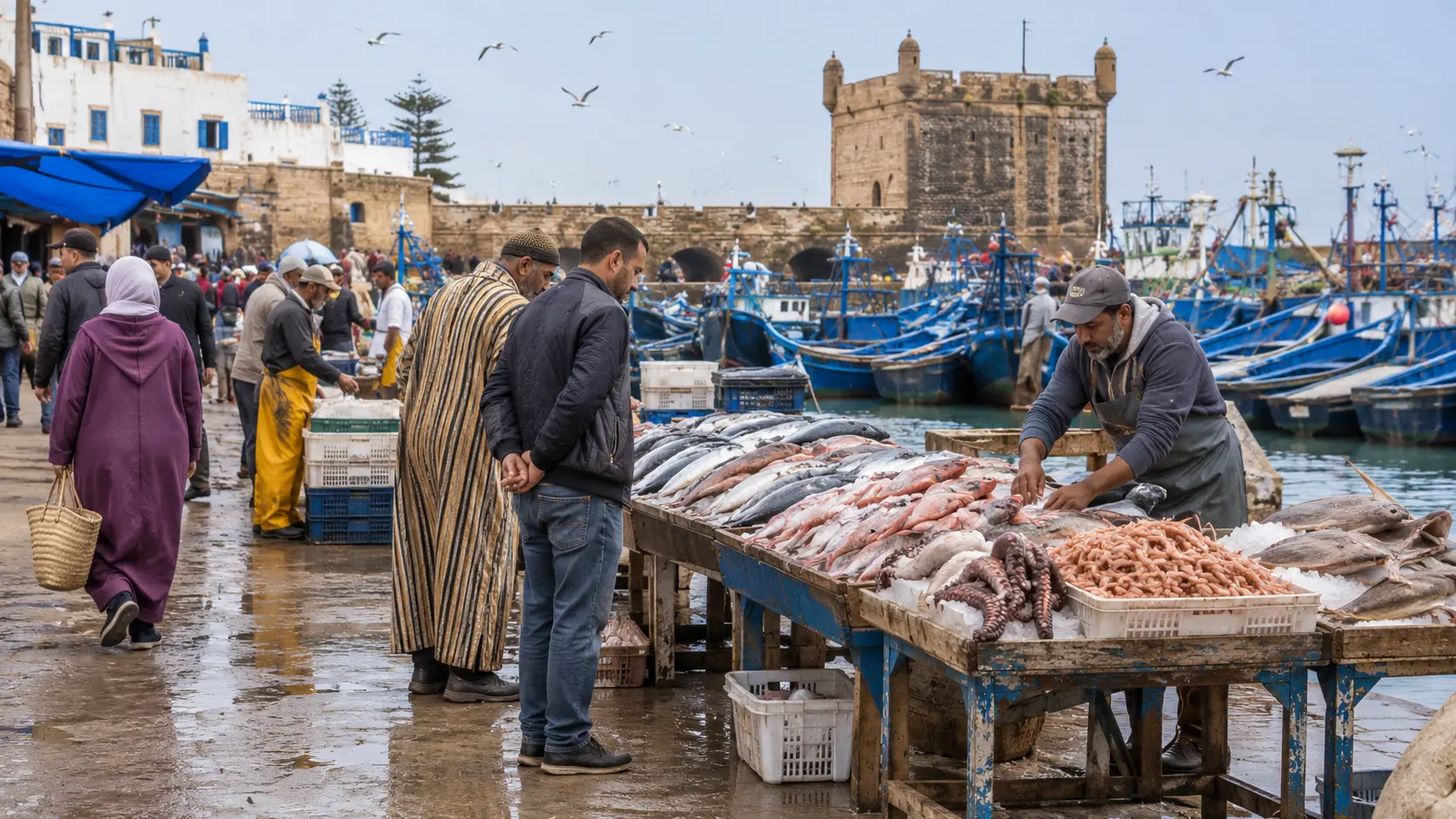
Essaouira is one of Morocco’s most straightforward destinations for combining sightseeing with a seafood meal. The fishing port and nearby fish-market culture make the connection between the city and the Atlantic immediately visible.
Grilled fish and sardines are natural choices, but you can also find seafood tagines, fried fish and more elaborate restaurant dishes. If you are buying or selecting fish before it is cooked, establish the price and preparation method before ordering.
Essaouira is particularly useful for travelers already visiting Marrakech or following the Atlantic coast. It makes more sense to enjoy the city as a destination in its own right than to rush in, eat lunch and leave without time for the medina, ramparts and port.
Oualidia: Go for the Lagoon and Oysters
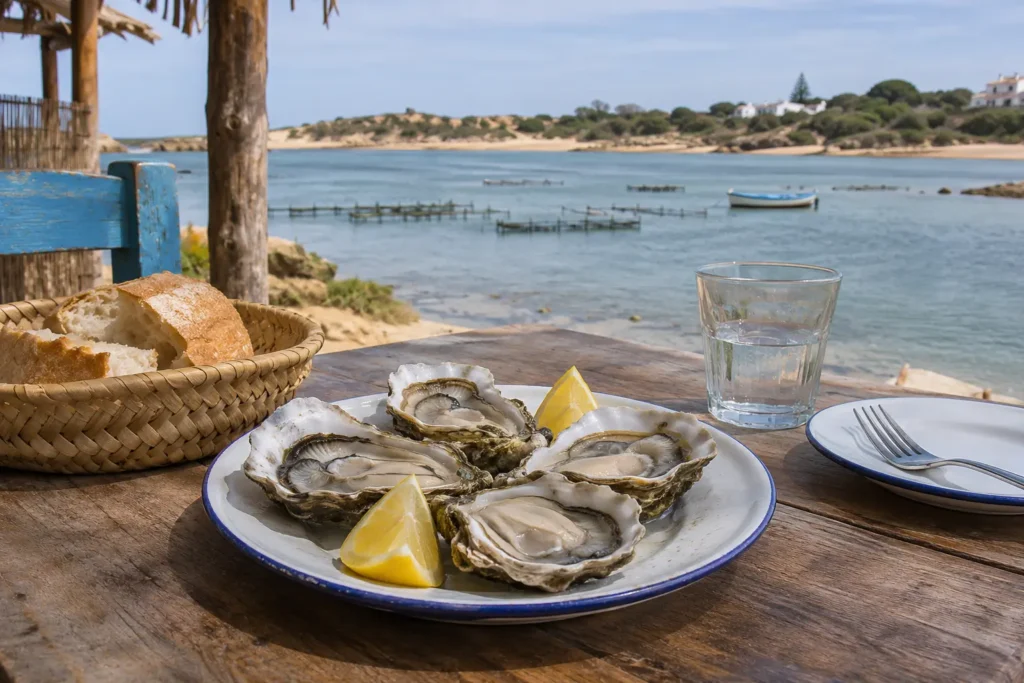
Oualidia suits travelers who want a quieter coastal stop built around the lagoon, seafood and a slower pace. Oysters are the obvious specialty to try, although restaurants may offer other fish and shellfish as well.
Oualidia works particularly well when it falls naturally into an Atlantic route. If your itinerary is concentrated in northern Morocco, the Sahara or the Atlas Mountains, there is little reason to create an awkward detour solely for an oyster meal.
Casablanca: Market Fish Without Leaving the Big City
For travelers whose itinerary already includes Casablanca, the Central Market provides a practical introduction to the city’s fish culture. Fresh fish is sold in the market, and small eateries offer the possibility of having fish prepared for a meal.
Casablanca also gives you considerably more restaurant variety than a small fishing town. That makes it useful for groups in which some travelers are enthusiastic about seafood and others want a broader menu.
Agadir: A Broad Atlantic Seafood Scene
Agadir is another strong choice for travelers who want seafood without making it the only purpose of the trip. Restaurants along the coast and elsewhere in the city serve a range of fish dishes, from straightforward grilled preparations to more elaborate Moroccan cooking.
Because Agadir is a larger resort city, quality, style and pricing can vary widely between establishments. Ask about the day’s fish rather than assuming every coastal restaurant is working with the same catch.
Safi: A Good Stop for Sardine Lovers
Safi has a long relationship with fishing and is particularly associated with sardines. For travelers already moving along the Atlantic coast, it can provide a less resort-oriented food stop as well as the city’s better-known ceramic traditions.
There is no need to build an entire itinerary around one fish dish, however. Safi works best when its food, port character and cultural sights all support the route you are already taking.
Tangier: Seafood on a Northern Morocco Route
Tangier is the most logical seafood destination for many travelers concentrating on northern Morocco. Its position on the Strait of Gibraltar gives the city a different geographic and culinary setting from Atlantic towns farther south.
Seafood is widely available in coastal restaurants, while the city’s broader dining culture reflects Moroccan and Mediterranean influences. Tangier therefore works well for travelers who want fish to be one part of a varied city break rather than the entire focus.
How to Order Fresh Fish Without Overcomplicating It
Fish markets and simple seafood restaurants can be informal, but the ordering process becomes easier when you clarify a few details first.
- Ask what is available today. The most interesting option may not be the fish you had planned to order.
- Confirm how the price is calculated. Fish may be priced differently depending on species, quantity, weight, venue and preparation.
- Agree on the cooking method. Grilled, fried and tagine preparations produce very different meals.
- Check what comes with it. Bread, salads, vegetables, sauces or other sides vary by establishment.
- Ask questions before ordering shellfish. Availability and handling matter more than simply choosing the largest platter.
- For allergies, be specific. Mixed seafood dishes, sauces and shared cooking equipment may make ingredients less obvious than they first appear.
In some market settings, the fish seller and the place cooking the fish may be separate. Do not assume that a displayed fish price automatically covers every part of the meal. Asking first avoids confusion later.
Does Coastal Always Mean Fresher?
Being beside the ocean is an advantage, but it is not a guarantee that every seafood meal is equally fresh. Supply depends on fishing conditions, season, weather, distribution and the individual restaurant or stall.
A better habit is to look for establishments that can explain what is available and how it is priced. Asking about the day’s catch is usually more useful than relying on a fixed list of supposedly essential species.
This also helps with seasonality. Instead of expecting the same fish and shellfish on every visit, treat changing availability as part of coastal eating.
How to Fit Seafood Stops Into a Morocco Itinerary
Food is a good reason to shape a route, but not a good reason to create unnecessary backtracking. Morocco’s seafood destinations are spread along a long coastline, so choose stops that suit the rest of your journey.
- Marrakech-focused trip: Essaouira is the most natural coastal addition for many itineraries and offers much more than lunch alone.
- Atlantic route: Casablanca, El Jadida, Oualidia, Safi and Essaouira can be considered as part of the same broad coastal corridor, but you do not need to stop in every city.
- Southern coast: Agadir makes sense for routes continuing toward Taghazout, Souss and other southern destinations.
- Northern Morocco: Tangier gives you a seafood stop without pulling the trip toward the southern Atlantic coast.
For a short trip, one well-chosen coastal base is usually more rewarding than collecting restaurant stops across several cities.
A Few Practical Etiquette and Responsible-Travel Tips
Working ports and fish markets are workplaces as well as visitor attractions. Give people room to work, follow any access restrictions and ask before taking close photographs of fishers, vendors or other individuals.
Avoid leaving food packaging or other litter around beaches, harbors and coastal viewpoints. When choosing seafood, asking what is local and currently available is more sensible than demanding a specific species regardless of supply.
FAQs
Is Morocco a good destination for seafood?
Yes, particularly if your itinerary includes the Atlantic or Mediterranean coast. Seafood ranges from simple grilled sardines and whole fish to tagines, stuffed fish, oysters and seafood pastilla.
Which Moroccan city is best for seafood?
There is no single answer. Essaouira is particularly convenient for port and fish-market dining, Oualidia stands out for oysters, Casablanca combines seafood with a major-city itinerary, and Agadir and Tangier are useful choices on southern and northern routes respectively.
Is seafood in Morocco expensive?
Prices vary significantly according to species, weight, restaurant style, location and current supply. Market-style grilled fish can offer a different price point from a formal seafood restaurant, but confirm the full price before ordering rather than assuming one format is always cheaper.
Is Moroccan fish very spicy?
Not necessarily. Chermoula is aromatic and heavily seasoned, but the amount of chili varies. Grilled fish can also be prepared very simply. If you prefer mild food, ask how the dish is seasoned before ordering.
Can I find good seafood away from the coast?
Yes. Restaurants in inland cities can serve excellent fish and seafood, and seafood pastilla appears well beyond coastal towns. The advantage of eating on the coast is the combination of the meal with fishing ports, markets and regional food traditions rather than a guarantee that every inland seafood dish is inferior.
What should I order for a first Moroccan seafood meal?
A simple grilled fish or sardines is a good starting point. Add a chermoula preparation if you want more Moroccan seasoning, or choose seafood pastilla when you want something more elaborate. In Oualidia, oysters are the most destination-specific choice.
Choose a Coastal Stop That Fits the Rest of Your Trip
The most rewarding way to explore seafood in Morocco is not to chase a checklist of famous dishes. Choose a coastal destination that already fits your route, ask what is fresh, try both a simple preparation and a more distinctly Moroccan dish, and leave room for the meal to be part of the destination rather than another item to rush through.
For more destination ideas and practical planning advice, browse more Morocco travel guides. Travelers building a wider Atlantic itinerary can also explore Visit Morocco Together’s Coastal Escapes for coastal-focused trip ideas.
Ready to Experience Morocco?
Turn this inspiration into your next adventure. Our travel experts are ready to help.