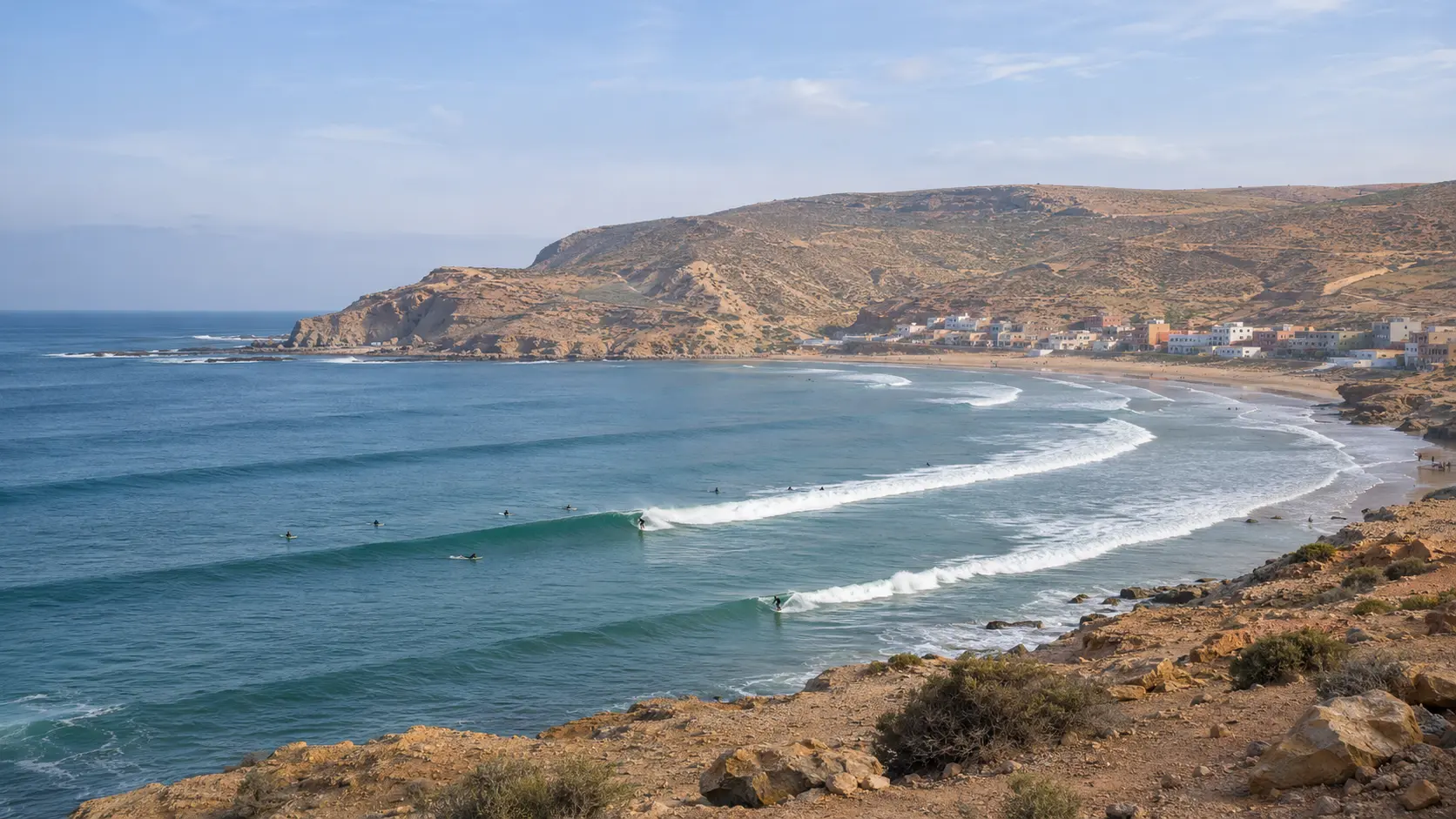
This Imsouane surf guide compares the two main surfing areas in Morocco’s Atlantic fishing village: The Bay and Cathedral. Although the breaks are close to one another, they offer different waves, challenges and surfing experiences.
The Bay is generally the better choice for beginners, longboarders and surfers who enjoy long, flowing right-hand waves. Cathedral is more exposed to Atlantic swell, with faster and often more powerful conditions that appeal to confident intermediate and advanced surfers. Its beach breaks can also suit less experienced surfers when the waves are small and manageable.
The right choice depends on more than your ability. Swell direction, wave size, wind, tides and crowds can change which break is suitable on a particular day. This guide explains those differences and helps you plan a realistic surfing trip to Imsouane.
Imsouane Surf Guide: The Bay vs Cathedral at a Glance
Imsouane sits on Morocco’s Atlantic coast between Agadir and Essaouira. Its headlands create two contrasting surfing environments within the same village.
- The Bay: A sheltered right-hand point break known for long, relatively gentle waves. Particularly appealing to longboarders, progressing beginners and intermediate surfers.
- Cathedral Point: A more exposed right-hand point break where waves can become steep, powerful and hollow. Generally better suited to experienced surfers.
- Cathedral Beach: A separate area with left- and right-breaking peaks. Depending on swell, sandbanks and tide, some sections can suit intermediate surfers or supervised beginners on smaller days.
The distinction between Cathedral Point and Cathedral Beach matters. Describing all of Cathedral as an advanced-only break overlooks the gentler conditions that can occasionally occur on the beach. Equally, describing The Bay as beginner-friendly does not mean its main takeoff area is appropriate for someone surfing for the first time.
The Bay: Long Right-Hand Waves and Relaxed Surfing
Imsouane’s Bay, sometimes called Magic Bay, is the village’s best-known surf break. Its reputation comes from the unusually long right-hand waves that can peel along the shoreline when the swell, tide and wind align.
The wave begins around a rocky point and runs into the bay. Under favorable conditions, surfers may enjoy extended rides with time to practice turning, trimming and positioning.
These long rides are not guaranteed. On some days, the wave is short or weak, while stronger swells can make the main peak considerably more demanding.
Who should surf The Bay?
The Bay is particularly appealing to several types of surfers:
- Beginners: With suitable waves and instruction, the gentler sections can help new surfers develop balance, paddling and basic wave-catching skills.
- Improving surfers: Longer waves provide opportunities to practice controlling speed and making turns rather than simply standing up.
- Longboarders: The wave’s flowing shape can suit traditional longboarding and smooth, controlled surfing.
- Experienced surfers: Stronger swells can produce more challenging sections, while smaller clean days offer enjoyable longboard or alternative-board sessions.
For a first lesson, an instructor should choose an appropriate area away from the busiest takeoff zone. Paddling straight toward the point because other surfers are doing so is not a sensible beginner strategy.
Why longboarders enjoy The Bay
Longboards are well suited to waves that build gradually and offer room to maneuver. In suitable conditions, The Bay allows surfers to concentrate on maintaining speed, adjusting their position and linking turns along the wave.
Mid-length boards and funboards can also work well here. Shortboards may be enjoyable when the waves have enough size and power, although smaller or softer conditions can make catching waves more difficult on a low-volume board.
If you are renting equipment, explain your ability and the current conditions to the rental provider rather than choosing a board only because it looks appealing.
The Bay’s main drawback: crowds
The Bay’s accessibility and reputation attract surf schools, independent travelers and experienced longboarders. Crowding can become one of the biggest challenges, even when the waves themselves appear manageable.
Long rides also create particular responsibilities. A surfer riding down the point can pass through several areas where other people are waiting or paddling out.
Good wave selection and awareness of other surfers are essential. Avoid dropping in on someone already riding, maintain enough space to control your board and do not paddle into another surfer’s path.
A crowded, gentle-looking wave is not necessarily easier or safer than a less crowded break.
Cathedral: More Exposed Waves and Greater Variety
Cathedral lies on the more exposed side of Imsouane’s coastline. Because it receives more direct Atlantic swell than The Bay, it can offer surf when the sheltered bay is small or lacking power.
However, Cathedral is not a single uniform wave. Its point break and beach peaks can behave differently, so choosing the right section is important.
Cathedral Point: A stronger right-hand break
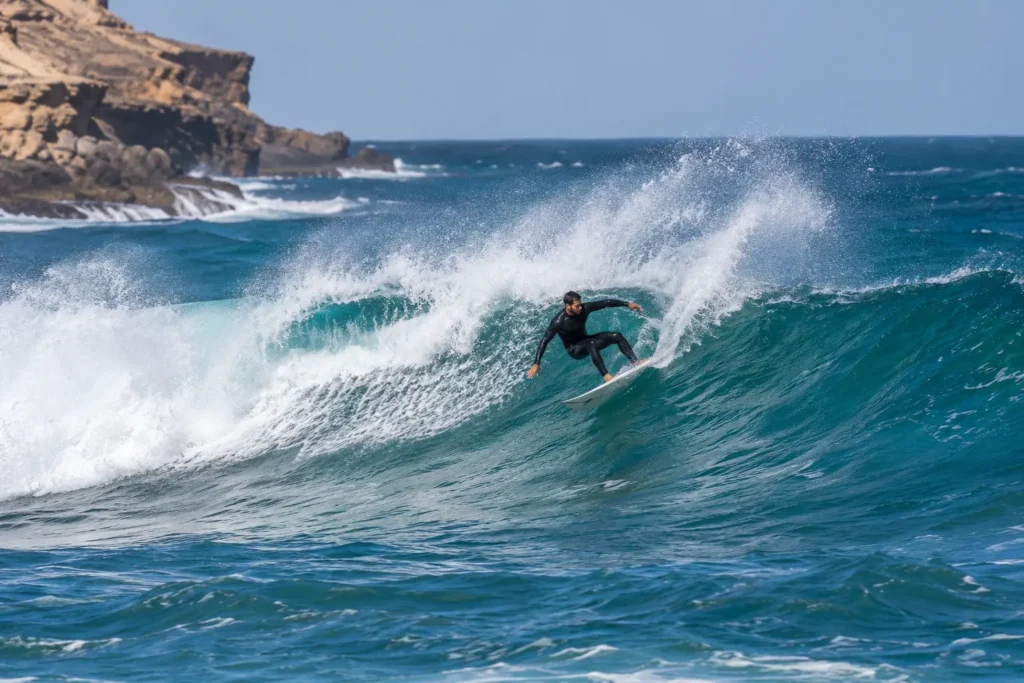
Cathedral Point is generally the more demanding option. Its right-hand waves can be steeper and faster than those in The Bay, particularly when larger Atlantic swells arrive.
Under suitable conditions, sections can become hollow, rewarding surfers who have the experience to position themselves correctly and react quickly.
This part of Cathedral is better suited to surfers who can:
- Catch and ride unbroken waves independently.
- Make controlled takeoffs on steeper wave faces.
- Recognize currents and changing wave conditions.
- Handle more demanding paddle-outs and wipeouts.
- Navigate a lineup while maintaining control of their equipment.
Strong surfing ability is important here. The size and power of the waves can increase substantially during winter swells, and conditions that suit advanced surfers may be inappropriate for intermediates.
Cathedral Beach: Lefts, rights and changing peaks
The beach area around Cathedral offers a different experience from the point. Depending on the sandbanks and swell, surfers may find both left- and right-breaking waves.
On smaller days, these peaks can be enjoyable for intermediate surfers and, where a qualified local instructor considers conditions suitable, beginners.
When the swell grows, the same area can develop stronger waves, difficult paddle-outs and currents. Sand and rocky sections also mean that entry and exit conditions deserve attention.
Cathedral Beach should not be treated as automatically safe for beginners simply because it has sandy sections. Conditions need to be assessed on the day.
Why choose Cathedral instead of The Bay?
Cathedral may be the better choice if you want more powerful waves, shorter and more technical rides, or a break that responds to a smaller incoming swell.
It can also provide variety during a longer stay, particularly for surfers who already feel comfortable with The Bay.
However, choosing Cathedral solely to avoid crowds is not always sensible. A quieter lineup is only an advantage when the waves match your ability.
How Swell, Wind and Tides Affect Both Breaks
One of the advantages of surfing in Imsouane is that the two breaks respond differently to the same Atlantic conditions.
That does not mean one of them will always be good. Understanding the relationship between swell, wind and tide helps you decide whether to surf, wait or book a lesson.
Swell: Shelter at The Bay, exposure at Cathedral
The Bay’s position provides some protection from incoming swell. This can help create manageable waves when more exposed breaks become powerful.
Cathedral generally receives more direct swell energy. When conditions are relatively small, Cathedral may still produce rideable waves while The Bay is less active.
During larger swells, Cathedral Point can become unsuitable for all but experienced surfers. The Bay may remain more protected, but its waves can also grow stronger and faster.
Always judge the actual wave conditions rather than assuming that sheltered means safe.
Tides: Why the timing of your session matters
The Bay commonly favors lower-to-mid tide conditions, although the ideal window depends on wave size, swell direction and the state of the break.
Higher tides can make some sections less defined, while lower water levels can expose rocky areas around the point and affect the safest entry route.
At Cathedral, the situation is more varied. The point and beach peaks do not necessarily work best at the same tide. Some beach sections can become more suitable as the tide rises, while the point may produce more demanding waves at lower water levels.
Instead of following a fixed rule from an old surf guide, check the current tide times and ask a local instructor or experienced surfer about the safest session window.
Wind: An important factor in wave quality
Wind direction can determine whether the waves are clean and organized or difficult to surf.
Because the two breaks face different directions, one may offer better conditions than the other during the same period. The Bay’s sheltered position can be useful when wind affects more exposed sections of coastline.
However, there is no guarantee that mornings, afternoons or any particular hour will always provide the best waves.
Check a recent surf forecast, observe the water before paddling out and be prepared to adjust your plans.
Which Imsouane Surf Spot Is Best for Your Skill Level?
Your preferred wave matters, but ability should determine the final decision.
Complete beginners: Start with an appropriate lesson
For someone who has never surfed, The Bay is generally the more practical starting point when conditions are small and suitable.
A lesson should focus on safe entry, paddling, standing up, controlling the board and understanding the lineup. A good instructor will select the teaching area according to conditions rather than automatically taking beginners to the main peak.
On some small days, Cathedral Beach may also be suitable for supervised instruction. The decision should be made by someone familiar with the break.
Progressing surfers: Match the wave to your goals
If you can already catch waves and want to improve your turns, positioning and wave selection, The Bay offers opportunities to develop those skills.
Cathedral Beach may provide more variety when conditions are manageable, particularly if you want to improve your timing on different types of waves.
Moving between the breaks can be useful, but there is no benefit in surfing more challenging waves before you have the skills to manage them.
Confident intermediate and advanced surfers: Consider Cathedral Point
Surfers comfortable with stronger takeoffs and powerful sections may find Cathedral Point more engaging.
Nevertheless, The Bay should not be overlooked. On suitable swells, experienced surfers can enjoy its long rides and distinctive point-break shape.
The best option is the one offering appropriate conditions for your ability and preferred style on that day.
Best Time to Surf in Imsouane
Imsouane is a surfing destination throughout much of the year, but the Atlantic swell changes seasonally. Planning around your surfing ability is more useful than choosing dates based only on the reputation of a particular month.
Autumn and winter: More consistent Atlantic swell
Autumn and winter generally bring more frequent and powerful North Atlantic swells to Morocco’s Atlantic coast.
This period can be particularly rewarding for surfers hoping to experience The Bay’s longer waves or Cathedral’s stronger sections.
However, large winter swells may also make certain breaks unsuitable for beginners. Strong winds, unsettled weather and crowded lineups can affect the quality of a session.
Travelers learning to surf should not assume that the season with the biggest waves is automatically the best for their first lessons.
Spring: A useful transitional period
Spring can provide a mixture of swell sizes, with opportunities for both relaxed surfing and more challenging sessions.
Conditions remain variable, so it is worth allowing several possible surfing windows rather than relying on one specific morning.
Summer: Often smaller, but less predictable
Summer generally brings smaller and less consistent Atlantic swell than the main winter season.
That can be useful for beginners when the waves and local conditions are suitable, although there may also be periods with limited surf.
Cathedral’s greater exposure can sometimes help it pick up waves when The Bay is small.
No season guarantees ideal conditions. Check current forecasts close to your travel dates and avoid planning a trip around a promised wave height or ride length.
Surf Lessons, Board Rentals and What to Bring

Imsouane has local surf schools, instructors and equipment-rental businesses. Their services can help visitors who do not travel with their own surfboards or who want local guidance.
Before booking, confirm the lesson location, instructor arrangements, equipment, meeting point, current price and weather-related cancellation conditions.
Useful questions include:
- Which break will the lesson use, and why?
- Is the session suitable for my current surfing ability?
- Are surfboards and wetsuits included?
- What is the instructor-to-student arrangement?
- Are there any minimum age or swimming-ability requirements?
- What happens if the waves are unsuitable?
For equipment, beginners commonly benefit from stable soft-top boards, while improving surfers may prefer a funboard or mid-length. Longboarders will naturally be drawn to The Bay, whereas more experienced surfers may select shorter boards for Cathedral’s powerful sections.
The Atlantic can feel cool, particularly outside the warmer months, so a suitable wetsuit is important. Ask a local rental provider about the appropriate thickness for the current water temperature and weather.
Bring sunscreen, drinking water, a towel and suitable footwear for moving around rocky or uneven access areas. A surf session may also involve considerable walking and paddling, so leave time to rest afterward.
How to Get to Imsouane and Where to Stay
Imsouane lies between Agadir and Essaouira, making it a possible addition to a wider Atlantic-coast journey.
Getting to Imsouane
Agadir, Taghazout and Essaouira are common starting points for reaching the village by road.
Depending on your budget and travel style, options may include:
- Rental car: Useful for travelers who want flexible departure times, carry surfing equipment or plan to explore several coastal destinations.
- Taxi or pre-arranged transfer: Practical for reaching accommodation directly, especially with luggage or surfboards.
- Surf camp transport: Some accommodation providers organize pickups or shared transfers, but this must be confirmed before booking.
- Bus and local transport: Budget connections may require changing vehicles or arranging onward transport from a nearby junction. Do not assume that an intercity bus will take you directly to your accommodation.
Imsouane does not have a railway station. Check the current road route and transport availability before travel, particularly if you are arriving late or carrying a large board bag.
A day trip from Taghazout or Agadir can work when you have reliable transport and the surf forecast is favorable. However, the journey is less rewarding if you arrive to find unsuitable waves and have no flexibility to return another day.
Where to stay for surfing
Staying in Imsouane allows you to observe conditions before choosing your session rather than committing to a fixed arrival time from another town.
Look for accommodation that suits your priorities:
- Near The Bay: Particularly convenient if longboarding, lessons or regular sessions at the right-hand point are your main interest.
- Near Cathedral: Worth considering for surfers focused on the more exposed break, provided the property’s location and access are confirmed.
- Surf camps and guesthouses: Potentially practical for travelers who want equipment rental, instruction and accommodation arranged together.
Parts of Imsouane’s seafront underwent major changes in 2024, affecting some homes and tourism businesses. Older accommodation photos, addresses and online recommendations may therefore be outdated.
Confirm that your chosen property is currently operating, verify its exact location and check the walking route to your preferred surf break before paying.
How Many Days Do You Need in Imsouane?
If surfing is the main reason for your visit, two or three nights is a useful starting point. This provides more flexibility than arriving for a single session.
A practical two-night plan might look like this:
- Arrival day: Travel to Imsouane, settle into your accommodation and observe conditions at both breaks. Surf only if there is enough daylight and the conditions suit your ability.
- Full surfing day: Choose your session according to the forecast, tide and local advice. Allow time between sessions for food, rest and checking whether conditions have changed.
- Departure day: Fit in another session if the waves and your onward transport schedule allow, then continue your journey without rushing.
Adding another night can be worthwhile for visitors who want multiple surf sessions or the freedom to wait for better conditions.
If you are already traveling along Morocco’s Atlantic coast, consider combining Imsouane with Taghazout or Essaouira. They offer different coastal experiences and can form part of a geographically sensible route.
Surf Safety and Etiquette in Imsouane
Imsouane’s reputation for accessible surfing should not replace basic ocean awareness. Conditions can change quickly, and both breaks have hazards that deserve attention.
Understand rocks, currents and entry points
The Bay includes rocky areas around its point and access routes. Cathedral has exposed sections, rocky features and currents that can become more demanding during larger swells.
Before entering the water, identify a suitable paddle-out and exit point. Ask a local instructor about current hazards, particularly if you are unfamiliar with the break.
Never assume that a sandy-looking beach has no rocks or currents beneath the surface.
Respect other surfers in the lineup
Surfing etiquette helps reduce collisions and unnecessary tension, especially at popular breaks.
- Respect wave priority and avoid dropping in on another surfer.
- Look around before paddling into the path of a breaking wave.
- Maintain control of your board and avoid abandoning it near others.
- Do not crowd the main takeoff area if your ability does not match the conditions.
- Respect local surfers, instructors and other water users.
If you are new to point breaks, ask your instructor to explain how priority works and how to return to the lineup without interfering with other surfers.
Respect the fishing village and coastline
Imsouane remains a working fishing community as well as a surfing destination. Keep access routes clear for local residents and fishing activity, and stay away from areas where boats are moving or being handled.
Ask permission before photographing people at close range, dispose of litter responsibly and avoid damaging coastal vegetation or rocky shoreline habitats.
Supporting local instructors, cafés and accommodation providers can also help ensure that the benefits of surf tourism reach businesses within the community.
FAQs
Is Imsouane Bay good for beginners?
Yes, The Bay is generally a good option for beginners when the waves are small and suitable. Lessons should take place in an appropriate section rather than automatically at the main point-break takeoff. Large swells and crowds can make conditions more challenging.
Is Cathedral suitable for beginner surfers?
Cathedral Point is generally more appropriate for intermediate and advanced surfers. However, parts of Cathedral Beach may suit beginners with local instruction when the waves are small and manageable. The two areas should not be confused.
Which break is better for longboarding?
The Bay is usually the stronger choice for longboarding because of its long, flowing right-hand waves. Its softer sections can reward smooth turns and controlled positioning, although wave quality varies with the conditions.
Can you surf The Bay and Cathedral on the same day?
Potentially, yes. The breaks are close enough for surfers staying in the village to consider both during a visit. However, having access to two spots does not guarantee that both will offer suitable conditions on the same day.
What is the best surfing season in Imsouane?
Autumn and winter generally provide more consistent Atlantic swell, particularly for experienced surfers seeking longer or more powerful waves. Spring and summer can offer smaller conditions, although surf quality and availability remain weather-dependent.
Is Imsouane worth visiting if the waves are small?
It can be, especially if you enjoy coastal scenery, fishing-village life and a slower travel pace. However, travelers visiting specifically for surfing should allow some flexibility, since neither break is guaranteed to produce suitable waves every day.
Choose the Break That Fits Your Surfing Goals
The main decision in Imsouane is straightforward: choose The Bay for longer, generally gentler right-hand waves and the opportunity to develop your surfing, or consider Cathedral when you have the experience and conditions for more exposed, powerful surf.
For beginners, the priority should be a suitable lesson rather than reaching a famous peak. Intermediate surfers can benefit from comparing both breaks, while advanced surfers may appreciate Cathedral’s more technical waves alongside The Bay’s long rides.
Give yourself enough time to respond to the swell, wind and tide. A flexible stay provides a better chance of finding suitable surf than a rushed visit built around a single forecast.
If Imsouane is part of a longer Atlantic-coast journey, explore Morocco coastal travel options with Visit Morocco Together. Compare the available routes and inclusions to find an itinerary that fits your preferred destinations and pace.
The most important takeaway: Imsouane’s appeal is not simply that it has two famous breaks. It is that The Bay and Cathedral provide different surfing experiences close together, allowing you to choose according to your skills and the ocean conditions rather than forcing a particular session.
Ready to Experience Morocco?
Turn this inspiration into your next adventure. Our travel experts are ready to help.