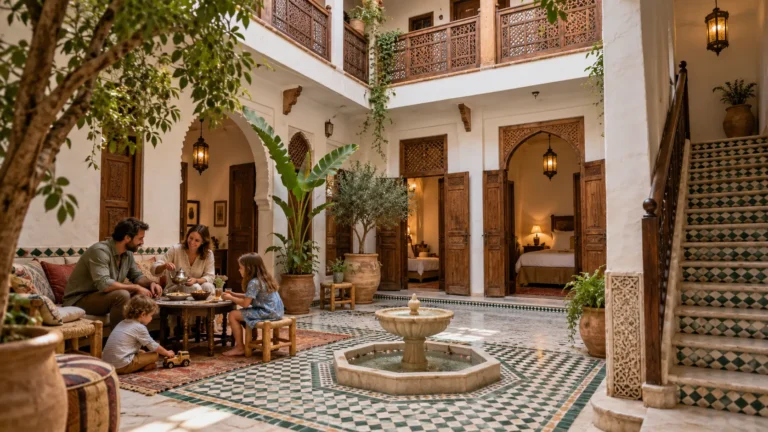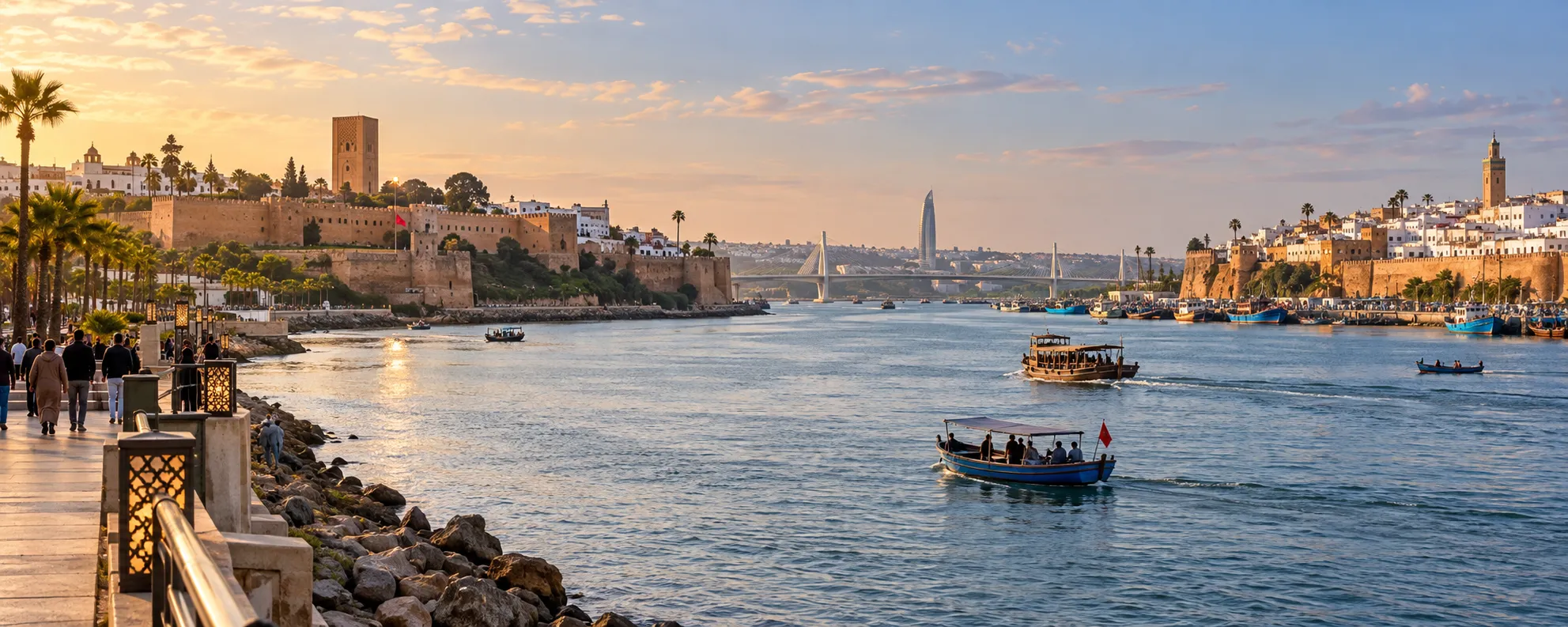
A Morocco imperial cities travel guide begins with four places: Fes, Marrakech, Meknes, and Rabat. Each has served as a seat of power, but visiting them is more than a tour of former capitals. You move between different medinas, royal building projects, gardens, workshops, and present-day neighborhoods.
The useful choice is how much time to give each city. Fes can support several days of exploration, Meknes deserves more than a photograph of a gate, and Rabat combines historic sites with the life of a modern capital. Marrakech adds another architectural history and a different set of city experiences.
You can visit all four in one journey, or choose a smaller combination. The broader range of Morocco destinations helps put the circuit in context; this guide focuses on what makes the four cities different and how to connect them without losing most of the trip to transfers.
What Are Morocco’s Four Imperial Cities?
The four imperial cities are Fes, Marrakech, Meknes, and Rabat. The term groups cities associated with Morocco’s ruling dynasties and the development of its capitals; it does not describe one administrative region.
Fes carries the legacy of Idrisid beginnings and later Marinid development. Marrakech was founded under the Almoravids, became an Almohad capital, and acquired important monuments under later rulers.
Meknes existed before Moulay Ismail, whose reign transformed it into an imperial capital with major fortified and royal works. Rabat combines an Almohad history with its role as Morocco’s current capital.
Those histories overlap. A city was not built by one dynasty in a single period, and a palace, madrasa, or neighborhood may tell a different story from the original foundation.
Casablanca often appears at the beginning or end of an imperial-cities itinerary because of the flight and transport arrangements. Volubilis adds an archaeological visit near Meknes. Neither is a fifth imperial city.
Rabat Look at the Capital Beyond Its Monuments
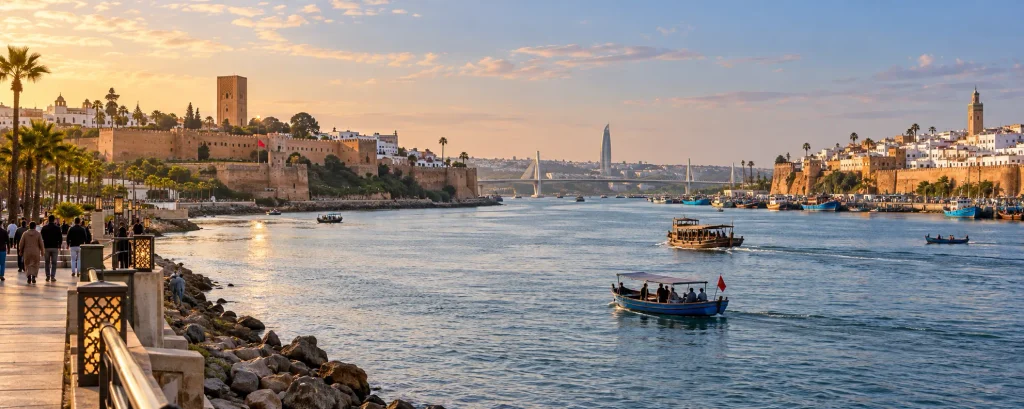
Rabat can be an introduction to the circuit or a later stay by the Atlantic. Its appeal includes the relationship between historic quarters, civic buildings, gardens, and the waterfront.
UNESCO’s Rabat heritage description recognizes both older parts of the city and its planned modern development. That is a useful way to approach the visit: leave time for the city between the named monuments.
The Hassan Tower and Mausoleum of Mohammed V area can form one part of the day. The Kasbah of the Udayas, medina, and Bou Regreg waterfront can form another. Check the walking involved and how you will connect the areas.
Chellah adds an archaeological and funerary landscape with its own access arrangements. Do not assume it fits into the same short walk as every central landmark.
Salé, across the river, can add another historic-city visit. Include it because you want time there rather than treating the crossing as a compulsory extra.
How Much Time to Give Rabat
Two nights can provide one full day between arrival and departure. That can support selected visits and time for a meal or walk without depending entirely on the arrival afternoon.
Add another night if you want museums, Chellah, Salé, or a less structured stay. One night may work for a shorter introduction, but write down when you arrive and what remains before checkout.
A flight into Casablanca does not mean an immediate Rabat sightseeing day. Complete the airport arrival and onward journey before judging the time available.
Fes Explore More Than the Tanneries
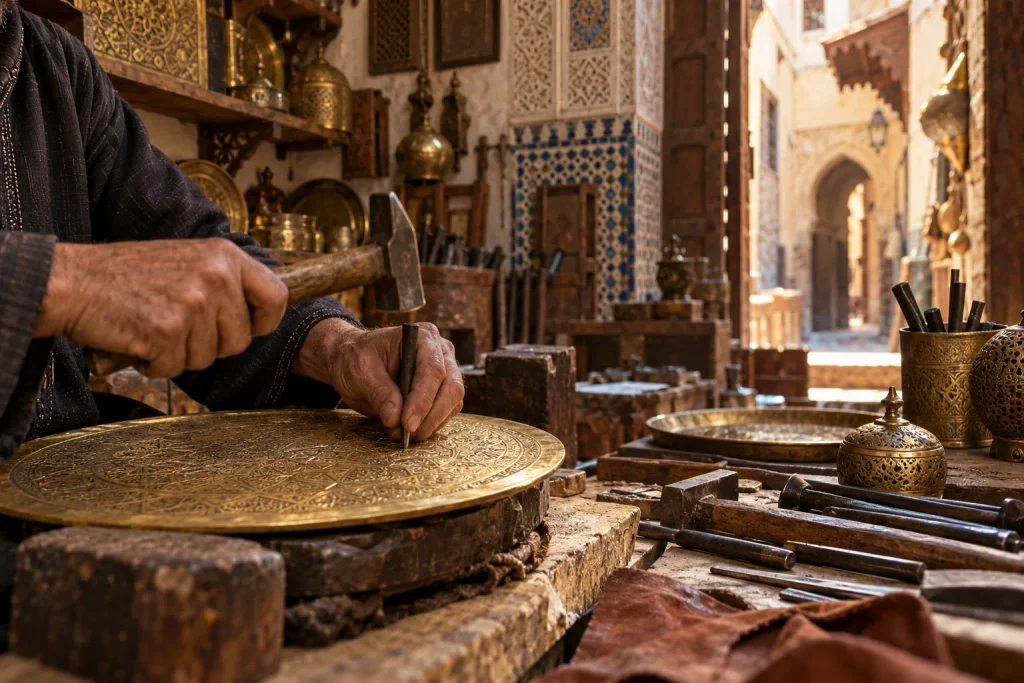
Fes rewards a visit built around its neighborhoods and buildings rather than one celebrated viewpoint.
Fes el-Bali contains the older medina. Fes el-Jdid adds another urban layer, including the royal area and Mellah. These should be planned as distinct parts of the stay rather than assumed to lie along one effortless walking circuit.
In Fes el-Bali, you might organize a day around Bab Bou Jeloud, selected madrasas, fondouks, fountains, artisan areas, and the streets that connect them. Choose the monuments you want to enter and check their access.
The tanneries can be one stop. Ask where you will view them, whether the visit involves entering a shop, and what arrangements apply. You do not need to spend the whole medina visit moving between shopping demonstrations.
A sightseeing reference to Al Quaraouiyine does not establish permission to enter every part of the religious or educational complex. Confirm what the visit includes rather than reading “university visit” as unrestricted interior access.
Give Different Parts of Fes Separate Time
Three nights can provide two full days: one for Fes el-Bali and another for a different neighborhood, museum, food activity, or a slower return to places that interest you.
An excursion to Meknes or Volubilis uses a separate day. If you allocate it to that second full day, you have one full day left for Fes itself.
For a distinct neighborhood focus, Visit Morocco Together’s Fes Mellah and Jewish heritage walk includes the Mellah and cemetery, with a synagogue visit when accessible. The page specifies a central meeting point rather than hotel pickup. Confirm the duration, access, and fees for your booking.
The Fes destination setting also affects where you stay. A medina room may involve a final walk with luggage, while another location may make vehicle access easier. Match the property to the visits and arrival arrangements you want.
Meknes Give the Imperial City Its Own Visit
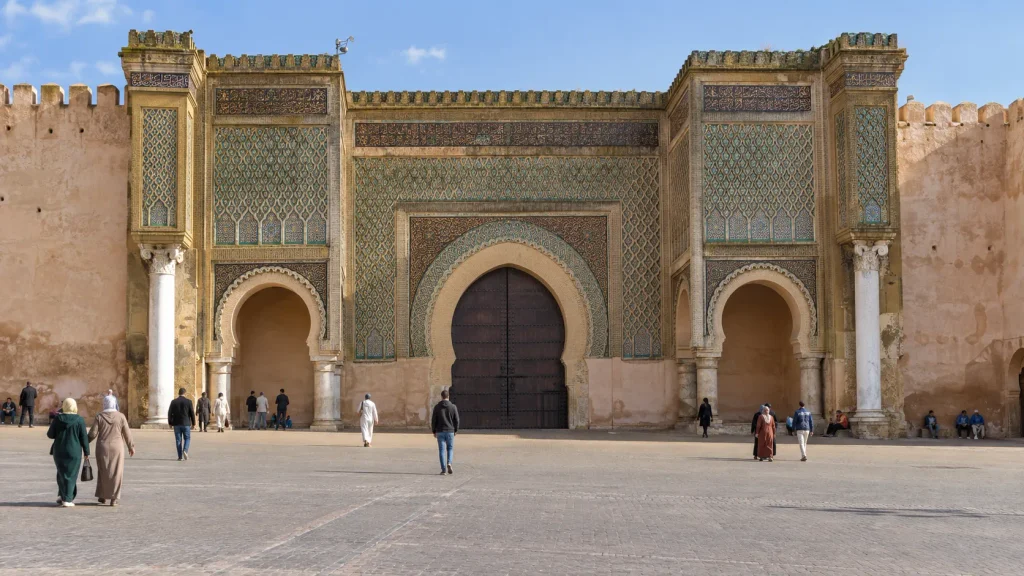
Meknes is often reduced to a stop between Rabat and Fes. That can conceal the very history the circuit is meant to explore.
Moulay Ismail’s imperial project left a city of monumental gates, walls, royal structures, and large spaces. The medina adds another scale of streets and everyday activity.
Bab Mansour and the area around Place el-Hedim can anchor the visit. The Moulay Ismail Mausoleum and the royal granaries or stables area require attention to the actual route and current access.
Confirm which interiors are open and what your guide plans to show. A named monument in an itinerary can mean an exterior stop, a view from an accessible area, or an interior visit; those are different experiences.
Meknes was not founded by Moulay Ismail simply because its imperial identity is closely associated with him. Understanding that earlier city and later royal transformation makes the visit more informative.
Day Trip or Overnight in Meknes
A day trip from Fes can suit travelers who want to retain one base. Allow enough time for the Meknes visits rather than automatically attaching several other destinations.
An overnight lets you spend an evening and another morning in town. Two nights provide a full day without transferring luggage that morning.
Visit Morocco Together’s Meknes artisans and heritage outing has a published starting price of €86 per person. It lists local guiding and starts in Meknes, with meals and drinks unless stated, and optional entry fees, excluded. Confirm the accessible stops, meeting point, departure type, and final price. It is not an intercity transfer from Fes unless separately arranged.
This is a useful distinction when comparing bookings: a locally guided day and a full excursion from another city do not cover the same services.
Marrakech Connect the Architecture With Time in the City
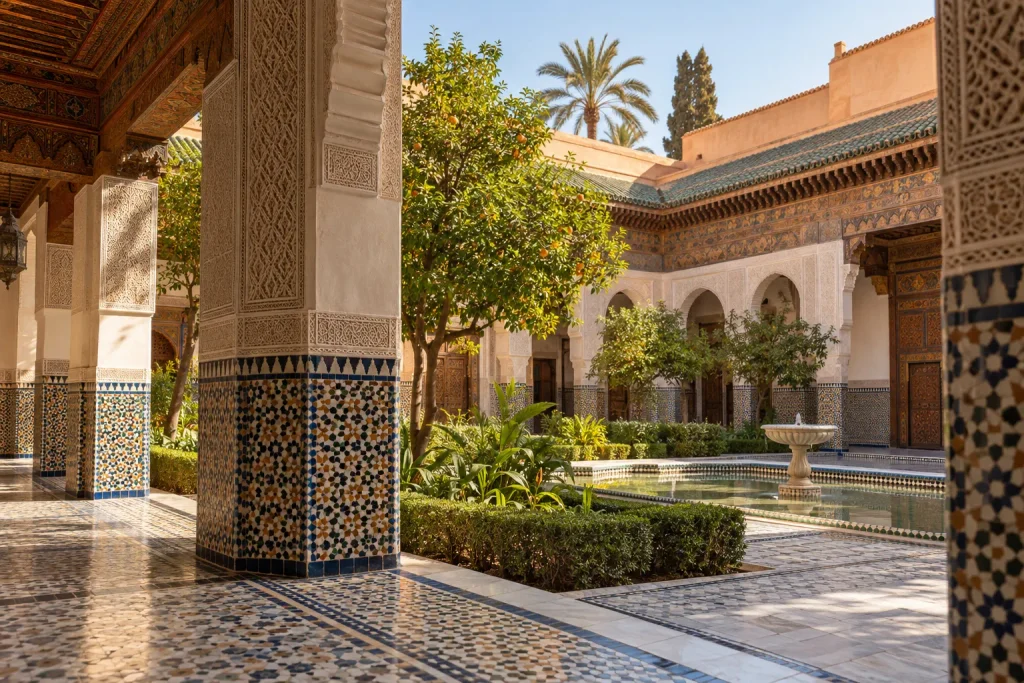
Marrakech’s imperial history appears in its medina, monumental buildings, gardens, and later additions. Choose a few connected areas each day instead of crossing the city repeatedly for a list of sights.
The Koutoubia area and Jemaa el-Fna can anchor one part of a visit. Bahia Palace and the Kasbah area offer another focus, while the Ben Youssef area can support a separate medina walk.
Check the current access and ticket arrangements for the buildings you select. A palace visit, a garden reservation, and time around a public square have different requirements.
Modern gardens, museums, cafés, and neighborhoods can add variety to a heritage-focused stay. They do not need to be described as imperial monuments to be worthwhile.
The Marrakech city experience includes more than sightseeing. Leave time to return to a neighborhood, sit down for a meal, or walk without trying to reach the next timed entry.
How Much Time to Give Marrakech
Three nights can provide two full days between arrival and departure. That is a useful starting allocation for selected city visits.
If you use one full day for an Atlas or Essaouira excursion, it is no longer available for Marrakech. Add time or reduce the city program accordingly.
An evening visit to Jemaa el-Fna can fit around the day’s plans, but it still needs a return arrangement and enough energy after travel. You do not have to make the first night the longest evening of the trip.
Casablanca and Volubilis Add Different Histories
Casablanca can support a separate urban visit, particularly when architecture or the Hassan II Mosque interests you. It also serves as a gateway for many routes, but airport arrival and city sightseeing should be counted separately.
Volubilis is an archaeological site near Meknes, not an imperial city. Its Roman remains introduce a different period and a different kind of visit from a medina.
Moulay Idriss Zerhoun is another nearby town with its own history and access considerations. Treat it as a planned stop rather than assuming a visit is included whenever Volubilis appears in a title.
If you want Meknes, Volubilis, and Moulay Idriss on one excursion, ask for the time allocated to each and the complete journey. Decide what you would remove if you prefer longer in one place.
A day that begins with Rabat sightseeing, continues through several visits, and ends in Fes can leave less time at each stop than the itinerary headings suggest.
Choose the Order Around Your Flights and Priorities
A route entering through Casablanca might continue to Rabat, then Meknes and Fes, before a longer transfer to Marrakech. The reverse is also worth investigating.
Another option uses Fes as a base for Meknes, reducing the number of accommodation changes. You trade an additional outward-and-return journey for the convenience of keeping your room.
Neither sequence is automatically right for every trip. Compare flights, overnight stays, transport, and the visits you want before choosing the direction.
The order of a multi-city Morocco journey matters more than an itinerary’s label. Keep substantial travel days visible and avoid scheduling a full sightseeing program immediately after every arrival.
If you arrive in one city and leave from another, check the complete cost and final airport connection. The different-airport arrival and departure arrangement can remove a return journey, but suitable flights and prices determine whether it works for you.
A Nine-Day Circuit With Three Overnight Bases
For nine days and eight nights, consider:
- Nights one and two: Rabat.
- Nights three, four, and five: Fes.
- Nights six, seven, and eight: Marrakech.
- Day nine: departure, with the airport journey arranged separately.
Under this suggested allocation, day two is a full Rabat day. Day three is the transfer to Fes, and day four can focus on Fes el-Bali.
Day five can be a Meknes excursion, making it possible to visit all four imperial cities while retaining three accommodation bases. Whether to include Volubilis depends on the time and route you confirm.
Day six is the longer move to Marrakech. Days seven and eight are available for selected city visits.
This gives Fes one full city day if the other is used for Meknes. If you want two full Fes days, add a night or revise the plan.
The example assumes the arrival permits reaching Rabat on day one and that the departure arrangement suits a final Marrakech stay. Adjust the nights if your flights require another gateway.
An Eleven-Day Circuit With a Meknes Stay
For eleven days and ten nights, consider:
- Nights one and two: Rabat.
- Nights three and four: Meknes.
- Nights five, six, and seven: Fes.
- Nights eight, nine, and ten: Marrakech.
- Day eleven: departure from the airport on your booking.
This allocation creates a full Meknes day rather than treating the city as part of another transfer. Fes and Marrakech each receive two full days between arrival and departure.
Volubilis can be considered on the move between Meknes and Fes if the transport, visits, and luggage arrangements work. It could also be a separate excursion, using time you otherwise keep free.
These are suggested night allocations, not reserved departures or promises about opening hours. Match them to your flights, available transport, and preferred pace.
Can You Visit the Imperial Cities by Train?
Rail is worth comparing for the main city connections. Check the official ONCF journey search for the actual stations, date, class, service, and any connections.
The station-to-station journey is only part of a transfer. Include the trip to the departure station and the final connection to the property.
A rail ticket does not include a sightseeing detour to Volubilis. If a day involves visits between cities, compare a vehicle arranged for those stops with separate journeys and local transport.
You can also combine methods: rail for a suitable city stage, a local guide for a medina visit, and a vehicle for a particular excursion.
A private driver is another option, but confirm guiding, admissions, luggage capacity, and the final destination. The vehicle booking alone does not establish that every monument visit is guided or included.
Check What an Imperial Cities Package Actually Covers
The title should lead you to the itinerary, not replace it. A package called “Imperial Cities” may include four cities, selected cities, or a broader journey with only short visits in some of them.
Check each overnight location and the time available there. A city mentioned during a transfer is not the same as a full guided day.
Compare:
- The number of nights and room arrangement.
- Included transport and airport connections.
- Local sightseeing guides versus driver support.
- Admissions and any timed reservations.
- Meals and drinks.
- Shared or exclusive departure arrangements.
- Cancellation and change terms.
The cost of a Morocco trip becomes clearer when every inclusion replaces a separate expense in your calculation. Avoid adding another room or transfer for a stage already covered by the package.
Choose Accommodation for Access as Well as Atmosphere
A riad can offer a courtyard setting close to medina visits. Check the exact property, including stairs, luggage access, room location, and how late arrival is handled.
A hotel with easier vehicle access may suit another part of the journey, particularly before an early transfer. There is no requirement to choose the same accommodation type in every city.
In Fes and Marrakech, ask for the practical pickup point if vehicles cannot reach the entrance. In Rabat or Meknes, check the location against the visits and departure station you intend to use.
The available accommodation styles in Morocco matter less than whether the individual property meets your needs. “Riad,” “heritage,” and “boutique” do not establish step-free access or a particular service standard.
Timing Access and the Pace of the Visit
Check the forecast for each city and plan breaks around the conditions. A circuit combines coastal Rabat with inland stays, so do not base the whole packing list or walking schedule on one city’s forecast.
During hotter conditions, a shorter walking section followed by an indoor visit or rest may suit the day. Rain can also change how you want to explore medina streets and open archaeological sites.
Religious occasions, public holidays, restoration, and special events can affect access. Confirm important visits close to the time and keep an alternative nearby.
For religious and royal sites, distinguish public visitor areas, exterior views, and restricted spaces. An organized itinerary does not grant access beyond the permissions that apply.
Clothing and footwear should suit the walking and the venues on your actual route. Ask before photographing people and follow site-specific restrictions.
Add Another Region Only When You Have the Time
Chefchaouen can extend the journey north of Fes. Essaouira can add an Atlantic stay after Marrakech. An Atlas visit introduces a different landscape.
A Sahara route is a larger additional commitment involving several road stages and overnight arrangements. It is not a small detour between two city visits.
Choose the extension because it matters to you, then add the time it needs. The differences between Morocco’s travel areas help you decide what contrast would improve the holiday.
If you have only a week, consider concentrating on two or three cities rather than insisting on all four and another region. You can still build a trip around imperial history without completing every city in the group.
Morocco Imperial Cities Travel Questions
What Are the Four Imperial Cities of Morocco?
They are Fes, Marrakech, Meknes, and Rabat. Casablanca is often a gateway on the route, while Volubilis is a separate archaeological site.
Do I Need to Visit All Four?
No. Choose according to your interests, flights, and available nights. Two cities explored well can suit a shorter trip better than four brief stops.
Is Casablanca an Imperial City?
No. It is an important urban destination and a possible arrival or departure point, but it is outside the traditional four-city group.
Should I Stay Overnight in Meknes?
An overnight can suit a visit focused on the city rather than a short stop. A day trip from Fes is another option. Compare how much time you want in Meknes with the additional accommodation change.
Can I Include Volubilis on a Transfer Day?
Possibly, with transport arranged for sightseeing stops, time at the site, and clear luggage arrangements. Check the whole day, particularly if Meknes or other visits are also proposed.
Is a Guide Necessary for the Whole Circuit?
You can arrange the journey independently and book guides for particular visits. A local guide can add historical context and help shape a medina route without accompanying every transfer.
Does Three Nights Mean Three Full Sightseeing Days?
Usually not. Three nights commonly provide two full days between arrival and departure. Count the actual times, especially when a transfer or excursion uses one of those days.
Can I Add the Desert Without Extending the Trip?
Review what would have to be removed. A desert journey needs its own transport and nights, so keeping the same total duration generally reduces time elsewhere.
Ready to Experience Morocco?
Turn this inspiration into your next adventure. Our travel experts are ready to help.