Morocco matchday transport starts with the stadium confirmed for your fixture, the access rules around it and a workable journey home. Plan the vehicle or public transport connection, the walk to your entrance and the meeting point after the game before setting off.
A normal driving estimate covers only part of that journey. Ticket checks, security queues, temporary barriers and the time needed to reach a permitted pickup point all affect when you arrive and leave.
Our Morocco football and sports travel guide explains how to fit football into a wider trip. This guide focuses on the practical journey between your accommodation, the stadium and your next stop.
Morocco matchday transport starts with the actual venue
Check the latest official match announcement and your ticket details before booking transport. Record the full stadium name, city, local kick-off time and allocated entrance or sector.
The home club’s name is a starting point, but its usual ground may differ from the venue used for your fixture. If an updated announcement changes the stadium, revisit the transport booking and the walking route.
In Casablanca, SONARGES lists Complexe Mohammed V in the Maârif district. That identifies the stadium location, but it does not establish which surrounding roads vehicles can use on your matchday. Check the access instructions for the particular event.
Send the driver the full stadium name and a location pin, alongside your entrance details. Treat the pin as a way to identify the venue; the event’s access instructions determine the permitted approach.
For a future World Cup 2030 trip, confirm the eventual match venue and operating transport services when arrangements are published. Infrastructure plans alone cannot settle your pickup route.
Build the journey in three stages
Organise the complete journey rather than treating the stadium as a single taxi destination.
| Stage | What to plan | What needs confirmation |
|---|---|---|
| Arrival in the match city | Travel from another city, an airport or your accommodation | Correct station or terminal, arrival time, luggage arrangements and onward connection |
| Stadium approach | Travel to the permitted drop-off or transit stop, then walk to the entrance | Road access, pedestrian route, allocated gate and admission timing |
| Journey after the game | Walk to the meeting point and continue to your accommodation or onward service | Pickup access, waiting arrangements, last departures and a backup option |
If you arrive by train, include the time needed to leave the station, find local transport and reach the stadium perimeter. Check where luggage can be left before travelling to the ground.
For an Agadir–Marrakech journey, confirm the intercity service or vehicle booking, then plan the local stadium approach separately. A quoted journey between city centres cannot cover every collection point, road restriction and admission queue.
Work backwards from the organiser’s recommended arrival time or admission deadline. Use ordinary travel time as a baseline, then allow for expected traffic, the permitted walking route and entry checks. The appropriate allowance depends on the match and route.
For a wider comparison of trains, coaches and road travel, use our guide to how to get around Morocco.
Check security perimeters and road closures
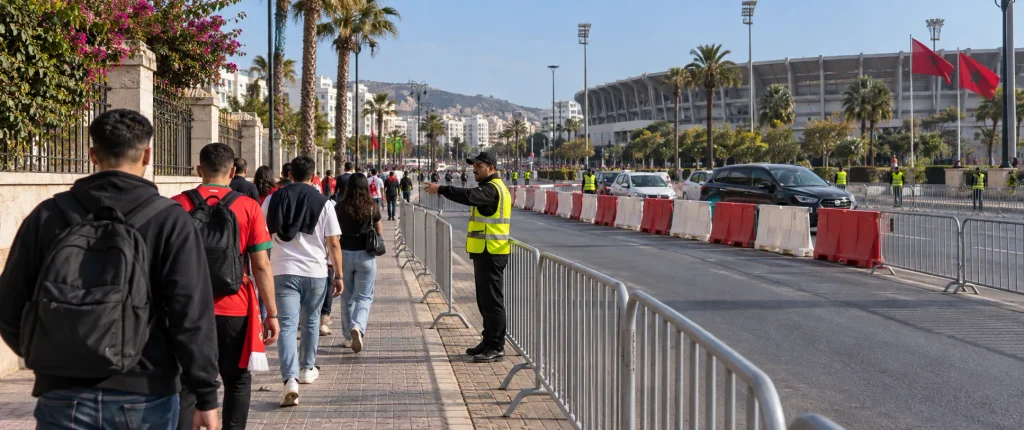
Look for access notices issued by the match organiser, stadium operator, municipality or relevant authorities. Read the publication date and the period for which the instructions apply.
Identify the roads affected, the time restrictions begin and end, and any designated parking, drop-off or pedestrian access arrangements. Where a notice distinguishes between spectators, residents and authorised vehicles, check which instructions apply to your journey.
A navigation app can help estimate distance and identify streets. Confirm its proposed route against the event notice and instructions on the ground before relying on it for the final approach.
Keep transport alerts and stadium access instructions separate
A tram service update explains conditions on that transport network. Stadium access notices explain how spectators and vehicles may approach the venue. Both can affect your journey, but they answer different questions.
Ask your driver to review the restrictions before departure and agree on an alternative approach if the original route becomes unavailable. At the perimeter, follow police and steward directions.
If a current access notice is unavailable, seek clarification from the organiser before selecting a roadside pickup point. An old tournament map or a photograph of an entrance is insufficient to confirm vehicle access for a new fixture.
Choose a permitted drop-off and meeting point

Arrange the outbound drop-off and return meeting point separately. The location that works before the match may be unavailable when spectators leave.
Choose a place where vehicles are permitted to stop and where your group can reach the correct entrance through a public pedestrian route. Agree on the precise address, landmark, pin and side of the road.
“Outside the stadium” leaves too much room for misunderstanding. A useful meeting instruction identifies a specific entrance to a named public place or another recognisable location, provided access and stopping are allowed there for the event.
A private booking still needs to follow the event’s vehicle restrictions. Confirm where the driver will actually stop and how far your group must walk.
Agree on a backup point
Select a second meeting point with the driver in case the primary location is blocked or temporarily closed. Confirm how you will reach it and how both sides will communicate the change.
Keep the fallback within a route your group can manage. If access changes, follow the instructions given by authorities and contact the driver before moving to a different location.
For a rental car, check designated parking, opening hours and how to reach the car after the match. Include the time needed to leave the parking area in any onward connection.
Plan around mobility and family needs
Tell the transport provider about wheelchair access, walking limitations, child seats and the size of your group before booking. Ask the organiser about the suitable entrance and permitted assistance arrangements.
Confirm the surface, crossings and walking distance between the stopping point and entrance. A short route on a map may still be unsuitable for someone who needs step-free access.
Plan for extra time and late finishes
Plan the return before committing to the outbound journey. Check the competition format and allow for extra time or penalties where applicable, as well as a delayed kick-off or a slower exit.
A transport booking tied to an assumed final whistle needs a clear waiting agreement. Ask when the waiting period starts, how additional time is charged and what happens if the match finishes later than expected.
Follow the event’s instructions for leaving the stadium. If a staggered departure is permitted and suits your group, coordinate that choice with the driver and any onward departure.
Check the last service from the correct stop
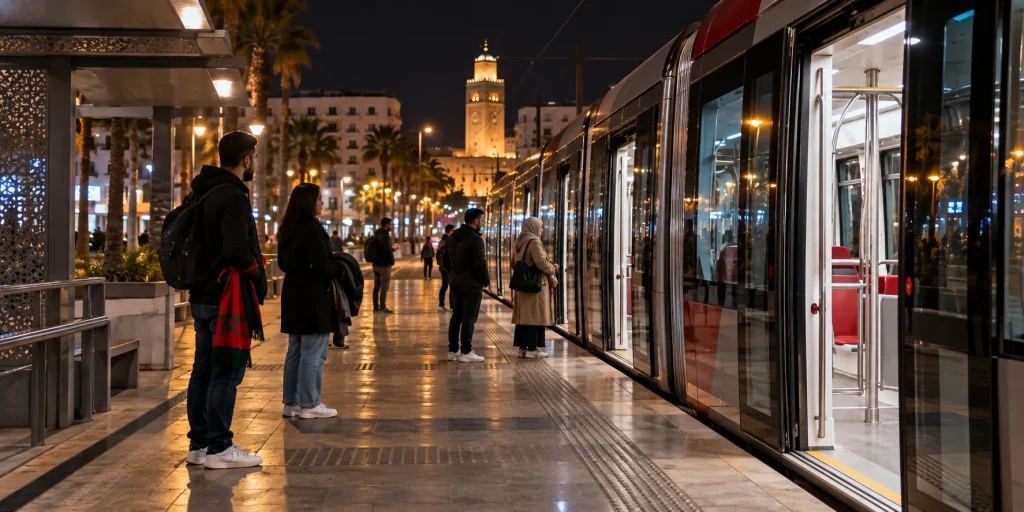
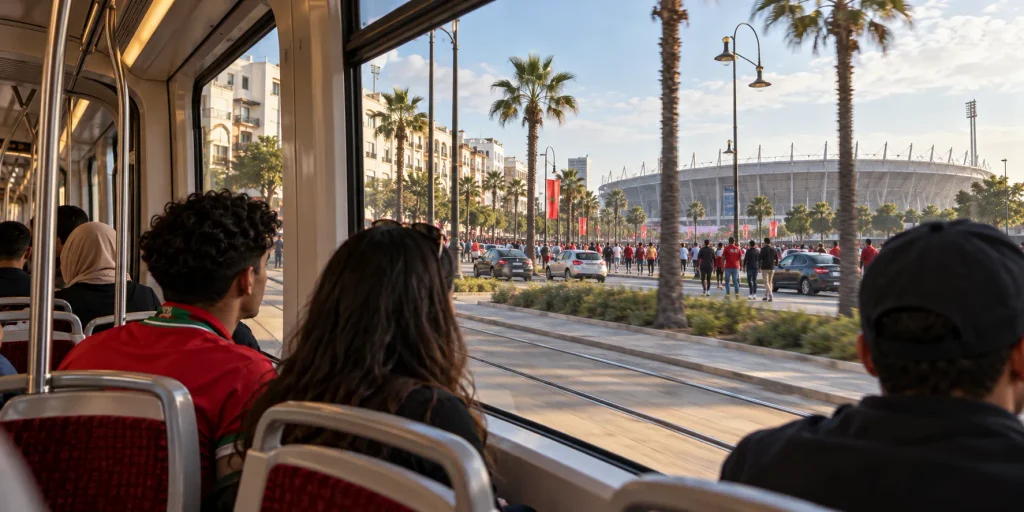
In Casablanca, use the official Casatramway and Casabusway timetables to check the line, direction and relevant stop. Distinguish a last departure from a terminus from the time a service passes your boarding stop.
Casatramway’s notice published on 18 January 2026 described extended hours and increased frequencies during CAN Morocco 2025. Those arrangements concerned that tournament; check the service announced for your own match date.
For an intercity return, consult ONCF’s official timetable search using the exact departure station, destination and travel date. Allow time to reach the station and platform after leaving the stadium.
If the online search is unavailable, confirm the timetable with ONCF before committing to the return connection.
If the departure is after midnight, search the following calendar date. Also check any connection needed to reach your final destination.
When a late finish leaves too little room for the last service, compare staying in the match city with a separately confirmed return vehicle. Our Morocco trip planning guide can help you organise overnight stops around fixed commitments.
Share the pickup plan before entering
Send the complete plan to the driver and everyone in your group while you still have a connection. Agree on the language you will use and whether contact will be by call, message or both.
Save the meeting address and relevant map area offline. Keep the driver’s contact details, booking reference and accommodation address accessible on your phone, and maintain enough battery for the return.
Use a message with these details:
- Match: teams, stadium, city and local kick-off time.
- Outbound collection: address, meeting landmark and agreed departure time.
- Stadium drop-off: confirmed stopping point and route to the entrance.
- Return meeting: precise landmark, address, pin and side of the road.
- Timing: when you will contact the driver and how waiting will be handled.
- Backup: alternative meeting point and procedure for a change.
Give the group one clear plan
Choose one person to coordinate with the driver and confirm the headcount before leaving the stadium area. For families, agree which adult stays with each child and where everyone will meet if separated.
Make sure each adult can access the meeting instructions rather than relying on one phone. If the primary location becomes unavailable, tell the group and driver which alternative you will use.
Before the match, ask what to do if messages fail, the vehicle cannot reach the agreed point or someone is delayed. Confirm the contact procedure and waiting terms rather than improvising them in the exit crowd.
Separate sightseeing transport from matchday transport
Read the scope of each transport booking. A sightseeing tour may include hotel collection and transport between attractions. An airport transfer may cover one journey between the terminal and accommodation.
For stadium transport, obtain written confirmation of the actual fixture, collection address, permitted drop-off, return meeting point, vehicle capacity and waiting arrangement. Check what happens if the venue or kick-off changes.
Ask whether parking, extended waiting, extra stops or a change of destination affect the agreed charge. Confirm child seats and accessibility arrangements where needed.
If you also plan sightseeing, give it a separate time window. A city tour’s finishing time should leave enough room to return to your accommodation, prepare for the game and begin the stadium journey.
Final checks on the day of the match
Before leaving your accommodation, check the fixture, access notice and transport updates again. Make sure the driver and group have the same version of the plan.
Confirm:
- The actual stadium, city, local kick-off and allocated entrance.
- The latest road restrictions and permitted approach.
- The agreed hotel or station collection point.
- The drop-off location and walk to the entrance.
- The return meeting point and available fallback.
- The last suitable service or confirmed return vehicle.
- The contact procedure and waiting conditions.
Keep a note of when you checked any time-sensitive notice. If the venue, access arrangements or timetable changes, update the affected part of the journey and notify everyone involved.
On arrival, compare the plan with official signage and instructions from police or stewards. Recheck your return arrangement before heading towards the meeting point after the game.
Frequently asked questions
Can a driver drop me at the stadium gate?
Only if the event permits that vehicle access and stopping arrangement. Confirm the authorised drop-off for your fixture, then check the walk to your allocated entrance. A chauffeur booking cannot guarantee permission to enter a restricted area.
Can I return by train after an evening match?
Check the date-specific departure and allow for the end of the game, stadium exit and journey to the station. If extra time, a delay or crowd dispersal would make the connection impractical, arrange another return option or stay in the match city.
What if the match venue changes?
Send the new official announcement to the transport provider. Reconfirm the city, route, collection time, price, permitted drop-off and return meeting point. Check any onward train or accommodation arrangements affected by the change before accepting the revised plan.
Where should my group meet after the match?
Use the specific public meeting point agreed beforehand, after checking event access restrictions. Give everyone the address, landmark and pin, plus the backup location and contact procedure. Keep the group together while following steward directions through the exit route.
Explore Casablanca on another day
For time away from the stadium, our guide to exploring Casablanca can help you choose city activities around your football plans. A separate sightseeing day leaves matchday available for the stadium journey and any change to the fixture.
Visit Morocco Together’s Casablanca City Discovery introduces the city through Hassan II Mosque, Art Deco architecture and its waterfront setting. The service page lists hotel pickup and drop-off, private transport, a licensed guide and the mosque entrance fee. Ask Visit Morocco Together to confirm availability, the start time, duration and pickup details for your dates before fitting the visit into your route. Plan it for a day that leaves your football arrangements clear. The tour’s transport covers the city experience; any request involving a stadium journey needs a separate written agreement on the route, access, waiting time and return collection.
Ready to Experience Morocco?
Turn this inspiration into your next adventure. Our travel experts are ready to help.