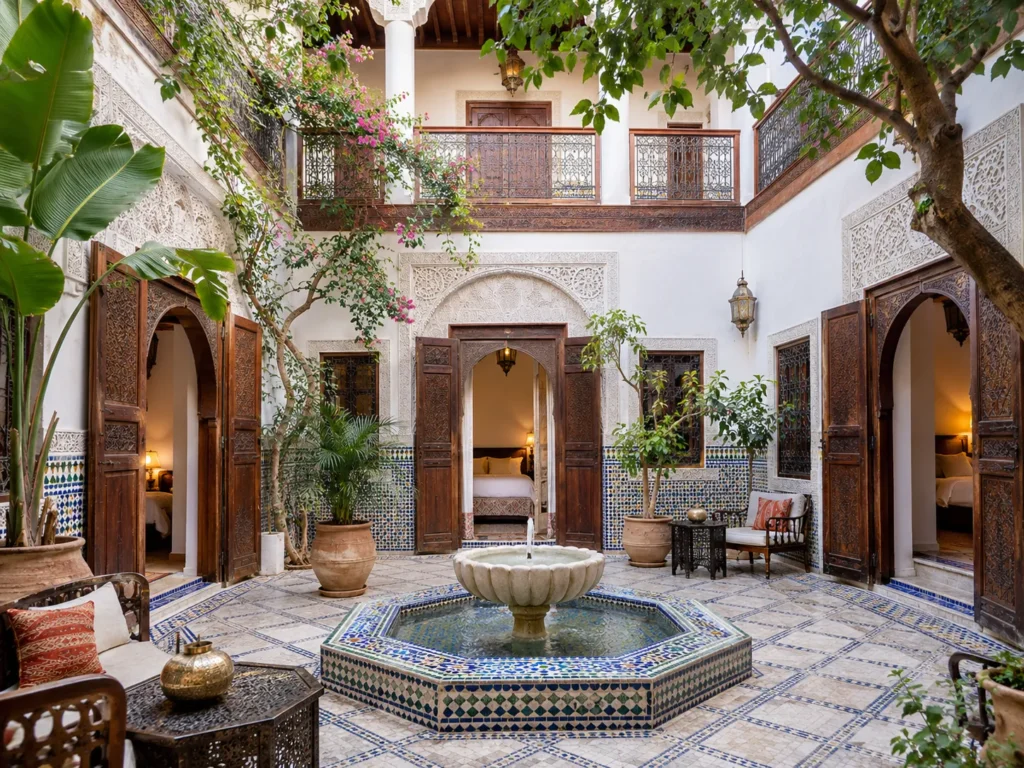
Muslim-friendly hotels and riads in Morocco meet different needs. Some travelers prioritize halal meals and prayer space; others look for alcohol-free premises, family privacy or women-only leisure facilities. Morocco’s Muslim cultural setting is familiar to many visitors, but individual properties follow different policies.
Before booking, verify the services you need rather than relying on a “halal-friendly” label. This guide covers food, prayer, privacy, Ramadan, family rooms and access.
What Does Muslim-Friendly Accommodation Mean in Morocco?
“Muslim-friendly” does not promise one standard set of facilities. A property may serve halal meals but operate a bar, or be alcohol-free without offering separate swimming times. A prayer mat in a guest room does not mean there is a dedicated prayer room.
Independent rating systems may assess food, prayer, washrooms and Ramadan services. For a claimed certification, ask who issued it and whether it covers your specific property. Neither hotel stars, the word “riad” nor a booking-site filter prove halal certification.
Riad, Hotel or Apartment: Which Type Fits Your Needs?
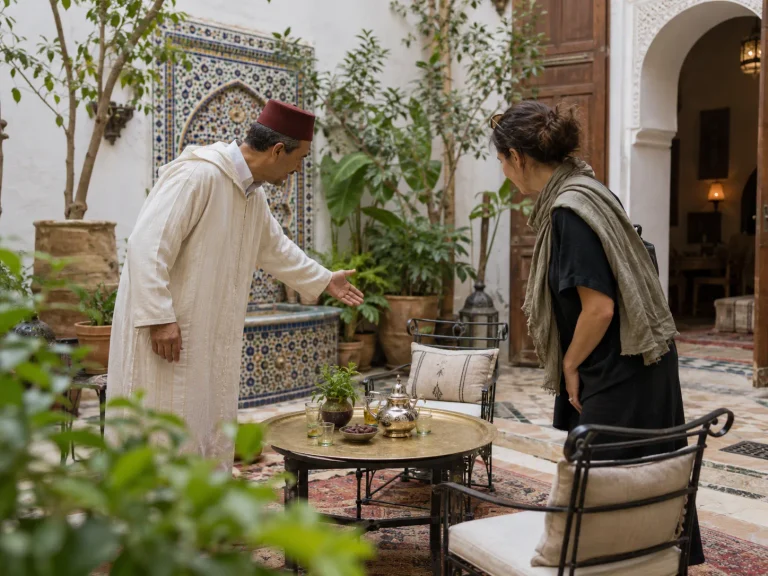
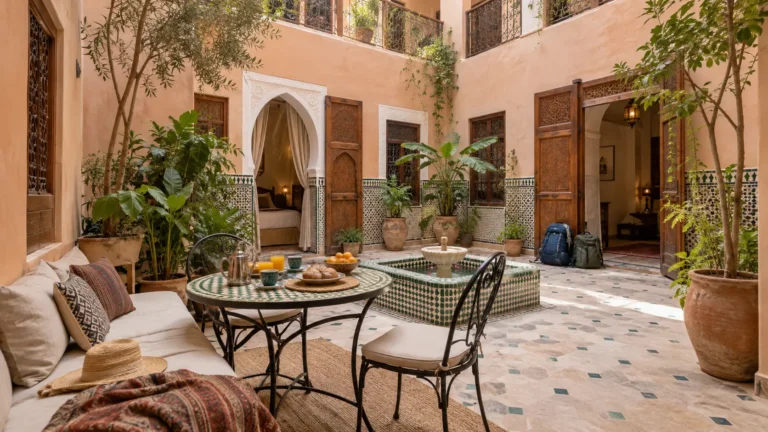
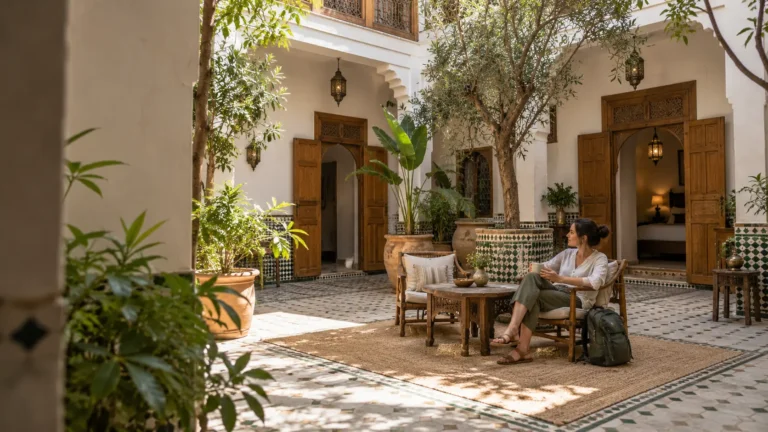
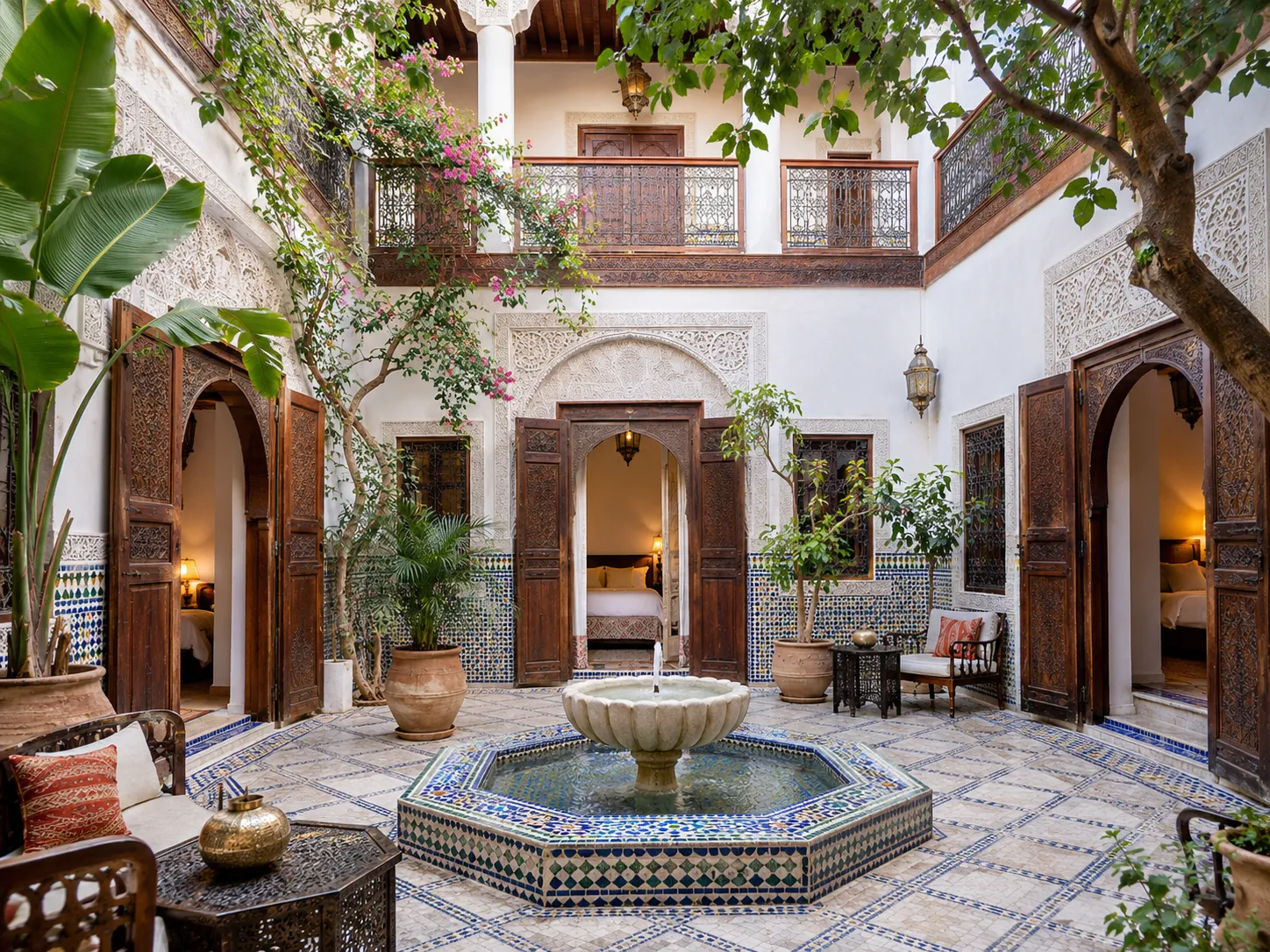
Morocco’s National Tourist Office describes a riad as a traditional house arranged around an interior patio or garden. Riads can offer an inward-facing setting, but privacy and facilities depend on the exact room and layout.
| Accommodation Type | Potential Advantage | What to Verify |
|---|---|---|
| Traditional riad or guesthouse | Smaller setting, courtyard dining and personal contact with the host | Alcohol policy, room privacy, stairs, walking access and meal arrangements |
| City hotel or resort | Potentially more room categories, lifts, restaurants and leisure facilities | Restaurant ingredients, bar areas, pool access and gender-specific services |
| Apartment or whole-property rental | Greater control over meals and use of private living space | Kitchen equipment, privacy from neighbors, legal occupancy rules and check-in support |
For accommodation types and locations beyond these specific requirements, use the Where to Stay in Morocco guide.
Check Halal Food and Alcohol Policies Separately
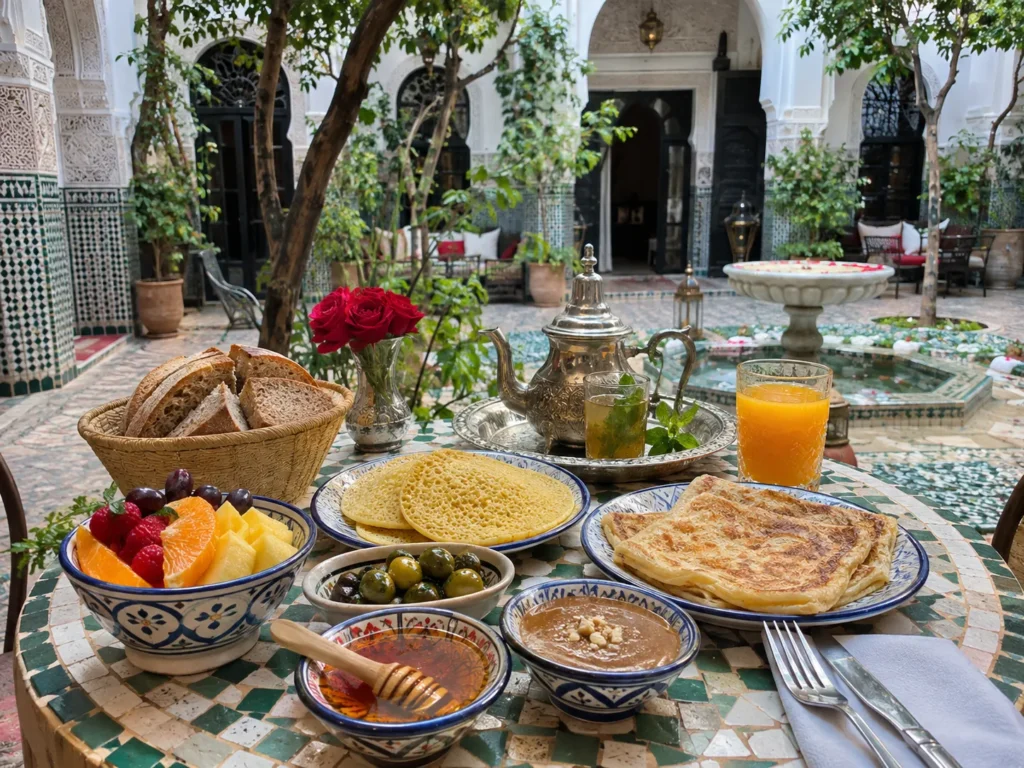
Ask What Is Actually Served
Traditional Moroccan meals often use ingredients familiar to Muslim travelers, including locally sourced meat, vegetables, bread and couscous. That cultural context is helpful, but it is not a guarantee that every menu item in an international hotel, buffet or resort is prepared according to your requirements.
If you need confirmed halal meat, ask whether all meat and poultry served by the property meet its stated halal standard, whether any certification is available, and how imported products are handled. Also check breakfast meats, desserts containing gelatin, cooking sauces and dishes prepared with alcohol. A vegetarian choice may be convenient, but its ingredients and preparation should still be checked if you have strict requirements.
Distinguish an Alcohol-Free Room From an Alcohol-Free Property
Some hotels serve alcohol and others do not. An empty minibar does not mean the restaurant, rooftop or entire property is alcohol-free. Ask whether alcohol is served or permitted anywhere on site and whether bars share family dining spaces.
The right choice depends on your requirements; confirm the policy before arriving.
Prayer Facilities, Qibla Direction and Mosque Access
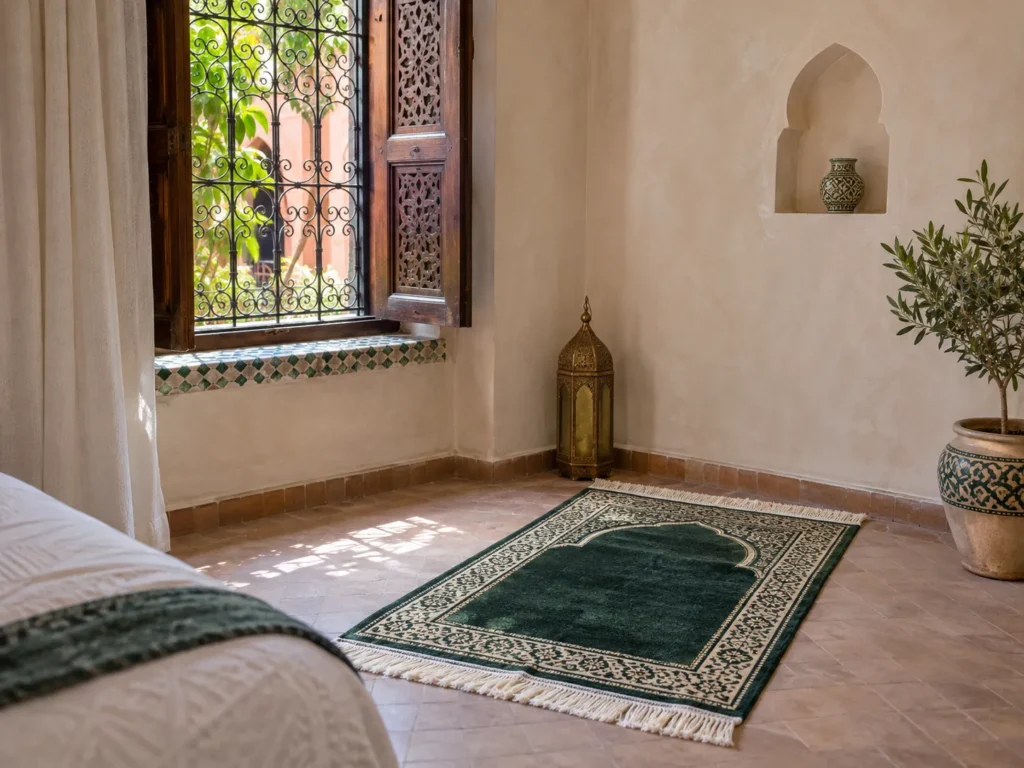
A usable place to pray may be as simple as sufficient clean floor space in your own room. If that is important to you, ask whether the booked room has enough space, whether the property provides a prayer mat, and whether staff can confirm the qibla direction. A dedicated prayer room should be treated as a separate amenity, not assumed from the presence of a nearby mosque.
For ablution, check the bathroom arrangement if you need a handheld spray, bidet or another convenient source of water. Historic riads can have compact bathrooms or different plumbing from a modern hotel. Request a specific room arrangement rather than relying on photographs of a different category.
For congregational or Friday prayers, ask which mosque is practical to reach. The walking route and access matter more than a map pin. Morocco’s Ministry of Habous and Islamic Affairs publishes city-specific prayer times; use the schedule for your location and dates.
Privacy, Swimming Pools and Spa Arrangements
Privacy is often the most misunderstood part of a “Muslim-friendly” hotel description. A private room does not mean a private courtyard, pool or rooftop. A swimming pool described as private may be exclusive to a particular villa but visible from neighboring balconies or staff areas.
If modest swimming is a priority, ask whether the pool is fully screened from outside view, who can access it, and whether any female-only or male-only sessions are scheduled. For a hammam or spa, clarify whether the treatment area is exclusive-use, whether attendants can be requested by gender, and whether facilities are shared between appointments. Do not assume gender-separated sessions exist without written confirmation.
Families may also want connecting rooms, a cot, a secure terrace or a safer arrangement around an unfenced plunge pool. Check the exact booked room, not just the property’s promotional photographs. These practical questions matter as much as a hotel’s general description.
Staying in a Moroccan Hotel or Riad During Ramadan
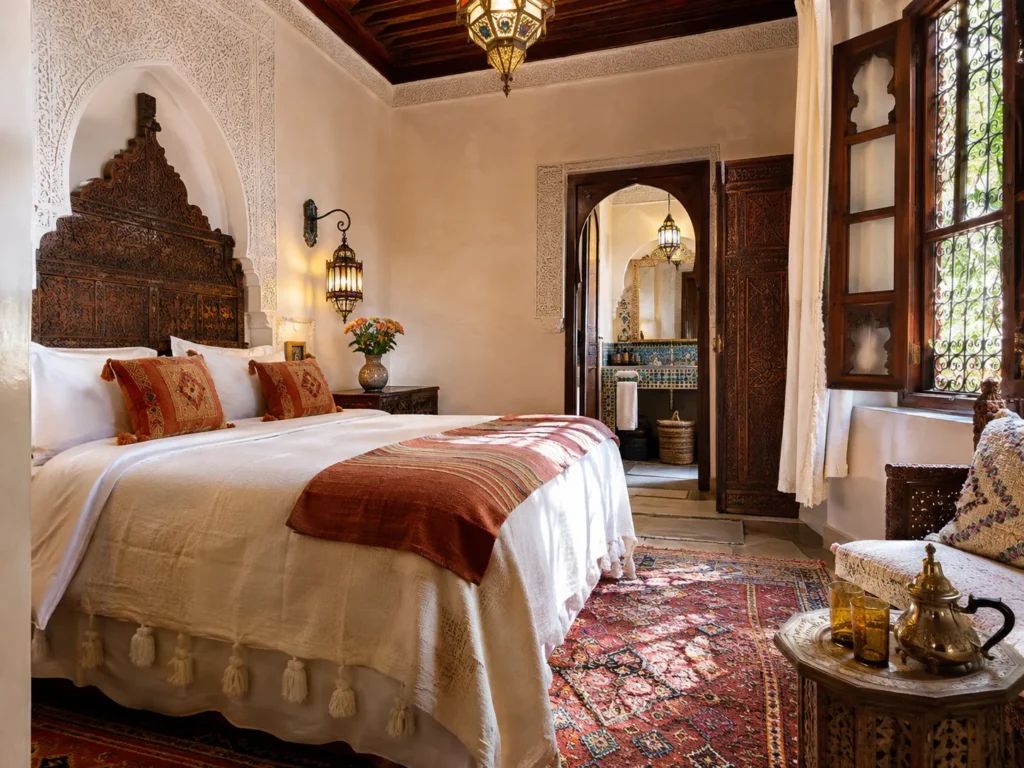
Ramadan can change meal schedules and local business hours. If you will be fasting, ask whether the accommodation offers suhoor before dawn, a packed pre-dawn meal or access to food you can store safely. Also check whether an iftar or ftour meal is included, available at extra cost or not offered.
Confirm the meal times for your actual travel dates. A property may provide breakfast for non-fasting guests while making separate arrangements for fasting visitors; neither service should be presumed. Ask whether you can arrive or return late after evening prayers and whether the reception will still be staffed.
Also check daytime meals for children and non-fasting companions. Read Eating During Ramadan in Morocco for more context.
Choose the Right Neighborhood, Not Just the Right Facilities
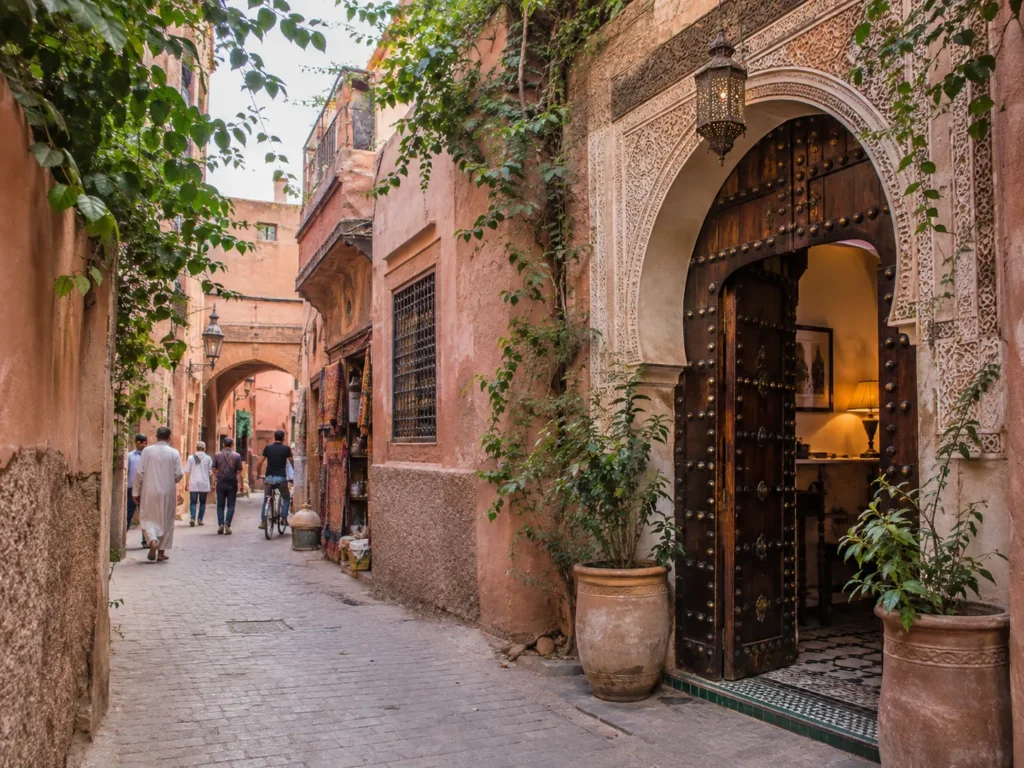
A property can meet your food and privacy requirements yet be inconvenient to reach. Historic medinas may have pedestrian streets, steps and vehicle restrictions. Modern districts can make airport pickups easier but may put you farther from the sights you want to visit or the mosque you prefer.
Marrakech
A medina riad can suit guests who want traditional accommodation and frequent walks through the old city. Guéliz and Hivernage are alternatives for travelers prioritizing larger hotels or road access. Compare the actual room and walking route rather than assuming all medina properties are equally close to the same mosque or attractions. The Marrakech neighborhood guide explains these differences.
Fes and Chefchaouen
In Fes, an accommodation address inside the medina may require a walk from the nearest vehicle-access point. Check stairs, luggage help and late-night directions, especially if you expect to return after evening prayers. The Fes Medina guide provides local context.
Chefchaouen has hillside streets and stepped lanes, so even a short distance on a map can involve a climb. The Chefchaouen travel guide is useful for choosing a realistic base. In other Moroccan cities and resorts, the same rule applies: verify the route to your room, nearby services and transport pickup point.
In pedestrian areas, even a private transfer may stop at a nearby street or gate. Confirm luggage assistance and the actual drop-off point.
Choosing Muslim-Friendly Hotels and Riads in Morocco
Send a short written enquiry to the exact property and ask it to answer the questions relevant to your stay. A general response saying “we are Muslim-friendly” is less useful than clear answers about specific services.
| Priority | Question to Send |
|---|---|
| Food | Are all meat and poultry dishes halal, and can you confirm any certification or ingredient restrictions? |
| Alcohol | Is the entire property alcohol-free, or only the room or selected dining areas? |
| Prayer | Is there room to pray privately, a prayer mat or qibla information, and a suitable mosque nearby? |
| Privacy | Is the pool or terrace overlooked, and are any gender-separated spa or swimming sessions available? |
| Ramadan | Can you provide suhoor and iftar on our dates, at what times and at what additional cost? |
| Room and access | Which room will we occupy, does it have a private bathroom, and where can our vehicle stop? |
| Booking terms | Which meals, taxes and facilities are included, and what are the cancellation conditions? |
Save the reply with your reservation. Confirm which room category and dates each promise covers, especially before a non-refundable booking.
Do You Need a Fully Alcohol-Free or Halal-Certified Hotel?
Not necessarily. Travelers differ in which provisions they consider essential. Some will be comfortable in a hotel that offers suitable halal meals and a private room even if other guests use a separate bar. Others will prefer a property where no alcohol is served at all. Similarly, some require independent halal certification, while others are satisfied with a clear explanation of the kitchen’s sourcing and procedures.
Make a personal shortlist of non-negotiable requirements, then compare properties against those points. If the property cannot provide a reliable answer about something important to you, choose another option rather than assuming the answer will be favorable. For broader expectations around local customs, the Morocco culture and etiquette guide provides additional context.
FAQ
Are all hotels in Morocco halal?
No single description covers every property. Morocco’s Muslim cultural setting does not establish that every international hotel restaurant is halal-certified, that alcohol is never served, or that leisure facilities are separated by gender. Verify the specific services you need.
Are riads in Morocco usually alcohol-free?
Some riads do not serve alcohol, while others have licensed dining or drink service. The traditional architectural style does not determine the policy. Ask whether alcohol is offered anywhere on the property, including rooftop and dining areas.
Do Moroccan hotels provide prayer mats and qibla direction?
Some do, or can help guests on request, but they are not guaranteed in every room. Ask about a prayer mat, a reliable qibla direction and sufficient private space before reserving.
Can I find a hotel with a private pool or women-only swimming?
These arrangements may be available at certain properties, but they must be checked individually. A private pool can still be overlooked, and a hotel with a spa does not necessarily offer women-only sessions. Request precise written confirmation.
Can riads arrange suhoor and iftar during Ramadan?
Some hotels and riads offer Ramadan meal arrangements, but schedules and charges differ. Ask whether suhoor or a packed meal is available before dawn, whether iftar is provided, and whether late check-in or entry is supported.
Is a riad or a modern hotel better for Muslim families?
Neither is universally better. A riad may offer a smaller atmosphere and courtyard accommodation; a modern hotel may offer lifts, family rooms and more facilities. Check privacy, food, room layout, children’s safety and transport access at the actual property.
Book According to Your Own Priorities
Finding Muslim-friendly hotels and riads in Morocco is less about choosing a particular label and more about obtaining clear answers. Check the meals and alcohol policy, prayer arrangements, privacy, Ramadan services and practical room access before making a non-refundable reservation. Keep written confirmation of the services that matter most to your group.
For more Morocco accommodation and travel-planning guidance, explore Visit Morocco Together.
Ready to Experience Morocco?
Turn this inspiration into your next adventure. Our travel experts are ready to help.