Eating during Ramadan in Morocco is manageable for visitors, but the daily rhythm changes. Non-fasting travelers can still find food during daylight hours, particularly at hotels, riads and restaurants serving visitors. The main differences are reduced daytime choices in some areas, changing business hours and a noticeable pause around sunset when people break the fast.
The easiest approach is to plan rather than worry: confirm breakfast and lunch options, keep your schedule flexible around sunset, and avoid conspicuous eating or drinking in busy public spaces during fasting hours when a more discreet option is available.
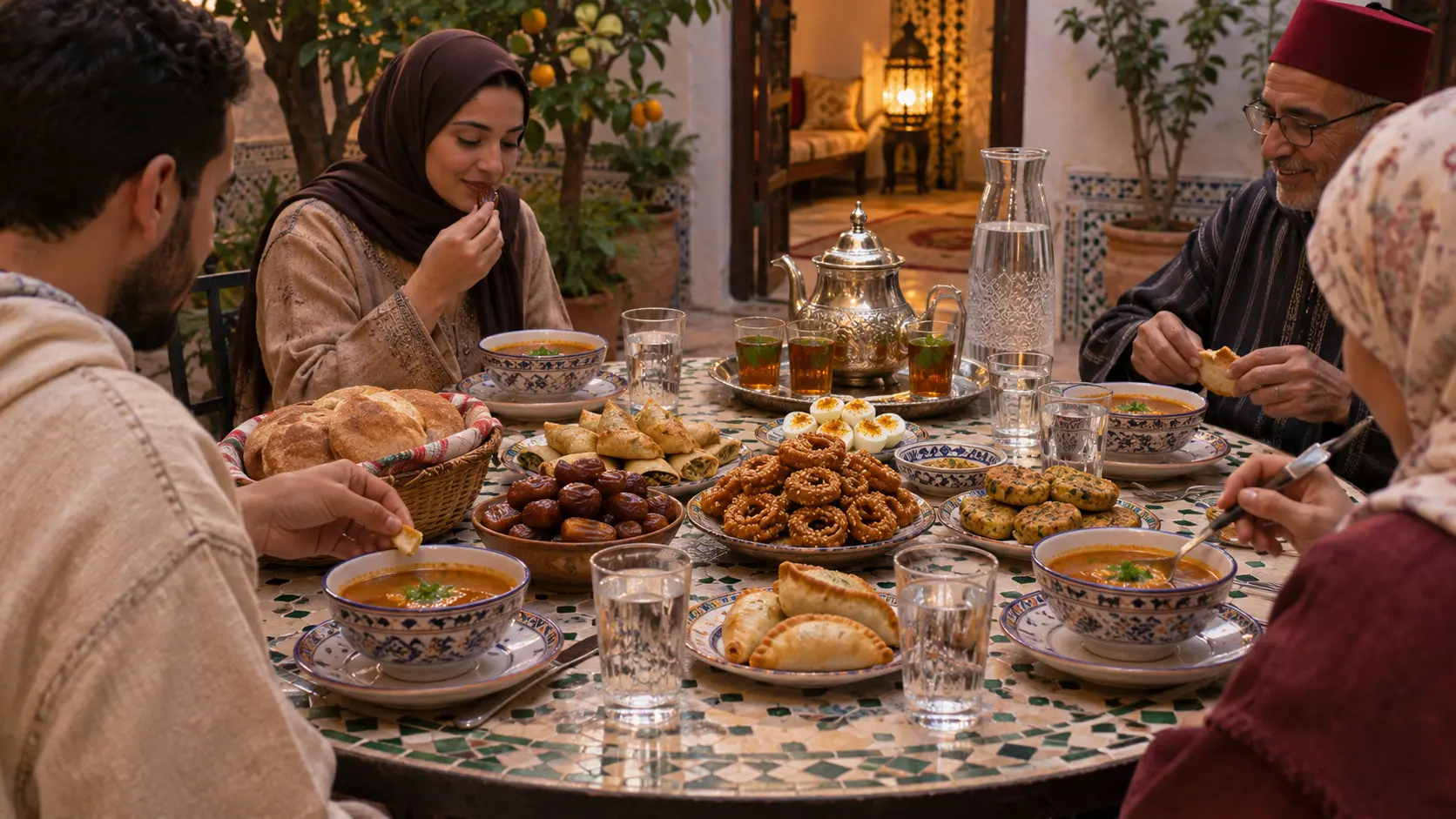
After sunset, food becomes one of the most interesting parts of Ramadan travel. Harira, dates, chebakia and other foods associated with the fast-breaking meal appear on tables, while streets and cafés often become livelier later in the evening.
How Ramadan Changes the Eating Schedule in Morocco
During Ramadan, Muslims who are fasting abstain from food and drink from dawn until sunset. This changes the timing of daily life as well as restaurant and café routines.
There is no single Ramadan schedule across Morocco. A restaurant in a major visitor area may continue serving lunch, while a neighborhood café nearby may remain closed until later in the day. Hotels and riads generally have more predictable arrangements for guests, but even these should be confirmed directly.
The period immediately around sunset is the biggest change for travelers to understand. Many people are heading home or preparing to break their fast, and some businesses pause service. Streets that were active shortly beforehand can become noticeably quieter for a time.
Later in the evening, the pattern reverses. Families go out, cafés reopen, people visit friends and relatives, and shopping and dining can continue later than travelers might expect from the quieter afternoon.
Eating During Ramadan in Morocco: What Happens at Iftar?
The meal that breaks the daily fast at sunset is known internationally as iftar and is often called ftour in Morocco. It is both a meal and an important social moment, frequently shared with family.
There is no mandatory menu that every Moroccan household follows. Recipes and combinations vary by family and region, but several foods are closely associated with Ramadan.
Dates
Dates are a familiar way to begin the fast-breaking meal. They may be served with water, milk or another drink before the rest of the food arrives.
Harira
Harira is one of the dishes most strongly connected with Moroccan Ramadan. Recipes vary, but the soup commonly combines tomatoes, pulses and herbs, with ingredients such as chickpeas, lentils, flour and vermicelli appearing in different versions.
It is filling without necessarily being the largest meal of the evening, which makes it well suited to the first stage of eating after a day of fasting.
Chebakia
Chebakia is a sesame pastry that is fried, coated with honey and shaped into an intricate folded form. Its sweetness provides a strong contrast to harira, and the two are frequently associated with the Ramadan table.
You may see bakeries and market stalls preparing or selling large quantities during the month.
Breads, Pancakes and Eggs
Msemen, breads and eggs may also appear as part of ftour. Other households may add savory pastries, olives, cheeses, juices or homemade sweets.
Travelers should treat these as common possibilities rather than a checklist. A simple family meal can look quite different from a large iftar spread prepared by a hotel or restaurant.
Can Tourists Eat During the Day in Ramadan?
Yes. Visitors are not expected to fast simply because they are traveling in Morocco during Ramadan. The Moroccan tourism authorities specifically note that tourists are not required to observe the fast and that food remains available to them during the day.
Finding food is generally easiest in accommodation, larger tourist centers and restaurants accustomed to serving international travelers. The number of choices can be smaller than at other times of year, particularly outside the busiest visitor areas.
The more important consideration is how you eat. When many people around you have been fasting since dawn, openly eating a large meal or drinking conspicuously in a crowded street can feel inconsiderate.
Eating inside a restaurant, riad, hotel or another appropriate indoor setting is the simplest solution. If you need water, food or medication for health reasons, prioritize your needs; when practical, choose a discreet setting rather than feeling pressured to go without.
Where to Find Breakfast and Lunch During Ramadan
Hotels and Riads
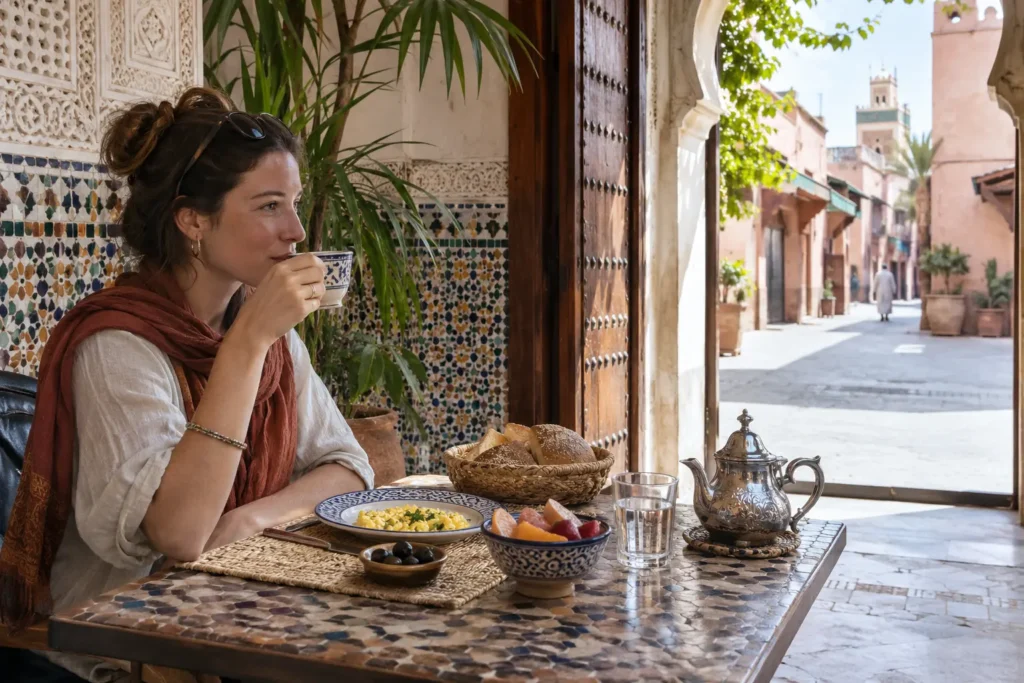
Your accommodation is often the most reliable place to begin. Many hotels and riads continue providing breakfast for non-fasting guests, although serving times and locations may change.
If you have an early departure, dietary requirements or children who need regular meals, ask about breakfast arrangements in advance rather than assuming the normal schedule applies.
Restaurants in Visitor Areas
Restaurants that regularly serve travelers may continue operating during daylight hours in destinations such as Marrakech, Fes, Casablanca, Essaouira and Agadir. Others may open later or offer a reduced menu.
Current hours are more important than an old online listing during Ramadan. Confirm directly when a particular restaurant matters to your plans.
Local Cafés and Small Restaurants
Small neighborhood businesses are more likely to adjust their daytime schedule around fasting. Some may close entirely until late afternoon or evening.
This is one reason a traveler relying heavily on spontaneous street food can find Ramadan more complicated than someone comfortable planning a daytime meal in advance.
Road Trips and Rural Areas
Food planning becomes more important once you leave major visitor centers. Do not assume that the next village or roadside stop will have a restaurant serving lunch during fasting hours.
If you are traveling between destinations, ask your accommodation or driver about realistic meal stops and carry suitable snacks and water for private use. This is especially useful for families and travelers with specific dietary needs.
Planning Dinner Around Sunset
The fast ends at sunset, but that does not mean every restaurant immediately begins normal dinner service. Staff may also be fasting and need time for their own ftour.
If you want dinner near sunset, ask the restaurant whether it is serving a Ramadan iftar, closing briefly or reopening later. Arrangements vary considerably between establishments.
Avoid building a tightly timed itinerary around this part of the day. Leave some flexibility between late-afternoon sightseeing, transport and dinner rather than expecting service to operate exactly as it would outside Ramadan.
If you are moving between cities, confirm transportation times separately as well. Business routines and traffic patterns can shift around the fast-breaking period.
How Visitors Can Experience a Moroccan Iftar
You do not need an invitation to a private home to experience Ramadan food. Some hotels, riads and restaurants prepare special ftour menus during the month.
These can be a practical option for visitors because they bring several traditional Ramadan foods together in one meal. What is included, how much it costs and whether advance booking is required varies by establishment, so check current details before making plans.
If you are genuinely invited to join a family meal, treat the invitation as hospitality rather than a performance arranged for visitors. Follow your host’s lead, wait until the group begins eating and ask permission before photographing people or the gathering.
Do not expect or pressure guides, accommodation staff or other people you meet to invite you into their homes. A restaurant or riad ftour is a perfectly valid way to experience the food traditions while respecting personal boundaries.
What to Eat After Iftar
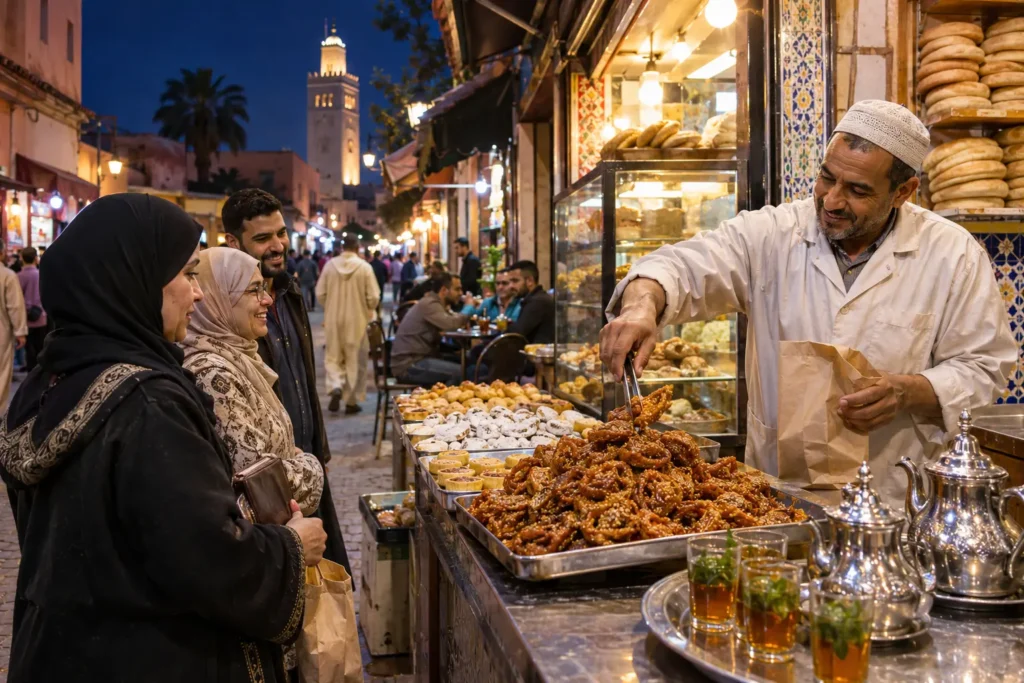
Ftour is not necessarily the only food people eat during the evening. After the initial fast-breaking meal, families may eat again later, and cafés and food businesses can become active as the night develops.
This makes Ramadan evenings a useful time to explore Moroccan food if you are comfortable with a later schedule. Depending on the destination, you may find pastries, sandwiches, grilled foods, tea and everyday Moroccan dishes available after the initial sunset pause.
Availability differs between large cities, small towns and rural areas, so avoid assuming late-night dining is equally extensive everywhere.
What About the Pre-Dawn Meal?
People who are fasting may eat again before dawn. This pre-fast meal is commonly known as suhoor, with local pronunciation and terminology varying.
Most visitors will not need to organize their day around it. However, it becomes relevant if you have an extremely early airport transfer, hike or road departure. Your accommodation’s normal breakfast service may not match your departure time, so ask whether an early meal or packed breakfast can be arranged.
Food Etiquette During Ramadan
Ramadan does not require visitors to imitate people who are fasting. Respect is more useful than performance.
- Eat indoors when practical during fasting hours. Hotels, riads and open restaurants provide comfortable spaces for non-fasting travelers.
- Avoid conspicuous public eating and drinking. This is particularly considerate in crowded medinas, markets and residential areas.
- Be patient with service. Restaurant, hotel and transport staff may be fasting while working.
- Do not expect normal opening hours. Confirm restaurants, shops and activities that are important to your day.
- Respect the sunset pause. Give staff time to break their own fast rather than demanding immediate service.
- Ask before photographing people. This is especially important during family meals, religious moments and evening gatherings.
- Respect religious spaces. Ramadan is a period of religious observance, not simply a food festival.
Traveling with Children or Dietary Requirements
Families and travelers with dietary requirements should do a little more preparation during Ramadan, especially on travel days.
Keep appropriate snacks available, confirm accommodation breakfasts and identify a realistic lunch option before setting out. Travelers with allergies should continue asking about ingredients just as they would at any other time of year.
Vegetarian and plant-based travelers can still find many familiar Moroccan options, but a special Ramadan menu may have a fixed selection. Ask what is included before committing to a set ftour.
If regular food or hydration is important for health reasons, do not change your needs simply to match the fasting schedule around you. Discretion and cultural respect can coexist with looking after yourself.
Is Ramadan a Good Time for a Food-Focused Morocco Trip?
It can be, but there is a tradeoff.
Travelers who want spontaneous daytime café stops, long lunches and a completely predictable restaurant schedule may find Ramadan less convenient. Travelers who are flexible about timing can encounter foods and evening routines that are especially associated with the month.
The key is to adjust the day. Use daylight hours for sightseeing at a comfortable pace, arrange lunch rather than leaving it to chance, and allow more time for the evening after ftour.
Ramadan dates change each year because they follow the Islamic lunar calendar, and the exact beginning and end are confirmed according to the religious calendar. Check the current year’s dates before building a trip around the month.
Eid al-Fitr, which marks the end of Ramadan, also changes the rhythm of travel. Family gatherings and holiday closures can affect services, so confirm arrangements if your arrival or departure falls around Eid.
FAQs
Will tourists be able to find food during Ramadan?
Yes. Hotels, riads and many restaurants serving visitors continue providing food during the day. Choices may be more limited, particularly in smaller towns or local neighborhoods, so planning ahead is useful.
Can tourists drink water during the day?
Visitors are not expected to fast. You can drink water, but using a discreet setting when practical is considerate of people around you who are fasting. Always prioritize hydration or medical needs when necessary.
What time is iftar in Morocco?
Iftar takes place at sunset, so the time changes by date and location. Do not rely on a fixed time from an older article. Check the current local sunset or ask your accommodation on the day.
What foods should I try during Ramadan?
Harira, dates and chebakia are particularly associated with Moroccan Ramadan. Msemen, breads, eggs, savory pastries, juices and other foods may also form part of ftour depending on the household or restaurant.
Are restaurants closed all day during Ramadan?
No. Some close or reduce daytime service, while hotels, riads and restaurants serving visitors may remain open. Restaurant hours vary, so verify a specific place rather than assuming a national rule.
Should tourists fast while visiting Morocco?
No. Visitors are not expected to fast. Showing respect for people who are observing Ramadan is more important than attempting to follow a religious practice that is not your own.
Plan Around Ramadan’s Rhythm, Not Against It
Eating during Ramadan in Morocco becomes straightforward once you plan around the altered daily rhythm. Arrange a reliable daytime meal, be discreet when eating or drinking in public, expect a pause around sunset and leave room for the evening to unfold at a slower pace.
For the food-focused traveler, the reward is a chance to encounter harira, chebakia and ftour in the season when these traditions carry their fullest meaning. The goal is not to turn Ramadan into an attraction, but to travel thoughtfully while everyday Moroccan life follows a different schedule.
For more practical destination and cultural advice, browse more Morocco travel guides.
If cultural traditions are an important part of your wider itinerary, Visit Morocco Together’s Cultural Discoveries offer a useful starting point for exploring Morocco beyond its major sights.
Ready to Experience Morocco?
Turn this inspiration into your next adventure. Our travel experts are ready to help.