Morocco travel styles are different ways to organise your trip around the people travelling, the support you need and how you want to spend each day. You might travel independently between cities, join a shared excursion and reserve a private guide for a particular interest. A family holiday can include adventure; a honeymoon can be simple and unhurried.
Start with the decisions that affect everyday comfort: walking, driving, sleep, meals and changing accommodation. Then choose the places and experiences that fit. A route becomes much easier to judge when you can picture an ordinary day on it, including the time spent getting from one activity to the next.
Which Morocco travel styles match your priorities?
Choose your travel style by deciding who is coming, how much organisation you want to handle, what support is necessary and which interest matters most. Treat these as separate choices. Travelling solo does not require joining a group, and a private vehicle does not automatically make a journey luxurious or accessible.
| Your priority | A useful starting point | The detail that needs attention |
|---|---|---|
| Time together with young children | Fewer accommodation changes and short activities | Sleep, meals, child seats and return options |
| Company while travelling alone | Shared activities or a small-group departure | Group size, room arrangements and free time |
| Privacy as a couple | A quiet base with selected private experiences | Actual room privacy and time without appointments |
| Control over daily arrangements | A private itinerary or independently booked trip | What can change after booking and at what cost |
| Mobility or sensory access | A route built around specific requirements | Measured access, assistance and suitable alternatives |
| A particular interest | Several nights around one useful base | Enough time with the subject and relevant local expertise |
Use the Morocco destinations guide to shortlist places after establishing those priorities. Choosing ten appealing destinations first makes it harder to recognise when the resulting trip no longer suits your group.
Should you travel independently, join a small group or book privately?
Independent travel gives you control over separate bookings; small-group travel provides a shared programme; private travel reserves specified services for your party. Compare the responsibilities and restrictions of each arrangement, including who handles changes when one part of the journey is disrupted.
| Format | What may suit you | What to clarify |
|---|---|---|
| Independent | Choosing individual stays, transport and activities | Connections, luggage handling and support for each booking |
| Small group | Travelling with company on an organised route | Maximum group size, departure conditions, pace and optional costs |
| Private | Coordinating activities around your own party | Which services are exclusive, guide hours and change terms |
| A combination | Using organised help for selected days | Where responsibility passes between providers |
“Private” and “tailor-made” answer different questions. A private tour can follow a fixed itinerary. A customised itinerary can still include shared accommodation facilities or a group activity. Ask exactly which parts are reserved for you.
An independently booked city stay with a guided morning can work well when you enjoy organising your own evenings. A private vehicle becomes more relevant when your party needs coordinated stops or has several bags and specific equipment. A small group may suit travellers who value company and are comfortable following a common timetable.
Check the practical connections in how to get around Morocco. Include the journey between a station or vehicle drop-off and your accommodation, particularly when comparing the convenience of different formats.
How should a family itinerary change with children’s ages?
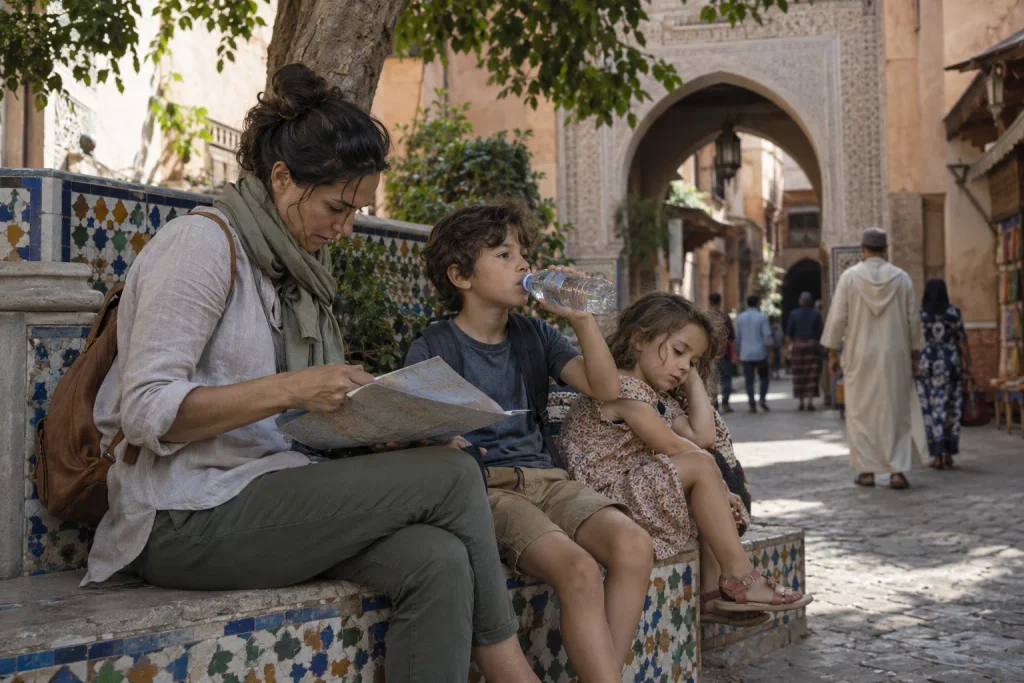
A family itinerary should follow the children’s actual routines and capabilities. Toddlers, school-age children and teenagers can need very different versions of the same day. Build the shared programme around what everyone can manage, then add optional activities for those who want more.
What matters when travelling with toddlers?
Protect sleep, familiar meal routines and opportunities to stop. A short outing from one base may be easier to adapt than an excursion whose return depends on completing a long circuit. Consider where a child can rest and how quickly you can return to the accommodation.
Ask about cot availability, room layout and the route from the vehicle to the entrance. For road journeys, provide the child’s age and size and request confirmation of the appropriate child seat and its installation. Check these arrangements for every transfer, including the airport journey.
What changes with school-age children and teenagers?
Give children a role in choosing the day. They might prefer a supervised cooking session, an artisan demonstration or a short outdoor activity to several consecutive sightseeing stops. Check the activity’s minimum age, duration and participation requirements before presenting it as a firm plan.
Teenagers may appreciate some choice over meals, photography stops or an afternoon activity. Agree meeting points and supervision rather than assuming the same independence works in every setting.
For all ages, distinguish an advertised family room from the sleeping arrangement you need. Confirm beds, connecting doors where relevant, bathroom access and whether adults can remain awake without disturbing children who have gone to sleep.
What works for multigenerational groups and older travellers?
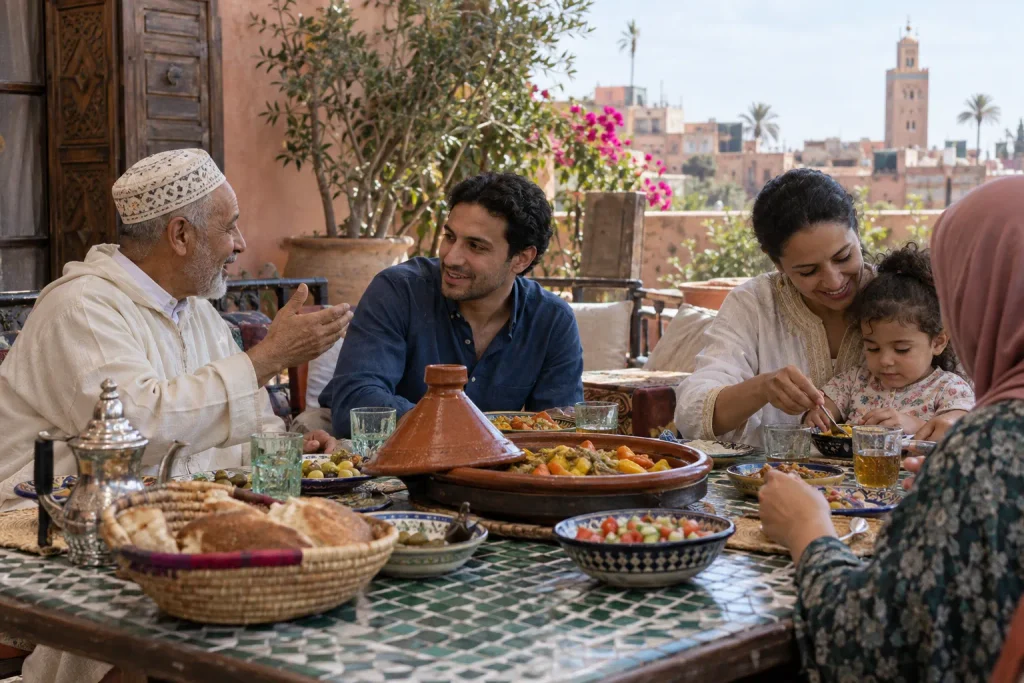
Plan one shared focus for the day and make additional activities optional. This creates time together while allowing different walking preferences, sleep routines and interests. Age alone does not tell you how active somebody wants to be; ask each traveller directly.
A multigenerational morning might include a short cultural visit followed by lunch together. Afterwards, some people can continue sightseeing while others return to the accommodation. That only works if the return transport, room access and meeting arrangements have been agreed beforehand.
Choose accommodation with a comfortable shared space as well as appropriate bedrooms. Confirm whether a ground-floor room is actually step-free from the entrance and dining area. Check vehicle capacity with luggage included, especially when the group needs a child seat, walking aid or wheelchair.
For older travellers, discuss standing time and recovery between outings as well as distance walked. A short route with long periods standing can be tiring. Build seated breaks into the day and avoid treating every free afternoon as an invitation to add another excursion.
How should solo travellers compare shared and private options?
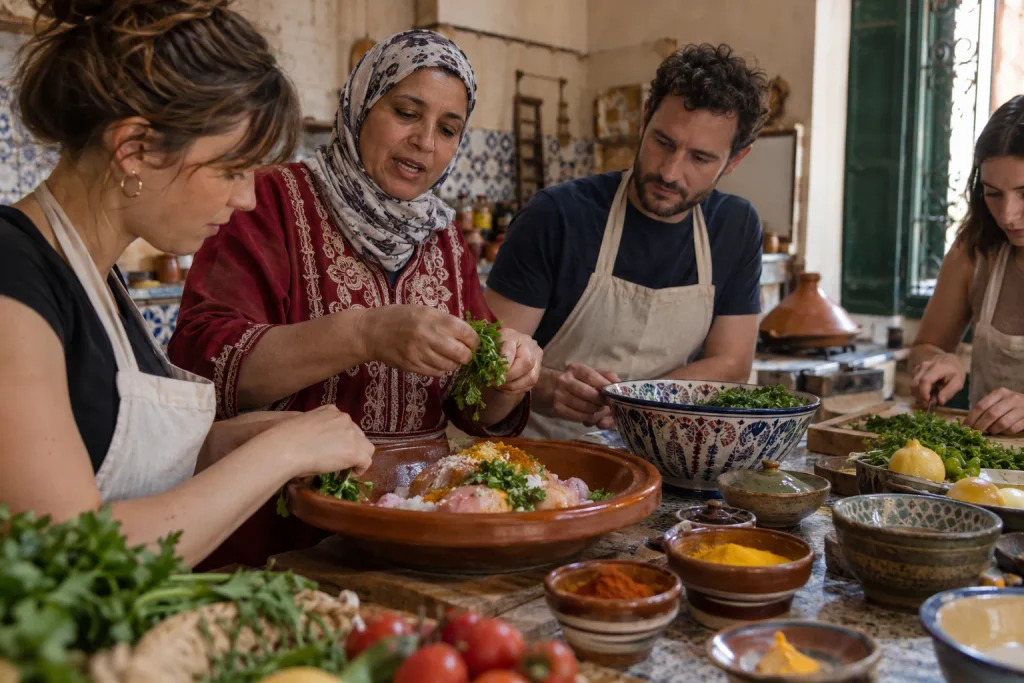
Compare the total cost, the amount of company you want and the freedom you need. A shared trip can create regular social contact, while private arrangements can give you more control over the programme. Independent travel can combine quiet days with selected group activities.
Ask whether a quoted price assumes two people sharing a room. Establish the final solo price, any single supplement and whether room sharing is optional. For a group departure, check the minimum number of participants, cancellation conditions and what happens if the departure does not run.
A shared excursion does not necessarily provide company for the rest of the day. Look at where it ends, how you return to your accommodation and whether evening meals are included. Conversely, a private driver or guide is providing a defined professional service; confirm working hours and responsibilities.
If you want company for a particular interest, a cooking activity or guided cultural visit can provide a useful point of contact without determining your entire itinerary. Choose the format around how you enjoy travelling, rather than assuming there is one standard solo experience.
What should couples prioritise for a Morocco honeymoon?
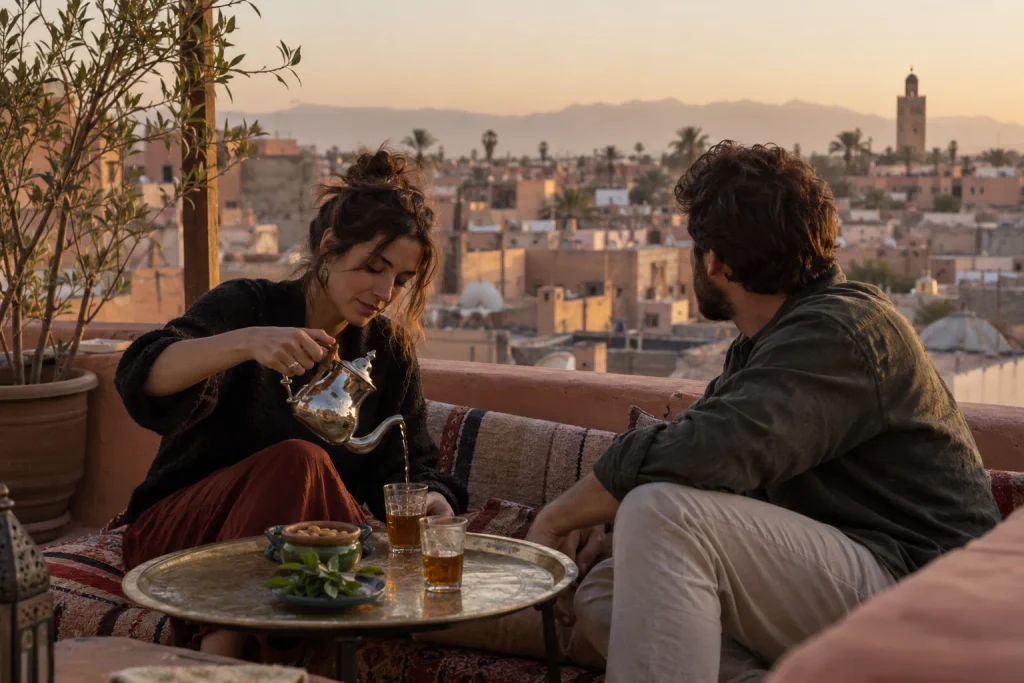
Prioritise time together, the accommodation features you will actually use and a pace both partners enjoy. Discuss those preferences before choosing a route. One person may imagine quiet mornings and long meals, while the other wants early departures and several activities each day.
Room details matter more than a romantic label. Ask whether a terrace or pool is private, whether the room faces a busy communal area and what dining arrangements are available. Confirm any celebration requests separately from the normal booking inclusions.
Leave space around the experiences you care about. An evening meal feels different after an unhurried afternoon than after a full transfer day and several timed visits. If a desert stay is a priority, give its travel days a realistic place in the itinerary instead of squeezing it between two city stays.
Agree how much of the budget belongs to accommodation, activities and transport. That conversation helps avoid paying for features that matter to only one person.
What does luxury travel in Morocco actually include?
Luxury travel should be assessed through specific services, facilities and support. A premium room, private transport and specialist guiding are separate components. Decide which improvements will make a noticeable difference to your journey, then ask for those items in the proposal.
Compare the named accommodation and room category, vehicle capacity, guiding arrangements, included meals, entrances and assistance outside scheduled activities. Find out which elements remain subject to availability and how substitutions are handled.
For a desert camp, ask about the bathroom arrangement, temperature control, power supply and the journey from the road to the tent. A luxury description alone does not answer those questions. A private tent also does not mean that the whole camp is reserved for your party.
Keep flexibility realistic. Changing a departure time may be possible while moving a prepaid stay involves availability and charges. Ask the organiser to distinguish choices you can make during the trip from changes that require a new booking. Comfort can also come from fewer transfers and more time at a property you have chosen carefully.
How should travellers with mobility needs plan their trip?
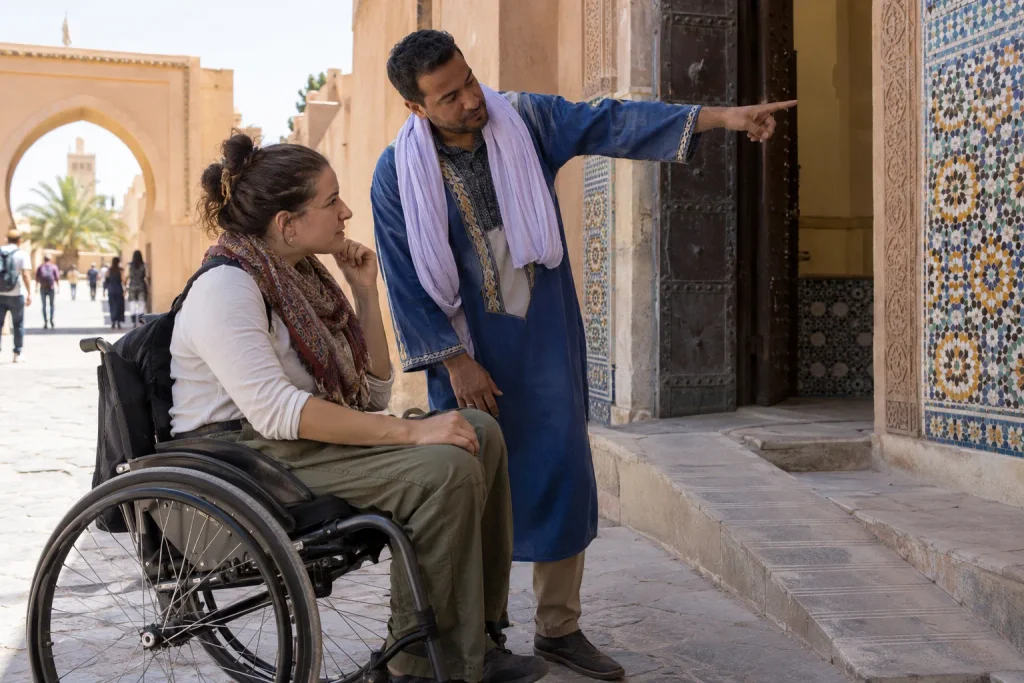
Plan access for the complete journey, from the vehicle to the room, bathroom, dining area and each activity. Describe your own requirements precisely and request measurements where they affect whether a service will work. A general accessibility label cannot establish suitability for every traveller.
The FCDO’s guidance on disability and travel abroad recommends stating assistance needs clearly and confirming arrangements in writing. For accommodation, its advice includes checking doorway widths, bathroom facilities and step-free access.
Build your enquiry around these practical details:
- Arrival: Distance and surface between the vehicle and entrance, including steps and slopes.
- Vehicle: Boarding method, seat transfers and space for your equipment.
- Room: Clear doorway widths, movement space and the route to meals.
- Bathroom: Toilet access, shower entry, grab rails and the space you need beside fixtures.
- Outings: Walking or rolling distance, rest points, toilets and a workable return route.
- Assistance: Who provides it, which tasks are included and any additional cost.
Request recent photographs of the actual room and bathroom, rather than relying on general property images. Where relevant, ask about lighting, quieter spaces and written or spoken communication options.
Agree alternatives before booking. If part of a medina walk or mountain outing does not fit your requirements, discuss a different visit with suitable access. The traveller should decide which options are acceptable; unexpected lifting or carrying is not a substitute for an agreed arrangement. A shorter programme can create more room to enjoy each place, but it still needs the right facilities.
How can you build a slower wellness or coastal stay?
Choose a base where you can enjoy ordinary days without frequent transfers, then add a small number of activities. A wellness break needs time to rest; a sequence of treatments between long drives may not deliver the pace you want.
The Moroccan National Tourist Office’s wellness overview describes options ranging from traditional hammams to hotel spa facilities. These settings can offer different levels of privacy, assistance and formality. Ask what a particular booking includes, who provides the treatment and whether facilities are shared.
For a coastal stay, decide whether you want beach time, town walks, restaurants or a particular water activity. Choose accommodation around that priority and check local conditions for the dates of your visit. A sea view does not establish easy access to the shore or suitable conditions for swimming.
Give unplanned time a place in the itinerary. Staying an extra night can make more difference to the pace than adding another organised relaxation activity.
How do desert and adventure trips affect the pace?
Adventure trips need planning around the activity itself and the travel required to reach it. Compare actual walking, riding, climbing or driving with your experience and preferences. A scenic route can still involve tiring days in a vehicle.
For example, the three-day Merzouga camel trek and desert camp tour from Marrakech travels through the Atlas and Dades area, continues to Merzouga and returns to Marrakech. Its published programme combines road travel with a camel trek and camp stay. That structure deserves careful consideration if your priority is short driving days or long stays in one place.
For any proposed adventure, ask about the longest travel day, activity duration, terrain, equipment and participation requirements. If you do not want to ride a camel or complete a walk, establish whether a suitable alternative is available and what it costs before booking.
Choose one activity that matters enough to justify the journey. With limited time, leaving the desert or mountains for another visit can make room for a more satisfying city or coastal stay. A private vehicle changes the arrangements; it does not shorten the geography.
How can food, crafts, architecture or photography shape a route?
Choose one main interest and use it to decide where to spend more time. Add related experiences nearby instead of turning every interest into a separate long-distance stop. This makes room for questions, observation and changes of plan.
For a food-focused stay, leave space between a market visit, cooking activity and substantial meal. Ask whether a class is hands-on or demonstration-based, how long participants stand and how dietary requirements are handled. A broad city tour with a snack stop serves a different purpose from a dedicated cooking session.
For architecture, Fes can be a focus for medina streets, courtyards and craft traditions. Select a few places that answer your interests and confirm which interiors are open to visitors. A building’s historical significance does not imply unrestricted admission.
For crafts, the Tiznit silver workshop experience provides a specific example: watching silver artisans at work during a visit from Agadir. Decide whether observation is what you want. A workshop visit does not by itself promise a jewellery-making lesson, and purchases should be considered separately from the experience price.
For photography, explain whether your priority is architecture, landscapes, food or portraits. Early or late outings affect meals, transport and rest for everyone travelling. Agree photography stops and ask permission before photographing people or working inside a private space. Travellers with different interests may appreciate separate activities during a longer photography session.
How should football fit into a wider Morocco trip?
Build a football trip around confirmed event arrangements while keeping the surrounding sightseeing flexible. Check the fixture, venue and ticket conditions with the organiser or club before making dependent bookings. Allow space for matchday transport and changes to the day’s timing.
A city visit can fill a non-match day, but it should not be presented as providing stadium admission, match tickets, hospitality or access to training. Those are separate arrangements that need explicit confirmation.
For a mixed-interest group, decide who is attending the match and what the others will do. Agree return transport and a meeting plan so that one person’s main event does not leave everyone else waiting without a programme.
What does travelling beyond the main circuit involve?
Choose a less familiar stop because it supports an interest, a relationship with a local host or a route you want to explore. Give it enough time and establish the practical arrangements. A place does not need to be described as untouched to be worth visiting.
Ask who is hosting the experience, what visitors are invited to do and how the visit is paid for. A workshop, farm or home is also somebody’s working or private space. Visits and photographs need consent, and a personal encounter should not be treated as an automatic inclusion.
Check transport, meals, accommodation and a fallback if a planned visit cannot happen. Avoid adding a distant detour merely to make an itinerary sound unusual. Spending longer in one neighbourhood or returning to an artisan with questions can provide depth without adding another overnight stop.
How can you turn these choices into a realistic itinerary?
Start with the nights available, arrival and departure arrangements, and one primary interest. Then allocate complete days, leaving transfer days lighter. Count nights at each base instead of describing every calendar day as a full sightseeing day.
For an illustrative seven-night family trip, four nights in Marrakech and three in Essaouira could provide two bases, one accommodation change and room for optional activities. Whether that arrangement fits depends on the flights, children’s routines and the travel involved at each end.
For an interest-led week, staying in one city can also be a deliberate choice. Someone interested in Fes architecture and food might prefer several shorter visits, a cooking session and free afternoons over a circuit that offers only one full day there. Match the number of bookings to your appetite for organised activity.
Before adding another destination, decide what it replaces. If it removes the only rest day or requires an early departure after a late arrival, the trade-off should be clear to everyone travelling.
What should you include when requesting a trip proposal?
Send a brief that describes how your party wants to travel as well as where you want to go. Include dates, arrival and departure points, ages of children, room arrangements, budget, access requirements and the experiences that matter most.
An example brief could read: “We have seven nights, two adults and a seven-year-old. We want two bases, one practical food activity and free afternoons. Please show the longest transfer day, proposed beds, child-seat arrangements and the cost of optional activities separately.”
Add anything you want to avoid, such as frequent hotel changes, camel riding or early starts. State which requirements are essential and where you are open to alternatives. Keep detailed medical information for an appropriate private discussion where it is needed.
When discussing options with Visit Morocco Together, ask for the proposed route, named services, inclusions, exclusions and change terms in writing. Choose the plan whose ordinary days fit your group, then confirm the individual services that make those days possible.
Ready to Experience Morocco?
Turn this inspiration into your next adventure. Our travel experts are ready to help.