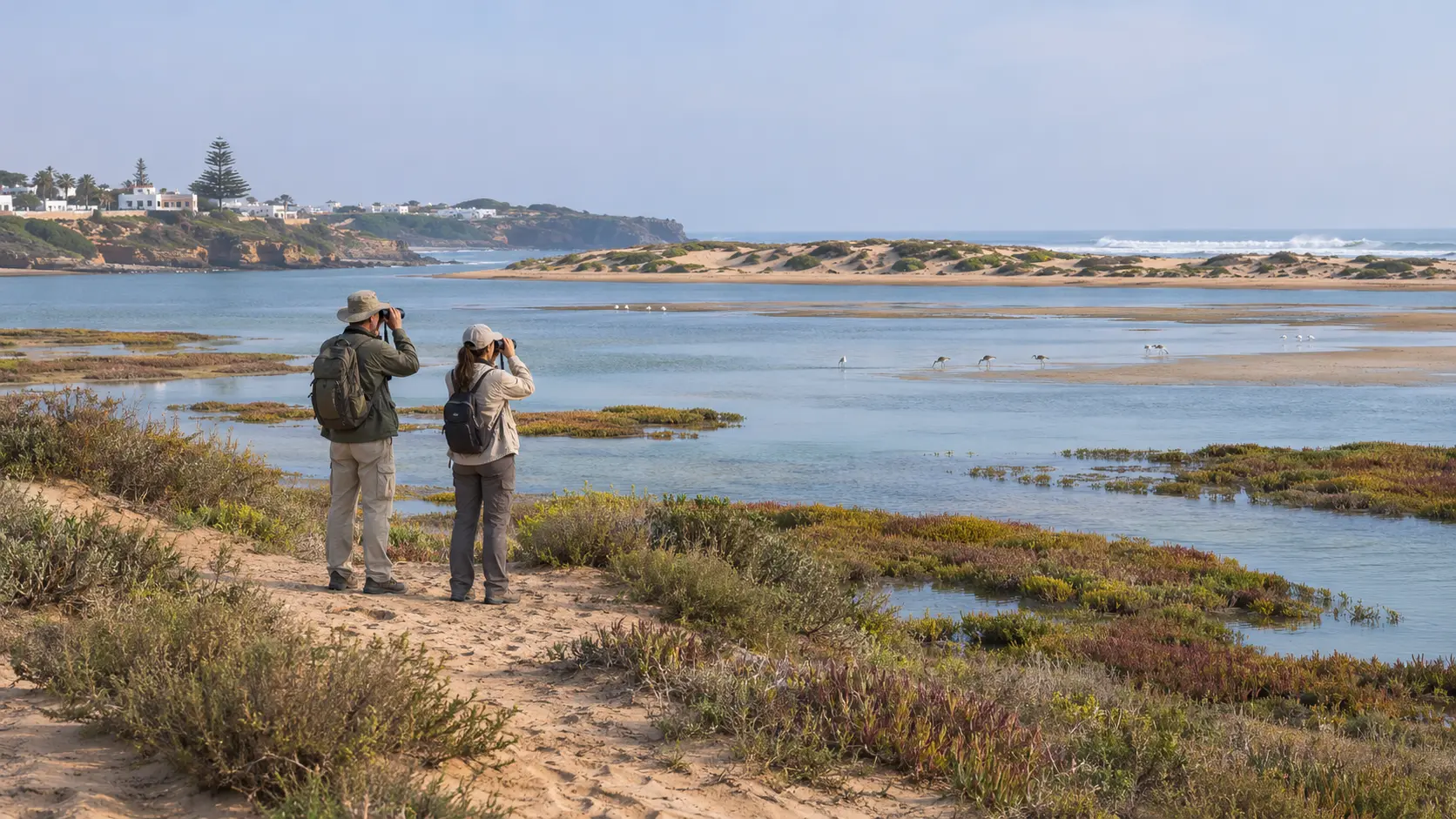
Oualidia lagoon birdwatching offers an opportunity to observe migratory birds, flamingos, herons and other coastal wildlife along Morocco’s Atlantic coast. Located between El Jadida and Safi, Oualidia is known for its sheltered tidal lagoon, surrounding wetlands and opportunities to explore the water by traditional boat.
For first-time visitors, the most practical choices are watching birds from an accessible shoreline viewpoint or arranging a guided boat excursion with someone familiar with the lagoon. A boat can help visitors explore suitable channels, while shore-based observation offers a quieter and more economical alternative.
Spring and autumn are particularly interesting for migrating birds, while winter can also provide rewarding opportunities to observe waterbirds. Flamingos are among the species visitors hope to see, but their presence depends on the season, tides and local conditions.
The most important rule is to watch wildlife without changing its natural behavior. Birds should never be chased, approached too closely or disturbed simply to obtain a photograph.
This guide explains which birds may be seen, how to choose between shore-based viewing and boat tours, why tides matter and what to check before booking a responsible birdwatching experience in Oualidia.
Why Is Oualidia Lagoon Good for Birdwatching?
Oualidia’s importance for birdlife comes from its coastal wetland environment.
The lagoon is connected to the Atlantic Ocean and sheltered from much of its open-water swell by sandy barriers and dunes.
As the tide rises and falls, shallow channels, mudflats and sandbanks provide different feeding and resting areas for waterbirds.
The surrounding wetlands also contain salt marshes and other habitats used by resident and migratory species.
Oualidia forms part of the Sidi Moussa–Oualidia wetland complex, which is recognized under the Ramsar Convention as a Wetland of International Importance.
This wider complex includes two separate coastal lagoons, Oualidia and Sidi Moussa, alongside marshes, salt pans and other coastal habitats.
Its position along the East Atlantic migratory route makes it an important stopping and wintering area for birds traveling between Europe and Africa.
For visitors, this means that birdwatching is not limited to one viewpoint or a single species. Different parts of the wetland support different birds, and the experience changes throughout the year.
However, Oualidia is a working coastal environment as well as an important wildlife habitat. Boats, fishing activities, local businesses and visitors share parts of the lagoon. Responsible observation means respecting both the wildlife and the people who use the area.
What Birds Can You See at Oualidia Lagoon?
Oualidia attracts a variety of coastal and migratory birds. The species visible on a particular day depend on migration patterns, water levels, weather and the location being observed.
Some birds feed in shallow water, others search exposed mudflats, and larger species may rest in quieter parts of the wetland.
Flamingos: Oualidia’s Most Recognizable Visitors
Greater flamingos are among the most sought-after birds in the Oualidia area.
These long-legged waterbirds may be seen feeding in shallow water or gathering in suitable wetland areas.
Spring and autumn are useful periods to consider because of seasonal bird movements, while sightings may also occur at other times.
However, flamingos do not remain in one location throughout the year.
They may be feeding farther into the wetland complex, outside the area reached by a short lagoon excursion, or may not be present during your visit.
Do not choose a tour solely because an advertisement shows flamingos. Ask whether the guide expects suitable viewing opportunities for the season, but treat any sighting as a possibility rather than a guarantee.
A good birdwatching experience can still be rewarding without flamingos.
Herons, Egrets and Spoonbills
Oualidia’s shallow waters and marshes can support several distinctive larger waterbirds.
Species associated with the wider wetland complex include:
- Grey herons: Tall birds often seen standing quietly in shallow water while searching for food.
- Egrets: White herons that may feed around wetland edges and shallow channels.
- Eurasian spoonbills: Recognizable by their unusually shaped bills, which they sweep through shallow water while feeding.
- Cormorants: Diving waterbirds that may be seen swimming or resting near suitable waterside perches.
- White storks: Large birds associated with parts of the surrounding wetland landscape, particularly during seasonal movements.
These birds offer interesting viewing opportunities because their feeding and movement patterns can often be observed from a distance.
Binoculars are particularly useful, as large birds can appear close across open water while still being too far away to see clearly with the naked eye.
Waders and Smaller Shorebirds
Oualidia is also important for shorebirds, commonly called waders.
These species use shallow water, exposed sand and mudflats to search for food.
Depending on the season, visitors may encounter:
- Curlews: Recognizable by their long, downward-curving bills.
- Godwits: Long-billed shorebirds that probe soft ground for food.
- Plovers: Smaller birds often seen moving across exposed shorelines.
- Avocets: Distinctive waders with slender, upward-curving bills.
- Black-winged stilts: Elegant birds with exceptionally long legs.
- Oystercatchers: Coastal birds with strong bills adapted for feeding on shoreline prey.
Many of these birds are easier to appreciate when watched patiently rather than approached for a closer look.
They may spend long periods feeding or resting, particularly during migration when conserving energy is important.
Gulls, Terns and Other Coastal Birds
Gulls and terns are also part of the Atlantic coastal birdlife around Oualidia.
Some may be seen flying over the lagoon, resting on sandbanks or searching for food near the water.
These birds can provide interesting opportunities to observe flight patterns and feeding behavior.
Not every species mentioned in this guide will appear on the same excursion. A guide familiar with local birds can help identify what is actually present rather than relying on a predetermined checklist.
Best Ways to Experience Oualidia Lagoon Birdwatching
There are several ways to watch birds in Oualidia, and each suits a different type of traveler.
The main choice is between observing from land and exploring suitable sections of the lagoon by boat.
1. Shore-Based Birdwatching: Simple and Flexible
Watching birds from publicly accessible areas around the lagoon is a practical option for travelers who prefer not to take a boat.
From a suitable shoreline viewpoint, you may be able to observe birds feeding in shallow water, resting on exposed banks or moving between different parts of the wetland.
Best suited to:
- First-time birdwatchers who want a relaxed introduction.
- Travelers who prefer to explore independently.
- Visitors carrying binoculars or a camera with a telephoto lens.
- Families who want a shorter activity without boarding a boat.
- People who prefer to remain on land.
The main advantage is flexibility. You can spend time watching the birds without needing to follow a fixed excursion schedule.
The limitation is that some feeding or resting areas may be too distant to see clearly from accessible viewpoints.
Stay on established paths and permitted public areas. Do not cross private land, enter working facilities or walk across sensitive mudflats to get closer to wildlife.
2. Guided Boat Tours: Explore More of the Lagoon
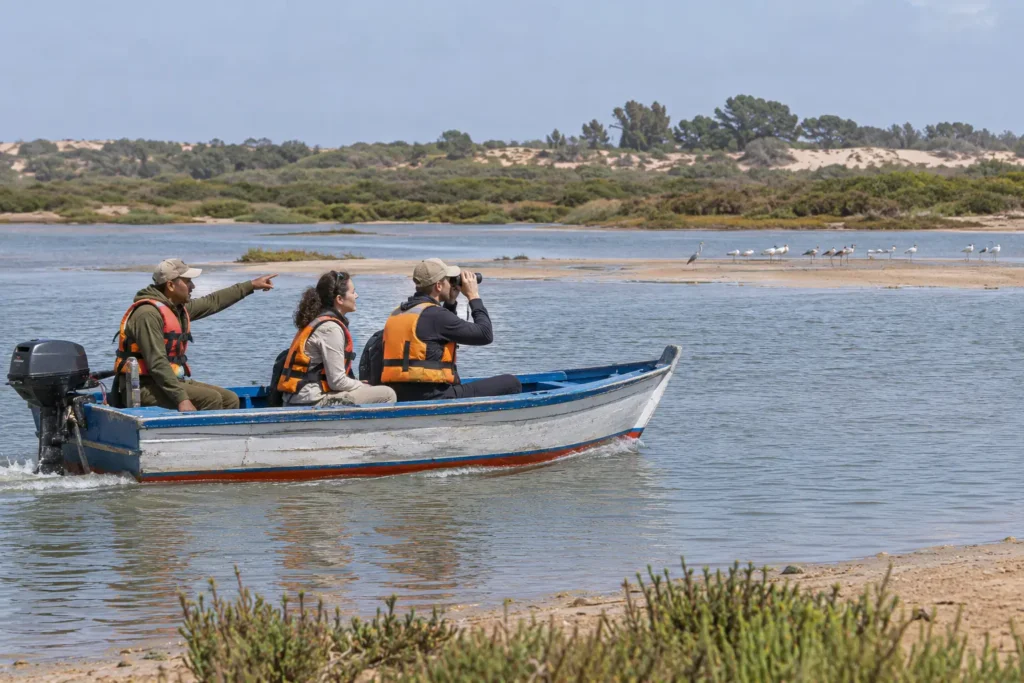
Traditional wooden boat excursions are a popular way to explore Oualidia’s sheltered waters.
Some outings focus mainly on the coastal scenery, while others provide a more specific birdwatching experience.
A knowledgeable guide can help identify species, explain the wetland environment and choose suitable viewing areas according to conditions.
Boat excursions may offer views of birds that are difficult to observe from the central beach.
Best suited to:
- Travelers who want to combine lagoon exploration with birdwatching.
- Visitors interested in seeing different wetland environments.
- Families looking for an organized nature activity.
- Photographers who want opportunities to observe birds from the water.
However, a boat does not automatically improve every wildlife encounter.
Birds may move away from approaching vessels, and some areas should be avoided to prevent disturbance.
A responsible boat operator should maintain an appropriate distance and never pursue birds to provide closer photographs.
Routes also depend on tides, wind and water depth. A boat cannot necessarily reach every part of the lagoon during every tidal stage.
3. Specialist Birdwatching Excursions
Travelers with a particular interest in bird identification may prefer an excursion focused specifically on the wetland’s birdlife.
These experiences can offer more interpretation than a general sightseeing cruise.
For example, La Sultana Oualidia advertises a birdwatching safari that introduces participants to the lagoon’s ecosystem with a guide.
Depending on the weather, the experience may use a boat or kayak. The operator also describes binoculars and other equipment as part of its arrangements.
This is a hotel-associated experience, so visitors should confirm current reservation conditions and whether participation is available to people who are not staying at the property.
Best suited to: Travelers interested in understanding bird behavior, migration and the importance of protecting coastal wetlands.
4. Kayaking for a Quieter Water-Based Experience
Kayaking can provide another way to explore suitable areas of the lagoon.
Without a motor, kayaks can offer a quieter experience, but they can still disturb wildlife when paddlers approach too closely.
Kayaking also requires attention to tidal currents, wind and the ability of each participant.
For visitors whose main goal is birdwatching rather than paddling, a guided boat excursion or shore-based observation may be more comfortable.
If you prefer a kayak, choose an appropriate supervised outing and confirm that the route avoids sensitive bird habitats.
When Is the Best Time for Birdwatching in Oualidia?
Oualidia can offer birdwatching opportunities throughout the year, but seasonal migration has a strong influence on the species present.
Spring: Migratory Birds Moving North
Spring is an interesting period for birdwatching as migratory species move toward their northern breeding areas.
The lagoon and surrounding wetlands can provide feeding and resting opportunities during these journeys.
Visitors may encounter different waders, waterbirds and other migrating species.
Flamingos may also be present, although their movements remain unpredictable.
Spring weather can vary, so wind and rain may still influence outdoor excursions.
Summer: Coastal Birdlife and Busier Beaches
Birdwatching remains possible during summer, although the seasonal mix of species differs from the main migration periods.
Some birds remain in or around the wetland complex, while others may be less numerous or located elsewhere.
Summer can also bring more visitors to Oualidia’s beaches.
If you prefer a quieter experience, consider observing birds away from the busiest recreational areas, using accessible viewpoints and following local guidance.
Do not assume that summer offers the same migration activity as spring or autumn.
Autumn: A Rewarding Migration Period
Autumn is another important period for birds traveling along the Atlantic migratory route.
Different species may use the wetland as they move south or stop to rest and feed.
For travelers interested in seeing a variety of migratory birds, autumn is a good season to consider.
However, migration takes place over time rather than on one predictable date. The birds present during one week may differ from those seen during another.
Winter: Waterbirds and Shorebird Watching
The wider Sidi Moussa–Oualidia wetland complex is important for wintering waterbirds.
Winter can therefore offer worthwhile opportunities to observe waders and other species using the coastal wetlands.
The main tradeoff is weather. Rain, wind and cooler conditions may affect visibility, comfort and the availability of boat excursions.
For winter visits, allow flexibility rather than arranging a single boat trip without an alternative plan.
How Tides Affect Birdwatching in Oualidia Lagoon
The lagoon changes continuously with the Atlantic tides.
Water levels influence where birds feed, where they rest and which areas are accessible by boat.
Low Tide: Exposed Feeding Areas
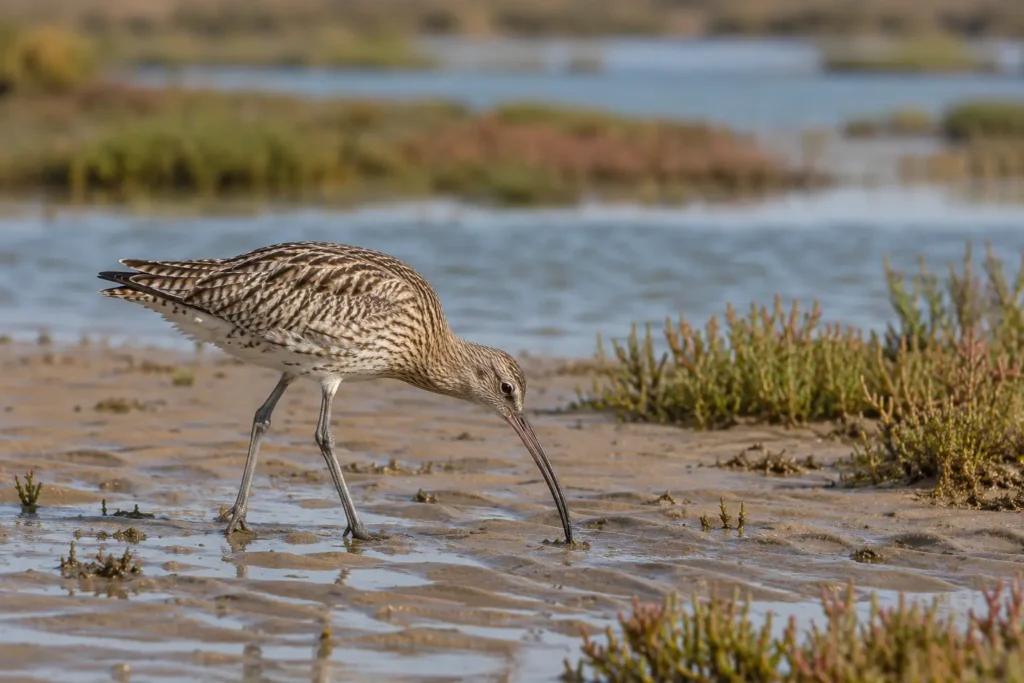
As the water recedes, sections of the lagoon’s sandy and muddy bottom become exposed.
These areas can attract shorebirds searching for food.
For birdwatchers, this may provide opportunities to observe feeding behavior from a suitable shoreline viewpoint.
However, low tide does not automatically make every location better for viewing.
Birds may move farther away, while some shallow channels can become difficult for boats to navigate.
Do not walk onto exposed mudflats simply to approach feeding birds.
Higher Water Levels: Changing Bird Positions
As water levels rise, birds may move away from feeding grounds that become submerged.
Some species gather in suitable resting areas, while others move to different parts of the wetland.
For boat excursions, higher water may make certain channels easier to navigate, although currents can remain important.
The ideal viewing location therefore changes with the tide.
Should You Book a Boat Tour at High or Low Tide?
There is no single tide level that guarantees better birdwatching throughout Oualidia.
The best timing depends on the species you hope to observe, the route, expected current and weather conditions.
Before booking, ask the guide:
- Which areas are likely to offer suitable viewing conditions?
- Will the selected route be navigable at the planned departure time?
- Are birds more likely to be feeding or resting during that tidal window?
- Could the route change if conditions are unsuitable?
A knowledgeable local guide should be able to explain the reasoning behind the departure time without promising a particular sighting.
How to Choose and Book a Responsible Birdwatching Boat Tour
Not every boat trip advertised around Oualidia is designed specifically for birdwatching.
Some excursions are primarily sightseeing rides, while others concentrate on observing and identifying wildlife.
Before booking, decide what you want from the experience.
General Boat Ride or Dedicated Birdwatching Tour?
A general lagoon cruise may include coastal scenery and opportunities to see birds along the route.
It can be suitable for travelers who want a relaxed boat experience with birdwatching as an added interest.
A dedicated birdwatching excursion is more appropriate when your main objective is identifying species and learning about the wetland.
Confirm that the guide has relevant knowledge rather than assuming every boat operator provides detailed wildlife interpretation.
Questions to Ask Before Booking
- Activity type: Is this a boat tour, shore-based guided walk or kayaking excursion?
- Wildlife focus: Does the guide identify birds and explain their behavior?
- Viewing approach: How does the operator avoid disturbing feeding or resting birds?
- Departure time: Is the schedule suitable for the tide and expected wind?
- Equipment: Are binoculars or other viewing aids provided?
- Boat safety: Are appropriate flotation devices available for all participants?
- Group arrangements: How many participants will join, and is a private option available?
- Duration: Does the advertised time include preparation and any transfers?
- Meeting point: Where does the excursion begin, and is transport included?
- Changes: What happens if weather conditions make the boat outing unsuitable?
Prices, availability, group arrangements and cancellation conditions can vary. Confirm current details before payment.
Be cautious of any excursion that guarantees close encounters with flamingos or promises to approach birds regardless of their behavior.
A responsible operator should be willing to explain how sightings are handled when birds are distant or absent.
Responsible Birdwatching: How to Observe Without Disturbing Wildlife
Responsible birdwatching is particularly important in a wetland used by migrating and wintering birds.
Feeding and resting are essential activities. Repeated disturbance can cause birds to expend energy unnecessarily or move away from suitable habitat.
Keep a Respectful Distance
Use binoculars or a telephoto lens rather than approaching birds for a better view.
There is no single viewing distance suitable for every species and situation. Follow local restrictions and allow enough space for the birds to behave naturally.
If birds stop feeding, become noticeably alert, move away or take flight because of your approach, you are too close.
Move back rather than continuing toward them.
Never Chase Birds for Photographs
Do not ask a boat operator to follow a group of flamingos until they take flight.
A photograph of birds flying away from an approaching boat may represent disturbance rather than a natural wildlife encounter.
Instead, remain at a suitable distance and observe the birds’ normal feeding, resting or movement.
Be patient. Some of the most interesting behavior becomes visible only when the birds are undisturbed.
Avoid Sensitive Nesting and Resting Areas
Stay away from nests, breeding areas and places where birds are gathering to rest.
Do not walk through dense vegetation, cross fragile wetland surfaces or enter restricted areas.
Use established paths and permitted access points when birdwatching on land.
A boat excursion should also avoid entering sensitive areas simply because the water appears navigable.
Do Not Feed or Lure Wild Birds
Feeding birds can change their natural behavior and may create problems for wildlife and other visitors.
Do not throw food from boats or attempt to attract birds with bait.
Avoid using recordings of bird calls to draw birds closer, particularly around breeding or nesting areas.
Drones can also disturb wildlife and are subject to restrictions. Do not use them for birdwatching or photography without the relevant authorization and a clear understanding of the conservation requirements.
Respect the Lagoon’s Working Environment
Birdwatching takes place alongside local activities such as fishing, aquaculture and boat transport.
Keep clear of working equipment and do not interfere with people carrying out their jobs.
Ask permission before photographing workers or residents.
Carry away litter and avoid leaving anything in the water or along the shoreline.
The aim is to enjoy the natural environment without creating additional pressure on the birds, their habitats or the local community.
What to Bring for Birdwatching in Oualidia
Birdwatching does not require expensive equipment, especially for beginners.
A few practical items can make the experience more comfortable.
- Binoculars: Useful for observing birds without moving closer.
- Camera with zoom: Optional for travelers interested in wildlife photography.
- Comfortable walking shoes: Suitable for uneven coastal paths and sandy areas.
- Wind-resistant clothing: Atlantic breezes can make exposed viewpoints and boat trips feel cool.
- Sun protection: A hat, sunglasses and sunscreen are useful on bright days.
- Drinking water: Particularly important during longer outdoor excursions.
- Waterproof protection: A dry bag can protect belongings during boat outings.
- A bird identification guide: A field guide or offline identification app can help distinguish similar species.
If you are taking a boat, ask whether binoculars and flotation equipment are included.
A longer camera lens is generally more useful for responsible wildlife photography than trying to shorten the distance to your subject.
Is Oualidia Birdwatching Suitable for Families and Beginners?
Yes. Birdwatching can be a suitable activity for visitors with little previous experience.
For families, the most convenient option may be a short shore-based session or an organized boat excursion with appropriate safety arrangements.
Children can enjoy identifying the differences between flamingos, herons, gulls and smaller shorebirds.
However, a wildlife tour should not be treated as a guarantee that children will see a particular bird.
If choosing a boat excursion, confirm:
- Minimum ages and participation requirements.
- Availability of properly fitted children’s flotation devices.
- Whether boarding requires stepping across uneven or slippery surfaces.
- The expected duration and opportunities for breaks.
- What happens if someone becomes uncomfortable on the water.
Travelers with mobility needs should also ask about the meeting point, shoreline access, boarding arrangements and available assistance.
If boarding is unsuitable, a land-based viewing experience can still be worthwhile.
How to Plan a Birdwatching Visit to Oualidia
Oualidia can fit into a wider Atlantic-coast journey or be visited as a destination in its own right.
The town lies between El Jadida and Safi, making it a possible stop when exploring this part of Morocco.
A Relaxed Half-Day of Birdwatching
If you are staying in Oualidia, a half-day is a practical starting point for birdwatching.
Choose the viewing method first, then organize the day around the most suitable tide and weather conditions.
A comfortable plan could include:
- Check the forecast and confirm your viewing location or guided excursion.
- Spend time observing birds from shore or during a guided boat trip.
- Allow a short break after the activity.
- Enjoy lunch or relax beside the lagoon.
Keep the schedule flexible, particularly when taking a boat.
Bird activity may vary, and it is better to observe patiently than to rush from one viewing point to another.
Should You Stay Overnight?
An overnight stay can be worthwhile if birdwatching is one of your main interests.
It gives you more opportunities to choose an appropriate tidal window and adjust plans if wind or rain affects your preferred excursion.
It also allows time for observing the lagoon under different conditions.
A day visit can still work, but avoid committing to a boat departure before confirming that your transport schedule is realistic.
Getting to Oualidia
Oualidia is reached by road from other parts of Morocco.
Transport options may include a rental car, regional road transport, taxis or a pre-arranged transfer.
The most suitable choice depends on your starting city, budget and whether you plan to visit other coastal destinations.
Oualidia does not have a passenger railway station, so train travelers need an onward road connection.
If you are traveling specifically for a birdwatching excursion, confirm your meeting point and departure time before arranging your arrival.
For more information about the destination, explore the Oualidia travel guide.
Common Mistakes to Avoid When Birdwatching in Oualidia
Most disappointing experiences result from expecting fixed wildlife sightings or overlooking practical conditions.
- Expecting guaranteed flamingos: Wild birds move according to season, habitat and local conditions.
- Assuming every boat trip includes bird identification: Confirm whether the excursion focuses on wildlife or general sightseeing.
- Ignoring tidal conditions: The location of feeding birds and the accessibility of channels change throughout the day.
- Approaching birds too closely: Disturbance can interrupt feeding and resting.
- Forgetting binoculars: Distant observations are more comfortable with suitable equipment.
- Booking without checking boat safety: Confirm flotation equipment, supervision and weather arrangements.
- Walking across sensitive wetlands: Exposed mudflats are not automatically public walking routes.
- Planning around one photograph: A rewarding birdwatching session is about observing wildlife, not forcing a particular encounter.
FAQs
Can you see flamingos in Oualidia Lagoon?
Yes, flamingos can occur in the Oualidia wetland area, particularly during seasonal movements. However, sightings are not guaranteed. Their location and presence vary with the season, tide and environmental conditions.
What is the best season for birdwatching in Oualidia?
Spring and autumn are particularly interesting for migratory birds. Winter also offers opportunities to observe waterbirds and shorebirds using the wetland complex. Birdwatching is possible at other times, but the species present will differ.
Are birdwatching boat tours available in Oualidia?
Yes. Local boat excursions can provide opportunities to observe birds around the lagoon, while some operators offer more specialized guided experiences. Confirm whether your booking includes a boat, a wildlife guide and suitable equipment.
Is low tide better for watching birds?
Low tide can expose feeding areas used by shorebirds, making it useful for some observations. However, bird positions change as water levels rise, and boat access may be more suitable at other times. The best tide depends on your viewing location and the planned route.
Do you need a guide for birdwatching in Oualidia?
No. Visitors can watch birds independently from suitable publicly accessible viewpoints. A guide is useful for identifying species, understanding the wetland and choosing appropriate routes without disturbing wildlife.
Is birdwatching in Oualidia suitable for children?
Yes, particularly when using accessible shore-based viewpoints or a suitable supervised excursion. For boat trips, confirm age requirements, flotation equipment, boarding conditions and the expected duration before booking.
Choose Responsible Birdwatching in Oualidia
Oualidia Lagoon offers a valuable opportunity to discover Morocco’s coastal birdlife, from flamingos and herons to migratory shorebirds feeding along the wetland edges.
For travelers who want a simple introduction, shore-based observation with binoculars is a practical starting point. A guided boat excursion can provide access to suitable sections of the lagoon and additional information about the species encountered.
The right choice depends on your interests, the season and the day’s conditions. Neither method guarantees close sightings, and responsible observation should always take priority over photography.
For travelers interested in an organized outing, Visit Morocco Together lists an Oualidia Lagoon Birdwatching Tour. Review the current activity details, availability and inclusions, and confirm whether your preferred experience includes boat transport before booking.
The practical takeaway: plan around the season and tides, bring binoculars, choose a responsible guide when appropriate and give wild birds enough space to feed and rest naturally. The most rewarding Oualidia birdwatching experience is one that allows you to appreciate the lagoon without disturbing the wildlife that makes it special.
Ready to Experience Morocco?
Turn this inspiration into your next adventure. Our travel experts are ready to help.