Vegetarian and vegan food in Morocco is easier to find than many first-time visitors expect, but the two diets require different levels of checking. Vegetarians can usually build meals around vegetable tagines, legumes, cooked salads, bread and couscous, while strict vegans need to ask more questions about butter, smen, eggs, honey and meat-based cooking liquids.
The most useful strategy is to learn a few reliable dishes, explain what you do not eat rather than relying only on the words “vegetarian” or “vegan,” and notify accommodations or tour providers in advance when meals are included. In larger cities, explicitly labelled plant-based choices are increasingly easy to find. In smaller towns and on rural routes, simple traditional dishes and advance communication become more important.
How Easy Is Vegetarian and Vegan Food in Morocco?
Vegetarian travel in Morocco is generally straightforward because vegetables, lentils, beans, olives, bread, fruit and cooked salads are familiar parts of everyday cooking. Even restaurants that specialize in meat usually have several vegetable-based starters or can prepare a simple meat-free meal.
Vegan travel is also practical, but appearances can be misleading. A vegetable dish may have been prepared with butter or smen, a couscous sauce may include meat, and pastries that appear plant-based can contain eggs, dairy or honey.
This does not mean every meal requires a complicated negotiation. It simply means that vegans should confirm ingredients rather than assuming that “vegetable” automatically means vegan.
Moroccan Dishes Vegetarians and Vegans Should Know
Zaalouk
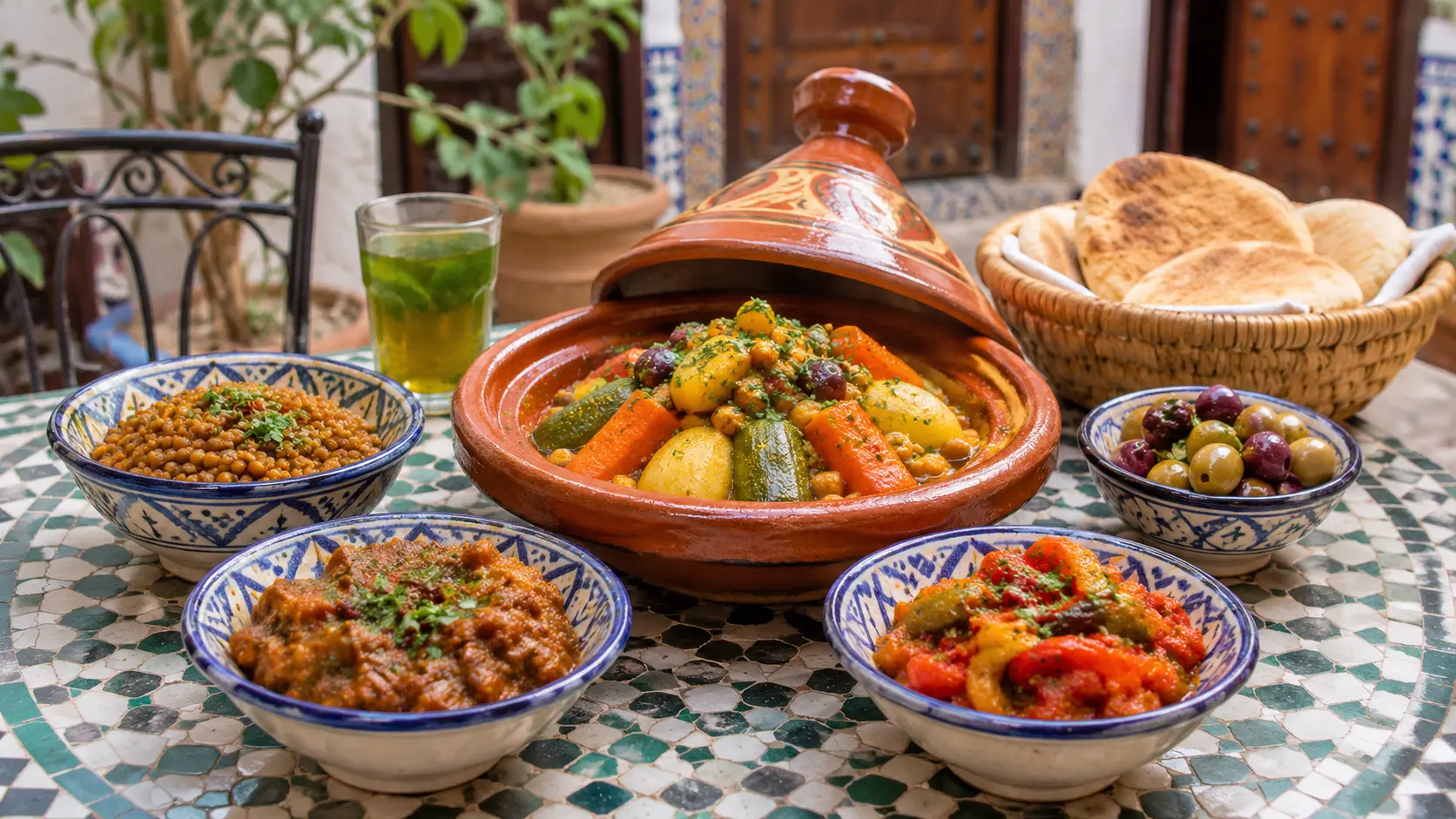
Zaalouk is a cooked aubergine and tomato salad seasoned with ingredients such as garlic, cumin, paprika, herbs and olive oil. It is often served as one of several small salads with bread.
Traditional versions are commonly plant-based, making zaalouk one of the most useful dishes for vegan travelers. Recipes still vary, so strict vegans should confirm when necessary.
Taktouka
Taktouka combines cooked peppers and tomatoes with garlic, olive oil and spices. Like zaalouk, it is generally served as a starter or side rather than a full main course.
A selection of cooked Moroccan salads with bread can become a satisfying light lunch, particularly when combined with beans or another substantial plant-based dish.
Bissara
Bissara is a thick soup or purée commonly based on fava beans and seasoned with olive oil, cumin and other spices. It is especially associated with simple cafés and cooler-weather breakfasts or lunches.
It is one of the more useful traditional dishes for plant-based travelers because the basic preparation can be vegan. Confirm the recipe if you need to avoid all animal ingredients.
Lentils and Beans
Simple lentil and bean dishes are useful alternatives when restaurant menus seem dominated by tagines. Lentils may appear as adis, while loubia usually refers to beans cooked in a tomato-based sauce with herbs and spices.
These dishes are often inexpensive, filling and served with bread. Ask whether meat or meat stock has been added before assuming they are vegan.
Vegetable Tagine
A vegetable tagine is often the easiest main course to find. Potatoes, carrots, courgettes, onions, tomatoes, pumpkin, olives and other seasonal ingredients may be slow-cooked with spices in different combinations.
Vegetarians can usually order one easily. Vegans should ask whether butter, smen, meat stock or any animal ingredient is used in the preparation.
If you are traveling for several days, however, do not rely on vegetable tagine for every meal. Moroccan salads, bean dishes, soups and street foods add much-needed variety.
Vegetable Couscous
Couscous with vegetables looks like an obvious vegetarian or vegan choice, but it needs more checking than many travelers realize. The vegetables may be cooked in the same broth as meat, and butter can be used when preparing the couscous grains.
Ask specifically whether the couscous and its sauce have been prepared without meat, chicken, butter or other animal ingredients. A restaurant that understands your requirements may be able to prepare a separate version.
Foods That Look Vegan but Need Checking
Some Moroccan foods can be plant-based in one kitchen and contain animal ingredients in another. These are the items worth asking about rather than automatically avoiding.
- Harira: This tomato, lentil and chickpea soup often contains meat in traditional preparations, although meat-free versions also exist.
- Msemen: The layered flatbread may be prepared with oil, butter or smen and can also have sweet or savory fillings.
- Baghrir: These spongy pancakes are commonly served with butter and honey, even when the pancake itself may be suitable for some plant-based diets.
- Maakouda: Potato fritters can be vegan, but recipes, binders, frying practices and sandwich sauces vary.
- Moroccan salads: Zaalouk and taktouka are good possibilities, but a larger salad selection can also contain eggs, tuna, mayonnaise or yogurt.
- Pastries and sweets: Butter, eggs, milk and honey are common enough that vegans should not judge by appearance alone.
- Amlou: This almond and argan-oil spread commonly includes honey, making many traditional versions suitable for vegetarians but not vegans.
Vegetarian and Vegan Moroccan Breakfasts
Breakfast is usually manageable with a little ingredient checking. Bread, olive oil, olives, jam and fresh fruit can form an easy plant-based meal.
Sfenj, Morocco’s fried ring-shaped dough, may also be suitable depending on the recipe and frying setup. Msemen and baghrir require more attention because butter and honey are common accompaniments.
Tea and coffee are easy options if taken without dairy. Plant-based milk is available in some modern cafés and larger cities, but it should not be assumed everywhere, particularly on rural routes.
If your accommodation provides breakfast, mentioning vegan requirements before arrival gives the kitchen more opportunity to prepare suitable alternatives rather than simply removing cheese and eggs from the standard meal.
Vegetarian and Vegan Street Food
Street food can add useful variety beyond restaurant tagines. Potato fritters, bread, bean dishes, roasted nuts, olives, fruit and some fried doughs can all work for plant-based travelers depending on preparation.
When ordering a sandwich, ask about every filling. A vegetable or potato sandwich may also include egg, cheese, mayonnaise, tuna or another sauce that is not obvious from the name.
For fried foods, strict vegans may also want to ask what else is cooked in the same oil. Travelers with allergies should treat shared frying equipment as a separate concern from whether a recipe is technically vegan.
Where Vegan Travelers Have the Most Choice
Marrakech
Marrakech is one of the easier places to begin a plant-based trip because traditional Moroccan food sits alongside modern cafés and restaurants with explicitly vegetarian or vegan options.
The medina has plenty of vegetable tagines, salads, lentil dishes and street food, while newer restaurants provide more variety when you want a break from traditional recipes.
Even here, check ingredients rather than assuming every dish marked “vegetarian” is also vegan.
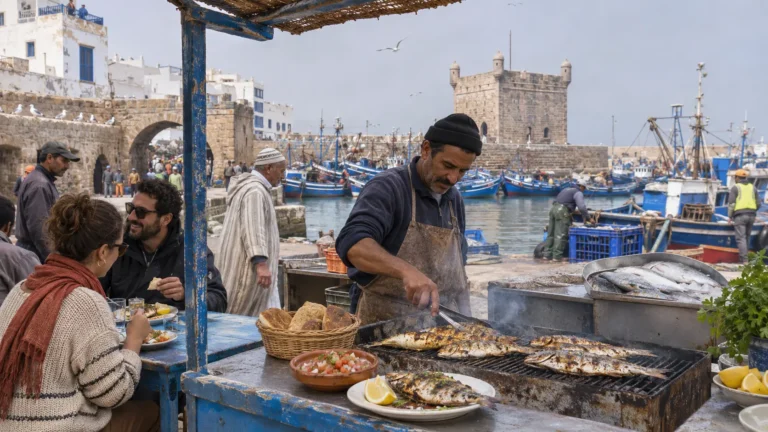
Essaouira
Essaouira also offers a useful mixture of traditional Moroccan cooking and restaurants accustomed to different dietary preferences.
The city is strongly associated with seafood, but that does not prevent vegetarian and vegan travelers from eating well. Vegetable tagines, couscous, salads, soups and modern plant-based dishes provide alternatives when communicated clearly.
Casablanca and Rabat
Morocco’s larger urban centers give travelers access to a wider range of contemporary dining, international cuisines and cafés alongside traditional restaurants. This can be helpful for longer trips when you want meals beyond Moroccan vegetable dishes.
Restaurant openings and menus change, so check current information shortly before visiting rather than building an itinerary around an old recommendation.
Fes and Other Historic Cities
In Fes, Meknes and other historic centers, traditional dishes may be easier to find than explicitly vegan menus. Cooked salads, lentils, beans and vegetable tagines therefore become particularly useful.
Do not interpret a lack of vegan labelling as a lack of possible meals. Asking the kitchen what can be prepared without animal ingredients often reveals more options than the menu initially suggests.
Smaller Towns, Mountains and Desert Routes
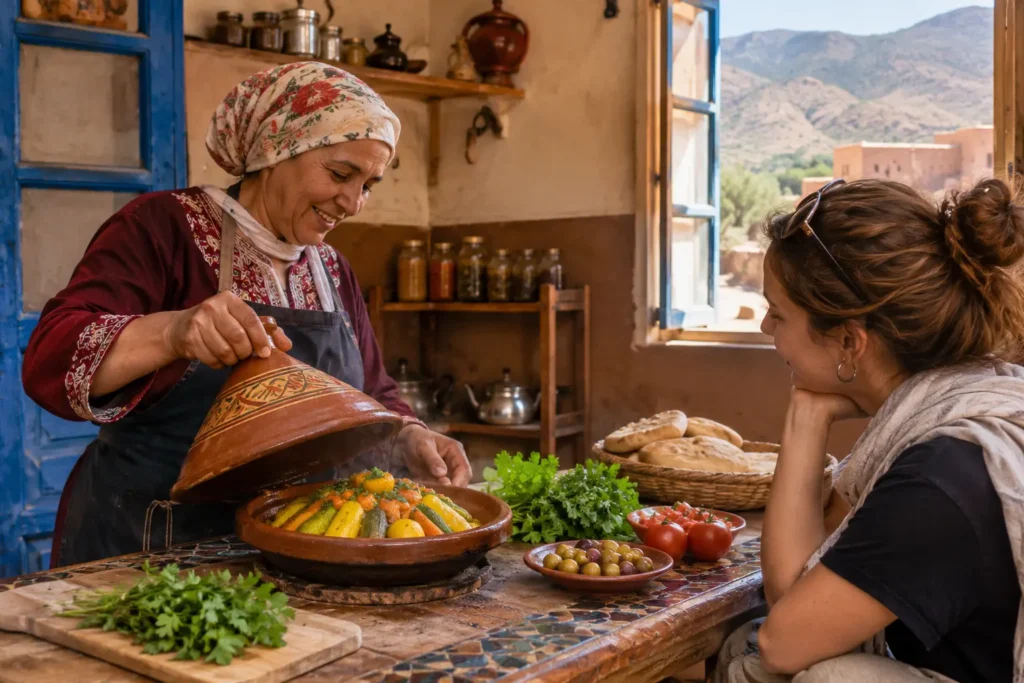
Plant-based travel needs more planning once you leave major cities. Smaller restaurants may have fewer menu choices, and guesthouses, mountain lodges or desert camps may prepare meals for everyone at the same time.
If your accommodation or tour includes meals, explain your diet before arrival and confirm it again when you check in. Do not wait until dinner is being served to mention a strict requirement.
Carrying a few simple snacks is also sensible on long driving days. Nuts, dried fruit, fresh fruit and packaged foods can bridge the gap when roadside choices are limited.
How to Order Vegetarian or Vegan Food Clearly
When precision matters, explaining excluded ingredients is usually more useful than saying only “vegetarian” or “vegan.” This is particularly important for dishes where meat broth, butter or honey may not be visible.
If French is useful where you are eating, simple phrases include:
- Je suis végétarien / végétarienne. I am vegetarian.
- Je suis végane. I am vegan.
- Sans viande, sans poulet, sans poisson. No meat, chicken or fish.
- Sans lait, sans beurre, sans œufs, sans miel. No milk, butter, eggs or honey.
- Sans bouillon de viande. No meat stock.
A translation card on your phone can be even more useful, especially for strict vegan diets or allergies. Showing a short written list reduces the risk of misunderstanding in a noisy restaurant or when neither side shares a strong common language.
Vegetarian Is Not the Same as Vegan
This distinction sounds obvious, but it causes many avoidable ordering problems.
A vegetarian meal may contain cheese, milk, butter, eggs or honey. A waiter who correctly understands that you do not eat meat may therefore offer a dish that still does not meet vegan requirements.
Instead of repeatedly saying that a dish must be “vegan,” state the ingredients you need excluded. For example, confirming “no meat, fish, chicken, butter, milk, egg or honey” is much more specific.
Food Allergies Need a Different Approach
A vegan label does not mean a dish is suitable for someone with an allergy. Nuts, sesame, wheat and other ingredients occur frequently in Moroccan cooking, while shared kitchens and frying oil can create cross-contact.
If an allergy could cause a serious reaction, communicate it as an allergy rather than a preference. Carry a written translation of the relevant ingredient, ask about preparation and follow the medical plan provided by your healthcare professional.
Do not rely solely on a menu symbol when the consequences of an error are significant.
Shopping and Self-Catering
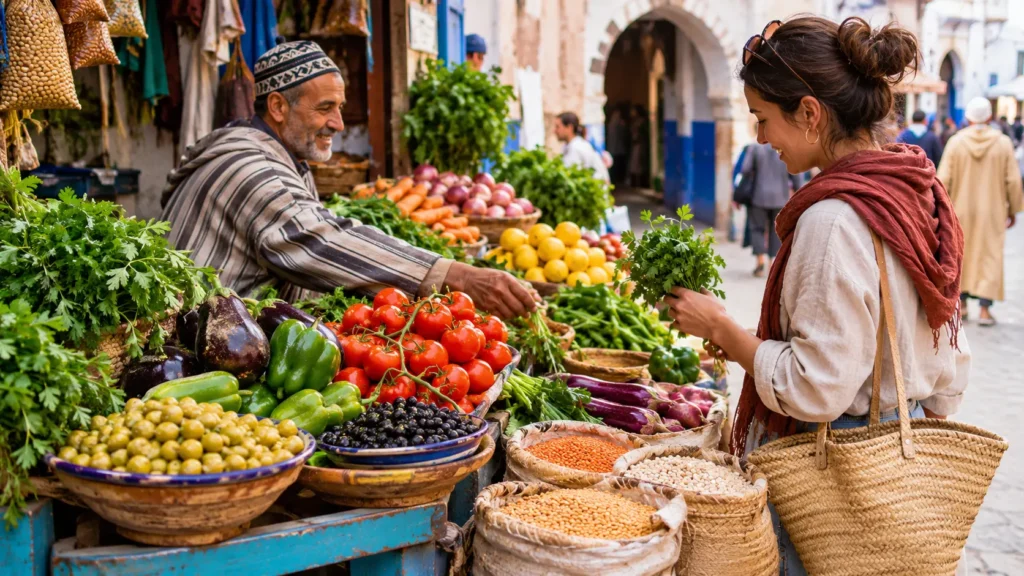
Self-catering can make plant-based travel easier, especially during longer stays or in places with limited restaurant choice.
Markets provide fruit, vegetables, olives, herbs, nuts and dried fruit, while neighborhood shops and supermarkets can help with staples such as bread, legumes, rice and other packaged foods.
Check labels on breads, spreads, biscuits and prepared foods if you follow a strict vegan diet. The same product category can contain different ingredients depending on the brand or bakery.
Self-catering does not need to replace Moroccan dining. Even preparing your own breakfast or keeping simple snacks at your accommodation can give you more flexibility for the rest of the day.
Eating Plant-Based During Ramadan
Ramadan changes meal rhythms across Morocco. Some restaurants alter their daytime hours, while food activity increases around the evening breaking of the fast.
Dates, breads, lentils and some soups can suit plant-based travelers, but do not assume traditional Ramadan foods are vegan. Harira may contain meat, while sweets can include honey, eggs or butter.
Because Ramadan follows the Islamic lunar calendar, dates change each year. If your trip overlaps with Ramadan, check current dates and confirm restaurant arrangements locally.
Common Mistakes Vegetarian and Vegan Travelers Make
- Assuming vegetable couscous is automatically vegan. Ask about both the grains and the cooking broth.
- Eating vegetable tagine every day. Look for salads, lentils, beans, bissara and street foods to add variety.
- Using “vegetarian” when you mean vegan. State the animal ingredients you need excluded.
- Assuming bread and pastries are always plant-based. Butter, eggs, milk and honey can appear in baked goods.
- Waiting until a rural meal is served to explain your diet. Notify guesthouses, camps and tour providers beforehand when possible.
- Treating an allergy like a dietary preference. Explain allergies separately and clearly.
FAQs
Is Morocco good for vegetarians?
Yes. Vegetarians can usually find vegetable tagines, couscous, salads, legumes, breads and egg- or dairy-based options in most destinations. Ingredient choice becomes more limited in some rural areas, but advance planning helps.
Is Morocco easy for vegans?
Vegan travel is practical, particularly in major cities, but it requires more ingredient checking. Butter, smen, honey, eggs and meat broth are the main hidden ingredients to ask about.
Is vegetable tagine vegan?
It can be, but do not assume every version is. Ask whether butter, smen, meat stock or other animal ingredients have been used.
Is Moroccan couscous vegan?
The semolina itself can be plant-based, but traditional preparation may involve butter, while vegetables can share a broth with meat. Request a vegan preparation specifically.
Is harira vegetarian or vegan?
Harira recipes vary. Traditional versions can contain meat, while vegetarian and vegan versions are also made. Ask about the specific pot being served.
Should vegans tell a hotel or tour company in advance?
Yes, especially when meals are included or when traveling through remote areas. Advance notice gives the kitchen more time to plan a suitable meal and reduces dependence on last-minute substitutions.
Plan for Variety, Not Just Vegetable Tagine
Eating vegetarian or vegan in Morocco becomes much easier once you stop looking for one perfect “vegan Moroccan dish” and learn how the cuisine is assembled. Cooked salads, beans, lentils, bissara, bread, vegetables and seasonal produce can create plenty of variety, while dishes such as couscous and tagine simply require a few extra questions.
For strict vegans, clear communication matters more than memorizing a long restaurant list. Confirm hidden ingredients, give advance notice when meals are included and keep simple snacks available for remote travel days. For more destination-specific advice as you build your route, explore Visit Morocco Together’s Morocco travel guides.
Ready to Experience Morocco?
Turn this inspiration into your next adventure. Our travel experts are ready to help.