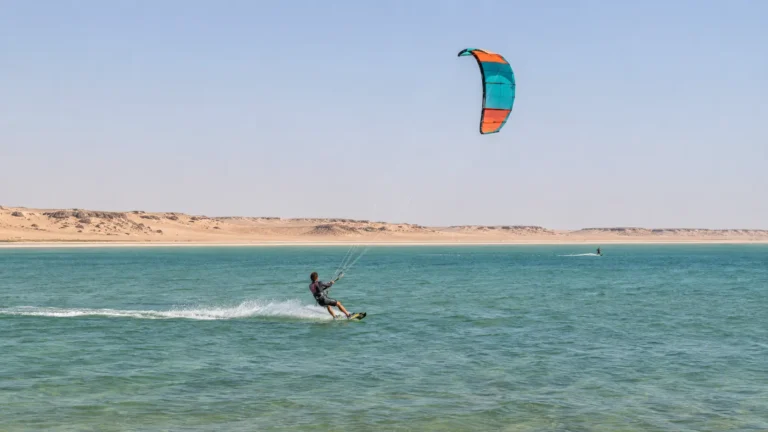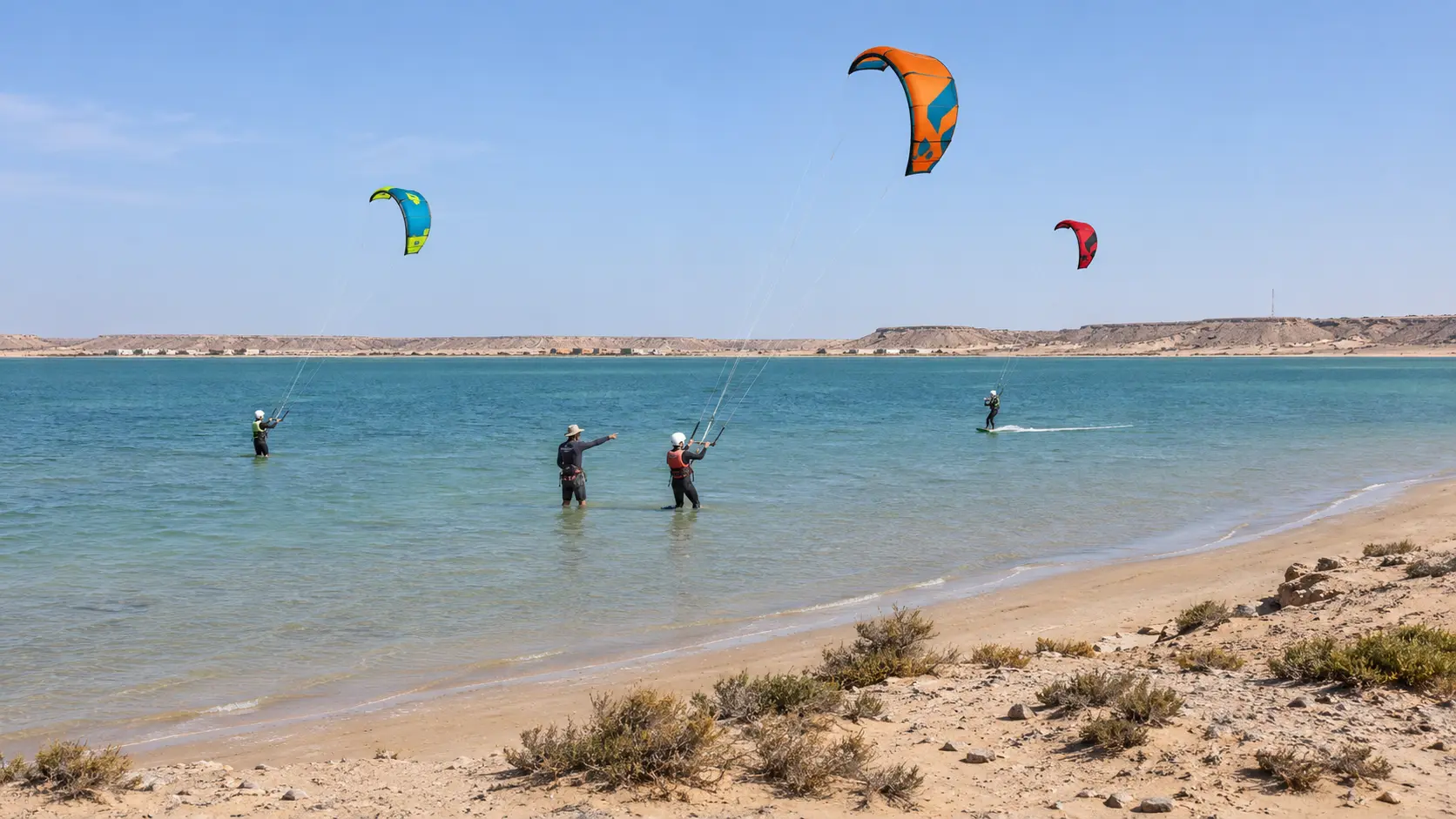
Dakhla kitesurfing lessons for beginners usually take place on the lagoon, where sheltered water and spacious teaching areas make it easier to practise kite control without dealing with ocean surf. The most useful decision is not which famous spot to visit first, but which school can match the day’s wind and tide to your level.
If you have never flown a kite, book a structured course with a qualified instructor, confirm that safety equipment and rescue support are available, and leave several days for lessons to fit the conditions. The lagoon can be a good place to start, but shallow water does not make kitesurfing risk-free, and learning to ride independently is not guaranteed within one holiday.
Why Learn on Dakhla Lagoon?
Dakhla’s peninsula separates the open Atlantic from a broad lagoon. Compared with ocean beaches exposed to breaking waves, parts of the lagoon offer flatter water, sandy shallows and room for schools to teach beginners. You can concentrate on the kite before adding the board.
Those advantages depend on location and conditions. Some areas have deeper channels, exposed sandbanks, changing currents or other riders nearby. Strong wind can make the surface choppy even when there are no ocean waves. A safe first lesson therefore depends on a local assessment, not simply the word lagoon.
What Dakhla Kitesurfing Lessons for Beginners Cover
Good beginner instruction builds skills in sequence. The exact order and pace depend on the instructor, the weather and how comfortable you are in the water.
Start on Land: Wind, Equipment and Safety
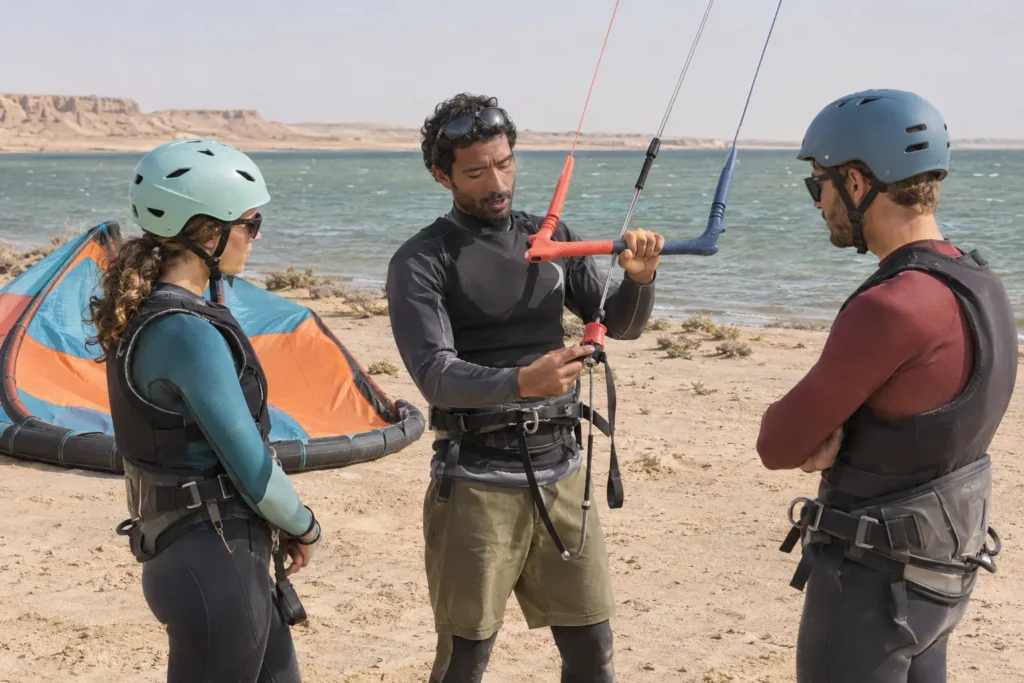
Before entering the water, expect an introduction to wind direction, the teaching area, kite setup and the control bar. Your instructor should explain the quick-release safety system and demonstrate safe launching and landing procedures. You should understand what to do when asked to release power from the kite before progressing.
Move Into the Water: Kite Control and Body Dragging
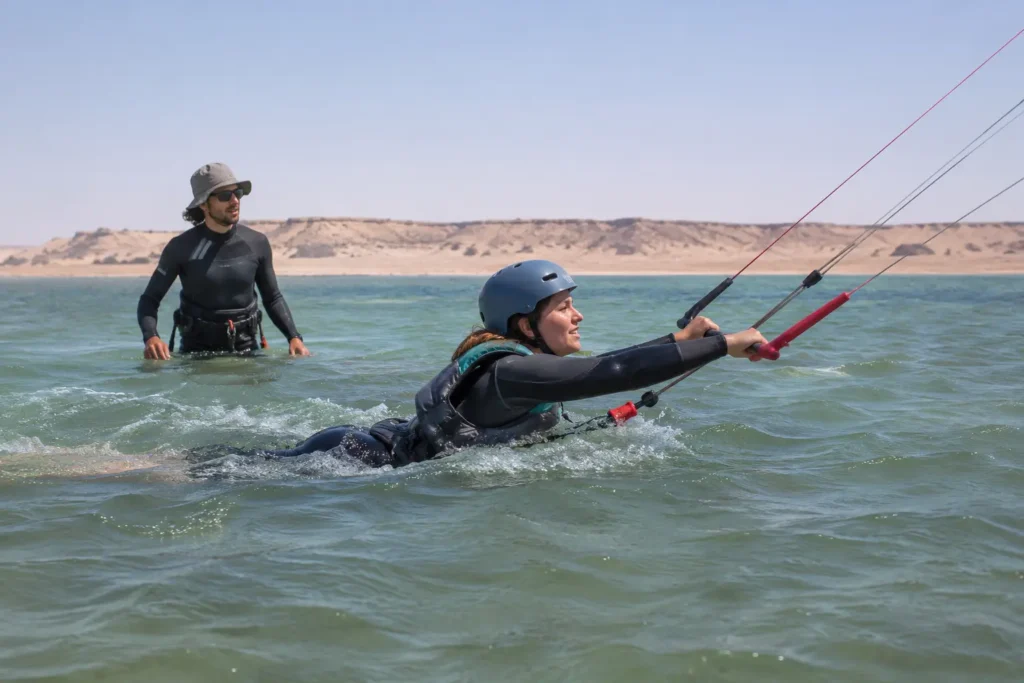
Once you can control the kite, you may practise relaunching it from the water and moving through the water using kite power, known as body dragging. These skills come before board riding for a reason: they help you respond to a dropped kite and work toward recovering a lost board. Self-rescue principles belong in beginner training too.
Add the Board: Water Starts and First Rides
Next come board positioning, the water start and short, controlled rides. Staying balanced, stopping safely and eventually riding upwind require practice. A first successful start is progress, but it is not the same as being ready to rent equipment and kite without supervision.
Ask your school how it assesses readiness for independent riding. A completion certificate or course-hour total should reflect demonstrated skills, not a promise that every student will progress at the same speed.
Choose the Right Part of the Lagoon
Main Lagoon Teaching Areas
Established teaching sections of the main lagoon are sensible starting points for first lessons. Schools can choose stretches with suitable standing depth, wind angle, launching space and supervised activity. The PK25 area is one of Dakhla’s well-known lagoon locations, but its suitability for an individual beginner session must be confirmed on the day.
When comparing schools, ask exactly where practical lessons happen, how students get there and whether a support boat can reach that area. A school based beside the lagoon may teach at a different spot when conditions change.
Other Named Spots Are Not Automatic Beginner Choices
Speed Spot, the White Dune side and areas near oyster farms sometimes offer attractive flat-water conditions. Some become practical only at particular tides; others can have offshore wind, exposed banks or access limitations. Do not treat an online list of flat-water spots as permission to practise there alone.
For your first sessions, prioritise the instructor’s supervised training zone over a scenic or famous location. Ocean-side wave spots are a different challenge and are generally not the place to begin.
How Wind and Tides Affect a Lesson
Dakhla is known for wind, but more wind is not always better for a new student. An instructor should decide whether to teach, change the spot or postpone based on the conditions at that time.
- Wind strength: Light wind may make kite control or water starts difficult; very strong or gusty wind can be demanding and unsuitable for first lessons.
- Wind direction: A manageable wind angle matters as much as speed. Do not assume the wind always blows toward a safe landing area.
- Tides and water depth: A shallow area can become too shallow for a board or deep enough that standing is no longer possible. Sandbanks and channels change how a spot can be used.
- Other water users: Launching zones and busy riding areas need room. Follow your school’s boundaries and right-of-way instructions.
Ask who checks forecasts and tides, what happens if a lesson cannot run, and whether missed hours can be moved to another day. Avoid choosing lesson times solely because a forecast looks windy; your instructor must assess the actual spot.
When Is the Best Time for a Beginner to Visit?
Wind tends to be more frequent and stronger through roughly spring to early autumn, with particularly energetic periods possible in summer. Strong summer conditions can suit experienced riders while feeling intimidating to someone on a first lesson. Spring and early autumn can offer a useful balance on some days, but neither season guarantees gentle wind.
Winter lessons may still be possible, although wind can be less consistent. Whenever you visit, expect sessions to move with the conditions and ask the school what wetsuit protection it recommends for that time of year.
Rather than selecting dates on wind statistics alone, choose a school prepared to adjust teaching hours, kite size and lesson location. A good safety decision can mean spending a session on land or rescheduling.
How Many Days Should You Allow?
For a trip built around learning, consider approximately five to seven nights in Dakhla rather than treating the experience as a one-day activity. This is planning advice, not a prediction of how long you will need to ride. Several days allow space for wind changes, rest and returning to skills that need more practice.
With just a day or two, a supervised introductory session may be worthwhile, but keep expectations focused on learning the basics. Protect your arrival and departure days rather than scheduling essential lessons around transfers.
Lagoon-side camps can make it convenient to reach lessons and rest between sessions, although meal plans, instruction and transport may be sold separately. Staying in Dakhla town may suit travelers who prefer a broader choice of services; check how you will reach the teaching area each day. If a package includes airport transfers, confirm the arrangement directly with the provider.
How to Choose a Beginner Kitesurf School
Compare lesson quality and safety arrangements before package prices. Ask schools the same questions so you can judge what you are actually paying for:
- Instructor qualifications: Are instructors currently certified through a recognised training organisation, such as IKO or VDWS, and can the school verify this?
- Individual attention: How many learners share an instructor and a kite? Are lesson hours counted per person, or does equipment rotate between students?
- Safety and rescue: Are helmets and suitable buoyancy aids provided? Is there a rescue plan and appropriate support for the teaching zone?
- What is included: Does the quote cover kite, board, harness, wetsuit, instruction and transport to the spot? Are there optional or additional charges?
- Weather policy: What happens to unused lessons when wind or tide conditions prevent teaching? Check rescheduling and refund terms before payment.
- Personal needs: Does the school have appropriate options for your swimming ability, age, physical requirements and preferred instruction language?
Private lessons may offer more direct coaching and a flexible pace, while shared lessons can be more economical and social. The better choice depends on the actual instructor-to-student arrangement, not the name of the package. If you have a disability or a particular mobility requirement, discuss the teaching site and any available adaptations with the school before booking.
What to Bring and How to Prepare
- Be comfortable swimming: Do not rely on the lagoon being shallow. Tell the instructor about any concerns before enrolling.
- Pack sun and wind protection: Bring suitable sunscreen, drinking water, a hat for breaks and a light layer for time out of the water.
- Confirm the wetsuit and protective gear: Ask whether the school supplies an appropriately fitting wetsuit, helmet and buoyancy aid, and what you need to bring yourself.
- Arrive rested: Kite control is physically and mentally demanding. Leave room between long journeys and training sessions.
- Respect the lagoon: Keep away from sensitive wildlife and working areas, follow designated access routes and take litter away with you.
Do not buy a kite or board for your first lesson unless a qualified instructor has advised you on suitable equipment. Learning on school equipment also lets you try sizes selected for the day’s conditions.
Common Mistakes to Avoid
- Assuming flat water means no hazards: Wind, lines, depth changes and other users still require attention.
- Choosing a remote spot from a photo: A beautiful empty bank may be unsuitable at the wrong tide or wind angle.
- Booking every hour in advance: Leave flexibility for weather, recovery and the school’s recommended teaching windows.
- Practising alone too soon: Your first ride does not replace competency in kite control, board recovery and self-rescue.
FAQs
Can I Take Dakhla Kitesurfing Lessons With No Experience?
Yes. Beginner courses are designed for people who have not flown a kite before. You should be comfortable in the water and disclose any relevant needs so the school can confirm a suitable lesson.
Is Dakhla Lagoon Shallow Everywhere?
No. Many teaching areas have shallows, but depth and access vary with location and tide. Never assume you can stand up throughout a session.
How Long Does It Take to Kitesurf Independently?
There is no reliable number of days for everyone. Wind conditions, lesson frequency, water confidence and individual progress all matter. Ask your instructor to assess safety skills before considering independent riding.
Are Private Lessons Better Than Group Lessons?
Private lessons give the instructor more time to focus on you, while small shared lessons may cost less. Compare actual teaching time, group size and whether you share a kite before choosing.
What Happens if the Wind Is Too Strong or Too Light?
A responsible school may change the lesson plan, reschedule water practice or cancel a session. Confirm its policy on unused hours before booking.
Should Beginners Start at the Ocean Beach Instead?
The supervised lagoon is usually the more practical starting point because many areas avoid breaking ocean waves. Ocean-side spots require a separate assessment and may be better left until you have more experience.
Plan Your First Days on the Water
Choose Dakhla for its opportunity to learn in a lagoon environment, not for a promise of instant progress. The sensible plan is a qualified school, a suitable training area, a clear rescue procedure and enough flexibility to follow the wind and tides. Good instruction should leave you knowing when not to launch as well as how to get moving.
For more about the destination and activities away from the lesson area, explore the Visit Morocco Together Dakhla destination guide.
Ready to Experience Morocco?
Turn this inspiration into your next adventure. Our travel experts are ready to help.