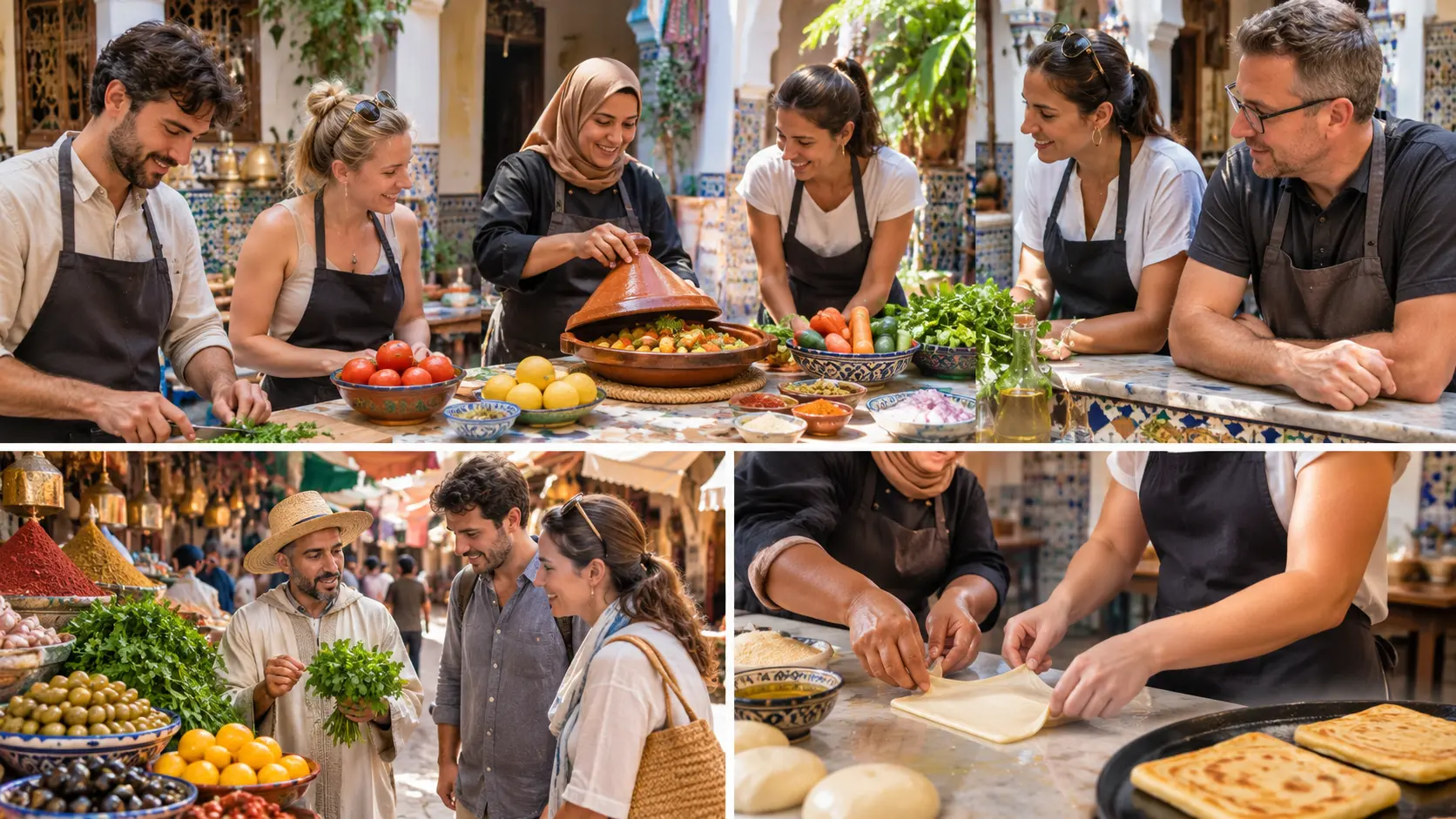
Moroccan cooking classes are a useful choice for travellers who want to understand the food they are eating rather than simply order it in restaurants. A good class can explain how spices are balanced, how vegetables and meats are prepared for tagines, why Moroccan salads are served in several small dishes, and how everyday ingredients are bought and used.
Classes range from informal home kitchens to professional cooking schools, riads and restaurant workshops. Some focus almost entirely on cooking, while others include a market visit, ingredient shopping, bread or pastry preparation, mint tea and a shared meal at the end.
The best option is not necessarily the class with the longest menu. Choose according to what you actually want to learn, how hands-on you want the experience to be and how easily it fits into the rest of your Morocco itinerary.
Are Moroccan Cooking Classes Worth It?
For travellers interested in food and culture, usually yes. A cooking class gives context that is difficult to get from restaurant meals alone. You can see how ingredients are prepared, ask why certain spices are used and learn techniques that may be practical to repeat at home.
The experience is particularly useful if you have already eaten several Moroccan dishes and want to understand the differences between them. Learning to prepare one tagine carefully can be more valuable than tasting several versions without knowing how they were made.
A class is less essential for travellers with a very short itinerary or little interest in cooking. If you would rather spend limited time sightseeing, a guided food tour or a well-chosen meal may provide a better balance.
What Moroccan Cooking Classes Usually Include
There is no standard format across Morocco. Before booking, check exactly what the session involves rather than assuming every cooking class includes the same activities.
Hands-On Cooking
The most useful classes involve participants directly rather than having them watch a long demonstration. Depending on the menu, you may chop vegetables, prepare marinades, grind or combine spices, shape bread or pastries and assemble a tagine.
Ask whether each participant prepares their own dish or whether the group cooks one meal together. Both formats can work, but they produce different experiences.
A Market or Souk Visit
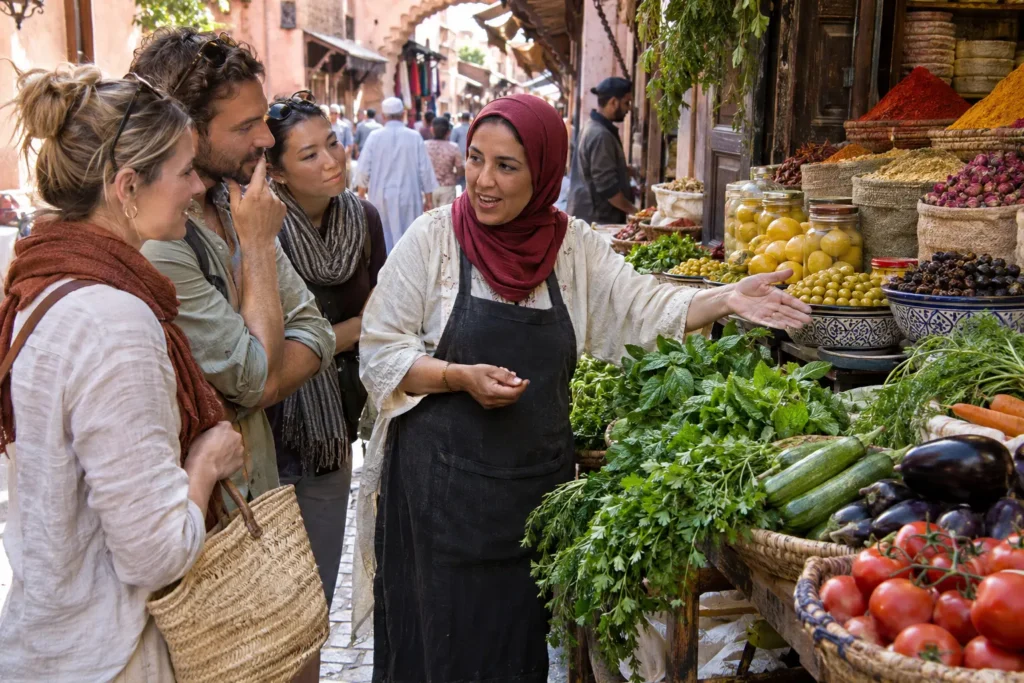
Some classes begin with a walk through a neighborhood market or medina souk. This can add real value when the guide explains how ingredients are selected rather than simply leading the group through stalls.
A good market component may introduce fresh herbs, preserved lemons, olives, vegetables, dried spices and other ingredients that later appear in the meal.
Not every traveller needs a market visit. If you have already explored markets independently, choosing a class with more kitchen time may be more useful.
Preparing and Eating a Full Meal
Many cooking experiences finish with participants eating what they have prepared. Menus differ, but a session may combine Moroccan salads or another starter with a tagine, couscous or another main dish, followed by fruit, pastries or tea.
Check the menu before booking if learning one particular dish matters to you. Do not assume every class teaches couscous, pastilla, bread and tagine in the same session.
Tea, Bread or Pastry Workshops
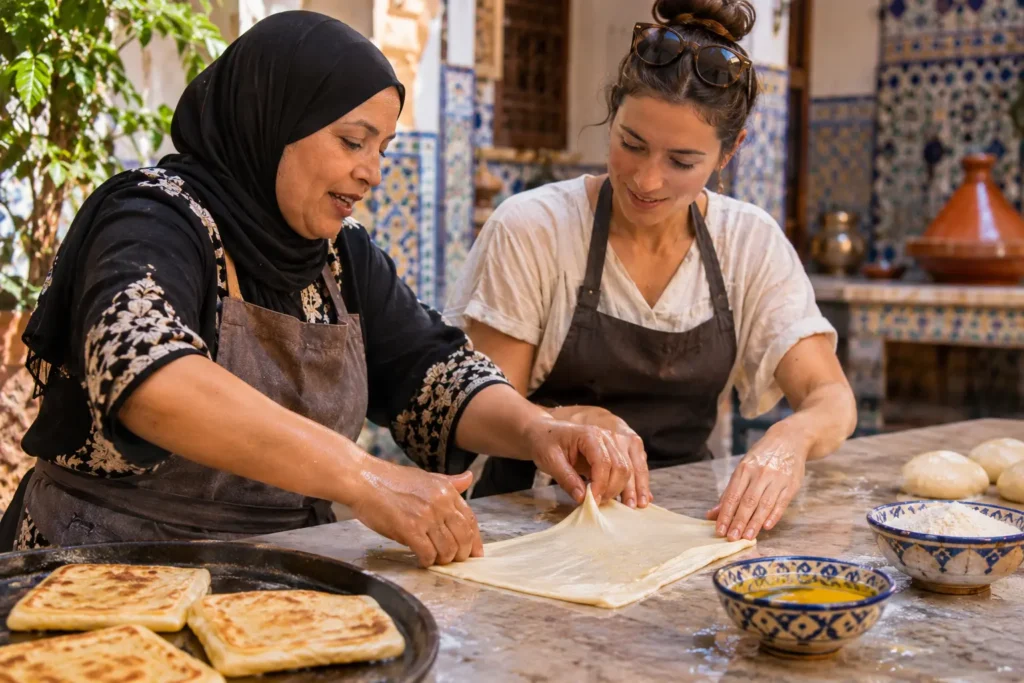
Some workshops focus more narrowly on one part of Moroccan food culture. Bread, msemen, pastries or mint tea can each support a worthwhile class without requiring a full multi-course meal.
These shorter or more specialized experiences can work well for travellers who have already taken a general cooking lesson elsewhere in Morocco.
What Dishes Can You Learn to Cook?
Menus change by instructor, location, dietary requirements and ingredient availability. Common subjects include dishes that travellers are likely to encounter throughout their trip.
- Tagine: chicken, meat or vegetable preparations cooked with spices, herbs and other ingredients according to the recipe.
- Moroccan salads: cooked or fresh vegetable dishes that may be served together at the beginning of a meal.
- Couscous: offered by some classes, particularly when the workshop allows enough time for its preparation.
- Zaalouk: an eggplant and tomato preparation that provides a useful lesson in Moroccan seasoning.
- Bread and msemen: useful choices if you want a technique that can be recreated without buying a tagine pot.
- Pastries: some specialized workshops concentrate on Moroccan sweets and almond-based pastries.
- Mint tea: often included as part of the meal or hospitality rather than treated as the main cooking lesson.
If your main goal is to recreate the food at home, ask whether the class provides written recipes or enough guidance to record ingredient quantities and methods yourself.
Best Cities for a Moroccan Cooking Class
Marrakech: The Widest Choice for Most Travellers
Marrakech has one of the broadest selections of cooking experiences, from small home-based classes to riad workshops and professional cooking schools.
It is a practical choice for first-time visitors because classes can usually be fitted around several days of sightseeing. Market visits are also a common addition, allowing the cooking experience to connect naturally with the city’s food markets and medina.
The large number of options is also the main challenge. Compare the actual format rather than choosing solely from photographs or a long menu.
Fes: Strong for Food Traditions and Medina Context
Fes is another strong choice, especially for travellers interested in how food connects with medina life.
Cooking schools, riads and family-hosted experiences can include market shopping, Moroccan salads, tagines and bread-related traditions. A market visit can be particularly useful in Fes because the medina’s layout and food stalls can otherwise feel difficult to interpret on a first visit.
Remember that some venues inside traditional buildings involve narrow lanes, stairs or uneven access. Ask directly about accessibility if this affects your choice.
Essaouira: A Good Match for a Coastal Itinerary
Essaouira works well for travellers who want a slower-paced cooking experience alongside an Atlantic coast stay.
Depending on the class and current ingredients, workshops may draw on local markets and the city’s coastal food culture. Essaouira is also convenient if you want to combine cooking with a relaxed medina day rather than add another major sightseeing attraction.
Rabat, Tangier, Chefchaouen and Agadir
Cooking classes are not limited to Marrakech and Fes. Travellers can also find workshops in Rabat, Tangier, Chefchaouen, Agadir and other destinations.
These can be particularly useful on longer itineraries because they allow you to place the activity where your schedule has more breathing room instead of forcing it into an already crowded Marrakech stay.
If you are visiting several cities, look at the menus before choosing. Taking two nearly identical tagine classes adds less value than combining a general cooking lesson in one destination with bread, pastry or market-focused learning elsewhere.
Home Kitchen, Riad or Cooking School?
The venue changes the character of the experience.
Home-Based Classes
A home kitchen can provide a smaller, more conversational setting. These experiences may be especially appealing to travellers who want to ask questions about everyday cooking rather than restaurant presentation.
However, facilities, group organization and accessibility can vary considerably. Confirm what is provided and what level of participation to expect.
Riad and Restaurant Workshops
Classes in riads and restaurants often provide a more structured setup, dedicated work areas and staff accustomed to hosting international visitors.
They may feel less domestic than a home experience, but the organization can be useful for families, larger groups or travellers who prefer a clearly defined schedule.
Professional Cooking Schools
A dedicated cooking school is a good choice when technique matters most. Individual workstations, written recipes and structured instruction can make it easier to repeat the dishes later.
The tradeoff is that the experience can feel more formal than cooking in a home or small riad.
How to Choose the Right Cooking Class
Before booking, look beyond the title and ask a few practical questions.
- How hands-on is it? Check whether you actually cook or mainly watch demonstrations.
- Is there a market visit? Decide whether ingredient shopping is important to you or whether you prefer more kitchen time.
- What dishes are prepared? Confirm the menu if you want to learn a specific recipe.
- How large is the group? Smaller groups can provide more individual instruction, while larger workshops may be more social.
- What language is used? Make sure you will be able to follow detailed cooking instructions comfortably.
- Are recipes provided? This matters if recreating the meal at home is one of your goals.
- What is included? Check whether the meal, drinks, market visit, ingredients and transport are part of the booking.
Availability, inclusions, group size and pricing can change by provider and date, so verify current details before reserving.
Dietary Requirements and Food Allergies
Moroccan cooking can adapt well to different diets, but never assume a class can accommodate every requirement without advance notice.
Vegetable tagines, salads, breads and other dishes may suit vegetarian travellers, while some providers can adjust menus for vegan or gluten-free guests. What is possible depends on the kitchen and recipe.
Food allergies require more specific discussion. Nuts, sesame, wheat, eggs and other ingredients can appear in Moroccan cooking, while shared preparation areas may create cross-contact concerns.
Contact the provider before booking if an allergy is medically significant. Ask about ingredients and preparation practices rather than relying only on a general statement that dietary needs are accepted.
Are Cooking Classes Good for Families?
They can be, particularly for children who enjoy practical activities. Mixing ingredients, shaping dough and preparing a shared dish can be easier to engage with than another long sightseeing visit.
Age policies differ between providers, and kitchens involve hot surfaces, knives and other equipment. Check minimum ages and the expected level of participation before booking.
For younger children, a shorter bread or pastry workshop may work better than a longer multi-course class.
Cooking Classes for Solo Travellers
A group cooking class can be a particularly easy activity for solo travellers because conversation happens naturally while everyone prepares and eats the meal.
Check whether the experience requires a minimum number of participants, especially outside busy periods. Some providers may combine individual bookings into a group or offer private alternatives.
If social interaction matters to you, choose a shared workshop rather than paying extra for a private lesson.
When to Fit a Cooking Class Into Your Itinerary
Cooking classes usually work best on a day when you are already staying in the same city. Avoid placing one immediately after a long intercity journey when delays could cause you to miss the starting time.
A morning class can replace both sightseeing time and lunch, while an afternoon session can work after a relaxed morning. The exact pattern depends on the provider.
In medina cities, allow enough time to find the meeting point. Some traditional properties cannot be reached directly by car, and walking through unfamiliar lanes can take longer than expected.
If your itinerary has only one full day in a major city, consider whether a multi-hour cooking class is more important to you than the city’s main sights. With two or more nights, the activity becomes easier to fit without making the visit feel rushed.
Market Etiquette During a Cooking Class
If the workshop includes a market visit, remember that the market is a working commercial space rather than a staged backdrop.
Stay close enough to hear your guide without blocking shop entrances or narrow passages. Ask before taking close photographs of vendors, shoppers or people working at food stalls.
Handling ingredients is not appropriate at every stall, so follow the instructor or merchant’s lead. A thoughtful market visit should help you understand the ingredients without disrupting the people selling them.
Common Mistakes to Avoid
Choosing Only by Rating
A highly reviewed class may still be the wrong format for you. Compare the menu, group size, amount of hands-on cooking and whether the market visit is genuinely important to your trip.
Expecting Every Moroccan Dish in One Session
Tagine, couscous, bread, pastries and pastilla involve different techniques and preparation times. A focused class that teaches a few dishes properly is often more useful than an overloaded menu.
Forgetting to Mention Dietary Needs
Tell the provider before the class rather than arriving and expecting major recipe changes on the spot.
Booking Too Much Food Activity on the Same Day
A cooking class usually ends with a substantial meal. Pairing it immediately with a food tour or elaborate dinner can make the day feel repetitive and unnecessarily heavy.
Assuming Accessibility
Traditional homes and riads may involve stairs, narrow doorways or medina walking. Ask about the specific venue if mobility, seating or step-free access matters to you.
FAQs
What do you usually cook in a Moroccan cooking class?
Menus vary, but tagines, Moroccan salads, couscous, bread and pastries are common subjects. Check the exact menu before booking if there is a particular dish you want to learn.
Do Moroccan cooking classes include a market visit?
Some do and some do not. A market visit can add useful context about ingredients, while a cooking-only class gives you more time in the kitchen.
Which city is best for a cooking class in Morocco?
Marrakech and Fes offer a particularly wide range of options, but Essaouira, Rabat, Tangier, Chefchaouen and Agadir also have cooking experiences. The best city is usually the one where your itinerary has enough time for the activity without rushing.
Can vegetarians take Moroccan cooking classes?
Many Moroccan dishes can be prepared without meat, and some providers offer vegetarian menus. Confirm the options in advance because the menu and ability to adapt differ between classes.
Should I book a private or group cooking class?
A private class offers more individual attention and can be useful for specific recipes or dietary requirements. A group class is usually more social and can work well for solo travellers and couples.
Do I need cooking experience?
Usually not. Many classes are designed for travellers rather than professional cooks. If you are already experienced in the kitchen, look for a workshop focused on technique, bread, pastry or a particular regional dish.
Choose a Class That Teaches More Than a Recipe
The best Moroccan cooking classes give you something useful to take home beyond photographs: an understanding of ingredients, techniques and the logic behind the dishes you have been eating during the trip.
Choose the class based on participation, menu and teaching style rather than trying to find one universal “best” option. A market visit is worthwhile if you want ingredient context; a dedicated cooking school is useful for technique; and a smaller home or riad workshop can offer a more conversational experience.
For more practical activities to add to your route, explore more things to do in Morocco. Travellers who want food, crafts and local traditions to form a larger part of their journey can also browse Visit Morocco Together’s Cultural Discoveries.
Ready to Experience Morocco?
Turn this inspiration into your next adventure. Our travel experts are ready to help.