This Fes food guide is for travellers who want to understand what to eat in Fes, where different dining styles fit into a medina visit, and how to enjoy the city’s food without building the entire itinerary around restaurant reservations.
Fes is particularly associated with refined Moroccan cooking, including pastilla, slow-cooked meat with fruit and nuts, soups, pastries and elaborate dishes that balance savory and sweet flavors. At the same time, some of the easiest meals are simple: hot soup, bread, potato fritters, msemen or a sandwich eaten between medina sights.
The practical strategy is to mix formats. Use casual cafés and street food during sightseeing, reserve one traditional riad meal if Fassi cuisine is a priority, and keep at least one meal flexible around wherever you happen to be in the medina. The Fes destination guide can help you fit those meals around the rest of your city planning.
Fes Food Guide: What to Eat First
You do not need to try every Moroccan classic in Fes. If time is limited, give priority to dishes strongly associated with the city’s culinary reputation, then use lighter snacks and breakfasts to add variety.
Pastilla
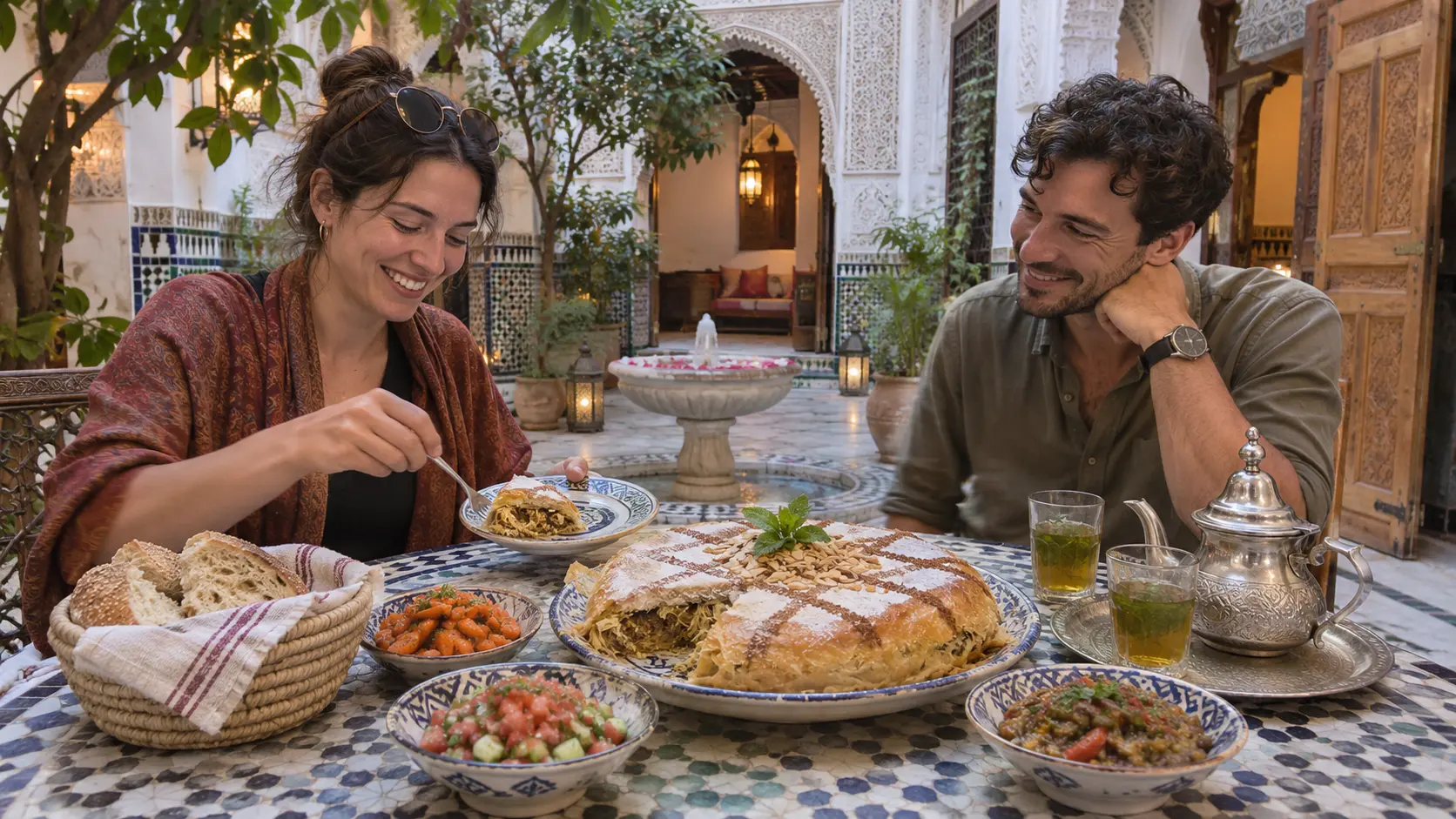
Pastilla, also written bastilla, is one of the dishes most closely associated with Fes. The classic version combines thin warqa pastry with a savory poultry filling, eggs, spices and almonds, then introduces sweetness with cinnamon and sugar.
Pigeon is traditional, while chicken is common in contemporary restaurant versions. The result is deliberately sweet and savory rather than fitting neatly into either category.
Pastilla takes considerable preparation, so it makes more sense as one planned meal than something to order casually at every restaurant. If you are particularly interested in Fassi cooking, this is one dish worth seeking out deliberately.
Lamb or Beef With Prunes and Almonds
Slow-cooked meat paired with prunes, almonds and warm spices illustrates another important side of Moroccan cooking: the combination of savory meat with fruit and gentle sweetness.
Restaurants may serve different versions as tagines or plated dishes, and recipes vary between kitchens. If you have already eaten several chicken-and-olive tagines elsewhere in Morocco, this style gives you a noticeably different meal.
Rfissa
Rfissa is made around shredded layered bread or pastry, lentils, seasoned broth and usually chicken. The ingredients absorb the sauce, creating a softer, more substantial dish than a typical tagine.
It is eaten in Fes and elsewhere in Morocco and is often associated with home cooking and family occasions. Not every tourist restaurant prepares it routinely, so ask rather than assuming it will appear on a standard menu.
Seffa Medfouna
Seffa medfouna combines fine steamed vermicelli or couscous with meat hidden beneath, while the top may be finished with cinnamon, sugar and almonds.
Like pastilla, it demonstrates how Moroccan cuisine can combine sweet and savory elements in the same course. It is richer and more specialized than an everyday snack, making it a good choice for travellers interested in traditional dishes beyond tagine.
Harira
Harira is a tomato-based soup commonly containing pulses, herbs and other ingredients depending on the recipe. It is especially important during Ramadan, when it is widely eaten at the breaking of the fast, but it can also be found at other times of year.
For travellers, it is one of the easiest dishes to fit into a food-focused day because it can work as a starter, light meal or street-food stop.
Breakfast and Street Food in Fes
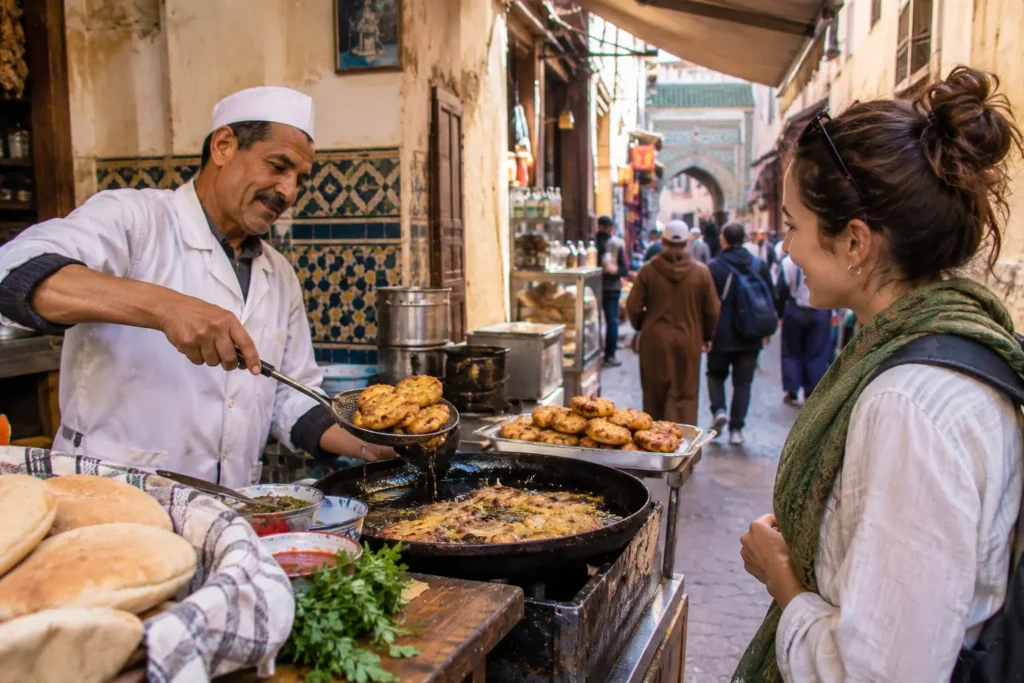
Some of the most practical food experiences in Fes happen without a reservation. Breakfast counters, bakeries and small stalls can fit naturally into a morning or afternoon medina walk.
Bissara
Bissara is a thick fava-bean soup commonly served with olive oil, cumin and bread. It is inexpensive, filling and particularly suited to cooler mornings.
It may not have the presentation of a riad dinner, but it gives travellers a useful contrast with the richer dishes often emphasized on restaurant menus.
Makouda
Makouda are seasoned potato fritters that can be eaten alone or used in sandwiches. They are an easy street snack when you want something quick rather than another full sit-down meal.
As with any street food, freshly cooked fritters served hot are preferable to food that has been sitting for a long period.
Msemen and Baghrir
Msemen is a layered flatbread cooked on a griddle, while baghrir is a soft semolina pancake recognizable by the small holes across its surface.
Both can appear at breakfast or tea time and are useful choices if your accommodation breakfast is optional or you want to try something outside the riad.
Sfenj
Sfenj is a fried dough ring best eaten fresh and hot. It pairs naturally with tea or coffee and works better as a small snack than something to save for later in the day.
Khlea
Khlea is preserved meat traditionally prepared through drying and preservation in fat. It can appear with eggs or in other simple preparations and is particularly associated with the Fes-Meknes region.
It has a concentrated flavor, so a breakfast or small portion can be a better introduction than building an entire meal around it.
Where to Eat in Fes Medina
Choosing where to eat in Fes is partly a navigation decision. Fes el-Bali is highly pedestrianized, and a restaurant that appears nearby on a map can involve a longer route through narrow lanes than expected.
Bab Boujloud for an Easy Start
The area around Bab Boujloud, or the Blue Gate, is one of the simplest places for a first-time visitor to find cafés and restaurants.
It is useful for lunch because you can identify the gate easily and continue exploring afterward. It also reduces the need to navigate deep into the medina after dinner.
Café Clock is one established name in the upper medina and is known for a mix of Moroccan and contemporary food. Treat named restaurants as examples rather than fixed recommendations, and check current opening arrangements before making a special journey.
Talaa Kebira and Talaa Seghira for Food While Exploring
The main routes through the medina are convenient for casual food because you are likely to pass bakeries, juice sellers, snack counters, small restaurants and tea stops while sightseeing.
This is where flexibility pays off. Instead of crossing the medina for a restaurant from a list, stop when you find a busy place serving something you actually want to try.
The areas around these routes also contain more polished restaurants such as The Ruined Garden, where travellers can combine Moroccan food with a longer courtyard meal.
R’cif and the Lower Medina
The R’cif side of the medina is useful for travellers exploring the lower sections of Fes el-Bali. Markets and food businesses around the area make it a logical place to look for snacks, grilled food and simpler local meals.
Planning lunch here can also prevent unnecessary backtracking if your sightseeing already takes you toward the Qarawiyyin and surrounding quarters.
Riad Dining and Traditional Fassi Meals
Some dishes are better suited to a longer meal than a street-food crawl. Traditional houses and riads can provide the setting for multi-course Moroccan dinners built around salads, pastilla, tagines and dessert.
This is the format to choose when you want the meal itself to be an evening activity.
Restaurants such as Dar Roumana and dining rooms within properties such as Riad Fes illustrate the more formal end of the city’s food scene, while other riads concentrate on home-style Moroccan cooking.
The tradeoff is access. Many traditional properties involve narrow medina lanes, stairs or rooftop dining areas. Ask about accessibility when necessary and confirm the recommended route before an evening reservation.
Fes Medina or Ville Nouvelle for Dinner?
You do not need to eat every meal inside the old city.
The medina makes sense for Fassi specialties, traditional houses, street snacks and atmospheric courtyard or rooftop restaurants. Ville Nouvelle provides easier vehicle access and more modern restaurants, cafés and international options.
After a full day walking through Fes el-Bali, dinner outside the medina can be a practical change of pace. This is especially true if your accommodation is already outside the old city or you want easier taxi access afterward.
How to Plan Food Into a Two- or Three-Day Fes Stay
Fes food is often rich, and trying to fit a food tour, cooking class, large lunch and formal dinner into the same day can reduce rather than improve the experience.
A better approach is to spread different formats across the stay.
- First morning: keep breakfast simple, then explore the medina without committing to a large early lunch.
- First lunch: choose a casual restaurant near the area you are already sightseeing.
- First evening: reserve a riad or traditional restaurant if pastilla or another elaborate Fassi dish is a priority.
- Second day: use street snacks such as makouda, msemen or harira to break up sightseeing.
- Another dinner: choose either a contemporary medina restaurant or Ville Nouvelle rather than repeating the same style of Moroccan set meal.
This leaves room for tea, pastries and spontaneous discoveries without making every few hours revolve around food.
Should You Take a Fes Food Tour?
A food tour can make sense in Fes because the medina is complex and some useful food stops are easy to walk past without context.
A good tour should do more than provide several tastings. It should explain ingredients, bread ovens, markets, eating habits and why particular dishes matter.
For first-time visitors, combining a food walk with medina orientation can be efficient. For travellers who already have a guided medina tour booked, a separate food tour may repeat some of the same streets.
If your main interest is learning techniques rather than sampling many foods, a cooking class can offer better value for your time.
Pastries, Sweets and Tea
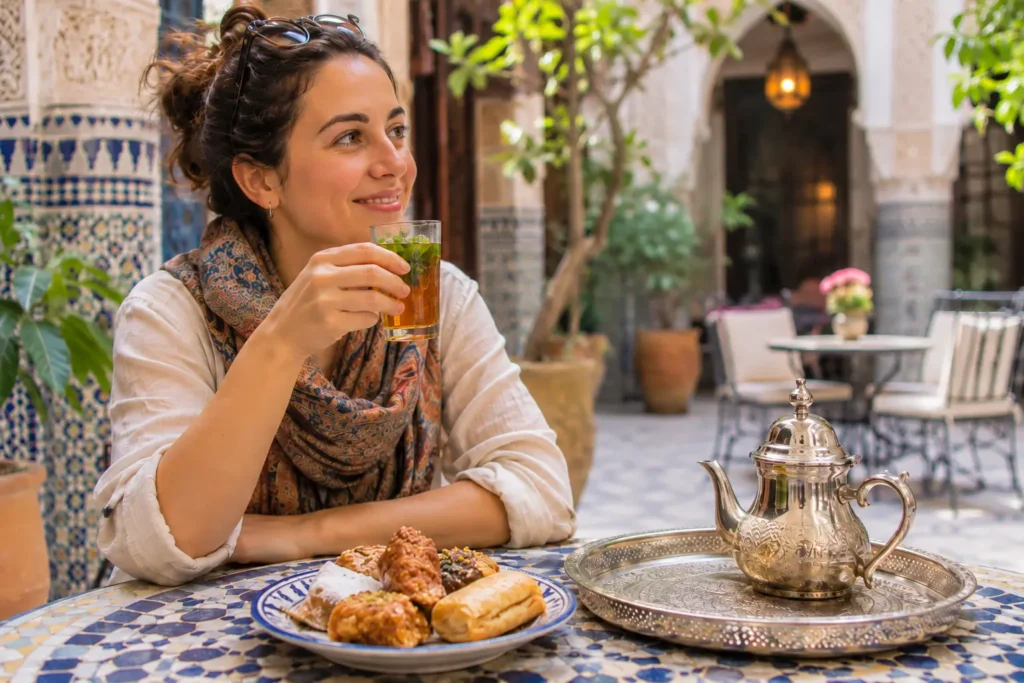
Fes is a good city for travellers with an interest in Moroccan sweets. Pastry shops and market stalls can provide an easier way to sample several flavors than ordering dessert after every restaurant meal.
Sellou
Sellou, also called sfouf in some contexts, is a dense mixture commonly made with toasted flour, sesame, almonds and sweeteners. It is especially associated with Ramadan and celebrations, although availability is not limited to one season.
Chebakia
Chebakia is a shaped, fried pastry coated with honey and sesame. It is particularly prominent during Ramadan and is traditionally paired with harira when breaking the fast.
Mint Tea
Mint tea provides a natural pause during a medina day. Sweetness varies, and travellers who prefer less sugar can ask whether it is possible to have the tea prepared or served with less.
A café stop is often more useful than adding another formal meal, particularly after several hours of walking.
Vegetarian and Vegan Eating in Fes
Vegetarian travellers can usually find cooked vegetable salads, vegetable tagines, lentils, beans, breads, couscous and other meat-free options.
However, a vegetable dish is not automatically vegetarian or vegan. Broth, butter, eggs or other animal products may be used depending on the recipe.
Explain dietary requirements clearly before ordering. Travellers with allergies should also ask about specific ingredients rather than relying on the dish name alone, particularly with pastries and sweets that may contain almonds, sesame, eggs or dairy.
Alcohol in Fes
Many traditional restaurants and cafés in Fes el-Bali do not serve alcohol. Some hotels, riads and licensed restaurants do, especially at the more formal end of the dining scene.
If alcohol matters to your dinner plans, confirm beforehand instead of assuming a high-end restaurant or rooftop has a license.
Tea, coffee, juices and soft drinks are more widely available and fit naturally into everyday dining.
Food Safety While Exploring Fes
There is no need to avoid street food simply because it is informal. Focus instead on preparation and storage.
Choose foods cooked fresh and served hot, look for active turnover and be cautious with prepared food that has been left sitting for long periods. Clean your hands before eating, particularly after shopping or handling cash in the medina.
If you are uncertain about drinking water, sealed bottled water or properly treated water is the conservative option.
Eating During Ramadan in Fes
Ramadan changes when and how people eat throughout the city. Some businesses adjust daytime hours, while the period around sunset becomes centered on breaking the fast.
Visitors do not need to fast, and hotels and restaurants may continue serving travellers during the day. However, individual opening hours can change, so confirm important meals directly rather than relying on ordinary schedules.
The evening can be an especially interesting time for food, with harira, dates, chebakia and other foods associated with the breaking of the fast becoming more visible.
Common Fes Food Planning Mistakes
Ordering Only Tagines
Tagine is an important part of Moroccan cuisine, but relying on it for every lunch and dinner means missing pastilla, soups, street snacks, preserved meats and sweet-savory Fassi dishes.
Crossing the Medina for Every Restaurant Recommendation
Fes rewards planning by geography. A good restaurant close to your sightseeing route is often more practical than losing a large part of the day trying to find one specific address.
Booking a Heavy Lunch and Dinner on the Same Day
Pastilla, meat tagines and traditional multi-course meals can be substantial. Balance a large planned dinner with a lighter lunch or street-food stops.
Ignoring the Route Home After Dinner
Medina lanes are easier to navigate in daylight. If you book dinner deep inside Fes el-Bali, save the route, ask the restaurant about the easiest exit and know which gate or accessible road you intend to reach afterward.
Assuming Traditional Food Must Be Expensive
Formal riad dining offers setting and service, but it is only one part of eating in Fes. Soup stalls, bakeries, grills and neighborhood restaurants can be just as useful for understanding everyday food.
FAQs
What food is Fes known for?
Pastilla is especially associated with Fes. The city’s food culture also includes sweet-savory meat dishes, harira, couscous, preserved meat, pastries and a wide range of breads and street snacks.
Where should first-time visitors eat in Fes?
Use a mix of locations. Bab Boujloud is convenient for an easy first meal, the main medina routes work well for lunch and snacks, and a riad restaurant is useful for one slower traditional dinner.
Is street food worth trying in Fes?
Yes. Makouda, msemen, soups, grilled foods and pastries can add variety without requiring another full restaurant meal. Choose freshly prepared food and use normal food-hygiene judgment.
Is Fes good for vegetarian travellers?
Vegetable tagines, salads, lentils, beans, breads and couscous provide several possibilities. Ask about stock and other animal ingredients when a strictly vegetarian or vegan meal is required.
Do restaurants in Fes serve alcohol?
Some licensed hotels, riads and restaurants do, but many medina restaurants and cafés do not. Confirm in advance if alcohol is important to your plans.
Do I need restaurant reservations in Fes?
Not for ordinary cafés and casual meals. Reservations are more useful for small riad dining rooms, popular destination restaurants or a particular dinner that matters to your itinerary.
Use Food to Slow Down Your Fes Itinerary
The most useful Fes food plan is not a checklist of restaurants. Try pastilla or another elaborate Fassi dish once, use soups and street snacks during medina sightseeing, allow time for tea and choose a formal dinner only when you want the meal itself to become part of the evening.
Planning meals around where you already are also reduces unnecessary walking through the medina and leaves more time for Fes itself. For wider route and timing advice, browse more Morocco travel planning guides.
Travellers who want food, crafts and medina traditions to play a larger role in their journey can also explore Visit Morocco Together’s Cultural Discoveries.
Ready to Experience Morocco?
Turn this inspiration into your next adventure. Our travel experts are ready to help.