Foum El Bouir Beach is one of Dakhla’s most accessible Atlantic surf spots, known for its long right-hand waves, sandy shoreline and proximity to the city. If you want to experience Dakhla’s ocean coast rather than its sheltered lagoon, this is a practical place to start.
The beach suits surfers who want to practise on Atlantic waves, beginners taking supervised lessons in suitable conditions, and visitors who simply want to enjoy the coastal scenery. However, its reputation as a surf beach does not mean the water is always suitable for swimming or inexperienced surfers.
Also written as Foum Labouir, Oum Labouir or Oum El Bouir, the beach is best approached with a flexible plan. Swell, wind and tides determine whether you can surf, paddle, swim in a designated area or enjoy the view from shore.
Where Is Foum El Bouir Beach in Dakhla?
Foum El Bouir Beach lies on the Atlantic-facing side of the Dakhla Peninsula, a short drive from the urban centre. Unlike many watersports camps farther along the lagoon, it is relatively easy to include in a visit based in Dakhla town.
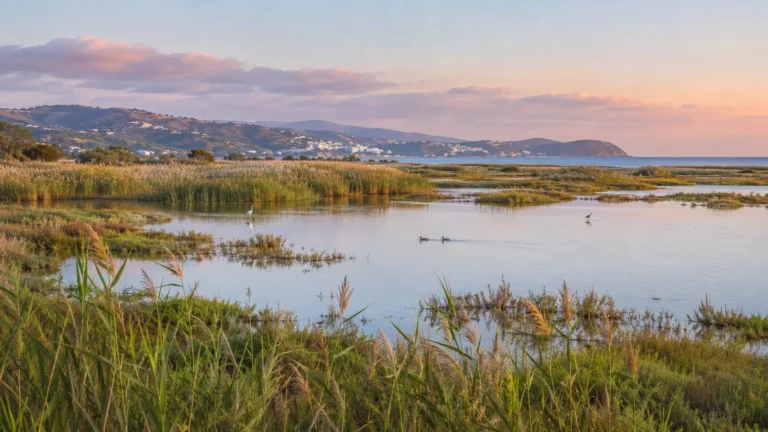
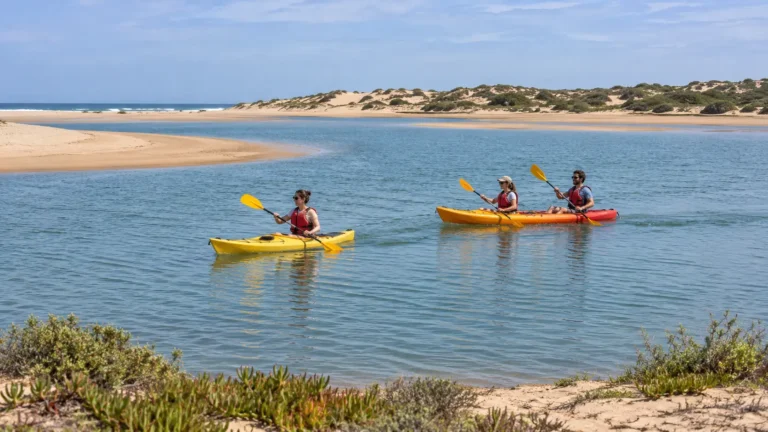
The peninsula separates two different coastal environments. On one side, Dakhla Lagoon provides sheltered water used for kitesurfing, kayaking and other activities. On the other, the open Atlantic brings breaking waves, stronger surf and different conditions for entering the water.
Foum El Bouir belongs to the ocean side. Its sandy stretches, rocky sections and exposed waves make it especially interesting for surfers, while the surrounding coastline provides opportunities for watching the waves and walking along the beach.
You do not need to be a surfer to appreciate the location. It works well as a short coastal outing from town, particularly when you want a change from lagoon-based activities.
Surfing at Foum El Bouir Beach: What to Expect
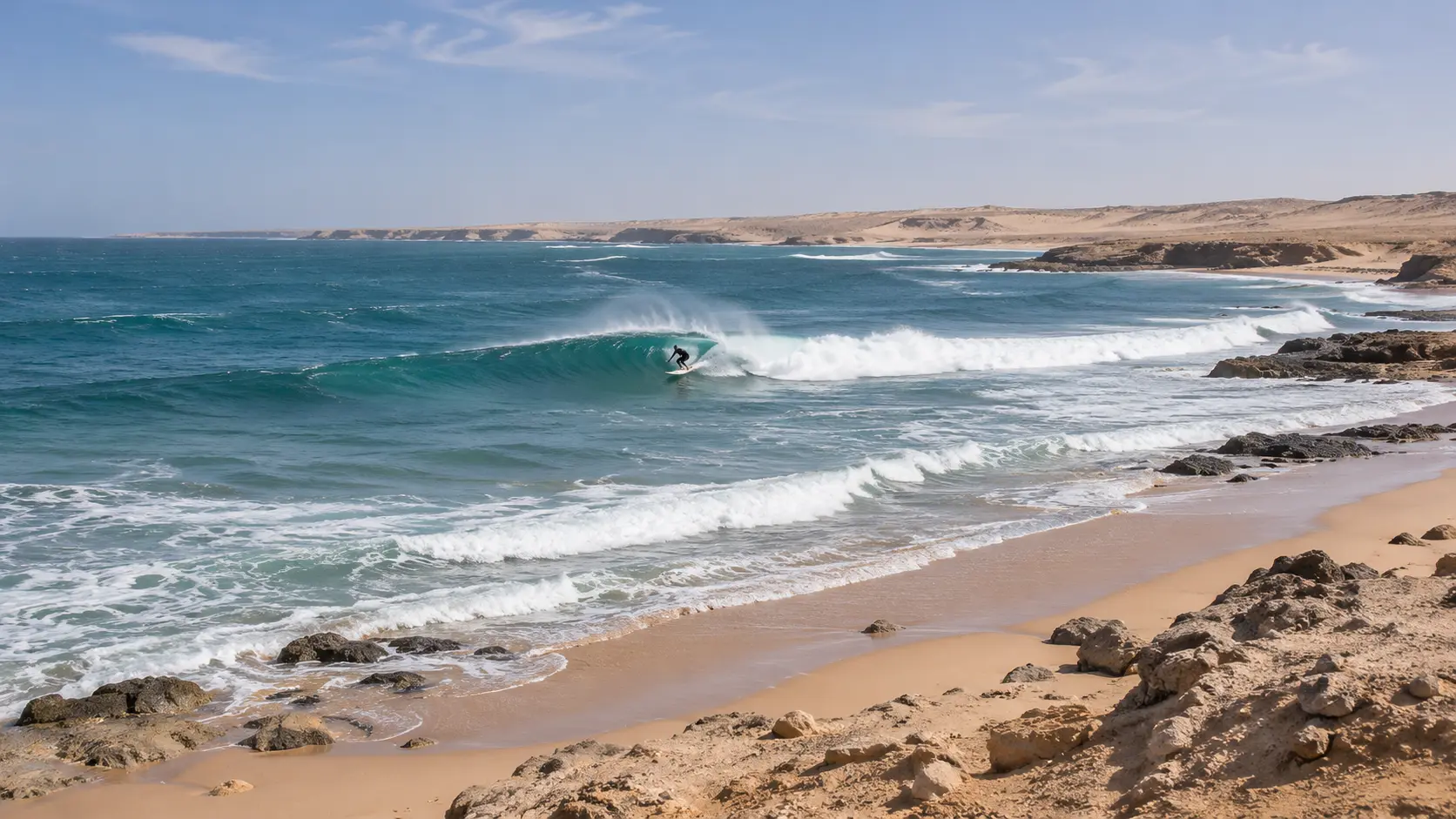
The main attraction at Foum El Bouir is its right-hand point break. Rather than breaking straight towards the beach, the wave can peel along the coast, allowing surfers to ride across its face.
When the swell and wind align, the break can produce long, clean sections. Some parts of the wave are faster and more hollow, while others may be gentler and more suitable for practising turns.
These characteristics change with wave size, swell direction, tide and the condition of the seabed. The bottom includes sand and rocky areas, so it should not be treated as a uniformly sandy beginner beach.
Is Foum El Bouir Suitable for Beginners?
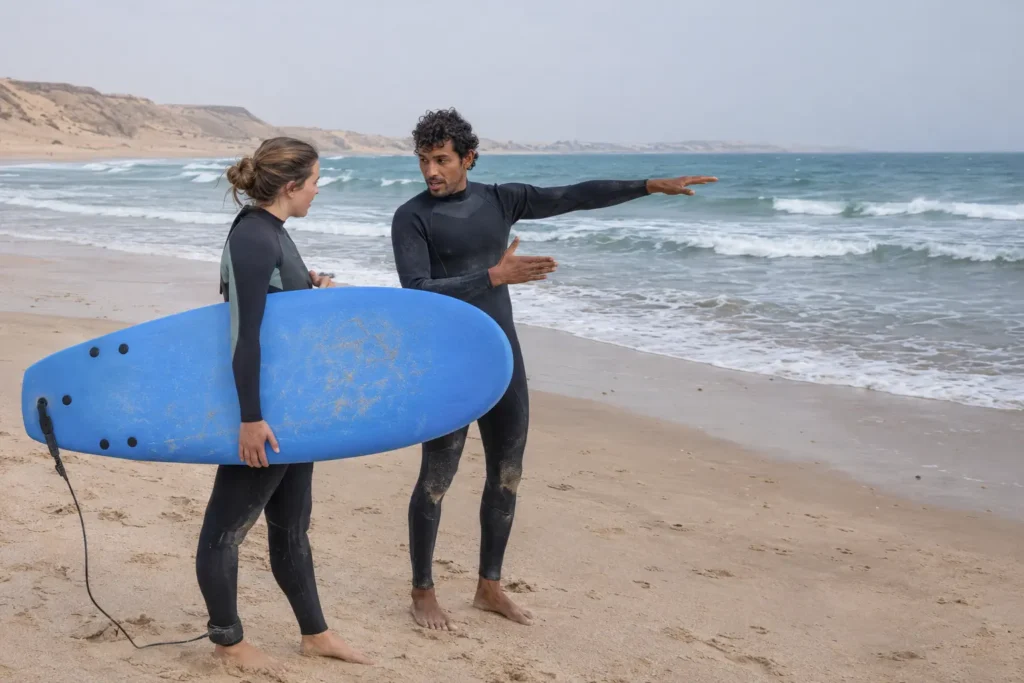
Beginners can sometimes learn at Foum El Bouir, but the conditions need to be appropriate. Smaller, manageable waves and a suitable teaching area can provide opportunities to practise paddling, standing up and controlling a surfboard.
Local surf schools offer introductory lessons and coaching around Dakhla, including at Oum Labouir when conditions permit. An instructor should assess the waves and select a location that matches the learner’s ability.
For a first surf lesson, choose instruction rather than entering the water independently. A well-known surf spot is not automatically a safe place to begin, especially when the swell becomes powerful or rocks are exposed.
Ask whether the lesson includes a suitable board, wetsuit, supervision and transport. Also confirm whether the school may move the session to another beach if the surf at Foum El Bouir is unsuitable.
What About Intermediate and Experienced Surfers?
Intermediate surfers may appreciate the opportunity to practise positioning, turns and longer rides when the waves are manageable. More experienced surfers can find a demanding break when larger Atlantic swells create faster or steeper sections.
Before paddling out, spend time observing the wave. Identify the take-off areas, the route through the break, other surfers and any visible rocks.
Pay attention to where the wave becomes shallower and how other surfers enter and leave the water. If you do not know the spot, local guidance is more useful than relying on a forecast alone.
Strong surf, difficult currents or an unfamiliar rocky entry are good reasons to postpone a session, even if the waves look attractive from shore.
When Is the Best Time to Surf Foum El Bouir?
Autumn through spring generally offers a better chance of receiving the North Atlantic swells associated with Dakhla’s surf season. The period from approximately October to April is often considered a useful starting point for planning a surf-focused visit.
That does not guarantee suitable conditions every day. Larger winter swells can produce challenging waves, while summer’s stronger winds may interfere with conventional surfing even when there is enough swell.
How Swell and Wind Affect the Waves
Foum El Bouir is particularly responsive to swell arriving from the northwest and nearby Atlantic directions. These swells can wrap around the point and create the right-hand waves for which the beach is known.
Wind direction and strength affect how those waves form. Offshore or suitable cross-offshore winds may leave the wave faces cleaner, while strong onshore winds can make them disorganised.
A forecast showing waves does not necessarily mean there will be a good surf session. Check the swell direction, swell period, wind and tide together, and compare the forecast with local observations.
Why the Tide Matters
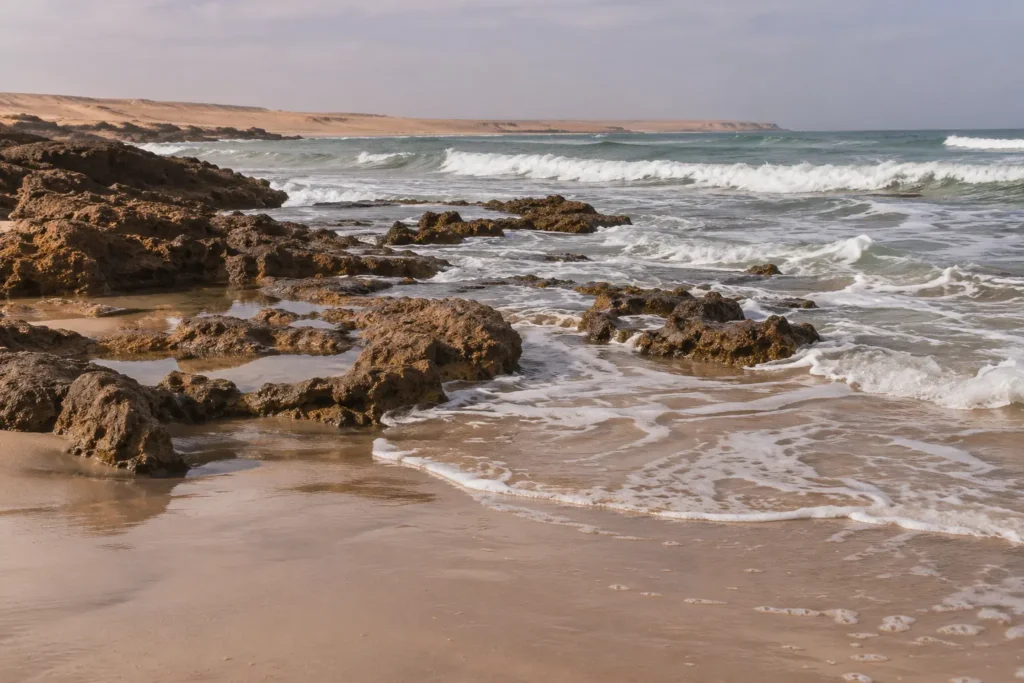
Foum El Bouir can work across different tide stages, but the quality of the waves and the ease of entering the water can change considerably.
At lower water levels, rocky areas may become more exposed. A rising or fuller tide can improve some sections, although the best window depends on the swell and the exact part of the break.
A local surf instructor or experienced guide can help identify the most appropriate time to enter. Do not assume that high tide, low tide or a particular hour is always best.
Can You Swim at Foum El Bouir Beach?
Swimming may be possible in designated areas when local conditions and supervision allow, but Foum El Bouir should not be approached as a permanently calm swimming beach.
The Atlantic waves that attract surfers can also create shorebreak, currents and difficult conditions for swimmers. Rocks and changing water depth add further considerations.
If swimming is your priority, check the current beach flags, local restrictions and whether lifeguard supervision is operating. Choose a designated swimming area where conditions have been assessed, and avoid entering near a busy surf break.
Families with young children or travellers who prefer gentle water should be particularly cautious. A sunny day or an apparently quiet stretch of beach does not guarantee safe swimming.
For people mainly interested in sheltered water activities, the lagoon side of Dakhla may provide more suitable alternatives, although wind, tides and local restrictions still need to be considered.
Things to Do at Foum El Bouir Without Surfing
Surfing is the beach’s main attraction, but it is not the only reason to visit.
Watch Surfers from the Shore
Foum El Bouir is an interesting place to observe how surfers use a point break. From a suitable viewing position, you can see how waves develop along the shoreline and how different surfers approach the same sections.
Even on days when the surf is too demanding for beginners, watching experienced surfers can make the visit worthwhile.
Walk Along the Beach and Enjoy the Coastal Views
A walk along an accessible sandy section offers an opportunity to enjoy Dakhla’s Atlantic scenery without entering the water.
Allow time to stop, watch the ocean and appreciate the contrast between the coastline and the surrounding dry landscape. Choose a route appropriate for the tide and avoid slippery rocks, unstable edges and areas used for launching water sports.
Photography and Sunset Views
The beach offers opportunities for photographing waves, surf silhouettes and the Atlantic coastline. Late-afternoon light can be particularly appealing, although visibility and weather conditions vary.
Keep a safe distance from breaking waves when taking photographs, especially around rocky areas. Ask permission before taking close photographs of identifiable people or surf students.
If you are travelling with someone who wants a surf session while you prefer a slower afternoon, the beach can offer a shared destination without requiring everyone to participate in the same activity.
How to Get to Foum El Bouir Beach
Foum El Bouir is relatively close to Dakhla town and can generally be reached by road. The most practical transport depends on where you are staying and whether you are bringing surfing equipment.
- Taxi: A convenient option for visitors staying in Dakhla town. Agree on the destination and fare before departure, and arrange a return pickup if needed.
- Rental car: Useful if you want flexibility to visit the beach, stop at coastal viewpoints or explore other parts of Dakhla independently. Use established access roads and parking areas.
- Surf-school transport: Some schools offer pickup or transport to their chosen teaching spot. Confirm whether this is included in the lesson price.
- Accommodation near the surf: Staying around Oum Labouir can reduce daily travel for surfers, but check the actual walking route and access to the beach before booking.
Travellers staying at lagoon-side camps should not assume the ocean beach is within walking distance. The journey depends on the camp’s location and the chosen road access.
A private driver is not essential for a straightforward visit from town. However, prearranged transport may be useful if you have bulky equipment, limited mobility or accommodation farther from the beach.
Planning a Visit: What to Bring and Check
A half-day can work well if your goal is to watch the surf, take photographs and spend time on the shoreline. If you are arranging a lesson or planning to surf independently, leave flexibility around the suitable wave and tide window.
Before setting out, consider the following:
- Check the conditions: Review the latest surf forecast, including swell, wind and tides. For water activities, seek a local assessment before entering.
- Bring sun and wind protection: Sunscreen, a hat, drinking water and an extra layer are useful on an exposed Atlantic beach.
- Prepare suitable footwear: Sand and rocky sections may require different footwear, particularly if you plan to walk beyond the main beach area.
- Confirm equipment: If surfing, ask about board rental, a suitable wetsuit, leash and any equipment requirements before arriving.
- Check facilities: Toilets, changing areas, food options, lifeguard services and equipment hire may depend on the specific beach section, operator and season.
- Plan your return: Confirm transport arrangements if you do not have your own vehicle.
For a comfortable visit, avoid filling the day with too many distant stops. Beach conditions can change, and surf lessons or coastal outings may need to move around the weather.
Foum El Bouir or Dakhla Lagoon: Which Should You Visit?
Although they are both part of the Dakhla Peninsula, Foum El Bouir and the lagoon serve different purposes.
Choose Foum El Bouir if you want to watch Atlantic waves, take a surf lesson in suitable conditions, practise ocean surfing or enjoy a relatively convenient coastal outing from Dakhla town.
Choose Dakhla Lagoon if your priority is kitesurfing instruction, kayaking or a lagoon boat excursion. These activities take place in different environments and should not be treated as interchangeable alternatives to ocean surfing.
If you have enough time, seeing both coastlines provides a more complete understanding of Dakhla’s watersports appeal. You could dedicate one outing to the Atlantic beach and another to the lagoon, rather than rushing between them during a single activity session.
Keep the order flexible. A day with unsuitable surf may still offer appropriate conditions for a different activity elsewhere, but each operator should assess its own operating conditions.
Common Mistakes to Avoid at Foum El Bouir
- Assuming every wave suits beginners: The point break becomes more technical as swell increases. Use an instructor when learning.
- Confusing the beach with the lagoon: Foum El Bouir faces the open Atlantic, where wave and swimming conditions differ from sheltered lagoon areas.
- Ignoring the rocky seabed: Some sections include rocks, particularly important when tides change.
- Booking a rigid surf schedule: Leave room to adjust the session around wind, swell and local guidance.
- Assuming beach facilities are always available: Confirm changing services and any supervised swimming arrangements before your visit.
Respect the shoreline by using established access routes, keeping away from sensitive natural areas and taking your rubbish with you. Give surfers room to enter and exit the water, and avoid disturbing local fishing activities.
FAQs
Is Foum El Bouir the Same as Oum Labouir?
Yes. Foum El Bouir is also commonly written as Foum Labouir, Oum Labouir or similar variations. These names are used for the well-known Atlantic surf beach near Dakhla.
Can You Learn to Surf at Foum El Bouir?
Yes, local surf schools may offer beginner lessons there when conditions are suitable. An instructor should assess the wave size, currents and teaching area before taking beginners into the water.
Do You Need a Surfboard to Enjoy the Beach?
No. Visitors can enjoy coastal views, watch surfers, walk along suitable beach sections and take photographs without participating in a water sport.
Should You Bring a Wetsuit?
A wetsuit is often useful for surfing on Dakhla’s Atlantic coast. The appropriate thickness depends on the season, water temperature, session length and personal comfort. Ask a local surf school what it recommends for your travel dates.
Is Foum El Bouir Suitable for a Family Beach Visit?
It can be suitable for a family outing focused on the shoreline and coastal scenery. However, families should not assume that ocean swimming is appropriate for children. Check the current conditions and availability of supervised swimming areas before entering the water.
Make Foum El Bouir Part of Your Dakhla Stay
Foum El Bouir Beach is worth considering if you want to discover Dakhla’s Atlantic side without organising a long excursion. Its right-hand point break makes it appealing for surfers, while the shoreline offers a straightforward coastal visit for non-surfers.
The most important decision is whether you want to surf, swim in an appropriate supervised area or simply enjoy the beach. Choose the activity first, then let the day’s conditions guide your timing.
For more ideas on combining ocean beaches, lagoon experiences and other coastal attractions, explore the Visit Morocco Together Dakhla destination guide and plan a stay that gives each part of the peninsula enough time.
Ready to Experience Morocco?
Turn this inspiration into your next adventure. Our travel experts are ready to help.