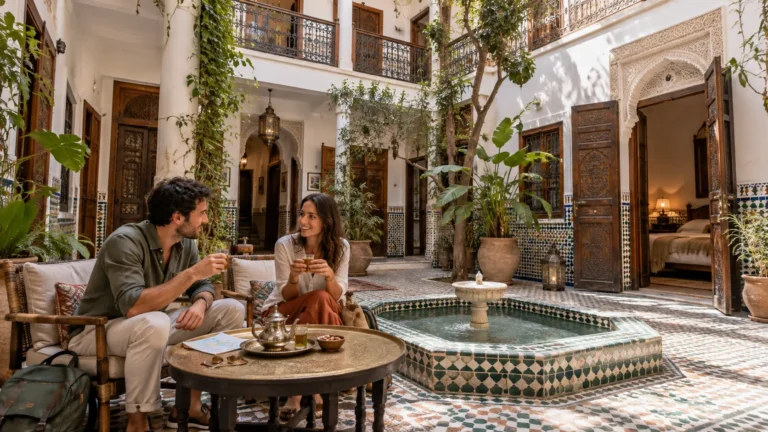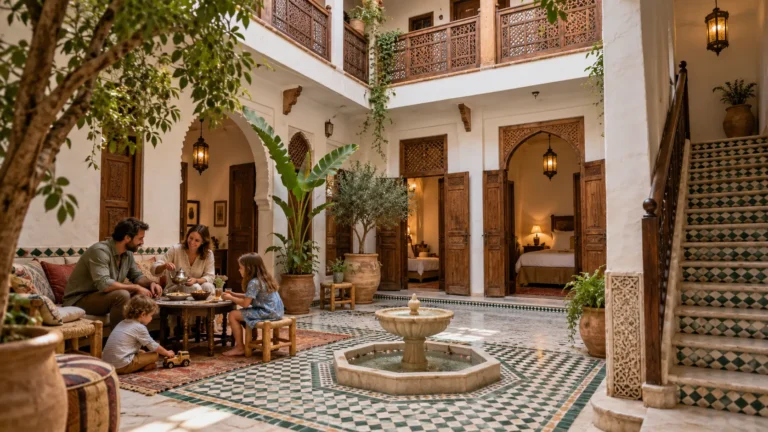
This Marrakech food guide is for travellers trying to decide what to eat, where different dining styles fit into a city stay, and which meals are worth planning in advance. Marrakech offers far more than tagine: local specialties such as tanjia and mechoui sit alongside harira, couscous, grilled meats, msemen, pastries, market snacks and a growing modern restaurant scene.
The easiest approach is not to reserve every meal. Keep daytime eating flexible around sightseeing, use Jemaa el-Fna and the medina for street food and casual lunches, and book only the dinners or rooftops that matter most to you. If you are still building the wider city itinerary, the Marrakech destination guide can help you fit food stops around the rest of your stay.
Marrakech Food Guide: What to Eat First
If time is limited, prioritize dishes that either have a strong connection with Marrakech or teach you something different about Moroccan cooking. You do not need to order tagine at every meal.
Tanjia
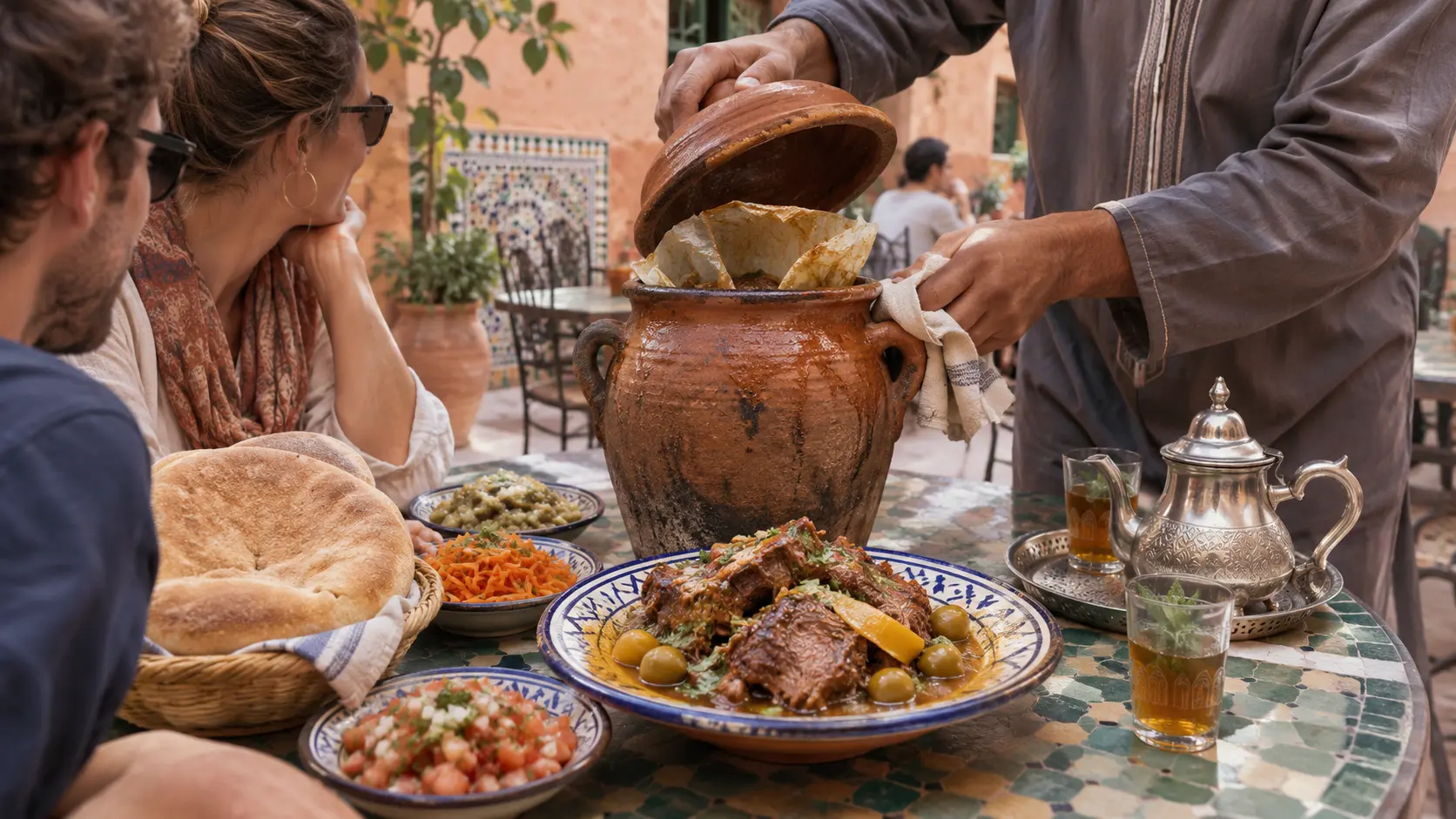
Tanjia, sometimes written tangia, is one of the dishes most closely associated with Marrakech. It refers both to the slow-cooked meat preparation and the tall earthenware vessel traditionally used to cook it.
The dish is usually based around meat cooked slowly with seasonings until very tender. Recipes and presentation vary, so think of tanjia as a style of Marrakech cooking rather than one fixed restaurant recipe.
If you are choosing between another familiar tagine and tanjia during a short stay, tanjia is the more specifically Marrakchi experience.
Mechoui
Mechoui is another strong choice for meat eaters. The term refers to slow-roasted lamb or sheep, traditionally cooked until the meat becomes very tender.
In Marrakech, roast lamb specialists are particularly associated with the medina. It is often a simpler meal than an elaborate restaurant dinner, with the quality of the meat and roasting method doing most of the work.
If you plan to try mechoui, lunch can make more sense than leaving it for a late dinner. Availability at individual specialists can depend on what has been prepared that day.
Tagine
Tagine is both the cooking vessel and the dish prepared inside it. Common versions combine meat, chicken or vegetables with spices, herbs, preserved lemon, olives, dried fruit or other ingredients.
There is no single standard tagine. A chicken tagine with preserved lemon tastes very different from a lamb preparation with prunes or a vegetable version.
Rather than ordering the same type repeatedly, use Marrakech to compare different styles. A simple neighborhood restaurant may produce a more traditional version, while modern restaurants often reinterpret the format.
Couscous
Couscous remains one of Morocco’s most important shared dishes and is traditionally particularly associated with Friday meals. Restaurants in Marrakech may serve it on other days as well, but some establishments still emphasize Friday couscous.
It can be substantial, especially when served with vegetables and meat. If you are planning a large dinner later, couscous at lunch may be more than you need.
Harira and Briouat
Harira is a tomato-based soup commonly made with pulses, herbs and other ingredients. It makes an easy introduction to Moroccan food and can work as a lighter meal or starter.
Briouat are small pastries made with thin dough and filled with savory or sweet ingredients. They are useful when you want to try several foods without committing to another full tagine.
Breakfast and Snacks in Marrakech
A food-focused trip should leave room for breakfast and small snacks rather than treating every meal as a restaurant reservation.
Msemen
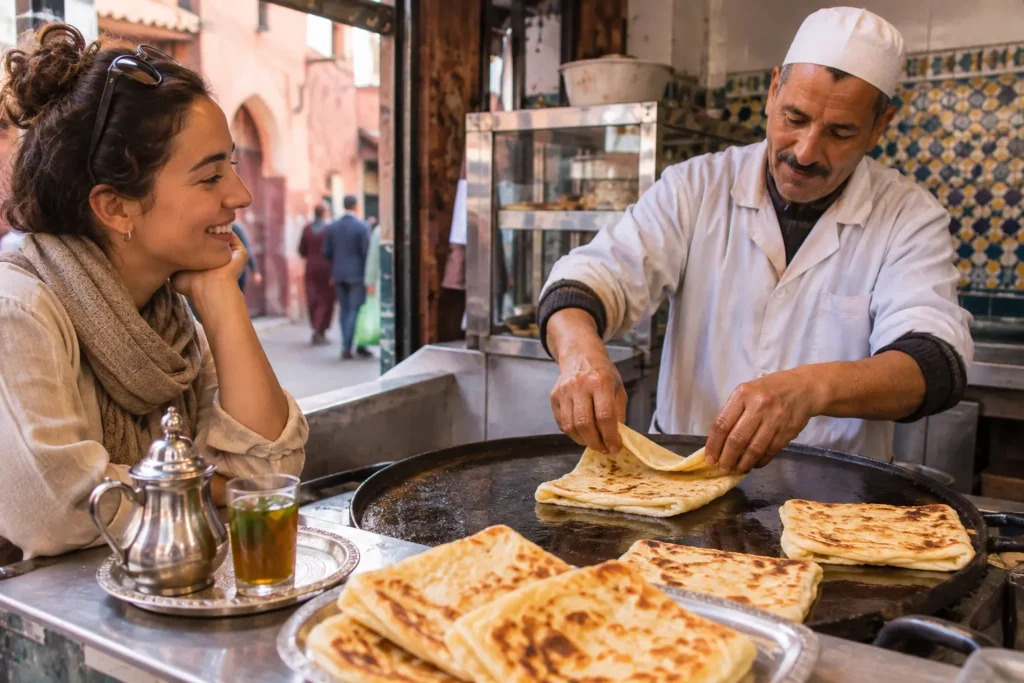
Msemen is a layered square flatbread or pancake that can be eaten plain, sweetened or with savory accompaniments. It is common at breakfast and as a snack.
Freshly cooked msemen with tea can be more useful on a sightseeing morning than a heavy hotel breakfast followed quickly by lunch.
Harcha
Harcha is a semolina-based flatbread cooked on a griddle. It is another simple breakfast or café food worth trying if you want to move beyond the most familiar Moroccan dishes.
Sfenj
Sfenj is a fried dough snack often compared with a doughnut. It is best approached as something to eat fresh rather than something to carry around for hours.
Khobz
Round Moroccan bread appears with many meals and is often used to pick up salads, sauces and tagines. Bakeries and neighborhood ovens are part of everyday food life in the medina, even when they are not designed as tourist attractions.
Street Food in Jemaa el-Fna
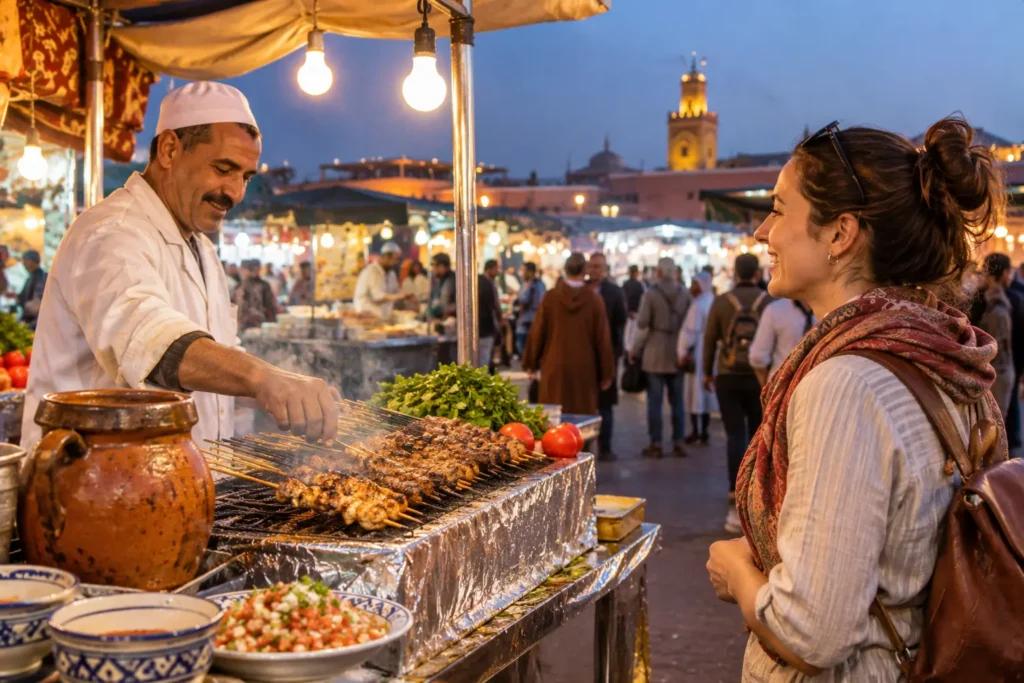
Jemaa el-Fna is as much about atmosphere as it is about finding the city’s finest individual dish. In the evening, food stalls become a major part of the square, serving grilled meats, soups, fried foods, sweets and other snacks.
For a first visit, treat the square as a tasting experience rather than planning your entire dinner around one stall. Walk through first, look at what is being cooked and choose a few things that appeal to you.
Freshly grilled foods, hot soup, fried dough and other dishes cooked in front of you are generally easier to assess than prepared food that has been sitting for a long time.
Possible things to encounter around the square and surrounding medina include:
- Grilled meat and brochettes.
- Liver sandwiches.
- Harira.
- Roast lamb.
- Msemen and other breads.
- Sfenj.
- Olives, dates and nuts.
- Chebakia and other sweets.
- Snail soup for travellers interested in trying something less familiar.
- Mint tea and fresh juices.
You do not need to try everything in one evening. Returning for a second walk often works better than ordering several heavy dishes at once.
Where to Eat in Marrakech by Area
Jemaa el-Fna and the Central Medina
This is the easiest area for combining sightseeing and food without losing much time to transport. You can move between stalls, small Moroccan restaurants, cafés and rooftops while exploring the souks.
Restaurants around Place des Épices and the central medina also offer a more contemporary take on Moroccan dining. Nomad is a well-known example for modern Moroccan food and rooftop dining, while Le Jardin is known for a courtyard setting inside the medina.
For popular rooftops and destination restaurants, check current opening arrangements and consider reserving rather than assuming you will find a table at your preferred time.
The Kasbah
The Kasbah can be a useful area for lunch or dinner when your sightseeing already takes you toward the southern part of the medina.
Café Clock is one recognizable option in this area, combining food with cultural programming. Even if you do not choose a named restaurant, the Kasbah is useful when you want to avoid crossing the entire medina for dinner.
The Mellah
The Mellah and surrounding southern medina streets provide another cluster of Moroccan and more polished dining options. Restaurants such as Le Tanjia have helped make the area familiar to visitors looking for a sit-down Moroccan dinner.
This part of the city fits naturally with sightseeing around the Bahia Palace and nearby historic areas, so lunch here can reduce unnecessary backtracking.
Gueliz
Gueliz is the modern-city alternative to medina dining. It is a good choice when you want contemporary Moroccan cooking, international food, cafés, cocktails or a change from riad courtyards and rooftop terraces.
The practical advantage is access. Streets are generally easier for taxis and vehicles than the medina’s pedestrian lanes, which can make Gueliz convenient for dinner after a long day.
It is also a useful reminder that eating in Marrakech does not need to mean choosing “traditional” food at every meal.
How to Plan Food Into a Short Marrakech Stay
The biggest food-planning mistake is trying to fit too many major meals into too little time. Moroccan dishes can be substantial, and a food tour, cooking class, restaurant lunch and elaborate dinner on the same day quickly become excessive.
For a two- or three-day visit, a more comfortable approach is to vary the format.
- One medina lunch: choose a simple Moroccan restaurant while already sightseeing.
- One street-food evening: explore Jemaa el-Fna without treating it as a formal multi-course dinner.
- One planned dinner: reserve a riad, rooftop or modern restaurant that offers something different from your daytime meals.
- One local specialty: make room for tanjia or mechoui rather than repeating tagine.
- One flexible breakfast: try msemen, harcha, bread and tea instead of making every morning a large hotel meal.
This leaves room for sightseeing, rest and spontaneous café stops rather than organizing the whole visit around reservations.
Rooftop Restaurants: Worth It or Overrated?
Rooftops are one of Marrakech’s most popular dining formats because they provide a break from the dense medina streets and views across the city.
They are worth including if the setting matters to you, but the view should not determine every meal. Some rooftops are stronger for tea, lunch or sunset drinks than for the most traditional Moroccan cooking.
A practical strategy is to choose one rooftop deliberately, then eat elsewhere for the remaining meals.
If accessibility matters, ask about stairs in advance. Many traditional medina buildings do not have lifts, and reaching a roof terrace can involve several flights.
Mint Tea, Coffee and Café Breaks
Mint tea is served throughout Marrakech and can be as much a pause in the day as a drink. It is commonly prepared sweet, although sweetness varies.
Do not feel that every café stop needs to become a meal. Tea with a pastry, coffee on a terrace or a glass of juice can provide useful downtime during a long medina walk.
Marrakech also has an extensive modern café scene, especially in Gueliz, for travellers who want espresso, pastries or a break from sweet mint tea.
What About Vegetarian and Vegan Food?
Vegetarian travellers can usually find vegetable tagines, salads, lentils, beans, breads, couscous and other meat-free dishes. Marrakech also has restaurants specifically designed around vegetarian or plant-focused menus.
However, do not assume that a dish labeled “vegetable” automatically meets every dietary requirement. Stock, butter, eggs or other animal products may be used depending on the recipe.
Vegans and travellers with allergies should explain requirements clearly before ordering, especially in smaller restaurants where written allergen information may be limited.
Alcohol in Marrakech Restaurants
Alcohol availability varies widely. Many traditional restaurants, cafés and street-food venues do not serve it, while some hotels, licensed restaurants and modern venues do.
If wine, beer or cocktails matter to your dinner plans, check beforehand rather than assuming every rooftop or higher-priced restaurant serves alcohol.
There is no need to build the dining experience around alcohol. Tea, juices and other non-alcoholic drinks are a normal part of meals throughout the city.
Food Safety Without Avoiding Local Food
You do not need to avoid Marrakech street food or traditional restaurants simply because they are informal. Pay attention to how food is being handled.
Prefer freshly cooked food served hot, especially at stalls. Look for active turnover, clean preparation practices and ingredients that have not been sitting unrefrigerated for long periods.
Wash or sanitize your hands before eating, particularly after shopping in the souks or handling cash. If you are uncertain about local drinking water, sealed bottled or properly treated water is the more conservative choice.
Food safety is about preparation and storage, not whether a restaurant is expensive or aimed at tourists.
Eating in Marrakech During Ramadan
Ramadan changes the rhythm of dining rather than making Marrakech impossible for non-fasting visitors. Some hotels, riads and restaurants continue serving travellers during daylight hours, while other businesses adjust their schedules.
Around sunset, expect a pause as people break the fast, followed by a livelier evening period. Restaurant hours can change, so confirm important meals directly during Ramadan rather than relying on ordinary schedules.
Visitors are not expected to fast, but eating or drinking discreetly rather than conspicuously in busy public spaces during fasting hours is a considerate approach.
Common Marrakech Food Mistakes
Eating Tagine at Every Meal
Tagine deserves a place in the trip, but Marrakech offers much more. Make room for tanjia, mechoui, harira, couscous, bread, pastries and street snacks.
Booking Every Restaurant in Advance
A few reservations are useful, particularly for popular rooftops or special dinners. Too many reservations make sightseeing rigid and remove the opportunity to stop somewhere interesting as you explore.
Assuming Jemaa el-Fna Has to Be Your Best Meal
The square is worth experiencing for its atmosphere and variety, but it does not need to carry the burden of being your finest restaurant meal in Marrakech.
Crossing the City for Every Recommendation
Marrakech traffic and medina walking can turn a restaurant list into inefficient sightseeing. Choose meals close to where you already plan to be.
Ignoring Gueliz Because It Is Not the Medina
The modern city adds variety and can provide a welcome change after several traditional Moroccan meals. A food guide should reflect Marrakech as it is today, not only its old city.
FAQs
What food is Marrakech known for?
Tanjia is particularly associated with Marrakech, while mechoui is another strong local choice. Tagines, couscous, harira, briouat, breads, grilled meats and pastries are also widely available.
Is Jemaa el-Fna worth visiting for food?
Yes, especially for the evening atmosphere and the chance to try several snacks or grilled foods. Treat it as one part of the Marrakech food experience rather than the only place you eat.
Where should first-time visitors eat in Marrakech?
Use a mix of locations: casual meals in the medina, one evening around Jemaa el-Fna, one planned restaurant or rooftop, and Gueliz if you want modern Moroccan or international dining.
Do I need restaurant reservations?
Not for every meal. Reserve popular rooftops, small riad restaurants and special dinners when a particular venue matters to you. Keep ordinary lunches and café stops flexible.
Is Marrakech good for vegetarian travellers?
Yes. Vegetable tagines, salads, couscous and other plant-based dishes are widely available, and the city also has vegetarian-focused restaurants. Confirm ingredients when vegan requirements or allergies apply.
Should I take a food tour or cooking class?
Either can add value if food is a major interest. A food tour is useful for tasting several dishes and understanding where to eat, while a cooking class is better for learning techniques you want to reproduce at home. On a short trip, choose one rather than filling the same day with both.
Plan for Variety, Not a Checklist of Restaurants
The most useful Marrakech food plan combines different styles of eating rather than chasing a long list of famous restaurants. Try a Marrakchi specialty, eat something simple in the medina, experience Jemaa el-Fna after dark, spend time over tea and reserve one meal where the setting or menu genuinely matters to you.
That balance leaves enough room to enjoy Marrakech itself instead of spending the trip moving from one reservation to the next. For broader itinerary advice, browse more Morocco travel planning guides.
If food, medinas and local traditions are a major part of the journey you want to build, Visit Morocco Together’s Cultural Discoveries offer a relevant starting point for wider trip inspiration.
Ready to Experience Morocco?
Turn this inspiration into your next adventure. Our travel experts are ready to help.