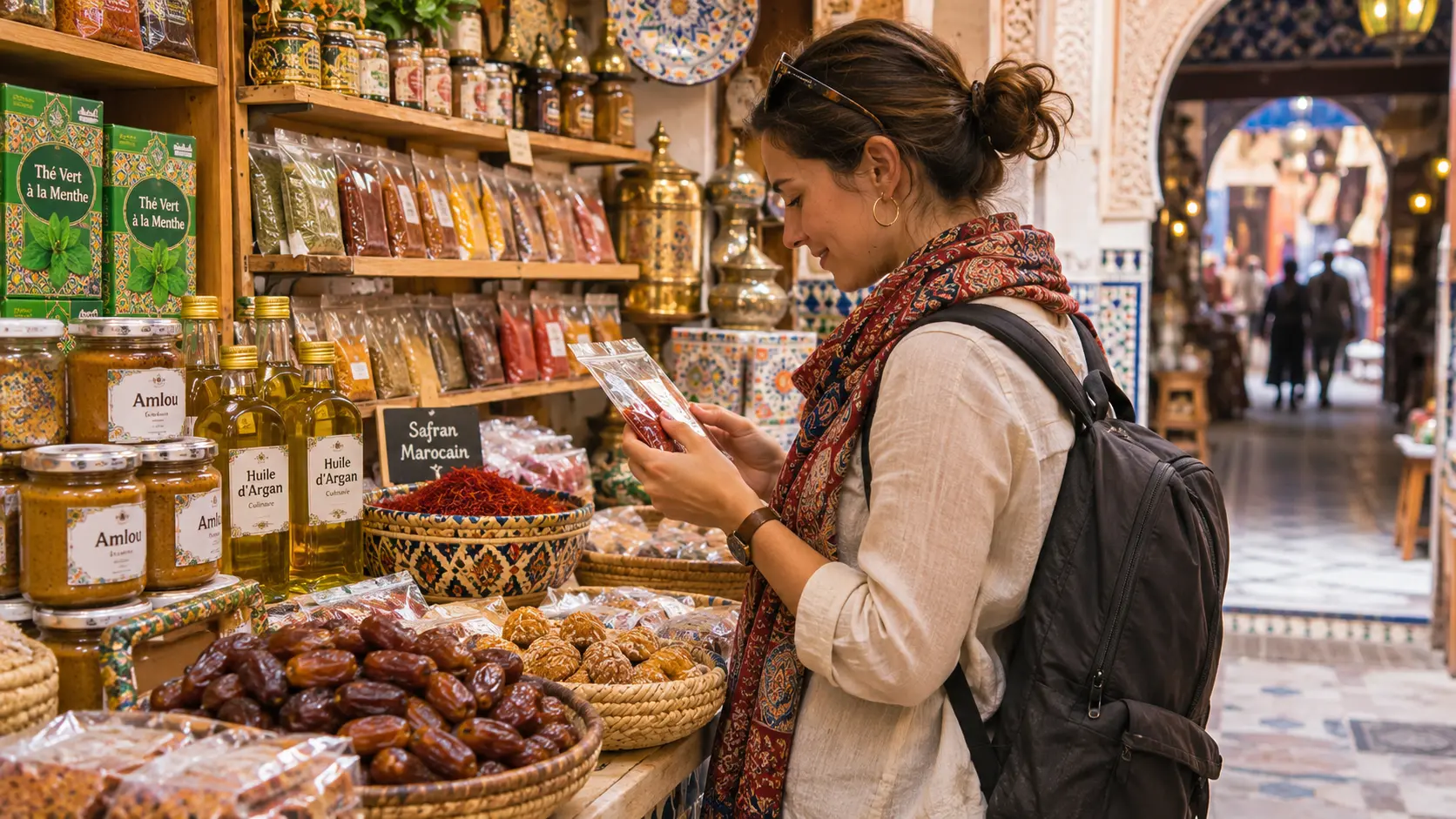
Moroccan food souvenirs can be some of the most useful gifts to bring home because they let you revisit the flavors of the trip without filling your luggage with bulky objects. Spices, saffron, packaged tea, dates and dry pastries are among the easiest choices to transport. Culinary argan oil, amlou, honey, olive oil and preserved lemons can also make excellent gifts, but they need more attention to packaging, luggage rules and customs restrictions.
The best choice depends on who the gift is for and how far it needs to travel. A cook may appreciate saffron or ras el hanout, while tea, dates or boxed pastries work well as gifts to share. For your own kitchen, a carefully chosen bottle of culinary argan oil can be more useful than buying several unfamiliar spice mixes simply because they look colorful in the souk.
Whatever you buy, prioritize food-grade products, clear packaging and ingredients you genuinely know how to use. Customs and airport rules vary by destination, so check current official requirements before packing any food for an international flight.
What Makes a Good Edible Souvenir from Morocco?
A good food souvenir should taste of the trip without becoming a problem at the airport. The easiest products usually have three advantages: they are shelf-stable, securely packaged and clearly identifiable.
Dry spices, tea, saffron and packaged sweets generally travel more easily than jars of olives or bottles of oil. A sealed product with an ingredient list and recognizable label can also be simpler to explain at customs than an unmarked bag of herbs or homemade food.
Freshness matters too. There is little benefit in buying a large quantity of spices if they will sit unused for years. Small amounts of ingredients you already cook with are usually the better purchase.
Best Moroccan Food Souvenirs to Bring Home
Culinary Argan Oil
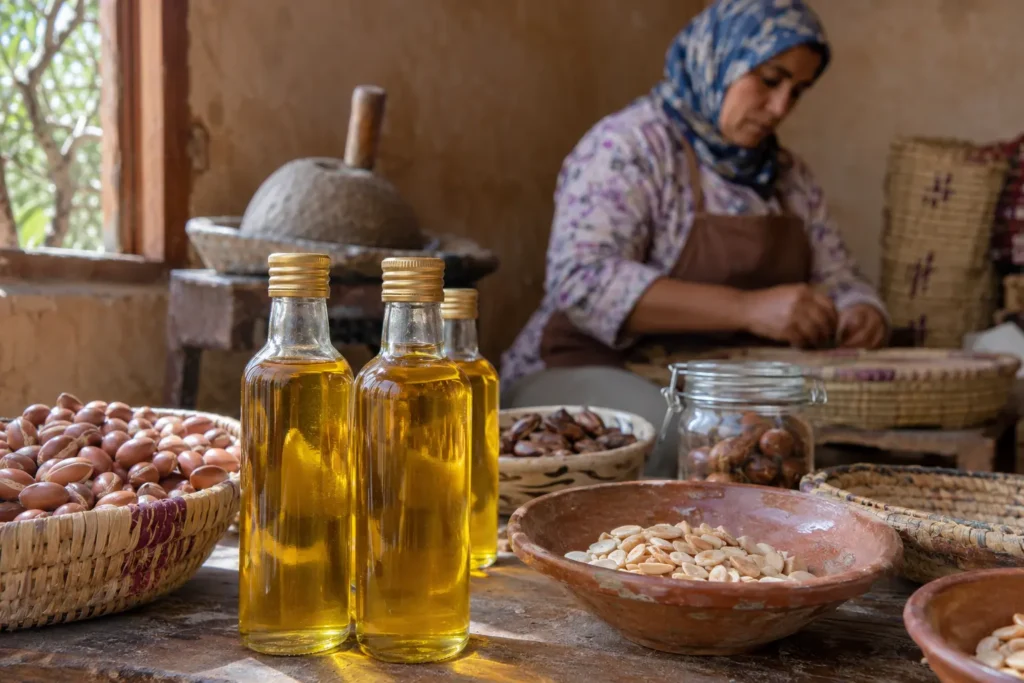
Argan oil is one of Morocco’s most recognizable regional products, particularly in the southwest. Travelers visiting areas around Agadir and Essaouira are especially likely to encounter shops and cooperatives selling it.
The important distinction is between culinary argan oil and oil produced for cosmetic use. They are not interchangeable simply because both say “argan” on the bottle. If you intend to eat it, choose a product clearly labeled for culinary use.
Culinary argan oil can be used with bread, salads and other dishes where its distinctive flavor remains noticeable. Buy a sealed bottle, check the label and avoid purchasing more than you can reasonably pack or use.
Because oil is a liquid, airline security and baggage rules also matter. Check the regulations for your departure airport, airline and destination before deciding whether to place it in cabin or checked luggage.
Amlou
Amlou is a particularly good gift for travelers who enjoyed Moroccan breakfast. This spread is commonly made from almonds, culinary argan oil and honey, producing a rich mixture eaten with bread, msemen or other breakfast foods.
It is closely associated with southwestern Morocco and makes a more complete ready-to-eat souvenir than buying argan oil alone.
For travel, choose a securely sealed jar and follow the storage instructions on the product. Amlou contains nuts, and recipes can differ, so check the ingredient list when buying for someone with food allergies or dietary restrictions.
Saffron
Saffron is one of the most compact Moroccan food gifts. Taliouine in southern Morocco is particularly associated with saffron production, making origin worth asking about when shopping.
Buy small quantities from a seller who can clearly identify the product and its origin. Threads are often a more practical purchase than an anonymous powder because you can see what you are buying and use a small amount at a time.
Saffron works especially well as a gift for an enthusiastic cook because it takes almost no luggage space but can be used in rice, sauces, baking and Moroccan-inspired dishes at home.
Ras el Hanout and Other Moroccan Spices
Spices are among the easiest Moroccan food souvenirs to buy, but the most colorful display is not automatically the best choice.
Ras el hanout is particularly interesting because it is a spice blend rather than one fixed recipe. The mixture can vary between merchants and producers, which is part of its character. Ask what is in the blend if allergies or personal preferences matter.
Cumin, paprika, cinnamon, ginger and other familiar spices are also widely used in Moroccan kitchens. Buying spices you already use can make more sense than filling your suitcase with unfamiliar blends.
For international travel, sealed packets are generally more practical than loose spices wrapped in paper. They protect the aroma, reduce spills and make the contents easier to identify.
Moroccan Tea
Tea is an easy gift because it is compact, dry and closely connected with Moroccan hospitality. Packaged green tea or prepared Moroccan-style tea blends can be paired with sweets for a simple gift.
If you want to recreate Moroccan mint tea at home, remember that fresh mint is normally added to green tea during preparation. Fresh plant material may be subject to stricter import rules than commercially packaged tea, so buying sealed tea and finding fresh mint at home is usually the simpler approach for international travelers.
Tea also works well when you need several small gifts for friends or colleagues because it can be divided more easily than a bottle of oil or jar of amlou.
Honey
Moroccan honey varies by region and producer, and it can be a useful gift for someone who enjoys breakfast foods or tea.
The drawback is portability. Honey is heavy, sticky if a container leaks and may be treated as a liquid for airport security purposes. Import rules can also differ between countries.
If you buy honey, choose a professionally sealed jar rather than an improvised container. Wrap it carefully and check both baggage and destination-country rules before flying.
Dates
Dates are a practical edible souvenir because dried fruit is easy to share and generally travels better than fresh produce. Morocco has important date-growing areas in the southeast, including the Tafilalet region.
Dates can vary considerably in size, texture and sweetness. Taste before buying when possible rather than assuming the largest or most expensive variety will suit everyone.
For travel, sealed packaging is preferable to loose fruit. Check the import rules of your destination, particularly regulations applying to plant and agricultural products.
Moroccan Pastries and Cookies
Pastries are one of the easiest food gifts to share after a trip, provided you choose varieties that travel well.
Ghriba cookies are a convenient option, as are kaab el ghazal, crescent-shaped pastries commonly filled with almond paste and scented with orange blossom water. Feqqas, a firm sliced biscuit often compared with biscotti, can also be practical because its drier texture handles travel relatively well.
Chebakia is another recognizable Moroccan sweet, particularly associated with Ramadan, but its honey-coated texture can make it messier to transport than dry cookies.
Buy pastries close to the end of your trip and ask for a sturdy box. Avoid products with fresh cream or other highly perishable fillings if they need to spend many hours in luggage.
Olive Oil
Moroccan olive oil can be an excellent gift for someone who cooks regularly. As with argan oil, however, it adds weight and creates a potential leakage problem.
Look for a sealed bottle intended for food use and buy a quantity that makes sense for the journey home. If you have a long multi-city route ahead, purchasing oil toward the end of the trip can save you from carrying a heavy bottle from hotel to hotel.
Olives and Preserved Lemons
Olives and preserved lemons are closely connected with Moroccan cooking and can be tempting when you see the large displays in markets.
They are less convenient as souvenirs because they are often packed in brine. A leaking container can damage everything around it, and agricultural import rules may apply depending on the destination.
If you want to bring them home, a commercially sealed jar is usually more practical than asking a market seller to improvise packaging. For many travelers, bringing home the spices and learning to make preserved lemons later is the easier solution.
Orange Blossom Water and Culinary Rose Water
Orange blossom water is used in Moroccan sweets and other preparations and can make an interesting gift for bakers. Rose water is another aromatic product you may encounter.
Check the label carefully because floral waters and oils are also sold for cosmetic and fragrance uses. If you plan to cook with the product, choose one specifically labeled as suitable for food.
These are liquids, so the same luggage considerations apply as with argan oil, olive oil and honey.
Where to Buy Moroccan Food Gifts
You do not need to buy every edible souvenir in a traditional souk. Different shops have different advantages.
Spice Shops and Medina Markets
Medina spice shops are useful when you want to compare aromas, discuss blends and purchase small quantities. They also provide the widest visual selection.
The tradeoff is packaging. Loose spices in simple bags may be fine for use during your trip but less convenient for an international flight. Ask whether the seller can package them securely.
Cooperatives and Specialist Producers
For products such as argan oil, amlou, honey or regional agricultural products, a cooperative or specialist producer can be useful because you can ask more specific questions about origin and intended use.
Do not treat the word “cooperative” alone as a guarantee of quality. Read the label, inspect the packaging and make the same practical checks you would make anywhere else.
Supermarkets and Fixed-Price Food Shops
A supermarket may sound less atmospheric than a souk, but it can be one of the most practical places to buy gifts for air travel.
Products are more likely to come in sealed packaging with ingredients, expiry information and a fixed price. That can be valuable when buying tea, spices, dates, honey or oil for someone else.
A sensible strategy is to taste and explore foods in markets during the trip, then buy the travel-friendly packaged version before departure.
Pastry Shops
For cookies and sweets, a dedicated pastry shop is often preferable to buying them far in advance. Ask which products travel well and request a strong box.
If your journey continues for several days after the purchase, wait until later in the route so the pastries spend less time being carried between accommodations.
How to Choose Food Gifts Without Overbuying
Moroccan markets make it easy to buy more than you intended, particularly when spices, oils and sweets are displayed together.
Before buying, think about how the recipient actually cooks or eats.
- For a keen cook: saffron, ras el hanout, cumin or culinary argan oil.
- For someone with a sweet tooth: ghriba, kaab el ghazal or another boxed dry pastry.
- For a tea drinker: packaged green tea or a Moroccan tea blend.
- For breakfast lovers: amlou or honey, provided packing and import rules allow them.
- For a small shared gift: dates, tea or individually packed sweets.
- For your own kitchen: buy an ingredient connected to a dish you actually want to recreate.
Small quantities are usually enough. Spices lose their character over time, oils need appropriate storage and sweets are best enjoyed while fresh.
Packing Moroccan Food Souvenirs for the Flight Home
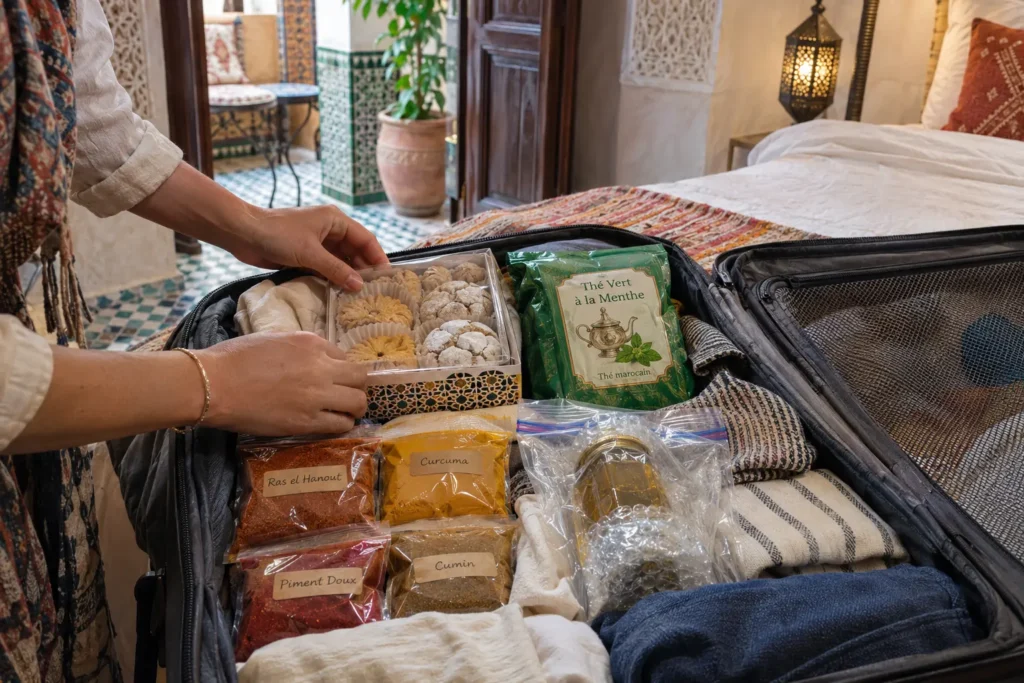
Customs rules depend on where you are traveling, not simply on where you bought the food. Your destination country and any transit country may have restrictions on agricultural products, animal products, plants, seeds, liquids and homemade foods.
Check current official customs and agriculture guidance before packing. Rules can change, so advice written for another nationality or destination should not be treated as universal.
For easier travel:
- Prefer sealed, labeled and shelf-stable products.
- Keep spice names and ingredient labels visible.
- Protect glass bottles and jars inside leak-resistant bags.
- Follow current airport security rules for oils, honey and other liquids.
- Do not assume fresh herbs, fruit, seeds or plant material can cross the border.
- Check rules carefully for foods containing meat, dairy or other animal products.
- Declare food when your destination country’s rules require it.
If you are uncertain whether something can legally enter your destination, check before buying it. A smaller, clearly packaged gift is usually a better souvenir than food that has to be discarded at the border.
Common Mistakes When Buying Edible Souvenirs
Buying Cosmetic Argan Oil for the Kitchen
Argan oil is sold for both cosmetic and culinary purposes. Read the product information rather than assuming every bottle is edible.
Buying Huge Bags of Spice
Spices are appealing and easy to buy in quantity, but most home cooks need relatively little. Smaller amounts are easier to pack and more likely to be used while still aromatic.
Choosing Packaging Only for Appearance
A beautiful glass jar may look like a better gift than a plain sealed packet, but it also adds weight and can break. For a long journey, practical packaging usually wins.
Leaving Customs Checks Until the Airport
Import restrictions are determined by the country you are entering. Check before shopping, especially if you want to buy fresh produce, honey, dairy-containing foods or other regulated agricultural products.
Assuming the Souk Is Always the Better Place to Buy
Markets are excellent for tasting, comparing and learning about ingredients, but packaged goods from a specialist shop or supermarket can be easier to transport. Use whichever option fits the product and the journey.
FAQs
What food is best to bring home from Morocco?
For straightforward packing, dried spices, saffron, packaged tea, dates and dry cookies are among the most practical choices. Oils, honey and amlou are also useful gifts but require more care with liquids, jars and customs rules.
What Moroccan spices make good gifts?
Ras el hanout, cumin and saffron are useful starting points. Choose spices the recipient is likely to cook with, and buy modest quantities in securely closed packaging.
Can I bring Moroccan argan oil on a plane?
Argan oil can be transported subject to current airline, airport security and destination-country rules. Because it is a liquid, verify cabin-baggage restrictions before flying and pack larger bottles securely if they must travel in checked luggage.
Is all argan oil edible?
No. Argan products are sold for both culinary and cosmetic use. If you intend to eat it, choose a bottle clearly labeled as culinary or food-grade argan oil.
What Moroccan sweets travel well?
Dryer pastries and cookies such as ghriba, feqqas and well-packed kaab el ghazal generally make more practical travel gifts than cream-filled or very sticky sweets. Packaging and freshness still matter.
Can I bring spices, dates or honey into my country?
That depends on your destination and sometimes on transit-country rules. Customs and agricultural regulations vary and can change. Check the current official guidance for the country you are entering before buying food specifically to take home.
Choose Food Gifts You Will Actually Use and Share
The most memorable Moroccan food souvenirs do not need to be rare or expensive. A small packet of saffron for a cook, tea for a friend, a box of ghriba for colleagues or a bottle of culinary argan oil for your own kitchen can carry more meaning than a suitcase full of ingredients you do not know how to use.
Choose quality over quantity, favor clear packaging for international travel and check customs requirements before you shop. For more ideas about Moroccan food, culture and destinations, browse more Morocco travel guides.
Travelers who want food traditions, markets and everyday culture to play a larger role in their route can also explore Visit Morocco Together’s Cultural Discoveries.
Ready to Experience Morocco?
Turn this inspiration into your next adventure. Our travel experts are ready to help.