Cultural experiences in Morocco become more interesting when you can connect what you see with the people who make, use or preserve it. A ceramic bowl leads to questions about clay and glazing. A shared meal reveals choices about ingredients and hospitality. A walk through a former Jewish quarter adds another perspective to a city you thought you understood.
Start with a subject that interests you, then choose a setting where there is time for explanation. One carefully arranged workshop or neighbourhood walk can teach you more than a day filled with short stops.
Morocco’s cultural life also extends beyond historic medinas. Contemporary art, multilingual conversations, new design and everyday urban routines belong in the picture. The wider choice of things to do in Morocco gives you room to combine these encounters with sightseeing, outdoor activities and rest.
Which cultural experiences in Morocco fit your interests?
Choose by the questions you want answered. If you are curious about how things are made, seek an artisan visit with time to discuss technique. If food interests you, find a class that explains an ingredient or process you do not already know. For religious or community history, a specialist walk can provide context that a general city circuit may only briefly cover.
Decide how you want to participate. Observing a skilled craftsperson, attempting a beginner task and discussing a museum object are different experiences. None is automatically more valuable; the format should match your curiosity and comfort.
You can also explore one subject across several places. Compare ceramics in different workshops, follow the relationship between architecture and privacy, or listen to how musicians describe their repertoire. This gives a journey continuity without requiring the same activity in every city.
Keep some time unstructured. A second visit to a bakery or a conversation after a class may help you understand something that the scheduled programme only introduced.
Learn how a medina works through its crafts and neighbourhoods
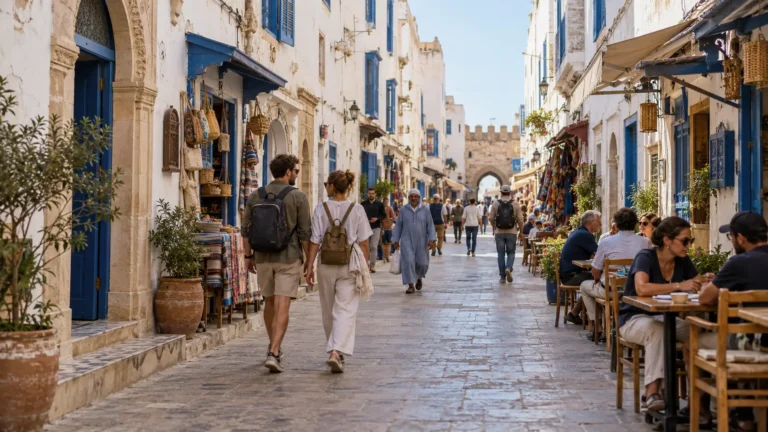
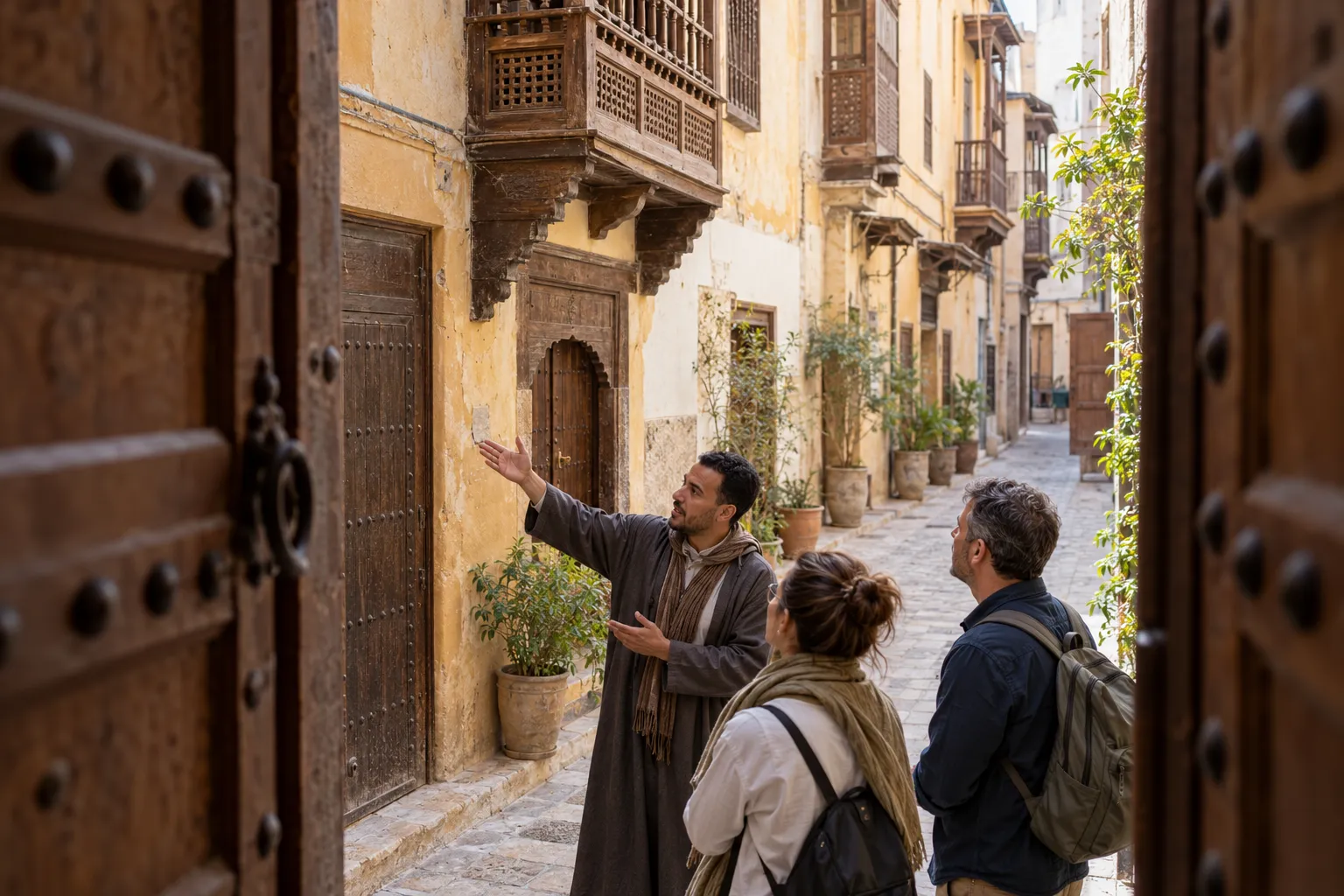
A medina walk becomes more informative when the guide explains the relationships between places. Ask how homes, shops, workshops and public spaces fit together, rather than focusing only on a sequence of monuments.
In Fes or Marrakech, a craft-focused route can follow an object from materials to finished work. You might discuss what a workshop produces, where the next stage takes place and how goods reach customers. Exact access depends on the businesses involved.
Tetouan offers a northern setting for exploring the connections between urban history, architecture and working craft spaces. Visit Morocco Together’s Tetouan artisan and heritage route brings the medina and workshop visits into the same outing. Ask which craft interests can receive more time; the Royal Palace square stop should not be understood as access to the palace interior.
Tell your guide whether you want historical explanation, time with artisans or shopping. A route can include all three, but they compete for the same hours.
A useful guide also distinguishes what is known about a building from a story told about it. Ask questions, and leave room for the answer to be more complicated than a familiar travel anecdote.
Understand craftsmanship before choosing a workshop
Ceramics, woodwork, metalwork, textiles and plaster decoration involve different tools and training. A short visit can introduce a process, but it cannot reproduce the skill behind a finished piece.
For pottery, ask whether you will observe, work with prepared clay or use a wheel. Find out whether the piece needs drying and firing after you leave. Taking an object home may involve collection or shipping rather than carrying it away that afternoon.
For zellij, Morocco’s geometric mosaic tilework, ask how a beginner session is organised. Assembling prepared pieces is different from cutting them. Both can be worthwhile if the description matches what you will do.
For textiles, discuss fibres, weaving technique and the maker’s own explanation of a pattern. Avoid treating every motif as a fixed symbol with the same meaning across Morocco.
Fes, Safi, Marrakech and Tetouan provide different places to investigate craft visits according to your route. Choose a particular workshop for its work and teaching format, rather than expecting a city name to guarantee a practical class.
If you decide to buy, ask who made the object, what it is made from and how it will be packed. Understanding the process makes shopping for Moroccan crafts a more considered decision.
Explore Amazigh heritage through regional voices and objects
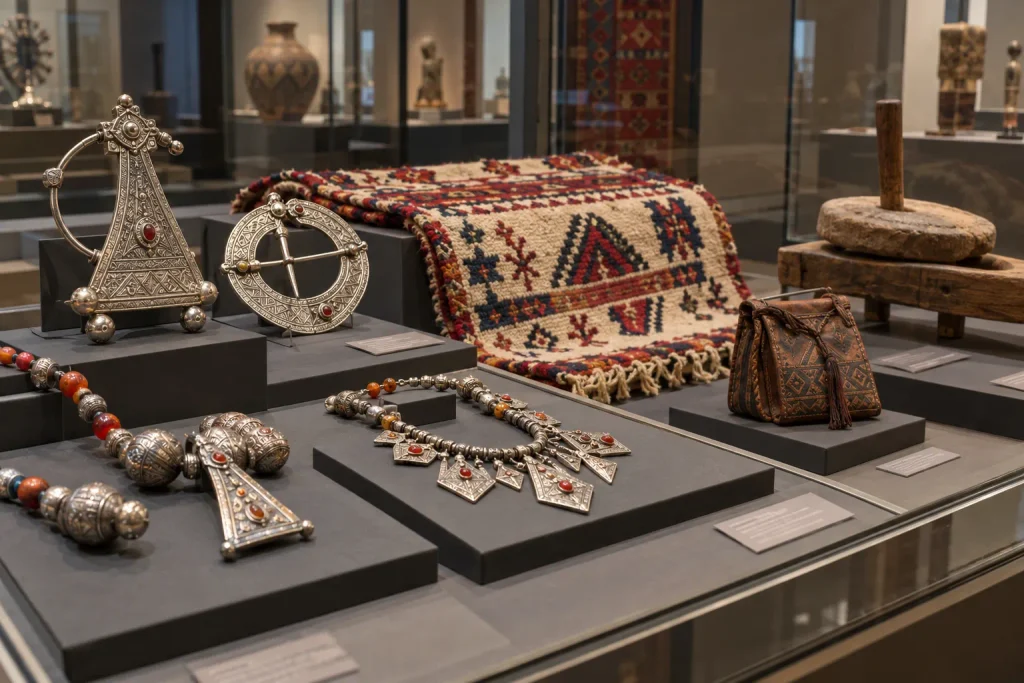
Amazigh heritage is part of contemporary Morocco as well as its history. It deserves more explanation than a brief village stop or a costume photograph.
Use “Amazigh” where appropriate, while recognising that “Berber” remains common in museum names and tourism descriptions. Let people describe their own identity, language and community instead of assigning those from appearance or location.
A museum can provide useful preparation. In Marrakech, the Musée Pierre Bergé des Arts Berbères presents objects and regional context from different parts of Morocco. Look closely at how clothing, jewellery and everyday tools are described, then carry those questions into later conversations.
On a rural visit, ask about a specific place: how the village has changed, what work people do, which languages are used and how younger generations relate to local traditions. Answers will vary between households and regions.
Choose a hosted visit with clear arrangements. Know who receives visitors, what has been agreed and how the host is compensated. An arranged meal can be a worthwhile exchange when the people involved control the welcome.
Avoid expecting a household to demonstrate an entire culture. A conversation with one person is valuable precisely because it reflects that person’s experience.
Learn about Moroccan Jewish heritage in its city setting
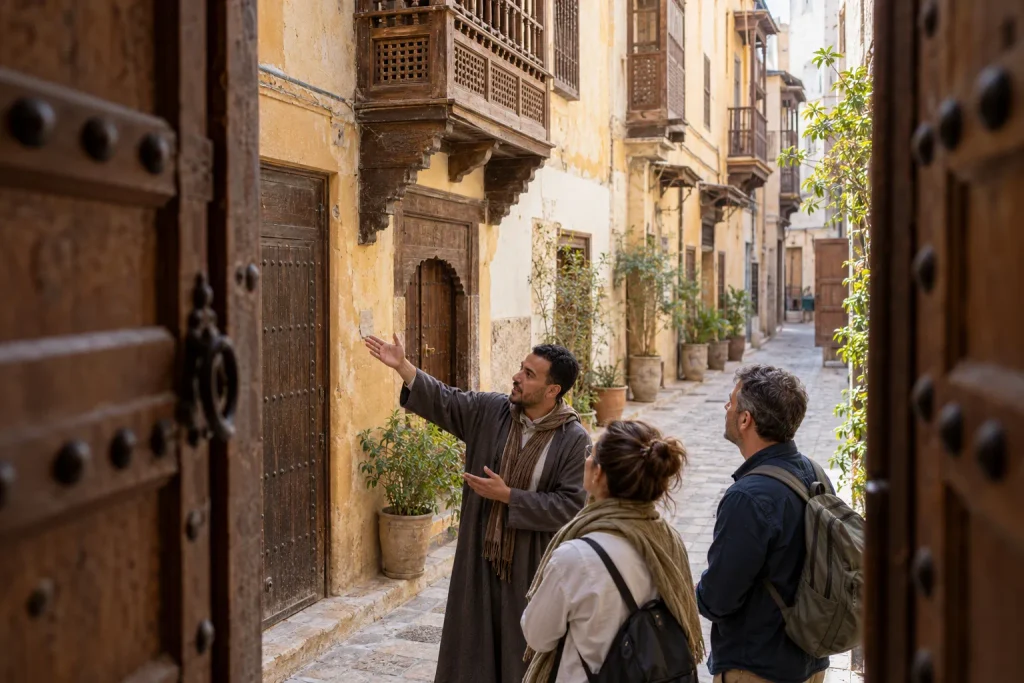
Jewish heritage adds an important dimension to understanding Morocco’s towns and cities. A visit can connect neighbourhood history, religious buildings, trade and family memory.
In Fes, distinguish a route through the Mellah in Fes el-Jdid from a general walk in Fes el-Bali. They are different areas, and combining them requires enough time for movement and explanation.
Visit Morocco Together’s Fes Jewish heritage walk focuses on the Mellah, synagogue access when available and the Jewish cemetery. Confirm the duration, meeting point and accessible interiors before arranging another activity immediately afterwards.
Ask the guide to connect the places with the community’s history rather than presenting a synagogue as an isolated architectural stop. Photographs and objects can prompt questions about daily life, migration and preservation.
In Essaouira or Casablanca, a Jewish heritage visit can explore a different local story. Choose one that suits the city you are already visiting instead of collecting similar stops without time to understand them.
Religious buildings and cemeteries require a considerate approach. Follow the site’s dress and photography instructions, keep voices low where appropriate and check access in advance. Visitor entry should never be assumed from an open doorway.
Discover food culture through preparation and conversation
Food provides several routes into cultural understanding. You can learn a technique, discuss the way a dish changes between households, or explore how a meal is served for a particular occasion.
Couscous is a useful example. UNESCO recognises the knowledge and practices surrounding couscous across Algeria, Mauritania, Morocco and Tunisia. The recognition concerns preparation, tools and social practices as well as the finished dish.
In a Moroccan class, ask how the couscous is prepared, what affects the choice of vegetables and how the cook learned the method. Do not assume that every lesson includes rolling grains by hand or every family serves an identical version.
Tagine, breads, salads and pastries offer other subjects to explore. Choose a menu that adds something to what you have already eaten.
For a hosted meal, make dietary needs clear before the menu is agreed. Ask about stock, butter, nuts and shared equipment when relevant. At the table, follow your host’s example and ask when unsure about serving or eating arrangements.
The range of Moroccan dishes and dining traditions makes food an ongoing part of the journey. A thoughtful question at an ordinary meal can be as revealing as a formal class.
Spend time at a market as a visitor to a working place
A market is a place of business before it is a visitor experience. People are buying supplies, comparing quality, arranging deliveries and earning a living.
Choose a visit that explains what is traded and how the market connects to its surroundings. Dates, vegetables, tools or household goods can tell you something about local needs without requiring a purchase.
Rissani adds this perspective to a southeastern journey. Visit Morocco Together’s Rissani medina and souks experience connects the traditional souk and date market with the town’s lanes. If you want to see a particular trading activity, confirm its operating day and timing before making it the reason for your visit.
Ask permission before close photographs of vendors or customers. Keep passages clear, avoid handling goods without an invitation and let a transaction finish before asking questions.
A market visit does not need to become a bargaining exercise. You can listen, observe and buy a modest item at an agreed price.
If your guide introduces a tasting, clarify whether it is included or paid separately. That lets the vendor and visitor share the same understanding of the exchange.
Listen to music beyond the restaurant soundtrack
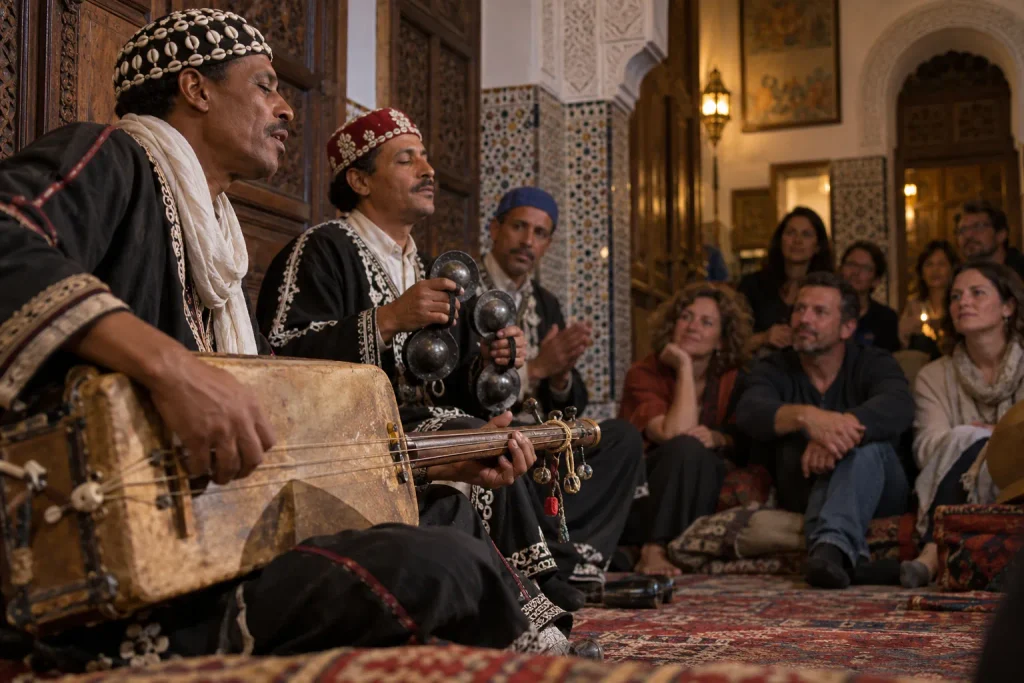
Music becomes a cultural encounter when someone helps you understand what you are hearing. Ask who is performing, what the instruments are and whether a song belongs to a particular repertoire or occasion.
Gnawa includes musical performance alongside spiritual and community practices, with a history connected to slavery and the slave trade. A concert provides one way to hear the music, while a private ritual has a different purpose and access expectations.
Avoid assuming that every evening of drumming at a camp is Gnawa or that one style represents all Moroccan music. Let performers explain the tradition they practise.
In cities such as Essaouira, Fes or Tetouan, investigate announced concerts, cultural programmes and smaller performances according to your interests. Check the actual programme rather than relying on a venue’s general reputation.
For a participatory lesson, ask whether instruments are provided and whether the focus is learning a rhythm, discussing the music or joining a performance. A short introduction should have a clear and achievable aim.
Photography and recording are separate questions from attendance. Obtain permission, and give the musicians your attention when the performance begins.
Approach storytelling as a shared event
Storytelling depends on language, delivery and the relationship with listeners. Understanding the words can transform an encounter that otherwise looks like a brief performance stop.
In Marrakech, Jemaa el-Fna offers a public setting associated with oral traditions. A guide can explain what is happening, but standing beside a storyteller does not guarantee that the session will be translated.
If following a story is your priority, choose an announced session in a language you understand or discuss interpretation in advance. Ask whether it is a traditional tale, a personal narrative or a contemporary adaptation.
Participation may involve humour, repetition or questions to the audience. You can listen without volunteering, and you should be free to decline attention.
A cultural café or smaller indoor programme may suit travellers who find large crowds tiring. Confirm whether admission, food or a drink is required and how long the session is expected to last.
Leave the phone aside for part of the evening. Watching how the audience responds can be as interesting as the story itself.
Include museums and contemporary art in the journey
Museums can give objects a context that a shop display cannot. A label may explain the material, maker, region or former use, helping you recognise differences later in the trip.
Choose a collection for the subject that interests you. Jewellery, photography, archaeology and modern art each introduce a different perspective.
Rabat’s Mohammed VI Museum of Modern and Contemporary Art offers an opportunity to include artistic creation beyond historic craft traditions. Check the current exhibition programme when deciding how much time to allow.
Contemporary work can also change the questions you ask elsewhere. A painting or photograph may address city life, identity, memory or movement in ways that complicate a simple picture of “traditional Morocco.”
In Marrakech, you could pair a collection visit with a later conversation about materials or design. In Tangier or Tetouan, an exhibition can provide a different emphasis from a medina walk.
Pay attention to the curator’s explanation and the artist’s own words. A museum visit becomes more useful when you leave with one subject you want to understand further, rather than trying to absorb every room.
Understand architecture through how spaces are used
Architecture offers more than a sequence of decorative surfaces. Courtyards, thresholds, passageways and windows can prompt questions about privacy, climate and the way a building functions.
In a madrasa, ask about the relationship between teaching spaces, circulation and decoration. In a courtyard house, discuss which areas visitors would historically enter and which remained private. Keep the explanation specific to the building.
It is also useful to distinguish original material, later additions and restoration. A polished surface does not by itself establish the age of what you are looking at.
A riad stay can give you time to notice these details, but guest accommodation has modern operating requirements. Do not assume every present-day feature reflects the building’s original use.
The differences between Morocco’s imperial cities can provide a framework for comparing architecture. Give individual buildings enough attention that the comparison goes beyond a city’s colour or nickname.
Ask before photographing interiors, and respect closed doors even when a space appears empty.
Experience religious life without assuming visitor access
You can learn about religion through a specialist discussion, a museum, an authorised site visit or the daily rhythm of a neighbourhood. Entering a place of worship is not a requirement for cultural understanding.
Confirm the visitor policy for each religious site. Rules differ, and a historic building’s appearance does not tell you whether it is functioning as a place of worship, a museum or both.
In Casablanca, an authorised guided visit to the Hassan II Mosque can provide a structured setting for questions about the building and its use. Check the operating arrangements, dress requirements and entry conditions directly before planning around a particular session.
During Ramadan, daily routines and meal schedules may change. If joining an arranged iftar, agree the timing and expectations with the host and recognise that the meal is connected with religious observance.
Ask open questions without expecting a host or guide to speak for every Moroccan Muslim, Jewish person or other community. Personal practice varies.
For everyday questions about greetings, clothing and behaviour, Morocco’s culture and etiquette provides useful preparation without turning each interaction into a formal lesson.
Choose festivals and community events for the actual programme
A festival can bring musicians, artists, makers and audiences together, but the name alone does not explain what visitors can attend.
Confirm the programme with the organiser. Distinguish public performances, ticketed concerts, professional events and private or religious gatherings. Accommodation and transport should follow confirmed arrangements.
If Tbourida interests you, look for an organised public event. This equestrian performance involves coordinated riders and ceremonial displays; follow spectator boundaries and expect loud sound rather than approaching it as a casual riding activity.
For music or craft festivals, choose a manageable part of the programme. A single performance with time to understand the artists can be more satisfying than moving continuously between stages.
Consider noise, seating, toilets and return transport, particularly with children or anyone who needs regular breaks. A free outdoor event can still involve practical costs and substantial time.
Do not build a journey around a celebration based on a previous edition’s schedule. When there is no confirmed event during your stay, a museum, workshop or smaller announced performance can explore the same interest.
Make hosted encounters fair and comfortable
Clear arrangements help both guests and hosts enjoy an encounter. A paid class or meal does not need to imitate a spontaneous invitation to be valuable.
Before booking, establish who delivers the activity, how many guests attend and what the payment includes. If community support is part of the offer, ask what that means in practice. A cooperative name or a photograph of artisans does not explain how revenue is distributed.
Language affects the conversation. If interpretation is needed, allow time for it and address your questions to the host as well as the guide.
Ask about photography before the activity begins, especially in homes and around children. Permission to take an image is separate from permission to publish it.
Keep requests reasonable. A home visit is not an invitation to open rooms, inspect possessions or ask sensitive questions. Let the host set the boundaries.
If gifts or tips are appropriate, ask the organiser about expectations. Agree costs early so the end of a visit does not become an uncomfortable negotiation.
Plan cultural time within your existing route
Build around places you are already visiting. Moving to another city for a short class can add more travel than cultural time.
For a Marrakech stay, you might choose a food activity on one day, a collection or architecture visit on another and an evening storytelling session if the programme suits you. Keep space between organised activities.
On a northern journey, choose a different emphasis in each base. Tetouan can centre on craft and urban history, while Fes can include a specialist community heritage walk. Chefchaouen may provide time for a smaller hosted activity or conversation without another full sightseeing circuit.
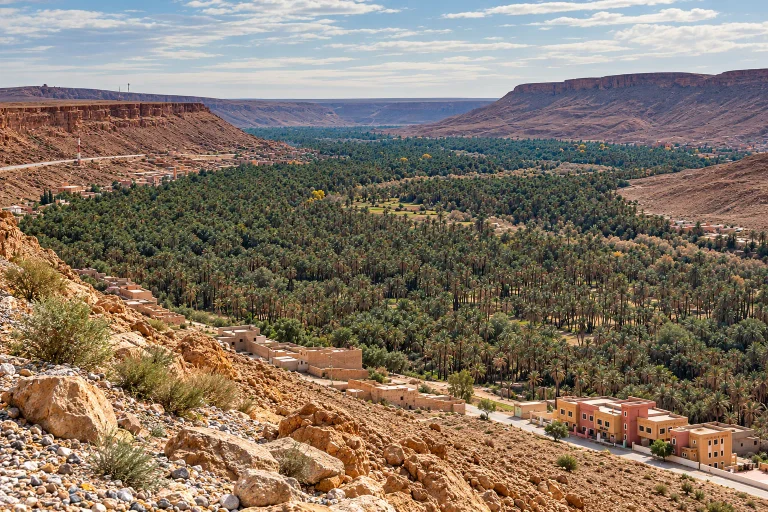
In the southeast, a market visit or arranged discussion about local life can add context to a landscape-focused route. Keep it separate from the expectation that a desert camp automatically provides access to households.
Tell the organiser one subject you particularly want to understand. “I would like to learn how this textile is made” is more useful than asking for a complete cultural immersion in a single afternoon.
When building a Morocco itinerary, protect the time needed for questions, meals and movement between places. Cultural encounters are difficult to enjoy when every pause puts the next appointment at risk.
Questions about cultural experiences in Morocco
Which city should you choose for a cultural stay?
Choose according to your interests and wider route. Fes can suit specialist heritage walks, Tetouan provides a northern setting for craft and urban history, Marrakech combines workshops and collections, and Rabat offers an opportunity to include modern and contemporary art. One city explored thoughtfully can support a short cultural break.
Can you arrange cultural activities without a multi-day tour?
Yes. You can book an individual class, specialist walk, workshop visit or public performance while organising the rest of your travel independently. Check whether the meeting point, language and timing fit your stay, and distinguish an activity that starts locally from one that includes transfers.
Are family meals and village visits open to everyone?
Only when the hosts agree to receive visitors. Use a clearly arranged experience or a genuine invitation, explain dietary and accessibility needs, and follow the household’s boundaries. A guide’s presence alone should not be treated as permission to enter a home.
Do you need to speak Arabic or an Amazigh language?
You do not need fluency to participate in an activity offered in a language you understand. Confirm the teaching or guiding language when booking. For a hosted conversation, ask whether interpretation is provided; basic greetings are considerate but cannot replace an interpreter for a detailed discussion.
How can you avoid a cultural visit becoming a shopping tour?
Explain your priorities before booking. Ask how much time is allocated to interpretation, whether shop stops are included and whether purchases are optional. Choose an activity with a clear learning focus and keep workshop fees separate from decisions about buying objects.
Ready to Experience Morocco?
Turn this inspiration into your next adventure. Our travel experts are ready to help.