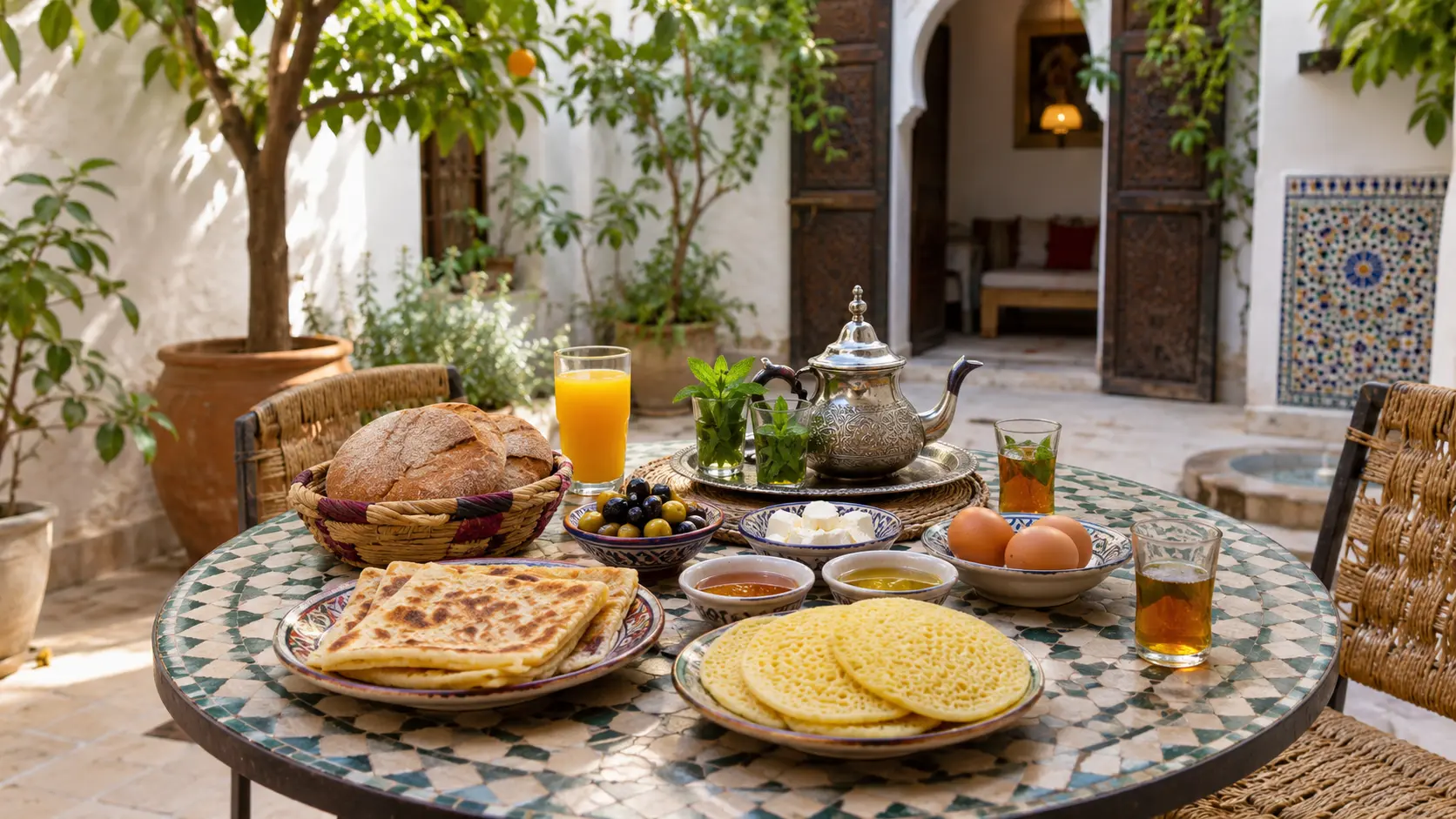
Moroccan breakfast and tea culture is easiest to understand as a collection of everyday habits rather than one fixed menu or formal ceremony. Breakfast often revolves around bread or griddled pastries with honey, olive oil, cheese, eggs or preserves, while sweet green tea with fresh mint is served at breakfast and throughout the day.
Travelers may encounter an elaborate breakfast spread at a riad, a quick msemen and tea at a neighborhood café, or a much simpler meal in a family home. Tea is equally flexible: it can accompany breakfast, pastries, conversation, a business discussion or a welcome offered to a guest.
The practical lesson is not to expect every Moroccan table to look the same. Regional ingredients, household preferences, accommodation style and the occasion all influence what is served.
What Does a Typical Moroccan Breakfast Include?
There is no single national breakfast plate. In many homes and cafés, breakfast can be quite simple, while riads and hotels often present travelers with a larger assortment of breads, spreads and drinks.
Bread is usually central. Depending on where you are staying and what has been prepared that morning, the table may include khobz, msemen, harcha or baghrir alongside honey, butter, olive oil, jam, cheese, olives or eggs.
Tea is common, but coffee is widely available too, particularly in urban cafés. Fresh juice may also be offered. Rather than expecting every item at every breakfast, think of these foods as a group of familiar options that appear in different combinations.
Moroccan Breakfast Breads and Pancakes to Try
Msemen
Msemen is one of the most recognizable Moroccan breakfast foods. Dough is stretched, folded into layers and cooked on a hot surface, producing a square flatbread with a lightly crisp exterior and a softer layered center.
At breakfast it may be eaten plain or with honey, butter, cheese, jam or another spread. Savory stuffed versions also exist, so it is worth asking what is inside before ordering if you have dietary preferences.
Baghrir
Baghrir is a soft semolina pancake distinguished by the many small holes that form across its surface while it cooks. Those holes make it particularly good at absorbing melted butter, honey or syrup.
Its texture is quite different from msemen: baghrir is soft and porous rather than layered and crisp. Trying both is an easy way to see how varied a Moroccan breakfast can be even when the ingredients begin with flour or semolina.
Harcha
Harcha is a semolina-based griddle bread with a more crumbly texture. It can be served plain or paired with butter, honey, cheese or jam.
Smaller versions are convenient café or bakery foods, while homemade preparations can vary in thickness, sweetness and texture.
Khobz
Khobz is the round bread that accompanies meals across Morocco, and it can also be part of breakfast. A piece of bread becomes the vehicle for olive oil, honey, cheese, preserves or other small dishes placed on the table.
For travelers, it is useful to remember that bread is not merely a side item in Moroccan eating. It often plays a practical role in sharing and scooping food as well.
Sfenj
Sfenj is a fried, ring-shaped dough with a crisp exterior and chewy interior. It can appear as a morning street food or snack and may be eaten plain or with sugar, often alongside tea or coffee.
It is richer than most bread-based breakfast options, so it works better as an occasional treat than as the only example of a Moroccan breakfast.
Amlou, Honey, Olive Oil and Other Breakfast Accompaniments
Part of the pleasure of Moroccan breakfast comes from combining relatively simple breads with small dishes of contrasting flavors.
Amlou
Amlou is especially associated with southwestern Morocco. It is a spread made with almonds, culinary argan oil and honey, although proportions and textures vary.
Travelers visiting Agadir, Essaouira or the wider Souss region are particularly well placed to encounter it. It is usually eaten with bread rather than treated as a dessert.
Argan oil sold for culinary use is different from cosmetic products intended for skin or hair, so that distinction matters if you decide to buy some to take home.
Olive Oil and Honey
Bread dipped in olive oil is one of the simplest breakfast combinations, while honey gives msemen, harcha and baghrir a sweeter direction. Sometimes the table provides several options so each person can combine them as they prefer.
Honey itself varies by producer and region, so there is little reason to expect one standard flavor throughout the country.
Cheese, Olives and Eggs
Breakfast does not have to be sweet. Cheese, olives and eggs can balance a table filled with honey and preserves. Eggs may be boiled, fried or prepared in another style depending on the café or household.
This mixture of sweet and savory foods is one reason a Moroccan breakfast spread can work well for travelers with different tastes.
Moroccan Mint Tea: What Is Actually in the Pot?
Tea is central to Moroccan breakfast and tea culture, but the familiar name “mint tea” can disguise the fact that it normally begins with actual tea leaves rather than mint alone.
A common preparation uses green tea, often a gunpowder-style Chinese green tea, fresh mint and sugar. The ingredients and proportions vary from one household, café and region to another.
Because the base is green tea, traditional Moroccan mint tea normally contains caffeine. Travelers looking for a caffeine-free drink should ask whether a separate herbal infusion is available rather than assuming mint tea itself is caffeine-free.
Why Is Moroccan Tea Poured from a Height?
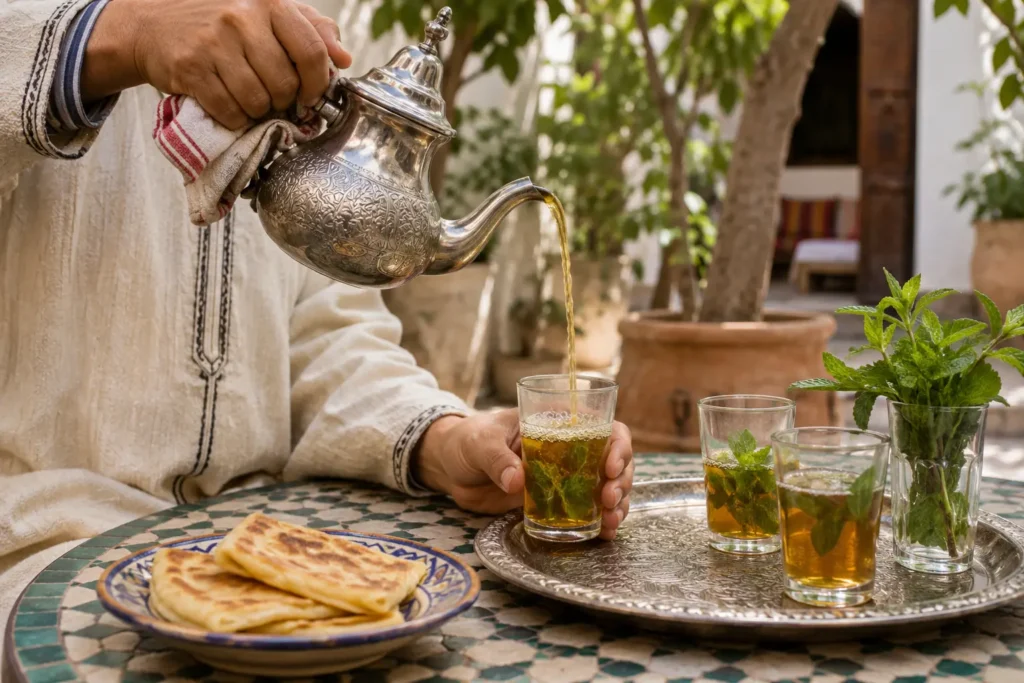
The high pour is one of the most visible parts of Moroccan tea service. Tea is commonly poured from a metal teapot into small glasses, and an experienced server may raise the pot well above the glass.
The technique helps mix and aerate the tea and can create a light foam at the surface. It is also part of the presentation, although not every café or household turns the pour into a performance.
Some preparations involve pouring tea into a glass and returning it to the pot before serving to help mix the contents. Methods differ, so travelers should avoid treating one recipe or sequence as the only “correct” Moroccan tea ceremony.
Tea Is About Hospitality as Much as Thirst
Mint tea is strongly associated with welcoming guests in Morocco. It can appear when visiting a home, sitting with friends, shopping, resting at a guesthouse or simply spending time in a café.
The important element is often the shared pause rather than the drink alone. Tea gives people time to sit, talk and welcome one another without turning the interaction into a hurried transaction.
If someone offers you tea in a social setting, it is reasonable to recognize the offer as a gesture of hospitality. You do not need to treat every glass as a rigid ceremony. Follow your host’s lead, accept graciously when you can, and decline politely if you have a dietary, health or practical reason not to drink it.
Moroccan Tea Can Be Very Sweet
Travelers are sometimes surprised by the amount of sugar in Moroccan mint tea. Traditionally prepared tea can be distinctly sweet, and sugar is often mixed into the pot rather than added individually at the table.
If you prefer less sugar, ask before the tea is prepared. A café may be able to serve it with less sugar or without it, but this is not always practical when one pot is being shared by several people.
Tea recipes are personal. One household may make a sweeter or stronger pot than another, and additional aromatic herbs can appear depending on region, season and family preference.
Tea Is Not Only a Breakfast Drink
One of the easiest misconceptions to avoid is thinking that mint tea belongs mainly to breakfast. It is consumed at many points during the day.
Afternoon tea can include breads, pastries, biscuits or other snacks. Tea may also follow a meal or simply accompany conversation. There is therefore no need to schedule a formal “tea ceremony” to experience the tradition.
A quiet café stop, a guesthouse welcome or tea shared during a family visit can reveal just as much about the custom.
Where Travelers Can Experience Moroccan Breakfast and Tea Culture
A Riad or Guesthouse Breakfast
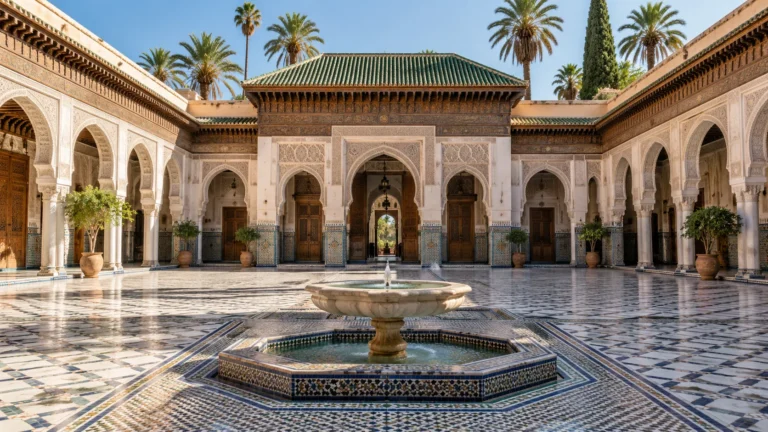
For many first-time visitors, accommodation breakfast is the easiest introduction. A riad may serve several breads and pancakes with small dishes of honey, oil, cheese, preserves, eggs, fruit and tea.
Do not assume every property serves the same spread or that breakfast is automatically included with every booking. Check your accommodation details if breakfast is important to you.
A Neighborhood Café
Local cafés can provide a simpler view of breakfast. Instead of a large decorative spread, you may order one or two items such as msemen, bread, eggs, tea or coffee.
This is often the better option for travelers who want a quick start to the day rather than a long hotel breakfast.
A Bakery or Street Stall
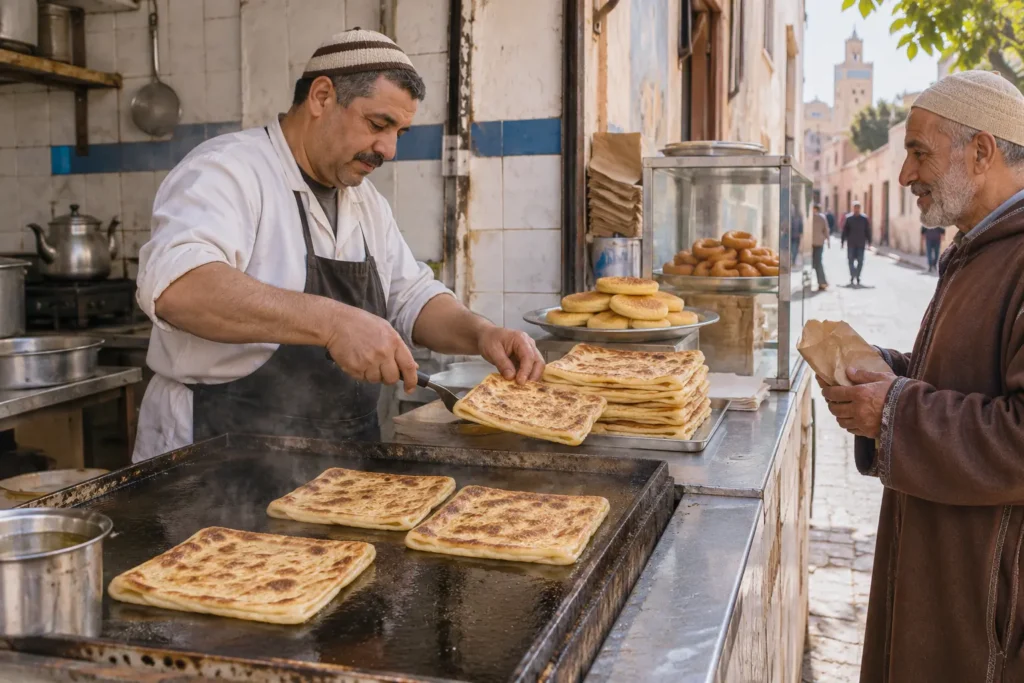
Stalls and bakeries selling freshly cooked msemen, harcha or sfenj can make a useful second breakfast or morning snack. What is available varies by neighborhood and time of day.
Choose busy, well-kept vendors, observe how food is handled and ask the price before ordering when it is not displayed.
A Moroccan Home
A home invitation is different from buying a cultural experience. Tea or food offered there is part of someone’s hospitality, so the best approach is to be attentive rather than trying to document every detail.
Ask permission before photographing people or private interiors, follow your host’s lead when food is shared, and avoid judging a household breakfast against what a tourist-oriented riad serves.
How Breakfast Changes Across Morocco
Moroccan breakfast traditions overlap across the country, but ingredients and habits are not identical everywhere.
Southwestern Morocco has a particularly strong association with culinary argan oil and amlou. Large cities offer a mix of Moroccan breakfasts and café culture, with espresso, coffee with milk and French-influenced pastries available alongside msemen and mint tea.
In other regions, available bread, cheese, oil, honey and herbs may reflect local agriculture and household preferences. A simple rural breakfast can therefore look very different from the large spread presented at an urban guesthouse.
That variation is worth preserving in your expectations. There is no need to search for a supposedly perfect national breakfast when the more interesting question is what people eat in the place you are visiting.
Breakfast and Tea Etiquette for Travelers
- Do not assume every meal is ceremonial. Tea can be an important gesture of welcome while still being part of ordinary daily life.
- Ask for less sugar early. Sugar may already be mixed into a shared pot before the tea reaches the table.
- Expect caffeine in mint tea. Ask for a herbal infusion if you specifically need a caffeine-free drink.
- Check ingredients when necessary. Msemen, harcha and other breads can contain butter or other fats, while amlou commonly contains almonds and honey.
- Ask before photographing people. This is especially important in homes, bakeries, markets and neighborhood cafés.
- Let regional variation be part of the experience. A breakfast does not become less Moroccan because it lacks an item you saw elsewhere.
FAQs
What is a traditional Moroccan breakfast?
There is no single fixed breakfast. Common elements include breads and griddled foods such as khobz, msemen, harcha and baghrir, accompanied by combinations of honey, oil, cheese, olives, preserves or eggs. Tea, coffee and juice may also be served.
What is the difference between msemen and baghrir?
Msemen is a folded, layered flatbread cooked on a hot surface. Baghrir is a soft semolina pancake with numerous small holes that absorb butter and honey. Their textures are noticeably different even though both commonly appear at breakfast.
Is Moroccan mint tea always very sweet?
It is often prepared with a noticeable amount of sugar, but recipes vary. If you prefer less sweetness, ask before the pot is prepared because sugar may be mixed into the tea rather than added to individual glasses.
Does Moroccan mint tea contain caffeine?
Usually, yes. Traditional mint tea commonly uses green tea as its base, so it contains caffeine. A pure mint or other herbal infusion is different and should be requested separately if you want to avoid caffeine.
Is coffee common in Morocco?
Yes. Tea may be more closely associated with traditional hospitality, but coffee is widely consumed in cafés and is easy to find in cities and tourist destinations. Breakfast does not require choosing tea over coffee.
Is Moroccan breakfast suitable for vegetarians?
Many common breakfast foods are meat-free, including breads, pancakes, honey, oils, preserves, olives and cheese. Individual recipes vary, however. Travelers who avoid dairy, eggs, honey or particular fats should ask about ingredients rather than relying only on the name of a dish.
Make Time for the Morning, Not Just the Menu
Understanding Moroccan breakfast and tea culture does not require finding every famous bread or learning a strict tea ritual. A better approach is to try a few different settings: a fuller guesthouse breakfast, a simple neighborhood café and a glass of tea when the opportunity naturally arises.
Notice the differences between msemen, baghrir and harcha, try amlou when traveling through southwestern Morocco, and remember that the tea itself is only part of the experience. Sharing time around the table is just as important.
For more food, culture and destination ideas, explore more Morocco travel guides. Travelers who want cultural experiences to form a larger part of their route can also browse Visit Morocco Together’s Cultural Discoveries.
Ready to Experience Morocco?
Turn this inspiration into your next adventure. Our travel experts are ready to help.