Moroccan street food goes well beyond the tagines and couscous that dominate restaurant menus. Neighborhood bakeries, market stalls, grills, soup counters and small takeaway shops serve everything from layered msemen and airy sfenj to potato fritters, grilled meat, sardines and bowls of harira.
For travelers, the most useful approach is not to chase one definitive list. Street food changes between cities, neighborhoods, seasons and times of day. Start with foods that are cooked in front of you or served hot, ask what is inside unfamiliar dishes, and try several small items rather than turning every snack into a full meal.
Marrakech offers the most obvious introduction because multiple vendors gather around busy areas such as Jemaa el-Fna, but some of the most interesting everyday food is found in ordinary neighborhood cafés, bakeries and market streets elsewhere in Morocco.
What Counts as Moroccan Street Food?
Street food in Morocco is broader than food sold from a mobile cart. It can mean a vendor frying dough beside the street, a tiny counter selling soup, a grill with a few stools, a bakery window, a sandwich shop inside a medina or a market stall preparing food to order.
This distinction matters because famous dishes such as couscous, elaborate pastilla and slow-cooked tagine belong to Moroccan cuisine without necessarily being everyday street snacks. You may find versions at casual stalls, particularly in busy visitor areas, but they are not the only foods worth seeking out.
The more practical street-food experience is often simpler: something freshly griddled for breakfast, a bowl of soup, a sandwich for lunch or a plate of grilled food in the evening.
Moroccan Street Food to Try First
Msemen
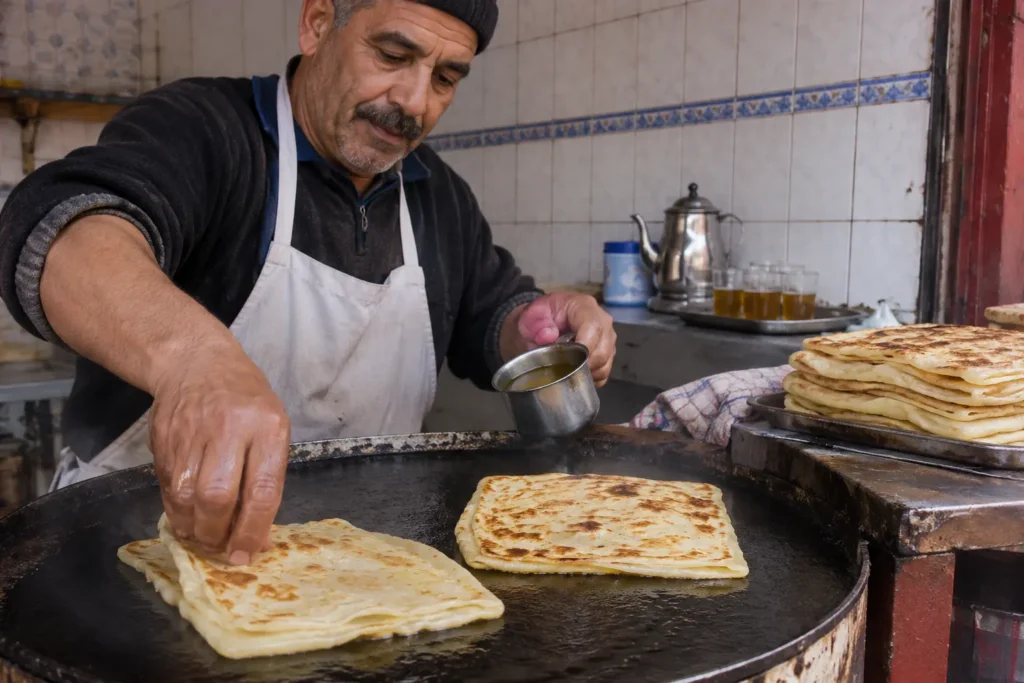
Msemen is a layered square flatbread made from dough that is folded before being cooked on a hot griddle. The result is crisp in places, soft inside and substantial enough for breakfast or a snack.
It may be eaten plain or with accompaniments such as honey, cheese or amlou, while savory filled versions are also available. Recipes differ between vendors, so do not assume a plain-looking msemen is dairy-free or vegan if that matters to you.
Msemen is a useful first street-food choice because you can often watch it being cooked and eat it while it is still hot.
Sfenj
Sfenj, also written sfinj, is Morocco’s airy fried doughnut. Instead of the dense, sweet style associated with many packaged doughnuts, traditional sfenj is made from a soft yeast dough that is shaped into a rough ring and fried.
It can be eaten plain or with sugar. Freshness matters: sfenj is at its most appealing when it has come directly from the fryer rather than after sitting for a long period.
It is commonly treated as a simple snack rather than an elaborate dessert, making it easy to pair with tea or coffee.
Maakouda
Maakouda are seasoned potato fritters with a crisp fried exterior and soft center. They are sold individually and are also commonly tucked into bread to make an inexpensive, filling sandwich.
Seasonings and additions vary. Herbs and spices such as cumin may be used, while sandwich versions can include sauces, vegetables or other fillings.
If you prefer vegetarian street food, maakouda is one of the first things worth asking about, although frying oil, sauces and cross-contact can vary between vendors.
Harira
Harira is a tomato-based soup commonly made with pulses such as lentils and chickpeas, along with herbs, spices and other ingredients that vary by recipe. Some versions contain meat, while others may not.
Although harira can be eaten throughout the year, it has a particularly important place during Ramadan, when it is traditionally served as part of the meal that breaks the daily fast.
Street-side soup counters and simple restaurants can be good places to try it. A bowl of harira also makes a useful lighter meal when several fried snacks in one day start to feel excessive.
Bissara
Bissara is a thick legume soup or purée commonly associated with simple breakfasts and inexpensive local eateries. Fava beans are widely used, although recipes can vary. Olive oil and cumin are common accompaniments.
You are especially likely to encounter bissara in northern Morocco, where a hot bowl suits cooler mornings. Travelers heading through Tangier, Tetouan or Chefchaouen may notice it more often than visitors who only stay in southern tourist centers.
It can be a useful meat-free option, but ask about the preparation if you follow a strict vegetarian or vegan diet.
Grilled Brochettes and Kefta
Moroccan grills are an important part of casual eating. Brochettes are skewers of meat cooked over a grill, while kefta usually refers to seasoned minced meat that may be grilled or prepared in other dishes.
Bread often accompanies grilled meat, with cumin, salt, chilli or sauces available according to the stall. Organ meats can also appear at specialist grills, so ask what is on a skewer rather than assuming every option is beef or chicken.
For food-safety reasons, choose meat that is thoroughly cooked and served hot rather than pieces that have been sitting after cooking.
Sardines and Fried Fish
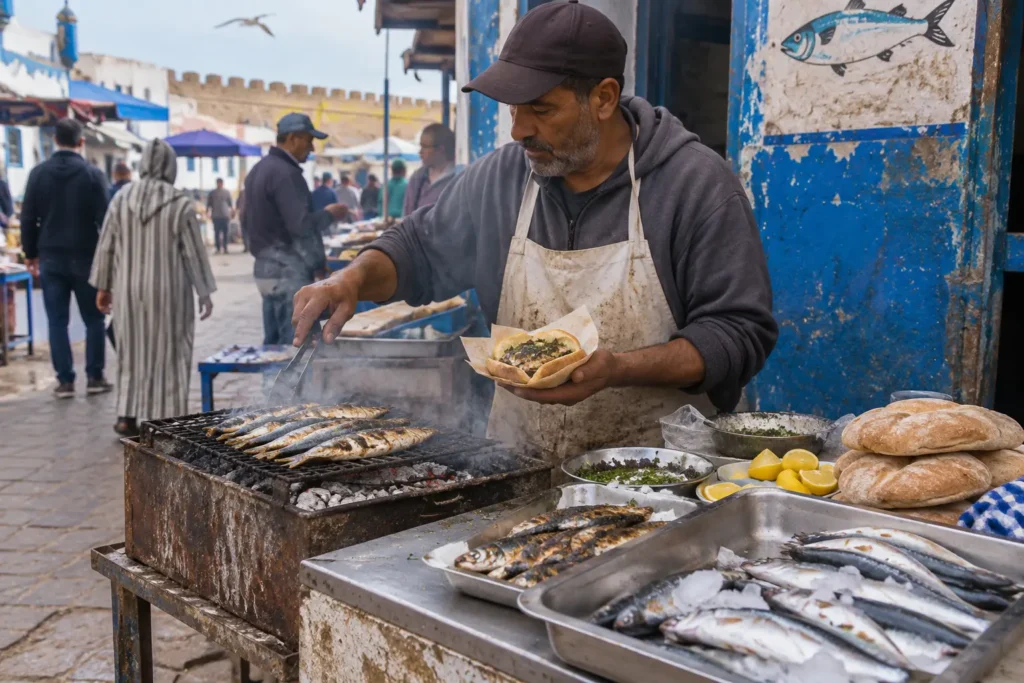
Fish becomes more prominent as you travel through Morocco’s coastal cities. Sardines are particularly common and may be grilled, fried or seasoned with herbs and spices before cooking.
In places such as Essaouira, seafood is part of the wider coastal food culture, while sardine sandwiches and casual fish meals also appear in other cities.
Seafood stalls can vary considerably in preparation and storage. Choose fish that is thoroughly cooked, served hot and handled separately from uncooked ingredients where possible.
Bocadillos and Street Sandwiches
A Moroccan street-food guide would be incomplete without sandwiches. The word bocadillo is widely understood, but the contents can vary enormously.
Depending on the shop, a sandwich might combine eggs, tuna, cheese, olives, potatoes, grilled meat, cooked vegetables, sauces or other ingredients. Bread styles also vary.
They are useful when you need a quick meal rather than a tasting experience. Ask what is included before ordering, especially if you have allergies or want to avoid meat, eggs or dairy.
Babbouche: Snails in Spiced Broth
Snail stalls are among Morocco’s more distinctive street-food sights. Often called babbouche, the snails are cooked and served in a seasoned broth containing herbs and spices.
They are particularly associated with busy markets and evening street-food areas. This is very much an optional experience rather than something every visitor needs to try.
If you are curious, choose a vendor where the broth is being kept properly hot and the food appears to be moving steadily through the stall.
Chebakia and Other Sweet Snacks
Chebakia is a shaped fried pastry coated with honey and sesame. It is closely associated with Ramadan, when it is commonly served alongside harira, although it can also be found at other times.
Other sweet options include cookies, nut-based pastries and fried dough. Moroccan sweets can be rich, so buying a small selection to share is often more practical than ordering several full portions.
Where to Try Street Food in Morocco
Marrakech
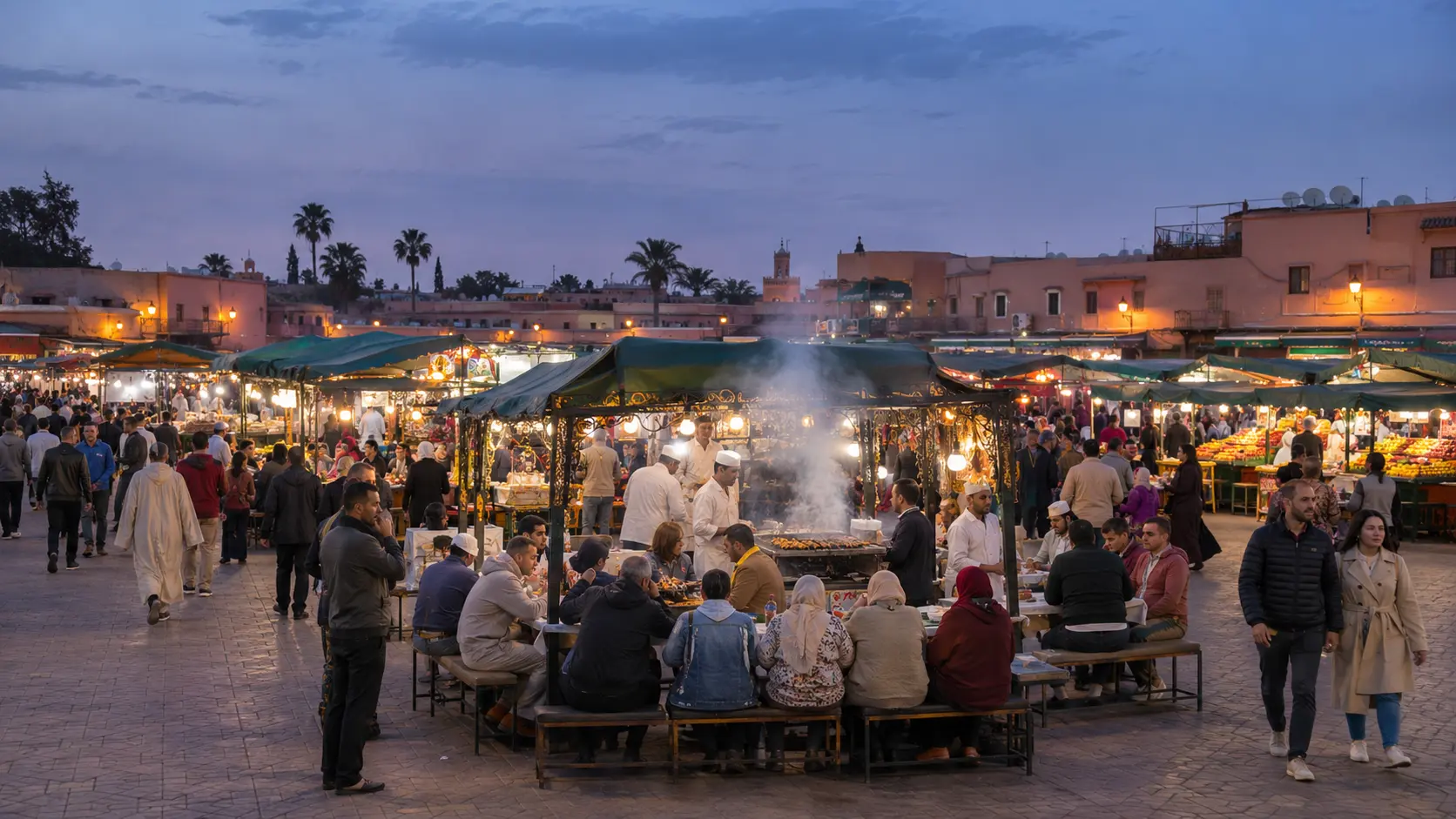
Marrakech is the easiest place for many first-time visitors to see several kinds of Moroccan street food in one area. Jemaa el-Fna becomes a major food hub in the evening, with grills, soups, sandwiches, snails, drinks and other dishes gathered around the square.
It is convenient, but it should not define your entire view of Moroccan street food. Walk into ordinary market streets and neighborhoods and you will find smaller bakeries, sandwich counters and cafés serving foods aimed primarily at everyday customers.
Rather than trying five full dishes in one evening at Jemaa el-Fna, choose one or two items and leave room to explore different food later in your trip.
Fes
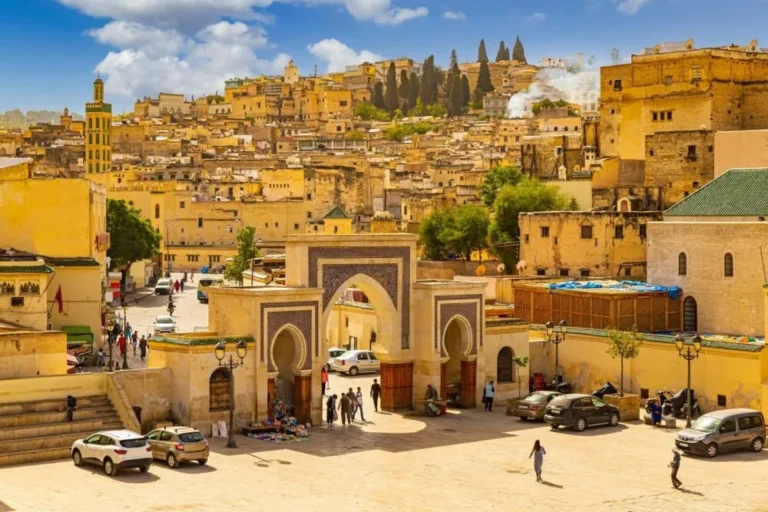
Fes has a deep culinary tradition, and food is woven into daily life throughout the medina. Alongside more elaborate dishes associated with Fassi cooking, travelers encounter breads, pastries, grilled foods, soups and small takeaway counters.
The narrow medina streets can make it tempting to eat at the first place you see. It is often worth slowing down, seeing what a stall actually specializes in and choosing one item that is being prepared frequently rather than ordering from a long menu.
Northern Morocco
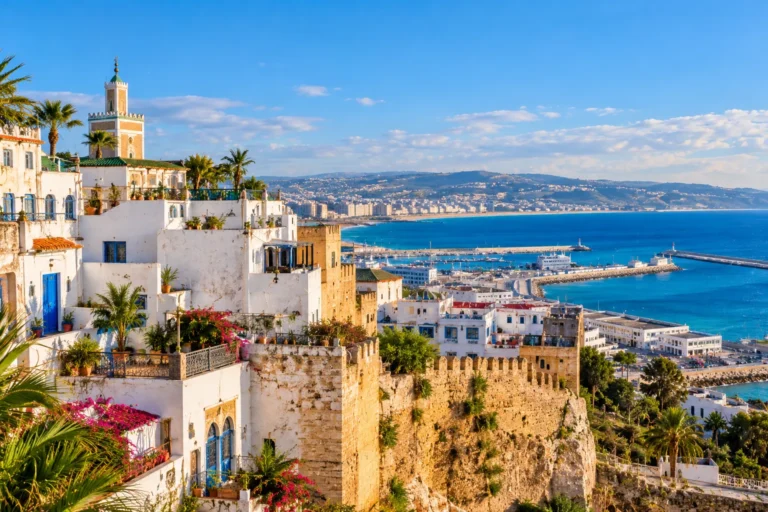
Northern cities add their own emphasis to the street-food picture. Bissara is especially useful to know, and small cafés, bakeries and grills offer simple dishes that may be less visible on menus designed specifically for international visitors.
Travelers moving between Tangier, Tetouan and Chefchaouen should expect some overlap in foods but not identical offerings in every neighborhood.
Atlantic and Mediterranean Coastal Towns
Along the coast, fish and seafood become an obvious part of casual eating. Sardines are among the most accessible choices, but the daily selection depends on location, season, supply and the individual vendor.
A coastal setting does not automatically make every seafood stall equally reliable. Apply the same food-safety checks you would use elsewhere.
How to Choose a Street Food Stall
A busy stall can indicate that food is being prepared and sold quickly, but a queue is not a guarantee of hygiene. Pay attention to what is happening behind the counter as well as how many people are eating there.
- Favor freshly cooked food. Fried, grilled or griddled items served directly after cooking are easier to assess than food that has been sitting at room temperature.
- Look at raw and cooked food handling. Ideally, cooked food should not be placed back onto surfaces or utensils used for raw meat.
- Choose hot food that is actually hot. Lukewarm meat, seafood, soup or cooked fillings deserve more caution.
- Be careful with raw additions. Salads, herbs, sauces and cut fruit can introduce risks even when the main food has been cooked thoroughly.
- Check drink preparation. If you are uncertain about local water quality, be cautious with ice or drinks diluted with water of unknown origin.
- Clean your hands before eating. Soap and water are preferable when available; hand sanitizer is useful when they are not.
Travelers who are pregnant, immunocompromised or managing medical conditions that increase the consequences of foodborne illness should follow advice from an appropriate health professional or travel-health authority.
Ordering Moroccan Street Food Without Knowing the Menu
Not every stall has a written menu, and even when it does, the most useful information may be what is currently cooking.
Watching what other customers order is perfectly reasonable. You can also point to an item and ask what it contains before committing to it.
Do not assume card payment will be available at small vendors. Having some local currency in practical denominations can make simple purchases easier. If a price is not displayed, asking before ordering avoids misunderstandings.
Some dishes are eaten with bread rather than cutlery. Follow the setup the vendor provides rather than worrying about reproducing a particular dining ritual.
Vegetarian, Vegan and Allergy Considerations
Vegetarian travelers have useful options, but a dish that looks meat-free is not automatically suitable for every diet.
Msemen, maakouda, bissara and some sandwiches may work, depending on the recipe. Butter, cheese, eggs, honey, meat stock or shared frying oil can all change the answer.
Harira also varies and may contain meat. Amlou usually contains almonds, making it important for travelers with nut allergies. Pastries can contain nuts, sesame, eggs or dairy even when those ingredients are not obvious from the outside.
For serious allergies, carry a clearly written ingredient or allergy card in a language the vendor can understand and remember that cross-contact is harder to control at small stalls.
Street Food During Ramadan
Ramadan changes the daily rhythm of eating. Many Moroccans fast between dawn and sunset, and food activity becomes especially important around the evening meal.
Harira, chebakia and other foods associated with breaking the fast become particularly visible. At the same time, some daytime cafés and food businesses may reduce or change their operating patterns.
Visitors are not generally expected to fast, but eating discreetly and respecting people who are fasting is considerate. Because Ramadan follows the Islamic lunar calendar, its dates move each year, so check current dates when planning your trip.
Common Street Food Mistakes to Avoid
- Trying everything on the first evening. Moroccan street food is easier to appreciate across several days and cities.
- Assuming tourist-famous dishes are the only ones worth eating. A simple msemen, bissara or potato sandwich can be as informative as a more elaborate meal.
- Equating a long queue with guaranteed food safety. Turnover helps, but handling, temperature and cleanliness still matter.
- Forgetting to ask about ingredients. Meat, dairy, eggs, nuts and sauces are not always visually obvious.
- Treating every city as having the same food scene. Regional specialties, coastal ingredients and local eating habits change as you travel.
FAQs
What Moroccan street food should I try first?
Msemen, sfenj and maakouda are approachable starting points. Harira and bissara work well if you prefer soup, while grilled skewers and sardines suit travelers looking for something more substantial.
Is Moroccan street food spicy?
Many Moroccan dishes rely more on aromatic seasoning than intense chilli heat. Cumin, paprika, herbs and spice blends are common, while hotter sauces or peppers may be served separately. Recipes vary, so ask if you are sensitive to chilli.
Is Moroccan street food safe?
Eating food from street vendors carries some foodborne-illness risk. Reduce that risk by choosing thoroughly cooked food served hot, being cautious with raw ingredients and questionable water or ice, and cleaning your hands before eating.
Where is the best place to start exploring Moroccan street food?
Marrakech is straightforward for first-time visitors because Jemaa el-Fna brings many vendors together. However, neighborhood cafés, bakeries and market streets across Morocco provide a broader picture of everyday eating.
Can vegetarians eat Moroccan street food?
Yes, but ingredients need to be checked. Maakouda, msemen, bissara and some sandwiches can be vegetarian, while recipes, sauces, stocks and cooking fats vary between vendors.
Do I need a food tour to try Moroccan street food?
No. Independent travelers can explore bakeries, stalls, cafés and markets themselves. A guided food experience can be useful if you want more explanation about ingredients and local customs, but it is not necessary for enjoying street food responsibly.
Make Street Food Part of the Journey
The most useful Moroccan street food experience is not about completing a checklist. Try a hot msemen in one city, a bowl of soup somewhere else and grilled fish when your route reaches the coast. Notice how the food changes with the neighborhood, region and time of day.
That slower approach gives you a better understanding of Moroccan food than trying to sample every famous dish in a single market visit. For more destination-based planning alongside your food discoveries, explore Visit Morocco Together’s Morocco travel guides.
Ready to Experience Morocco?
Turn this inspiration into your next adventure. Our travel experts are ready to help.