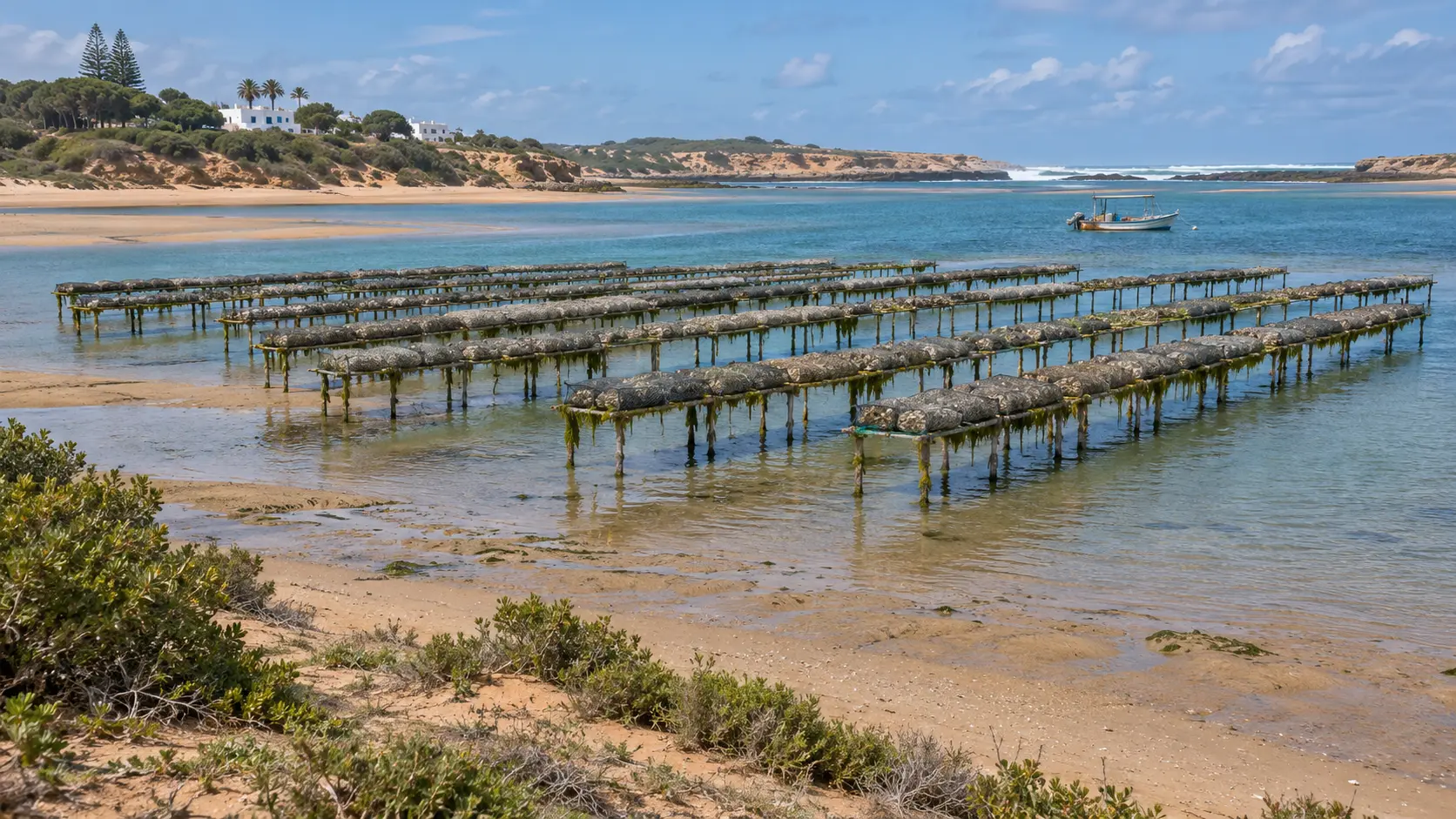
Oualidia oyster farm visits offer travelers a chance to discover one of Morocco’s established seafood traditions. On the Atlantic coast between El Jadida and Safi, Oualidia is known for its sheltered lagoon, where oysters have been cultivated since the 1950s.
Visitors can enjoy oysters at lagoon-side tasting counters, dine at restaurants serving locally cultivated shellfish or arrange a guided visit to learn how the oyster farms operate.
The important distinction is that tasting oysters and visiting a working oyster farm are not the same experience. A restaurant visit may be relatively straightforward, while access to oyster beds generally requires advance arrangements. Some farm visits depend on low tide and weather conditions, and boat excursions may have additional booking requirements.
For travelers primarily interested in tasting, a reputable lagoon-side restaurant or oyster counter is the simplest option. If you want to understand cultivation, harvesting and preparation, reserve a dedicated farm experience before arriving.
This guide explains the different visiting options, what to expect from a farm tour, how to arrange reservations, where to taste oysters and how to plan a comfortable visit to Oualidia.
Why Is Oualidia Famous for Oyster Farming?
Oualidia’s oyster-farming tradition is closely connected to the geography of its lagoon.
Natural sandy barriers shelter much of the lagoon from the Atlantic’s larger waves, while tidal openings allow seawater to circulate through the area.
These conditions helped establish Oualidia as an important center for oyster cultivation in Morocco.
Commercial oyster farming began here during the 1950s. Over the following decades, local producers developed cultivation, handling and purification facilities that helped supply oysters to restaurants and markets.
Today, oyster cultivation remains part of the local coastal economy, alongside fishing, tourism and other activities.
For visitors, the appeal is not simply eating seafood. It is understanding how the lagoon supports a working industry and how the oysters move from cultivation areas to tasting counters and restaurant kitchens.
Oualidia Oyster Farm Visits: Three Ways to Experience Them
There are several ways to explore Oualidia’s oyster tradition, and they offer different levels of access.
Before making a reservation, decide whether you want to visit the production area, take a guided excursion or simply enjoy a tasting beside the lagoon.
1. Visit a Working Oyster Farm
A dedicated farm visit is the most informative option for travelers interested in how oysters are cultivated.
One established producer is Ostréa, associated with oyster farm Parc 007. The business has a long history in Oualidia and offers visits to its oyster beds by prior reservation.
These visits depend on suitable conditions, particularly low tide and the weather. They are not unrestricted walk-in activities.
Depending on the arrangements, a farm visit may introduce visitors to:
- The location and layout of oyster cultivation areas.
- How young oysters are raised and monitored.
- How workers handle, sort and prepare harvested oysters.
- The role of seawater circulation and purification facilities.
- How oysters are prepared for commercial sale and restaurant service.
The exact activities depend on the farm’s visitor arrangements. Not every reservation includes access to processing facilities, participation in harvesting or a tasting.
Best for: Travelers interested in local food production, aquaculture and understanding the work behind Oualidia’s seafood reputation.
Booking tip: Contact the farm directly before your visit. Ask whether visitors can enter the working area, which activities are included and whether a tasting must be reserved separately.
2. Take a Boat Excursion to the Oyster Beds
Some organized experiences use traditional boats to explore the lagoon and introduce visitors to the oyster-farming areas.
A boat excursion provides a different perspective from a land-based visit. Depending on the route, visitors may observe cultivation structures from the water and learn how the tidal lagoon supports production.
La Sultana Oualidia is one example of a hotel offering oyster-related excursions for its guests. Its experiences have included boat visits to oyster beds, tastings and more elaborate outings combining lagoon exploration with dining.
These arrangements are generally associated with the hotel’s guest services and should not be assumed to be available to all day visitors.
Best for: Travelers who prefer a guided lagoon excursion or want to combine oyster farming with a broader dining experience.
Booking tip: Confirm whether the experience is available to non-residents, whether a boat ride is included and whether the excursion involves visiting a working farm or only observing the beds from the water.
Boat trips depend on tides, weather, operator arrangements and suitable water conditions. A reservation should not be considered final until the provider confirms the details.
3. Enjoy an Oyster Tasting Without a Farm Tour
Visitors who mainly want to taste Oualidia’s oysters do not necessarily need to book an organized excursion.
The town has seafood restaurants and smaller oyster counters where oysters may be served freshly shucked, often with lemon.
Along parts of the waterfront, simple seafood stalls provide a more informal experience than a restaurant meal.
Ostréa also operates a lagoon-side restaurant and a separate oyster-tasting area associated with its production site. Its restaurant welcomes visitors who are not staying at the property, although reservations are recommended.
The farm’s tasting area is different from a full-service restaurant, so visitors should confirm which location suits their plans.
Best for: Day-trippers, couples, seafood enthusiasts and travelers who want a relaxed tasting without organizing a production-site visit.
Booking tip: A casual tasting may be possible when a counter is operating, but confirm opening arrangements and reserve a restaurant table when visiting during busy periods.
What Happens During an Oyster Farm Visit in Oualidia?
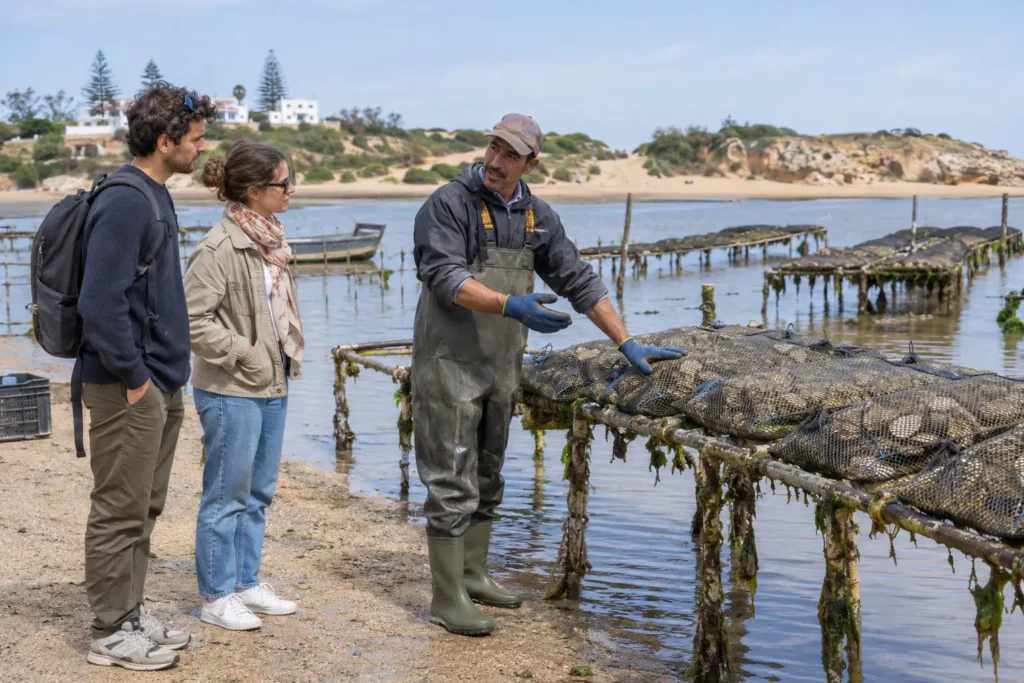
A working oyster farm is different from a conventional tourist attraction. Its main purpose is food production, and visitor activities must fit around normal operations.
The experience depends on the farm, but understanding the production process helps travelers know what questions to ask.
Understanding how oysters are cultivated
Oyster farming involves raising young oysters until they reach an appropriate size for harvesting.
In Oualidia, cultivation has historically included methods using raised structures within the lagoon.
These structures help producers manage the oysters as they grow while making use of the lagoon’s tidal conditions.
Visitors may be able to see cultivation equipment and learn how workers monitor growth, maintain the installations and prepare oysters for collection.
Actual access to the beds depends on the operator’s rules and the tide.
Sorting and preparing harvested oysters
After harvesting, oysters go through handling and sorting processes before reaching customers.
Producers may separate oysters by size and condition and use specialized facilities for cleaning and purification.
Ostréa’s operation includes a seawater purification station associated with its oyster production.
However, a visitor should not assume that a tour includes entering this facility. Production and food-handling areas may have hygiene and access restrictions.
Ask whether the experience includes an explanation of processing or an actual visit to the relevant working area.
Finishing with a tasting
Some experiences combine an introduction to oyster farming with a tasting.
Others focus only on the production side, leaving visitors free to arrange a separate meal afterward.
If tasting is important to you, confirm whether it is included, how the oysters are served and whether alternative dishes are available.
There is no need to assume that every farm visit includes a full lunch, boat excursion or unlimited tasting.
How to Reserve an Oualidia Oyster Farm Visit
Advance planning is particularly important when your main objective is to enter a working oyster-farming area.
Not every farm offers public visits, and those that do may restrict access according to operational needs, tides and weather.
Step 1: Decide what you want to experience
Choose between a working farm visit, a guided boat excursion or an oyster tasting.
If you want to learn about cultivation, request an experience specifically described as a farm or oyster-bed visit.
If your priority is eating oysters, a restaurant reservation may be simpler and more appropriate.
Step 2: Contact the farm or experience provider directly
For an organized visit, contact the producer, hotel concierge or relevant activity provider through its current reservation channels.
Explain your preferred date, number of participants and the type of experience you want.
Do not assume that a restaurant reservation automatically grants access to the farm’s production areas.
Step 3: Confirm the tide and weather requirements
Ask which departure times or visiting windows are possible.
Ostréa’s oyster-bed visits, for example, are organized by reservation and depend on low tide and suitable weather.
Boat-based excursions may have different requirements.
Allow some flexibility in your itinerary rather than organizing the entire day around an unconfirmed appointment.
Step 4: Check exactly what the reservation includes
Before making payment, confirm:
- Farm access: Will you enter the production area or only view it from a distance?
- Guide: Will someone explain the cultivation process?
- Boat transport: Is a boat included, required or arranged separately?
- Tasting: Are oysters included, and are they served raw or cooked?
- Duration: How much time should you allow for the complete experience?
- Meeting point: Where does the visit begin, and how do you reach it?
- Participation: Are there age, mobility or other eligibility requirements?
- Cost: What is the current price, and what does it cover?
- Changes: What happens if the weather or tide prevents the visit?
These details can vary considerably between a simple farm introduction and an experience that combines a boat journey with a meal.
Step 5: Confirm your reservation before traveling
Once the arrangements are agreed, keep the confirmation and meeting instructions available.
If your visit depends on low tide or a boat excursion, reconfirm the activity shortly beforehand.
This is especially important for travelers visiting Oualidia for only one day.
When Is the Best Time to Visit Oualidia Oyster Farms?
The best time depends on whether you want to see the oyster beds or simply enjoy a tasting.
Low tide for certain farm visits
At low tide, water recedes from some sections of the lagoon, making parts of the oyster-growing areas more accessible.
This is why certain farm visits are organized around low-water conditions.
However, low tide should not be treated as a universal requirement for every oyster-related activity.
A boat excursion may depend on a different water-level window, while a restaurant tasting does not necessarily require a particular tide.
Practical advice: Choose the experience first, then ask the provider which tide and time of day are appropriate.
Seasonal considerations
Oualidia’s Atlantic location generally brings milder coastal conditions than Morocco’s hotter inland regions, although wind, rain and temperature vary throughout the year.
Spring and autumn can be comfortable periods for combining a farm visit with time beside the lagoon.
Summer can bring more visitors to the coast, making advance reservations useful for popular restaurants and organized activities.
Winter may involve cooler temperatures and unsettled weather that can affect outdoor visits and boat excursions.
Oyster availability also depends on production conditions, harvesting arrangements and any applicable food-safety restrictions.
No particular month guarantees that every farm will be open for visits or serving the same products.
Where to Taste Oysters in Oualidia
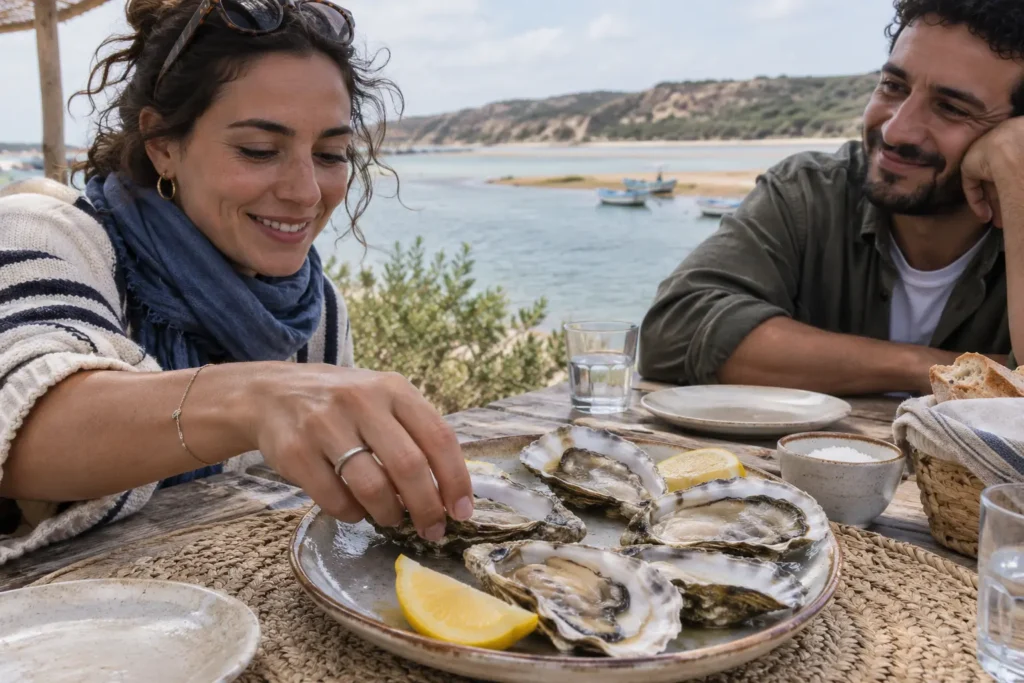
Oualidia offers several styles of seafood dining, from informal counters near the waterfront to restaurants overlooking the lagoon.
The best choice depends on whether you want a quick tasting, a relaxed lunch or a more elaborate dining experience.
Farm-associated oyster tasting
For travelers interested in the connection between cultivation and serving, an oyster producer with a tasting facility can be a useful choice.
Ostréa, associated with Parc 007, offers oyster tasting as part of its wider operation. Its tasting area and restaurant provide different experiences.
Before visiting, confirm which area is open, whether advance booking is required and whether food other than oysters is served.
Lagoon-side seafood restaurants
Several restaurants in Oualidia feature oysters and other seafood.
Dining establishments such as Ostréa, L’Hippocampe and the restaurants at La Sultana Oualidia are associated with the town’s seafood dining scene.
However, access arrangements differ. Some hotel restaurants may prioritize or restrict service to staying guests, while other businesses welcome outside visitors.
Always confirm the current menu, reservation requirements and whether non-residents are accepted.
A restaurant meal is not the same as a guided farm tour, even when the oysters come from a local producer.
Informal oyster counters near the waterfront
For a more casual experience, visitors may find oyster sellers operating near Oualidia’s beachside waterfront.
These counters can offer a straightforward opportunity to sample oysters without committing to a longer meal.
Availability and operating arrangements vary, so do not assume that every counter is open daily.
Before ordering, confirm the price, serving quantity and preparation method. Choose a business that handles and stores seafood appropriately.
Raw or Cooked Oysters: What Should You Order?
Oualidia oysters are often served raw, freshly opened and accompanied by lemon.
Some restaurants also prepare oysters cooked or baked, depending on the menu.
For travelers unfamiliar with oysters, the choice comes down to taste preferences and food-safety considerations.
Raw oysters
Raw oysters offer the characteristic taste and texture that many seafood enthusiasts seek.
However, eating raw or undercooked shellfish carries a risk of foodborne infection, including illness caused by Vibrio bacteria.
Even oysters that appear fresh and have undergone purification are not guaranteed to be free from harmful microorganisms.
Lemon juice, hot sauce and alcohol do not make raw oysters safe by killing these bacteria.
Cooked oysters
Properly cooked oysters are a lower-risk alternative for travelers who prefer not to eat raw seafood.
Ask whether the restaurant offers thoroughly cooked oyster dishes rather than assuming every tasting counter has cooking facilities.
Pregnant travelers, young children, older adults and people with weakened immune systems or certain medical conditions, including liver disease, should avoid raw oysters.
Anyone with a shellfish allergy should avoid oysters and check with the establishment about possible cross-contact.
The safest choice for reducing the risk of infection from raw oysters is to eat seafood that has been thoroughly cooked.
These precautions apply regardless of the oyster’s origin, appearance or reputation.
Getting to Oualidia and Finding the Oyster Farms
Oualidia lies on Morocco’s Atlantic coast between El Jadida and Safi.
The town can fit naturally into a coastal journey that includes Casablanca, El Jadida, Safi or Essaouira, depending on your route.
Most visitors reach Oualidia by road.
Rental car
A rental car offers flexibility if you want to combine a farm appointment with lunch and other stops.
It can also help when visiting a producer outside the main town center.
For example, Ostréa’s operation is located in the oyster-farming area, with access involving a drivable track rather than simply walking from the central beach.
Ask for the precise meeting location before setting out.
Taxi or pre-arranged transport
A taxi can be a practical option for reaching Oualidia from nearby towns or transport connections.
Confirm the fare, destination and return arrangements beforehand.
If your farm visit begins outside the central visitor area, arrange transport to the actual meeting point rather than asking to be dropped at Oualidia Beach.
Bus and public transport connections
Budget travelers may be able to reach the Oualidia area using regional road transport, depending on current services.
However, public transport may not stop near individual oyster farms.
Confirm both the main journey and the onward connection before reserving a timed activity.
Oualidia does not have a passenger railway station, so train travel requires onward road transport.
For broader destination planning, explore our Oualidia travel guide.
How to Plan an Oyster-Focused Day in Oualidia
An oyster-focused visit does not need to fill an entire day with scheduled activities.
The most comfortable approach is to make the confirmed farm appointment or tasting reservation the central activity and leave the rest of the day flexible.
Option 1: A relaxed tasting visit
If you are primarily interested in eating oysters, arrange lunch at a suitable restaurant or visit a seafood counter when it is operating.
Allow time to enjoy the setting without rushing directly to your next destination.
This is the simplest option for a day trip and does not require access to a working farm.
Option 2: Farm visit followed by lunch
For a more informative experience, reserve a farm visit first.
Ask the operator about the tide-dependent departure or meeting time, then arrange lunch afterward with enough flexibility for delays.
Do not assume the farm tour includes dining unless that is explicitly stated in your reservation.
Option 3: Overnight stay with an organized excursion
An overnight stay is useful if the oyster experience is one of your main reasons for visiting.
It provides more flexibility to work around tides, weather and the provider’s schedule.
You can also choose a more elaborate lagoon excursion without having to coordinate a long same-day return journey.
For travelers already following the Atlantic coast, an overnight stop in Oualidia may be more comfortable than attempting a substantial detour solely for lunch.
Practical Tips for Visiting a Working Oyster Farm
Oyster farms are working food-production environments, so visitors should follow the operator’s instructions rather than treating the site as an unrestricted attraction.
- Wear practical footwear: Ask whether you need closed-toe shoes or footwear suitable for wet, uneven ground.
- Prepare for coastal weather: Bring sun protection and a wind-resistant layer when appropriate.
- Follow access instructions: Do not walk into production areas, onto cultivation structures or across exposed lagoon beds without permission.
- Respect hygiene rules: Avoid touching oysters, sorting equipment or food-preparation surfaces unless invited and instructed.
- Ask before taking photographs: Workers may be handling equipment or carrying out tasks that should not be interrupted.
- Check boat safety: For water-based excursions, confirm suitable flotation equipment and the operator’s safety arrangements.
- Consider accessibility: Tracks, boat transfers, slippery surfaces and uneven ground may create difficulties for some visitors. Ask about the exact route before booking.
- Leave the site clean: Do not discard oyster shells, packaging or other waste around the lagoon.
Visitors do not need to handle oysters or take part in harvesting to appreciate the experience.
Watching how a producer works and asking thoughtful questions can be just as informative.
Common Mistakes to Avoid When Booking an Oyster Farm Visit
A few misunderstandings can lead to disappointment, especially when visiting Oualidia for a single day.
- Assuming every farm welcomes walk-ins: Working oyster farms may require prior reservations and have restricted access.
- Confusing tasting with touring: A restaurant booking does not automatically include a visit to the cultivation beds.
- Ignoring the tide: Some production-site visits can only operate during suitable low-water conditions.
- Expecting a boat ride: Not every farm visit includes boat transport, even if the farm is located beside the lagoon.
- Overlooking hotel restrictions: Certain excursions and dining experiences may be limited to hotel guests.
- Assuming oysters are served in unlimited quantities: Check the tasting format and what is included.
- Forgetting food-safety considerations: Raw oysters carry risks that are not removed by adding lemon or choosing an attractive restaurant.
- Arriving without confirming the meeting point: Some farming facilities are away from the central beach and require separate transport.
FAQs
Can tourists visit a working oyster farm in Oualidia?
Yes, some producers offer arranged visits to their oyster-farming areas. Ostréa Parc 007 is one example, with visits available by reservation and subject to low tide and weather conditions. Not every farm welcomes visitors, so confirm access directly.
Do you need a reservation to taste oysters in Oualidia?
A casual oyster counter may serve visitors without advance booking when operating. Restaurants may recommend reservations, particularly during busy periods. A guided farm visit should be arranged in advance rather than treated as a walk-in tasting.
Do oyster farm tours include a boat trip?
Some excursions include traditional boat transport, particularly organized lagoon experiences. Other farm visits may use land-based access. Confirm the route, transport and activities included before booking.
Is low tide the best time to visit the oyster farms?
Low tide is important for certain oyster-bed visits because it can make cultivation areas more accessible. However, boat excursions and restaurant tastings may follow different schedules. The appropriate timing depends on the operator and activity.
Can you visit an oyster farm without eating raw oysters?
Potentially, yes. A farm visit can focus on learning about cultivation rather than tasting. Ask whether the experience can be booked without a raw-oyster tasting and whether cooked food or other options are available.
Can you visit Oualidia’s oyster farms on a day trip?
Yes, a day visit can work if the farm appointment and transport arrangements fit your schedule. However, a low-tide visit may not align with your preferred arrival time. An overnight stay gives you more flexibility if the farm experience is the main purpose of your journey.
Choose the Oualidia Oyster Experience That Fits Your Visit
Oualidia’s oyster tradition offers more than a seafood lunch. A farm visit can introduce travelers to the work involved in cultivating, handling and preparing oysters, while a lagoon-side tasting provides a simpler way to experience the town’s coastal food culture.
For travelers who want to understand production, a reserved visit to a working farm is the most relevant option. For those mainly interested in flavor and atmosphere, a reputable restaurant or oyster counter is usually easier to arrange.
Whichever option you choose, confirm the current reservation requirements, tide conditions, access arrangements and tasting inclusions. Do not assume that every experience offers the same level of access or services.
If Oualidia is part of a wider journey along Morocco’s Atlantic coast, explore Morocco coastal travel options with Visit Morocco Together. Compare the available routes and inclusions, and allow sufficient time for an independently confirmed oyster-farm appointment if that is one of your priorities.
The practical takeaway: decide whether you want to visit the farm or simply taste the oysters, reserve production-site access in advance, and plan around the provider’s conditions. A well-organized visit offers a more useful understanding of Oualidia’s oyster tradition than arriving at a working farm without an appointment.
Ready to Experience Morocco?
Turn this inspiration into your next adventure. Our travel experts are ready to help.