Moroccan festivals and cultural celebrations offer travelers an opportunity to experience the country’s music, regional traditions, seasonal harvests and community life. From Gnawa performances in Essaouira and sacred music concerts in Fez to rose harvest celebrations in the Dades Valley, these events reveal different aspects of Morocco’s cultural heritage.
For travelers planning around a festival, the first decision is what kind of experience they want. Essaouira and Fez are strong choices for traditional music, Rabat and Agadir offer major contemporary music events, while Sefrou and Kalaat M’Gouna are known for regional harvest celebrations. Marrakech adds international cinema, and southern Morocco hosts gatherings connected with Saharan traditions.
Festival dates, venues and admission arrangements can change between editions. Religious celebrations follow a different calendar and are not always public events. This guide explains which celebrations to consider, when they usually take place and how to include them in a realistic Morocco itinerary.
How to Choose Moroccan Festivals and Cultural Celebrations
Morocco’s celebrations are easier to understand when divided into four broad groups:
- Music festivals: Events featuring Gnawa, Amazigh, Andalusi, sacred, popular and international music.
- Regional and harvest festivals: Celebrations connected with agricultural seasons, local products and community traditions.
- Religious and family celebrations: Observances such as Ramadan, Eid al-Fitr and Eid al-Adha, which have meanings beyond public entertainment.
- Contemporary cultural events: Film festivals, artistic programmes and large concerts that reflect modern Moroccan creativity.
These occasions differ considerably. A large concert may welcome thousands of spectators, while a religious gathering or community ceremony may be private.
Choose an event that matches your interests, then build your travel route around its location and confirmed dates. Do not assume that all festivals operate annually without interruption or follow the same schedule every year.
Major Music and Arts Festivals in Morocco
Music festivals are among Morocco’s most accessible cultural events for international visitors. Several established festivals combine Moroccan musical traditions with performances by artists from other countries.
Gnawa and World Music Festival — Essaouira
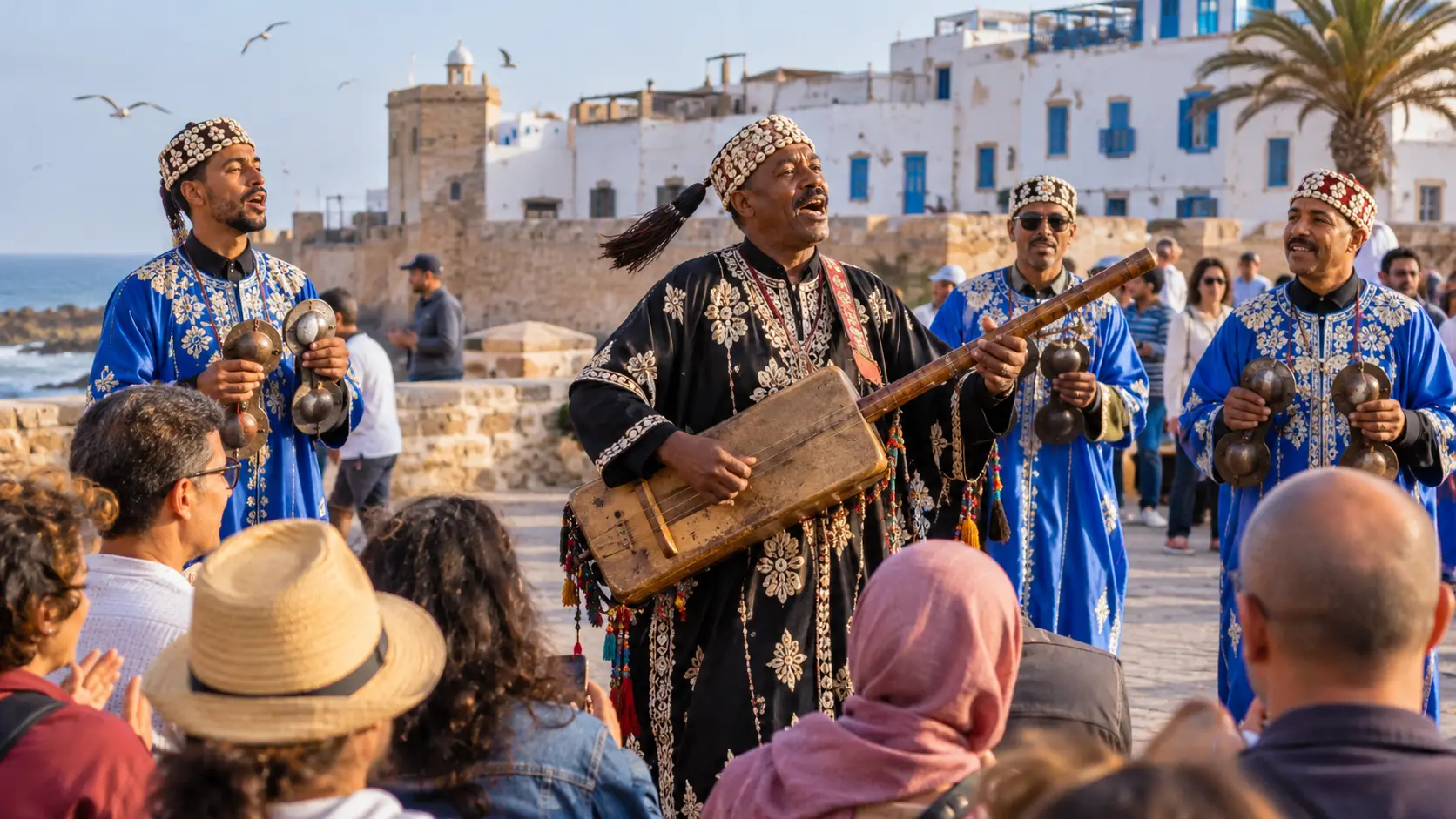
The Gnawa and World Music Festival is one of Essaouira’s signature cultural events. It brings together Gnawa master musicians, known as maâlems, and performers from genres such as jazz, blues and contemporary world music.
Gnawa has deep historical and spiritual roots in Morocco, and its cultural practices were inscribed on UNESCO’s Representative List of the Intangible Cultural Heritage of Humanity in 2019.
The festival generally takes place in early summer, with concerts held across several venues in Essaouira. Previous editions have included major outdoor performances alongside smaller events requiring separate admission.
Best for: Travelers interested in live music, cultural exchange and experiencing Essaouira during a major public event.
Planning tip: Stay in Essaouira rather than traveling back and forth from Marrakech for evening concerts. Allow time for crowded pedestrian areas, late performances and quieter breaks during the day.
For accommodation areas and other activities, explore our Essaouira destination guide.
Fez Festival of World Sacred Music
The Fez Festival of World Sacred Music brings together musical traditions associated with different cultures and spiritual backgrounds.
Performances have taken place in historic venues around Fez, creating a close connection between music and the city’s architectural heritage. Programmes may feature vocal ensembles, instrumental performances and artistic collaborations from Morocco and abroad.
The festival has traditionally been organized during spring or early summer, although dates and venues depend on the edition.
Best for: Travelers interested in musical heritage, intercultural dialogue and performances in historic settings.
Planning tip: Choose accommodation based on the confirmed venues, not simply proximity to the medina. Some historic locations require walking, and vehicle access can be limited.
Fez also rewards visitors who want time for traditional craftsmanship and historic architecture. Our Fez travel guide can help you plan the wider stay.
Mawazine — Rhythms of the World, Rabat and Salé
Mawazine is a major international music festival associated with Rabat and neighboring Salé.
Unlike festivals focused primarily on a particular traditional style, Mawazine brings together Moroccan popular music, Arab and African performers, and international artists across multiple stages.
Its programme changes by edition, with different venues and admission arrangements. Some performances have been publicly accessible, while others require tickets.
Best for: Travelers who enjoy large concerts, contemporary music and a lively urban festival atmosphere.
Planning tip: Check which stage hosts your preferred performer before choosing accommodation. Rabat and Salé are connected but have separate districts, and festival traffic can complicate movement between venues.
Timitar Festival — Agadir
The Timitar Festival celebrates Amazigh musical heritage alongside Moroccan, African and international music.
Its guiding idea brings Amazigh artists into dialogue with musicians from other traditions, making it particularly relevant for visitors interested in the cultural identity of the Souss-Massa region.
Timitar is generally associated with the summer festival season, although exact dates and programmes should be confirmed for each edition.
Best for: Travelers interested in Amazigh culture, contemporary music and combining a cultural event with time on Morocco’s Atlantic coast.
Planning tip: Base yourself in Agadir if attending multiple evening performances. Check current venue locations and avoid assuming that every concert will take place in the same area.
Marrakech International Film Festival
The Marrakech International Film Festival offers a different kind of cultural experience, bringing filmmakers, performers and cinema audiences together.
Its programme includes international cinema, artistic discussions and film-industry activities. Public screening opportunities and access arrangements vary, so not every event is automatically open to visitors.
The festival is commonly associated with the later part of the year, but travelers should check the official programme for the relevant edition.
Best for: Cinema enthusiasts, travelers interested in contemporary Moroccan culture and visitors who enjoy cultural events beyond music.
Planning tip: Check screening registration, language information and venue locations in advance. A festival pass or reservation may be required even for activities without a ticket price.
Traditional Harvest Festivals and Regional Celebrations
Some Moroccan festivals are closely connected with agriculture and local livelihoods. These celebrations often combine markets, music, community activities and regional products.
They can provide valuable cultural context, but visitors should remember that the harvest and the people involved remain more important than the tourist programme.
Rose Festival — Kalaat M’Gouna
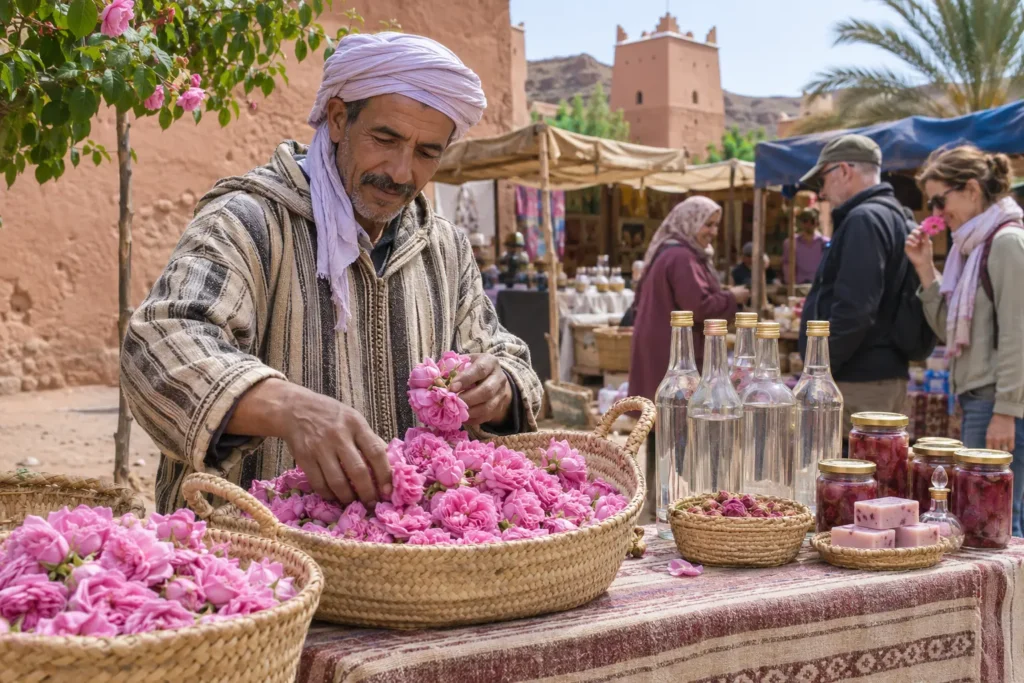
The Rose Festival celebrates rose cultivation around Kalaat M’Gouna, in the valley commonly known as the Valley of Roses.
The region is associated with the cultivation of fragrant roses used in products such as rosewater and cosmetics. Festival activities have included performances, exhibitions, local product displays and celebrations connected with the harvest.
The event is usually associated with spring, often around May. However, blooming conditions and festival dates are not interchangeable: a scheduled celebration does not guarantee that the surrounding landscape will be covered in flowers.
Best for: Travelers interested in regional traditions, local products, agricultural heritage and the landscapes of southern Morocco.
Planning tip: Include Kalaat M’Gouna in a multi-day journey through Ouarzazate and the Dades Valley rather than treating it as a quick day trip from Marrakech. Mountain roads, sightseeing stops and festival traffic require a realistic schedule.
Cherry Festival — Sefrou
The Cherry Festival in Sefrou celebrates the town’s connection with cherry cultivation and local community traditions.
Historically, festivities have included parades, music, decorative displays, community participation and the selection of a Cherry Queen.
The festival was inscribed on UNESCO’s Representative List of the Intangible Cultural Heritage of Humanity in 2012, recognizing its importance to local identity and cultural continuity.
It is traditionally associated with June, but the exact dates and public activities should be confirmed before visiting.
Best for: Travelers interested in smaller-city celebrations, regional identity and community heritage.
Planning tip: Sefrou is near Fez, making it a practical addition to a stay in the region. Do not assume the Cherry Festival and Fez’s sacred music festival will overlap simply because they often occur during the same general season.
Erfoud Date Festival and International Date Exhibition
Erfoud, in Morocco’s Tafilalt region, is associated with date-palm cultivation and oasis agriculture.
The area’s date celebrations and the International Date Exhibition, known as SIDATTES, highlight agricultural production, local varieties, regional products and the wider economic importance of date cultivation.
The exhibition has included producer displays, professional activities and cultural programming. It is important to distinguish the organized exhibition from the broader seasonal date harvest.
These activities generally relate to the autumn harvest period, although exact dates vary.
Best for: Travelers interested in oasis agriculture, local food production and cultural experiences connected with the Tafilalt region.
Planning tip: Erfoud fits more naturally into a wider journey through eastern Morocco and the Merzouga area than into a short trip from Marrakech or Fez. Allow enough time for the road journey and other stops.
Moussem of Tan-Tan — Saharan Cultural Heritage
The Moussem of Tan-Tan is a gathering associated with Saharan nomadic communities and cultural traditions.
Its heritage includes oral poetry, music, traditional dress, social exchange and practices connected with livestock and pastoral life. The moussem was inscribed on UNESCO’s Representative List of the Intangible Cultural Heritage of Humanity in 2008.
Unlike a conventional music festival, the moussem has broader historical, social and community significance.
Its scheduling and public programme require particular care when planning. Do not assume that an edition will occur on the same dates or with identical activities every year.
Best for: Travelers with a specific interest in Saharan cultural heritage and regional traditions.
Planning tip: Tan-Tan is a substantial journey from Morocco’s main northern tourist centers. Confirm the current edition before organizing transport and accommodation specifically for the gathering.
Religious and National Celebrations in Morocco
Not every important Moroccan celebration is designed for spectators. Religious holidays and family observances are part of everyday cultural life, but participation depends on the setting and the people involved.
Ramadan: A Month of Fasting and Community Life
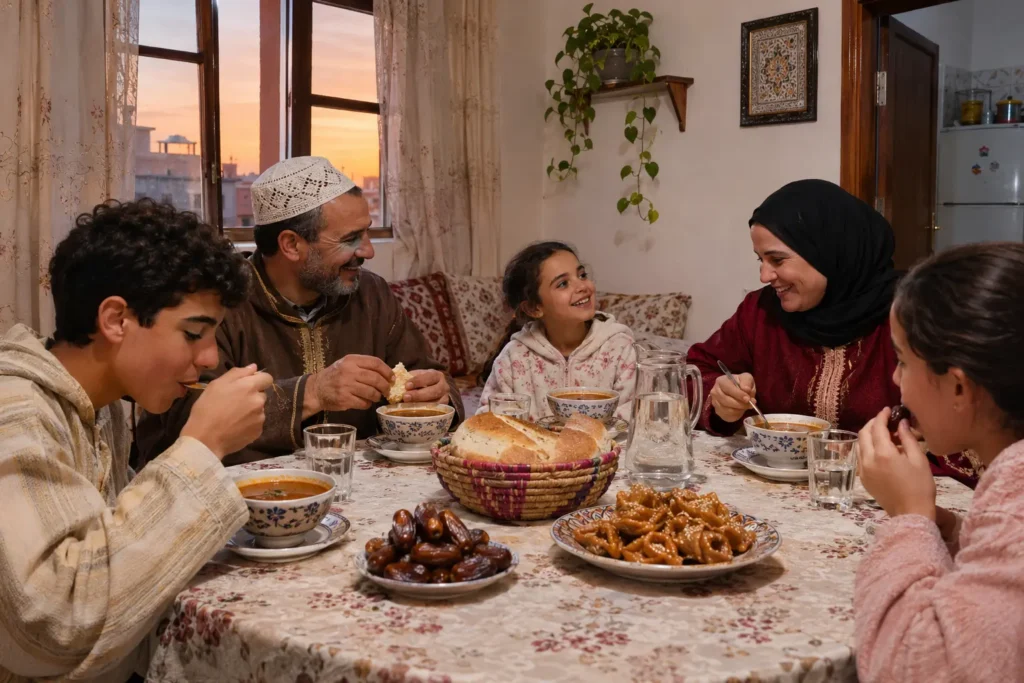
Ramadan is the Islamic month of fasting, prayer and reflection. Many Muslims abstain from food and drink between dawn and sunset, while evenings often become important times for family gatherings and shared meals.
The meal that breaks the fast is called iftar, or ftour in Moroccan usage.
Travelers may notice different restaurant schedules, quieter daytime streets in some areas and increased activity after sunset.
Visitors are not generally expected to fast, but discretion around eating, drinking and smoking near people observing the fast is considerate.
Ramadan follows the Islamic lunar calendar, so its dates shift relative to the Gregorian calendar. Confirm the relevant year’s dates and local arrangements before traveling.
Eid al-Fitr and Eid al-Adha
Eid al-Fitr marks the end of Ramadan and is associated with prayer, family visits, hospitality and shared meals.
Eid al-Adha commemorates the devotion of Prophet Ibrahim and is traditionally associated with prayer, family gatherings and the ritual sacrifice of livestock.
Both holidays have important religious and family meanings. Visitors should not treat private celebrations as public attractions.
Travel arrangements may also be affected. Some shops, restaurants and services can close or operate differently, while transport demand may change as families travel.
Holiday dates depend on the Islamic calendar and official announcements. Confirm current information rather than relying on dates from a previous year.
Yennayer: Amazigh New Year
Yennayer celebrates the Amazigh New Year and is associated with cultural identity, family gatherings and traditions connected with the agricultural calendar.
Morocco recognizes Amazigh New Year on 14 January as an official public holiday.
Celebrations can include traditional foods, music and community activities, although customs vary by region and household.
Yennayer is particularly meaningful for understanding Morocco’s Amazigh heritage, but visitors should not assume that every town organizes a public festival or parade.
When Do Moroccan Festivals Take Place?
For general planning, Morocco’s festival calendar can be understood through broad seasonal patterns. These are useful starting points, not confirmed schedules for a particular year.
- Winter: Yennayer takes place in January. Some local celebrations are also associated with the agricultural calendar, including almond blossom traditions in southern Morocco.
- Spring: Rose-related celebrations take place around the harvest season in Kalaat M’Gouna. Exact dates and flowering conditions vary.
- Early summer: Events have included the Sefrou Cherry Festival, Fez Festival of World Sacred Music and Essaouira’s Gnawa and World Music Festival.
- Summer: Large music events such as Mawazine and Timitar have commonly taken place during this period, depending on the edition.
- Autumn and early winter: Erfoud’s date-related events and the Marrakech International Film Festival are associated with the later part of the year.
Ramadan and the Islamic holidays move through the Gregorian calendar and cannot be assigned permanently to one season.
Regional weather also matters. A summer festival in coastal Essaouira may involve wind and cooler evenings, while inland cities can experience significant heat. Mountain and southern routes have different seasonal considerations.
Check the conditions for the actual destination rather than planning around a single idea of Morocco’s climate.
How to Plan a Festival-Focused Morocco Trip
The most practical festival itinerary begins with one confirmed event. Add nearby destinations only after allowing enough time for arrival, performances, rest and departure.
For Essaouira’s Gnawa Festival
Consider staying for two or three nights if your schedule allows. This gives you time for more than one performance and for enjoying the city outside concert hours.
Essaouira can be combined with Marrakech by road. Buses, taxis and arranged transfers are possible transport choices, but there is no direct railway connection between the two cities.
For a music-focused visit, staying overnight in Essaouira is usually preferable to attempting a long evening return journey.
For Fez and Sefrou
Fez makes a useful base for travelers interested in sacred music and nearby regional heritage.
If the festival dates align with your trip, allow separate time for concerts and exploring the historic medina. Sefrou can be added as another outing when its celebration is confirmed.
Do not assume the two festivals will occur together. An itinerary should work even if only one event falls within your dates.
For the Rose Festival and southern Morocco
Build a multi-day route through Ouarzazate, Kalaat M’Gouna and the Dades Valley rather than making the festival the only stop on a long driving day.
Leave room for mountain-road conditions, meals and delays. An additional night can make the trip more comfortable, especially if you want to explore the surrounding valley.
For urban music and film festivals
Rabat, Agadir and Marrakech are practical bases for their respective city festivals.
Choose accommodation according to the confirmed venues and your transport preferences. In large cities, a hotel near one performance location may not be convenient for every event.
Rail connections are useful for some northern and central Moroccan routes, while Agadir and many southern destinations rely on road or air connections.
Tickets, Accommodation and Practical Festival Tips
Festival travel can be straightforward when the main arrangements are confirmed before departure.
Pay particular attention to the following:
- Dates: Verify the specific year’s official programme before purchasing non-refundable flights or accommodation.
- Tickets: Do not assume all performances are free. Public concerts, reserved seating and smaller events may have different admission rules.
- Accommodation: Compare locations and cancellation conditions. A festival may increase demand in the surrounding area.
- Transport: Check return services, road closures and late-night options, particularly when performances finish after normal transport hours.
- Accessibility: Historic venues, medina streets and outdoor festival areas may involve steps, uneven surfaces or long periods of standing. Confirm individual arrangements with organizers.
- Families: Consider crowd density, sound levels, seating and age restrictions before attending with children.
- Weather: Bring clothing appropriate for the region and season, including sun protection or warmer evening layers when needed.
If an event is the central reason for your journey, a flexible accommodation booking can be especially valuable while the final programme is being announced.
Experiencing Moroccan Celebrations Respectfully
Public festivals can create opportunities to learn about local traditions, but visitors should distinguish performances intended for audiences from private religious or family practices.
A few principles help make cultural experiences more respectful:
- Ask before photographing performers at close range, residents or children.
- Respect restrictions around religious spaces, ceremonies and private gatherings.
- Follow organizer instructions, crowd barriers and designated pedestrian routes.
- Do not block entrances, residential streets or access for emergency vehicles.
- Support local vendors and artisans when you genuinely want their products or services.
- Carry litter away and avoid damaging public spaces or natural areas.
- If animal-related traditions are part of an event, observe respectfully and avoid activities involving visibly distressed or poorly treated animals.
Participation should never be assumed. When invited into a community celebration, follow your host’s guidance and recognize that some activities have meanings beyond entertainment.
FAQs
What are the most famous cultural festivals in Morocco?
Well-known events include the Gnawa and World Music Festival in Essaouira, Fez Festival of World Sacred Music, Mawazine in Rabat and Salé, Timitar in Agadir and the Marrakech International Film Festival. Regional celebrations such as the Sefrou Cherry Festival and the Rose Festival are also culturally significant.
What is the best month to visit Morocco for festivals?
Late spring and summer often provide several major music and regional cultural events. However, the best month depends on the specific festival you want to attend. Check confirmed dates rather than choosing travel dates solely from previous editions.
Are Moroccan festivals free to attend?
Some festivals include free public performances, while other events require tickets, reservations or accreditation. Admission arrangements can differ between venues within the same festival. Confirm the current programme before visiting.
Can tourists participate in Ramadan or Eid celebrations?
Travelers can experience the atmosphere surrounding these observances and may attend appropriate public activities. Private meals and family gatherings require an invitation. Respect religious practices and do not assume that all celebrations are open to visitors.
Which Moroccan festival is best for traditional culture?
Essaouira’s Gnawa festival is particularly relevant for musical heritage, while Sefrou’s Cherry Festival and the Moussem of Tan-Tan are associated with regional community traditions. The Rose Festival offers another perspective through agricultural heritage and local products.
How far in advance should I plan a festival trip?
Begin by identifying your preferred event and monitoring its official announcements. Once dates and venues are confirmed, compare accommodation and transport options. Book according to your flexibility and the cancellation conditions, especially if the event is the main purpose of your visit.
Choose the Celebration That Fits Your Journey
Moroccan festivals and cultural celebrations are most rewarding when you choose an experience that genuinely interests you and allow enough time to understand its setting.
For music, start with Essaouira, Fez, Rabat or Agadir. For regional heritage, consider Sefrou, the Valley of Roses or Tan-Tan when events are confirmed. Travelers interested in contemporary arts may prefer Marrakech’s film programme.
If you are planning a multi-city cultural journey around specific festival dates, explore a custom Morocco itinerary with Visit Morocco Together to organize destinations and travel days around your interests.
The practical takeaway: choose one festival as your main event, confirm its current schedule and build a comfortable itinerary around it. Music, local traditions and public celebrations can add depth to a Morocco trip, but they are best appreciated without rushing or treating every cultural occasion as a tourist attraction.
Ready to Experience Morocco?
Turn this inspiration into your next adventure. Our travel experts are ready to help.