Prayer in Morocco while traveling takes a little planning: find reliable prayer times, check mosque entrances and allow for stops between cities. A nearby minaret does not guarantee that a prayer area or ablution facility is open whenever you arrive.
This guide covers mosques, airport prayer rooms, Friday prayer, wudu and road-trip stops without assuming every hotel or roadside station has dedicated facilities.
Prayer in Morocco While Traveling: Checking Daily Times
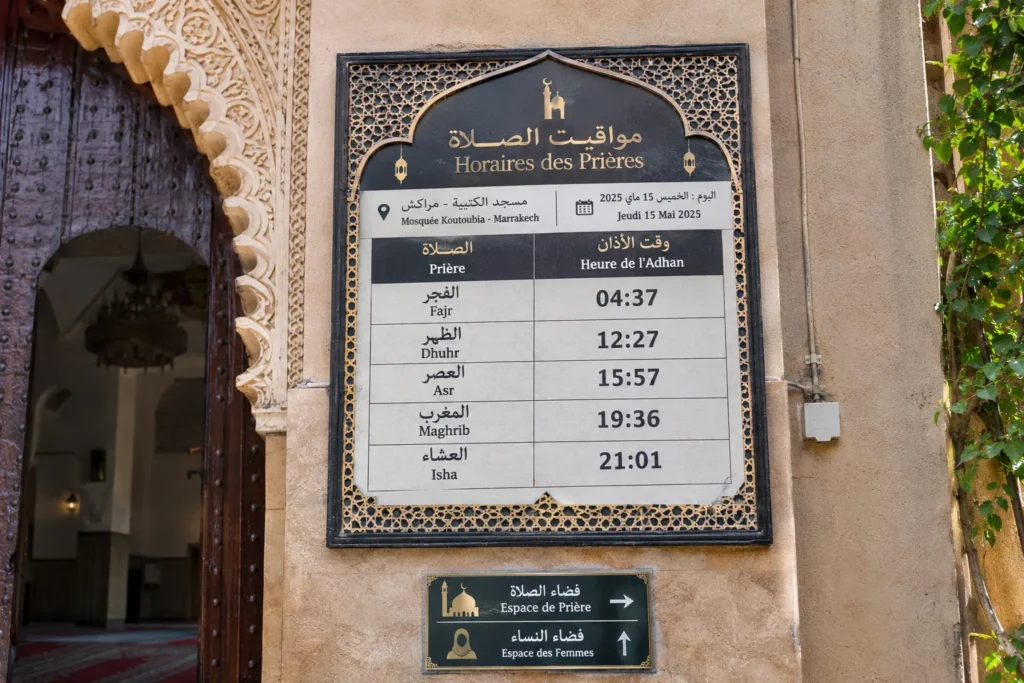
Morocco’s Ministry of Habous and Islamic Affairs publishes prayer times by city for Fajr (locally also Sobh), Dhuhr, Asr, Maghrib and Isha. Check the date and location rather than using a Rabat timetable for Marrakech or another destination.
As of November 2026, Morocco uses GMT (UTC+0). The government restored GMT on September 20, 2026, replacing the previous legal GMT+1 arrangement. Older guides or device settings may show the wrong offset, so check your phone and prayer app before relying on alerts.
Prayer apps can help, but their calculation settings may differ from local schedules. For congregations, ask about the mosque’s iqama time; it may differ from the adhan.
Can Muslim Travelers Pray in Mosques in Morocco?
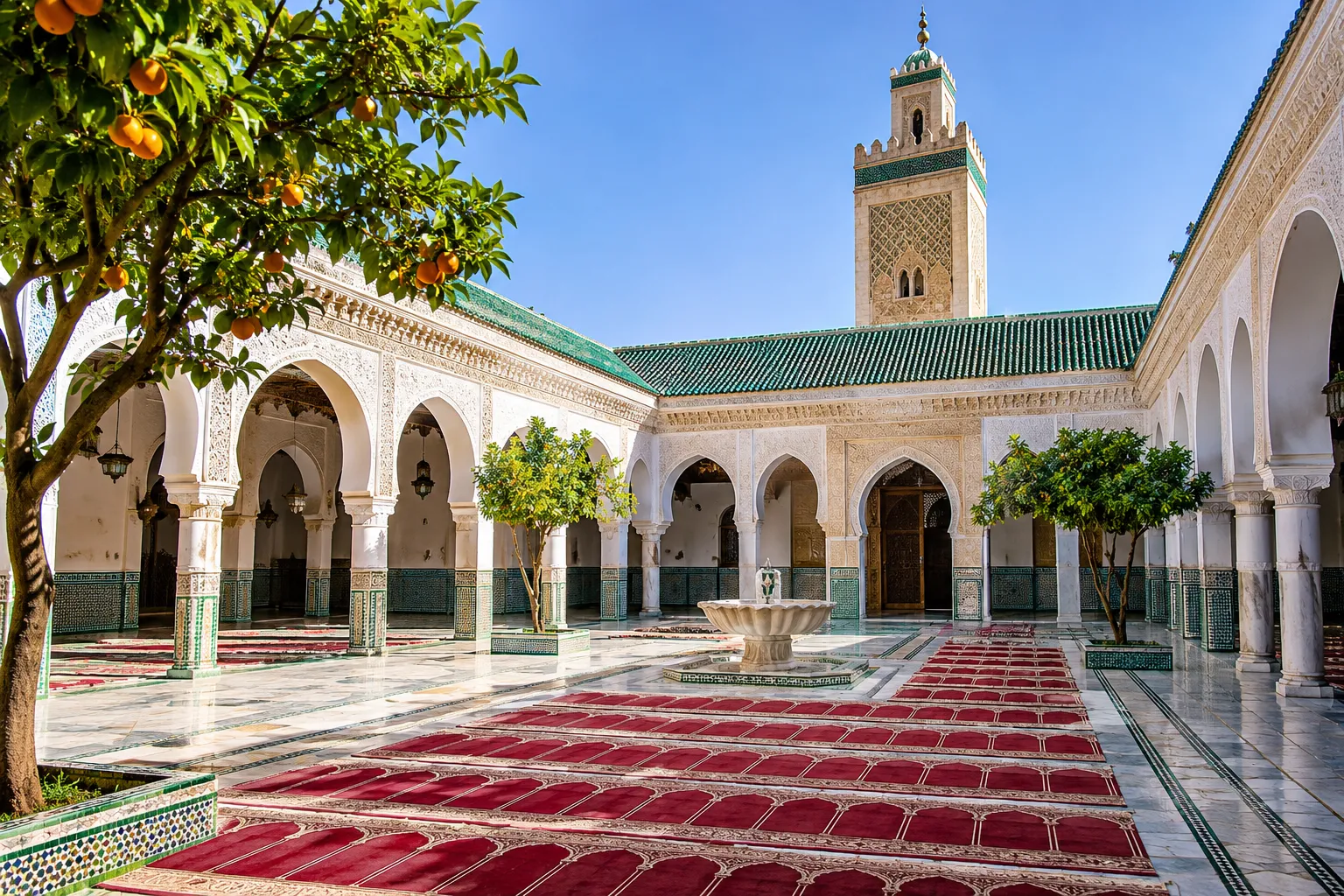
Muslim visitors can generally join prayers at active mosques, subject to local arrangements. Opening periods, women’s facilities and entrances vary; some mosques close between prayers or undergo maintenance.
Follow notices, dress appropriately, remove shoes where required and ask staff about an unclear entrance.
Marrakech: Finding a Prayer Stop During Medina Visits
The active Koutoubia Mosque is near central Marrakech. If exploring the medina, check the prayer entrance and allow time to reach it through busy streets; a view of its minaret does not establish prayer-hall access.
The Marrakech first-visit guide can help you understand the old-city layout and arrange a realistic walking day. In other neighborhoods, ask your accommodation which nearby mosque is practical for the prayers you plan to attend.
Fes: Mosques Within a Busy Historic Medina
In Fes el-Bali, narrow lanes can make a nearby mosque slower to reach than expected. Allow extra time near Friday prayer and follow entrance instructions, including around the historic Al-Qarawiyyin area.
For orientation around its historic neighborhoods, see the Fes medina guide. It explains the city’s religious and cultural landscape without treating active places of worship as unrestricted sightseeing attractions.
Casablanca: Worship and Tourist Visits Are Different
Hassan II Mosque is both an active place of worship and a major Casablanca landmark. Its foundation also offers paid cultural visits, which have different access rules from prayers.
If your aim is worship, confirm the current prayer entrance and congregation arrangements locally. If your aim is to learn about the architecture, the separate Hassan II Mosque guided-tour activity is a cultural visit, not a prayer reservation or guaranteed access during worship.
Where to Find Prayer Stops While Traveling Around Morocco
Prayer-stop planning depends on how you are traveling. Specific airports have confirmed facilities; verify stations, rest stops and hotels individually.
| Travel Situation | Practical Option | What to Confirm |
|---|---|---|
| City sightseeing | An active neighborhood mosque or your accommodation | Walking time, entrance and any women’s prayer area |
| Airport connection | A terminal prayer room where officially provided | Terminal, public versus post-security location and access time |
| Train or intercity bus | A stop before boarding or after reaching the next town | Timetable, connection margin and availability of a suitable place |
| Private road journey | A planned town or safe rest stop | Driver agreement, safe parking, washing facilities and stop duration |
| Hotel or riad stay | A clean, private area in your room or a confirmed prayer space | Room layout, qibla information and bathroom arrangements |
Prayer Rooms at Moroccan Airport
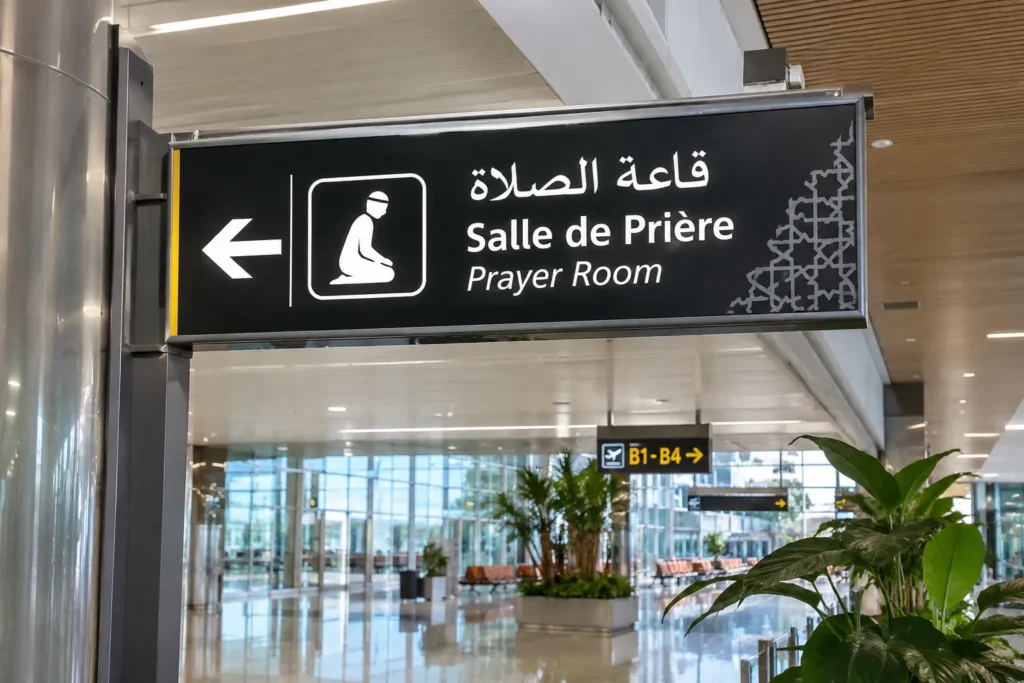
Morocco’s National Airports Office, ONDA, documents prayer rooms at several airports. At Casablanca Mohammed V Airport, it lists rooms in the public halls and boarding areas of both terminals, with nearby ablution areas. At Agadir Al Massira Airport, it lists prayer rooms in the arrivals hall and the international-flight boarding hall. At Fes-Saiss Airport, it identifies facilities in the public hall and boarding area.
These locations are not a guarantee for other airports. Ask staff for the current room; a post-security space may be inaccessible to arriving travelers.
Train Journeys and Intercity Buses
For trains and coaches, check whether you can pray before boarding or after arrival. Do not assume an onboard prayer room or a stop long enough to reach a mosque; allow for delays.
Use the guide to getting around Morocco to compare transport options, then check your actual departure times.
Road Trips, the Atlas Mountains and the Sahara
On a private road journey, tell your driver at the beginning of the day that you would like to include appropriate prayer stops. Ask which towns or established stopping places fit the route. A roadside cafe, fuel station or scenic viewpoint does not automatically offer a prayer room, water for wudu or a safe area away from traffic.
In remote areas, plan stops before leaving town and carry a small prayer mat if helpful. Never stop on an unsafe road shoulder. If considering Visit Morocco Together private transfers, agree on requested stops in advance rather than assuming they are included.
Prayer Facilities in Hotels and Riads
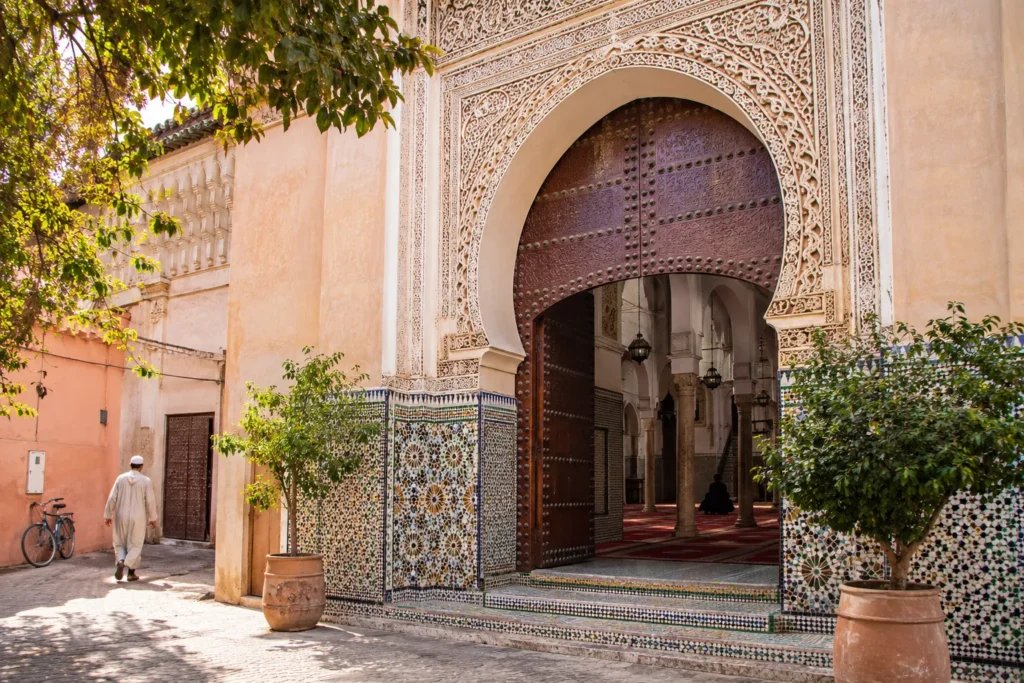
A guest room may offer enough space to pray, but a prayer mat, qibla marker or dedicated room is not guaranteed, particularly in small riads.
Before booking, ask whether your exact room has a clean floor area, whether the host can help with the qibla direction, and whether the bathroom arrangement meets your needs for ablution. If you need a women-only prayer space or a room accessible without stairs, request confirmation of those details separately. A hotel’s general description as Muslim-friendly is not a guarantee of every amenity.
Wudu, Qibla Direction and Mosque Etiquette
Many mosques have ablution facilities, but accessibility and availability vary. If you need privacy or step-free access, check ahead and keep walkways dry.
A qibla app can help offline if set up in advance, although phone compasses can be affected by metal or electronics. Ask local staff when uncertain.
Wear appropriate clothing for prayer, respect any separate entrances or prayer sections, and avoid photographing worshippers without permission. Do not block access to the mosque or speak loudly during a congregation. For wider advice about visiting religious and community spaces, read the Morocco culture and etiquette guide.
Friday Prayer in Morocco: Plan More Time
Jumu’ah is an important weekly congregational prayer, and popular mosques can become busy around Friday midday. The exact start of the sermon and congregational prayer depends on the location. The Ministry’s published Dhuhr time is useful context, but it is not a substitute for confirming that mosque’s Friday arrangements.
If attending Friday prayer is important to your itinerary, identify a suitable mosque earlier in the week, ask about the correct entrance and arrive with sufficient time. Women who wish to attend should verify whether an appropriate space and access route are available. Avoid scheduling a train, a non-refundable attraction or a long road departure immediately around your planned congregation.
Prayer Planning During Ramadan
During Ramadan, the daily timetable also affects fasting, iftar and evening prayers. Mosque attendance may increase, particularly in the evenings, and some properties or businesses adjust their routines. Confirm any Taraweeh arrangements with the specific mosque rather than assuming the same schedule across Morocco.
Travelers observing the fast may want to arrange both prayer and food around sunset. The guide to eating during Ramadan in Morocco covers meal planning, including the timing of ftour. If you are also comparing local food options, the halal food guide for Morocco deals with ingredients and restaurant questions separately from prayer planning.
For religious rulings about shortening, combining or praying during unavoidable travel, consult a qualified scholar whose guidance you follow. This article covers logistics, not religious judgments.
Useful Questions to Ask Locally
You do not need a long conversation to find a nearby mosque or prayer space. In French, which is useful in many Moroccan travel settings, you can ask:
- “Où est la mosquée ?” – Where is the mosque?
- “Y a-t-il une salle de prière ?” – Is there a prayer room?
- “Où peut-on faire les ablutions ?” – Where can we perform ablution?
- “À quelle heure commence la prière du vendredi ?” – What time does Friday prayer begin?
Show a written translation if needed, and ask staff rather than interrupting worshippers.
FAQ
Can Muslim tourists pray in mosques in Morocco?
Muslim visitors can generally join worship at active mosques, subject to local access and congregation arrangements. Ask about the entrance and prayer times rather than assuming a mosque is open continuously.
Can women pray in Moroccan mosques?
Women’s prayer areas exist in many mosques, but the layout, entrance and availability differ. If attending a congregation is important, ask about that particular mosque in advance instead of assuming every building has the same arrangement.
Where can I find Morocco’s official prayer times?
The Ministry of Habous and Islamic Affairs publishes timetables by city. Select your location and date, and check that your device is using Morocco’s current legal time. As of November 2026, that is GMT (UTC+0).
Do Moroccan airports have prayer rooms?
Some do. ONDA specifically lists prayer rooms at Casablanca Mohammed V, Agadir Al Massira and Fes-Saiss airports. Their terminal locations differ, and facilities at other airports should be checked separately.
Can I arrange prayer stops on a Morocco road trip?
Yes, you can request appropriate stops from a driver, but a particular stop, mosque or washing facility should not be assumed to be available. Agree on timing and a safe stopping location before a long journey.
Can travelers shorten or combine prayers while in Morocco?
Travel-related prayer rulings depend on the circumstances and religious guidance you follow. Consult a qualified scholar or trusted authority for the rules applicable to your journey rather than relying on a general tourism article.
Build Prayer Stops Into Your Morocco Itinerary
Prayer in Morocco while traveling is easier when you use official city-specific times and leave enough flexibility for mosque access, transport connections and Friday congregations. Verify airport and hotel facilities individually, discuss planned stops before a long road journey, and avoid treating a tourist mosque visit as the same thing as attending worship.
For help planning travel routes and experiences around your priorities, explore Visit Morocco Together.
Ready to Experience Morocco?
Turn this inspiration into your next adventure. Our travel experts are ready to help.