Where to eat near Moroccan medinas depends less on finding one famous restaurant and more on choosing the right part of the old city for the meal you want. Eat near a medina gate when easy taxi access matters, head deeper inside for riad restaurants and rooftops, use busy market streets for simple lunches and snacks, and choose major squares when atmosphere matters as much as the food.
This approach works particularly well in Marrakech, Fes, Tangier and Essaouira, where the old quarters offer everything from inexpensive soups and grills to long Moroccan dinners in restored traditional houses.
The main tradeoff is convenience. A restaurant hidden deep inside a medina can be memorable, but reaching it may mean navigating narrow pedestrian lanes and walking back out after dinner. A place near the walls or a major gate may be less secluded but considerably easier when you have children, limited mobility, luggage or an early start the next morning.
Where to Eat Near Moroccan Medinas by Dining Style
Near the Medina Gates for the Easiest Access
Restaurants close to major gates are often the most practical choice when transport matters. Taxis and other vehicles cannot reach every old-city lane, so choosing a restaurant near an accessible road reduces the amount of walking before and after dinner.
This is particularly useful for an evening meal. Instead of navigating unfamiliar alleys late at night, you can finish dinner near a known gate or meeting point and arrange onward transport more easily.
Medina-edge restaurants can also work well for families, travelers carrying shopping and anyone who prefers not to climb multiple flights of stairs to a rooftop.
Inside the Main Souk Streets for Casual Meals
The busiest medina streets are good places to look for straightforward Moroccan food without turning lunch into a long event. You may find grilled meat, sandwiches, harira, lentils, beans, omelets, msemen and simple tagines alongside juice shops, bakeries and tea stalls.
These areas are useful during sightseeing because you can eat and continue walking rather than crossing the city for a particular restaurant.
Choose somewhere that looks busy, check prices before ordering when they are not clearly displayed, and pay attention to how food is stored and cooked. A crowded stall can indicate strong turnover, although popularity alone is never a guarantee of quality.
Riad Restaurants for a Slower Moroccan Dinner
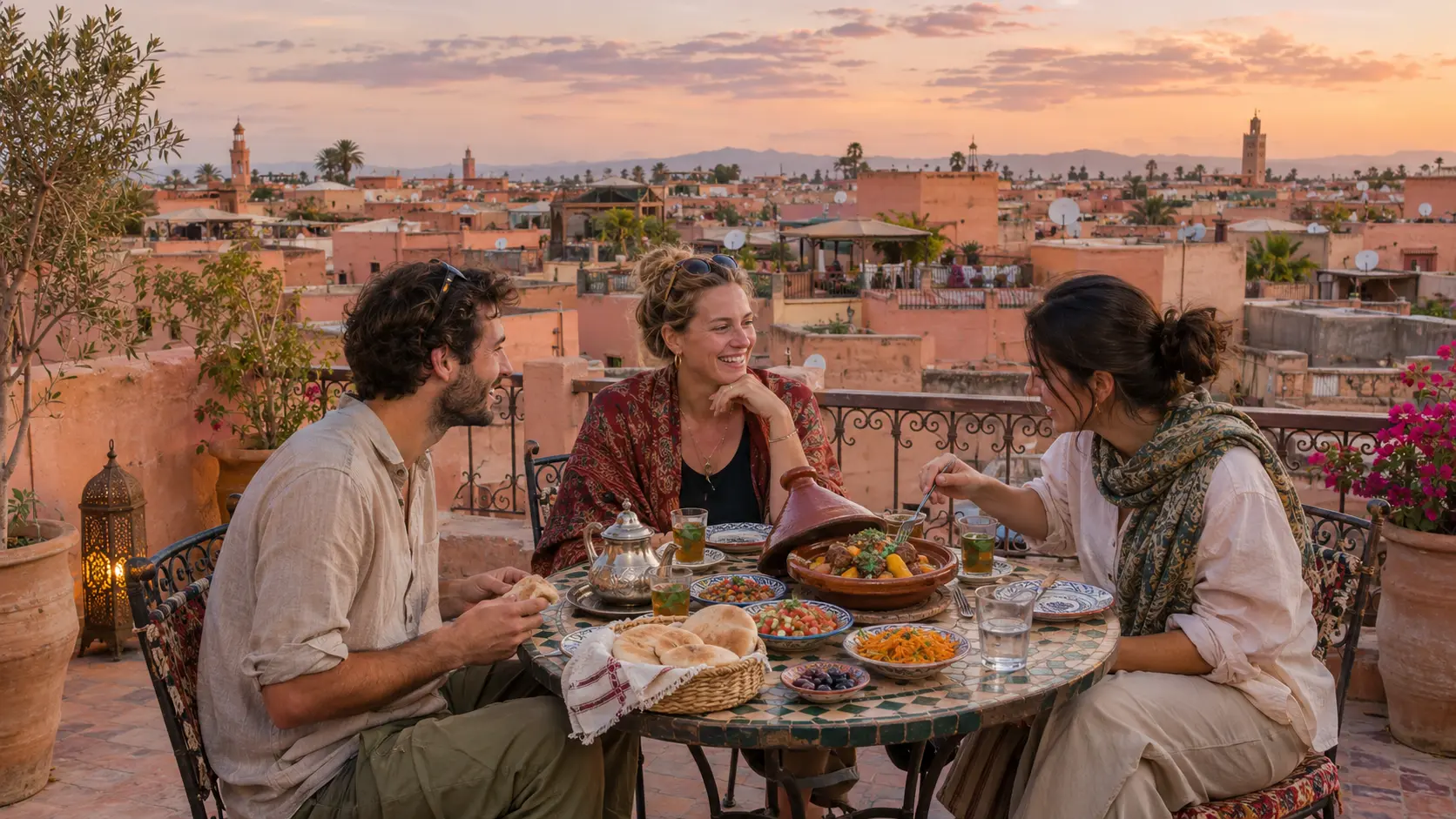
Traditional houses converted into riads often contain courtyard or rooftop restaurants. These are a good choice when you want a quieter sit-down meal with Moroccan salads, pastilla, tagine, couscous or other dishes served over several courses.
The setting is usually part of the experience. The tradeoff is that some riads sit well inside the medina and can be difficult to locate on a first visit.
For dinner, confirm the location in advance and ask whether the restaurant recommends a particular gate or meeting point. Some properties may provide directions or assistance for guests arriving through complicated lanes.
Rooftops for a Break from the Medina Streets
Rooftop cafés and restaurants are common in Morocco’s most visited medinas. They work particularly well for lunch, tea or an early dinner when you want to rest after several hours of walking.
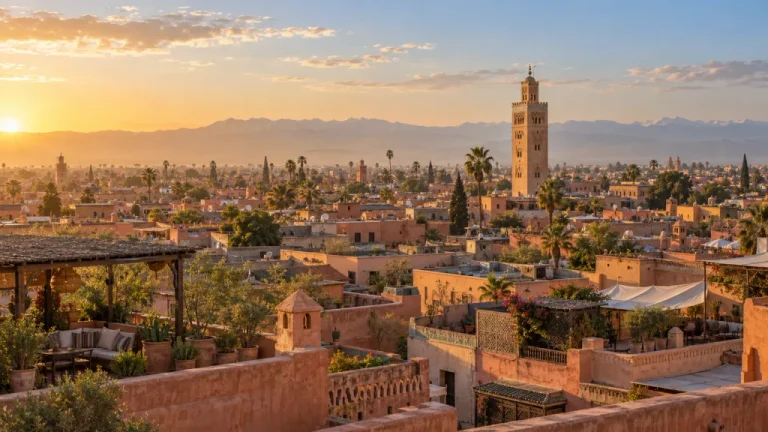
A rooftop can also give you a better sense of the old city’s layout, with minarets, terraces and surrounding hills or coastline visible above the lanes.
Do not assume every rooftop is accessible to everyone. Older buildings may involve several steep staircases, so travelers with mobility concerns should ask before booking.
Where to Eat in Marrakech Medina
Marrakech has one of Morocco’s largest ranges of medina dining, from simple local counters to contemporary rooftops and elaborate riad restaurants.
Jemaa el-Fna for Atmosphere and Evening Food
Jemaa el-Fna is the obvious starting point for travelers who want food to be part of the evening atmosphere. Food stalls and drink vendors operate around the square, and the surrounding streets contain numerous cafés and restaurants.
Think of the square as an experience rather than automatically assuming it offers the city’s strongest meal. Walk around first, compare options and check prices before ordering.
Souk and Mouassine Areas for Cafés and Rooftops
Moving deeper into the medina brings a large choice of small restaurants, courtyard cafés and terraces. Areas around the souks, Mouassine and the routes leading toward Ben Youssef work well for a midday break because they fit naturally into a sightseeing day.
This is a good part of Marrakech to combine a lighter lunch with tea or coffee rather than interrupting the day with a long meal.
Kasbah and Medina Edges for Easier Dinner Logistics
If you want a longer dinner but would rather avoid a complicated walk back through the souks, consider the Kasbah or another area close to a vehicle-accessible edge of the medina.
Marrakech is also the place to look for regional specialties such as tanjia, alongside mechoui, Moroccan salads, couscous and numerous styles of tagine.
Where to Eat in Fes Medina
Fes rewards travelers who think carefully about location. Fes el-Bali is a dense pedestrian medina, and restaurants that appear close together on a map may require a more complicated walk than expected.
Bab Bou Jeloud for an Easy First Meal
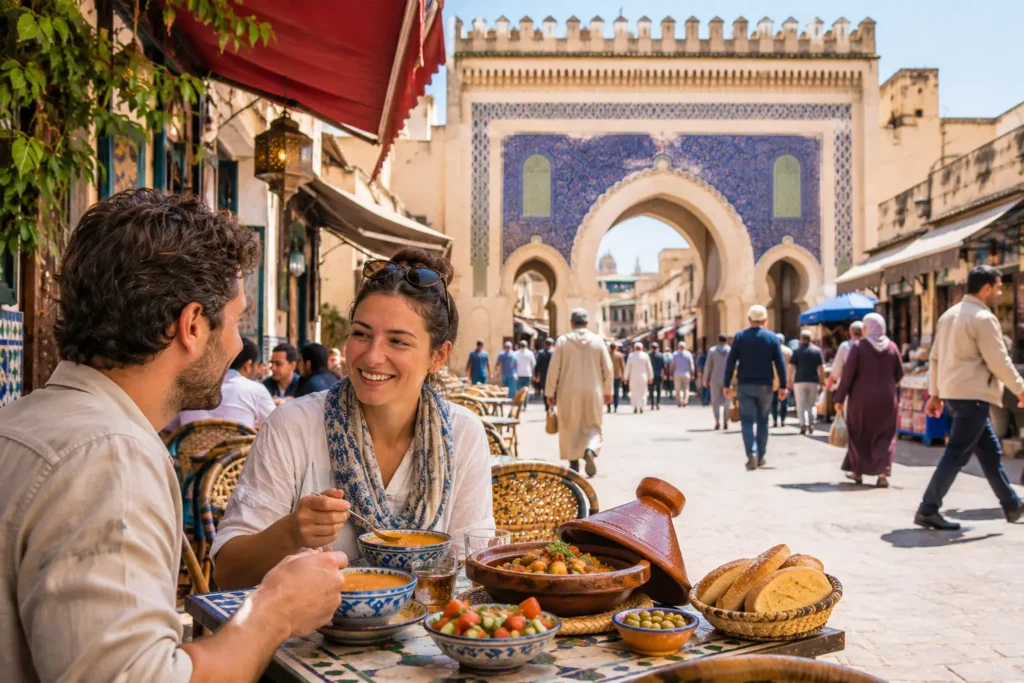
The streets around Bab Bou Jeloud are among the simplest places for a first-time visitor to find a casual meal. The gate provides a clear reference point, while the nearby streets offer cafés, grills and Moroccan restaurants at different levels of formality.
This area works especially well for lunch or for travelers who do not want to navigate deep into the medina after dark.
Talaa Kebira and Talaa Seghira for Food While Exploring
The principal routes running through Fes el-Bali provide many opportunities to stop for tea, pastries, soup or a simple meal while sightseeing.
Because the lanes are busy and full of shops, these streets suit travelers who prefer eating spontaneously rather than building the day around a reservation.
Traditional Houses for Fassi Cuisine
For a more leisurely dinner, consider a riad or traditional-house restaurant. Fes is particularly associated with refined combinations of sweet and savory flavors, and dishes such as pastilla are especially relevant here.
Some dining rooms are tucked away behind unassuming medina doors. Confirm directions beforehand and allow enough walking time to arrive without rushing.
Where to Eat in Tangier Medina
Tangier offers a useful mix of traditional Moroccan food, seafood, cafés and more contemporary dining influenced by the city’s Mediterranean setting.
Grand Socco for the Transition Between Old and New
The Grand Socco sits at an important meeting point between the medina and the surrounding city. That makes the area useful when you want to eat near the old town without committing to a long walk through its lanes.
It is also a practical rendezvous point if members of your group are arriving separately or you intend to take a taxi after dinner.
Petit Socco for Tea and Café Culture
Inside the medina, Petit Socco has a long association with Tangier’s café culture. It is better suited to sitting over tea, coffee or a lighter meal than treating every stop as a formal restaurant experience.
Use it as a pause during a medina walk before continuing uphill toward the Kasbah.
The Kasbah for Rooftops and Longer Meals
The higher Kasbah area has restaurants and terraces that suit travelers looking for a slower meal and views over the old city or toward the Strait.
Keep the uphill walk in mind. If you are dining late, decide in advance where you want to exit the medina afterward rather than relying entirely on map directions through small lanes.
Where to Eat in Essaouira Medina
Essaouira is easier to navigate than some of Morocco’s larger medinas, and food naturally connects with both the old town and the fishing port.
Near Moulay Hassan Square for Convenience
The streets around Moulay Hassan Square provide an easy transition between the medina, port and waterfront. Cafés and restaurants in this part of town suit travelers who want a meal without losing much sightseeing time.
The Port Area for Seafood
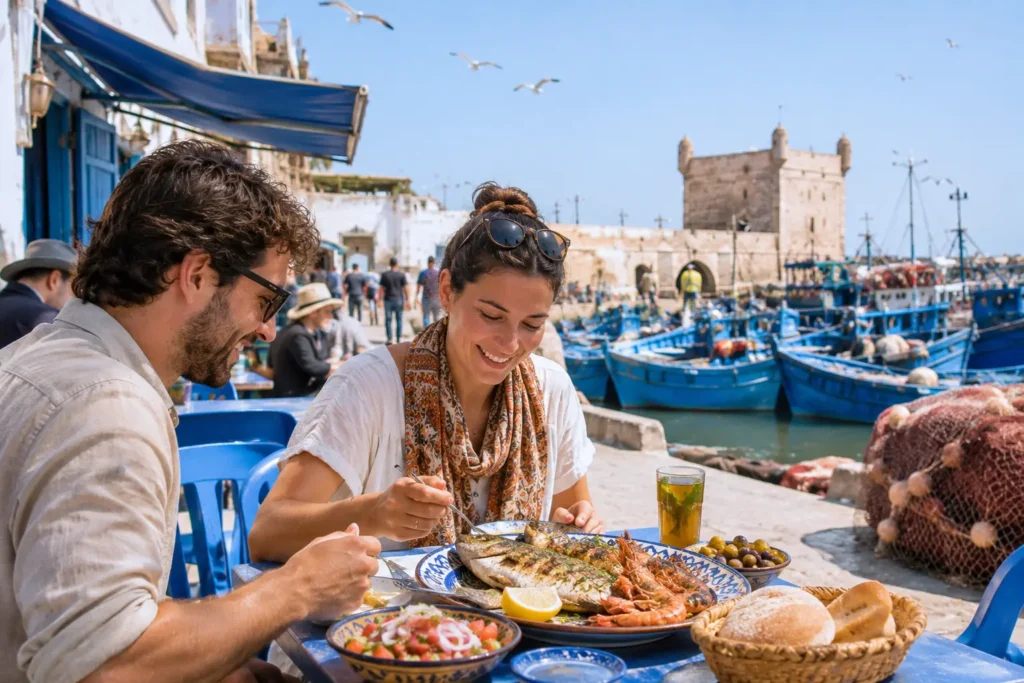
For fish and seafood, the harbor area is an obvious place to explore. Available fish varies with the catch and conditions, so asking what is available that day makes more sense than arriving determined to order one particular species.
Confirm the price and preparation method before ordering, especially where buying fish and having it cooked may involve separate arrangements.
Inside the Medina for a Longer Dinner
Essaouira’s medina contains small Moroccan restaurants, seafood kitchens, contemporary dining rooms and rooftop terraces. Because the old town is comparatively compact, eating deeper inside usually creates fewer logistical problems than in Fes.
What About Chefchaouen and Rabat?
In Chefchaouen, restaurants cluster around the main medina streets and the central square. Rooftops are popular because they overlook the blue-painted old town and surrounding Rif landscape. The medina is hilly, however, so travelers with limited mobility may prefer dining closer to an accessible entrance.
Rabat offers a different balance. The old medina is integrated into a larger modern capital, making it relatively easy to combine a medina lunch with cafés and restaurants outside the walls. Travelers who want more variety in one evening do not need to remain inside the old town for every course.
Street Food, Casual Restaurant or Riad Dinner?
Each format works for a different moment in the trip.
- Street food and market stalls: best for snacks, simple lunches and trying several small things while sightseeing.
- Casual Moroccan restaurants: useful for tagines, grills, soups and everyday meals without a long time commitment.
- Riad restaurants: better for a slower dinner, several courses and a quieter setting.
- Rooftops: ideal when the view and a break from busy streets matter as much as the menu.
- Medina-edge restaurants: practical for families, limited mobility and easier taxi connections.
A balanced trip can include all of them. Eating every meal in an elaborate riad can become repetitive, just as relying entirely on snacks may mean missing some of Morocco’s slower, more complex dishes.
Practical Tips for Medina Dining
Save the Location Before Dinner
Mobile maps are useful, but narrow alleys, covered passages and multiple levels can make navigation confusing. Save your restaurant location before leaving your accommodation and note a recognizable nearby gate, square or landmark.
Allow Walking Time
A restaurant may look close on a map yet take longer to reach because the direct route is pedestrian, crowded or difficult to follow. Do not schedule dinner immediately after an attraction across the medina.
Confirm Current Hours
Restaurant hours can change with season, holidays, Ramadan and individual operating decisions. Check current arrangements if a particular meal or restaurant is important to your itinerary.
Reserve Special Dinners
Popular rooftops, small riad dining rooms and more elaborate restaurants have limited seating. Reservations are more useful for a planned dinner than for an ordinary daytime meal.
Ask About Dietary Needs Before Ordering
Moroccan cuisine offers many vegetable dishes, but a vegetable tagine or salad is not automatically suitable for every vegetarian, vegan or allergy-sensitive traveler. Ask specifically about ingredients and preparation when it matters.
Check Alcohol Availability Rather Than Assuming
Many traditional medina restaurants and cafés do not serve alcohol, while some hotels and licensed restaurants do. If wine or beer is important to your dinner plans, confirm beforehand rather than using it as a measure of restaurant quality.
Common Medina Dining Mistakes
Choosing Every Meal by the View
A rooftop is useful for scenery, but the best view and the meal you most want to eat may not be in the same place. Use some terraces for tea or lunch and choose dinner based on the food.
Walking Across the Entire Medina for One Restaurant
Good food is usually available in several neighborhoods. On a short trip, geography matters. A restaurant that fits naturally into your sightseeing route often makes more sense than spending a large part of the evening crossing the old city.
Assuming Expensive Means More Traditional
Formal riad dining and simple neighborhood restaurants serve different purposes. Price reflects setting, service and presentation as well as ingredients. Decide which experience you actually want.
Overordering
Moroccan meals may begin with several salads, bread and other small dishes before the main course arrives. Order gradually when possible rather than assuming every person needs several full dishes.
FAQs
Is it better to eat inside or outside a Moroccan medina?
Inside the medina is useful for traditional restaurants, rooftops, market food and atmosphere. Restaurants near the edge are easier when taxi access, mobility or a late return matters. Neither option is automatically better.
Where is the easiest place to eat in Marrakech Medina?
Areas around Jemaa el-Fna and major medina routes provide the largest concentration of easily found options. Deeper neighborhoods offer quieter riad and rooftop dining but require more navigation.
Where should first-time visitors eat in Fes?
Bab Bou Jeloud and the nearby main medina streets are practical for casual meals. For a longer traditional dinner, a riad restaurant deeper in Fes el-Bali can be worthwhile if you arrange directions in advance.
Do I need restaurant reservations in Moroccan medinas?
Not for every meal. Casual cafés, grills and small restaurants often work well spontaneously. Reserve when you specifically want a popular rooftop, tasting menu, small riad restaurant or special dinner.
Is street food worth trying in Moroccan medinas?
It can be an enjoyable part of the trip. Choose places with visible food preparation and good turnover, check prices before ordering and use the same food-hygiene judgment you would use when traveling anywhere else.
Can taxis enter Moroccan medinas?
Vehicle access varies, but many traditional medina lanes are pedestrian or too narrow for normal cars. For dinner, it is useful to know the nearest accessible gate, road or square where you can meet a taxi afterward.
Choose Your Meal Around the Medina, Not Against It
The simplest answer to where to eat near Moroccan medinas is to plan by geography as well as cuisine. Have quick lunches near the sights you are already visiting, use rooftops when you need a break, save deeper riad restaurants for evenings when you have time, and choose medina-edge dining when transport matters.
That approach gives you more variety without spending the trip chasing restaurant lists across complicated old-city lanes. For more destination-specific food and cultural planning, browse more Morocco travel guides.
Travelers who want medinas, markets and food traditions to form a larger part of their itinerary can also explore Visit Morocco Together’s Cultural Discoveries.
Ready to Experience Morocco?
Turn this inspiration into your next adventure. Our travel experts are ready to help.