This Moroccan history guide explains the major events, dynasties and cultural influences that shaped Morocco, with a focus on what travelers can still see today. From the Roman ruins of Volubilis and the medieval streets of Fez to Marrakech’s imperial monuments and Rabat’s twentieth-century architecture, the country’s history is visible across its cities and landscapes.
The easiest way to understand Morocco’s history is to connect each period with a place. Volubilis reveals ancient North Africa, Fez introduces the first Islamic dynasties and medieval scholarship, Marrakech reflects powerful Amazigh-led empires, and Meknes illustrates the rise of the Alaouite dynasty. Rabat and Casablanca help explain the protectorate period and the development of modern Morocco.
You do not need to memorize every ruler or historical date before visiting. Understanding a few turning points will help you recognize why Moroccan cities look different, how their traditions developed and which historical destinations deserve more time.
This guide follows Morocco’s history chronologically, explains the landmarks associated with each period and offers practical ideas for building a history-focused itinerary.
Moroccan History Guide: The Main Periods Explained
Morocco’s history stretches back long before the creation of the modern state. Indigenous Amazigh societies, Mediterranean trade, Islamic dynasties, trans-Saharan connections and European involvement all contributed to the country visitors encounter today.
The following periods provide a useful framework for understanding that development.
1. Ancient Morocco: Amazigh Communities and Roman Influence
Long before the arrival of Islam or the formation of Morocco’s medieval dynasties, North Africa was home to established indigenous communities. The Amazigh, whose cultural and linguistic heritage remains important across Morocco, have deep historical roots in the region.
Archaeological discoveries demonstrate that human history here extends much further back. Fossils found at Jebel Irhoud, west of Marrakech, have been dated to approximately 300,000 years ago and are among the earliest evidence of Homo sapiens.
These prehistoric discoveries are separate from the later development of Moroccan states, but they reveal the region’s importance in the wider story of human history.
During antiquity, coastal settlements developed connections with Phoenician and Carthaginian trading networks. Indigenous kingdoms also emerged, interacting with Mediterranean powers.
Parts of northern Morocco later became incorporated into the Roman Empire, particularly the province of Mauretania Tingitana.
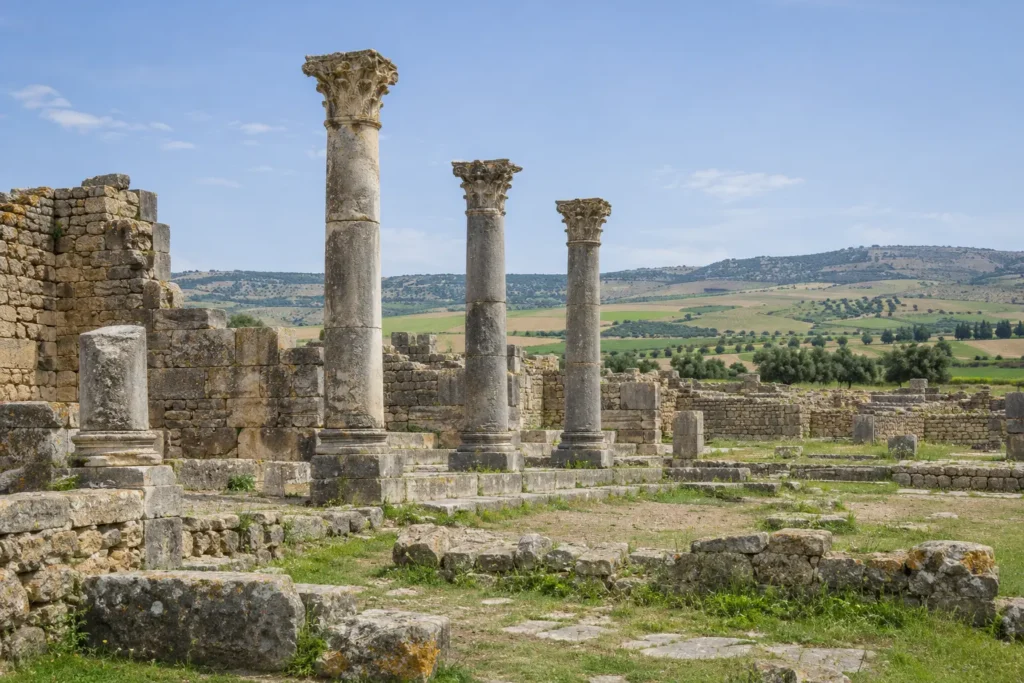
Where travelers can see this history: The archaeological site of Volubilis, near Meknes, preserves Roman-era streets, mosaics, columns and public buildings.
Volubilis was not simply a Roman city established on empty land. Its history includes earlier indigenous settlement and later Islamic occupation, reflecting several periods of cultural exchange.
2. The Arrival of Islam and the Idrisid Dynasty
Islam began spreading into the territory of present-day Morocco during the seventh and eighth centuries. Its arrival gradually transformed political institutions, religious life, architecture and scholarship.
This transformation was not immediate or uniform. Amazigh communities participated in the development of Islamic societies while retaining important elements of their languages and cultural traditions.
The Idrisid dynasty, established in the late eighth century, played a major role in the formation of an independent Islamic political center in Morocco.
Idris I established his authority in the region around Volubilis, while his successors contributed to the development of Fez.
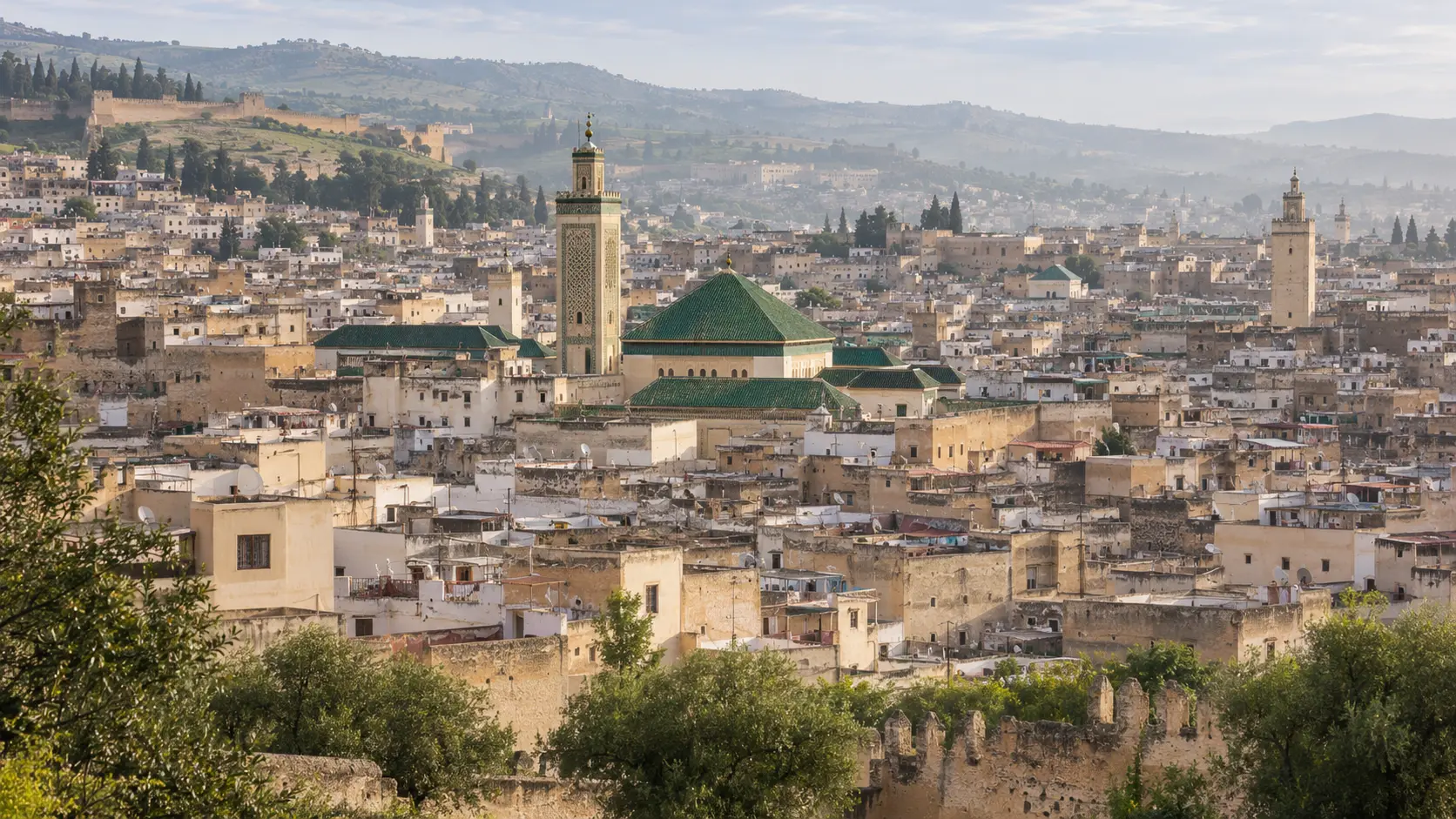
Fez grew into an important center of trade, religious learning and intellectual activity. Over time, the city developed institutions and architectural traditions that influenced the wider western Islamic world.
One of its most recognizable institutions is Al-Qarawiyyin, founded in the ninth century and associated with a long history of religious scholarship and education.
Where travelers can see this history: Fez’s historic medina preserves the urban setting that developed from these early Islamic foundations, although many surviving monuments belong to later dynasties.
3. The Almoravids and Almohads: Morocco’s Medieval Empires
Two powerful Amazigh-led movements transformed Morocco between the eleventh and thirteenth centuries: the Almoravids and the Almohads.
The Almoravid dynasty emerged from Saharan Amazigh communities and established a state that extended across much of the western Maghreb and parts of the Iberian Peninsula.
The Almoravids founded Marrakech around 1070–1072, establishing a major political and commercial center that would become one of Morocco’s most important cities.
During the twelfth century, the Almohad dynasty replaced Almoravid rule and developed an empire extending across Morocco and other parts of North Africa and Al-Andalus.
The Almohads commissioned major architectural projects, including the Koutoubia Mosque in Marrakech and the ambitious Hassan Mosque complex in Rabat.
The Hassan Tower remains unfinished, but its scale illustrates the political ambitions of the Almohad rulers.
Where travelers can see this history: Marrakech’s city walls, Koutoubia Mosque and historic urban layout provide important connections with the medieval dynasties. Rabat’s Hassan Tower offers another striking example.
Remember that many buildings within these cities were constructed, altered or restored under later rulers. A historic medina usually represents several centuries rather than a single dynasty.
4. The Marinids: Fez Becomes a Center of Learning
The Marinid dynasty rose to power during the thirteenth century and made Fez an important political and intellectual capital.
Under Marinid rule, the city expanded and developed new educational, religious and residential buildings.
Madrasas, or institutions associated with Islamic religious education, became particularly important architectural features. Their courtyards often demonstrate elaborate zellij tilework, carved plaster and decorated wood.
Fez Jdid, the newer historic quarter of the city, was established during this period alongside the older Fez el-Bali.
Morocco’s connections with Al-Andalus also continued to influence architecture, scholarship, music and urban life. Migration from the Iberian Peninsula occurred across several periods and contributed to cultural development in cities such as Fez and Tetouan.
Jewish communities were another important part of Morocco’s historical landscape, participating in commerce, craftsmanship, scholarship and urban life over many centuries.
Where travelers can see this history: Fez is particularly rewarding for its Marinid madrasas and historic urban quarters. Tetouan’s medina provides another perspective on Andalusi cultural heritage.
5. The Saadian Dynasty: Marrakech and the Sixteenth Century
The sixteenth century brought political competition, growing European involvement along Morocco’s coast and the rise of the Saadian dynasty.
The Saadians strengthened their authority in Morocco and challenged Portuguese positions along the Atlantic coast.
Under Sultan Ahmad al-Mansur, who ruled from 1578 to 1603, Marrakech became an important center of royal power and architectural patronage.
The dynasty’s monuments reflected political ambition and wealth, including the El Badi Palace and the Saadian Tombs.
Morocco’s connections with trans-Saharan commerce and the kingdoms farther south also formed an important part of this period. These relationships involved trade, political conflict and exchanges of people and ideas.
Where travelers can see this history: Marrakech’s Saadian Tombs and the remains of El Badi Palace are particularly relevant.
The palace survives largely as ruins, while the tombs preserve decorative craftsmanship. Visiting both helps explain the scale of Saadian royal patronage without assuming every structure remains in its original condition.
6. The Alaouite Dynasty and the Imperial City of Meknes
The Alaouite dynasty emerged as Morocco’s ruling dynasty during the seventeenth century and continues into the present.
One of its most influential rulers was Sultan Moulay Ismail, who governed from 1672 to 1727.
Moulay Ismail transformed Meknes into an imperial capital, commissioning monumental gates, fortifications, palaces and other royal infrastructure.
His building projects gave Meknes an architectural character distinct from Fez and Marrakech.
Later Alaouite rulers also strengthened Morocco’s Atlantic trade connections.
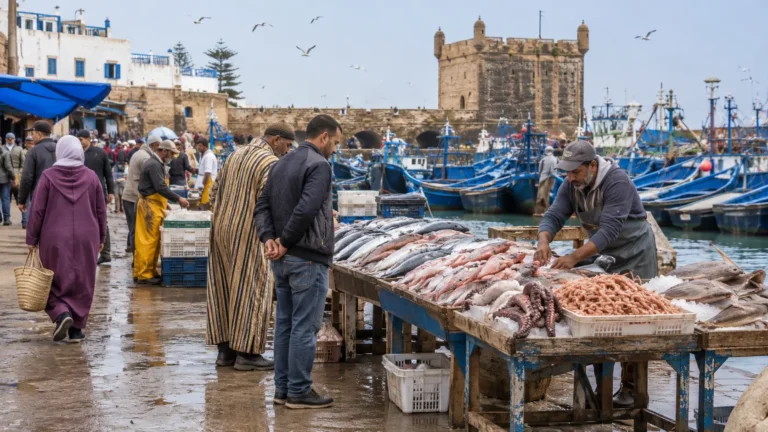
During the eighteenth century, Essaouira developed as a fortified trading port linking Morocco’s interior with European and international markets.
Where travelers can see this history: Meknes is associated with Moulay Ismail’s imperial projects, while Essaouira’s fortified medina reflects eighteenth-century maritime trade and urban planning.
7. European Expansion and Morocco’s Coastal Fortifications
European involvement in Morocco did not begin with the twentieth-century protectorates.
From the fifteenth century onward, Portuguese expansion led to fortified settlements and military positions along parts of the Moroccan Atlantic coast.
One of the clearest surviving examples is Mazagan, now part of El Jadida.
Its fortifications were developed during the sixteenth century and demonstrate European military architecture adapted to a North African coastal setting.
The Portuguese left Mazagan in 1769, and the town subsequently developed within Morocco under a new name.
These coastal sites reveal histories of competition, trade and cultural exchange. They also help explain why Morocco’s Atlantic towns sometimes look architecturally different from its inland imperial cities.
Where travelers can see this history: El Jadida’s historic Portuguese quarter, including its surviving ramparts and fortifications, provides an accessible introduction to this period.
8. The French and Spanish Protectorates: 1912–1956
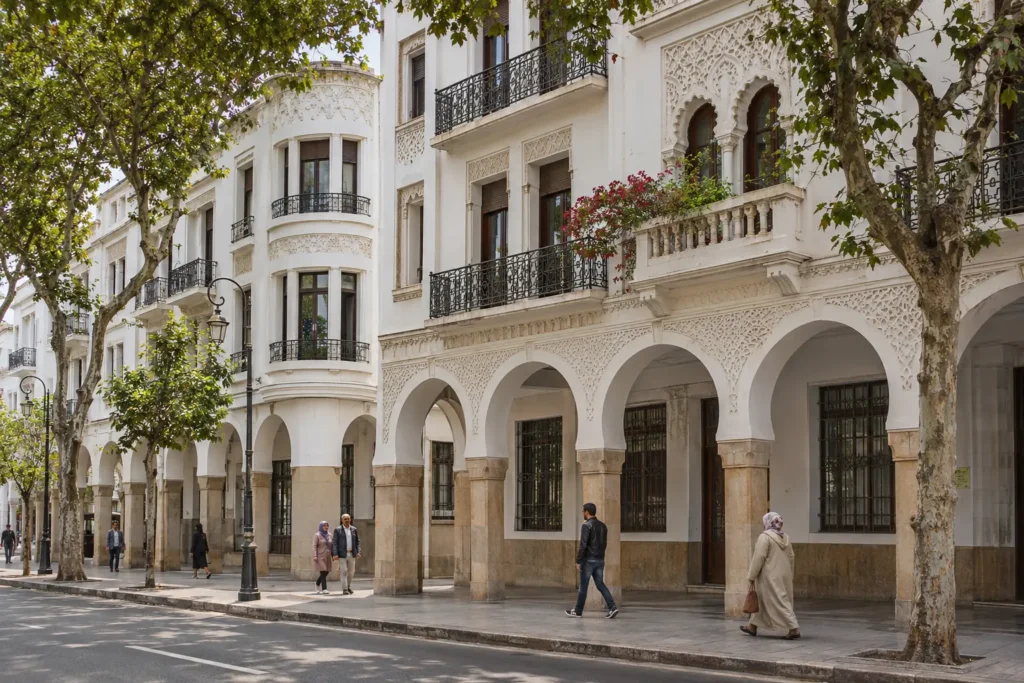
During the nineteenth and early twentieth centuries, European political and economic pressure on Morocco increased.
In 1912, Morocco entered a protectorate system under which France administered most of the country while Spain controlled separate northern and southern zones.
Tangier later operated under a distinct international administrative arrangement for much of the protectorate period.
The protectorates transformed administration, infrastructure and urban development while also creating political inequality and resistance to colonial rule.
Rabat became the country’s administrative capital in 1912. Its twentieth-century districts still display architectural and planning influences from the French protectorate.
Resistance took different forms across Morocco. In the Rif, Abd el-Krim led a major campaign against Spanish colonial forces during the 1920s.
Political nationalism also developed through organizations, publications and public movements.
In 1944, Moroccan nationalists issued the Manifesto of Independence. Sultan Mohammed V later became an important symbol of the independence movement.
After being removed from power and exiled in 1953, Mohammed V returned to Morocco in November 1955.
Morocco regained independence from French and Spanish protectorate rule in 1956. The transfer of control over certain territories occurred through additional agreements in subsequent years.
Where travelers can see this history: Rabat’s modern districts, Casablanca’s twentieth-century architecture and Tangier’s historic international connections provide different perspectives on the protectorate era.
9. Independent Morocco and the Modern Era
Following independence, Morocco developed new political institutions while maintaining its monarchy.
Mohammed V was succeeded by Hassan II in 1961. The following decades brought major political, economic and social developments, alongside periods of political repression and demands for reform.
Events surrounding Spain’s withdrawal from Western Sahara in 1975–1976 also began a continuing dispute over the territory’s status, which remains unresolved within the United Nations framework.
Since the late twentieth century, Morocco has experienced further changes in education, infrastructure, urban development and cultural expression.
An important development came with the 2011 constitution, which recognized Amazigh alongside Arabic as an official language.
Modern Moroccan identity continues to reflect the country’s Amazigh, Arab, Andalusi, African, Jewish and Mediterranean heritage, while contemporary generations shape its future.
For travelers, this means that Morocco’s history is not limited to ancient ruins and preserved monuments. Museums, public spaces, modern architecture, music and everyday city life also reveal how the country has changed.
Where to Experience Moroccan History on Your Trip
Some destinations are particularly helpful for connecting the historical timeline with places you can explore.
Volubilis: Ancient North Africa and Roman Morocco
Volubilis is one of Morocco’s most important archaeological sites. Its surviving columns, streets, mosaics and building foundations provide an introduction to ancient urban life.
The site also reveals connections between Roman and indigenous North African cultures.
Volubilis works particularly well as part of a stay in Meknes or Fez. Reaching it normally involves road transport, so check the route and current visitor arrangements before setting out.
Best for: Ancient history, archaeology and visitors interested in the Roman period.
Fez: Idrisid Foundations and Marinid Architecture
Fez is one of the most useful destinations for understanding medieval Morocco.
Its historic medina combines religious architecture, traditional commercial buildings, madrasas, workshops and residential neighborhoods.
The city’s historical layers are not always immediately obvious. A knowledgeable guide can help distinguish Idrisid foundations from later Marinid buildings and subsequent alterations.
Allow time to explore individual monuments rather than rushing through the medina.
Best for: Islamic history, medieval architecture, scholarship and traditional craftsmanship.
Explore our Fez destination guide for practical ideas about visiting the city.
Marrakech: Almoravid, Almohad and Saadian Heritage
Marrakech offers a broad introduction to several powerful dynasties.
The city’s historic walls and Koutoubia Mosque reflect its medieval importance, while the Saadian Tombs and El Badi Palace reveal later royal history.
Other historic buildings show how the city continued to change under successive rulers.
Plan separate time for major monuments and wandering through the medina. Trying to visit every historical attraction in a single morning can feel rushed.
Best for: Imperial history, monumental architecture and travelers interested in the evolution of a major Moroccan city.
Use our Marrakech destination guide to plan your stay.
Meknes: The Alaouite Imperial Capital
Meknes is particularly associated with Sultan Moulay Ismail and his ambitious building programme.
Its monumental gates, historic walls and imperial structures offer an alternative perspective to the better-known medinas of Fez and Marrakech.
Meknes can also be combined with Volubilis, allowing visitors to compare Roman-era remains with a much later Moroccan imperial capital.
Best for: Alaouite history, imperial architecture and combining several historical periods in one region.
Rabat: Medieval History and Modern Nationhood
Rabat is useful for understanding the transition between medieval Morocco, the protectorate period and the modern capital.
Its landmarks include the Hassan Tower, historic fortifications and neighborhoods shaped by twentieth-century urban planning.
The city also provides opportunities to explore museums and cultural institutions that offer broader historical context.
Best for: Almohad architecture, the protectorate era and modern Moroccan history.
Essaouira, El Jadida and Tetouan: Different Cultural Connections
These cities demonstrate how Morocco’s historical relationships with other regions influenced its architecture and urban development.
Essaouira reflects eighteenth-century Atlantic trade and fortified port planning.
El Jadida preserves important remains of Portuguese military architecture.
Tetouan reveals connections between Morocco and Al-Andalus through its historic medina and artistic traditions.
They are geographically separate destinations, so choose according to your wider route rather than attempting to visit them together in one day.
Ait Ben Haddou: Traditional Southern Architecture
The fortified settlement of Ait Ben Haddou demonstrates a different aspect of Moroccan history: the development of earthen architecture in the pre-Saharan south.
Its traditional buildings and defensive walls reflect forms of settlement adapted to local materials, environmental conditions and historic patterns of community life.
The surrounding valleys also developed connections with trade routes crossing southern Morocco.
Best for: Traditional architecture, southern Moroccan heritage and the relationship between settlements and their environment.
Learn more through our Ait Ben Haddou destination guide.
Historical Terms That Help You Understand Moroccan Cities
A few architectural terms make exploring Morocco’s historic destinations easier.
- Medina: The traditional historic urban quarter of a town or city, often surrounded by walls.
- Kasbah: A fortified structure or district, sometimes associated with political, military or residential functions.
- Ksar: A fortified settlement, particularly associated with parts of southern Morocco. Its plural is ksour.
- Madrasa: A place of learning, historically often associated with Islamic religious education.
- Riad: Traditionally a house organized around an interior garden or courtyard, although the term is now also widely used for guesthouse accommodation.
- Mellah: A historic Jewish quarter found in several Moroccan cities.
- Fondouk: A building historically associated with merchants, trade, storage and accommodation, sometimes comparable to a caravanserai.
These terms describe different functions and building traditions. Not every Moroccan city contains each type, and buildings may have changed purpose over time.
How to Plan a History-Focused Morocco Itinerary
A history-focused trip is more rewarding when organized by geography rather than by the number of monuments you want to see.
Option 1: Fez, Meknes and Volubilis
This route is particularly useful for travelers interested in ancient and medieval history.
Begin in Fez, where you can explore the historic medina and its important architectural traditions.
Continue to Meknes for imperial monuments, then arrange a separate visit to Volubilis.
Allow at least a few days across the region if you want time for guided visits, meals and relaxed exploration.
Rail connections are available between Fez and Meknes, while Volubilis requires a road connection. A private driver can be convenient, but independent transport arrangements may also work.
Option 2: Marrakech, Ait Ben Haddou and Ouarzazate
This route introduces medieval and Saadian Marrakech before continuing toward southern Morocco’s traditional fortified architecture.
Begin with Marrakech’s monuments and historic neighborhoods.
Then travel across the High Atlas toward Ait Ben Haddou and Ouarzazate.
The mountain crossing involves winding roads, changing conditions and opportunities for stops. A multi-day route is generally more comfortable than attempting to combine extensive sightseeing with a same-day return drive.
If you want to continue farther into the Draa Valley or toward the Sahara, allow additional nights. Merzouga is not a practical Marrakech day trip.
Option 3: Rabat and Morocco’s Atlantic Heritage
Rabat provides an introduction to both medieval architecture and twentieth-century history.
Casablanca can be added for its urban development and architectural heritage, while El Jadida offers a different perspective through Portuguese coastal fortifications.
For a longer coastal journey, Essaouira introduces eighteenth-century maritime trade and another style of fortified town.
This route works best when divided into separate travel and sightseeing periods rather than attempting every city in one day.
Practical Tips for Visiting Morocco’s Historical Sites
Historic attractions are not all managed in the same way. Some are museums, others remain active religious buildings or inhabited neighborhoods, and certain monuments may be undergoing restoration.
Before visiting, keep these considerations in mind:
- Check current access: Opening hours, entrance fees and restoration closures can change. Do not assume every historic building admits visitors.
- Respect religious spaces: Mosques and other active religious buildings may have restricted access. Follow the rules for each location.
- Allow time for walking: Historic medinas can involve narrow lanes, steps, slopes and uneven paving. Confirm accessibility arrangements if needed.
- Use guides selectively: A knowledgeable local guide can help explain historical periods, architectural details and places that are difficult to interpret independently.
- Prepare for regional weather: Inland cities can be very hot in summer, while northern areas and mountain routes may experience colder or wetter conditions.
- Protect heritage sites: Avoid climbing on fragile ruins, touching delicate decoration or entering restricted structures.
- Respect local residents: Many historic neighborhoods are living communities. Ask permission before photographing people or private spaces.
For travelers interested in architecture or archaeology, visiting fewer monuments with more time to understand them can be more worthwhile than rushing through a long checklist.
FAQs
How old is Morocco’s history?
Human history in the territory of present-day Morocco extends back hundreds of thousands of years. Indigenous societies, ancient kingdoms and Roman-era settlements existed long before the medieval Islamic dynasties. The modern independent Moroccan state emerged in 1956, although its political and cultural history is much older.
Who were the original inhabitants of Morocco?
Amazigh communities are indigenous to North Africa and have deep roots in the territory of present-day Morocco. Their languages and cultural traditions remain important. Morocco’s population and identity have also developed through centuries of migration and interaction with other communities.
What are Morocco’s four imperial cities?
The four imperial cities are Fez, Marrakech, Meknes and Rabat. Each served as a royal or political capital during important periods of Moroccan history and preserves distinctive architectural heritage.
Which Moroccan city is best for history lovers?
Fez is particularly rewarding for medieval Islamic history and traditional architecture. Marrakech offers several dynastic periods, Meknes highlights Alaouite imperial history, and Rabat connects medieval heritage with the modern capital. Volubilis is the stronger choice for travelers specifically interested in Roman archaeology.
When did Morocco gain independence?
Morocco regained independence from French and Spanish protectorate rule in 1956. The independence movement had developed over preceding decades, with Sultan Mohammed V playing an important role. Some territorial questions continued beyond that year.
Can you visit Morocco’s main historical sites without a tour?
Yes. Many historic neighborhoods, museums and archaeological attractions can be visited independently. Trains connect several major cities, while sites such as Volubilis and Ait Ben Haddou require road travel. A local guide can be useful when detailed historical explanation is important to your visit.
Explore Moroccan History Through the Places That Shaped It
Morocco’s history is easier to appreciate when you connect major events with the places where their influence remains visible.
Volubilis reveals ancient Mediterranean connections, Fez reflects early Islamic development and medieval scholarship, and Marrakech preserves monuments associated with powerful dynasties. Meknes illustrates Alaouite imperial ambitions, while Rabat and Morocco’s Atlantic cities help explain the country’s later political and commercial history.
You do not need to visit every historical destination on one journey. Choose a region that matches your interests, spend time understanding its landmarks and allow the differences between cities to become part of the experience.
If you would like to combine several historical destinations without rushing between them, you can plan a custom Morocco itinerary with Visit Morocco Together around your preferred cities, interests and travel pace.
The practical takeaway: Moroccan history is not confined to a timeline of rulers and dynasties. It remains visible in working medinas, historic architecture, languages, religious traditions and the everyday life of modern Morocco. Understanding those connections can make even a short visit more meaningful.
Ready to Experience Morocco?
Turn this inspiration into your next adventure. Our travel experts are ready to help.